G o o g l e  and Beyond How to get the most out of Search Engines Joe Barker John Kupersmith A “Know Your Library” Workshop Teaching Library, University of California, Berkeley Spring 2007
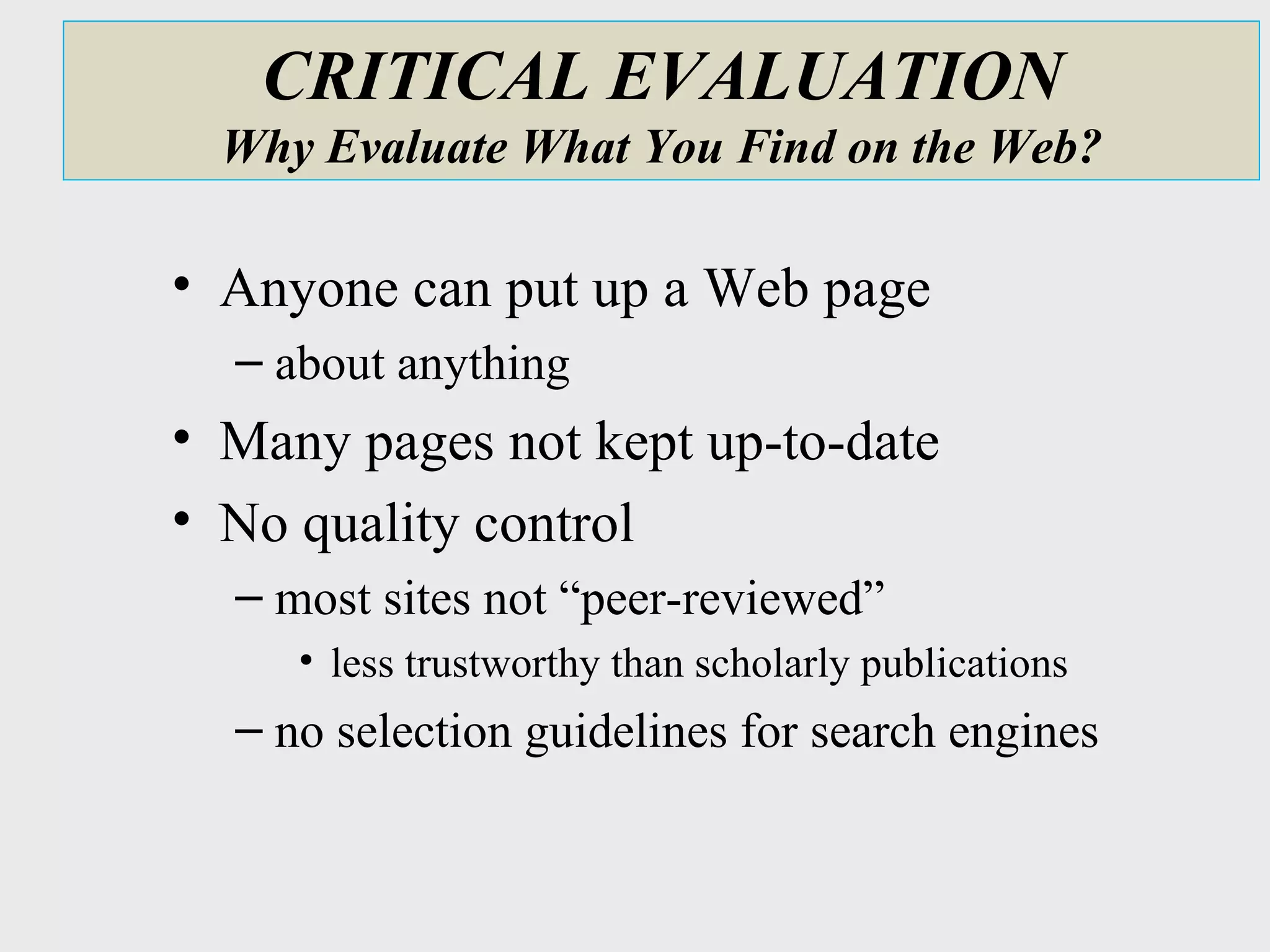
CRITICAL EVALUATION Why Evaluate What You Find on the Web? Anyone can put up a Web page about anything Many pages not kept up-to-date No quality control most sites not “peer-reviewed”  less trustworthy than scholarly publications no selection guidelines for search engines
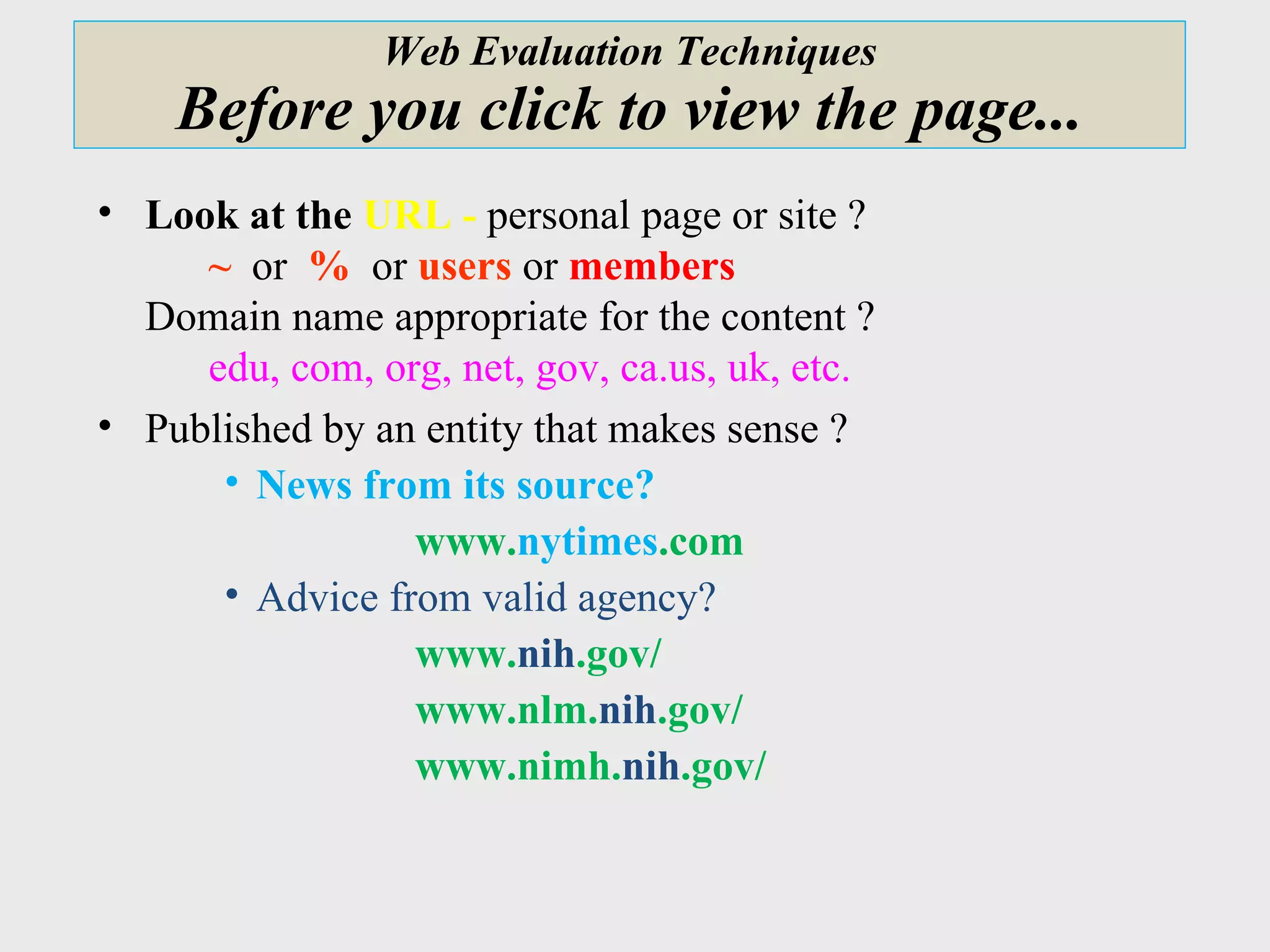
Web Evaluation Techniques Before you click to view the page... Look at the  URL -  personal page or site ?    ~   or  %   or   users  or  members Domain name appropriate for the content ?   edu, com, org, net, gov, ca.us, uk, etc. Published by an entity that makes sense ?  News from its source?  www. nytimes .com Advice from valid agency?  www. nih .gov/ www.nlm. nih .gov/ www.nimh. nih .gov/
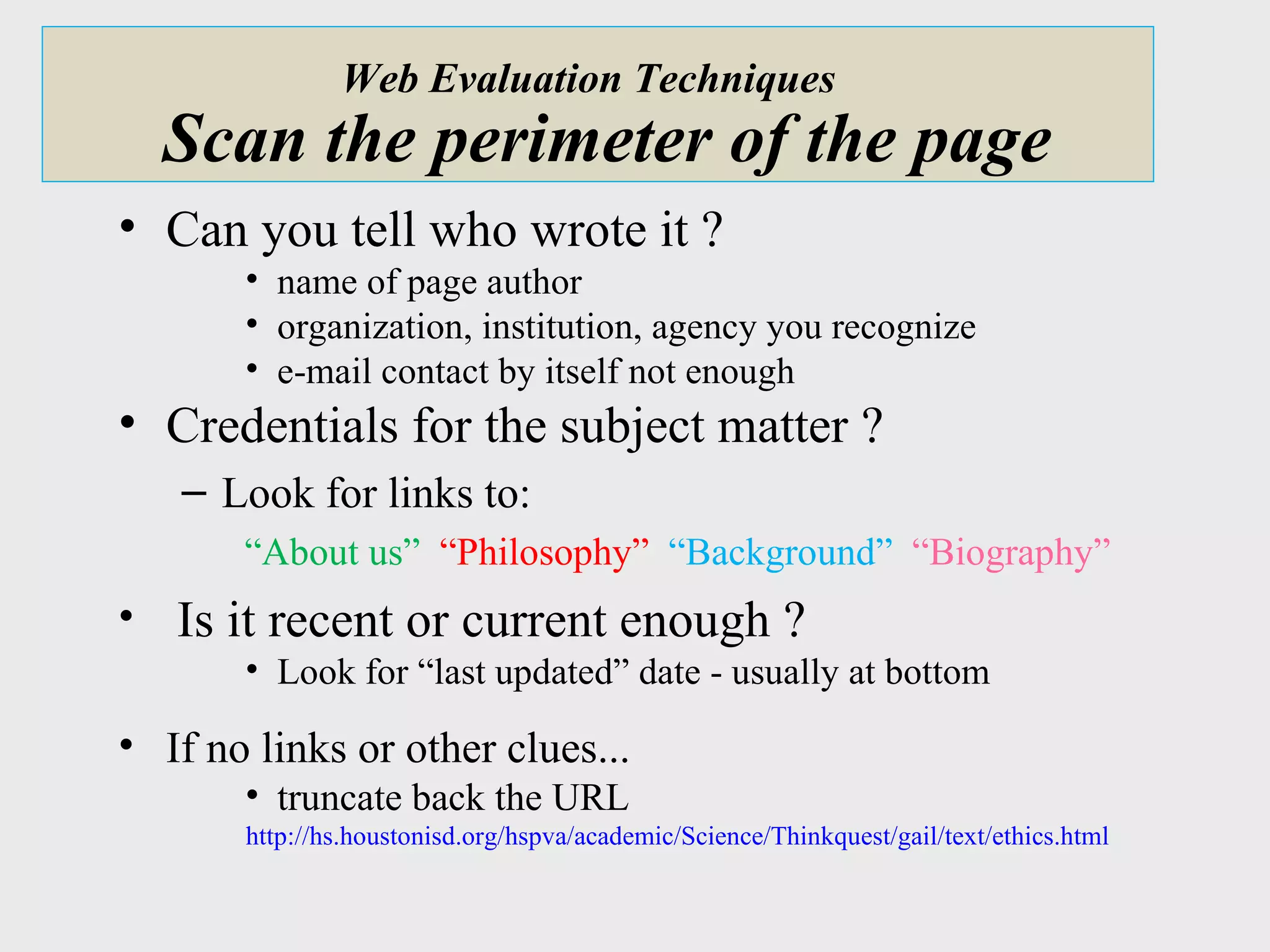
Web Evaluation Techniques    Scan the perimeter of the page Can you tell who wrote it ? name of page author organization, institution, agency you recognize e-mail contact by itself not enough Credentials for the subject matter ? Look for links to: “ About us”  “Philosophy”  “Background”  “Biography” Is it recent or current enough ? Look for “last updated” date - usually at bottom If no links or other clues... truncate back the URL http://hs.houstonisd.org/hspva/academic/Science/Thinkquest/gail/text/ethics.html
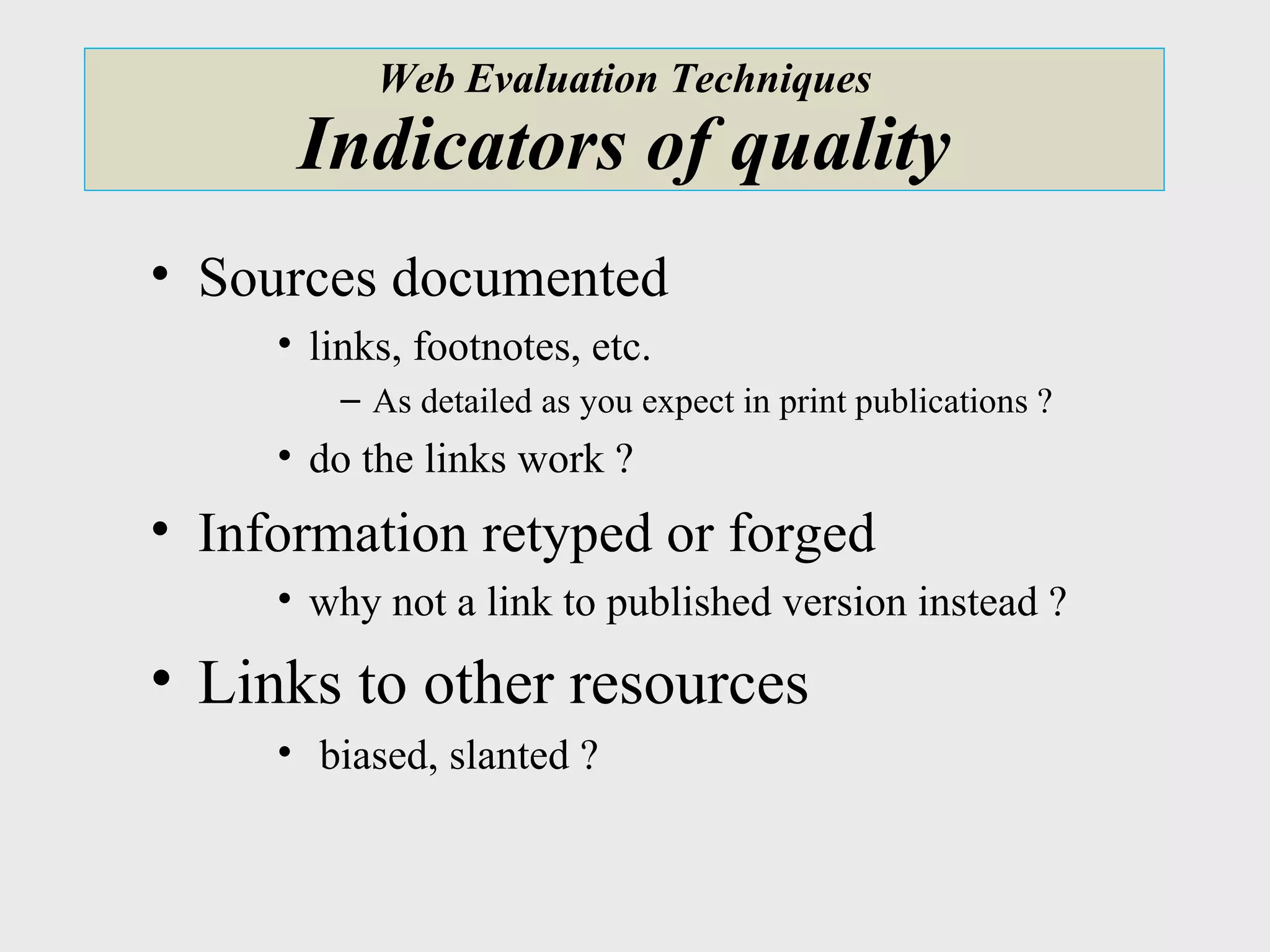
Web Evaluation Techniques Indicators of quality Sources documented links, footnotes, etc. As detailed as you expect in print publications ? do the links work ? Information retyped or forged why not a link to published version instead ? Links to other resources biased, slanted ?
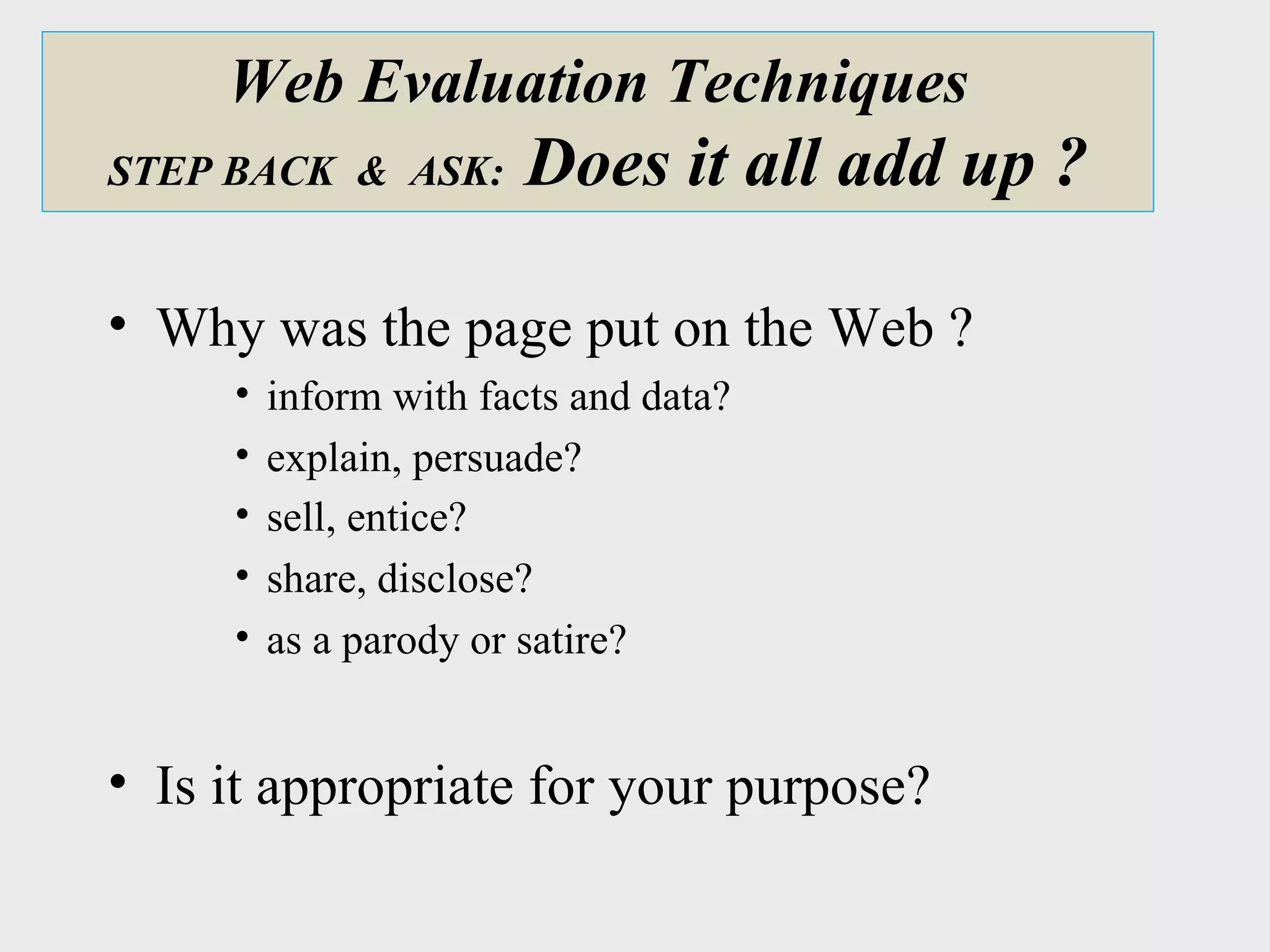
Web Evaluation Techniques STEP BACK  &  ASK:  Does it all add up ? Why was the page put on the Web ?  inform with facts and data?  explain, persuade?  sell, entice?   share, disclose? as a parody or satire?  Is it appropriate for your purpose?
Research-quality Web Searching Search Google effectively and precisely Know when to use other search engines    and web directories Evaluate what you find on the web   Goals
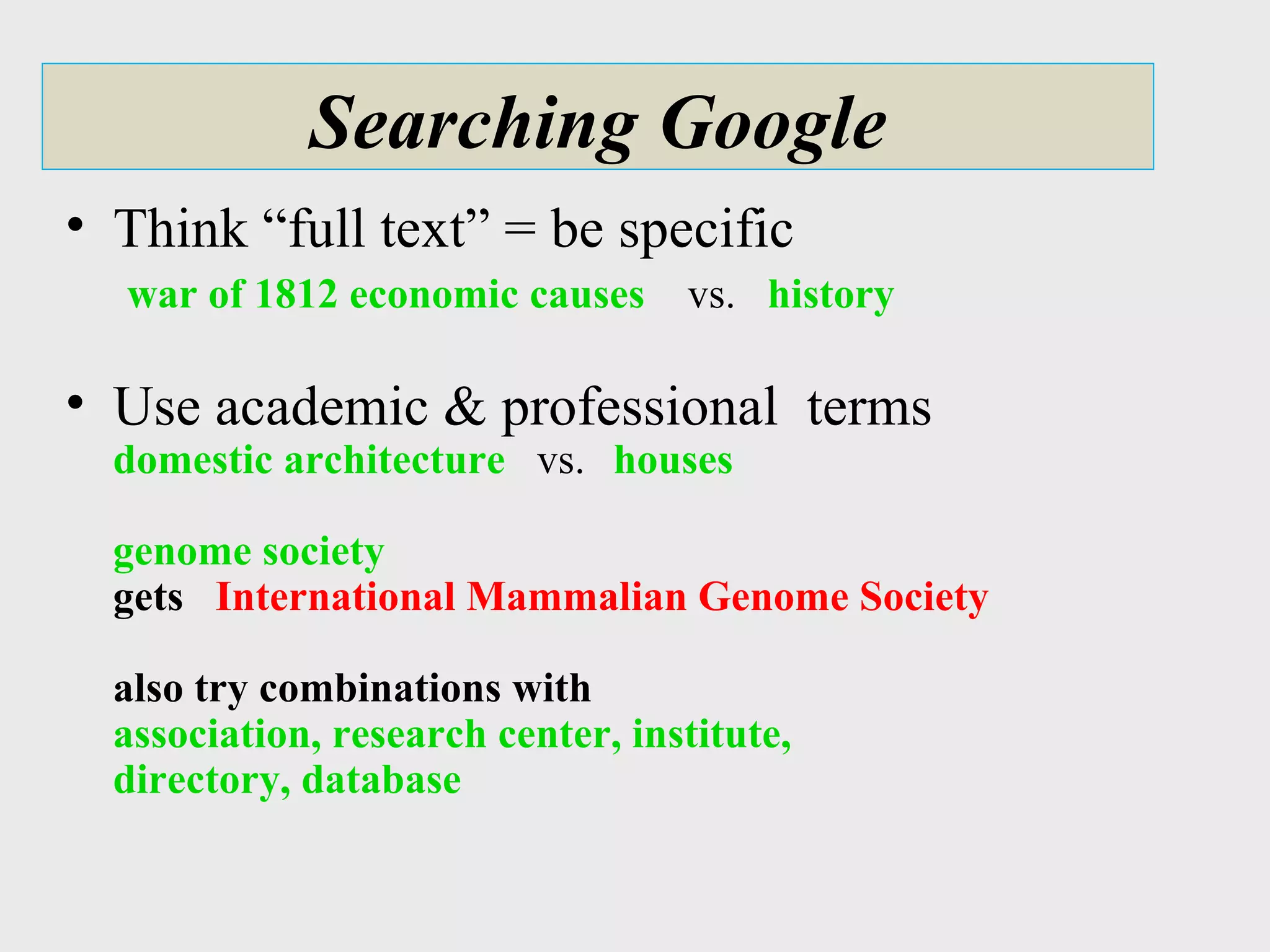
Searching Google Think “full text” = be specific   war of 1812 economic causes   vs.  history    Use academic & professional  terms domestic architecture   vs.  houses genome society gets  International Mammalian Genome Society also try combinations with   association, research center, institute,  directory, database
Specify exact phrases   “tom bates”   “what you're looking for is already inside you” Exclude or require a word using + or - signs   proliferation  - nuclear    bush legacy + environment
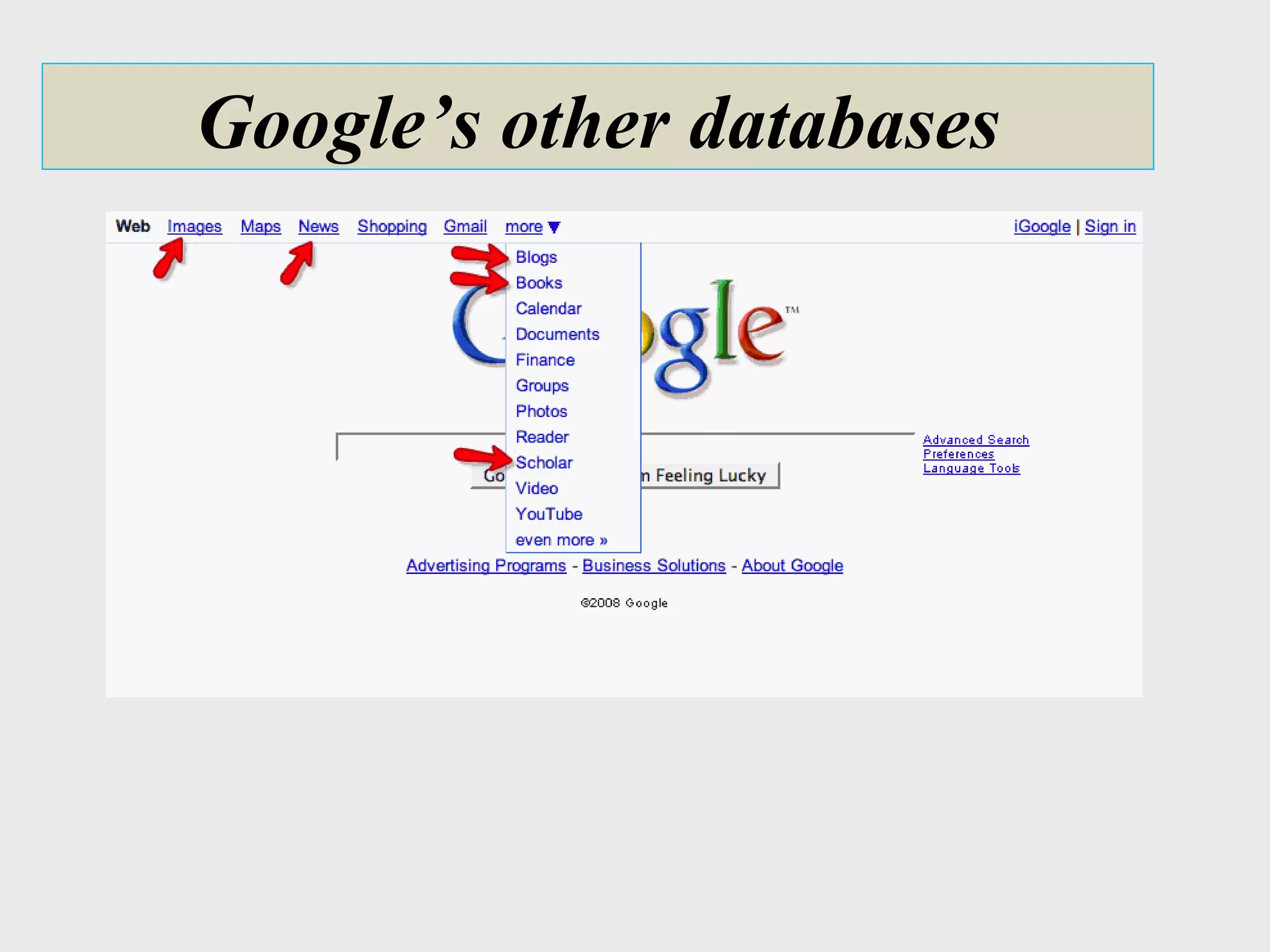
Google’s other databases
Why go beyond Google? Search more of the web Yahoo! Get more options Exalead
Take advantage of human selectivity – stand on the shoulders of Giants! Librarians’ Internet Index InfoMine   Google Custom Search Engines (CSE)

Google and beyond

  • 1.
    G o og l e and Beyond How to get the most out of Search Engines Joe Barker John Kupersmith A “Know Your Library” Workshop Teaching Library, University of California, Berkeley Spring 2007
  • 2.
    CRITICAL EVALUATION WhyEvaluate What You Find on the Web? Anyone can put up a Web page about anything Many pages not kept up-to-date No quality control most sites not “peer-reviewed” less trustworthy than scholarly publications no selection guidelines for search engines
  • 3.
    Web Evaluation TechniquesBefore you click to view the page... Look at the URL - personal page or site ? ~ or % or users or members Domain name appropriate for the content ? edu, com, org, net, gov, ca.us, uk, etc. Published by an entity that makes sense ? News from its source? www. nytimes .com Advice from valid agency? www. nih .gov/ www.nlm. nih .gov/ www.nimh. nih .gov/
  • 4.
    Web Evaluation Techniques Scan the perimeter of the page Can you tell who wrote it ? name of page author organization, institution, agency you recognize e-mail contact by itself not enough Credentials for the subject matter ? Look for links to: “ About us” “Philosophy” “Background” “Biography” Is it recent or current enough ? Look for “last updated” date - usually at bottom If no links or other clues... truncate back the URL http://hs.houstonisd.org/hspva/academic/Science/Thinkquest/gail/text/ethics.html
  • 5.
    Web Evaluation TechniquesIndicators of quality Sources documented links, footnotes, etc. As detailed as you expect in print publications ? do the links work ? Information retyped or forged why not a link to published version instead ? Links to other resources biased, slanted ?
  • 6.
    Web Evaluation TechniquesSTEP BACK & ASK: Does it all add up ? Why was the page put on the Web ? inform with facts and data? explain, persuade? sell, entice? share, disclose? as a parody or satire? Is it appropriate for your purpose?
  • 7.
    Research-quality Web SearchingSearch Google effectively and precisely Know when to use other search engines and web directories Evaluate what you find on the web Goals
  • 8.
    Searching Google Think“full text” = be specific war of 1812 economic causes vs. history Use academic & professional terms domestic architecture vs. houses genome society gets International Mammalian Genome Society also try combinations with association, research center, institute, directory, database
  • 9.
    Specify exact phrases “tom bates” “what you're looking for is already inside you” Exclude or require a word using + or - signs proliferation - nuclear bush legacy + environment
  • 10.
  • 11.
    Why go beyondGoogle? Search more of the web Yahoo! Get more options Exalead
  • 12.
    Take advantage ofhuman selectivity – stand on the shoulders of Giants! Librarians’ Internet Index InfoMine Google Custom Search Engines (CSE)