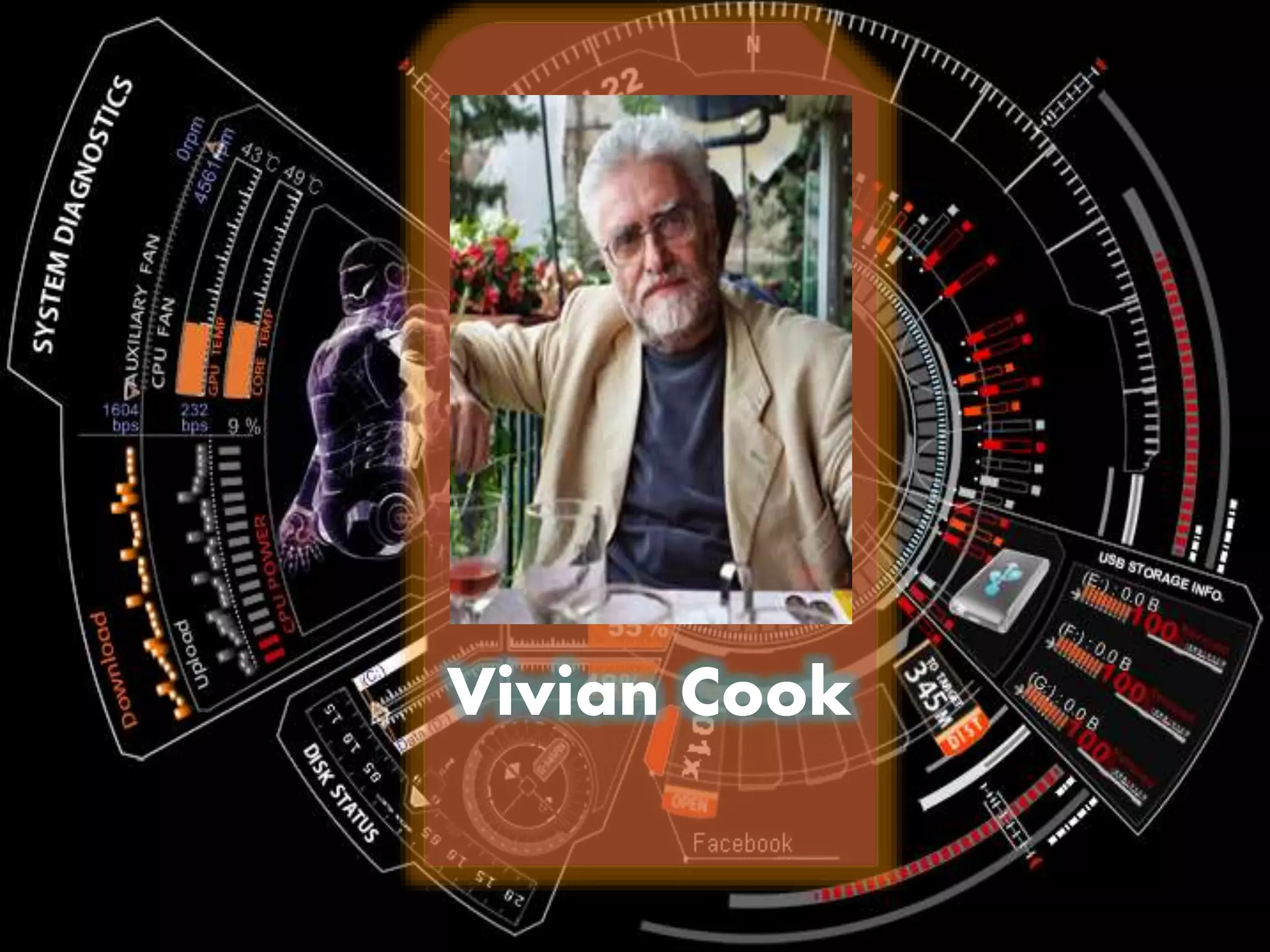
Vivian Cook
Stephen
Krashen
Language Acquisition
The Acquisition- Learning Distinction. There
are two distinct and independent ways of
developing 2nd language competence. 1st,
language acquisition which speaks of a
subconscious process. Language acquirers
are not usually aware of the fact that they
are acquiring language, but they are only
aware of the fact that they are using the
language for communication.
Language Acquisition
In other words, this is implicit learning of a
language. 2nd, language learning which is
referred as conscious knowledge of a second
language, knowing the rules, being aware of
them and being able talk to them. This is
usually called “explicit learning”.
Language Acquisition
The natural order hypothesis – the
acquisition of grammatical structures
proceeds in a predictable order. Acquirers of
a given language tend to acquire certain
grammatical structures early and others,
later.
Language Acquisition
The monitor hypothesis posits the language
acquisition and language learning are used
in very specific ways– acquisition initiates
our utterances in a second language and is
responsible for our fluency. Learning has
only one function, that is a monitor or editor
to make changes in the form of our
utterance, after it has been “produced” by
the acquired system.
Language competence
(The monitor)
.
OutputAcquired
Competence
Language acquisition
The input hypothesis. This conjectures that
human acquire language by understanding
messages or by receiving “comprehensible
input” only. This suggests that learners
acquire language by “in taking” ang
understanding language that is a “little
beyond” their current level of competence
(Krashen, 1981)
.
Language acquisition
The affective filter hypothesis. This states
how affective factors relate to the second
language acquisition process. Affective
factors include motivation, self confidence
and anxiety. This also captures the
relationship between affective variables and
the process of second language acquisition
by posting vary with respect to the strength
or level of their affective filter. Furthermore,
this hypothesis explains that the “input is
the
Language acquisition
Primary causative variables in second
language acquisition and affective variables
act to encumber the delivery on input to the
language acquisition device. Lastly, this
hypothesis emplies that the pedagogical
goals should not only include supplying
comprehension input also creating a
situation that encourages low filter
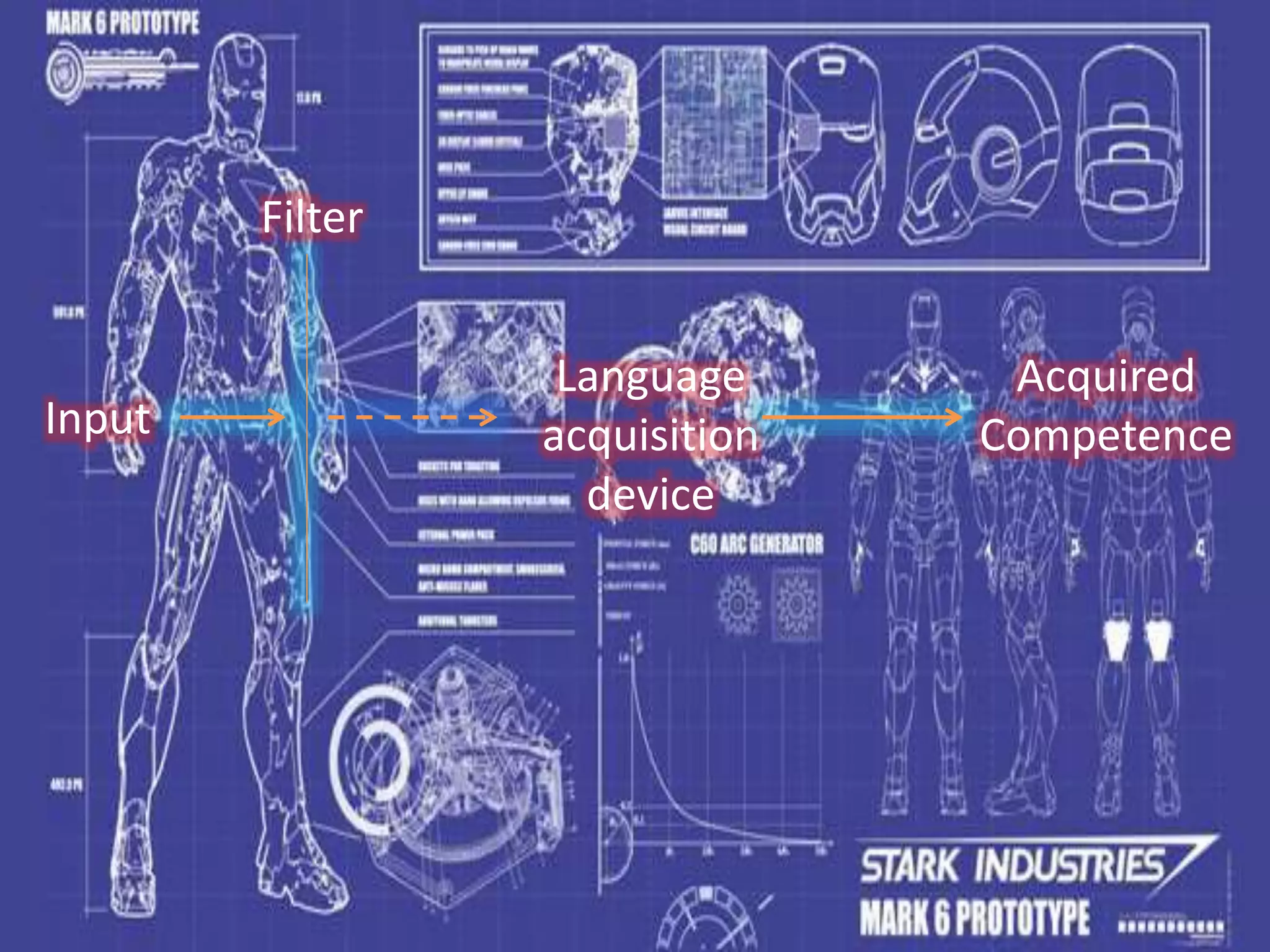
Input
Filter
Language
acquisition
device
Acquired
Competence
Study skills and comprehension
1.PQRST Method. This method helps
students focus on studying and prioritizing
the information that relates directly to how
they will use information. The method can
also be modified to suit any particular form
of learning.
PREVIEW :Looking at the topic by glancing
over the major headings or the points in a
reading material
Study skills and comprehension
1. PQRST Method. This method helps
students focus on studying and
prioritizing the information that relates
directly to how they will use information.
The method can also be modified to suit
any particular form of learning.
PREVIEW :Looking at the topic by glancing
over the major headings or the points in a
reading material
Study skills and comprehension
2. Spider diagram: this links concepts
together. This determines the theme relative
to the other concepts present in the
selection
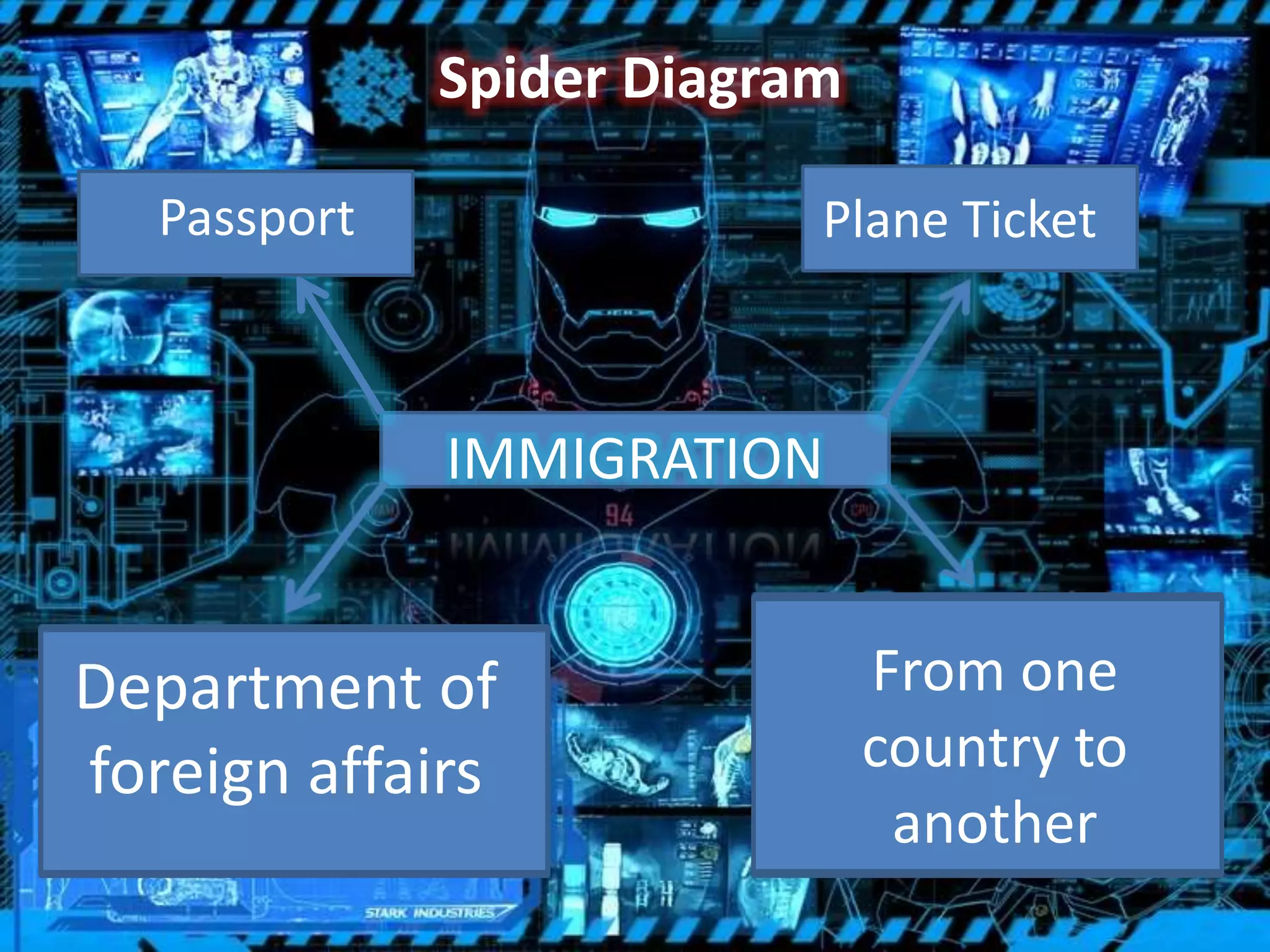
Spider Diagram
IMMIGRATION
Passport Plane Ticket
Department of
foreign affairs
From one
country to
another
3. SQ4R Method
SURVEY: the reader’s aim is not to go into
detail but to develop a general idea of
structure. This will prepare the reader for
what he/she is going to read and grasp a
general understanding of the reading
material.
QUESTION: It is thinking about the material
and asking oneself questions which serve to
keep the reader more involved with the
material.
SQ4R Method
READ: It is reading carefully and trying to
answer question
WRITE: This is writing down the answer to
the questions formerly raised. It is
restructuring the information so that it makes
most sense
SQ4R Method
RECITE: This is reciting what has been read. It is
recalling main headings and ideas. It is putting
ideas in one’s own words as this will improve one’s
ability to retain the material.
REVIEW: Reviewing is the key to figuring out what
one knows and what one needs to concentrate on.
The best time to review is right after reading while
the material is still fresh in one’s mind and again
before the test it is summarizing major points in
the chapter and answering questions posed to
oneself.
4. PQ4R Method
PREVIEW: It is surveying the chapter to
determine the general topics being discussed,
identifying the sections to be read as units
and applying the next 4 step to each section
QUESTIONS: This is making questions about
the section. Often, it is simply transforming
section headings to adequate questions
READ: It is reading the selection carefully
trying to answer the questions one has made
PQ4R Method
REFLECT: It is reflecting on the text as one is
reading, trying to understand it, to think of
examples, and to relate the material to prior
knowledge
RECITE: After finishing a section, it is trying to
recall the information contained in it and
trying to answer the questions one has made
for the section. If one cannot recall enough
he/she has to read the portions that he/she
had trouble remembering
PQ4R Method
REVIEW: After one has finished the chapter
he/she goes through it mentally recalling its
main points. It is trying again to answer the
questions one made

Goals in teaching english language

  • 13.
  • 29.
  • 30.
    Language Acquisition The Acquisition-Learning Distinction. There are two distinct and independent ways of developing 2nd language competence. 1st, language acquisition which speaks of a subconscious process. Language acquirers are not usually aware of the fact that they are acquiring language, but they are only aware of the fact that they are using the language for communication.
  • 31.
    Language Acquisition In otherwords, this is implicit learning of a language. 2nd, language learning which is referred as conscious knowledge of a second language, knowing the rules, being aware of them and being able talk to them. This is usually called “explicit learning”.
  • 32.
    Language Acquisition The naturalorder hypothesis – the acquisition of grammatical structures proceeds in a predictable order. Acquirers of a given language tend to acquire certain grammatical structures early and others, later.
  • 33.
    Language Acquisition The monitorhypothesis posits the language acquisition and language learning are used in very specific ways– acquisition initiates our utterances in a second language and is responsible for our fluency. Learning has only one function, that is a monitor or editor to make changes in the form of our utterance, after it has been “produced” by the acquired system.
  • 34.
  • 35.
    Language acquisition The inputhypothesis. This conjectures that human acquire language by understanding messages or by receiving “comprehensible input” only. This suggests that learners acquire language by “in taking” ang understanding language that is a “little beyond” their current level of competence (Krashen, 1981) .
  • 36.
    Language acquisition The affectivefilter hypothesis. This states how affective factors relate to the second language acquisition process. Affective factors include motivation, self confidence and anxiety. This also captures the relationship between affective variables and the process of second language acquisition by posting vary with respect to the strength or level of their affective filter. Furthermore, this hypothesis explains that the “input is the
  • 37.
    Language acquisition Primary causativevariables in second language acquisition and affective variables act to encumber the delivery on input to the language acquisition device. Lastly, this hypothesis emplies that the pedagogical goals should not only include supplying comprehension input also creating a situation that encourages low filter
  • 38.
  • 39.
    Study skills andcomprehension 1.PQRST Method. This method helps students focus on studying and prioritizing the information that relates directly to how they will use information. The method can also be modified to suit any particular form of learning. PREVIEW :Looking at the topic by glancing over the major headings or the points in a reading material
  • 40.
    Study skills andcomprehension 1. PQRST Method. This method helps students focus on studying and prioritizing the information that relates directly to how they will use information. The method can also be modified to suit any particular form of learning. PREVIEW :Looking at the topic by glancing over the major headings or the points in a reading material
  • 41.
    Study skills andcomprehension 2. Spider diagram: this links concepts together. This determines the theme relative to the other concepts present in the selection
  • 42.
    Spider Diagram IMMIGRATION Passport PlaneTicket Department of foreign affairs From one country to another
  • 43.
    3. SQ4R Method SURVEY:the reader’s aim is not to go into detail but to develop a general idea of structure. This will prepare the reader for what he/she is going to read and grasp a general understanding of the reading material. QUESTION: It is thinking about the material and asking oneself questions which serve to keep the reader more involved with the material.
  • 44.
    SQ4R Method READ: Itis reading carefully and trying to answer question WRITE: This is writing down the answer to the questions formerly raised. It is restructuring the information so that it makes most sense
  • 45.
    SQ4R Method RECITE: Thisis reciting what has been read. It is recalling main headings and ideas. It is putting ideas in one’s own words as this will improve one’s ability to retain the material. REVIEW: Reviewing is the key to figuring out what one knows and what one needs to concentrate on. The best time to review is right after reading while the material is still fresh in one’s mind and again before the test it is summarizing major points in the chapter and answering questions posed to oneself.
  • 46.
    4. PQ4R Method PREVIEW:It is surveying the chapter to determine the general topics being discussed, identifying the sections to be read as units and applying the next 4 step to each section QUESTIONS: This is making questions about the section. Often, it is simply transforming section headings to adequate questions READ: It is reading the selection carefully trying to answer the questions one has made
  • 47.
    PQ4R Method REFLECT: Itis reflecting on the text as one is reading, trying to understand it, to think of examples, and to relate the material to prior knowledge RECITE: After finishing a section, it is trying to recall the information contained in it and trying to answer the questions one has made for the section. If one cannot recall enough he/she has to read the portions that he/she had trouble remembering
  • 48.
    PQ4R Method REVIEW: Afterone has finished the chapter he/she goes through it mentally recalling its main points. It is trying again to answer the questions one made