“Pampango” refers to the people who speak the
Pampango language or inhabit the
province of Pampanga. The name of the province
was coined by the early Spanish
conquerors from “pangpang” or “pangpangan”
which means riverbank.
“Kapampangan” literally means “region of, or
people inhabiting riverbanks.”
Pampango is the Spanish version of “Pampanga.”
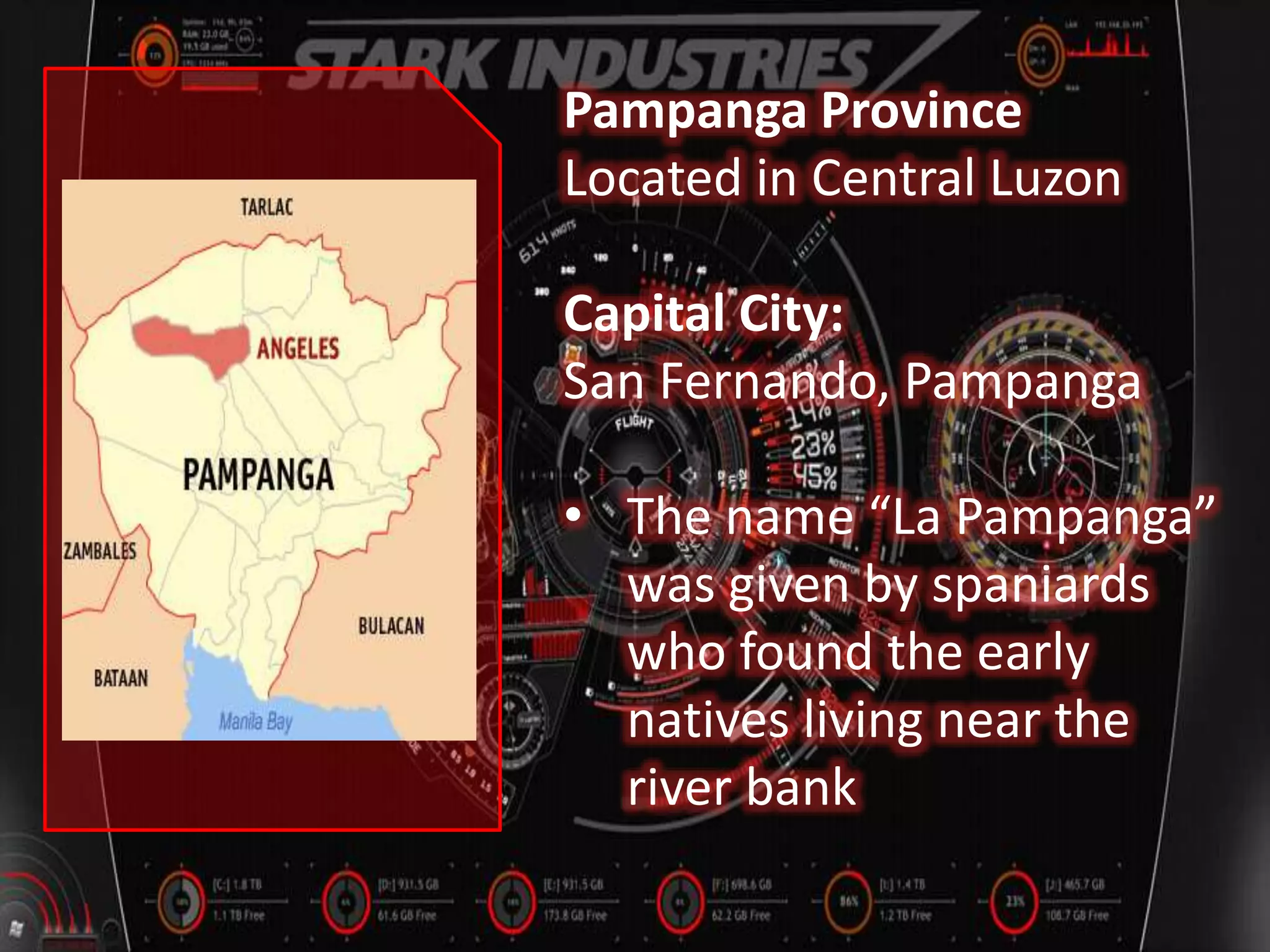
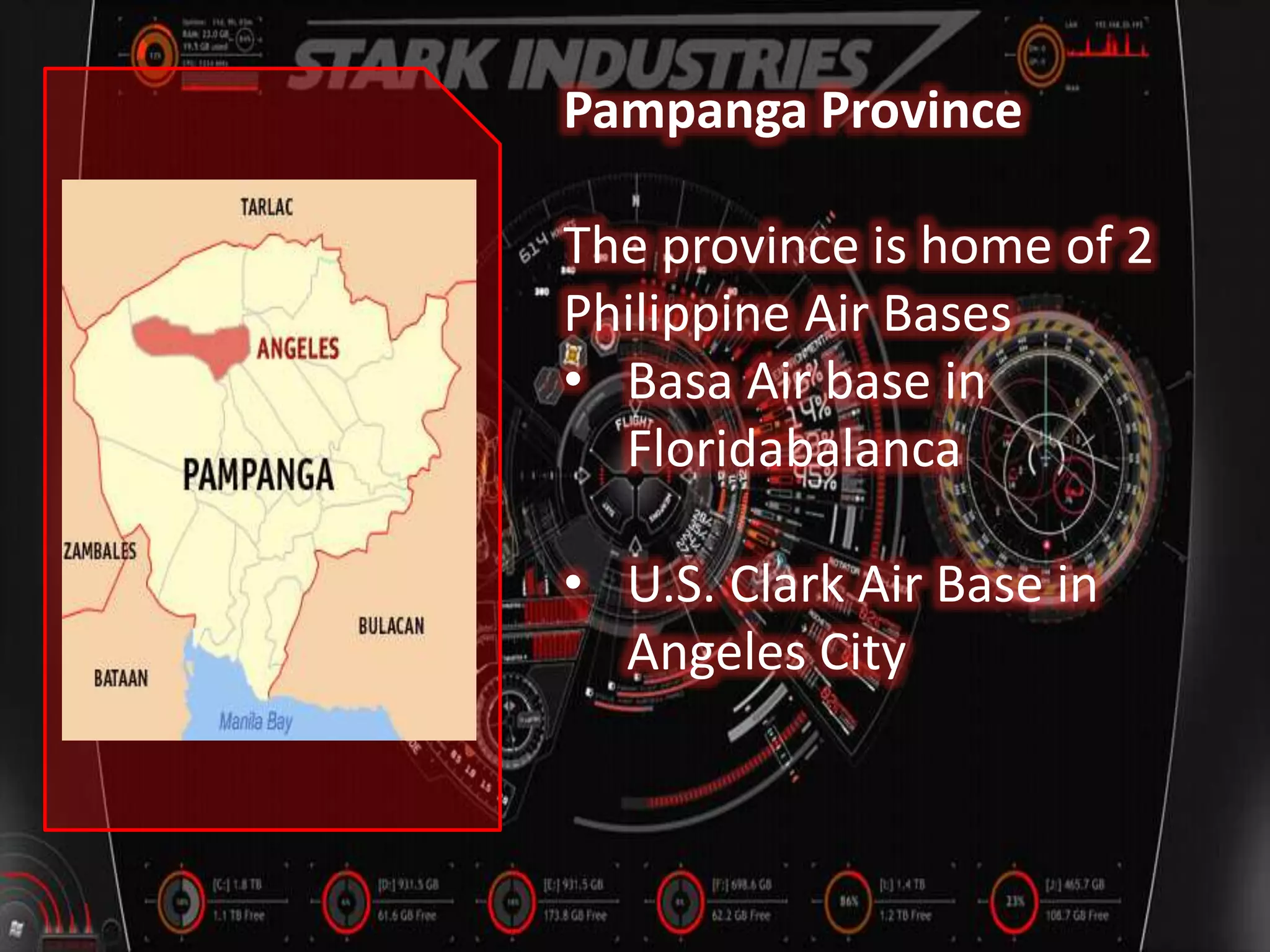
Pampanga Province
Located in Central Luzon
Capital City:
San Fernando, Pampanga
• The name “La Pampanga”
was given by spaniards
who found the early
natives living near the
river bank
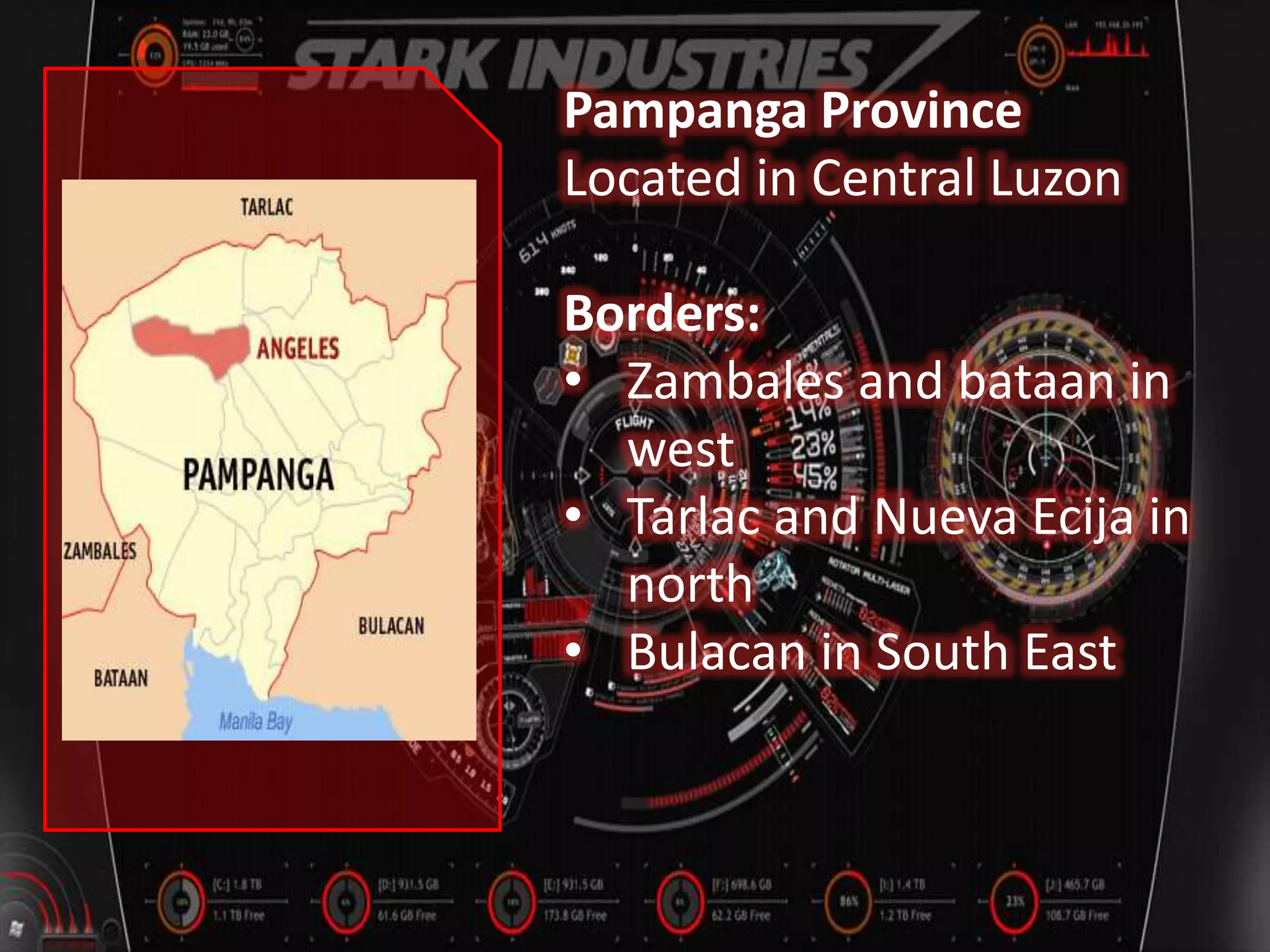
Pampanga Province
Located in Central Luzon
Borders:
• Zambales and bataan in
west
• Tarlac and Nueva Ecija in
north
• Bulacan in South East
Pampanga Province
The province is home of 2
Philippine Air Bases
• Basa Air base in
Floridabalanca
• U.S. Clark Air Base in
Angeles City
Pampanga Province
• The inhabitants of
Pampanga are generally
referred to
Kapampangans,
Pampango or
Pampangueños
Pampanga Province
• The Province of
Pampanga is the
Culinary Capital of the
Philippines
Pampanga Province
• Kapampangan ranks
seventh among 8 majors
languages in Philippines
Pampanga Province
Crissotan – A debate in
verse and was named in
Honor of Juan Crisostomo
Soto
Full Name:
Juan Crisóstomo Caballa
Soto
A.K.A.:
Crissot “The Father of
Pampango Literature”
Born : January 27, 1867
Died: July 12, 1918
Father: Santiago Soto
Mother: Marciana CaballaJUAN CRISOSTOMO SOTO
Family Background:
Soto married twice. By his first
wife Julia Amaida, who died in
1903, he had six children. He
remarried on 24 January 1910,
this time to Rosario Palma,
with whom he had four
children.
Soto’s maternal grandfather,
Sixto Caballa, was also a local
poet who participated in
poetical debates known as
karagatan. The debate is now
called Crissotan in Soto's
honor.
JUAN CRISOSTOMO SOTO
He was a:
• Poet
• Dramatist
• Journalist
• Newspaperman
JUAN CRISOSTOMO SOTO
Other Information:
After graduating, Soto enrolled
in the Colegio de San Juan de
Letrán and studied philosophy,
Latin and theology. However, his
passion for poetry and theatrical
plays prohibited him from
finishing with a degree. He went
back to Bacolor before the
school year was over and wrote
a Pampango version of the
Shakespeare play, Romeo and
Juliet. His version was entitled
“Ing Pamaquisawa ning Mete”
(“The Marriage of the Dead”).
JUAN CRISOSTOMO SOTO
Soto’s first attempt in
producing a play failed. Yet, he
did not go back to college as
he fell in love with the girl who
played Juliet in his play. His
father did not approve of the
relationship and instead he
was wed to Julia Almaida in
1891. His next works were all
Pampango adaptations from
Spanish plays, namely: Ing
Marino, Ding Mipalsinta
Teruel, Fausto and I Neron
Ampon Ding Gladiadores.
JUAN CRISOSTOMO SOTO
As Revolutionary:
It was Francisco Makabulos that
introduced Soto to the Katipunan.
Once in the organization, the poet
worked with Maximino Hizón in
building the organization’s chapter
in Pampanga. Later on, he enlisted
himself as a volunteer in the
Spanish government’s forces to be
able to score arms and
ammunitions for the revolutionary
movement. When the Spanish
government learned about his
secret mission and his safety was
compromised, he left his chapter
and joined the Katipunero force
organized by Tomas Mascardo.
JUAN CRISOSTOMO SOTO
As Revolutionary:
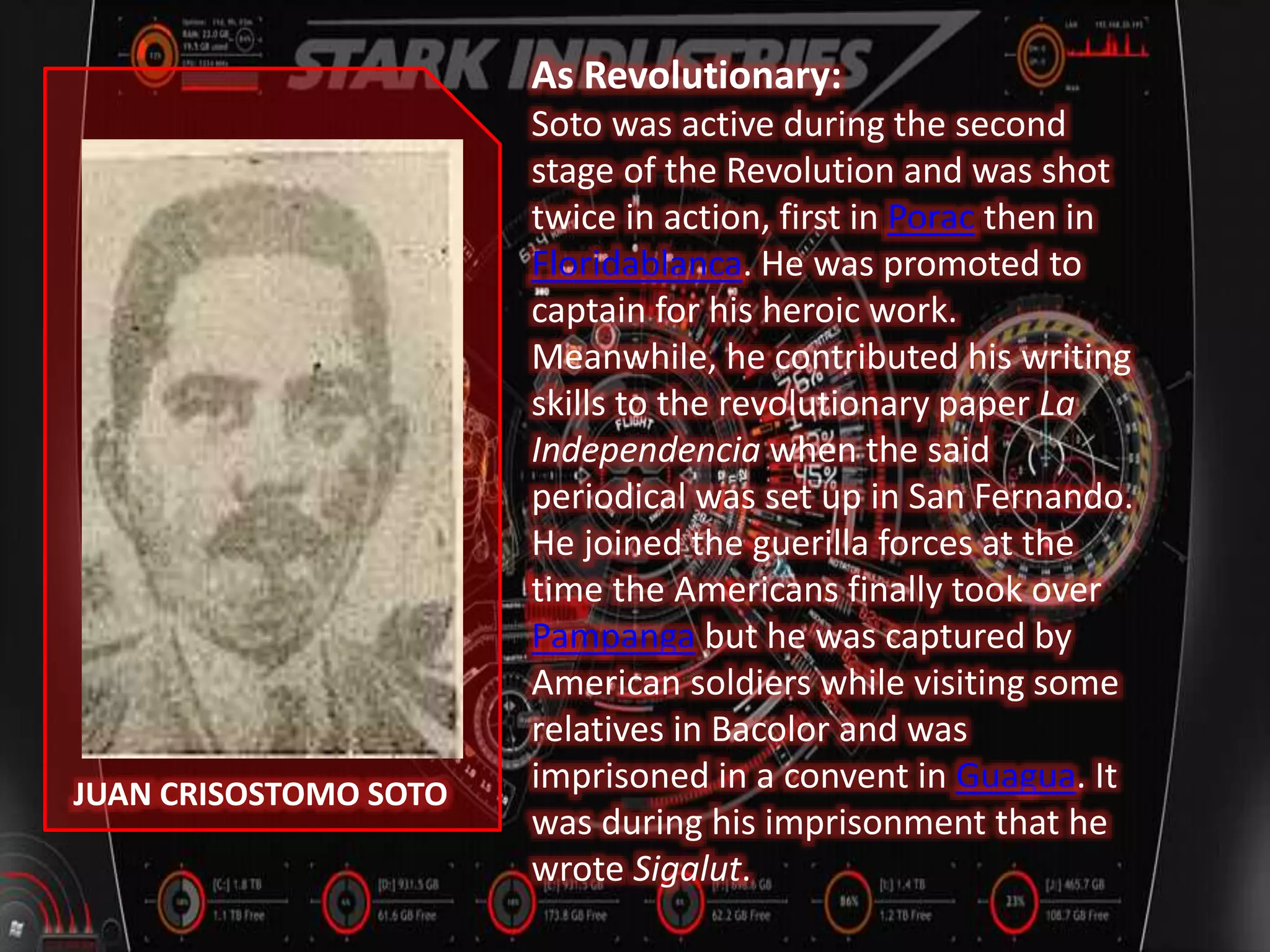
Soto was active during the second
stage of the Revolution and was shot
twice in action, first in Porac then in
Floridablanca. He was promoted to
captain for his heroic work.
Meanwhile, he contributed his writing
skills to the revolutionary paper La
Independencia when the said
periodical was set up in San Fernando.
He joined the guerilla forces at the
time the Americans finally took over
Pampanga but he was captured by
American soldiers while visiting some
relatives in Bacolor and was
imprisoned in a convent in Guagua. It
was during his imprisonment that he
wrote Sigalut.
JUAN CRISOSTOMO SOTO
As Revolutionary:
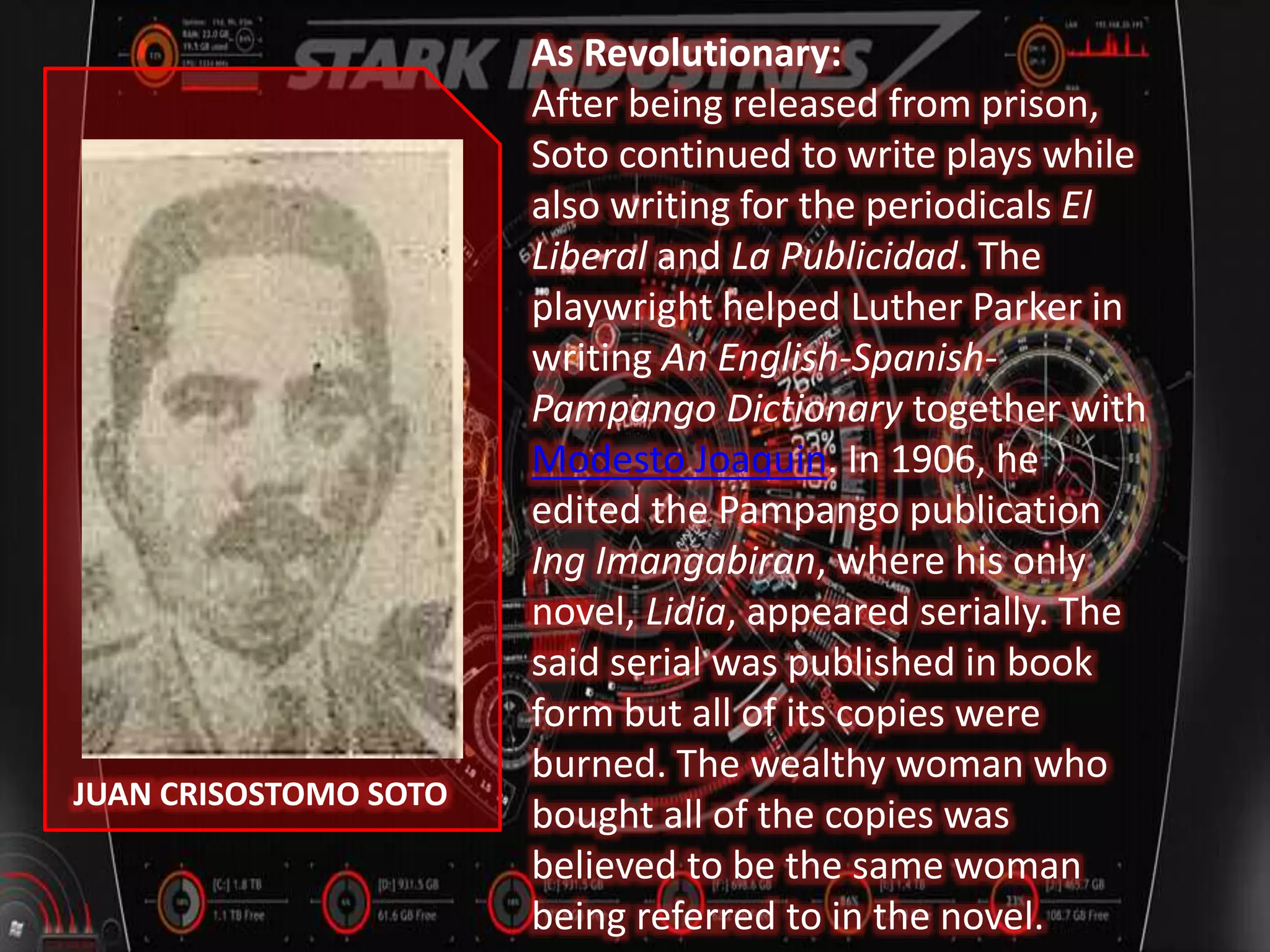
After being released from prison,
Soto continued to write plays while
also writing for the periodicals El
Liberal and La Publicidad. The
playwright helped Luther Parker in
writing An English-Spanish-
Pampango Dictionary together with
Modesto Joaquin. In 1906, he
edited the Pampango publication
Ing Imangabiran, where his only
novel, Lidia, appeared serially. The
said serial was published in book
form but all of its copies were
burned. The wealthy woman who
bought all of the copies was
believed to be the same woman
being referred to in the novel.
JUAN CRISOSTOMO SOTO
As Revolutionary:
After Ing Imangabiran’s publication
ended, he found himself editing the
paper Ing Balen. Later on, he became
editor of Ing Alipatpat, the publication
he founded together with Pascual
Gozún and Félix Galura. The paper’s
first issue appeared on 3 November
1917. It was in this publication that his
Pampango translation of José Rizal’s
Noli Me Tangere appeared. However,
the playwright died a year later, so the
paper ceased publishing, leaving the
translated work unfinished.
Soto used the pen names Crissot, Rubí,
Natis Balén, Lacan Batbat, Vitaliano in
his verses and Julio Septiembre in his
articles.
JUAN CRISOSTOMO SOTO
List of literacy work:
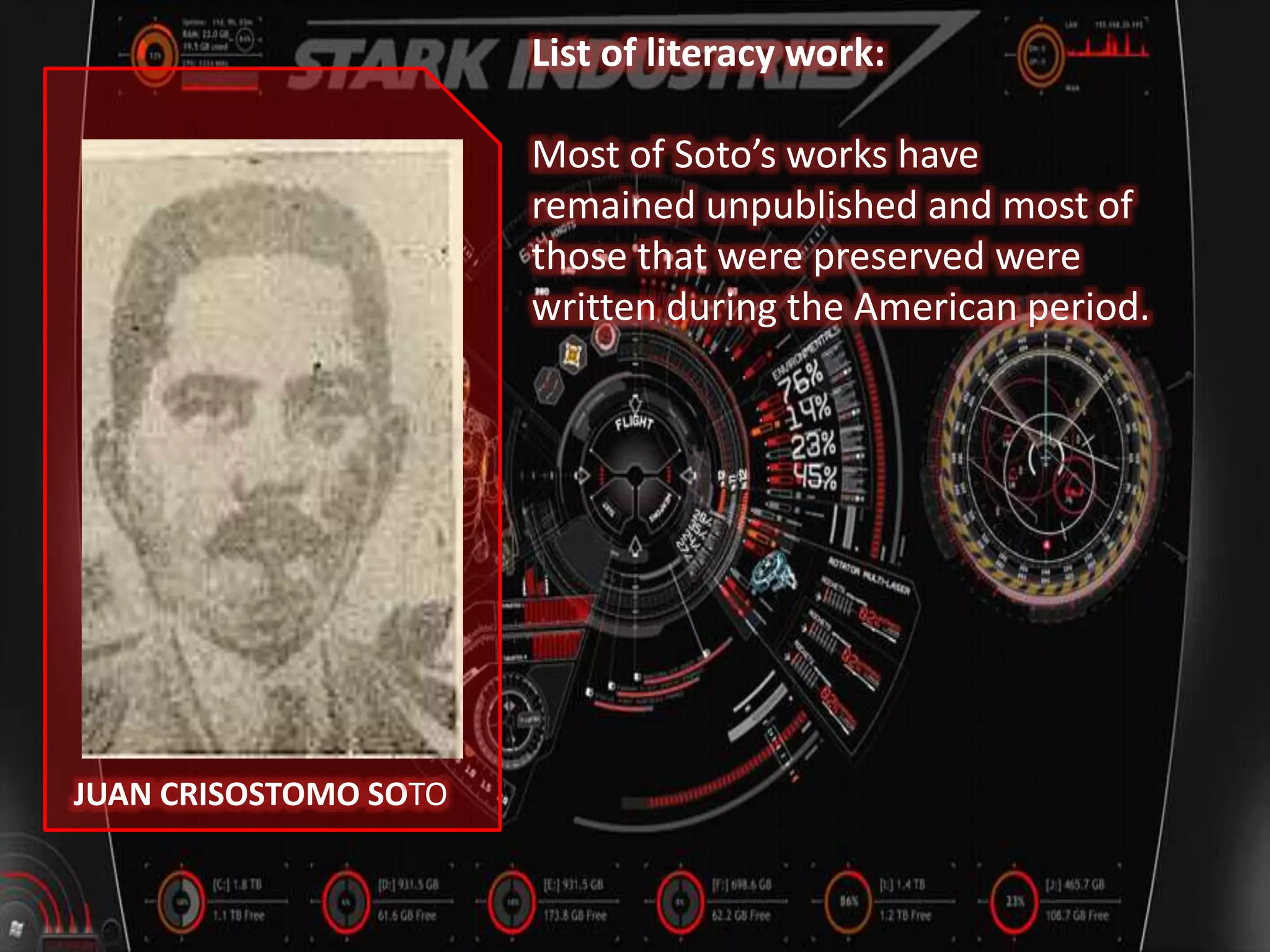
Most of Soto’s works have
remained unpublished and most of
those that were preserved were
written during the American period.

Pampango literature

  • 2.
    “Pampango” refers tothe people who speak the Pampango language or inhabit the province of Pampanga. The name of the province was coined by the early Spanish conquerors from “pangpang” or “pangpangan” which means riverbank. “Kapampangan” literally means “region of, or people inhabiting riverbanks.” Pampango is the Spanish version of “Pampanga.”
  • 3.
    Pampanga Province Located inCentral Luzon Capital City: San Fernando, Pampanga • The name “La Pampanga” was given by spaniards who found the early natives living near the river bank
  • 4.
    Pampanga Province Located inCentral Luzon Borders: • Zambales and bataan in west • Tarlac and Nueva Ecija in north • Bulacan in South East
  • 5.
    Pampanga Province The provinceis home of 2 Philippine Air Bases • Basa Air base in Floridabalanca • U.S. Clark Air Base in Angeles City
  • 6.
    Pampanga Province • Theinhabitants of Pampanga are generally referred to Kapampangans, Pampango or Pampangueños
  • 7.
    Pampanga Province • TheProvince of Pampanga is the Culinary Capital of the Philippines
  • 8.
    Pampanga Province • Kapampanganranks seventh among 8 majors languages in Philippines
  • 9.
    Pampanga Province Crissotan –A debate in verse and was named in Honor of Juan Crisostomo Soto
  • 10.
    Full Name: Juan CrisóstomoCaballa Soto A.K.A.: Crissot “The Father of Pampango Literature” Born : January 27, 1867 Died: July 12, 1918 Father: Santiago Soto Mother: Marciana CaballaJUAN CRISOSTOMO SOTO
  • 11.
    Family Background: Soto marriedtwice. By his first wife Julia Amaida, who died in 1903, he had six children. He remarried on 24 January 1910, this time to Rosario Palma, with whom he had four children. Soto’s maternal grandfather, Sixto Caballa, was also a local poet who participated in poetical debates known as karagatan. The debate is now called Crissotan in Soto's honor. JUAN CRISOSTOMO SOTO
  • 12.
    He was a: •Poet • Dramatist • Journalist • Newspaperman JUAN CRISOSTOMO SOTO
  • 13.
    JUAN CRISOSTOMO SOTO OtherInformation: After graduating, Soto enrolled in the Colegio de San Juan de Letrán and studied philosophy, Latin and theology. However, his passion for poetry and theatrical plays prohibited him from finishing with a degree. He went back to Bacolor before the school year was over and wrote a Pampango version of the Shakespeare play, Romeo and Juliet. His version was entitled “Ing Pamaquisawa ning Mete” (“The Marriage of the Dead”).
  • 14.
    JUAN CRISOSTOMO SOTO Soto’sfirst attempt in producing a play failed. Yet, he did not go back to college as he fell in love with the girl who played Juliet in his play. His father did not approve of the relationship and instead he was wed to Julia Almaida in 1891. His next works were all Pampango adaptations from Spanish plays, namely: Ing Marino, Ding Mipalsinta Teruel, Fausto and I Neron Ampon Ding Gladiadores.
  • 15.
    JUAN CRISOSTOMO SOTO AsRevolutionary: It was Francisco Makabulos that introduced Soto to the Katipunan. Once in the organization, the poet worked with Maximino Hizón in building the organization’s chapter in Pampanga. Later on, he enlisted himself as a volunteer in the Spanish government’s forces to be able to score arms and ammunitions for the revolutionary movement. When the Spanish government learned about his secret mission and his safety was compromised, he left his chapter and joined the Katipunero force organized by Tomas Mascardo.
  • 16.
    JUAN CRISOSTOMO SOTO AsRevolutionary: Soto was active during the second stage of the Revolution and was shot twice in action, first in Porac then in Floridablanca. He was promoted to captain for his heroic work. Meanwhile, he contributed his writing skills to the revolutionary paper La Independencia when the said periodical was set up in San Fernando. He joined the guerilla forces at the time the Americans finally took over Pampanga but he was captured by American soldiers while visiting some relatives in Bacolor and was imprisoned in a convent in Guagua. It was during his imprisonment that he wrote Sigalut.
  • 17.
    JUAN CRISOSTOMO SOTO AsRevolutionary: After being released from prison, Soto continued to write plays while also writing for the periodicals El Liberal and La Publicidad. The playwright helped Luther Parker in writing An English-Spanish- Pampango Dictionary together with Modesto Joaquin. In 1906, he edited the Pampango publication Ing Imangabiran, where his only novel, Lidia, appeared serially. The said serial was published in book form but all of its copies were burned. The wealthy woman who bought all of the copies was believed to be the same woman being referred to in the novel.
  • 18.
    JUAN CRISOSTOMO SOTO AsRevolutionary: After Ing Imangabiran’s publication ended, he found himself editing the paper Ing Balen. Later on, he became editor of Ing Alipatpat, the publication he founded together with Pascual Gozún and Félix Galura. The paper’s first issue appeared on 3 November 1917. It was in this publication that his Pampango translation of José Rizal’s Noli Me Tangere appeared. However, the playwright died a year later, so the paper ceased publishing, leaving the translated work unfinished. Soto used the pen names Crissot, Rubí, Natis Balén, Lacan Batbat, Vitaliano in his verses and Julio Septiembre in his articles.
  • 19.
    JUAN CRISOSTOMO SOTO Listof literacy work: Most of Soto’s works have remained unpublished and most of those that were preserved were written during the American period.