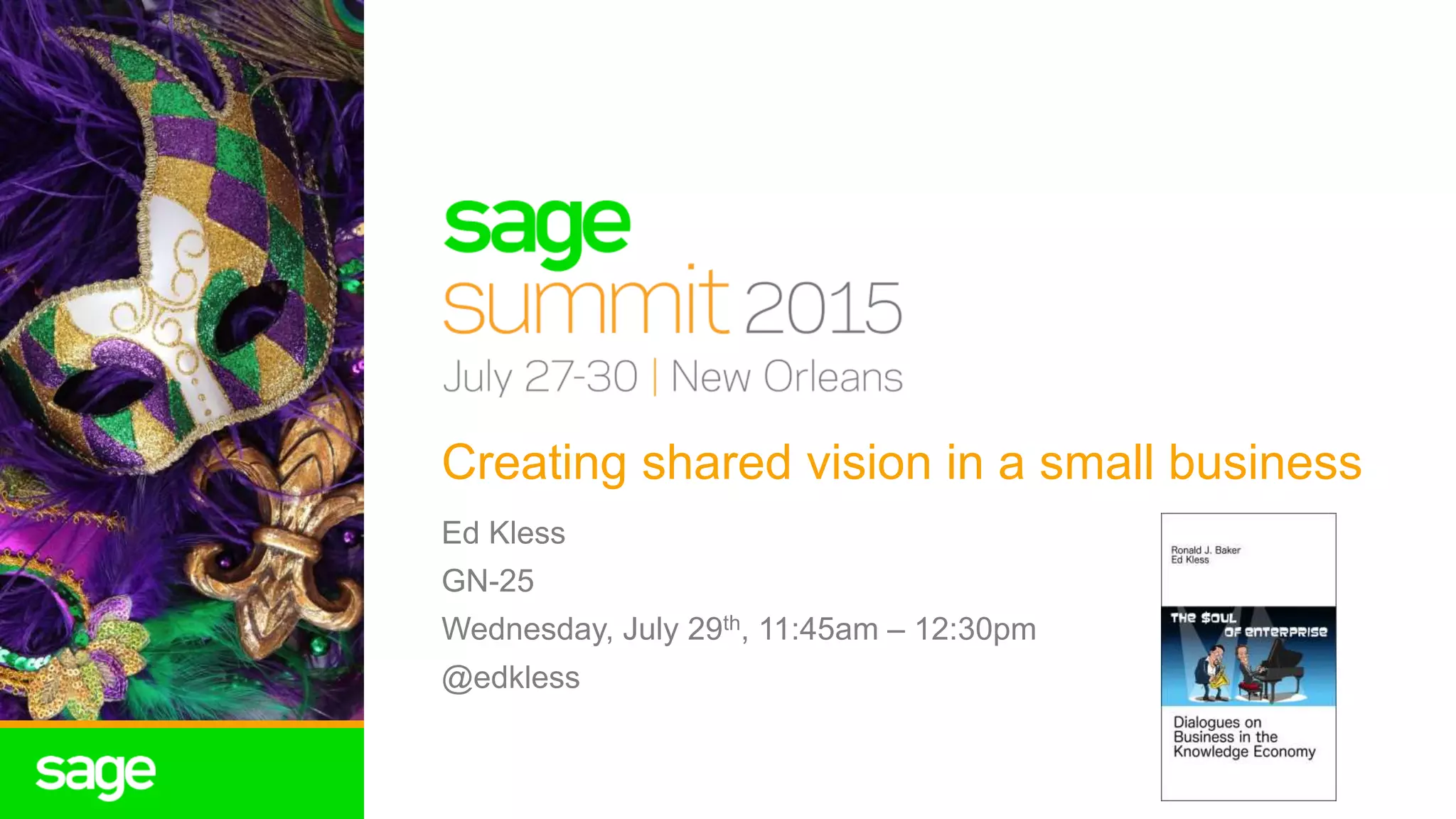
Creating shared vision in a small business
Ed Kless
GN-25
Wednesday, July 29th, 11:45am – 12:30pm
@edkless
2
#SageSummit
The contents of this presentation were provided by the individual(s) and/or
company listed on the title page. The information and opinions presented in this
presentation may not represent the positions, strategies, or opinions of Sage.
Unless explicitly stated, Sage is not responsible for the content herein and no
endorsements are implied.
©2015 Sage Software, Inc. All rights reserved. Sage, the Sage logo, and any Sage
product and service names mentioned herein, are trademarks of Sage Software,
Inc. or its affiliates. All other names used in this presentation are for informational
purposes only and may be trademarks of their respective owners.
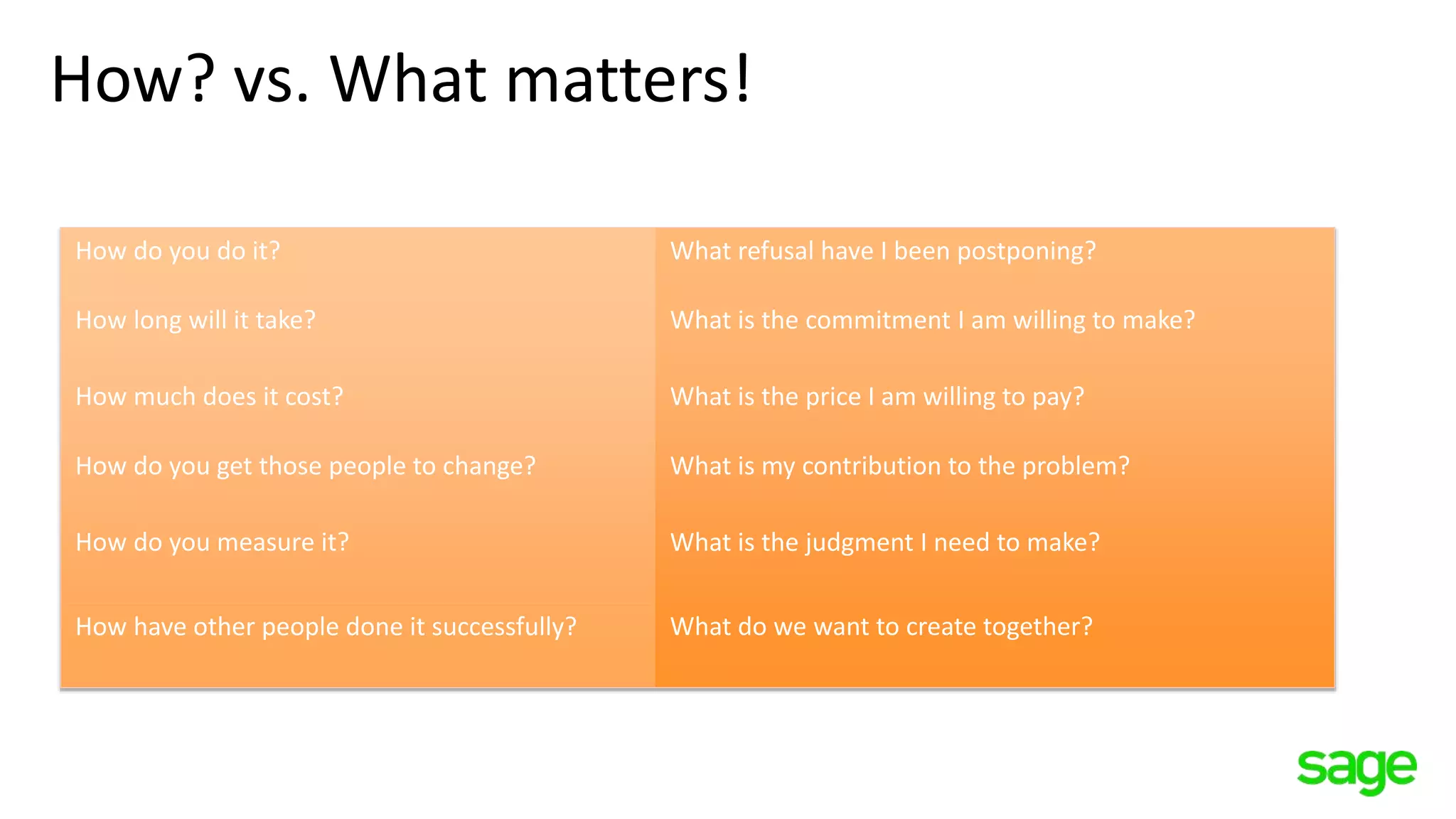
How? vs. What matters!
How do you do it? What refusal have I been postponing?
How long will it take? What is the commitment I am willing to make?
How much does it cost? What is the price I am willing to pay?
How do you get those people to change? What is my contribution to the problem?
How do you measure it? What is the judgment I need to make?
How have other people done it successfully? What do we want to create together?
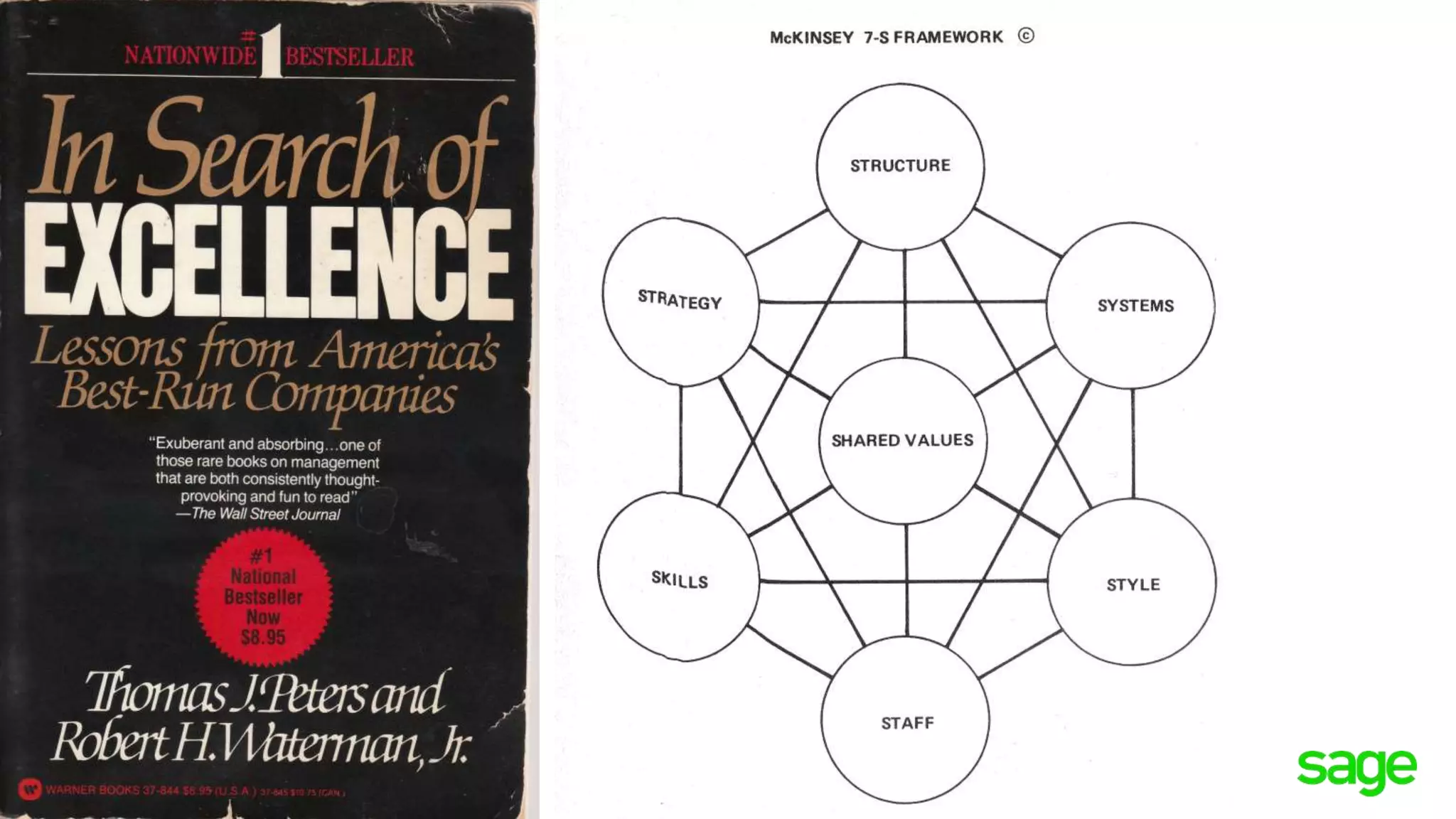
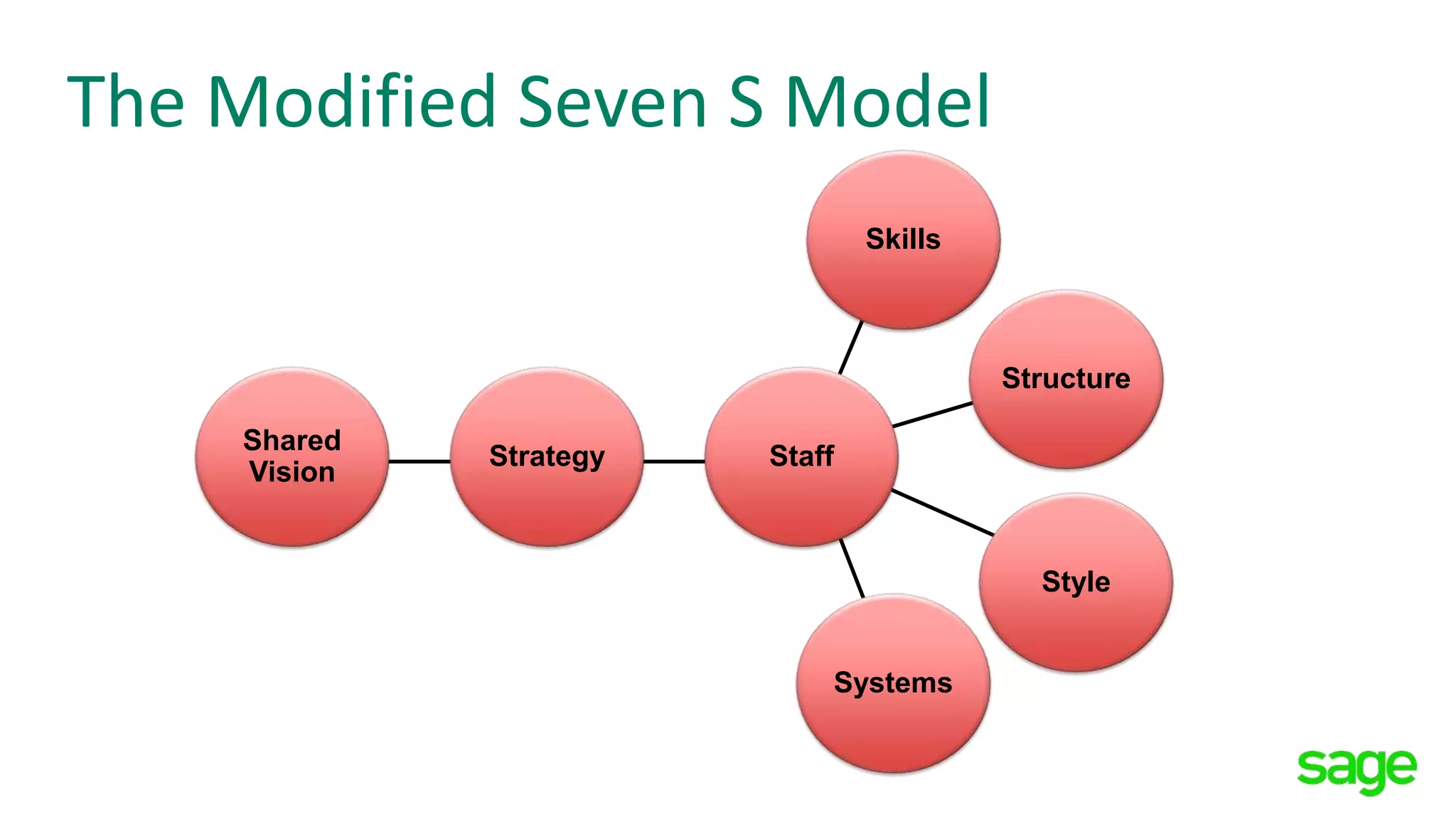
Strategy Staff
Skills
Structure
Style
Systems
Shared
Vision
The Modified Seven S Model
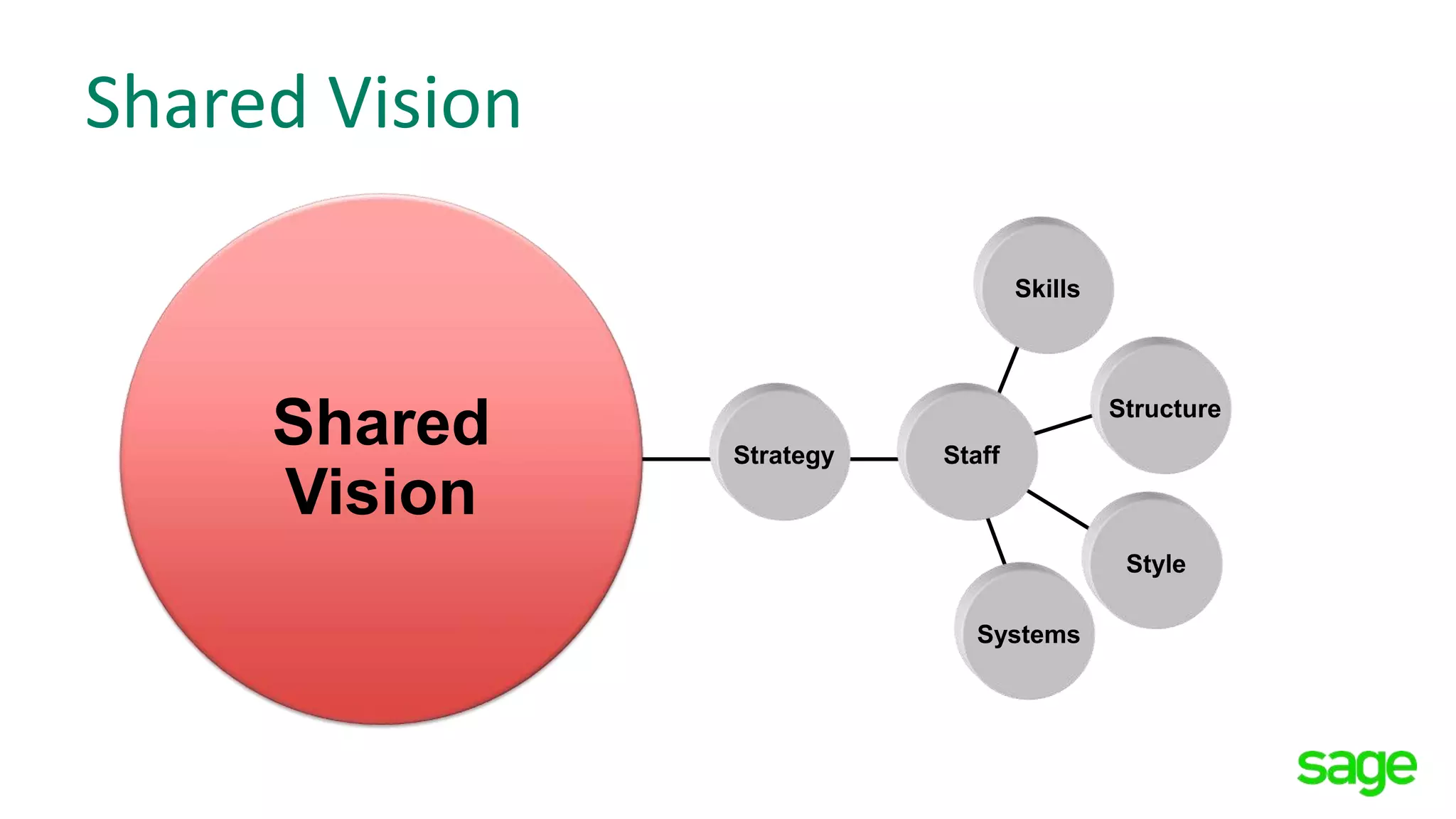
Strategy Staff
Skills
Structure
Style
Systems
Shared
Vision
Shared Vision
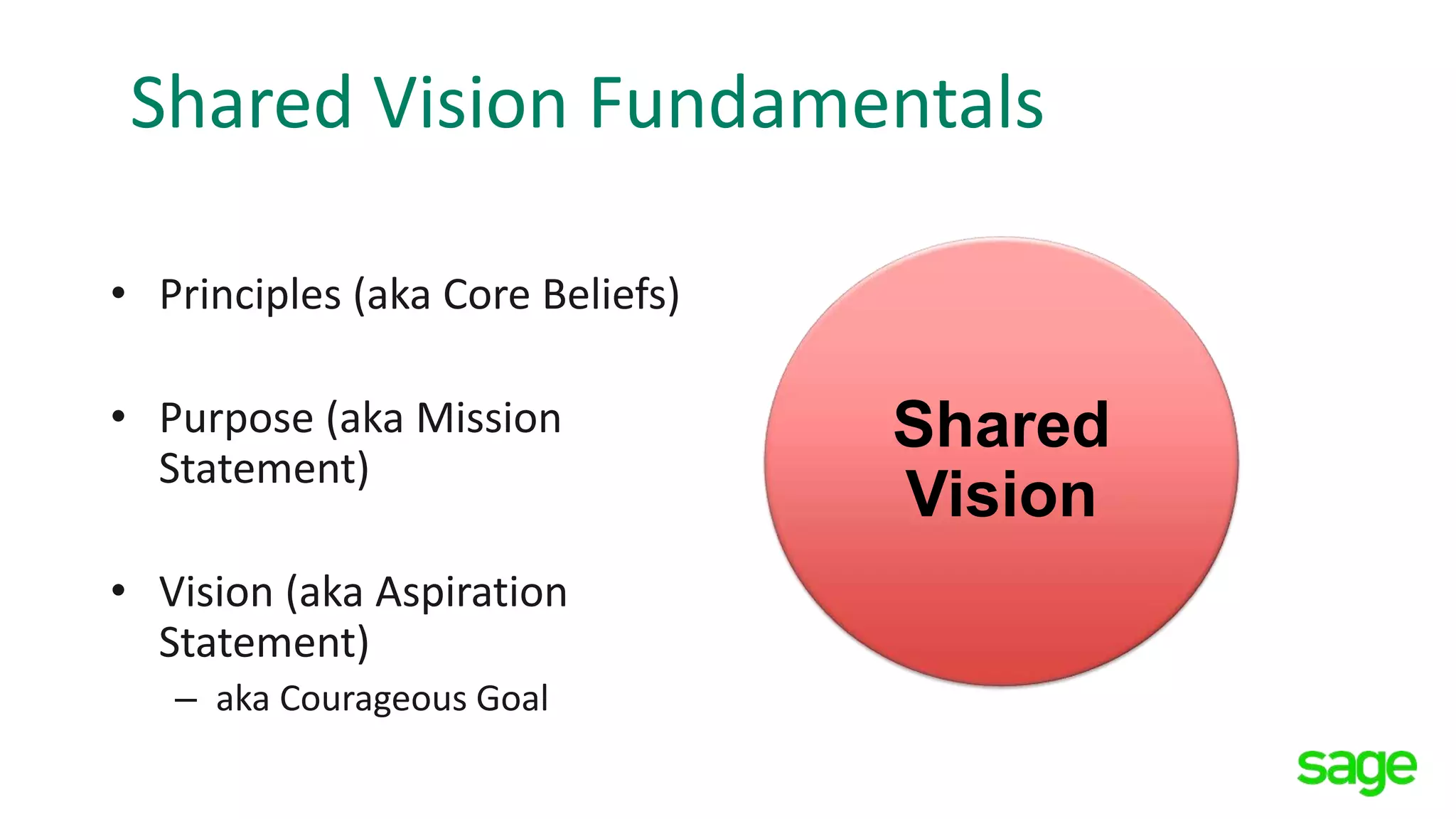
Shared Vision Fundamentals
• Principles (aka Core Beliefs)
• Purpose (aka Mission
Statement)
• Vision (aka Aspiration
Statement)
– aka Courageous Goal
Shared
Vision
Principles
• Founding beliefs of your company
• Answers the question “What do we collectively
believe in?”
• Should rarely change
• Usually between four and eight words or
statements
• Internal vs. external
Principles (cont.)
• Examples
• Customers first, Velocity, Do the right thing, Innovate, Make a
difference
• Ensure quality of life balance
• Acting with integrity, truthfulness and an open line of
communication
• Work collaboratively as a team, understanding and drawing on
each other’s strengths
• Have raving fans for customers
Purpose
• Usually composed of three parts
• What do we do?
• Who benefits from what we do?
• How do we do it? (optional)
• Answers the question “Why did I come to work today?”
• Should be easy to memorize
• Can sometimes change
Purpose—Examples
• To help make it easier for our customers to manage their
business processes
• To improve the business success (what we do) of our clients
(who benefits) by providing superior business systems (how
we do it)
• Improving the success of our team, our clients and our
partners.
Vision—Courageous Goal
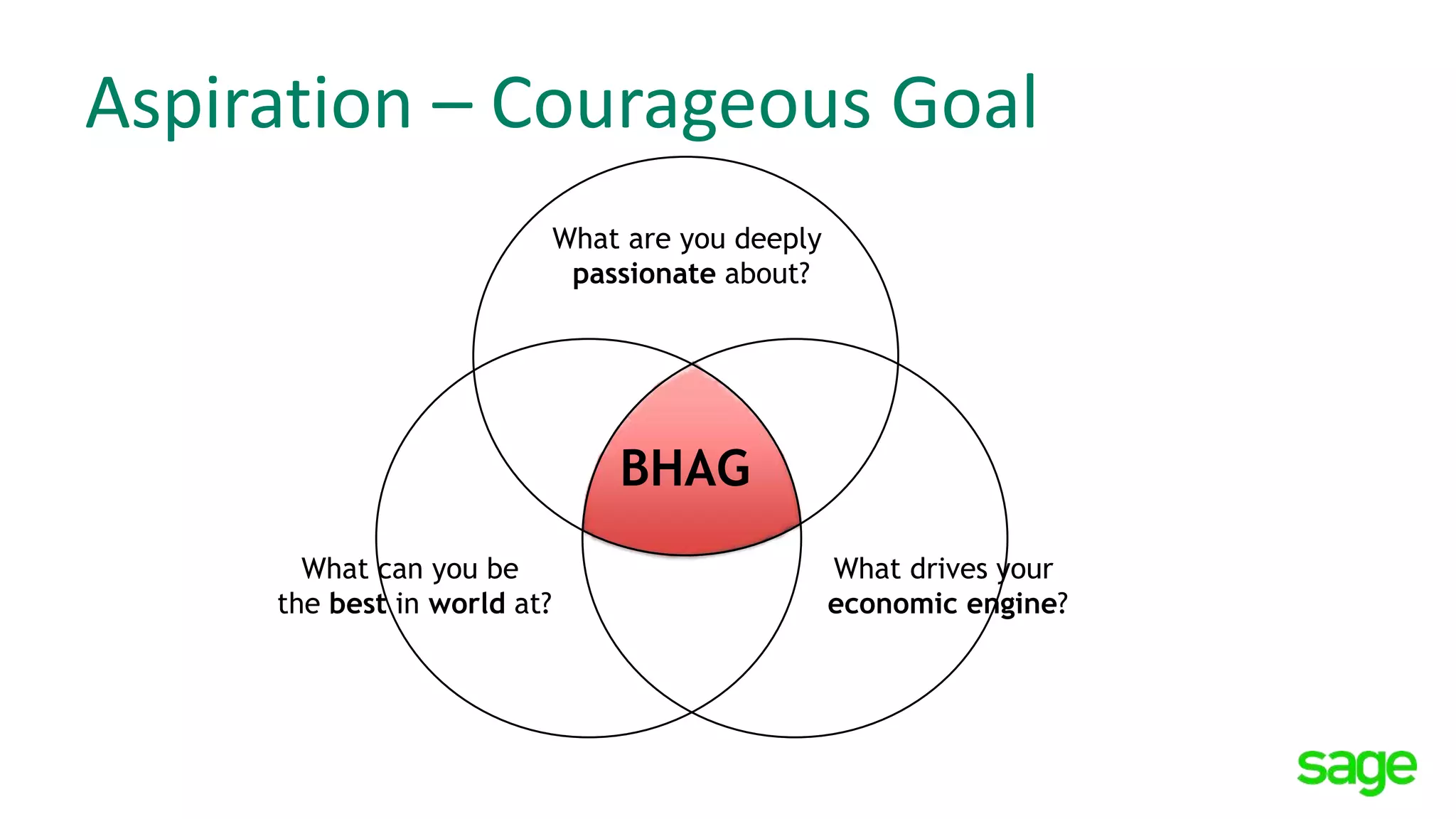
• BHAG
• Clear and concise with little room for interpretation
• Should take three to five years to achieve and be difficult
and daring
• Must be aligned with your purpose and principles
• Should change when achieved
• Can be quantitative and qualitative
Aspiration – Courageous Goal
What are you deeply
passionate about?
What can you be
the best in world at?
What drives your
economic engine?
BHAG
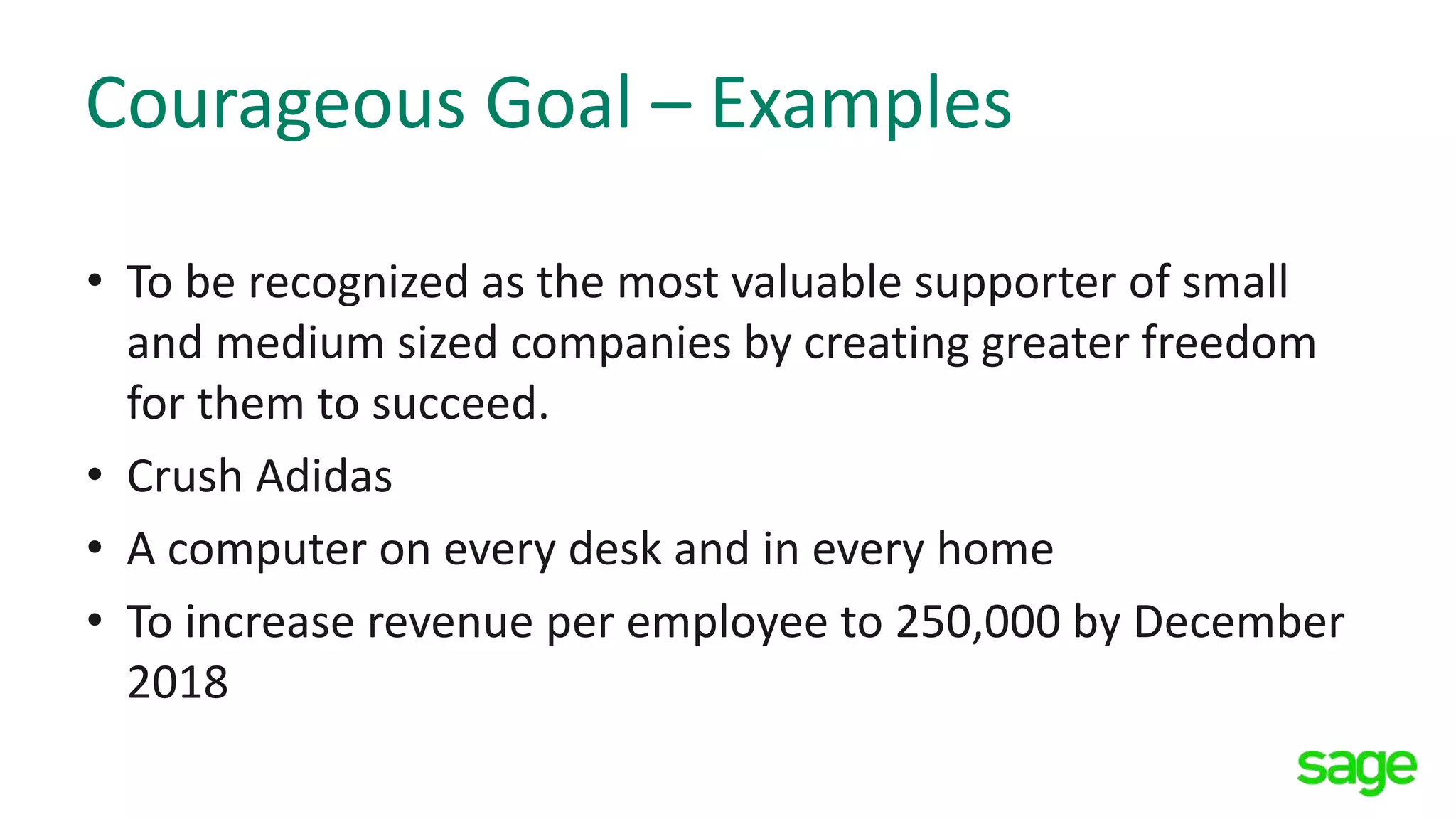
Courageous Goal – Examples
• To be recognized as the most valuable supporter of small
and medium sized companies by creating greater freedom
for them to succeed.
• Crush Adidas
• A computer on every desk and in every home
• To increase revenue per employee to 250,000 by December
2018
Creating shared vision in a small business
Ed Kless
GN-25
Wednesday, July 29th, 11:45am – 12:30pm
@edkless
16
#SageSummit
Questions?
• Send any questions you may have about this session to the
following email by August 15:
@edkless
ConferenceSessions.NA@sage.com
17
#SageSummit
Session survey
• Complete a survey for this session!
@edkless
http://goo.gl/2MUPWW
Session code: GN-25
Session title: Creating shared vision in a small business
Creating shared vision in a small business
Ed Kless
GN-25
Wednesday, July 29th, 11:45am – 12:30pm
@edkless

Creating shared vision in a small business

  • 1.
    Creating shared visionin a small business Ed Kless GN-25 Wednesday, July 29th, 11:45am – 12:30pm @edkless
  • 2.
    2 #SageSummit The contents ofthis presentation were provided by the individual(s) and/or company listed on the title page. The information and opinions presented in this presentation may not represent the positions, strategies, or opinions of Sage. Unless explicitly stated, Sage is not responsible for the content herein and no endorsements are implied. ©2015 Sage Software, Inc. All rights reserved. Sage, the Sage logo, and any Sage product and service names mentioned herein, are trademarks of Sage Software, Inc. or its affiliates. All other names used in this presentation are for informational purposes only and may be trademarks of their respective owners.
  • 3.
    How? vs. Whatmatters! How do you do it? What refusal have I been postponing? How long will it take? What is the commitment I am willing to make? How much does it cost? What is the price I am willing to pay? How do you get those people to change? What is my contribution to the problem? How do you measure it? What is the judgment I need to make? How have other people done it successfully? What do we want to create together?
  • 5.
  • 6.
  • 7.
    Shared Vision Fundamentals •Principles (aka Core Beliefs) • Purpose (aka Mission Statement) • Vision (aka Aspiration Statement) – aka Courageous Goal Shared Vision
  • 8.
    Principles • Founding beliefsof your company • Answers the question “What do we collectively believe in?” • Should rarely change • Usually between four and eight words or statements • Internal vs. external
  • 9.
    Principles (cont.) • Examples •Customers first, Velocity, Do the right thing, Innovate, Make a difference • Ensure quality of life balance • Acting with integrity, truthfulness and an open line of communication • Work collaboratively as a team, understanding and drawing on each other’s strengths • Have raving fans for customers
  • 10.
    Purpose • Usually composedof three parts • What do we do? • Who benefits from what we do? • How do we do it? (optional) • Answers the question “Why did I come to work today?” • Should be easy to memorize • Can sometimes change
  • 11.
    Purpose—Examples • To helpmake it easier for our customers to manage their business processes • To improve the business success (what we do) of our clients (who benefits) by providing superior business systems (how we do it) • Improving the success of our team, our clients and our partners.
  • 12.
    Vision—Courageous Goal • BHAG •Clear and concise with little room for interpretation • Should take three to five years to achieve and be difficult and daring • Must be aligned with your purpose and principles • Should change when achieved • Can be quantitative and qualitative
  • 13.
    Aspiration – CourageousGoal What are you deeply passionate about? What can you be the best in world at? What drives your economic engine? BHAG
  • 14.
    Courageous Goal –Examples • To be recognized as the most valuable supporter of small and medium sized companies by creating greater freedom for them to succeed. • Crush Adidas • A computer on every desk and in every home • To increase revenue per employee to 250,000 by December 2018
  • 15.
    Creating shared visionin a small business Ed Kless GN-25 Wednesday, July 29th, 11:45am – 12:30pm @edkless
  • 16.
    16 #SageSummit Questions? • Send anyquestions you may have about this session to the following email by August 15: @edkless ConferenceSessions.NA@sage.com
  • 17.
    17 #SageSummit Session survey • Completea survey for this session! @edkless http://goo.gl/2MUPWW Session code: GN-25 Session title: Creating shared vision in a small business
  • 18.
    Creating shared visionin a small business Ed Kless GN-25 Wednesday, July 29th, 11:45am – 12:30pm @edkless