

ADVANCED PHARMACOLOGY
TOPIC : GLUTAMATE
AYANA R KUMAR
M Pharm
Department of Pharmacology
GLUTAMATE
 Glutamate is a Excitatory neurotransmitter.
 Glutamate generally refers to the anion of glutamic
acid.
 Glutamate is involved in cognitive functions such
as learning and memory in the brain.
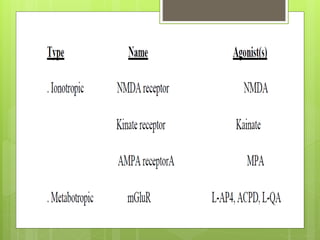
 Biochemical receptors for glutamate fall into two
major classes,
1. IONOTROPIC RECEPTORS
2. METABOTROPIC RECEPTORS
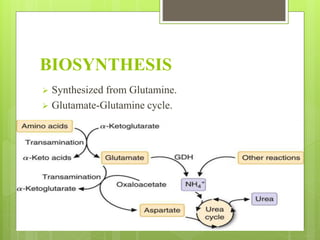
BIOSYNTHESIS
 Synthesized from Glutamine.
 Glutamate-Glutamine cycle.
STORAGE
 Stored in vesicles in the axon.
 Released by an increased concentration of
intracellular Ca2+.
 Synaptic release of glutamate is controlled by a
wide range of presynaptic receptor.
GLUTAMATE TRANSPORTERS
 Glutamate uptake
 Na+/H+/K+ dependent transporters.
 Glutamate taken up by astroglial cells is converted
to Glutamine.
Glutamate-Glutamine
Nerve terminals take up Glutamine and
convert Glutamine back to glutamate.
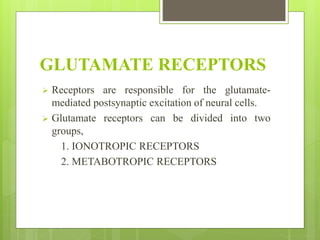
GLUTAMATE RECEPTORS
 Receptors are responsible for the glutamate-
mediated postsynaptic excitation of neural cells.
 Glutamate receptors can be divided into two
groups,
1. IONOTROPIC RECEPTORS
2. METABOTROPIC RECEPTORS
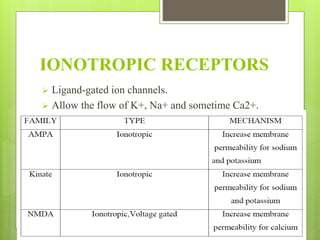
IONOTROPIC RECEPTORS
 Ligand-gated ion channels.
 Allow the flow of K+, Na+ and sometime Ca2+.
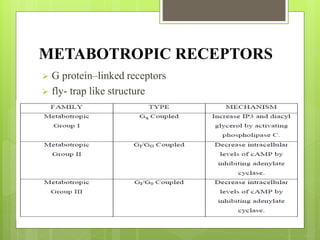
METABOTROPIC RECEPTORS
 G protein–linked receptors
 fly- trap like structure
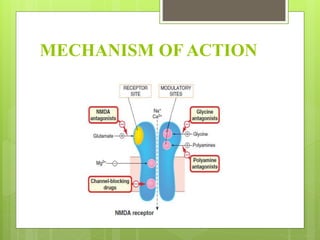
MECHANISM OF ACTION
DRUGS ACTING ON
GLUTAMATE RECEPTORS
GLUTAMATE RECEPTOR
ANTAGONIST
 Glycine site blocking drug : Kynureneic acid
 Channel blocking drugs:Ketamine,
Phencyclidine,Dizocilpine,Remacimide,Memantin
e
 NMDA receptor antagonist : Selfotel,
Eliprodil,Dextromethorphan,Methadone,
Amantadine.
 GLUTAMATE RECEPTOR AGONIST
 AMPA Receptor modulators:Cyclothiazide, Piracetam and
CX-516 (Ampalex).
Role : Cognition enhancement
Treatment of schizophrenia, Depression, Attention deficit
hyperactivity disorder (ADHD) and Parkinson's disease.
THANK YOU
GLUTAMATE TOXICITY
 Excitotoxicity
 Neurodegeneration
 Aching
 Autism
 Ischemia
 Seizures

Glutamate

  • 1.
    ADVANCED PHARMACOLOGY TOPIC :GLUTAMATE AYANA R KUMAR M Pharm Department of Pharmacology
  • 2.
    GLUTAMATE  Glutamate isa Excitatory neurotransmitter.  Glutamate generally refers to the anion of glutamic acid.  Glutamate is involved in cognitive functions such as learning and memory in the brain.  Biochemical receptors for glutamate fall into two major classes, 1. IONOTROPIC RECEPTORS 2. METABOTROPIC RECEPTORS
  • 3.
    BIOSYNTHESIS  Synthesized fromGlutamine.  Glutamate-Glutamine cycle.
  • 4.
    STORAGE  Stored invesicles in the axon.  Released by an increased concentration of intracellular Ca2+.  Synaptic release of glutamate is controlled by a wide range of presynaptic receptor.
  • 5.
    GLUTAMATE TRANSPORTERS  Glutamateuptake  Na+/H+/K+ dependent transporters.  Glutamate taken up by astroglial cells is converted to Glutamine. Glutamate-Glutamine Nerve terminals take up Glutamine and convert Glutamine back to glutamate.
  • 6.
    GLUTAMATE RECEPTORS  Receptorsare responsible for the glutamate- mediated postsynaptic excitation of neural cells.  Glutamate receptors can be divided into two groups, 1. IONOTROPIC RECEPTORS 2. METABOTROPIC RECEPTORS
  • 8.
    IONOTROPIC RECEPTORS  Ligand-gatedion channels.  Allow the flow of K+, Na+ and sometime Ca2+.
  • 9.
    METABOTROPIC RECEPTORS  Gprotein–linked receptors  fly- trap like structure
  • 10.
  • 12.
    DRUGS ACTING ON GLUTAMATERECEPTORS GLUTAMATE RECEPTOR ANTAGONIST  Glycine site blocking drug : Kynureneic acid  Channel blocking drugs:Ketamine, Phencyclidine,Dizocilpine,Remacimide,Memantin e  NMDA receptor antagonist : Selfotel, Eliprodil,Dextromethorphan,Methadone, Amantadine.
  • 13.
     GLUTAMATE RECEPTORAGONIST  AMPA Receptor modulators:Cyclothiazide, Piracetam and CX-516 (Ampalex). Role : Cognition enhancement Treatment of schizophrenia, Depression, Attention deficit hyperactivity disorder (ADHD) and Parkinson's disease.
  • 14.
  • 15.
    GLUTAMATE TOXICITY  Excitotoxicity Neurodegeneration  Aching  Autism  Ischemia  Seizures