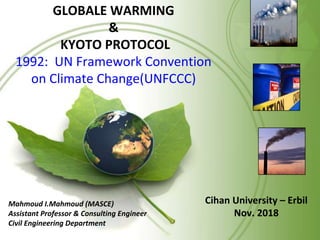
GLOBALE WARMING
&
KYOTO PROTOCOL
1992: UN Framework Convention
on Climate Change(UNFCCC)
Cihan University – Erbil
Nov. 2018
Mahmoud I.Mahmoud (MASCE)
Assistant Professor & Consulting Engineer
Civil Engineering Department
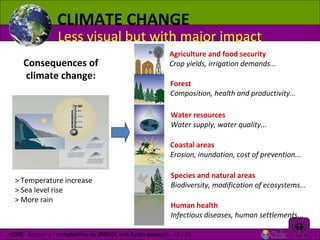
CLIMATE CHANGE
Less visual but with major impact
> Temperature increase
> Sea level rise
> More rain
Agriculture and food security
Crop yields, irrigation demands...
Forest
Composition, health and productivity...
Water resources
Water supply, water quality...
Coastal areas
Erosion, inundation, cost of prevention...
Species and natural areas
Biodiversity, modification of ecosystems...
Human health
Infectious diseases, human settlements...
Consequences of
climate change:
ACME - Session 4 - Introduction to UNFCCC and Kyoto protocol - 15 / 48
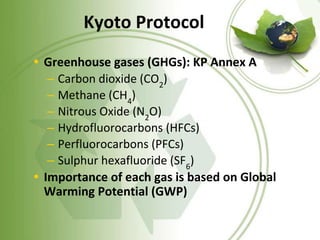
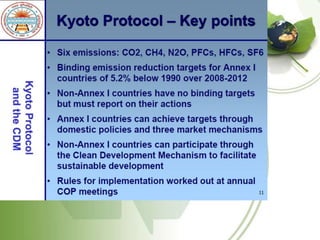
• Greenhouse gases (GHGs): KP Annex A
– Carbon dioxide (CO2
)
– Methane (CH4
)
– Nitrous Oxide (N2
O)
– Hydrofluorocarbons (HFCs)
– Perfluorocarbons (PFCs)
– Sulphur hexafluoride (SF6
)
• Importance of each gas is based on Global
Warming Potential (GWP)
Kyoto Protocol
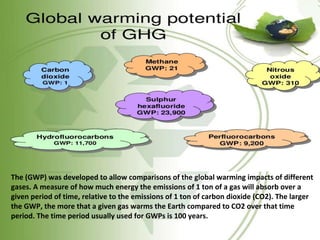
The (GWP) was developed to allow comparisons of the global warming impacts of different
gases. A measure of how much energy the emissions of 1 ton of a gas will absorb over a
given period of time, relative to the emissions of 1 ton of carbon dioxide (CO2). The larger
the GWP, the more that a given gas warms the Earth compared to CO2 over that time
period. The time period usually used for GWPs is 100 years.
• Ratio of global warming, from one unit mass of a GHG to that of
one unit mass of CO2
over a period of time
– Carbon dioxide (CO2
) 1 [baseline]
– Methane (CH4
) 21
– Nitrous oxide (N2
O) 310
– HFC-23 11,700
– HFC-125 2,800
– HFC-134a 1,300
– HFC-143a 3,800
– HFC-152a 140
– HFC-227ea 2,900
– HFC-236fa 6,300
– HFC-4310mee 1,300
– CF4
6,500
– C2
F6 9,200
– C4
F10
7,000
– C6
F14
7,400
– SF6
23,900
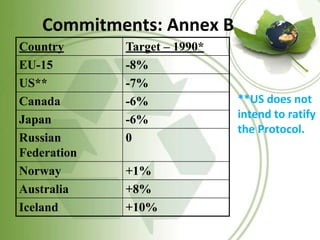
Commitments: Annex B
Country Target – 1990*
EU-15 -8%
US** -7%
Canada -6%
Japan -6%
Russian
Federation
0
Norway +1%
Australia +8%
Iceland +10%
**US does not
intend to ratify
the Protocol.
Kyoto Protocol:
Implementation Mechanisms
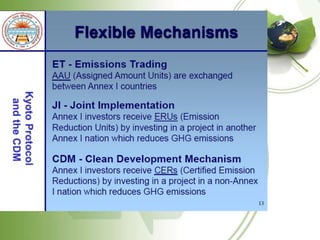
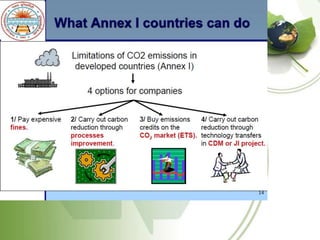
• Joint Implementation
– activities implemented jointly between
developed/EIT (economy in transition)country
Parties (ERUs=emission reduction units)
• Emissions trading
– can be used as supplementary to actions to meet
reduction commitments (AAUs=assigned amount
unites)
• Clean Development Mechanism (CDM)
– developing country Parties can volunteer to reduce
emissions via joint activities with developed Parties
(CERs =certified emis. Red.)
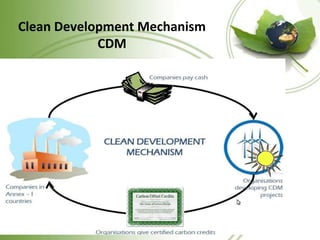
Clean Development Mechanism
CDM
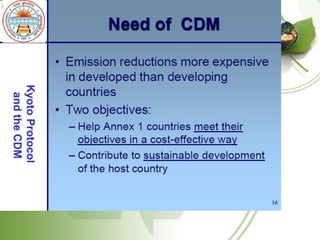
CDM was designed to meet
a dual objective:
1- help developed countries fulfill their commitments to reduce
emissions,
2- assist developing countries in achieving sustainable
development.
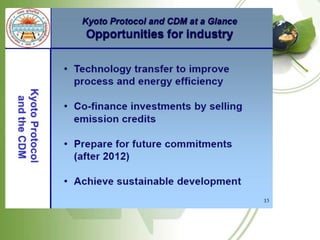
CDM projects earn tradable, saleable certified emission reduction (CER) credits
that can be used by industrialized countries to meet a part of their emission
reduction targets under the Kyoto Protocol.
Benefits of CDM projects include investment in climate change
mitigation projects in developing countries, transfer of technology, as
well as improvement in the livelihood of communities by creation of
employment or increased economic activity. .
What is the Kyoto Protocol: Main
Elements
• The Kyoto Protocol consist of four main
elements:
• 1. Commitments
A. Specific emissions commitments
B. General commitments
• 2. Implementation
A. Domestic policies and measures
B. Land use, land-use change and forestry sector
C. Joint implementation
D. Clean development mechanism
E. Emissions trading
3. Compliance
A. Facilitative Branch
B. Enforcement Branch
4. Minimizing impacts on developing
countries
A. Adaptation Fund
Commitments: General
• All Parties to the Protocol are subject to a set
of general commitments :
• Taking steps to improve the quality of
emissions data.
• Promoting environmentally-friendly technology
transfer.
• Supporting climate change education, training
and public awareness.
• Cooperating on international climate
observation.
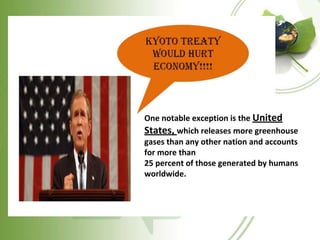
One notable exception is the United
States, which releases more greenhouse
gases than any other nation and accounts
for more than
25 percent of those generated by humans
worldwide.
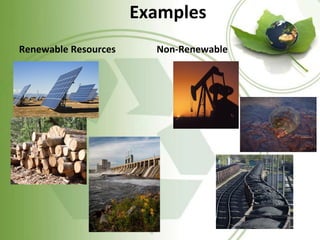
Examples
Renewable Resources Non-Renewable
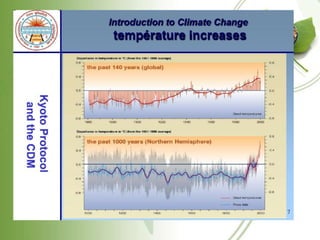
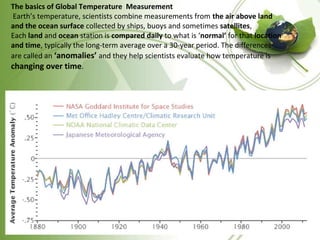
The basics of Global Temperature Measurement
Earth’s temperature, scientists combine measurements from the air above land
and the ocean surface collected by ships, buoys and sometimes satellites,
Each land and ocean station is compared daily to what is ‘normal’ for that location
and time, typically the long-term average over a 30-year period. The differences
are called an ‘anomalies’ and they help scientists evaluate how temperature is
changing over time.
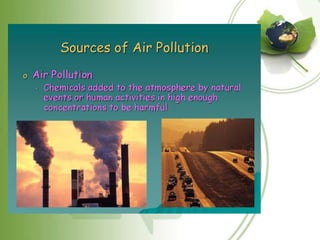
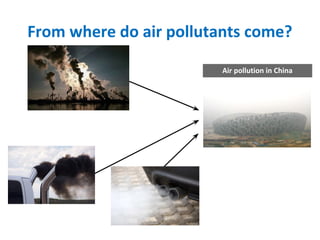
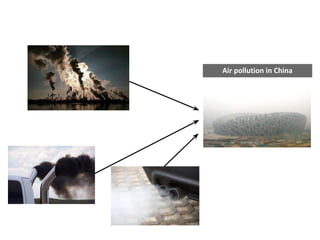
From where do air pollutants come?
Air pollution in China
From where do air pollutants come?
Air pollution in China

Global Warming and Kyoto Protocol

  • 1.
    GLOBALE WARMING & KYOTO PROTOCOL 1992:UN Framework Convention on Climate Change(UNFCCC) Cihan University – Erbil Nov. 2018 Mahmoud I.Mahmoud (MASCE) Assistant Professor & Consulting Engineer Civil Engineering Department
  • 15.
    CLIMATE CHANGE Less visualbut with major impact > Temperature increase > Sea level rise > More rain Agriculture and food security Crop yields, irrigation demands... Forest Composition, health and productivity... Water resources Water supply, water quality... Coastal areas Erosion, inundation, cost of prevention... Species and natural areas Biodiversity, modification of ecosystems... Human health Infectious diseases, human settlements... Consequences of climate change: ACME - Session 4 - Introduction to UNFCCC and Kyoto protocol - 15 / 48
  • 20.
    • Greenhouse gases(GHGs): KP Annex A – Carbon dioxide (CO2 ) – Methane (CH4 ) – Nitrous Oxide (N2 O) – Hydrofluorocarbons (HFCs) – Perfluorocarbons (PFCs) – Sulphur hexafluoride (SF6 ) • Importance of each gas is based on Global Warming Potential (GWP) Kyoto Protocol
  • 21.
    The (GWP) wasdeveloped to allow comparisons of the global warming impacts of different gases. A measure of how much energy the emissions of 1 ton of a gas will absorb over a given period of time, relative to the emissions of 1 ton of carbon dioxide (CO2). The larger the GWP, the more that a given gas warms the Earth compared to CO2 over that time period. The time period usually used for GWPs is 100 years.
  • 22.
    • Ratio ofglobal warming, from one unit mass of a GHG to that of one unit mass of CO2 over a period of time – Carbon dioxide (CO2 ) 1 [baseline] – Methane (CH4 ) 21 – Nitrous oxide (N2 O) 310 – HFC-23 11,700 – HFC-125 2,800 – HFC-134a 1,300 – HFC-143a 3,800 – HFC-152a 140 – HFC-227ea 2,900 – HFC-236fa 6,300 – HFC-4310mee 1,300 – CF4 6,500 – C2 F6 9,200 – C4 F10 7,000 – C6 F14 7,400 – SF6 23,900
  • 23.
    Commitments: Annex B CountryTarget – 1990* EU-15 -8% US** -7% Canada -6% Japan -6% Russian Federation 0 Norway +1% Australia +8% Iceland +10% **US does not intend to ratify the Protocol.
  • 31.
    Kyoto Protocol: Implementation Mechanisms •Joint Implementation – activities implemented jointly between developed/EIT (economy in transition)country Parties (ERUs=emission reduction units) • Emissions trading – can be used as supplementary to actions to meet reduction commitments (AAUs=assigned amount unites) • Clean Development Mechanism (CDM) – developing country Parties can volunteer to reduce emissions via joint activities with developed Parties (CERs =certified emis. Red.)
  • 32.
  • 33.
    CDM was designedto meet a dual objective: 1- help developed countries fulfill their commitments to reduce emissions, 2- assist developing countries in achieving sustainable development. CDM projects earn tradable, saleable certified emission reduction (CER) credits that can be used by industrialized countries to meet a part of their emission reduction targets under the Kyoto Protocol. Benefits of CDM projects include investment in climate change mitigation projects in developing countries, transfer of technology, as well as improvement in the livelihood of communities by creation of employment or increased economic activity. .
  • 34.
    What is theKyoto Protocol: Main Elements • The Kyoto Protocol consist of four main elements: • 1. Commitments A. Specific emissions commitments B. General commitments • 2. Implementation A. Domestic policies and measures B. Land use, land-use change and forestry sector C. Joint implementation D. Clean development mechanism E. Emissions trading
  • 35.
    3. Compliance A. FacilitativeBranch B. Enforcement Branch 4. Minimizing impacts on developing countries A. Adaptation Fund
  • 36.
    Commitments: General • AllParties to the Protocol are subject to a set of general commitments : • Taking steps to improve the quality of emissions data. • Promoting environmentally-friendly technology transfer. • Supporting climate change education, training and public awareness. • Cooperating on international climate observation.
  • 37.
    One notable exceptionis the United States, which releases more greenhouse gases than any other nation and accounts for more than 25 percent of those generated by humans worldwide.
  • 39.
  • 42.
    The basics ofGlobal Temperature Measurement Earth’s temperature, scientists combine measurements from the air above land and the ocean surface collected by ships, buoys and sometimes satellites, Each land and ocean station is compared daily to what is ‘normal’ for that location and time, typically the long-term average over a 30-year period. The differences are called an ‘anomalies’ and they help scientists evaluate how temperature is changing over time.
  • 44.
    From where doair pollutants come? Air pollution in China
  • 45.
    From where doair pollutants come? Air pollution in China