Downloaded 101 times
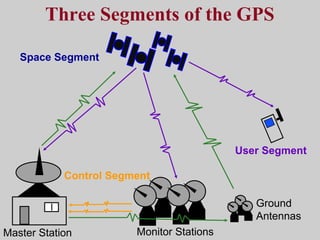
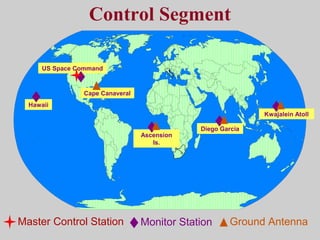
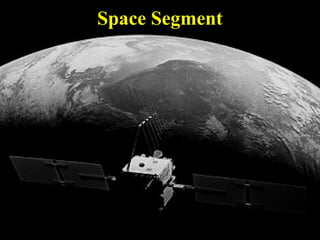
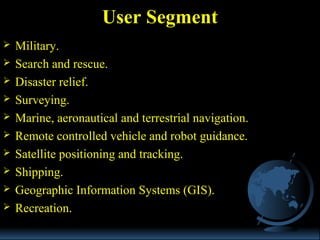
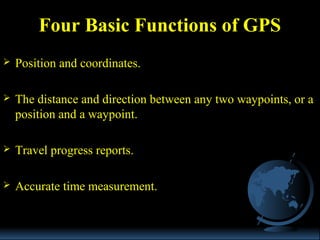
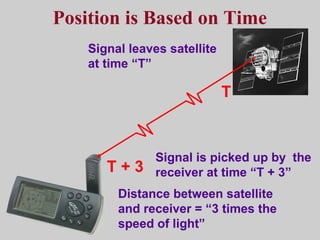
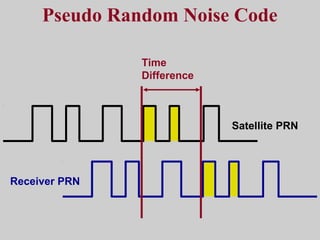
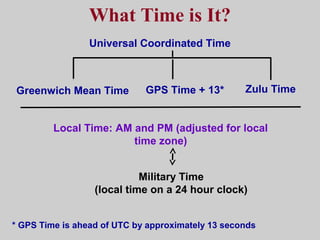
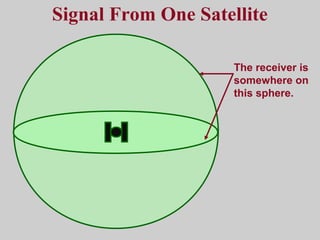
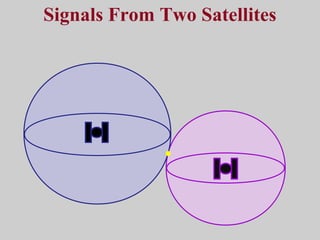
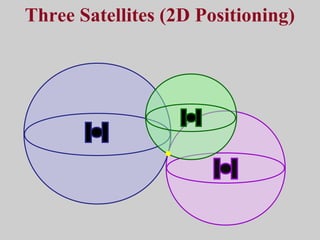
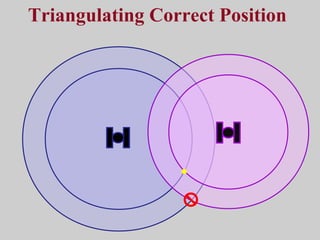
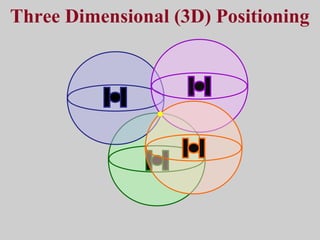
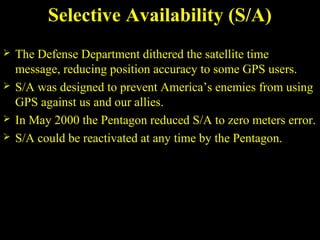
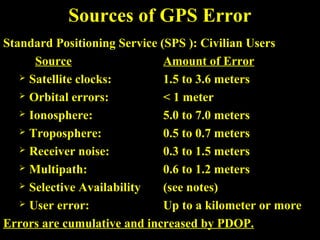
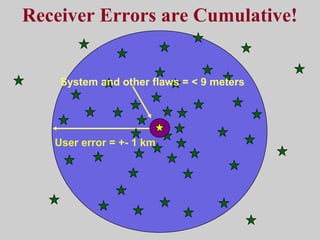
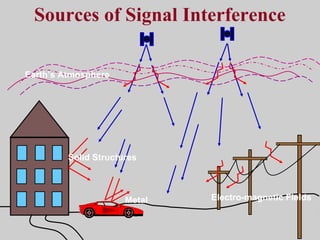
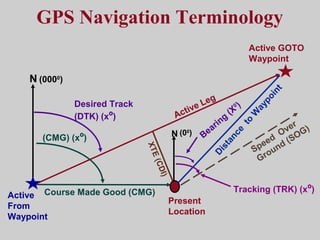
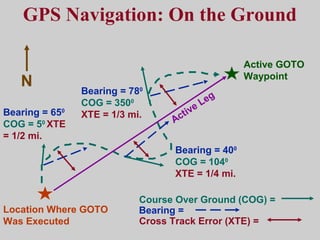
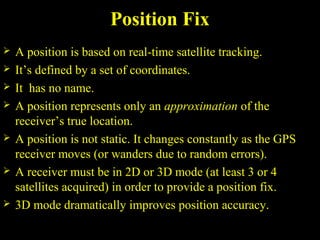
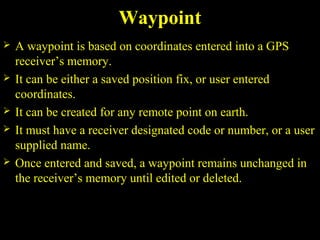
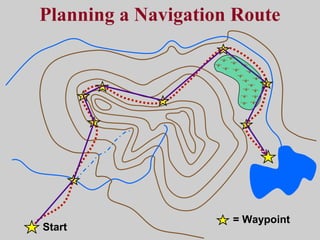
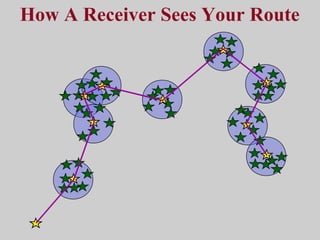
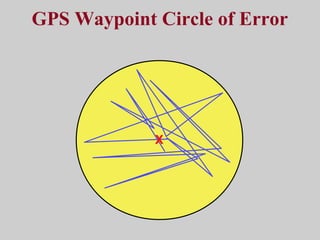
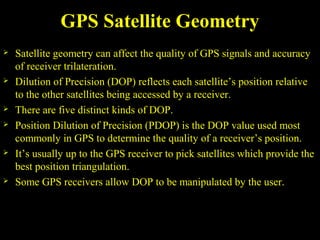
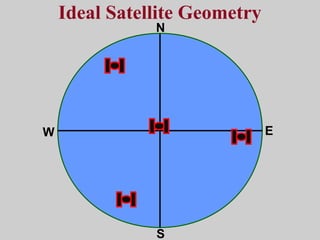
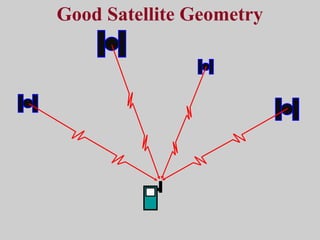
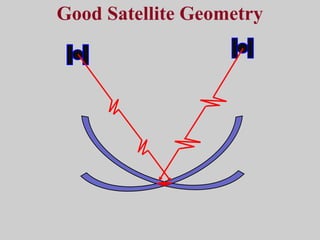
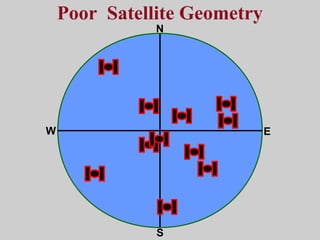
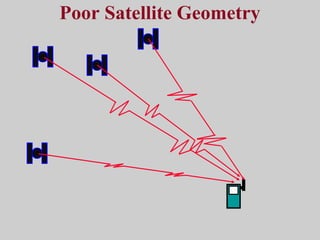
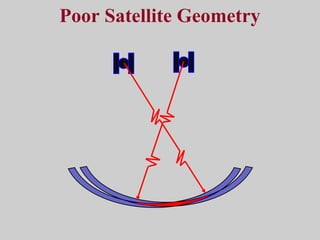
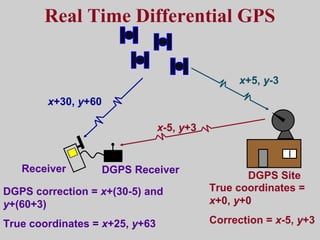
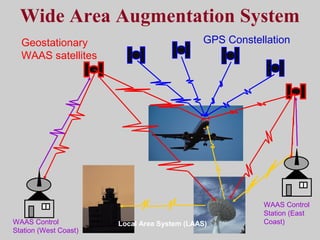
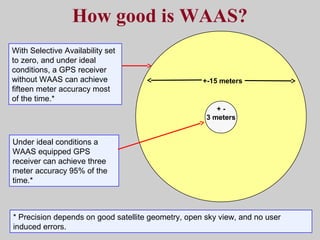

GPS uses a constellation of satellites and ground stations to provide location and time information to receivers. It operates in three segments: the space segment consisting of satellites, the control segment of ground stations that monitor the satellites, and the user segment of GPS receivers. GPS works by precisely measuring the time for signals to travel from satellites to a receiver, allowing the receiver to triangulate its position using signals from at least three satellites. Sources of error include factors like atmospheric conditions and receiver noise, but accuracy is improved using techniques like differential GPS which corrects errors.


![GPS[Global Positioning System]](https://cdn.slidesharecdn.com/ss_thumbnails/globalpositioningsystem-130707095218-phpapp02-thumbnail.jpg?width=640&height=640&fit=bounds)


