GLOBAL EDUCATION
Why Selinsgrove Should Engage with the World
WHY GLOBAL COMPETENCY?
• ¾ of the world’s purchasing power exists outside the U.S.
• Job growth in international trade exceeds 100% on a 20-year
average
• One in five jobs is linked to international trade.
• 40 million people in the U.S. are foreign-born
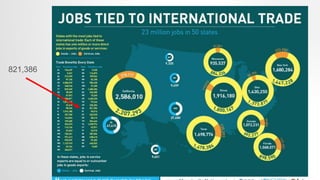
WHAT IT’S LIKE IN PENNSYLVANIA
WHAT IS PENNSYLVANIA DOING?
821,386
WHY INCREASING GLOBAL COMPETENCY
IS IMPORTANT TO OUR STUDENTS
“All major hiring companies need global citizens. Global
sensitivities, global perspective, global insight, along with
maturity and a capacity for risk-taking, are exactly the skills
every major organization is looking for – in every
industry.”
Kevin Gill, Global Director of Staffing for Honeywell
BUT IT’S NOT ALL ABOUT A JOB
It’s about citizenship.
It’s about problem-solving in the 21st
century.
It’s about empathy and understanding.
IT’S ABOUT THE STUDENT
AND OUR WORLD
WHAT IS GLOBAL COMPETENCY?
• Investigate the world
• Recognize perspectives, others’ and their own
• Communicate ideas effectively with diverse
audiences
• Take action to improve conditions
• Asia Society, Educating for Global Competence
HOW GLOBAL COMPETENCY
FITS WITH PA CORE
• Greater rigor
• Critical thinking skills
• Increase in nonfiction reading
• Less focus on teacher talk and more actively engaging
students.
• Emphasis on problem-solving and real-world application
GLOBAL COMPETENCY IS HOW THE
CURRICULUM IS TAUGHT
CONNECT, COLLABORATE, CREATE
GLOBAL COMPETENCY ALSO INCLUDES
• Technology literacy and skills
• Interdisciplinary connections
• Comfort with ambiguity and change
• Creating and innovating
• Active participation in society
• Understanding of global issues
OUR CURRENT STRENGTHS
• Strong language programs at the high school
• Sister-school relationship with Senshu in Japan
• Popular courses high school social studies dealing with other
cultures
• Annual summer trips to different countries
• Addition of global cuisines in FACS courses
• Close proximity to Susquehanna University and Bucknell Bucknell
University
• Language clubs at the high school
MAKE A PLAN
• We have many strengths, but we don’t have an
intentional global competency plan.
• We need to identify what we are doing at all grade levels,
what we need to do, and create a plan.
SOME CHANGES WE COULD MAKE
We can move incrementally at all the grade levels.
• Choose one unit a year to globalize.
• Find global classroom partners.
• Form a PLC of interested educators.
• Invite speakers from other parts of the world.
• Examine other rural districts who have made the change, for
example Franklin West Supervisory Union in Vermont
• Tap the expertise of SU and Bucknell
ADDITIONAL IDEAS
• International night
• Participate in academic projects that involve students in multiple
countries
• Expand Senshu ties to lower grades
• Allow students time to explore and communicate with different
cultures
• Have globally focused movie nights or book clubs
RESOURCES
• Asia Society’s Educating for Global Competency: Preparing Our
Youth to Engage the World (Mansilla and Jackson, 2011)
• Global Education Checklist by Fred Czarra
• Asia Society – www.asiasociety.com
• World Savvy – www.worldsavvy.com
• ePals – www.ePals.com
• IREX – Teachers for a Global Classroom – www.irex.org
Global education presentation

Global education presentation

  • 1.
    GLOBAL EDUCATION Why SelinsgroveShould Engage with the World
  • 2.
    WHY GLOBAL COMPETENCY? •¾ of the world’s purchasing power exists outside the U.S. • Job growth in international trade exceeds 100% on a 20-year average • One in five jobs is linked to international trade. • 40 million people in the U.S. are foreign-born
  • 3.
    WHAT IT’S LIKEIN PENNSYLVANIA
  • 4.
  • 5.
  • 6.
    WHY INCREASING GLOBALCOMPETENCY IS IMPORTANT TO OUR STUDENTS “All major hiring companies need global citizens. Global sensitivities, global perspective, global insight, along with maturity and a capacity for risk-taking, are exactly the skills every major organization is looking for – in every industry.” Kevin Gill, Global Director of Staffing for Honeywell
  • 7.
    BUT IT’S NOTALL ABOUT A JOB It’s about citizenship. It’s about problem-solving in the 21st century. It’s about empathy and understanding.
  • 8.
  • 9.
  • 10.
    WHAT IS GLOBALCOMPETENCY? • Investigate the world • Recognize perspectives, others’ and their own • Communicate ideas effectively with diverse audiences • Take action to improve conditions • Asia Society, Educating for Global Competence
  • 11.
    HOW GLOBAL COMPETENCY FITSWITH PA CORE • Greater rigor • Critical thinking skills • Increase in nonfiction reading • Less focus on teacher talk and more actively engaging students. • Emphasis on problem-solving and real-world application
  • 13.
    GLOBAL COMPETENCY ISHOW THE CURRICULUM IS TAUGHT
  • 14.
  • 15.
    GLOBAL COMPETENCY ALSOINCLUDES • Technology literacy and skills • Interdisciplinary connections • Comfort with ambiguity and change • Creating and innovating • Active participation in society • Understanding of global issues
  • 16.
    OUR CURRENT STRENGTHS •Strong language programs at the high school • Sister-school relationship with Senshu in Japan • Popular courses high school social studies dealing with other cultures • Annual summer trips to different countries • Addition of global cuisines in FACS courses • Close proximity to Susquehanna University and Bucknell Bucknell University • Language clubs at the high school
  • 17.
    MAKE A PLAN •We have many strengths, but we don’t have an intentional global competency plan. • We need to identify what we are doing at all grade levels, what we need to do, and create a plan.
  • 18.
    SOME CHANGES WECOULD MAKE We can move incrementally at all the grade levels. • Choose one unit a year to globalize. • Find global classroom partners. • Form a PLC of interested educators. • Invite speakers from other parts of the world. • Examine other rural districts who have made the change, for example Franklin West Supervisory Union in Vermont • Tap the expertise of SU and Bucknell
  • 19.
    ADDITIONAL IDEAS • Internationalnight • Participate in academic projects that involve students in multiple countries • Expand Senshu ties to lower grades • Allow students time to explore and communicate with different cultures • Have globally focused movie nights or book clubs
  • 20.
    RESOURCES • Asia Society’sEducating for Global Competency: Preparing Our Youth to Engage the World (Mansilla and Jackson, 2011) • Global Education Checklist by Fred Czarra • Asia Society – www.asiasociety.com • World Savvy – www.worldsavvy.com • ePals – www.ePals.com • IREX – Teachers for a Global Classroom – www.irex.org