GAMIFICATION 101:
Learn the Basics of
Gamification
Strategy

A Presentation by
TechnologyAdvice

ready
go!
A Presentation by
Gamifi...huh?
GAMIFICATION
is usually described as “the application
of game elements to non-game
contexts.”
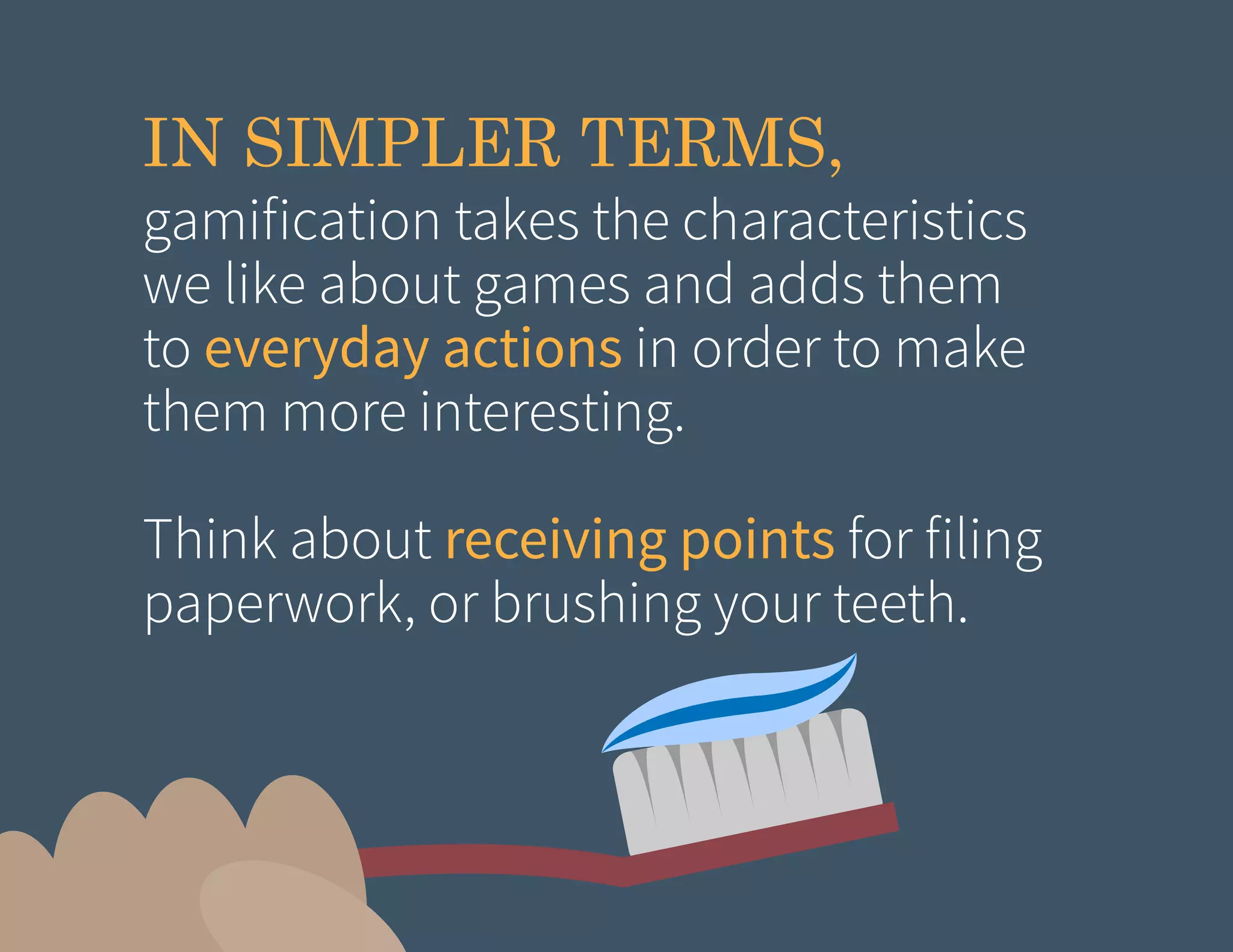
IN SIMPLER TERMS,

gamification takes the characteristics
we like about games and adds them
to everyday actions in order to make
them more interesting.
Think about receiving points for filing
paperwork, or brushing your teeth.
These game elements leverage our love of
competition and reward, and use it to
encourage certain actions.
Central Concept
of

By changing the way people
think about behavior, gamification
can change people’s habits.
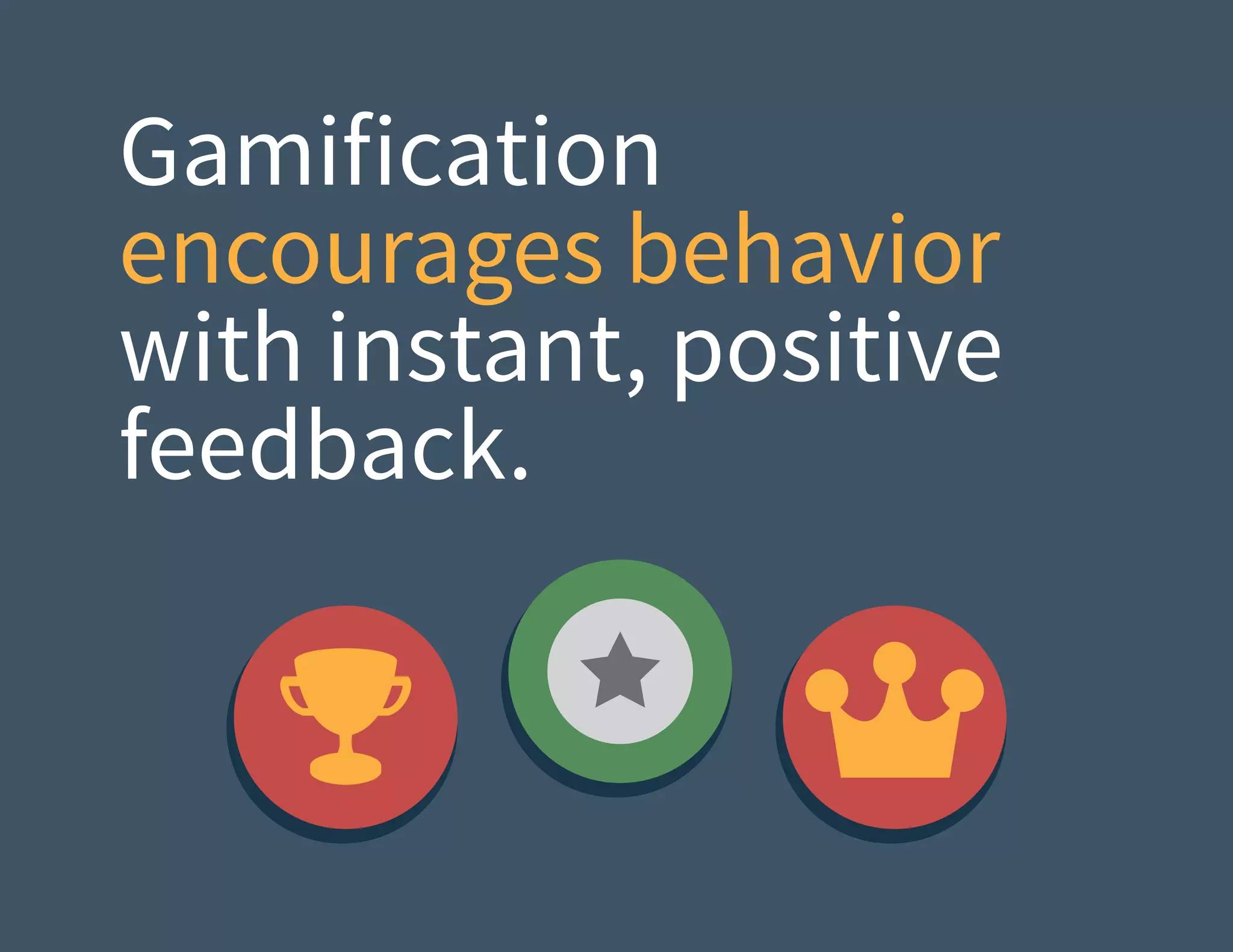
Gamification
encourages behavior
with instant, positive
feedback.
In order to understand gamification, you
have to speak the language. Like any tech
industry, gamification has a lot of jargon.
Let’s dive in.
USERS

Anyone who participates in a
gamification platform. For some
companies, users will be their
customers. For other companies,
the users will be their employees.
USERS

Anyone who participates in a
gamification platform. For some
companies, users will be their
customers. For other companies,
the users will be their employees.

FEEDBACK

Immediate, positive feedback
makes us feel good about
completing something and
motivates us to do it again.
Feedback mechanics are the
most widely known gamification
elements.
BADGES

Badges are usually awarded for
actions the user has just completed.
They offer a more visual display of
achievement than points, and can
be shown on profile pages or user
accounts.
BADGES

Badges are usually awarded for
actions the user has just completed.
They offer a more visual display of
achievement than points, and can
be shown on profile pages or user
accounts.

LEADERBOARDS

Ranking top performing users on a
leaderboard broadcasts who’s getting the most out of the game. Leaderboards help foster a sense of
community, especially if users are
joined into teams.
PROGRESS

Pulled from the level system of
video games, progress in gamification can be as simple as telling
a user when they’ve completed a
required action or as a complex as
moving through multiple stages of
an extensive process.
PROGRESS

Pulled from the level system of
video games, progress in gamification can be as simple as telling
a user when they’ve completed a
required action or as a complex as
moving through multiple stages of
an extensive process.

REWARDS

Offering rewards for completing an
action isn’t a new idea. With the
advent of digital media, brands are
able to reward users faster than
ever for actions like sharing content over social media, or purchasing a product.
SOCIAL
RECOGNITION

By integrating social media
platforms with gamification
software, businesses can
empower users to share their
experiences and show off their
rewards. Incentives such as
badges can be displayed on
user’s profiles and news feeds,
which increases a business’
brand awareness through
social proof.
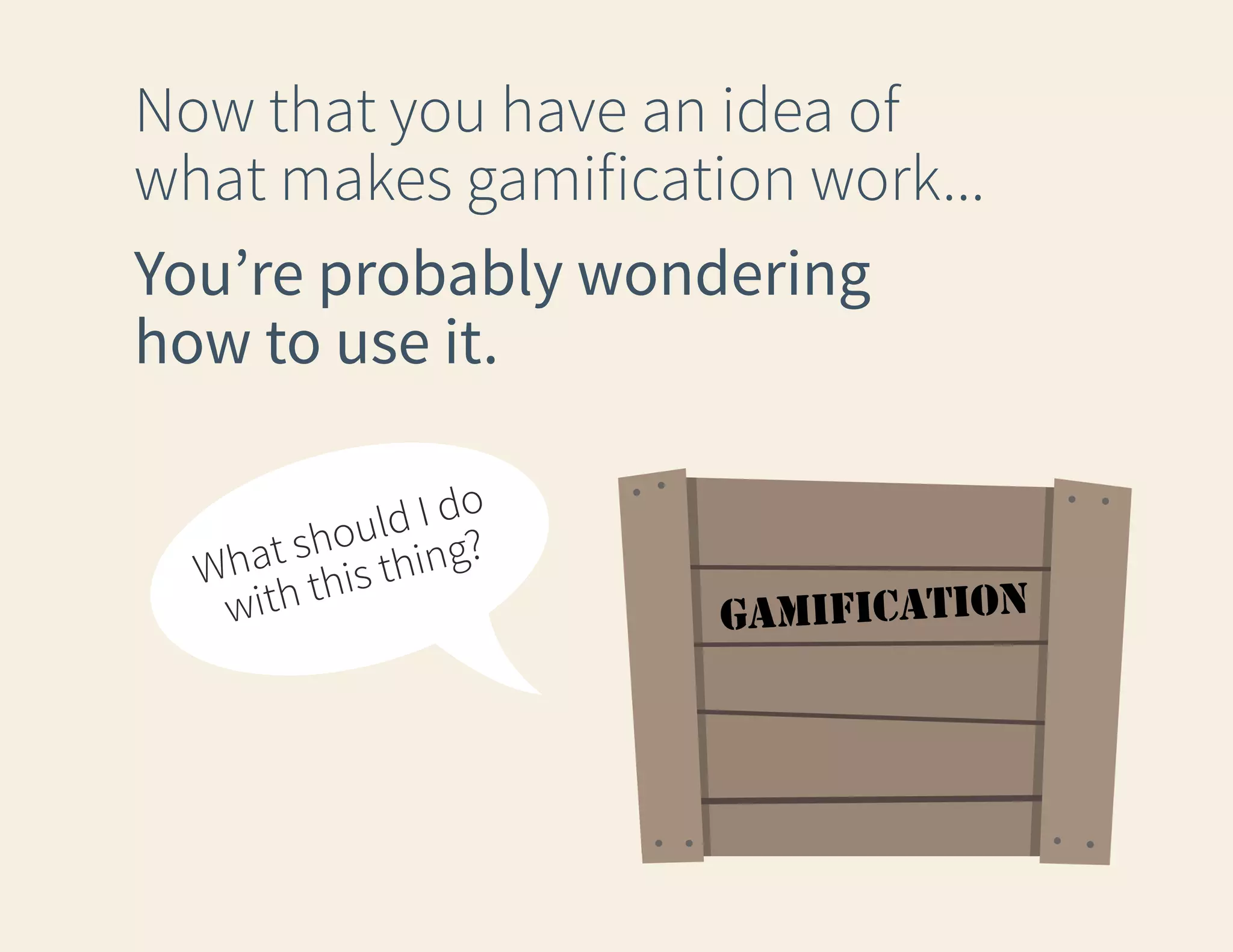
Now that you have an idea of
what makes gamification work...
You’re probably wondering
how to use it.
d I do
l
shou hing?
What this t
with

gamification
Gamification can take many forms, so it’s
important to evaluate all of your options.

Gamification services can be
grouped into three categories:
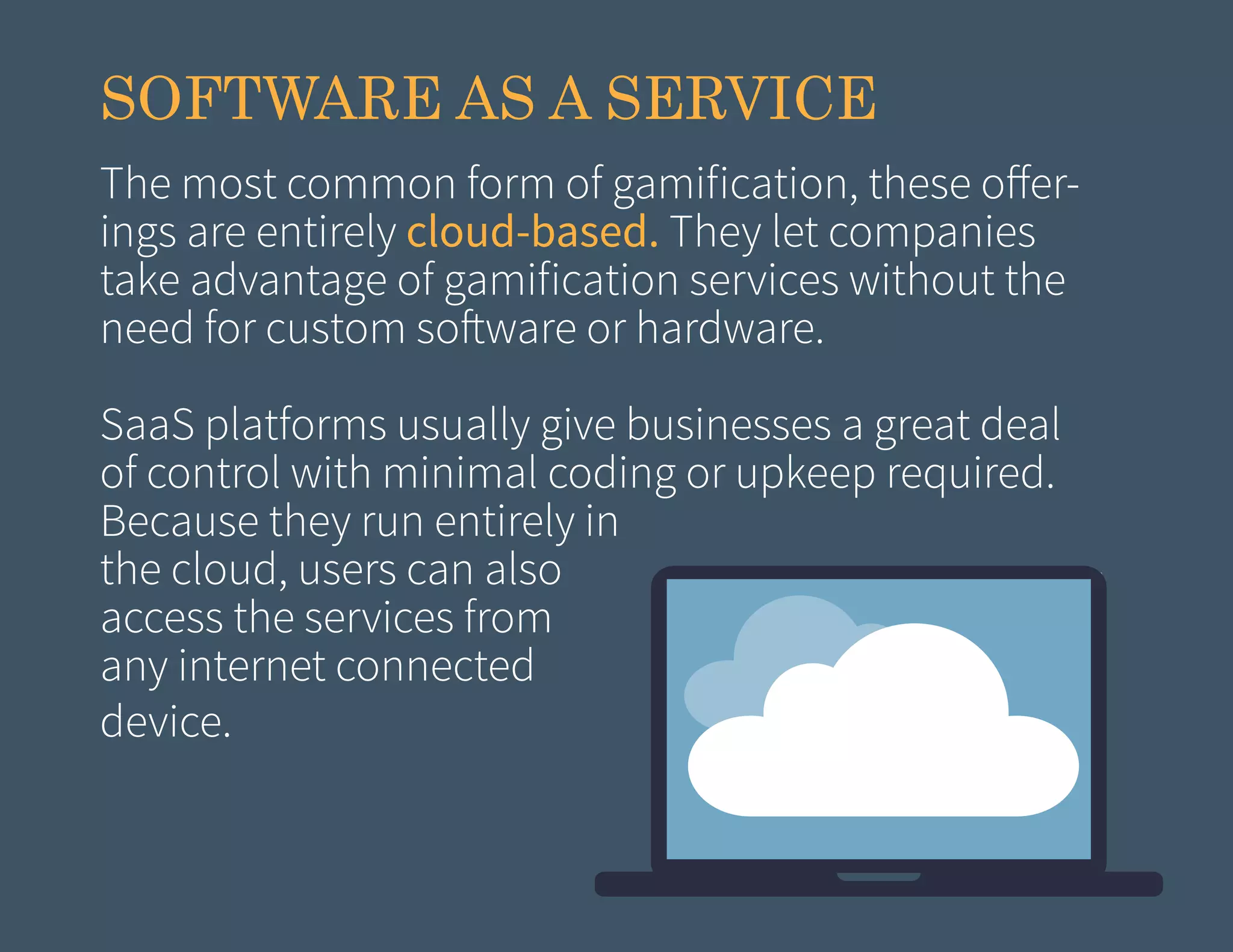
SOFTWARE AS A SERVICE
The most common form of gamification, these offerings are entirely cloud-based. They let companies
take advantage of gamification services without the
need for custom software or hardware.
SaaS platforms usually give businesses a great deal
of control with minimal coding or upkeep required.
Because they run entirely in
the cloud, users can also
access the services from
any internet connected
device.
CUSTOM SOFTWARE
On-premise gamification software is generally
reserved for specialty industries or custom solutions.
Developers will sometimes work with companies
to create unique interfaces and mechanics based
around their workflow and criteria. Certain vendors
even offer full-fledged game design.
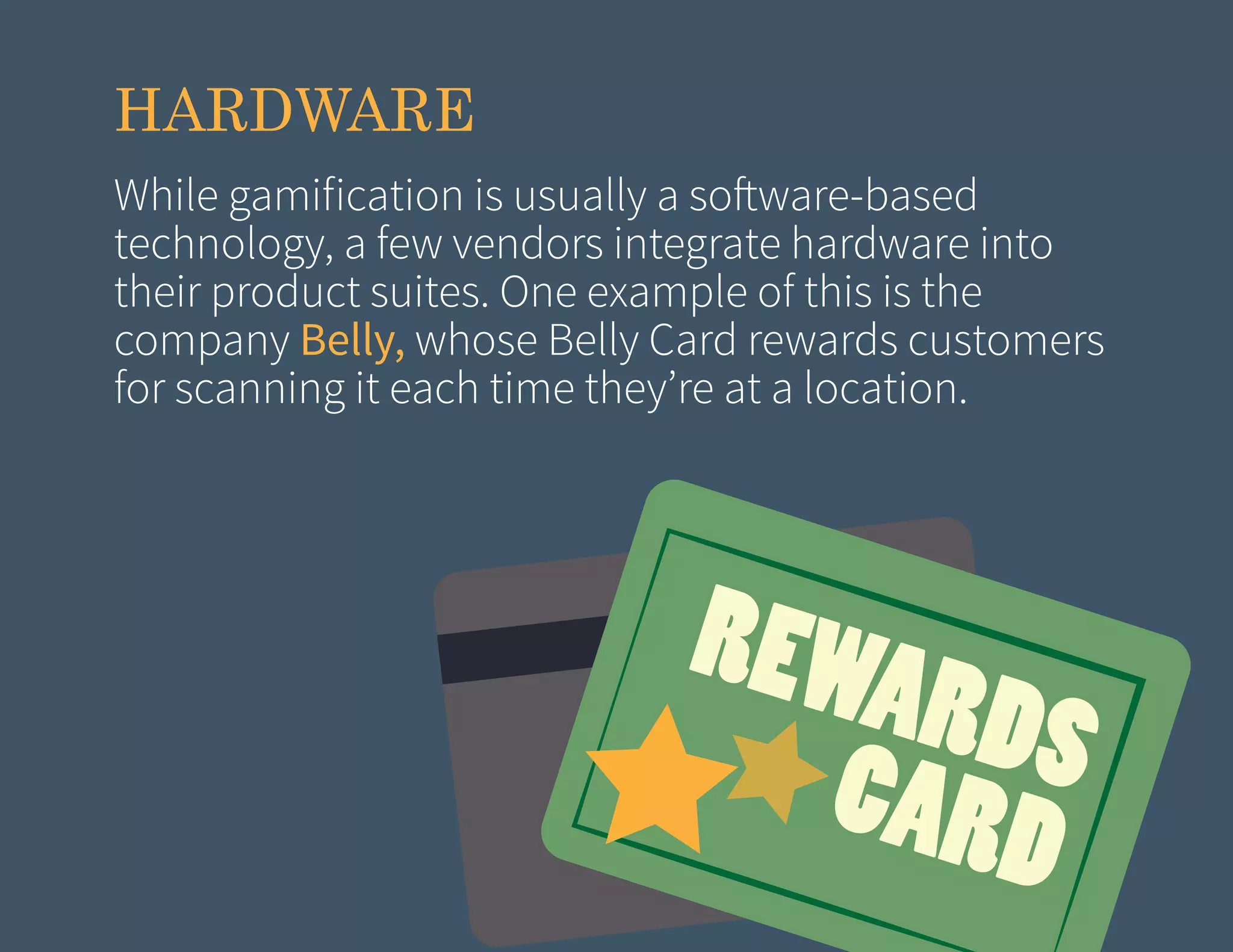
HARDWARE
While gamification is usually a software-based
technology, a few vendors integrate hardware into
their product suites. One example of this is the
company Belly, whose Belly Card rewards customers
for scanning it each time they’re at a location.

REWA
RDS
CARD
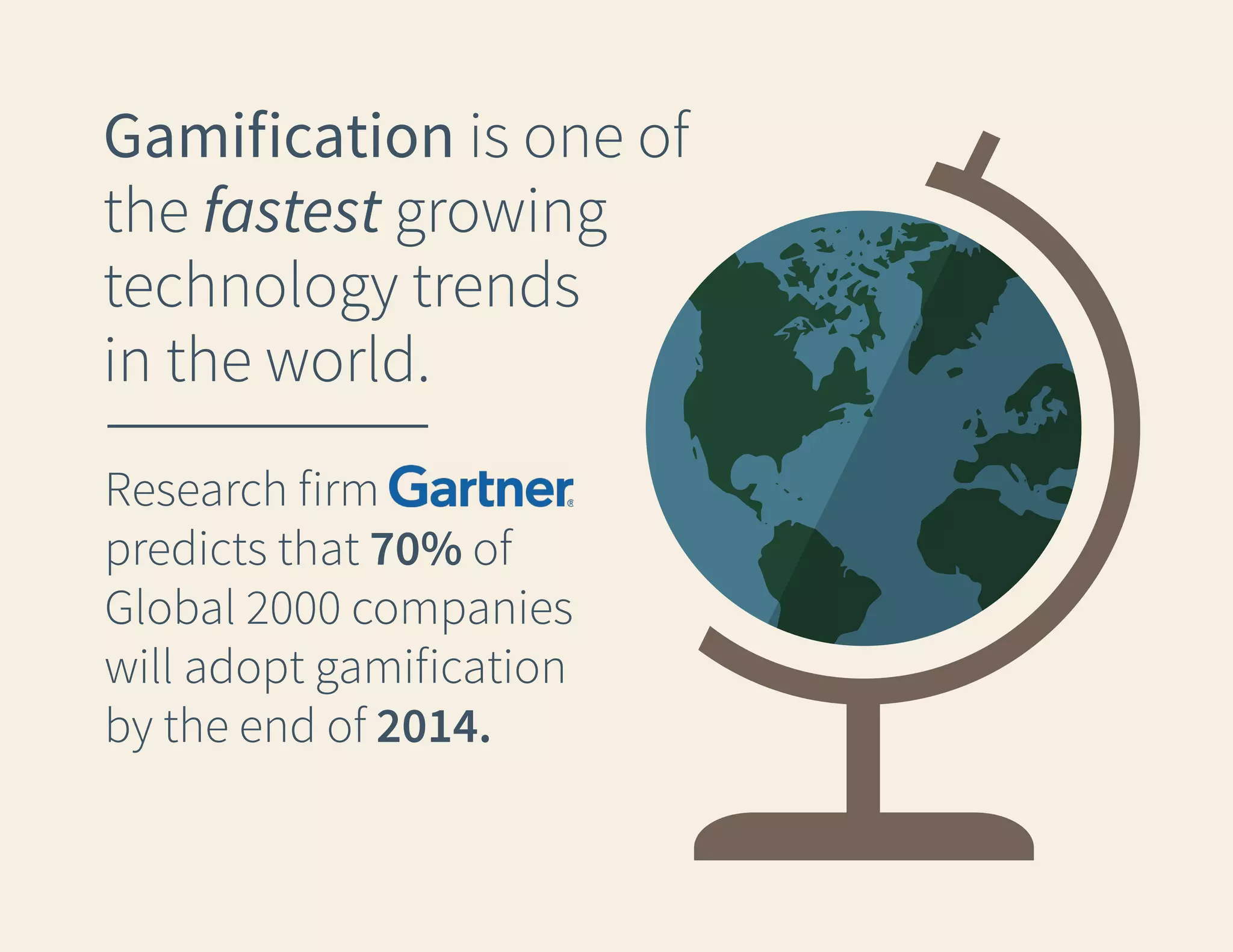
Gamification is one of
the fastest growing
technology trends
in the world.
Gamification is one of
the fastest growing
technology trends
in the world.
Research firm
predicts that 70% of
Global 2000 companies
will adopt gamification
by the end of 2014.
Here are 2 trends to look out
for in 2014:

Land-ho!
SPECIALIZATION

As the market continues to grow, individual firms
will become increasingly specialized. Forward
thinking technology vendors will follow these
examples and create industry-specific solutions.
SPECIALIZATION

As the market continues to grow, individual firms
will become increasingly specialized. Forward
thinking technology vendors will follow these
examples and create industry-specific solutions.

CUSTOMIZATION

Innovative companies will find ways to further personalize the gamification experience. Some
companies are creating personal leaderboards,
which only show a user’s closest competitors. This
allows for a more personal experience, and doesn’t
discourage lower ranking employees.
CONGRATULATIONS!
You’ve completed
GAMIFICATION 101.
Visit TechnologyAdvice.com
to learn more about
gamification, and see
reviews of top companies.

Gamification 101: Learn the Basics of Gamification Strategy

  • 1.
    GAMIFICATION 101: Learn theBasics of Gamification Strategy A Presentation by TechnologyAdvice ready go! A Presentation by
  • 2.
  • 3.
    GAMIFICATION is usually describedas “the application of game elements to non-game contexts.”
  • 4.
    IN SIMPLER TERMS, gamificationtakes the characteristics we like about games and adds them to everyday actions in order to make them more interesting. Think about receiving points for filing paperwork, or brushing your teeth.
  • 5.
    These game elementsleverage our love of competition and reward, and use it to encourage certain actions.
  • 6.
    Central Concept of By changingthe way people think about behavior, gamification can change people’s habits.
  • 7.
  • 8.
    In order tounderstand gamification, you have to speak the language. Like any tech industry, gamification has a lot of jargon. Let’s dive in.
  • 9.
    USERS Anyone who participatesin a gamification platform. For some companies, users will be their customers. For other companies, the users will be their employees.
  • 10.
    USERS Anyone who participatesin a gamification platform. For some companies, users will be their customers. For other companies, the users will be their employees. FEEDBACK Immediate, positive feedback makes us feel good about completing something and motivates us to do it again. Feedback mechanics are the most widely known gamification elements.
  • 11.
    BADGES Badges are usuallyawarded for actions the user has just completed. They offer a more visual display of achievement than points, and can be shown on profile pages or user accounts.
  • 12.
    BADGES Badges are usuallyawarded for actions the user has just completed. They offer a more visual display of achievement than points, and can be shown on profile pages or user accounts. LEADERBOARDS Ranking top performing users on a leaderboard broadcasts who’s getting the most out of the game. Leaderboards help foster a sense of community, especially if users are joined into teams.
  • 13.
    PROGRESS Pulled from thelevel system of video games, progress in gamification can be as simple as telling a user when they’ve completed a required action or as a complex as moving through multiple stages of an extensive process.
  • 14.
    PROGRESS Pulled from thelevel system of video games, progress in gamification can be as simple as telling a user when they’ve completed a required action or as a complex as moving through multiple stages of an extensive process. REWARDS Offering rewards for completing an action isn’t a new idea. With the advent of digital media, brands are able to reward users faster than ever for actions like sharing content over social media, or purchasing a product.
  • 15.
    SOCIAL RECOGNITION By integrating socialmedia platforms with gamification software, businesses can empower users to share their experiences and show off their rewards. Incentives such as badges can be displayed on user’s profiles and news feeds, which increases a business’ brand awareness through social proof.
  • 16.
    Now that youhave an idea of what makes gamification work... You’re probably wondering how to use it. d I do l shou hing? What this t with gamification
  • 17.
    Gamification can takemany forms, so it’s important to evaluate all of your options. Gamification services can be grouped into three categories:
  • 18.
    SOFTWARE AS ASERVICE The most common form of gamification, these offerings are entirely cloud-based. They let companies take advantage of gamification services without the need for custom software or hardware. SaaS platforms usually give businesses a great deal of control with minimal coding or upkeep required. Because they run entirely in the cloud, users can also access the services from any internet connected device.
  • 19.
    CUSTOM SOFTWARE On-premise gamificationsoftware is generally reserved for specialty industries or custom solutions. Developers will sometimes work with companies to create unique interfaces and mechanics based around their workflow and criteria. Certain vendors even offer full-fledged game design.
  • 20.
    HARDWARE While gamification isusually a software-based technology, a few vendors integrate hardware into their product suites. One example of this is the company Belly, whose Belly Card rewards customers for scanning it each time they’re at a location. REWA RDS CARD
  • 21.
    Gamification is oneof the fastest growing technology trends in the world.
  • 22.
    Gamification is oneof the fastest growing technology trends in the world. Research firm predicts that 70% of Global 2000 companies will adopt gamification by the end of 2014.
  • 23.
    Here are 2trends to look out for in 2014: Land-ho!
  • 24.
    SPECIALIZATION As the marketcontinues to grow, individual firms will become increasingly specialized. Forward thinking technology vendors will follow these examples and create industry-specific solutions.
  • 25.
    SPECIALIZATION As the marketcontinues to grow, individual firms will become increasingly specialized. Forward thinking technology vendors will follow these examples and create industry-specific solutions. CUSTOMIZATION Innovative companies will find ways to further personalize the gamification experience. Some companies are creating personal leaderboards, which only show a user’s closest competitors. This allows for a more personal experience, and doesn’t discourage lower ranking employees.
  • 26.
    CONGRATULATIONS! You’ve completed GAMIFICATION 101. VisitTechnologyAdvice.com to learn more about gamification, and see reviews of top companies.