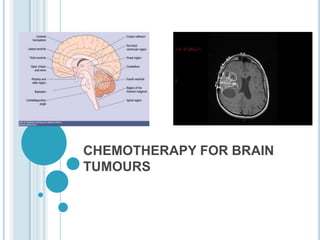
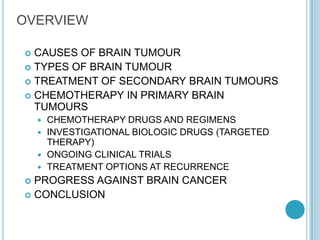
CHEMOTHERAPY FOR BRAIN
TUMOURS
ADD SOME
RELATED
PICTURE
OVERVIEW
 CAUSES OF BRAIN TUMOUR
 TYPES OF BRAIN TUMOUR
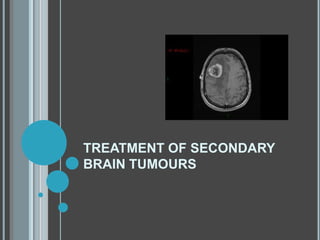
 TREATMENT OF SECONDARY BRAIN TUMOURS
 CHEMOTHERAPY IN PRIMARY BRAIN
TUMOURS
 CHEMOTHERAPY DRUGS AND REGIMENS
 INVESTIGATIONAL BIOLOGIC DRUGS (TARGETED
THERAPY)
 ONGOING CLINICAL TRIALS
 TREATMENT OPTIONS AT RECURRENCE
 PROGRESS AGAINST BRAIN CANCER
 CONCLUSION
CAUSES OF BRAIN TUMOUR
 DNA damage
 Radiation
 Genetics
NF- 1 (acoustic neuromas)
Li Fraumeni syndrome
Tuberous sclerosis ( astrocytomas)
Multiple endocrine neoplasia type 1(pituitary
macroadenoma)
 Infection
HIV
TYPES OF BRAIN TUMOUR
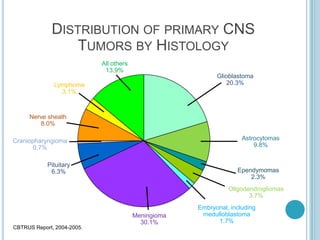
DISTRIBUTION OF PRIMARY CNS
TUMORS BY HISTOLOGY
Glioblastoma
20.3%
Astrocytomas
9.8%
Ependymomas
2.3%
Oligodendrogliomas
3.7%
Embryonal, including
medulloblastoma
1.7%
Meningioma
30.1%
Pituitary
6.3%
Craniopharyngioma
0.7%
Nerve sheath
8.0%
Lymphoma
3.1%
All others
13.9%
CBTRUS Report, 2004-2005.
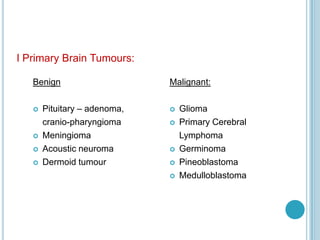
I Primary Brain Tumours:
Benign
 Pituitary – adenoma,
cranio-pharyngioma
 Meningioma
 Acoustic neuroma
 Dermoid tumour
Malignant:
 Glioma
 Primary Cerebral
Lymphoma
 Germinoma
 Pineoblastoma
 Medulloblastoma
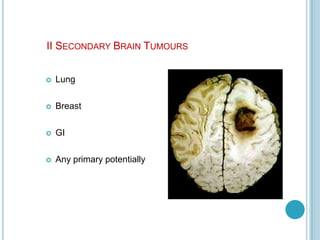
II SECONDARY BRAIN TUMOURS
 Lung
 Breast
 GI
 Any primary potentially
TREATMENT OF SECONDARY
BRAIN TUMOURS
QUESTION:
 How will you initially treat brain secondaries?
HOW TO TREAT?
 Oedema – steroids
 Pain – analgaesia
 Nausea – antiemetics
 Prevent Seizures - Antiepileptics required pre/post
operatively
HOW TO TREAT - SECONDARIES
 Depends on Primary cancer and its extent / control
 Depends on patient fitness and wishes
 Can occasionally debulk and give post op
radiotherapy, or radiotherapy alone (20Gy in 5#)
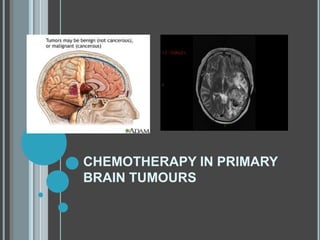
CHEMOTHERAPY IN PRIMARY
BRAIN TUMOURS
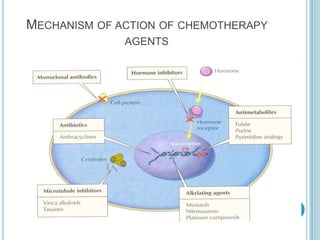
MECHANISM OF ACTION OF CHEMOTHERAPY
AGENTS
TIMING OF CHEMOTHERAPY
 Adjuvant
 After surgery or radiation
 Defined number of cycles
 Aim
 prolong time to recurrence
 Recurrence
 Number of cycles limited by side effects
 Aim
 improve symptoms, quality of life and slow progression
A BIT OF HISTORY..
 Surgery and radiation mainstays of treatment (and
still are)
 Chemotherapy options
 PCV standard of care for many years
 Procarbazine
 Carmustine (BCNU)
 Vincristine
 Significant side effects
 Single agent nitrosurea(lomustine/carmustine) equivalent
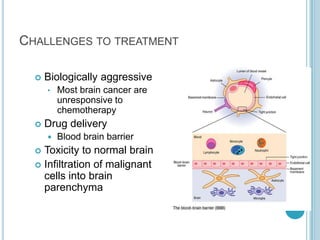
CHALLENGES TO TREATMENT
 Biologically aggressive
• Most brain cancer are
unresponsive to
chemotherapy
 Drug delivery
 Blood brain barrier
 Toxicity to normal brain
 Infiltration of malignant
cells into brain
parenchyma
How to overcome BBB ???
Newer delivery methods include:
Interstitial chemotherapy uses disc-shaped polymer wafers (known as
Gliadel wafers) soaked with carmustine, the standard
chemotherapeutic drug for brain cancer.
Intrathecal chemotherapy delivers chemotherapeutic drugs directly into
the spinal fluid.
Intra-arterial chemotherapy delivers high-dose chemotherapy into
arteries in the brain using tiny catheters.
Convection-enhanced delivery (CED) involves placing catheters into
the brain tumor or nearby brain tissue to deliver slowly and
continuously a cancer drug over several days
http://www.umm.edu/patiented/articles/how_radiotherapy_used_treating_brain_tumors_000089_10.htm#ixzz256vtlVt
R
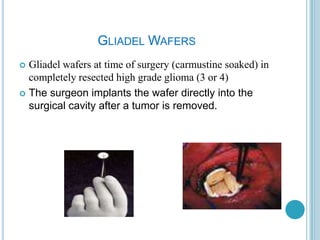
GLIADEL WAFERS
 Gliadel wafers at time of surgery (carmustine soaked) in
completely resected high grade glioma (3 or 4)
 The surgeon implants the wafer directly into the
surgical cavity after a tumor is removed.
CHEMOTHERAPY DRUGS AND
REGIMENS
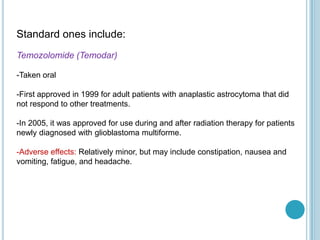
Standard ones include:
Temozolomide (Temodar)
-Taken oral
-First approved in 1999 for adult patients with anaplastic astrocytoma that did
not respond to other treatments.
-In 2005, it was approved for use during and after radiation therapy for patients
newly diagnosed with glioblastoma multiforme.
-Adverse effects: Relatively minor, but may include constipation, nausea and
vomiting, fatigue, and headache.
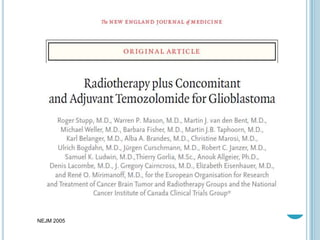
NEJM 2005
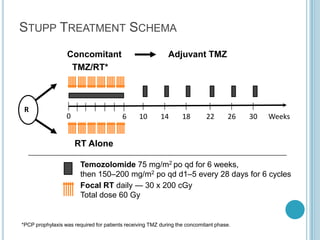
Temozolomide 75 mg/m2 po qd for 6 weeks,
then 150–200 mg/m2 po qd d1–5 every 28 days for 6 cycles
Focal RT daily — 30 x 200 cGy
Total dose 60 Gy
TMZ/RT*
Adjuvant TMZ
Weeks6 10 14 18 22 26 30
RT Alone
R
STUPP TREATMENT SCHEMA
0
*PCP prophylaxis was required for patients receiving TMZ during the concomitant phase.
Concomitant
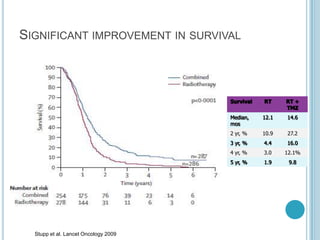
SIGNIFICANT IMPROVEMENT IN SURVIVAL
Stupp et al. Lancet Oncology 2009
Survival RT RT +
TMZ
Median,
mos
12.1 14.6
2 yr, % 10.9 27.2
3 yr, % 4.4 16.0
4 yr, % 3.0 12.1%
5 yr, % 1.9 9.8
Carmustine (BCNU, BiCNU)
-Carmustine is used to treat many types of brain tumors, including
glioblastoma, medulloblastoma, and astrocytoma.
-Administered IV or delivered through a wafer implant (Gliadel),
which is surgically placed into the brain cavity after tumor removal.
-Adverse effects
-Intravenously: Nausea and vomiting, fatigue, respiratory
problems and pulmonary fibrosis, bone marrow impairment.
-Delivered through a wafer: Seizures and cerebral infection
PCV Drug Regimen
-PCV is an abbreviation for a chemotherapy regimen that combines
procarbazine (Matulane), lomustine (CCNU), and vincristine (Oncovin).
-PCV is commonly used to treat oligodendrogliomas and mixed
oligoastrocytomas.
-Procarbazine and lomustine are taken by mouth. Vincristine is given by
either injection or IV.
-Adverse effects:
Drop in blood cell counts, nausea and vomiting, constipation,
fatigue, and mouth sores.
Procarbazine can cause high blood pressure when taken with
foods high in tyramine. Patients should avoid foods such as
beer, red wine, cheese, chocolate, processed meat, yogurt,
and certain fruits and vegetables.
Platinum-Based Drugs
-Cisplatin (Platinol) and carboplatin (Paraplatin)
-Used to treat glioma, medulloblastoma, and other types of brain
tumors.
-Delivered by IV.
-Adverse effects:
Nausea and vomiting
Carboplatin can cause alopecia
Cisplatin can cause muscle weakness.
Other Chemotherapy Drugs
Researchers are investigating whether drugs used to treat other
types of cancer may have benefits for brain tumors. These drugs
include:
- Tamoxifen (Nolvadex) and paclitaxel (Taxol), which are used to
treat breast cancer
- Topotecan (Hycamtin), which is used to treat ovarian and lung
cancers
- Vorinostat (Zolinza), which is approved for treatment of cutaneous
T-cell lymphoma
-Irinotecan (Campath) is another cancer drug that is being studied in
combination treatment.
http://www.umm.edu/patiented/articles/how_radiotherapy_used_treating_brain_tumors_000089_10.htm#ixzz256w
UbUkK
INVESTIGATIONAL BIOLOGIC DRUGS
(TARGETED THERAPY)
-Targeted therapies work on a molecular level by blocking specific
mechanisms associated with cancer cell growth and division.
-less severe side effects.
Promising targeted therapies for brain tumors include:
1. Tyrosine kinase inhibitors
-It block proteins involved in tumor cell growth and production.
-Drugs that specifically target epidermal growth factor receptors (EGFR) are a type
of tyrosine kinase inhibitor of special interest in brain tumor research.
-These drugs include erlotinib (Tarceva), imatinib (Gleevac), and gefitinib (Iressa).
2. Farnesyl protein transferase inhibitors
Tipifarnib (Zarnestra) and lonafarnib (Sarasar)
-These drugs target a protein involved in the functioning of the cancer-
causing Ras protein.
-Lonafarnib is being studied in combination with temozolomide, and
tipifarnib in combination with radiation therapy.
3. MTOR inhibitors
-Everolimus (RAD-001) is being studied for glioblastoma multiforme and
astrocytoma.
-Everolimus is related to rapamycin (Siroliumus) and tacrolimus (Prograf),
which are also being investigated for brain tumor treatment.
-These drugs are commonly used to suppress the immune system to
prevent rejection after organ transplantation.
www.umm.edu/patiented/articles/how_radiotherapy_used_treating_brain_tumors_000089_10.htm#ixzz256wfm64B
4. Anti-angiogenesis drugs:
Bevacizumab (Avastin)
- It is being studied in combination with irinotecan for treatment
of recurrent malignant gliomas.
Cediranib (Recentin, AZD2171)
- It is another VEGF inhibitor being investigated for
glioblastoma treatment.
BEVACIZUMAB (AVASTIN)
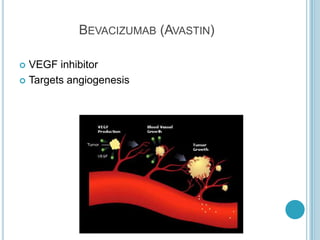
 VEGF inhibitor
 Targets angiogenesis
BEVACIZUMAB (AVASTIN)
 To date mainly investigated in Phase II trials
 Usually in combination with irinotecan chemotherapy
 No trials have demonstrated a survival benefit
 Side effects include
 Hypertension (9%)
 Delayed wound healing (2%)
 Bowel perforation (2%)
 Intracranial haemorrhage (2%)
 Venous and arterial clots (4%)
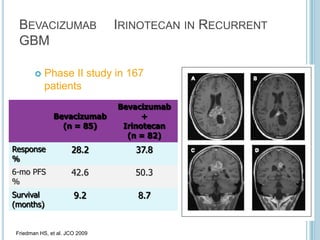
BEVACIZUMAB IRINOTECAN IN RECURRENT
GBM
 Phase II study in 167
patients
Friedman HS, et al. JCO 2009
Bevacizumab
(n = 85)
Bevacizumab
+
Irinotecan
(n = 82)
Response
%
28.2 37.8
6-mo PFS
%
42.6 50.3
Survival
(months)
9.2 8.7
ONGOING CLINICAL TRIALS
Phase III Trials of Bevacizumab in newly
diagnosed GBM
AVAGLIO[1]
Newly diagnosed GBM
(planned N = 920)
Placebo q2w +
standard RT (60 Gy
D1-5) x 6 wks + TMZ
75 mg/m2 PO/day for
6 wks then 150-200
mg/m2 Days 1-5 of
each 6 x 4-wk cycle
until progression
Bevacizumab
10 mg/kg q2w +
standard RT (60 Gy
D1-5) x 6 wks + TMZ
75 mg/m2 PO/day for
6 wks then 150-200
mg/m2 Days 1-5 of
each 6 x 4-wk cycle
until progression
1. ClinicalTrials.gov. NCT00943826. 2. ClinicalTrials.gov. NCT00884741.
Newly Diagnosed GBM
≥ 18 years; KPS 70% to 100%
Standard RT + concurrent TMZ
(Planned N = 942)
4 wks after
chemoRT:
Adjuvant TMZ 200
mg/m2 D1-5 Q28D for
up to 12 courses +
placebo
Wk 4 of chemoRT:
Bevacizumab q2w,
continuing until
completion of adjuvant
TMZ
4 wks after chemoRT:
Adjuvant TMZ 200
mg/m2 Days 1-5 Q28D
for up to 12 courses +
placebo
RTOG 0825[2]
RANDOMISED PHASE II STUDY OF
CARBOPLATIN AND BEVACIZUMAB IN
RECURRENT GLIOBLASTOMA (CABARET)
 IN patients of recurrent glioblastoma post radiation and
temozolomide
 Bevacizumab carboplatin
 Closed to accrual
 Results awaited
ANGIOGENESIS-TARGETING AGENTS FOR
GLIOBLASTOMA
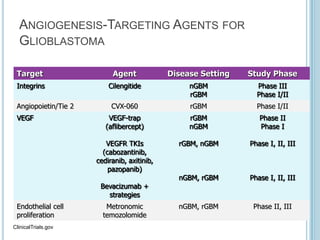
Target Agent Disease Setting Study Phase
Integrins Cilengitide nGBM
rGBM
Phase III
Phase I/II
Angiopoietin/Tie 2 CVX-060 rGBM Phase I/II
VEGF VEGF-trap
(aflibercept)
VEGFR TKIs
(cabozantinib,
cediranib, axitinib,
pazopanib)
Bevacizumab +
strategies
rGBM
nGBM
rGBM, nGBM
nGBM, rGBM
Phase II
Phase I
Phase I, II, III
Phase I, II, III
Endothelial cell
proliferation
Metronomic
temozolomide
nGBM, rGBM Phase II, III
ClinicalTrials.gov.
Wick W, et al Neuro-Oncol. 2011
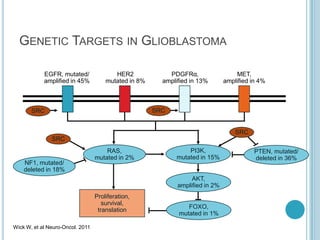
GENETIC TARGETS IN GLIOBLASTOMA
EGFR, mutated/
amplified in 45%
HER2
mutated in 8%
PDGFRα,
amplified in 13%
MET,
amplified in 4%
Proliferation,
survival,
translation
FOXO,
mutated in 1%
NF1, mutated/
deleted in 18%
RAS,
mutated in 2%
PI3K,
mutated in 15%
PTEN, mutated/
deleted in 36%
AKT,
amplified in 2%
SRC
SRC
SRC
SRC
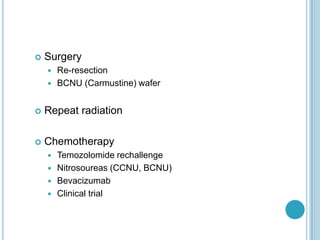
TREATMENT OPTIONS AT
RECURRENCE
 Surgery
 Re-resection
 BCNU (Carmustine) wafer
 Repeat radiation
 Chemotherapy
 Temozolomide rechallenge
 Nitrosoureas (CCNU, BCNU)
 Bevacizumab
 Clinical trial
PROGRESS AGAINST BRAIN
CANCER
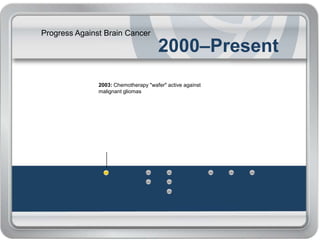
Progress Against Brain Cancer
2000–Present
2003: Chemotherapy "wafer" active against
malignant gliomas
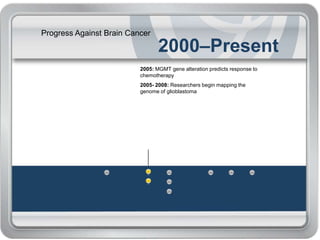
Progress Against Brain Cancer
2000–Present
2005: MGMT gene alteration predicts response to
chemotherapy
2005- 2008: Researchers begin mapping the
genome of glioblastoma
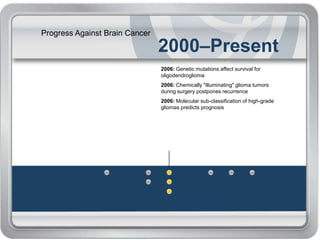
Progress Against Brain Cancer
2000–Present
2006: Genetic mutations affect survival for
oligodendroglioma
2006: Chemically "illuminating" glioma tumors
during surgery postpones recurrence
2006: Molecular sub-classification of high-grade
gliomas predicts prognosis
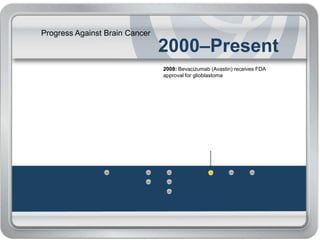
Progress Against Brain Cancer
2000–Present
2008: Bevacizumab (Avastin) receives FDA
approval for glioblastoma
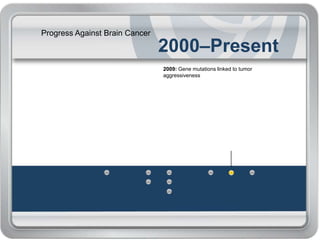
Progress Against Brain Cancer
2000–Present
2009: Gene mutations linked to tumor
aggressiveness
Progress Against Brain Cancer
2000–Present
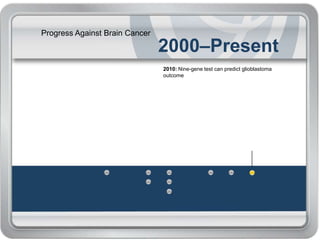
2010: Nine-gene test can predict glioblastoma
outcome
Progress Against Brain Cancer
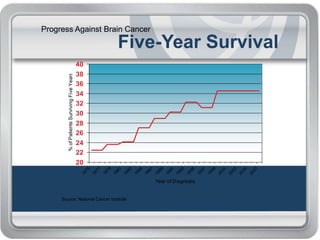
Five-Year Survival
20
22
24
26
28
30
32
34
36
38
40
1975
1977
1979
1981
1983
1985
1987
1989
1991
1993
1995
1997
1999
2001
2003
2005
2007
Year of Diagnosis
%ofPatientsSurvivingFiveYears
Source: National Cancer Institute
CONCLUSION
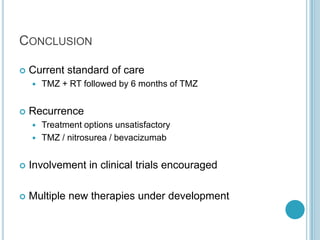
 Current standard of care
 TMZ + RT followed by 6 months of TMZ
 Recurrence
 Treatment options unsatisfactory
 TMZ / nitrosurea / bevacizumab
 Involvement in clinical trials encouraged
 Multiple new therapies under development
THANK YOU !!!

Chemotherapy for brain tumours

  • 1.
  • 2.
    OVERVIEW  CAUSES OFBRAIN TUMOUR  TYPES OF BRAIN TUMOUR  TREATMENT OF SECONDARY BRAIN TUMOURS  CHEMOTHERAPY IN PRIMARY BRAIN TUMOURS  CHEMOTHERAPY DRUGS AND REGIMENS  INVESTIGATIONAL BIOLOGIC DRUGS (TARGETED THERAPY)  ONGOING CLINICAL TRIALS  TREATMENT OPTIONS AT RECURRENCE  PROGRESS AGAINST BRAIN CANCER  CONCLUSION
  • 3.
  • 4.
     DNA damage Radiation  Genetics NF- 1 (acoustic neuromas) Li Fraumeni syndrome Tuberous sclerosis ( astrocytomas) Multiple endocrine neoplasia type 1(pituitary macroadenoma)  Infection HIV
  • 5.
  • 6.
    DISTRIBUTION OF PRIMARYCNS TUMORS BY HISTOLOGY Glioblastoma 20.3% Astrocytomas 9.8% Ependymomas 2.3% Oligodendrogliomas 3.7% Embryonal, including medulloblastoma 1.7% Meningioma 30.1% Pituitary 6.3% Craniopharyngioma 0.7% Nerve sheath 8.0% Lymphoma 3.1% All others 13.9% CBTRUS Report, 2004-2005.
  • 7.
    I Primary BrainTumours: Benign  Pituitary – adenoma, cranio-pharyngioma  Meningioma  Acoustic neuroma  Dermoid tumour Malignant:  Glioma  Primary Cerebral Lymphoma  Germinoma  Pineoblastoma  Medulloblastoma
  • 8.
    II SECONDARY BRAINTUMOURS  Lung  Breast  GI  Any primary potentially
  • 9.
  • 10.
    QUESTION:  How willyou initially treat brain secondaries?
  • 11.
    HOW TO TREAT? Oedema – steroids  Pain – analgaesia  Nausea – antiemetics  Prevent Seizures - Antiepileptics required pre/post operatively
  • 12.
    HOW TO TREAT- SECONDARIES  Depends on Primary cancer and its extent / control  Depends on patient fitness and wishes  Can occasionally debulk and give post op radiotherapy, or radiotherapy alone (20Gy in 5#)
  • 13.
  • 14.
    MECHANISM OF ACTIONOF CHEMOTHERAPY AGENTS
  • 15.
    TIMING OF CHEMOTHERAPY Adjuvant  After surgery or radiation  Defined number of cycles  Aim  prolong time to recurrence  Recurrence  Number of cycles limited by side effects  Aim  improve symptoms, quality of life and slow progression
  • 16.
    A BIT OFHISTORY..  Surgery and radiation mainstays of treatment (and still are)  Chemotherapy options  PCV standard of care for many years  Procarbazine  Carmustine (BCNU)  Vincristine  Significant side effects  Single agent nitrosurea(lomustine/carmustine) equivalent
  • 17.
    CHALLENGES TO TREATMENT Biologically aggressive • Most brain cancer are unresponsive to chemotherapy  Drug delivery  Blood brain barrier  Toxicity to normal brain  Infiltration of malignant cells into brain parenchyma
  • 18.
    How to overcomeBBB ??? Newer delivery methods include: Interstitial chemotherapy uses disc-shaped polymer wafers (known as Gliadel wafers) soaked with carmustine, the standard chemotherapeutic drug for brain cancer. Intrathecal chemotherapy delivers chemotherapeutic drugs directly into the spinal fluid. Intra-arterial chemotherapy delivers high-dose chemotherapy into arteries in the brain using tiny catheters. Convection-enhanced delivery (CED) involves placing catheters into the brain tumor or nearby brain tissue to deliver slowly and continuously a cancer drug over several days http://www.umm.edu/patiented/articles/how_radiotherapy_used_treating_brain_tumors_000089_10.htm#ixzz256vtlVt R
  • 19.
    GLIADEL WAFERS  Gliadelwafers at time of surgery (carmustine soaked) in completely resected high grade glioma (3 or 4)  The surgeon implants the wafer directly into the surgical cavity after a tumor is removed.
  • 20.
  • 21.
    Standard ones include: Temozolomide(Temodar) -Taken oral -First approved in 1999 for adult patients with anaplastic astrocytoma that did not respond to other treatments. -In 2005, it was approved for use during and after radiation therapy for patients newly diagnosed with glioblastoma multiforme. -Adverse effects: Relatively minor, but may include constipation, nausea and vomiting, fatigue, and headache.
  • 22.
  • 23.
    Temozolomide 75 mg/m2po qd for 6 weeks, then 150–200 mg/m2 po qd d1–5 every 28 days for 6 cycles Focal RT daily — 30 x 200 cGy Total dose 60 Gy TMZ/RT* Adjuvant TMZ Weeks6 10 14 18 22 26 30 RT Alone R STUPP TREATMENT SCHEMA 0 *PCP prophylaxis was required for patients receiving TMZ during the concomitant phase. Concomitant
  • 24.
    SIGNIFICANT IMPROVEMENT INSURVIVAL Stupp et al. Lancet Oncology 2009 Survival RT RT + TMZ Median, mos 12.1 14.6 2 yr, % 10.9 27.2 3 yr, % 4.4 16.0 4 yr, % 3.0 12.1% 5 yr, % 1.9 9.8
  • 25.
    Carmustine (BCNU, BiCNU) -Carmustineis used to treat many types of brain tumors, including glioblastoma, medulloblastoma, and astrocytoma. -Administered IV or delivered through a wafer implant (Gliadel), which is surgically placed into the brain cavity after tumor removal. -Adverse effects -Intravenously: Nausea and vomiting, fatigue, respiratory problems and pulmonary fibrosis, bone marrow impairment. -Delivered through a wafer: Seizures and cerebral infection
  • 26.
    PCV Drug Regimen -PCVis an abbreviation for a chemotherapy regimen that combines procarbazine (Matulane), lomustine (CCNU), and vincristine (Oncovin). -PCV is commonly used to treat oligodendrogliomas and mixed oligoastrocytomas. -Procarbazine and lomustine are taken by mouth. Vincristine is given by either injection or IV. -Adverse effects: Drop in blood cell counts, nausea and vomiting, constipation, fatigue, and mouth sores. Procarbazine can cause high blood pressure when taken with foods high in tyramine. Patients should avoid foods such as beer, red wine, cheese, chocolate, processed meat, yogurt, and certain fruits and vegetables.
  • 27.
    Platinum-Based Drugs -Cisplatin (Platinol)and carboplatin (Paraplatin) -Used to treat glioma, medulloblastoma, and other types of brain tumors. -Delivered by IV. -Adverse effects: Nausea and vomiting Carboplatin can cause alopecia Cisplatin can cause muscle weakness.
  • 28.
    Other Chemotherapy Drugs Researchersare investigating whether drugs used to treat other types of cancer may have benefits for brain tumors. These drugs include: - Tamoxifen (Nolvadex) and paclitaxel (Taxol), which are used to treat breast cancer - Topotecan (Hycamtin), which is used to treat ovarian and lung cancers - Vorinostat (Zolinza), which is approved for treatment of cutaneous T-cell lymphoma -Irinotecan (Campath) is another cancer drug that is being studied in combination treatment. http://www.umm.edu/patiented/articles/how_radiotherapy_used_treating_brain_tumors_000089_10.htm#ixzz256w UbUkK
  • 29.
  • 30.
    -Targeted therapies workon a molecular level by blocking specific mechanisms associated with cancer cell growth and division. -less severe side effects. Promising targeted therapies for brain tumors include: 1. Tyrosine kinase inhibitors -It block proteins involved in tumor cell growth and production. -Drugs that specifically target epidermal growth factor receptors (EGFR) are a type of tyrosine kinase inhibitor of special interest in brain tumor research. -These drugs include erlotinib (Tarceva), imatinib (Gleevac), and gefitinib (Iressa).
  • 31.
    2. Farnesyl proteintransferase inhibitors Tipifarnib (Zarnestra) and lonafarnib (Sarasar) -These drugs target a protein involved in the functioning of the cancer- causing Ras protein. -Lonafarnib is being studied in combination with temozolomide, and tipifarnib in combination with radiation therapy. 3. MTOR inhibitors -Everolimus (RAD-001) is being studied for glioblastoma multiforme and astrocytoma. -Everolimus is related to rapamycin (Siroliumus) and tacrolimus (Prograf), which are also being investigated for brain tumor treatment. -These drugs are commonly used to suppress the immune system to prevent rejection after organ transplantation. www.umm.edu/patiented/articles/how_radiotherapy_used_treating_brain_tumors_000089_10.htm#ixzz256wfm64B
  • 32.
    4. Anti-angiogenesis drugs: Bevacizumab(Avastin) - It is being studied in combination with irinotecan for treatment of recurrent malignant gliomas. Cediranib (Recentin, AZD2171) - It is another VEGF inhibitor being investigated for glioblastoma treatment.
  • 33.
    BEVACIZUMAB (AVASTIN)  VEGFinhibitor  Targets angiogenesis
  • 34.
    BEVACIZUMAB (AVASTIN)  Todate mainly investigated in Phase II trials  Usually in combination with irinotecan chemotherapy  No trials have demonstrated a survival benefit  Side effects include  Hypertension (9%)  Delayed wound healing (2%)  Bowel perforation (2%)  Intracranial haemorrhage (2%)  Venous and arterial clots (4%)
  • 35.
    BEVACIZUMAB IRINOTECAN INRECURRENT GBM  Phase II study in 167 patients Friedman HS, et al. JCO 2009 Bevacizumab (n = 85) Bevacizumab + Irinotecan (n = 82) Response % 28.2 37.8 6-mo PFS % 42.6 50.3 Survival (months) 9.2 8.7
  • 36.
  • 37.
    Phase III Trialsof Bevacizumab in newly diagnosed GBM AVAGLIO[1] Newly diagnosed GBM (planned N = 920) Placebo q2w + standard RT (60 Gy D1-5) x 6 wks + TMZ 75 mg/m2 PO/day for 6 wks then 150-200 mg/m2 Days 1-5 of each 6 x 4-wk cycle until progression Bevacizumab 10 mg/kg q2w + standard RT (60 Gy D1-5) x 6 wks + TMZ 75 mg/m2 PO/day for 6 wks then 150-200 mg/m2 Days 1-5 of each 6 x 4-wk cycle until progression 1. ClinicalTrials.gov. NCT00943826. 2. ClinicalTrials.gov. NCT00884741. Newly Diagnosed GBM ≥ 18 years; KPS 70% to 100% Standard RT + concurrent TMZ (Planned N = 942) 4 wks after chemoRT: Adjuvant TMZ 200 mg/m2 D1-5 Q28D for up to 12 courses + placebo Wk 4 of chemoRT: Bevacizumab q2w, continuing until completion of adjuvant TMZ 4 wks after chemoRT: Adjuvant TMZ 200 mg/m2 Days 1-5 Q28D for up to 12 courses + placebo RTOG 0825[2]
  • 38.
    RANDOMISED PHASE IISTUDY OF CARBOPLATIN AND BEVACIZUMAB IN RECURRENT GLIOBLASTOMA (CABARET)  IN patients of recurrent glioblastoma post radiation and temozolomide  Bevacizumab carboplatin  Closed to accrual  Results awaited
  • 39.
    ANGIOGENESIS-TARGETING AGENTS FOR GLIOBLASTOMA TargetAgent Disease Setting Study Phase Integrins Cilengitide nGBM rGBM Phase III Phase I/II Angiopoietin/Tie 2 CVX-060 rGBM Phase I/II VEGF VEGF-trap (aflibercept) VEGFR TKIs (cabozantinib, cediranib, axitinib, pazopanib) Bevacizumab + strategies rGBM nGBM rGBM, nGBM nGBM, rGBM Phase II Phase I Phase I, II, III Phase I, II, III Endothelial cell proliferation Metronomic temozolomide nGBM, rGBM Phase II, III ClinicalTrials.gov.
  • 40.
    Wick W, etal Neuro-Oncol. 2011 GENETIC TARGETS IN GLIOBLASTOMA EGFR, mutated/ amplified in 45% HER2 mutated in 8% PDGFRα, amplified in 13% MET, amplified in 4% Proliferation, survival, translation FOXO, mutated in 1% NF1, mutated/ deleted in 18% RAS, mutated in 2% PI3K, mutated in 15% PTEN, mutated/ deleted in 36% AKT, amplified in 2% SRC SRC SRC SRC
  • 41.
  • 42.
     Surgery  Re-resection BCNU (Carmustine) wafer  Repeat radiation  Chemotherapy  Temozolomide rechallenge  Nitrosoureas (CCNU, BCNU)  Bevacizumab  Clinical trial
  • 43.
  • 44.
    Progress Against BrainCancer 2000–Present 2003: Chemotherapy "wafer" active against malignant gliomas
  • 45.
    Progress Against BrainCancer 2000–Present 2005: MGMT gene alteration predicts response to chemotherapy 2005- 2008: Researchers begin mapping the genome of glioblastoma
  • 46.
    Progress Against BrainCancer 2000–Present 2006: Genetic mutations affect survival for oligodendroglioma 2006: Chemically "illuminating" glioma tumors during surgery postpones recurrence 2006: Molecular sub-classification of high-grade gliomas predicts prognosis
  • 47.
    Progress Against BrainCancer 2000–Present 2008: Bevacizumab (Avastin) receives FDA approval for glioblastoma
  • 48.
    Progress Against BrainCancer 2000–Present 2009: Gene mutations linked to tumor aggressiveness
  • 49.
    Progress Against BrainCancer 2000–Present 2010: Nine-gene test can predict glioblastoma outcome
  • 50.
    Progress Against BrainCancer Five-Year Survival 20 22 24 26 28 30 32 34 36 38 40 1975 1977 1979 1981 1983 1985 1987 1989 1991 1993 1995 1997 1999 2001 2003 2005 2007 Year of Diagnosis %ofPatientsSurvivingFiveYears Source: National Cancer Institute
  • 51.
    CONCLUSION  Current standardof care  TMZ + RT followed by 6 months of TMZ  Recurrence  Treatment options unsatisfactory  TMZ / nitrosurea / bevacizumab  Involvement in clinical trials encouraged  Multiple new therapies under development
  • 52.

Editor's Notes

  • #7 CBTRUS, Central Brain Tumor Registry of the United States; CNS, central nervous system.
  • #33 Anti-angiogenesis drugs block molecules involved with the growth of blood vessels that feed the tumor (a process called "angiogenesis," which is particularly important in the growth of glioblastomas.) These drugs starve tumors of vital nutrients and oxygen. Bevacizumab, which targets vascular endothelial growth factor (VEGF), a specific angiogenesis growth factor
  • #36 GBM, glioblastoma multiforme; PFS, progression-free survival.
  • #38 GBM, glioblastoma; Gy, gray; KPS, Karnofsky performance status; PO, orally; RT, radiotherapy; RTOG, Radiation Therapy Oncology Group;TMZ, temozolomide.
  • #40 nGBM, newly diagnosed glioblastoma multiforme; rGBM, recurrent glioblastoma multiforme; TKI, tyrosine kinase inhibitor; VEGF, vascular endothelial growth factor; VEGFR, VEGF receptor.
  • #41 EGFR, epidermal growth factor receptor; PDGFR, platelet-derived growth factor receptor; PI3K, phosphatidylinositol-3-kinase.