Building Competencies of the 21st century:
learning from the past
LTTA in Athens, 18-22 March 2019
Where on earth is Greece?
Greece, officially the
Hellenic Republic , also
known as Hellas, is
located in Southern
Europe, with a
population of
approximately 10
million.
The Greek flag consists of nine equal horizontal stripes of blue alternating
with white, symbolizing the colors of the famous Greek sky and sea.
Greece is considered the cradle of
Western civilisation, being the
birthplace of democracy, Western
philosophy, Western literature,
historiography, political science, major
scientific and mathematical principles,
and Western drama, as well as the
Olympic Games.
The very beginnings
The
Olympian Gods
Greek Mythology: The Heroes
Achilles
Ulysses (Odysseus)
Hercules
Greek History
All three stages of the stone age
(Paleolithic, Mesolithic, and
Neolithic) are represented in
Greece. Neolithic settlements in
Greece, dating from the 7th
millennium BC are the oldest in
Europe.
Greece is home of the first advanced
civilizations in Europe, the Cycladic
civilization on the islands of the Aegean Sea (
around 3200 BC), the Minoan civilization in
Crete (2700–1500 BC), and the Mycenaean
civilization on the mainland (1900-1100 BC)
776 BC, the year of the first Olympic Games
5th century BC The Golden Age of Athens
Lack of political unity within Greece resulted
in frequent conflict between Greek states. .
Both big cities, Athens and Sparta, were
later overshadowed by Thebes and eventually
Macedonia, under the control of Phillip II and
his son Alexander .
Undefeated in battle, Alexander the Great had conquered the Persian Empire
in its entirety by 330 BC. By the time of his death in 323 BC, he had created
one of the largest empires in history, stretching from Greece to India.
After a period of confusion
following Alexander's death, Greece
became a Roman protectorate.
The Roman Empire in the east, following the fall
of the Empire in the west , is conventionally
known as the Byzantine Empire and lasted until
1453. With its capital in Constantinople, its
language and literary culture was Greek and its
religion was predominantly Eastern Orthodox
Christian. Greece was part of the Byzantine
Empire.
After the fall of Constantinople to the Ottomans Turks in 1453,
mainland Greece was occupied by the Ottoman Empire.
After 400 years of Turkish occupation, the Greek War of
Independence (1821-1826), Greece became independent.
Major Greek
cities
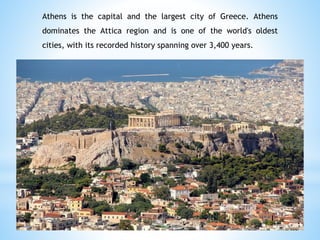
Athens is the capital and the largest city of Greece. Athens
dominates the Attica region and is one of the world's oldest
cities, with its recorded history spanning over 3,400 years.
Thessaloniki
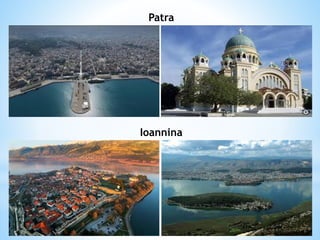
Patra
Ioannina
Heraklion
Chania
Crete
Nafplio
Greek islands
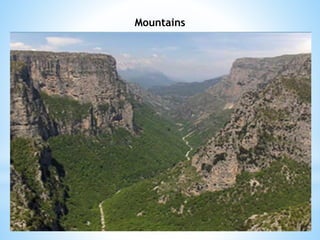
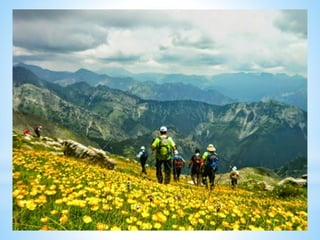
Mountains
Rivers
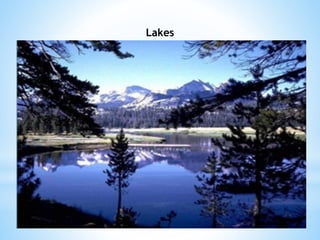
Lakes
Caves
Greek food
Greek Dances
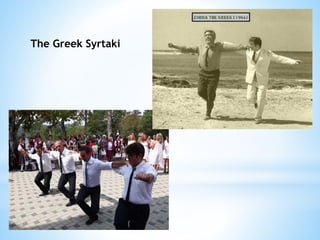
The Greek Syrtaki
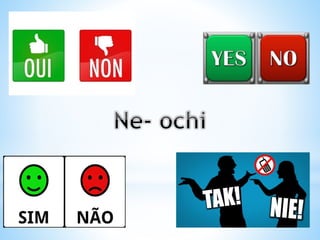
Let΄s communicate!
(Get to know) Greece

(Get to know) Greece

  • 1.
    Building Competencies ofthe 21st century: learning from the past LTTA in Athens, 18-22 March 2019
  • 4.
    Where on earthis Greece?
  • 5.
    Greece, officially the HellenicRepublic , also known as Hellas, is located in Southern Europe, with a population of approximately 10 million.
  • 7.
    The Greek flagconsists of nine equal horizontal stripes of blue alternating with white, symbolizing the colors of the famous Greek sky and sea.
  • 9.
    Greece is consideredthe cradle of Western civilisation, being the birthplace of democracy, Western philosophy, Western literature, historiography, political science, major scientific and mathematical principles, and Western drama, as well as the Olympic Games.
  • 10.
  • 11.
  • 12.
    Greek Mythology: TheHeroes Achilles
  • 13.
  • 14.
  • 15.
    Greek History All threestages of the stone age (Paleolithic, Mesolithic, and Neolithic) are represented in Greece. Neolithic settlements in Greece, dating from the 7th millennium BC are the oldest in Europe.
  • 16.
    Greece is homeof the first advanced civilizations in Europe, the Cycladic civilization on the islands of the Aegean Sea ( around 3200 BC), the Minoan civilization in Crete (2700–1500 BC), and the Mycenaean civilization on the mainland (1900-1100 BC)
  • 17.
    776 BC, theyear of the first Olympic Games
  • 18.
    5th century BCThe Golden Age of Athens
  • 22.
    Lack of politicalunity within Greece resulted in frequent conflict between Greek states. . Both big cities, Athens and Sparta, were later overshadowed by Thebes and eventually Macedonia, under the control of Phillip II and his son Alexander . Undefeated in battle, Alexander the Great had conquered the Persian Empire in its entirety by 330 BC. By the time of his death in 323 BC, he had created one of the largest empires in history, stretching from Greece to India.
  • 23.
    After a periodof confusion following Alexander's death, Greece became a Roman protectorate.
  • 24.
    The Roman Empirein the east, following the fall of the Empire in the west , is conventionally known as the Byzantine Empire and lasted until 1453. With its capital in Constantinople, its language and literary culture was Greek and its religion was predominantly Eastern Orthodox Christian. Greece was part of the Byzantine Empire.
  • 25.
    After the fallof Constantinople to the Ottomans Turks in 1453, mainland Greece was occupied by the Ottoman Empire.
  • 26.
    After 400 yearsof Turkish occupation, the Greek War of Independence (1821-1826), Greece became independent.
  • 28.
  • 29.
    Athens is thecapital and the largest city of Greece. Athens dominates the Attica region and is one of the world's oldest cities, with its recorded history spanning over 3,400 years.
  • 31.
  • 32.
  • 33.
  • 34.
  • 35.
  • 37.
  • 39.
  • 40.
  • 41.
  • 42.
  • 43.
  • 44.
  • 46.