 Fetus – The name given to the embryo after the first
  three months of gestation
 The embryo develops inside the cavity surrounded by
  a membrane called amnion.
 Placenta – an organ made up of cells from the embryo
  and the mother
    ◦ Allows the embryo to receive nutrients and oxygen and
      removes carbon dioxide and other waste
    ◦ Acts as a defense barrier
    ◦ Secretes the hormones responsible for fetal development and
      controls the changes in the mother’s body
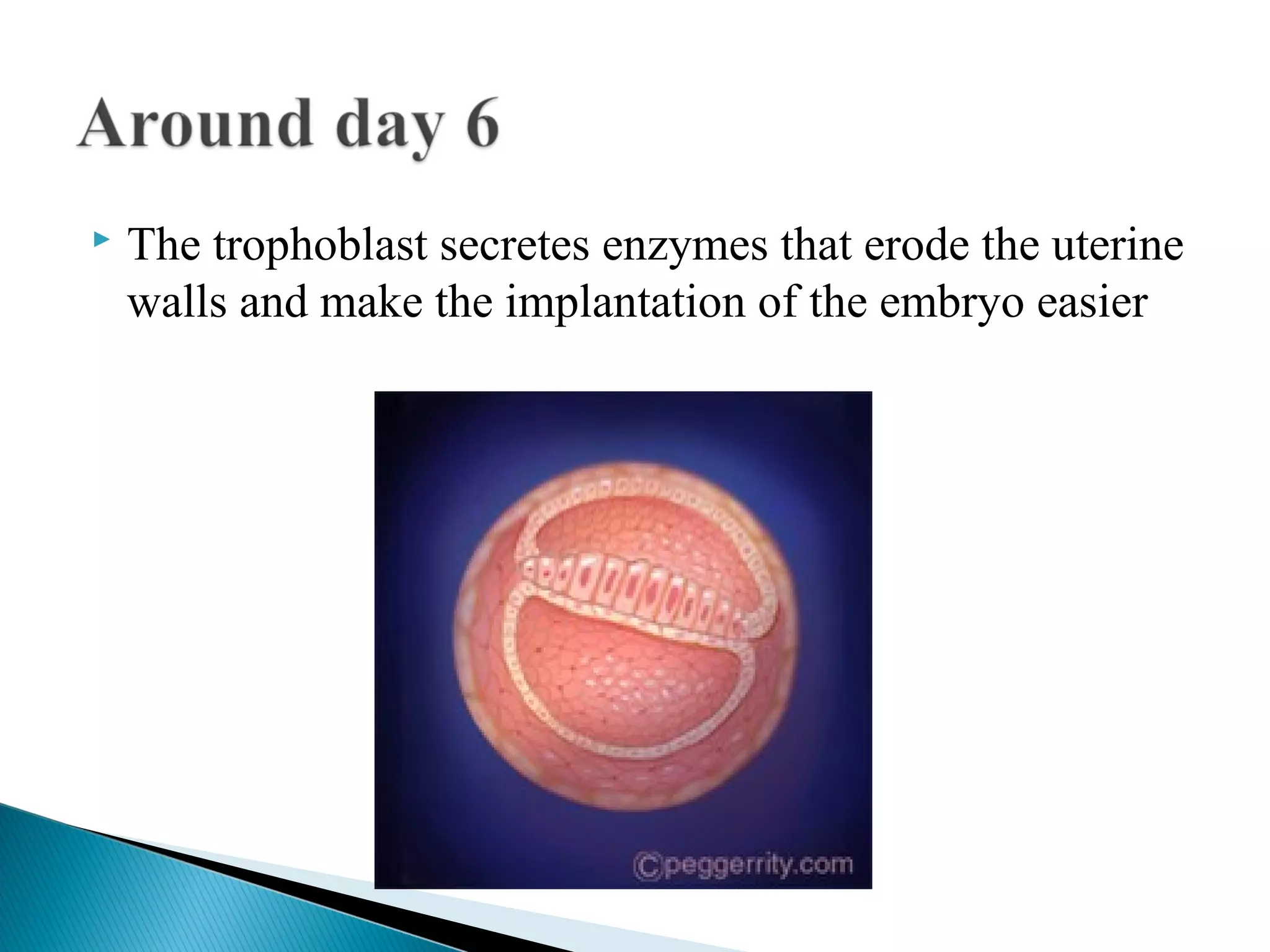
   The trophoblast secretes enzymes that erode the uterine
    walls and make the implantation of the embryo easier
 The embryo buries itself into the vascular layer of the
  uterus and the placenta starts to develop
 The placenta receives substances from the mother and

  removes the embryo’s waste.
    ◦ It also acts as a filter for the substances that are not meant to
      reach the embryo.
       However, some small molecules (drugs, tobacco, toxins, alcohol,
        certain medicines, and viruses) may still reach the fetus
 The embryo’s cells start to specialize
 On day 16, the neural tube (precursor to the central

  nervous system) appears
 One of the most important processes in this phase is

  cellular migration – cells change their position inside
  the embryo
 From day 19, the somites (precursors to the spine)

  develop
 Around day 20, the structure of the future heart

  appears; it starts beating around day 25
 The connection between the embryo and the placenta
  now takes place through a tube (later known as the
  umbilical cord)
 Between day 25 and 40, the brain begins to develop
  and the face, ears and neck are visible
 The precursors to the digestive organs, lungs, and
  kidneys start to appear
   From day 61, the embryo becomes a fetus
    ◦ Almost all parts of the future individual are present
 At week 28, the fetus measures around 35 cm and
  weighs more than a kilogram.
 Inside its brain, folds are forming, which make it

  possible to increase the area of the brain within the
  same volume (which is key to intellectual
  development)
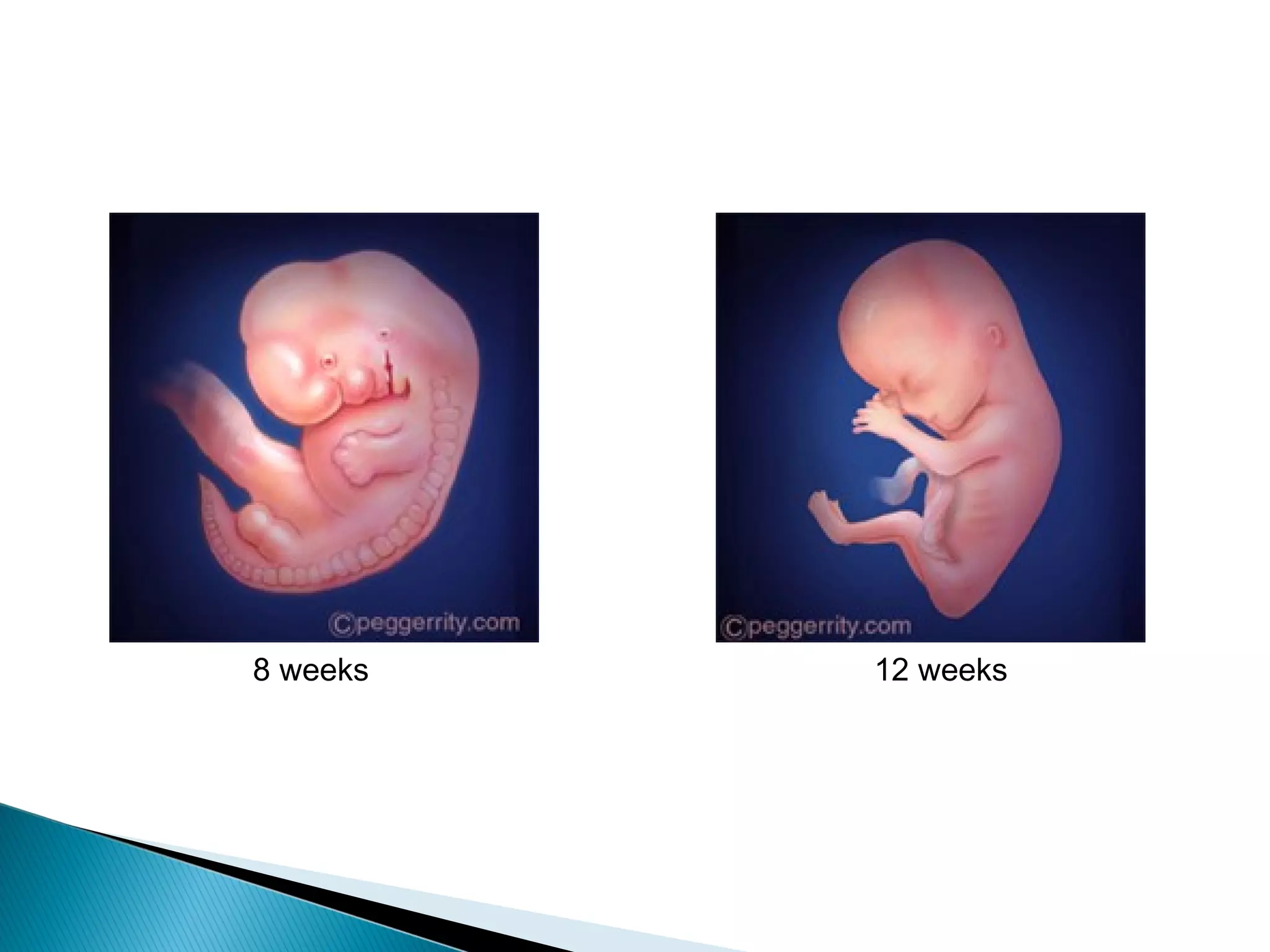
8 weeks   12 weeks
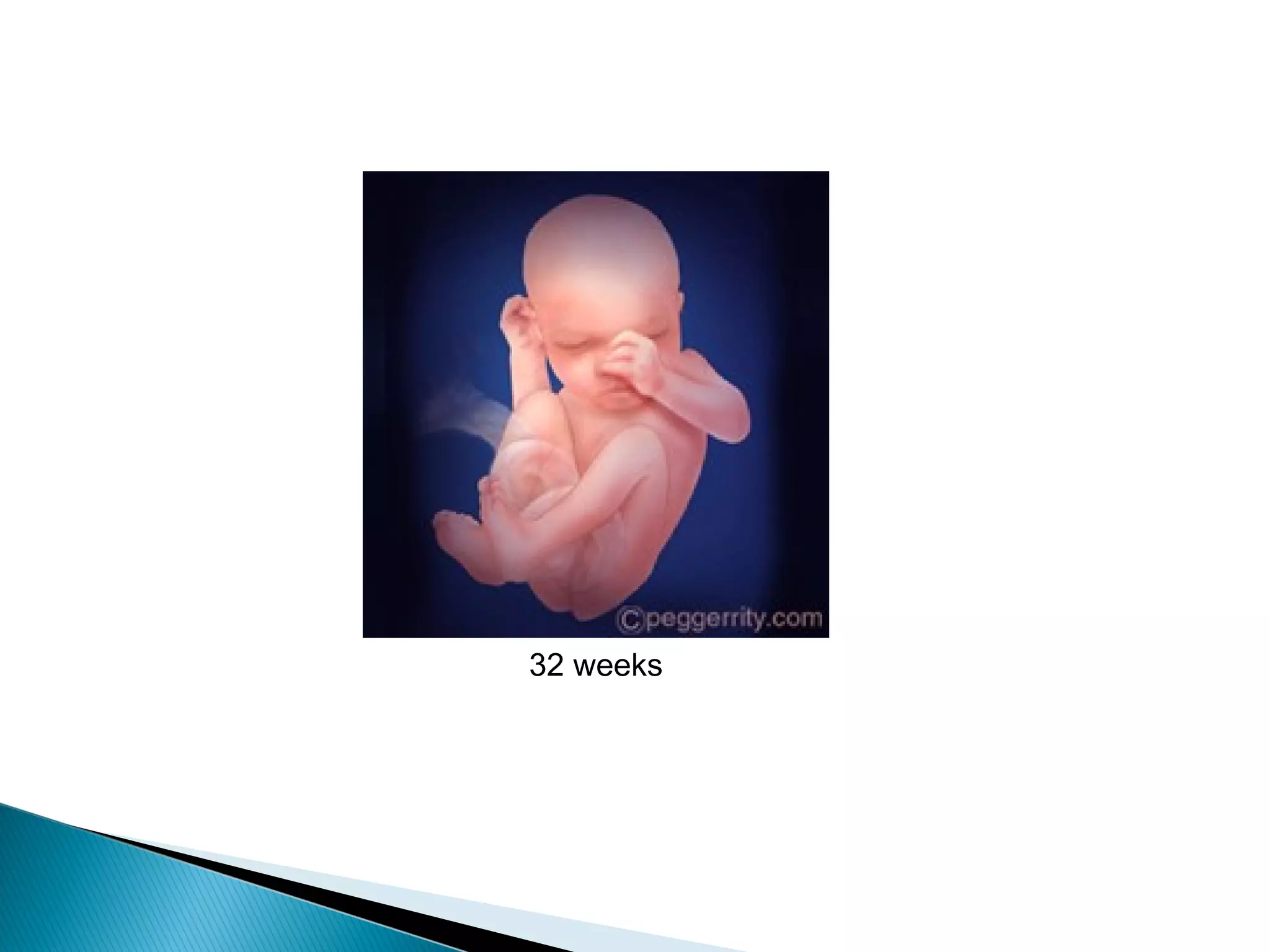
32 weeks
   Childbirth consists of three phases:
    ◦ Phase 1: Also called dilation phase, because uterine
      contractions widen the neck of the uterus
       The amnion breaks and releases the amniotic fluid
    ◦ Phase 2
       Uterine contractions before stronger, longer and more frequent.
         The mother also contracts her abdominal muscles.
         Between these two forces, the baby is pushed out of the womb
       Once the baby is born, its umbilical cord is clamped and its
        general state of health is checked
    ◦ Phase 3
       The last contractions of the uterus push the placenta out of the
        mother’s body (about 15 minutes after the baby is born)
 A Caesarean, or C-section, is a surgical operation in
  which the baby is taken out of the mother’s body by
  means of an incision
 This is done when the baby is unable to be born in the

  normal way, whether this is due to the health of either
  the mother or the baby

Gestation process

  • 2.
     Fetus –The name given to the embryo after the first three months of gestation  The embryo develops inside the cavity surrounded by a membrane called amnion.  Placenta – an organ made up of cells from the embryo and the mother ◦ Allows the embryo to receive nutrients and oxygen and removes carbon dioxide and other waste ◦ Acts as a defense barrier ◦ Secretes the hormones responsible for fetal development and controls the changes in the mother’s body
  • 3.
    The trophoblast secretes enzymes that erode the uterine walls and make the implantation of the embryo easier
  • 4.
     The embryoburies itself into the vascular layer of the uterus and the placenta starts to develop  The placenta receives substances from the mother and removes the embryo’s waste. ◦ It also acts as a filter for the substances that are not meant to reach the embryo.  However, some small molecules (drugs, tobacco, toxins, alcohol, certain medicines, and viruses) may still reach the fetus
  • 5.
     The embryo’scells start to specialize  On day 16, the neural tube (precursor to the central nervous system) appears  One of the most important processes in this phase is cellular migration – cells change their position inside the embryo  From day 19, the somites (precursors to the spine) develop  Around day 20, the structure of the future heart appears; it starts beating around day 25
  • 6.
     The connectionbetween the embryo and the placenta now takes place through a tube (later known as the umbilical cord)  Between day 25 and 40, the brain begins to develop and the face, ears and neck are visible  The precursors to the digestive organs, lungs, and kidneys start to appear
  • 7.
    From day 61, the embryo becomes a fetus ◦ Almost all parts of the future individual are present  At week 28, the fetus measures around 35 cm and weighs more than a kilogram.  Inside its brain, folds are forming, which make it possible to increase the area of the brain within the same volume (which is key to intellectual development)
  • 8.
    8 weeks 12 weeks
  • 9.
  • 10.
    Childbirth consists of three phases: ◦ Phase 1: Also called dilation phase, because uterine contractions widen the neck of the uterus  The amnion breaks and releases the amniotic fluid ◦ Phase 2  Uterine contractions before stronger, longer and more frequent.  The mother also contracts her abdominal muscles.  Between these two forces, the baby is pushed out of the womb  Once the baby is born, its umbilical cord is clamped and its general state of health is checked ◦ Phase 3  The last contractions of the uterus push the placenta out of the mother’s body (about 15 minutes after the baby is born)
  • 11.
     A Caesarean,or C-section, is a surgical operation in which the baby is taken out of the mother’s body by means of an incision  This is done when the baby is unable to be born in the normal way, whether this is due to the health of either the mother or the baby