Hitler’s Foreign Policy

         1933-1939


       MR. RAKOCHY
       IBDP HISTORY
Basis of Foreign Policy

1. Destroy the Treaty of Versailles
     Hated by Germans
     Considered unfair by German people
     Disallowed Anschluss

2. Unite German speakers into one country
          Especially: Austria, Czechoslovakia, Poland

3. Lebensraum
          At expense of inferior Polish and Russian Slavs
         Feed greater Germany (85 million)
1933 (caution)

 Goodbye to the League of Nations
   Upset with lack of disarmament by other nations
   Promised no intention of war
   Seen as a hero by the German people
  One political opponent described people’s reaction
  “Everybody thought that there was some justification
    in Hitler’s demands. All Germans hated Versailles.
    Hitler tore up this hateful treaty and forced France
    to its knees…. people said, “he’s got courage to take
    risks”
 Secretly begins provisions for rearmament
   Secret meetings with military (see document and discuss)
1934 (caution)

 German-Polish 10 year Non-aggression pact
   Strategic move by Hitler (Polish invasion 1939)
     Good anti-French maneuver, as treaty with Poland went against
      French rhetoric of Nazi expansionism
     Fed into Britain’s policy of appeasement toward Germany

 Austrian coup (by Austrian Nazi group)
   Supported initially by Hitler

   PM Dollfuss killed

   Italian troops sent by Mussolini

   Hitler disclaims support to avoid war
1935 (some caution)

 The Saar willingly goes back to Germany (90% vote
  after terms of Versailles expired)
     Rich source of coal, iron, transportation link
     Huge propaganda victory for Hitler


 Return of Conscription
   Number of divisions 36 (approx 750,000 men)

   Luftwaffe

   Naval Expansion

   Public Announcement of rearmament
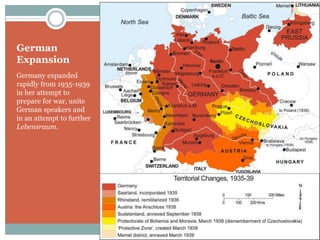
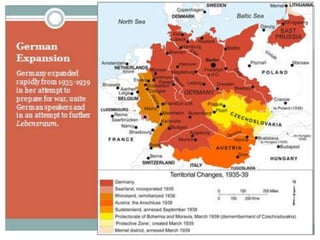
German
Expansion
Germany expanded
rapidly from 1935-1939
in her attempt to
prepare for war, unite
German speakers and
in an attempt to further
Lebensraum.
Stresa Front 1935

 Agreement between France, Britain and Italy
   Supposed to stop German aggression
   Outlawed any more infractions of Versailles
   Reaffirmed no Anschluss to be permitted
   Spirit of Locarno invoked
   Ultimately a failure (Anglo-German Naval agreement followed
    by Abyssinian Crisis)
 Failure of Stresa Front gave Mussolini an
  opportunity for aggression
     Mussolini looked upon Anglo-German agreement as
      permission to ignore Stresa Front agreements
     Hitler in turn supported Mussolini’s invasion of Ethiopia
1936

 The Rhineland (7 March 1936)
    No resistance despite T.O.V. being broken again
    British sympathy
    French apathetic behind Maginot Line
    A major gamble
 Impact of Rhineland
    “The forty-eight hours after the march into the Rhineland were the most
     nerve-racking in my life….If the French had then marched into the
     Rhineland, we would have had to withdraw with our tails between our
     legs, for the military resources at our disposal would have been wholly
     inadequate for even moderate resistance.”

  Hitler   convinced that France and Britain are
     politically weak      alliance with Italy
1936-37 (spreading the love)

 Support of General Franco in Spain
   Spanish Civil war

   Aid to Franco from Mussolini and Hitler

   Tightened fascist alliance “Rome-Berlin Axis” Oct (lead to
    “Rome-Berlin-Tokyo Axis” Nov. or the “Anti-Comintern Pact”
    which Italy signed in 1937)
 Spread of Fascism seen as good by both leaders
   Support extended further in 1939 with Pact of Steel
1938 - Austria

 Meeting at Bechtesgaden in Bavarian Alps
   Hitler and Austrian Chancellor Schuschnigg meet

   Hitler forces Schuschnigg to free Nazis and appoint Arthur
    Seyss-Inquart Minister of Interior
 German Annexation of Austria
   Hitler’s coercion of Schuschnigg sets stage for invasion and
    annexation with Austria
   Soon after Schuschnigg resigns under pressure-replaced by
    Seyss-Inquart (Anschluss goal completed – March 13 with no
    action by West)
1938 – Czechoslovak Crisis

 Pro-Nazi Sudetenland party (Konrad Henlein) issue
 Karlsbad program
    Demands autonomy for Sudetenland
    Refusal to meet demands leads to increased protests
    Sudetenland or war! (British appeasement and end of end of
     French/Czech alliance under British pressure)
    Seeing weakness, Hitler demanded even more!
1938 further escalation

 Sep 22, 1938 Hitler meets with Chamberlin and
 demands:
    German entrance to Sudetenland by October 1
    All Czech instillations left in tact
    Claims of Poland and Hungary against Czechoslovakia must be
     met
    Czech refusal escalates likelihood of war
Munich Conference

 Mussolini, Chamberlin, and Edouard Daladier
  (France Premier) invited by Hitler to Munich
     Conference held September 29-30
 Huge victory for Hitler
   Sacrifice Czechoslovakia in another attempt to avert war

   Germany annexes Sudetenland

   Teschen region to Poland

   Southern Slovakia and Ruthenia to Hungary
March 1939

 Hitler destroys Czechoslovakia
   Germany takes Bohemia and Moravia and Slovakia becomes
    puppet state
 Chamberlin finally comes to senses
   Declares (with France) any aggression against Poland will lead
    to war
April 1939

 Polish Crisis
 Hitler makes impossible demands on Poland
   Return of Danzig

   Access to East Prussia across Polish Corridor

   Better treatment of Germans in Poland

 Poor diplomacy by West
   Weak attempt to ally with Stalin

   No allowance of Soviet troops into Poland

   Soviet suspicions of West very high
August 23, 1939

 German-Soviet Nonaggression Pact
 Soviets to receive eastern Poland in return for
  neutrality
 With threat of Soviets removed . . .
September 1,1939

 Hitler invades Poland
 Great Britain and France declare war on Germany

Germany 1933 1939 - Alex Rakochy

  • 1.
    Hitler’s Foreign Policy 1933-1939 MR. RAKOCHY IBDP HISTORY
  • 2.
    Basis of ForeignPolicy 1. Destroy the Treaty of Versailles  Hated by Germans  Considered unfair by German people  Disallowed Anschluss 2. Unite German speakers into one country  Especially: Austria, Czechoslovakia, Poland 3. Lebensraum  At expense of inferior Polish and Russian Slavs  Feed greater Germany (85 million)
  • 3.
    1933 (caution)  Goodbyeto the League of Nations  Upset with lack of disarmament by other nations  Promised no intention of war  Seen as a hero by the German people One political opponent described people’s reaction “Everybody thought that there was some justification in Hitler’s demands. All Germans hated Versailles. Hitler tore up this hateful treaty and forced France to its knees…. people said, “he’s got courage to take risks”  Secretly begins provisions for rearmament  Secret meetings with military (see document and discuss)
  • 4.
    1934 (caution)  German-Polish10 year Non-aggression pact  Strategic move by Hitler (Polish invasion 1939)  Good anti-French maneuver, as treaty with Poland went against French rhetoric of Nazi expansionism  Fed into Britain’s policy of appeasement toward Germany  Austrian coup (by Austrian Nazi group)  Supported initially by Hitler  PM Dollfuss killed  Italian troops sent by Mussolini  Hitler disclaims support to avoid war
  • 5.
    1935 (some caution) The Saar willingly goes back to Germany (90% vote after terms of Versailles expired)  Rich source of coal, iron, transportation link  Huge propaganda victory for Hitler  Return of Conscription  Number of divisions 36 (approx 750,000 men)  Luftwaffe  Naval Expansion  Public Announcement of rearmament
  • 6.
    German Expansion Germany expanded rapidly from1935-1939 in her attempt to prepare for war, unite German speakers and in an attempt to further Lebensraum.
  • 7.
    Stresa Front 1935 Agreement between France, Britain and Italy  Supposed to stop German aggression  Outlawed any more infractions of Versailles  Reaffirmed no Anschluss to be permitted  Spirit of Locarno invoked  Ultimately a failure (Anglo-German Naval agreement followed by Abyssinian Crisis)  Failure of Stresa Front gave Mussolini an opportunity for aggression  Mussolini looked upon Anglo-German agreement as permission to ignore Stresa Front agreements  Hitler in turn supported Mussolini’s invasion of Ethiopia
  • 8.
    1936  The Rhineland(7 March 1936)  No resistance despite T.O.V. being broken again  British sympathy  French apathetic behind Maginot Line  A major gamble  Impact of Rhineland  “The forty-eight hours after the march into the Rhineland were the most nerve-racking in my life….If the French had then marched into the Rhineland, we would have had to withdraw with our tails between our legs, for the military resources at our disposal would have been wholly inadequate for even moderate resistance.”  Hitler convinced that France and Britain are politically weak alliance with Italy
  • 9.
    1936-37 (spreading thelove)  Support of General Franco in Spain  Spanish Civil war  Aid to Franco from Mussolini and Hitler  Tightened fascist alliance “Rome-Berlin Axis” Oct (lead to “Rome-Berlin-Tokyo Axis” Nov. or the “Anti-Comintern Pact” which Italy signed in 1937)  Spread of Fascism seen as good by both leaders  Support extended further in 1939 with Pact of Steel
  • 10.
    1938 - Austria Meeting at Bechtesgaden in Bavarian Alps  Hitler and Austrian Chancellor Schuschnigg meet  Hitler forces Schuschnigg to free Nazis and appoint Arthur Seyss-Inquart Minister of Interior  German Annexation of Austria  Hitler’s coercion of Schuschnigg sets stage for invasion and annexation with Austria  Soon after Schuschnigg resigns under pressure-replaced by Seyss-Inquart (Anschluss goal completed – March 13 with no action by West)
  • 12.
    1938 – CzechoslovakCrisis  Pro-Nazi Sudetenland party (Konrad Henlein) issue Karlsbad program  Demands autonomy for Sudetenland  Refusal to meet demands leads to increased protests  Sudetenland or war! (British appeasement and end of end of French/Czech alliance under British pressure)  Seeing weakness, Hitler demanded even more!
  • 13.
    1938 further escalation Sep 22, 1938 Hitler meets with Chamberlin and demands:  German entrance to Sudetenland by October 1  All Czech instillations left in tact  Claims of Poland and Hungary against Czechoslovakia must be met  Czech refusal escalates likelihood of war
  • 14.
    Munich Conference  Mussolini,Chamberlin, and Edouard Daladier (France Premier) invited by Hitler to Munich  Conference held September 29-30  Huge victory for Hitler  Sacrifice Czechoslovakia in another attempt to avert war  Germany annexes Sudetenland  Teschen region to Poland  Southern Slovakia and Ruthenia to Hungary
  • 15.
    March 1939  Hitlerdestroys Czechoslovakia  Germany takes Bohemia and Moravia and Slovakia becomes puppet state  Chamberlin finally comes to senses  Declares (with France) any aggression against Poland will lead to war
  • 16.
    April 1939  PolishCrisis  Hitler makes impossible demands on Poland  Return of Danzig  Access to East Prussia across Polish Corridor  Better treatment of Germans in Poland  Poor diplomacy by West  Weak attempt to ally with Stalin  No allowance of Soviet troops into Poland  Soviet suspicions of West very high
  • 17.
    August 23, 1939 German-Soviet Nonaggression Pact  Soviets to receive eastern Poland in return for neutrality  With threat of Soviets removed . . .
  • 18.
    September 1,1939  Hitlerinvades Poland  Great Britain and France declare war on Germany