Geothermal Energy
Done by: Sanaz Hussain and Epshita Tarannum
Index
What is geothermal energy?
Different uses of geothermal energy.
Dry steam power plant.
Flash steam power plant.
Binary cycle power plant.
Ground source heat pump(GSHP)
Advantages
Disadvantages
What is geothermal energy?
Geothermal energy is the heat
energy generated and stored in the
Earth. The geothermal energy of
the Earth’s crust originates from
the original formation of the planet
and from radioactive decay of
materials.
Geothermal energy is a non-
conventional source of energy
which in other words means it is
renewable.
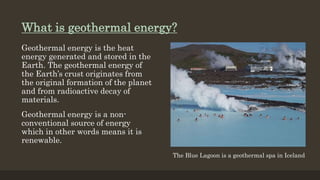
The Blue Lagoon is a geothermal spa in Iceland
Different Uses of Geothermal Energy:
 Geothermal energy can be extracted and converted into different forms of
energy so that we can use it in our day to day life. Geothermal energy is
mainly used for –
• Heating water- [Geothermal heat pump(GHP)]
• Air conditioning-[Geothermal heat pump(GHP)]
• Electricity generation-[Geothermal power plants]
 Geothermal energy is converted into electrical energy in geothermal power
plants. Geothermal power plants mainly follow 3 working principles:
• Dry steam
• Flash steam
• Binary cycle
Dry steam power
plant:
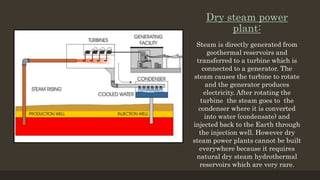
Steam is directly generated from
geothermal reservoirs and
transferred to a turbine which is
connected to a generator. The
steam causes the turbine to rotate
and the generator produces
electricity. After rotating the
turbine the steam goes to the
condenser where it is converted
into water (condensate) and
injected back to the Earth through
the injection well. However dry
steam power plants cannot be built
everywhere because it requires
natural dry steam hydrothermal
reservoirs which are very rare.
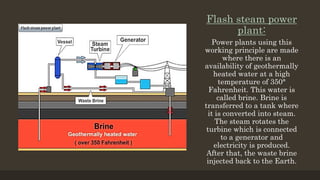
Flash steam power
plant:
Power plants using this
working principle are made
where there is an
availability of geothermally
heated water at a high
temperature of 350°
Fahrenheit. This water is
called brine. Brine is
transferred to a tank where
it is converted into steam.
The steam rotates the
turbine which is connected
to a generator and
electricity is produced.
After that, the waste brine
injected back to the Earth.
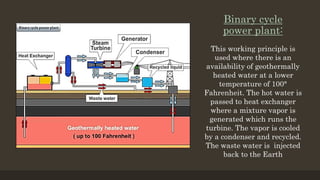
Binary cycle
power plant:
This working principle is
used where there is an
availability of geothermally
heated water at a lower
temperature of 100°
Fahrenheit. The hot water is
passed to heat exchanger
where a mixture vapor is
generated which runs the
turbine. The vapor is cooled
by a condenser and recycled.
The waste water is injected
back to the Earth
Geothermal Heat Pumps or Ground Source Heat
Pump (GSHP)-
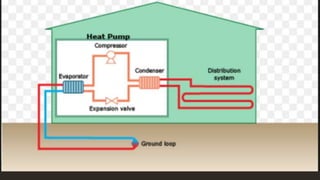
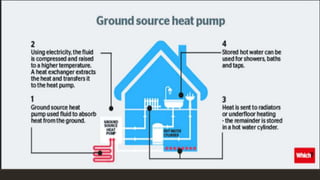
• A geothermal heat pump or ground source heat pump (GSHP) is a central heating
and cooling system that transfers heat to or from the ground.
• Earth acts as a very large store of heat energy. It can be used as a heat source in
winter, or a heat sink in summer. The ground can be used to moderate the
temperature in buildings standing on it.
• A ground source heat pump provides a clean way to heat buildings, free of all carbon
emissions on site. It can make use of solar energy stored in the ground to provide one
of the most energy-efficient ways of heating buildings. Solar recharge of the ground is
an integral part of ground source energy which is used to increase the efficiency of
ground source heat pumps.
• The only energy used by a ground source heat pump is electricity to power the
compressor and the circulation pumps which transfer heat energy from the ground
into the building. A well designed ground source heat pump installation will deliver
three or four times as much thermal energy (heat) as is used in electrical energy to
drive the system.
Advantages -
• There is no combustion involved and no emission of potentially
dangerous gases. No fuels are required.
• Heat pumps can also provide cooling in summer, as well as heating in
winter. Ground source heat pumps are the only renewable energy
technology that can benefit from the thermal energy storage properties of
the ground to recycle heat from summer to winter
• Ground Source Heat Pumps save money. Heat pumps are much cheaper
to run than direct electric heating systems.
• GSHPs require less maintenance than combustion based heating
systems. They also have a longer life than combustion boilers.
Disadvantages
• Potential emissions of greenhouse gases below the earth surface might
migrate to the earth surface and the atmosphere which can lead to an
increase in pollution level. Such emissions are higher in areas near
geothermal power plants.
• Construction of geothermal power plants can affect the stability of
land. In January 1997, the construction of a geothermal power plant in
Switzerland triggered an earthquake with a magnitude of 3.4 on the
Richter scale.
• Geothermal heat pumps have to be powered in order to function which
leads consumption of more energy in turn.
Quiz-
• What is geothermal energy ?
• Name two advantages of geothermal energy.
• Give example of a liquid that can be used as secondary liquid in binary cycle power
plant.
• Name two disadvantages of geothermal energy.
• Do you think we should use geothermal energy for the future? Why?
Bibliography
• https://openei.org/wiki/Definition:Ground_Source_Heat_Pumps
• https://www.azocleantech.com/article.aspx?ArticleID=335
• http://www.gshp.org.uk/Geothermal_Heat_Pumps.html
Thank You!:)

Geothermal Energy

  • 1.
    Geothermal Energy Done by:Sanaz Hussain and Epshita Tarannum
  • 2.
    Index What is geothermalenergy? Different uses of geothermal energy. Dry steam power plant. Flash steam power plant. Binary cycle power plant. Ground source heat pump(GSHP) Advantages Disadvantages
  • 3.
    What is geothermalenergy? Geothermal energy is the heat energy generated and stored in the Earth. The geothermal energy of the Earth’s crust originates from the original formation of the planet and from radioactive decay of materials. Geothermal energy is a non- conventional source of energy which in other words means it is renewable. The Blue Lagoon is a geothermal spa in Iceland
  • 4.
    Different Uses ofGeothermal Energy:  Geothermal energy can be extracted and converted into different forms of energy so that we can use it in our day to day life. Geothermal energy is mainly used for – • Heating water- [Geothermal heat pump(GHP)] • Air conditioning-[Geothermal heat pump(GHP)] • Electricity generation-[Geothermal power plants]  Geothermal energy is converted into electrical energy in geothermal power plants. Geothermal power plants mainly follow 3 working principles: • Dry steam • Flash steam • Binary cycle
  • 5.
    Dry steam power plant: Steamis directly generated from geothermal reservoirs and transferred to a turbine which is connected to a generator. The steam causes the turbine to rotate and the generator produces electricity. After rotating the turbine the steam goes to the condenser where it is converted into water (condensate) and injected back to the Earth through the injection well. However dry steam power plants cannot be built everywhere because it requires natural dry steam hydrothermal reservoirs which are very rare.
  • 6.
    Flash steam power plant: Powerplants using this working principle are made where there is an availability of geothermally heated water at a high temperature of 350° Fahrenheit. This water is called brine. Brine is transferred to a tank where it is converted into steam. The steam rotates the turbine which is connected to a generator and electricity is produced. After that, the waste brine injected back to the Earth.
  • 7.
    Binary cycle power plant: Thisworking principle is used where there is an availability of geothermally heated water at a lower temperature of 100° Fahrenheit. The hot water is passed to heat exchanger where a mixture vapor is generated which runs the turbine. The vapor is cooled by a condenser and recycled. The waste water is injected back to the Earth
  • 9.
    Geothermal Heat Pumpsor Ground Source Heat Pump (GSHP)- • A geothermal heat pump or ground source heat pump (GSHP) is a central heating and cooling system that transfers heat to or from the ground. • Earth acts as a very large store of heat energy. It can be used as a heat source in winter, or a heat sink in summer. The ground can be used to moderate the temperature in buildings standing on it. • A ground source heat pump provides a clean way to heat buildings, free of all carbon emissions on site. It can make use of solar energy stored in the ground to provide one of the most energy-efficient ways of heating buildings. Solar recharge of the ground is an integral part of ground source energy which is used to increase the efficiency of ground source heat pumps. • The only energy used by a ground source heat pump is electricity to power the compressor and the circulation pumps which transfer heat energy from the ground into the building. A well designed ground source heat pump installation will deliver three or four times as much thermal energy (heat) as is used in electrical energy to drive the system.
  • 12.
    Advantages - • Thereis no combustion involved and no emission of potentially dangerous gases. No fuels are required. • Heat pumps can also provide cooling in summer, as well as heating in winter. Ground source heat pumps are the only renewable energy technology that can benefit from the thermal energy storage properties of the ground to recycle heat from summer to winter • Ground Source Heat Pumps save money. Heat pumps are much cheaper to run than direct electric heating systems. • GSHPs require less maintenance than combustion based heating systems. They also have a longer life than combustion boilers.
  • 13.
    Disadvantages • Potential emissionsof greenhouse gases below the earth surface might migrate to the earth surface and the atmosphere which can lead to an increase in pollution level. Such emissions are higher in areas near geothermal power plants. • Construction of geothermal power plants can affect the stability of land. In January 1997, the construction of a geothermal power plant in Switzerland triggered an earthquake with a magnitude of 3.4 on the Richter scale. • Geothermal heat pumps have to be powered in order to function which leads consumption of more energy in turn.
  • 14.
    Quiz- • What isgeothermal energy ? • Name two advantages of geothermal energy. • Give example of a liquid that can be used as secondary liquid in binary cycle power plant. • Name two disadvantages of geothermal energy. • Do you think we should use geothermal energy for the future? Why?
  • 15.
  • 16.