Geothermal EnergyBy: Kyle Fisher, Andrew Colagreco, andPhilip Himmelstein.
Definition:thermal energy generated and stored in the EarthIt can be used for electrical use and also for home heating.The heat inside of the Earth originally came from volcanic activity and solar rays being absorbed when the Earth was formed.What is Geothermal Energy?
Definition: Electricity generated from geothermal energy.Geothermal plants run around the clock, which increase the reliability value of them. Which solar and wind are not able to do.The three types of geothermal plants are dry steam, flash steam, and binary cycle plants.Geothermal Electricity
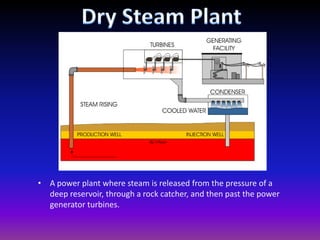
Dry Steam PlantA power plant where steam is released from the pressure of a deep reservoir, through a rock catcher, and then past the power generator turbines.
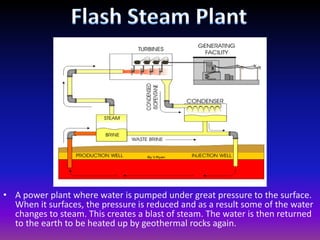
Flash Steam PlantA power plant where water is pumped under great pressure to the surface. When it surfaces, the pressure is reduced and as a result some of the water changes to steam. This creates a blast of steam. The water is then returned to the earth to be heated up by geothermal rocks again.
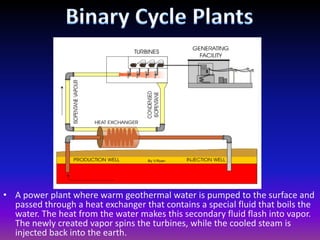
Binary Cycle PlantsA power plant where warm geothermal water is pumped to the surface and passed through a heat exchanger that contains a special fluid that boils the water. The heat from the water makes this secondary fluid flash into vapor. The newly created vapor spins the turbines, while the cooled steam is injected back into the earth.
Geothermal EnergyFor Home UseUsed mostly for domestic heating and coolingCreates absolutely no pollutionCan save you up to $2000.00 dollars annually
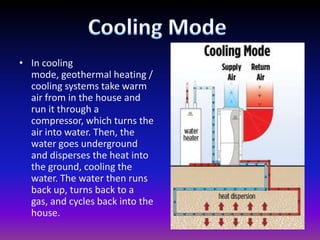
In cooling mode, geothermal heating / cooling systems take warm air from in the house and run it through a compressor, which turns the air into water. Then, the water goes underground and disperses the heat into the ground, cooling the water. The water then runs back up, turns back to a gas, and cycles back into the house.Cooling Mode
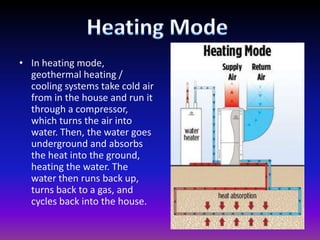
In heating mode, geothermal heating / cooling systems take cold air from in the house and run it through a compressor, which turns the air into water. Then, the water goes underground and absorbs the heat into the ground, heating the water. The water then runs back up, turns back to a gas, and cycles back into the house.Heating Mode
Geothermal Energy Pros & ConsThe six main areas of discussion about the pros and cons of geothermal energy are:- Environmental Friendliness- Reliability- Cost- Availability- Looks- Sustainability
Environmental FriendlinessProsConsBasically emission-freeSmallest land-use Produces  silica and sulfur dioxide (although barely any)
ReliabilityProsConsOnce in operation, the most reliable energy sourceNo purchase of fuelNo waste disposalEvery geothermal energy facility that has been built in the last 100 years is still in productionNONE
CostProsConsNo fuel costsIn competition with coal power plant prices, making them one of the cheapestHigh initial costs for construction
AvailabilityProsConsProvides ¼ of the Western US’s electricityDrilling technology is improving, increasing the range of geothermal use on the globePrimarily available where magma is close to the surface, which isn’t everywhereNot very vast amount of plants
LooksProsConsLeast aesthetic problems out of all power plantsLeast visual impact of any power generation technology availablePlants where river water is used for a cooling medium are built completely undergroundNONE
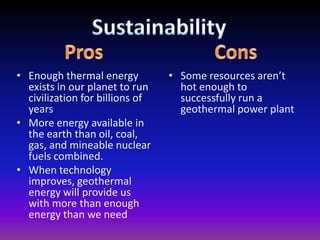
SustainabilityProsConsEnough thermal energy exists in our planet to run civilization for billions of yearsMore energy available in the earth than oil, coal, gas, and mineable nuclear fuels combined.When technology improves, geothermal energy will provide us with more than enough energy than we needSome resources aren’t hot enough to successfully run a geothermal power plant
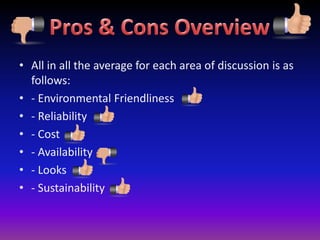
Pros & Cons OverviewAll in all the average for each area of discussion is as follows:- Environmental Friendliness- Reliability- Cost- Availability- Looks- Sustainability
ConclusionAll in all, Geothermal Energy is a long-lasting, efficient way to heat / cool your home and run some of the world’s electric power plants.

COMPLETED POWERPOINT (DONT DELETE)

  • 1.
    Geothermal EnergyBy: KyleFisher, Andrew Colagreco, andPhilip Himmelstein.
  • 2.
    Definition:thermal energy generatedand stored in the EarthIt can be used for electrical use and also for home heating.The heat inside of the Earth originally came from volcanic activity and solar rays being absorbed when the Earth was formed.What is Geothermal Energy?
  • 3.
    Definition: Electricity generatedfrom geothermal energy.Geothermal plants run around the clock, which increase the reliability value of them. Which solar and wind are not able to do.The three types of geothermal plants are dry steam, flash steam, and binary cycle plants.Geothermal Electricity
  • 4.
    Dry Steam PlantApower plant where steam is released from the pressure of a deep reservoir, through a rock catcher, and then past the power generator turbines.
  • 5.
    Flash Steam PlantApower plant where water is pumped under great pressure to the surface. When it surfaces, the pressure is reduced and as a result some of the water changes to steam. This creates a blast of steam. The water is then returned to the earth to be heated up by geothermal rocks again.
  • 6.
    Binary Cycle PlantsApower plant where warm geothermal water is pumped to the surface and passed through a heat exchanger that contains a special fluid that boils the water. The heat from the water makes this secondary fluid flash into vapor. The newly created vapor spins the turbines, while the cooled steam is injected back into the earth.
  • 7.
    Geothermal EnergyFor HomeUseUsed mostly for domestic heating and coolingCreates absolutely no pollutionCan save you up to $2000.00 dollars annually
  • 8.
    In cooling mode,geothermal heating / cooling systems take warm air from in the house and run it through a compressor, which turns the air into water. Then, the water goes underground and disperses the heat into the ground, cooling the water. The water then runs back up, turns back to a gas, and cycles back into the house.Cooling Mode
  • 9.
    In heating mode,geothermal heating / cooling systems take cold air from in the house and run it through a compressor, which turns the air into water. Then, the water goes underground and absorbs the heat into the ground, heating the water. The water then runs back up, turns back to a gas, and cycles back into the house.Heating Mode
  • 10.
    Geothermal Energy Pros& ConsThe six main areas of discussion about the pros and cons of geothermal energy are:- Environmental Friendliness- Reliability- Cost- Availability- Looks- Sustainability
  • 11.
    Environmental FriendlinessProsConsBasically emission-freeSmallestland-use Produces silica and sulfur dioxide (although barely any)
  • 12.
    ReliabilityProsConsOnce in operation,the most reliable energy sourceNo purchase of fuelNo waste disposalEvery geothermal energy facility that has been built in the last 100 years is still in productionNONE
  • 13.
    CostProsConsNo fuel costsIncompetition with coal power plant prices, making them one of the cheapestHigh initial costs for construction
  • 14.
    AvailabilityProsConsProvides ¼ ofthe Western US’s electricityDrilling technology is improving, increasing the range of geothermal use on the globePrimarily available where magma is close to the surface, which isn’t everywhereNot very vast amount of plants
  • 15.
    LooksProsConsLeast aesthetic problemsout of all power plantsLeast visual impact of any power generation technology availablePlants where river water is used for a cooling medium are built completely undergroundNONE
  • 16.
    SustainabilityProsConsEnough thermal energyexists in our planet to run civilization for billions of yearsMore energy available in the earth than oil, coal, gas, and mineable nuclear fuels combined.When technology improves, geothermal energy will provide us with more than enough energy than we needSome resources aren’t hot enough to successfully run a geothermal power plant
  • 17.
    Pros & ConsOverviewAll in all the average for each area of discussion is as follows:- Environmental Friendliness- Reliability- Cost- Availability- Looks- Sustainability
  • 18.
    ConclusionAll in all,Geothermal Energy is a long-lasting, efficient way to heat / cool your home and run some of the world’s electric power plants.