COASTSCOASTS
WHAT IS A COAST?
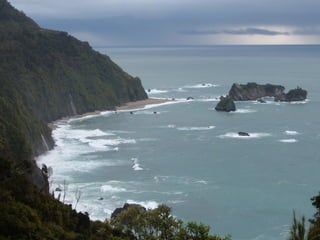
• A coastline or a seashore is the area where land
meets the sea or ocean, or a line that forms the
boundary between the land and the ocean or a lake.
ETYMOLOGY
– The term "coastal zone" is a region where
interaction of the sea and land processes occurs.
–
– Both the terms coast and coastal are often used to
describe a geographic location or region; for example,
New Zealand's West Coast, or the East and West Coasts of
the United States.
PELAGIC COASTS AND SHORES
• A pelagic coast refers to a coast which fronts the
open ocean, as opposed to a more sheltered coast.
• A shore refers to parts of the land which adjoin any
large body of water, including oceans (sea shore) and
lakes (lake shore).
FORMATION OF THE COASTS
• Tides determine the range over which sediment is
deposited or eroded. The tidal range is influenced by
the size and shape of the coastline.
– Waves erode coastline as they break on shore releasing
their energy; the larger the wave the more energy it
releases and the more sediment it moves.
ENVIRONMENTAL IMPORTANCE
• The coast is an important part of a local ecosystem:
the mixture of fresh water and salt water provides
many nutrients for marine life. Salt marshes and
beaches also support a diversity of plants, animals
and insects crucial to the food chain.
HUMAN USES OF A COAST
• More and more of the world's people live in coastal
regions. Many major cities are on or near good
harbours and have port facilities.
– The coast is a frontier that nations have typically defended
against military invaders, smugglers and illegal migrants.
Fixed coastal defenses have long been erected in many
nations and coastal countries typically have a navy and
some form of coast guard.
COASTS AND TOURISM
• Coasts with beaches and warm water attract
tourists. In many island nations such as those of the
Mediterranean, South Pacific and Caribbean, tourism
is central to the economy. Coasts offer recreational
activities such as swimming, fishing, surfing,
boating, and sunbathing.
COAST POLLUTION
• Pollution can occur from a number of sources:
garbage and industrial debris; the transportation of
petroleum in tankers, or increasing the probability of
large oil spills.
FISHING DECLINING
• Fishing has declined due to habitat degradation,
overfishing, trawling, bycatch and climate change.
COASTAL LANDFORMS
Coastal landforms are: bays, capes, coves, gulfs,
headlands and peninsulas.
CLIFF EROSION
Much of the sediment deposited along a coast is the
result of erosion of a surrounding cliff, or bluff.
NATURAL ARCH
A natural arch is formed when a sea stacks is eroded
through by waves.
SEA CAVES
Sea caves are made when certain rock beds are more
susceptible to erosion than the surrounding rock beds
because of different areas of weakness. These areas
are eroded at a faster pace creating a hole that,
through time, by means of wave action and erosion,
becomes a cave.
STACKS
A stack is formed when a headland is eroded away by
wave and wind action.
STUMPS
A stump is a shortened sea stack that has been eroded
away or fallen because of instability.
WAVE-CUT NOTCHES
Wave-cut notches are caused by the undercutting of
overhanging slopes which leads to increased stress on
cliff material and a greater probability that the slope
material will fall.
The fallen debris accumulates at the bottom of the cliff and is
eventually removed by waves.
WAVE-CUT PLATFORM
A wave-cut platform forms after erosion and retreat of
a sea cliff has been occurring for a long time. Gently
sloping wave-cut platforms develop early on in the first
stages of cliff retreat.
Later the length of the platform decreases because the waves
lose their energy as they break further off shore.

GEOGRAPHY YEAR 9 - LANDFORMS - COASTS

  • 1.
  • 2.
    WHAT IS ACOAST? • A coastline or a seashore is the area where land meets the sea or ocean, or a line that forms the boundary between the land and the ocean or a lake.
  • 4.
    ETYMOLOGY – The term"coastal zone" is a region where interaction of the sea and land processes occurs. – – Both the terms coast and coastal are often used to describe a geographic location or region; for example, New Zealand's West Coast, or the East and West Coasts of the United States.
  • 5.
    PELAGIC COASTS ANDSHORES • A pelagic coast refers to a coast which fronts the open ocean, as opposed to a more sheltered coast. • A shore refers to parts of the land which adjoin any large body of water, including oceans (sea shore) and lakes (lake shore).
  • 7.
    FORMATION OF THECOASTS • Tides determine the range over which sediment is deposited or eroded. The tidal range is influenced by the size and shape of the coastline. – Waves erode coastline as they break on shore releasing their energy; the larger the wave the more energy it releases and the more sediment it moves.
  • 8.
    ENVIRONMENTAL IMPORTANCE • Thecoast is an important part of a local ecosystem: the mixture of fresh water and salt water provides many nutrients for marine life. Salt marshes and beaches also support a diversity of plants, animals and insects crucial to the food chain.
  • 9.
    HUMAN USES OFA COAST • More and more of the world's people live in coastal regions. Many major cities are on or near good harbours and have port facilities. – The coast is a frontier that nations have typically defended against military invaders, smugglers and illegal migrants. Fixed coastal defenses have long been erected in many nations and coastal countries typically have a navy and some form of coast guard.
  • 10.
    COASTS AND TOURISM •Coasts with beaches and warm water attract tourists. In many island nations such as those of the Mediterranean, South Pacific and Caribbean, tourism is central to the economy. Coasts offer recreational activities such as swimming, fishing, surfing, boating, and sunbathing.
  • 11.
    COAST POLLUTION • Pollutioncan occur from a number of sources: garbage and industrial debris; the transportation of petroleum in tankers, or increasing the probability of large oil spills.
  • 12.
    FISHING DECLINING • Fishinghas declined due to habitat degradation, overfishing, trawling, bycatch and climate change.
  • 13.
    COASTAL LANDFORMS Coastal landformsare: bays, capes, coves, gulfs, headlands and peninsulas.
  • 14.
    CLIFF EROSION Much ofthe sediment deposited along a coast is the result of erosion of a surrounding cliff, or bluff.
  • 15.
    NATURAL ARCH A naturalarch is formed when a sea stacks is eroded through by waves.
  • 16.
    SEA CAVES Sea cavesare made when certain rock beds are more susceptible to erosion than the surrounding rock beds because of different areas of weakness. These areas are eroded at a faster pace creating a hole that, through time, by means of wave action and erosion, becomes a cave.
  • 17.
    STACKS A stack isformed when a headland is eroded away by wave and wind action.
  • 18.
    STUMPS A stump isa shortened sea stack that has been eroded away or fallen because of instability.
  • 19.
    WAVE-CUT NOTCHES Wave-cut notchesare caused by the undercutting of overhanging slopes which leads to increased stress on cliff material and a greater probability that the slope material will fall. The fallen debris accumulates at the bottom of the cliff and is eventually removed by waves.
  • 20.
    WAVE-CUT PLATFORM A wave-cutplatform forms after erosion and retreat of a sea cliff has been occurring for a long time. Gently sloping wave-cut platforms develop early on in the first stages of cliff retreat. Later the length of the platform decreases because the waves lose their energy as they break further off shore.