CAMERA
SHOTS/ANGLES
Natalie Rockall
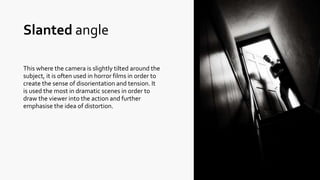
Slanted angle
This where the camera is slightly tilted around the
subject, it is often used in horror films in order to
create the sense of disorientation and tension. It
is used the most in dramatic scenes in order to
draw the viewer into the action and further
emphasise the idea of distortion.
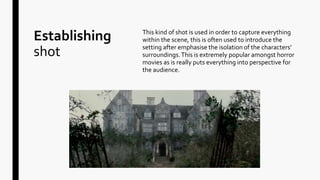
Establishing
shot
This kind of shot is used in order to capture everything
within the scene, this is often used to introduce the
setting after emphasise the isolation of the characters’
surroundings.This is extremely popular amongst horror
movies as is really puts everything into perspective for
the audience.
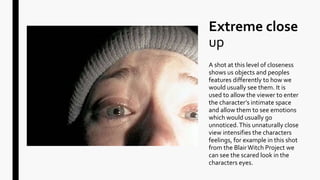
Extreme close
up
A shot at this level of closeness
shows us objects and peoples
features differently to how we
would usually see them. It is
used to allow the viewer to enter
the character’s intimate space
and allow them to see emotions
which would usually go
unnoticed.This unnaturally close
view intensifies the characters
feelings, for example in this shot
from the BlairWitch Project we
can see the scared look in the
characters eyes.
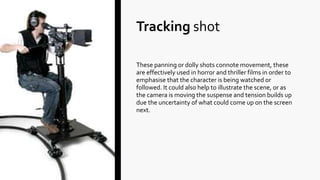
Tracking shot
These panning or dolly shots connote movement, these
are effectively used in horror and thriller films in order to
emphasise that the character is being watched or
followed. It could also help to illustrate the scene, or as
the camera is moving the suspense and tension builds up
due the uncertainty of what could come up on the screen
next.
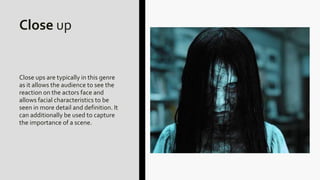
Close up
Close ups are typically in this genre
as it allows the audience to see the
reaction on the actors face and
allows facial characteristics to be
seen in more detail and definition. It
can additionally be used to capture
the importance of a scene.
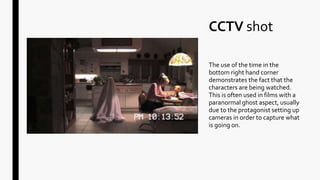
CCTV shot
The use of the time in the
bottom right hand corner
demonstrates the fact that the
characters are being watched.
This is often used in films with a
paranormal ghost aspect, usually
due to the protagonist setting up
cameras in order to capture what
is going on.
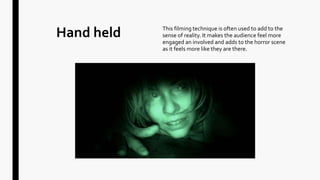
Hand held This filming technique is often used to add to the
sense of reality. It makes the audience feel more
engaged an involved and adds to the horror scene
as it feels more like they are there.
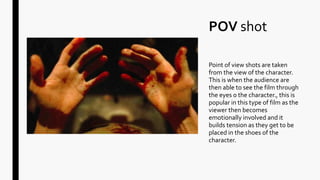
POV shot
Point of view shots are taken
from the view of the character.
This is when the audience are
then able to see the film through
the eyes o the character., this is
popular in this type of film as the
viewer then becomes
emotionally involved and it
builds tension as they get to be
placed in the shoes of the
character.
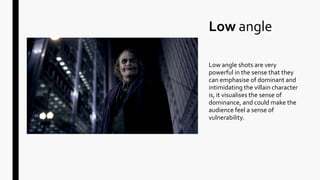
Low angle
Low angle shots are very
powerful in the sense that they
can emphasise of dominant and
intimidating the villain character
is, it visualises the sense of
dominance, and could make the
audience feel a sense of
vulnerability.
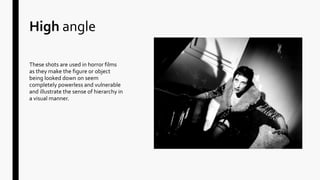
High angle
These shots are used in horror films
as they make the figure or object
being looked down on seem
completely powerless and vulnerable
and illustrate the sense of hierarchy in
a visual manner.

Genre Camera Research

  • 1.
  • 2.
    Slanted angle This wherethe camera is slightly tilted around the subject, it is often used in horror films in order to create the sense of disorientation and tension. It is used the most in dramatic scenes in order to draw the viewer into the action and further emphasise the idea of distortion.
  • 3.
    Establishing shot This kind ofshot is used in order to capture everything within the scene, this is often used to introduce the setting after emphasise the isolation of the characters’ surroundings.This is extremely popular amongst horror movies as is really puts everything into perspective for the audience.
  • 4.
    Extreme close up A shotat this level of closeness shows us objects and peoples features differently to how we would usually see them. It is used to allow the viewer to enter the character’s intimate space and allow them to see emotions which would usually go unnoticed.This unnaturally close view intensifies the characters feelings, for example in this shot from the BlairWitch Project we can see the scared look in the characters eyes.
  • 5.
    Tracking shot These panningor dolly shots connote movement, these are effectively used in horror and thriller films in order to emphasise that the character is being watched or followed. It could also help to illustrate the scene, or as the camera is moving the suspense and tension builds up due the uncertainty of what could come up on the screen next.
  • 6.
    Close up Close upsare typically in this genre as it allows the audience to see the reaction on the actors face and allows facial characteristics to be seen in more detail and definition. It can additionally be used to capture the importance of a scene.
  • 7.
    CCTV shot The useof the time in the bottom right hand corner demonstrates the fact that the characters are being watched. This is often used in films with a paranormal ghost aspect, usually due to the protagonist setting up cameras in order to capture what is going on.
  • 8.
    Hand held Thisfilming technique is often used to add to the sense of reality. It makes the audience feel more engaged an involved and adds to the horror scene as it feels more like they are there.
  • 9.
    POV shot Point ofview shots are taken from the view of the character. This is when the audience are then able to see the film through the eyes o the character., this is popular in this type of film as the viewer then becomes emotionally involved and it builds tension as they get to be placed in the shoes of the character.
  • 10.
    Low angle Low angleshots are very powerful in the sense that they can emphasise of dominant and intimidating the villain character is, it visualises the sense of dominance, and could make the audience feel a sense of vulnerability.
  • 11.
    High angle These shotsare used in horror films as they make the figure or object being looked down on seem completely powerless and vulnerable and illustrate the sense of hierarchy in a visual manner.