Features and types of
Documentaries
Features of Documentaries
1. Observation
2. Interview
3. Dramatisation
4. Mise-en-scene
5. Exposition
Observation
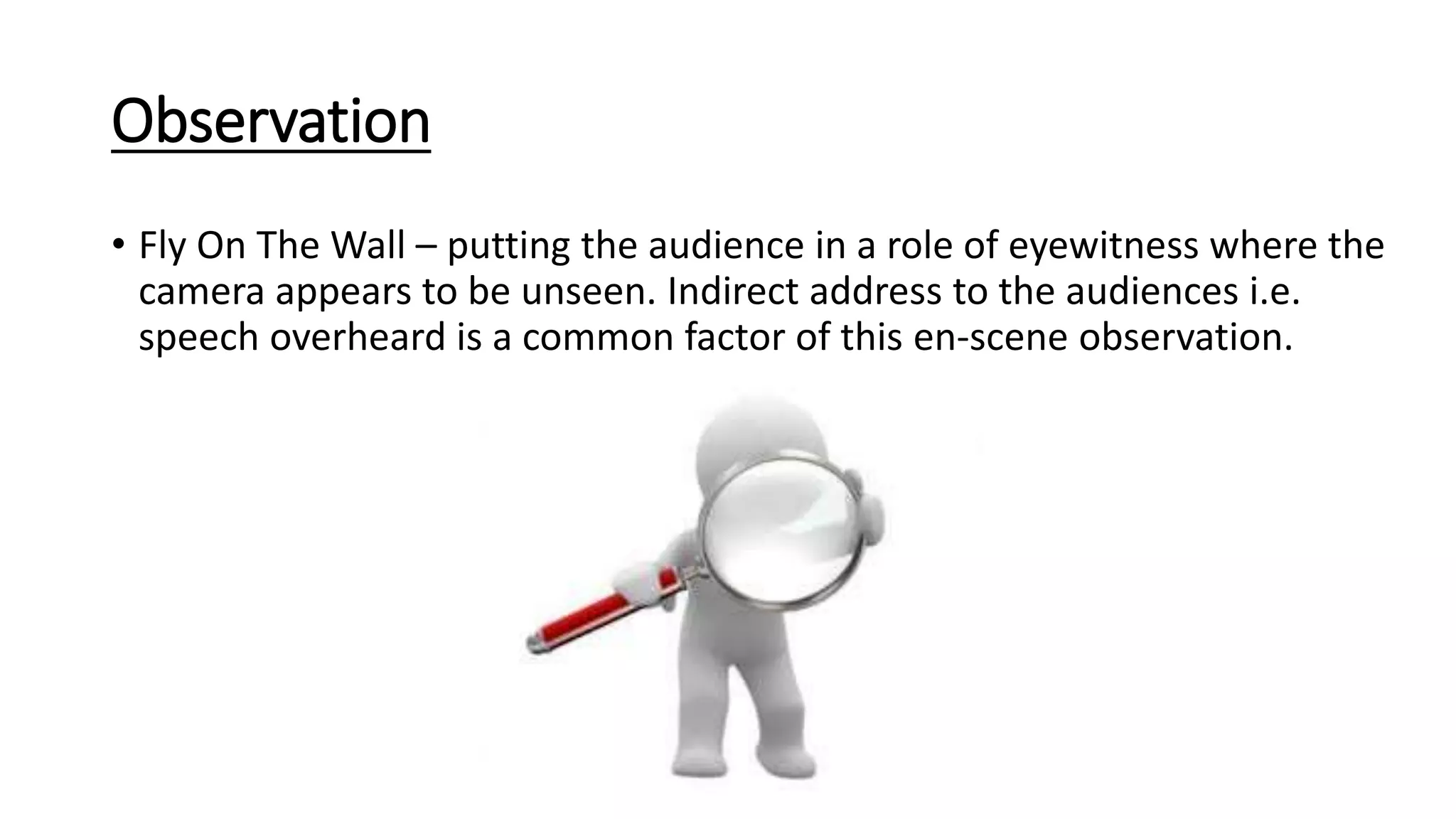
• Fly On The Wall – putting the audience in a role of eyewitness where the
camera appears to be unseen. Indirect address to the audiences i.e.
speech overheard is a common factor of this en-scene observation.
Interview
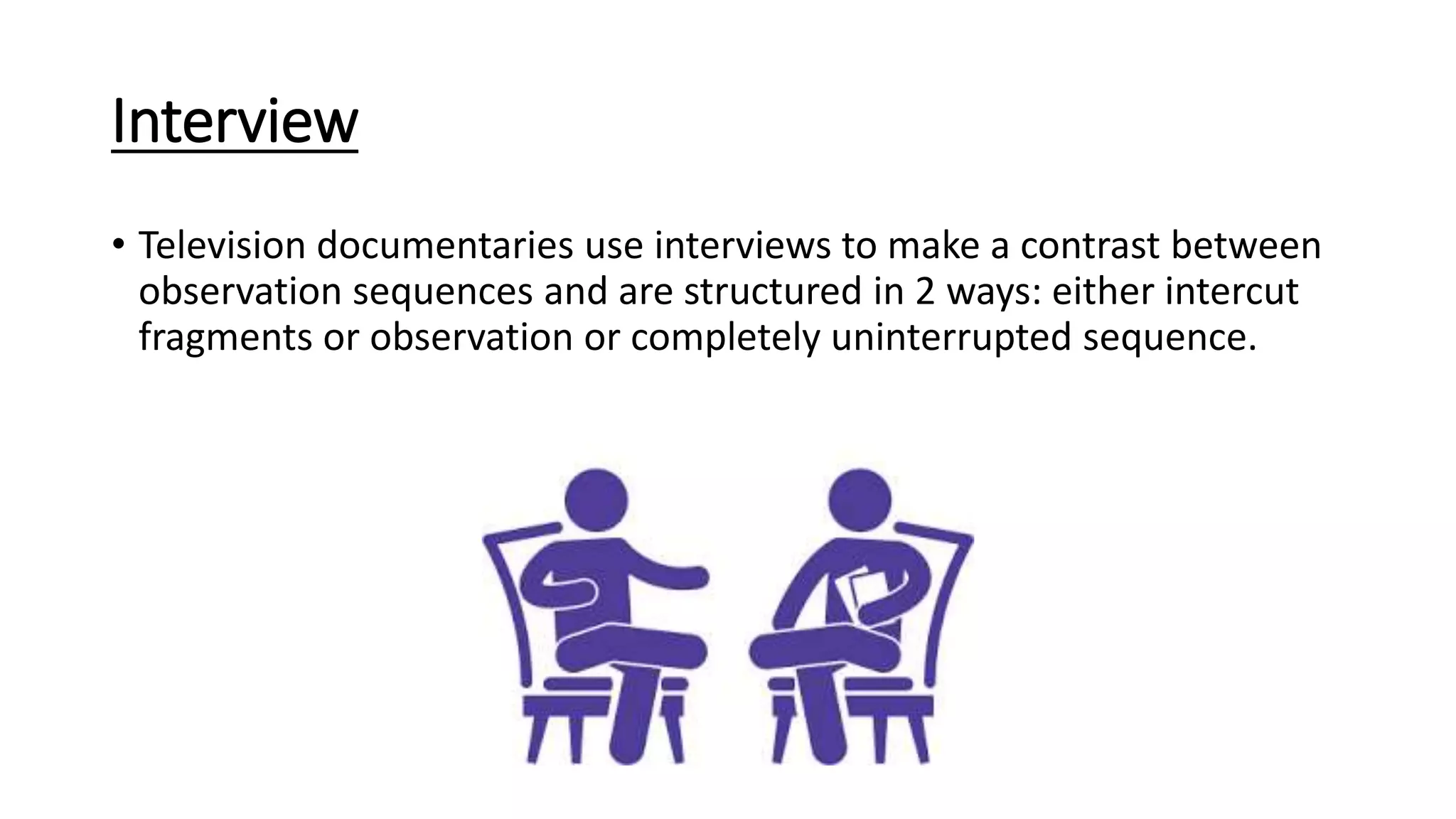
• Television documentaries use interviews to make a contrast between
observation sequences and are structured in 2 ways: either intercut
fragments or observation or completely uninterrupted sequence.
Dramatisation
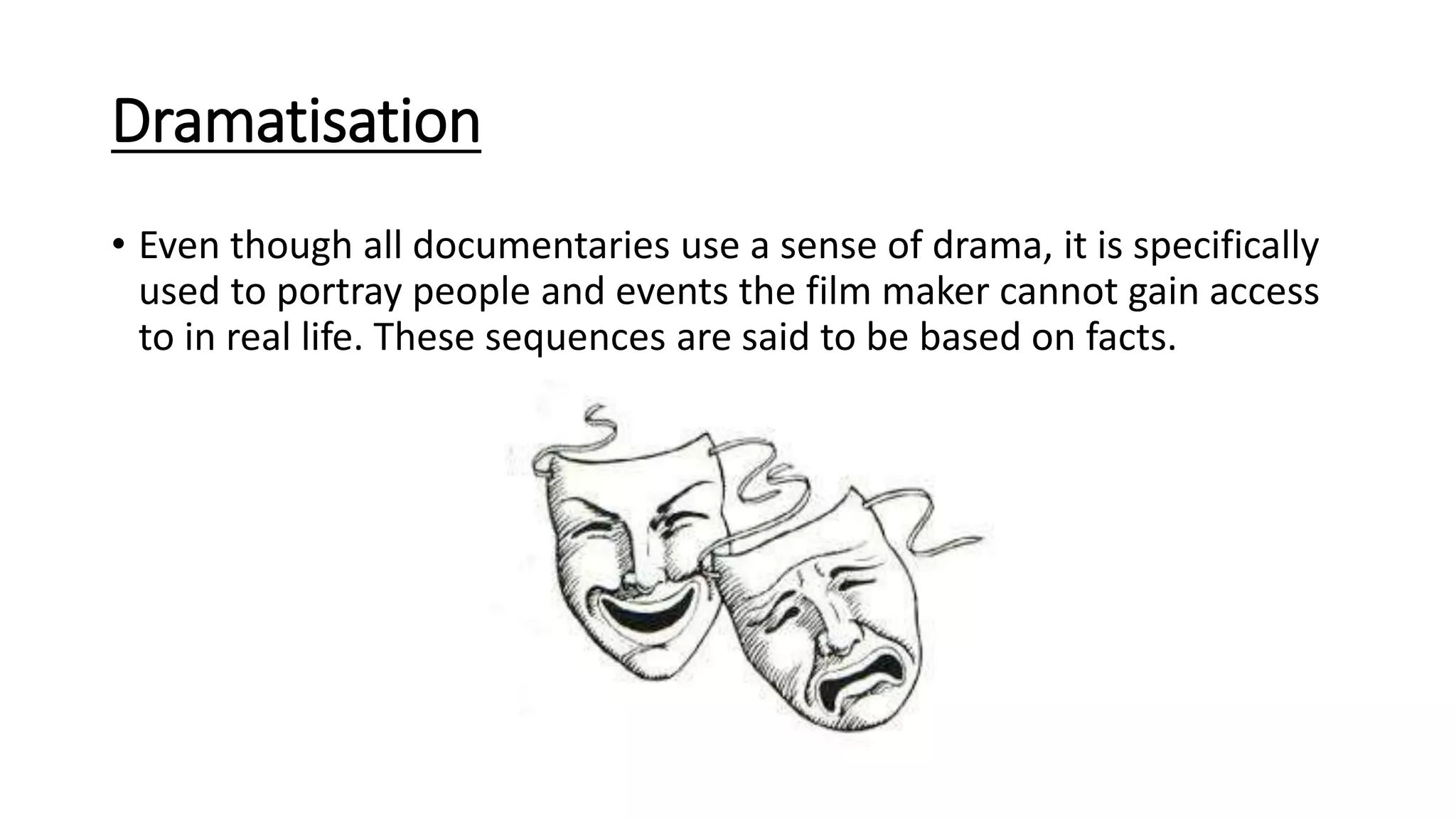
• Even though all documentaries use a sense of drama, it is specifically
used to portray people and events the film maker cannot gain access
to in real life. These sequences are said to be based on facts.
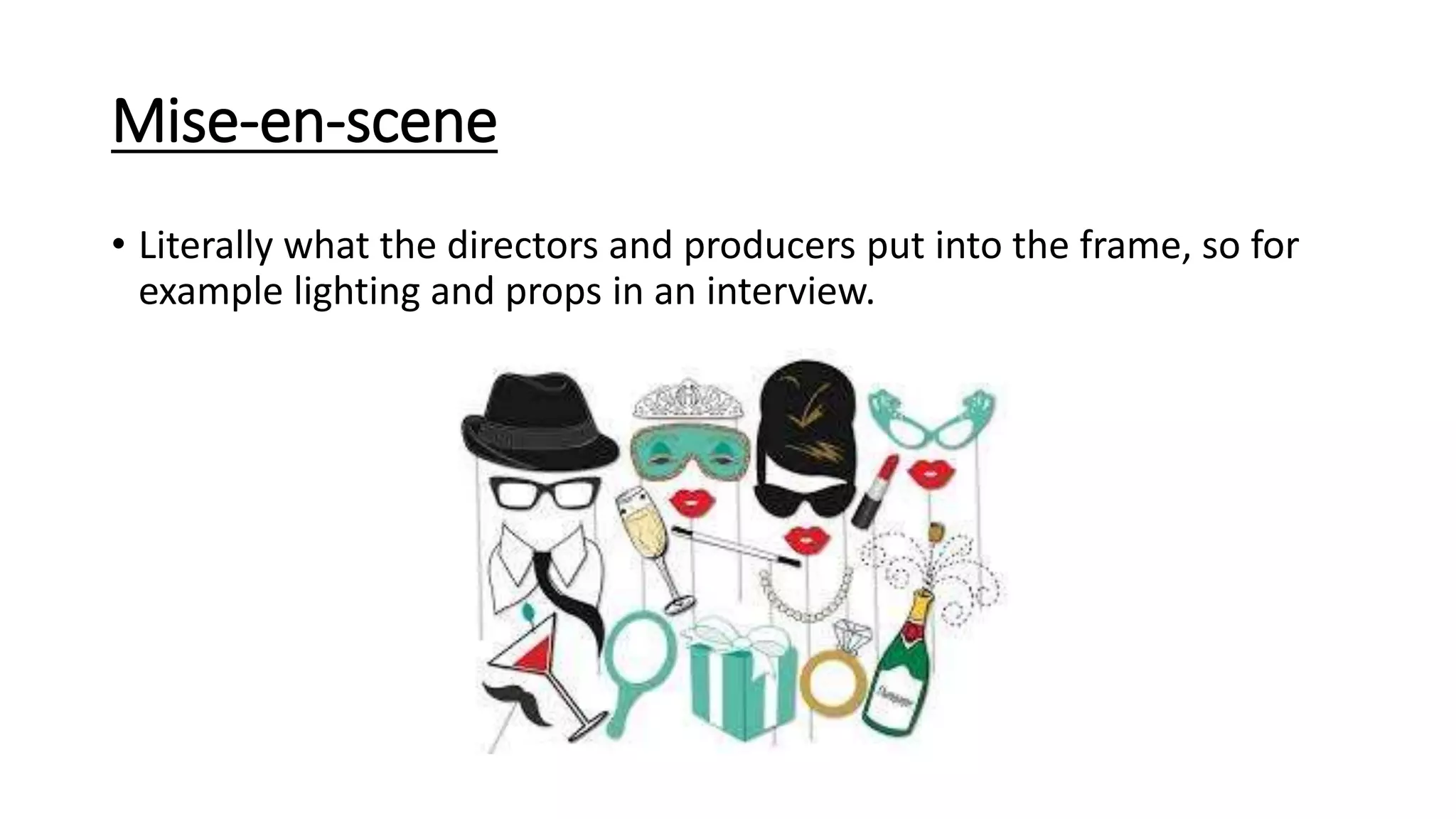
Mise-en-scene
• Literally what the directors and producers put into the frame, so for
example lighting and props in an interview.
Exposition
• Simply means the line of argument in a documentary which is what
the documentary is ‘saying’. Sequences that lead the audience to
make their own conclusions.
Types of Documentaries
1. Fully Narrated
2. Fly on the wall
3. Mixed
4. Self reflective
5. Docu-drama
6. Docu-soap
Fully Narrated
• Direct address documentaries use of the screen voiceover to convey
the exposition. The narrator seems authorative about the topic
allowing them to make sense of visuals. A.K.A ‘Voice of God’.
Fly on the Wall
• Rely almost totally on observation, as the cameras are left to record
without interference and viewers come to their own conclusions.
Mixed
• Uses a combination of interview, observation and narration to
advance the argument. Narrator is within the frame and this style is
most common in news reporting.
Self Reflective
• The subjects of a documentary acknowledge the presence of the
camera and speaks directly to the film maker. Makes a point of
drawing attention the film maker to create a view of reality.
Docu-drama
• A re-enactment of events as they are supposed to of happened.
Fictional narrative is combined with elements of the exposition,
however critics claim that docu-dramas will only ever deliver fiction.
Docu-soap
• A phenomenon of recent years which follow the daily lives of
particular people. E.g. ‘Airport’. Many dispute whether these are real
documentaries in any sense.
Current Affairs
• These are different from documentaries. Journalist based
programmes that aim to address news in more depth. Differences
include the pressure of deadlines, i.e. documentaries may take
several months to create, therefore allowing them to be a lot more in
depth, where as Current Affairs must have a new story daily, so each
story will only be examined in a 5-10 minute slot. Audience is a varied
one for Current Affairs, i.e. many watch for pleasure as well as
information.

Features and types of documentaries

  • 1.
    Features and typesof Documentaries
  • 2.
    Features of Documentaries 1.Observation 2. Interview 3. Dramatisation 4. Mise-en-scene 5. Exposition
  • 3.
    Observation • Fly OnThe Wall – putting the audience in a role of eyewitness where the camera appears to be unseen. Indirect address to the audiences i.e. speech overheard is a common factor of this en-scene observation.
  • 4.
    Interview • Television documentariesuse interviews to make a contrast between observation sequences and are structured in 2 ways: either intercut fragments or observation or completely uninterrupted sequence.
  • 5.
    Dramatisation • Even thoughall documentaries use a sense of drama, it is specifically used to portray people and events the film maker cannot gain access to in real life. These sequences are said to be based on facts.
  • 6.
    Mise-en-scene • Literally whatthe directors and producers put into the frame, so for example lighting and props in an interview.
  • 7.
    Exposition • Simply meansthe line of argument in a documentary which is what the documentary is ‘saying’. Sequences that lead the audience to make their own conclusions.
  • 8.
    Types of Documentaries 1.Fully Narrated 2. Fly on the wall 3. Mixed 4. Self reflective 5. Docu-drama 6. Docu-soap
  • 9.
    Fully Narrated • Directaddress documentaries use of the screen voiceover to convey the exposition. The narrator seems authorative about the topic allowing them to make sense of visuals. A.K.A ‘Voice of God’.
  • 10.
    Fly on theWall • Rely almost totally on observation, as the cameras are left to record without interference and viewers come to their own conclusions.
  • 11.
    Mixed • Uses acombination of interview, observation and narration to advance the argument. Narrator is within the frame and this style is most common in news reporting.
  • 12.
    Self Reflective • Thesubjects of a documentary acknowledge the presence of the camera and speaks directly to the film maker. Makes a point of drawing attention the film maker to create a view of reality.
  • 13.
    Docu-drama • A re-enactmentof events as they are supposed to of happened. Fictional narrative is combined with elements of the exposition, however critics claim that docu-dramas will only ever deliver fiction.
  • 14.
    Docu-soap • A phenomenonof recent years which follow the daily lives of particular people. E.g. ‘Airport’. Many dispute whether these are real documentaries in any sense.
  • 15.
    Current Affairs • Theseare different from documentaries. Journalist based programmes that aim to address news in more depth. Differences include the pressure of deadlines, i.e. documentaries may take several months to create, therefore allowing them to be a lot more in depth, where as Current Affairs must have a new story daily, so each story will only be examined in a 5-10 minute slot. Audience is a varied one for Current Affairs, i.e. many watch for pleasure as well as information.