Introduction to Documentaries 
The purpose of a documentary is to 
document an aspect of life. 
A documentary has to: 
Inform 
Educate 
Investigate 
Entertain 
They are subject specific with an 
argument/clear point including 
facts presented in different styles. 
A documentary film is a nonfictional 
motion picture intended to 
document some aspect of reality, 
primarily for the purposes of 
instruction or maintaining a 
historical record. 
Early film (pre-1900) was dominated by the novelty of showing 
an event. They were single-shot moments captured on film: a 
train entering a station, a boat docking, or factory workers 
leaving work. These short films were called "actuality" films; 
the term "documentary" was not coined until 1926. Many of 
the first films, such as those made by Auguste and Louis 
Lumière, were a minute or less in length, due to technological 
limitations. 
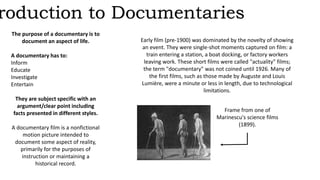
Frame from one of 
Marinescu's science films 
(1899).
Direct Cinema was a large movement in the late 1950’s to early 1960’s in North America. It 
was characterized initially by filmmakers' desire to directly capture reality and represent it 
truthfully. It began to question the relationship of reality with cinema. It aimed to present 
social and political issues in the era as a piece of recorded history for future generations. 
Cinema Verite was a similar movement created in France by Jean Rouch. It was a 
minimalistic style of film making that convoyed real life events happening in France, as the 
same in USA to record as history for other generations. In these films the viewers are shown 
a front account analysis of what is happening in the country perhaps.
Features of a Documentary 
Observation 
Observation is when the 
creator of the documentary 
monitors someone or 
something closely showing a 
clear focused aspect to the 
viewer. This is more than likely 
done with the use of a camera. 
Mise-En-Scene 
An expression used to describe 
the designs/aspects of a film 
or theatre production. This 
means visual theme or telling 
a story from on the use of the 
background presented 
Exposition 
The exposition is the part of a 
story/film that introduces an 
important background 
information to the 
documentary for the viewers 
purpose. Eg, characters back 
stories, information on settings 
and events occurring before 
the main plot. 
Interview 
An interview is a conversation 
between two individuals with 
questions about the focus of 
the documentary being asked. 
This extracts facts and 
information from the 
interviewee for viewers. 
Dramatisation 
Dramatisation is a 
reconstruction of events used 
to create a story/idea to a 
dramatic extent. This makes 
the documentary more 
fascinating for the audience to 
watch.
Documentary TypesA fully narrated documentary has an 
off screen voice playing throughout. 
This type of narration is mostly seen in 
documentaries that focus on nature. 
The narration in these documentaries 
is what some people call a “voice of 
god” as it knows everything about the 
subject and gives specific information 
to the topic for the audience. 
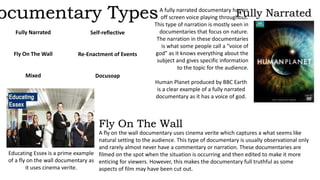
Human Planet produced by BBC Earth 
is a clear example of a fully narrated 
documentary as it has a voice of god. 
A fly on the wall documentary uses cinema verite which captures a what seems like 
natural setting to the audience. This type of documentary is usually observational only 
and rarely almost never have a commentary or narration. These documentaries are 
filmed on the spot when the situation is occurring and then edited to make it more 
enticing for viewers. However, this makes the documentary full truthful as some 
aspects of film may have been cut out. 
Fully Narrated 
Fly On The Wall 
Mixed 
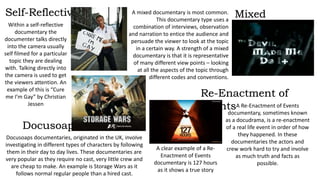
Educating Essex is a prime example 
of a fly on the wall documentary as 
it uses cinema verite. 
Self-reflective 
Re-Enactment of Events 
Docusoap
A mixed documentary is most common. 
This documentary type uses a 
combination of interviews, observation 
and narration to entice the audience and 
persuade the viewer to look at the topic 
in a certain way. A strength of a mixed 
documentary is that it is representative 
of many different view points – looking 
at all the aspects of the topic through 
different codes and conventions. 
Within a self-reflective 
documentary the 
documenter talks directly 
into the camera usually 
self filmed for a particular 
topic they are dealing 
with. Talking directly into 
the camera is used to get 
the viewers attention. An 
example of this is “Cure 
me I’m Gay” by Christian 
Jessen A Re-Enactment of Events 
documentary, sometimes known 
as a docudrama, is a re-enactment 
of a real life event in order of how 
they happened. In these 
documentaries the actors and 
crew work hard to try and involve 
as much truth and facts as 
possible. 
Docusoaps documentaries, originated in the UK, involve 
investigating in different types of characters by following 
them in their day to day lives. These documentaries are 
very popular as they require no cast, very little crew and 
are cheap to make. An example is Storage Wars as it 
follows normal regular people than a hired cast. 
A clear example of a Re- 
Enactment of Events 
documentary is 127 hours 
as it shows a true story

Documentary Genre Analysis

  • 1.
    Introduction to Documentaries The purpose of a documentary is to document an aspect of life. A documentary has to: Inform Educate Investigate Entertain They are subject specific with an argument/clear point including facts presented in different styles. A documentary film is a nonfictional motion picture intended to document some aspect of reality, primarily for the purposes of instruction or maintaining a historical record. Early film (pre-1900) was dominated by the novelty of showing an event. They were single-shot moments captured on film: a train entering a station, a boat docking, or factory workers leaving work. These short films were called "actuality" films; the term "documentary" was not coined until 1926. Many of the first films, such as those made by Auguste and Louis Lumière, were a minute or less in length, due to technological limitations. Frame from one of Marinescu's science films (1899).
  • 2.
    Direct Cinema wasa large movement in the late 1950’s to early 1960’s in North America. It was characterized initially by filmmakers' desire to directly capture reality and represent it truthfully. It began to question the relationship of reality with cinema. It aimed to present social and political issues in the era as a piece of recorded history for future generations. Cinema Verite was a similar movement created in France by Jean Rouch. It was a minimalistic style of film making that convoyed real life events happening in France, as the same in USA to record as history for other generations. In these films the viewers are shown a front account analysis of what is happening in the country perhaps.
  • 3.
    Features of aDocumentary Observation Observation is when the creator of the documentary monitors someone or something closely showing a clear focused aspect to the viewer. This is more than likely done with the use of a camera. Mise-En-Scene An expression used to describe the designs/aspects of a film or theatre production. This means visual theme or telling a story from on the use of the background presented Exposition The exposition is the part of a story/film that introduces an important background information to the documentary for the viewers purpose. Eg, characters back stories, information on settings and events occurring before the main plot. Interview An interview is a conversation between two individuals with questions about the focus of the documentary being asked. This extracts facts and information from the interviewee for viewers. Dramatisation Dramatisation is a reconstruction of events used to create a story/idea to a dramatic extent. This makes the documentary more fascinating for the audience to watch.
  • 4.
    Documentary TypesA fullynarrated documentary has an off screen voice playing throughout. This type of narration is mostly seen in documentaries that focus on nature. The narration in these documentaries is what some people call a “voice of god” as it knows everything about the subject and gives specific information to the topic for the audience. Human Planet produced by BBC Earth is a clear example of a fully narrated documentary as it has a voice of god. A fly on the wall documentary uses cinema verite which captures a what seems like natural setting to the audience. This type of documentary is usually observational only and rarely almost never have a commentary or narration. These documentaries are filmed on the spot when the situation is occurring and then edited to make it more enticing for viewers. However, this makes the documentary full truthful as some aspects of film may have been cut out. Fully Narrated Fly On The Wall Mixed Educating Essex is a prime example of a fly on the wall documentary as it uses cinema verite. Self-reflective Re-Enactment of Events Docusoap
  • 5.
    A mixed documentaryis most common. This documentary type uses a combination of interviews, observation and narration to entice the audience and persuade the viewer to look at the topic in a certain way. A strength of a mixed documentary is that it is representative of many different view points – looking at all the aspects of the topic through different codes and conventions. Within a self-reflective documentary the documenter talks directly into the camera usually self filmed for a particular topic they are dealing with. Talking directly into the camera is used to get the viewers attention. An example of this is “Cure me I’m Gay” by Christian Jessen A Re-Enactment of Events documentary, sometimes known as a docudrama, is a re-enactment of a real life event in order of how they happened. In these documentaries the actors and crew work hard to try and involve as much truth and facts as possible. Docusoaps documentaries, originated in the UK, involve investigating in different types of characters by following them in their day to day lives. These documentaries are very popular as they require no cast, very little crew and are cheap to make. An example is Storage Wars as it follows normal regular people than a hired cast. A clear example of a Re- Enactment of Events documentary is 127 hours as it shows a true story