











genomics in
public health
Tracking & treating disease with DNA sequencing
Dr. Jennifer Gardy, BC Centre for Disease Control
@jennifergardy
jennifer.gardy@bccdc.ca
HelLO!
Senior Scientist (Genomics),BCCDC
Asst.Professor,UBC SPPH
Canada Research Chair in Public Health Genomics
agenda of fun
Where does microbiology fit in public health?
What are we doing now? Diagnostics & outbreaks
The genomics revolution
Current genomics approaches in public health microbiology
Future directions
Goal: show you a very cool domain where
interesting genomics is maybe going to prevent
us all from dying of something awful
microbiology in public health
public health (noun, ˈpə-blik ˈhelth):
the organized efforts of society to keep people healthy and
prevent injury, illness and premature death, combining
programs, services and policies that protect and promote
people’s health.
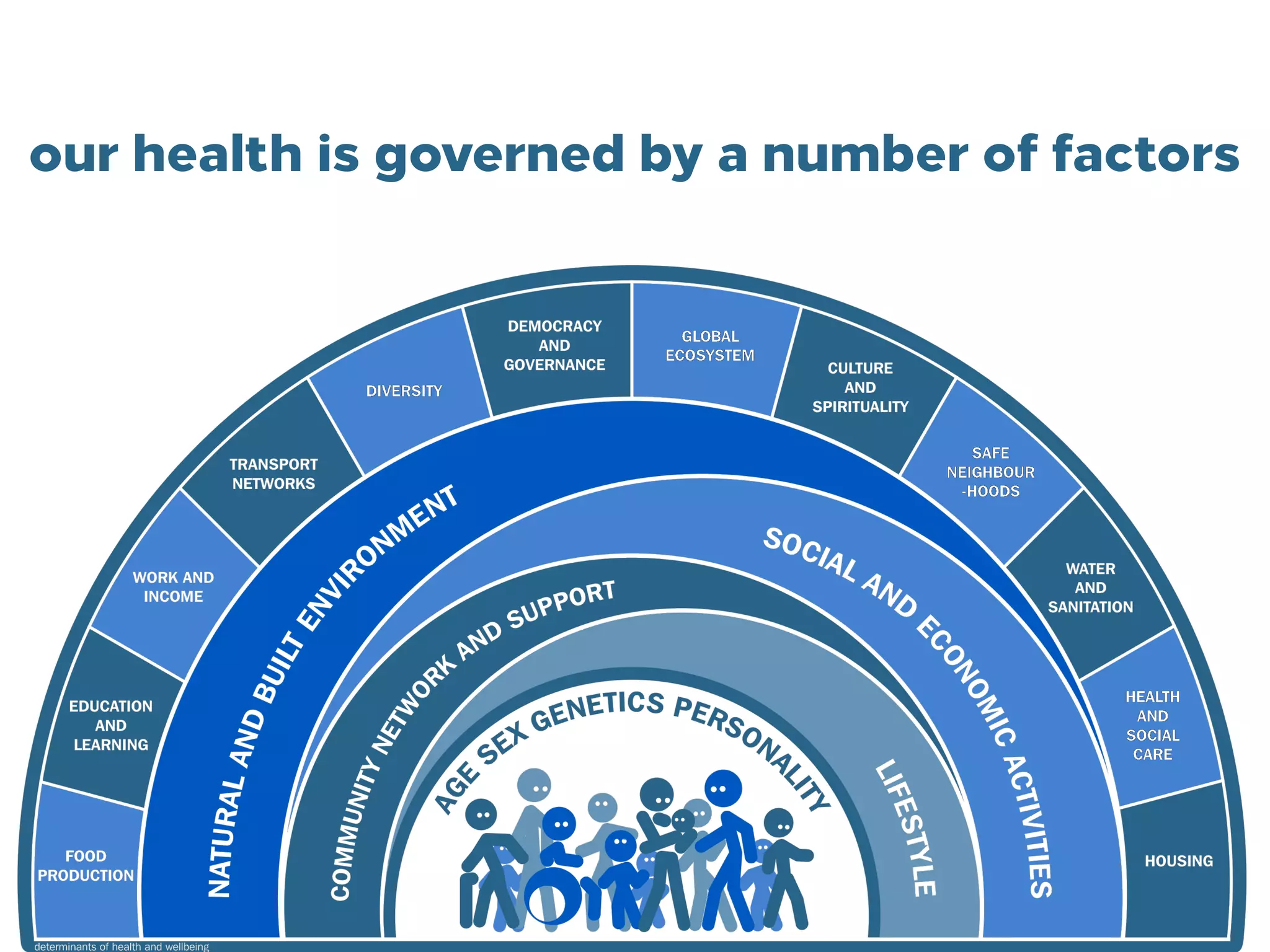
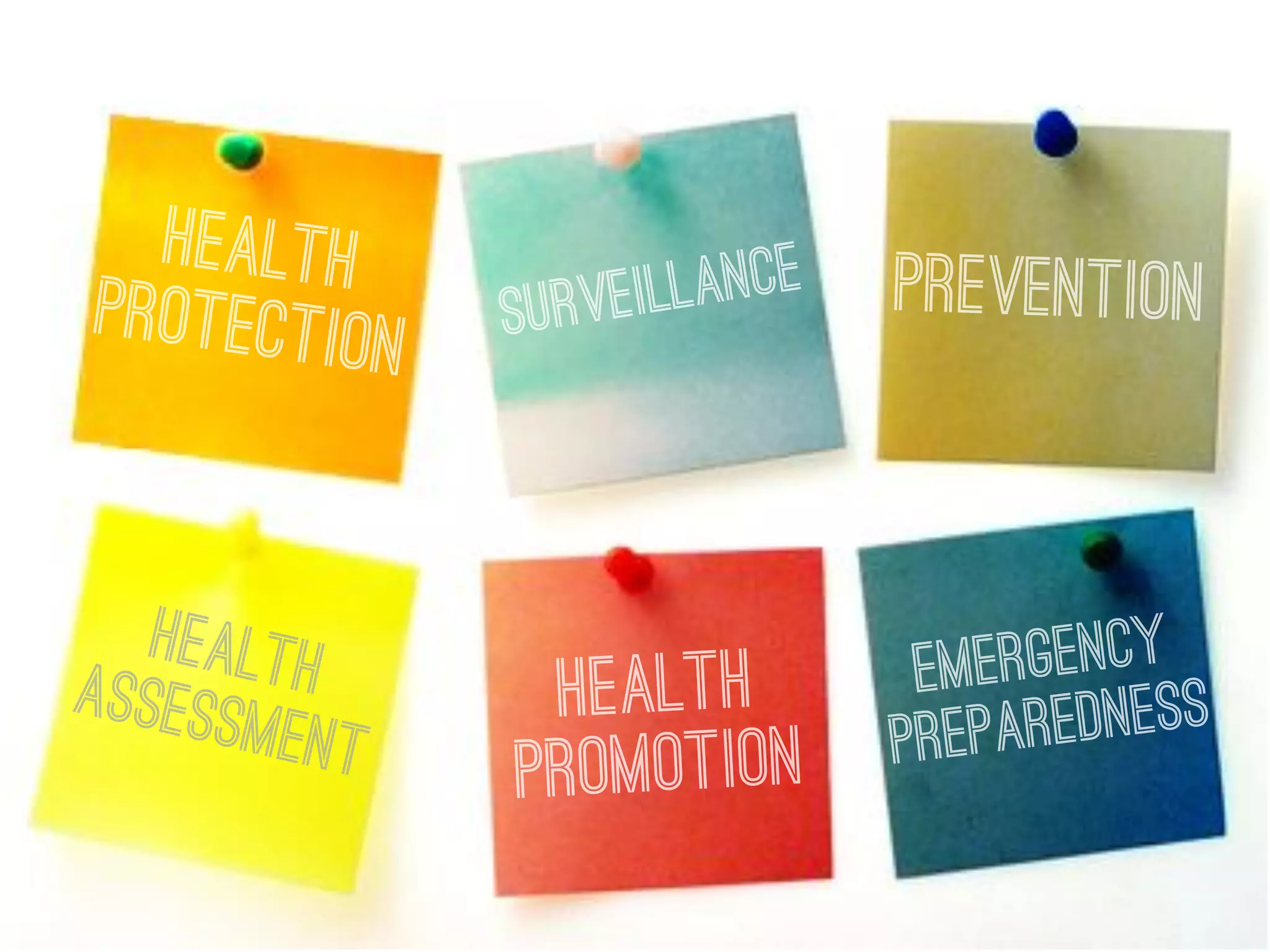
our health is governed by a number of factors
health
protection surveillance prevention
healthassessment
health
promotion
emergency
preparedness
the public health lab
patient sample for diagnosis
study sample for surveillance
environmental sample
patient sample for diagnosis
what does this patient have?
how should I treat them?
study sample for surveillance
what is circulating in our population?
what does this mean for PH?
environmental sample
what is circulating in our water, food?
what does this mean for PH?
What are we doing now?
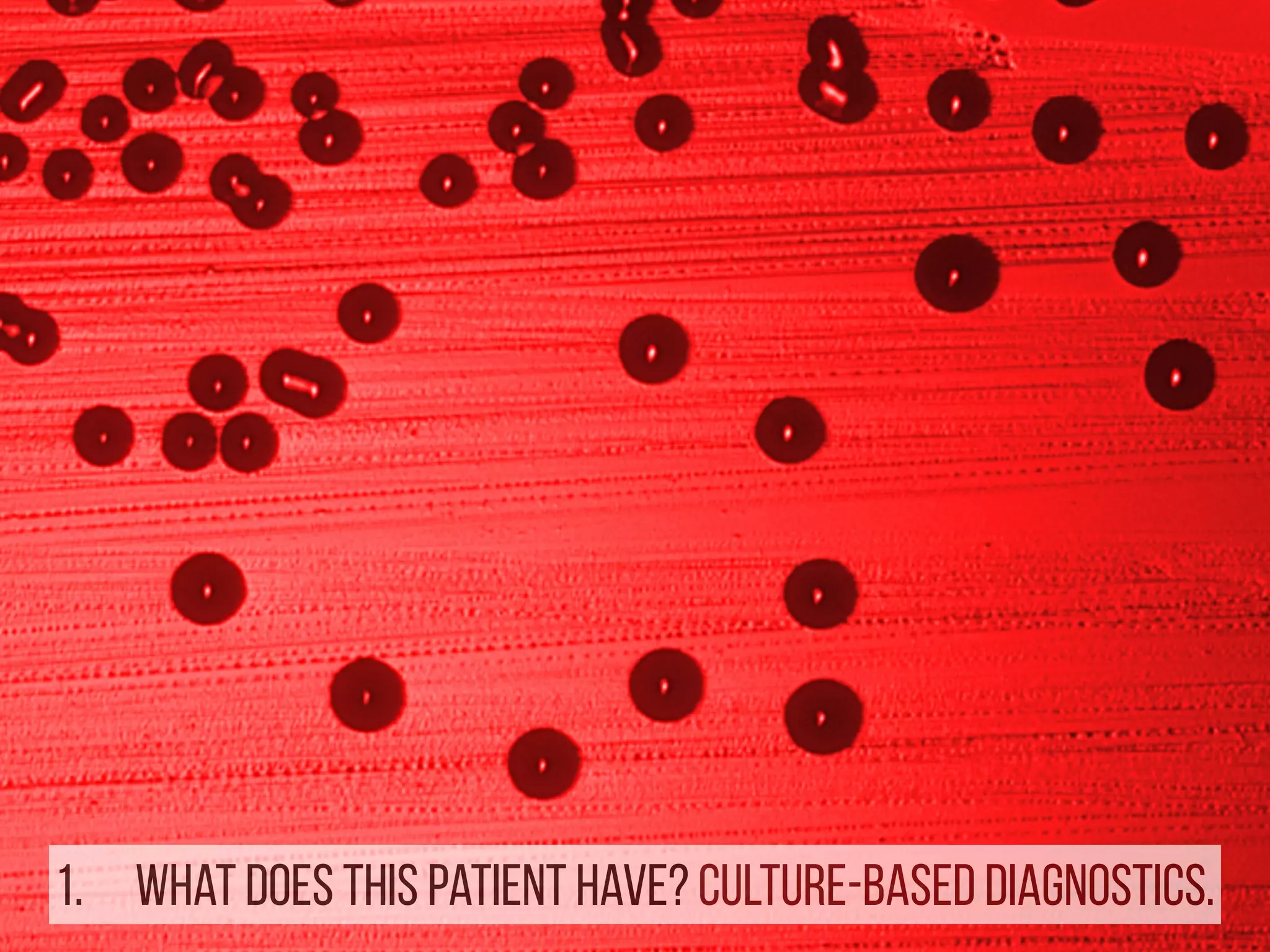
1. What does this patient have? Culture-based diagnostics.
2. What does this patient have? serology
3. What does this patient have?
nucleic acid amplification testing.
a representative example:
mycobacterial diagnostics
1
Clinician suspects TB
DAY 0
1 2
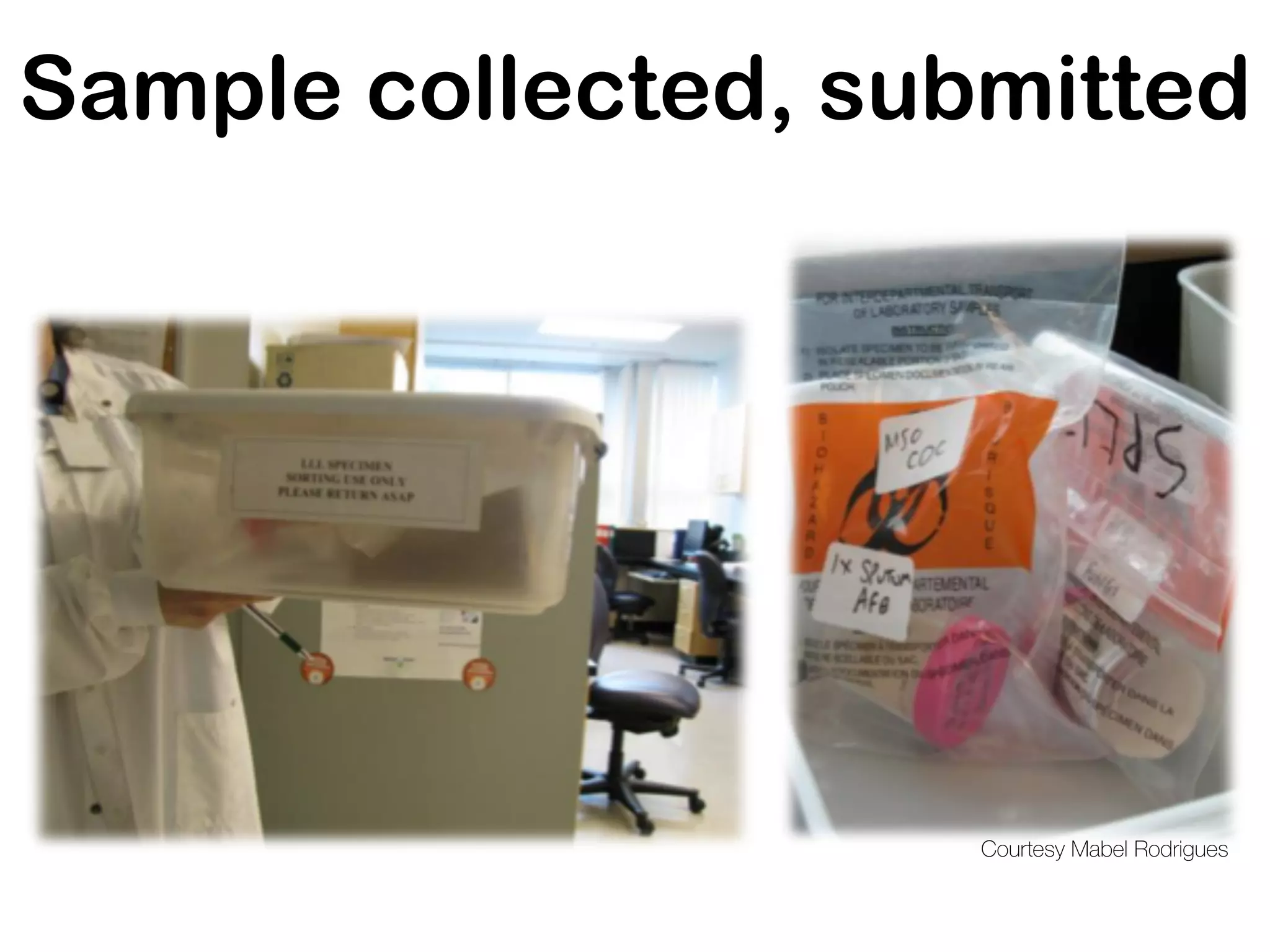
Sample collected, submitted
DAY 0
Sample collected, submitted
Courtesy Mabel Rodrigues
1 2 3
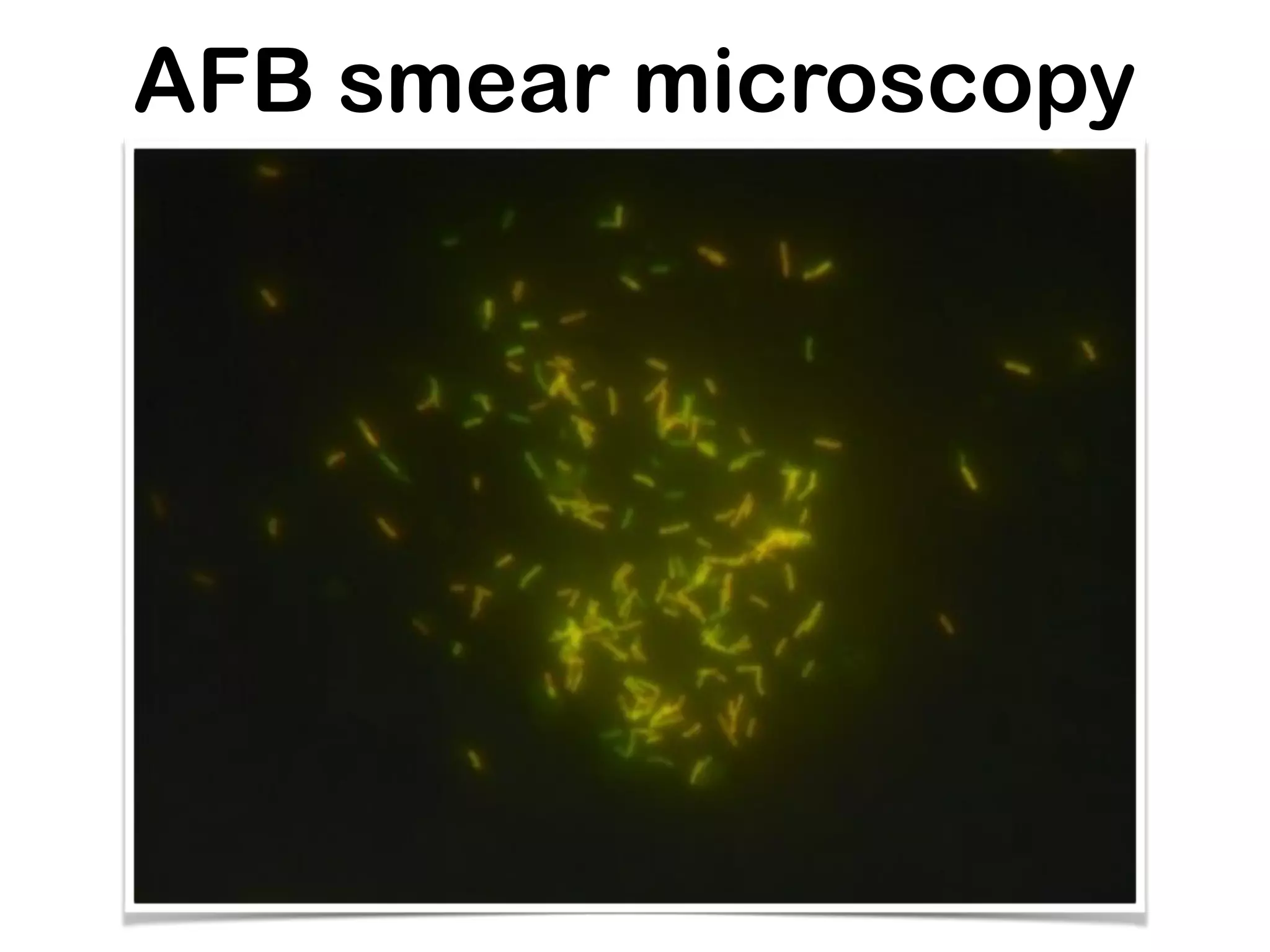
AFB smear microscopy
DAY 1-2
Slides are prepped
Courtesy Mabel Rodrigues
Smears are read
Courtesy Mabel Rodrigues
AFB smear microscopy
1 2 3
Nucleic Acid Amplification Testing (NAAT)
3*
DAY 2-3
Prelim report issued
1 2 3 4
Inoculate into culture
DAY 1
Solid culture on LJ
Courtesy Mabel Rodrigues
Liquid culture on Bactec MGIT
Courtesy Mabel Rodrigues
2nd report issued with
culture results
Success! I have diagnosed my patient.
Now what do I treat them with?
AMR occurs through multiple routes
1. what do i treat this patient with? phenotypic dst.
2. What do i treat this patient with?
molecular testing.
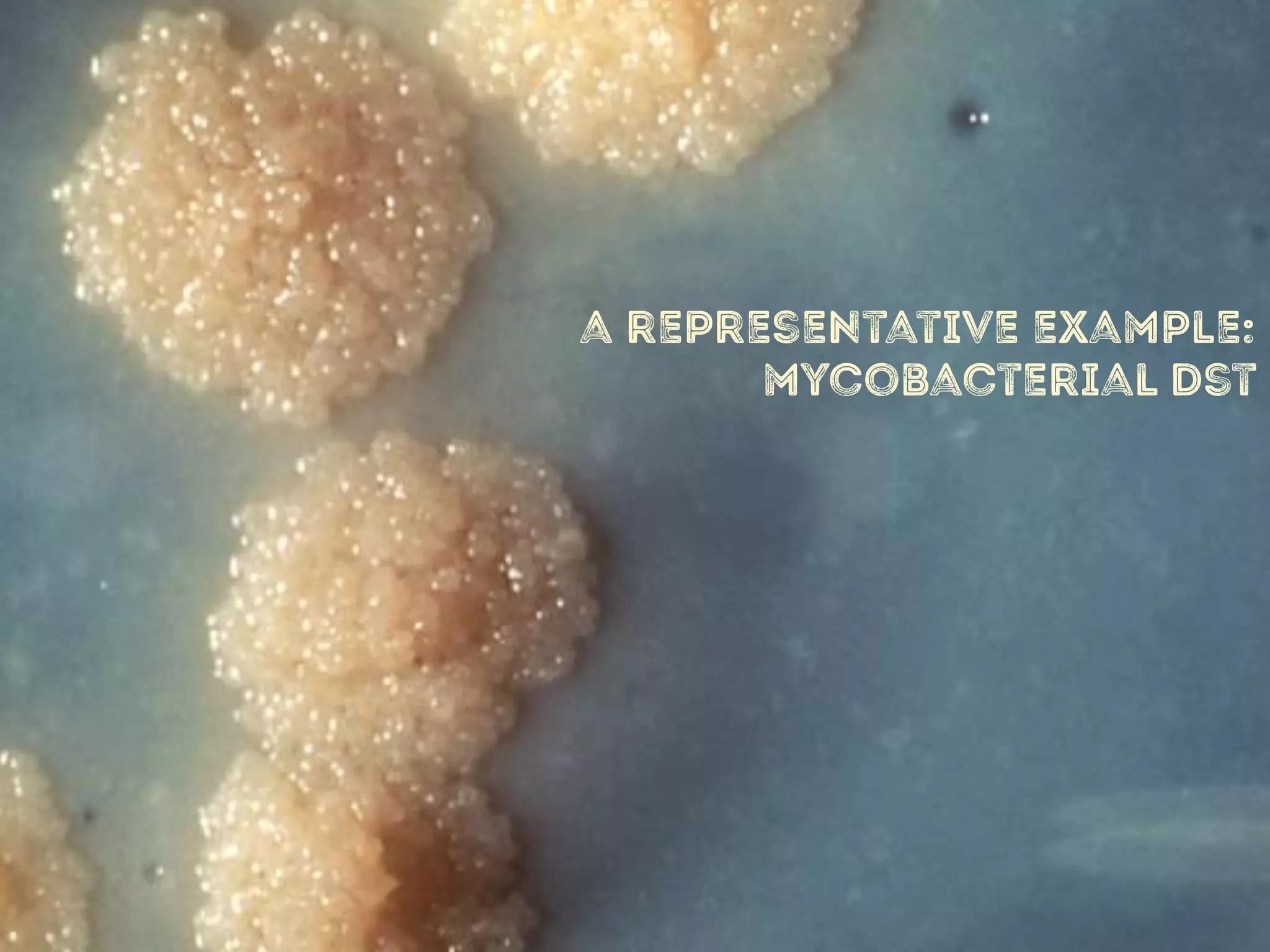
a representative example:
mycobacterial dst
Liquid culture on Bactec MGIT
Courtesy Mabel Rodrigues
Third report issued after
DST results
Cool. Thanks. I’m done.
Over to you, public health.
Public health: what’s going around and why?
communicable disease surveillance
• multiple data streams: lab positives,
other reports, physician billing
codes, alert healthcare workers
• what is out there?
• is there more than usual?
• are blips due to an outbreak?
?
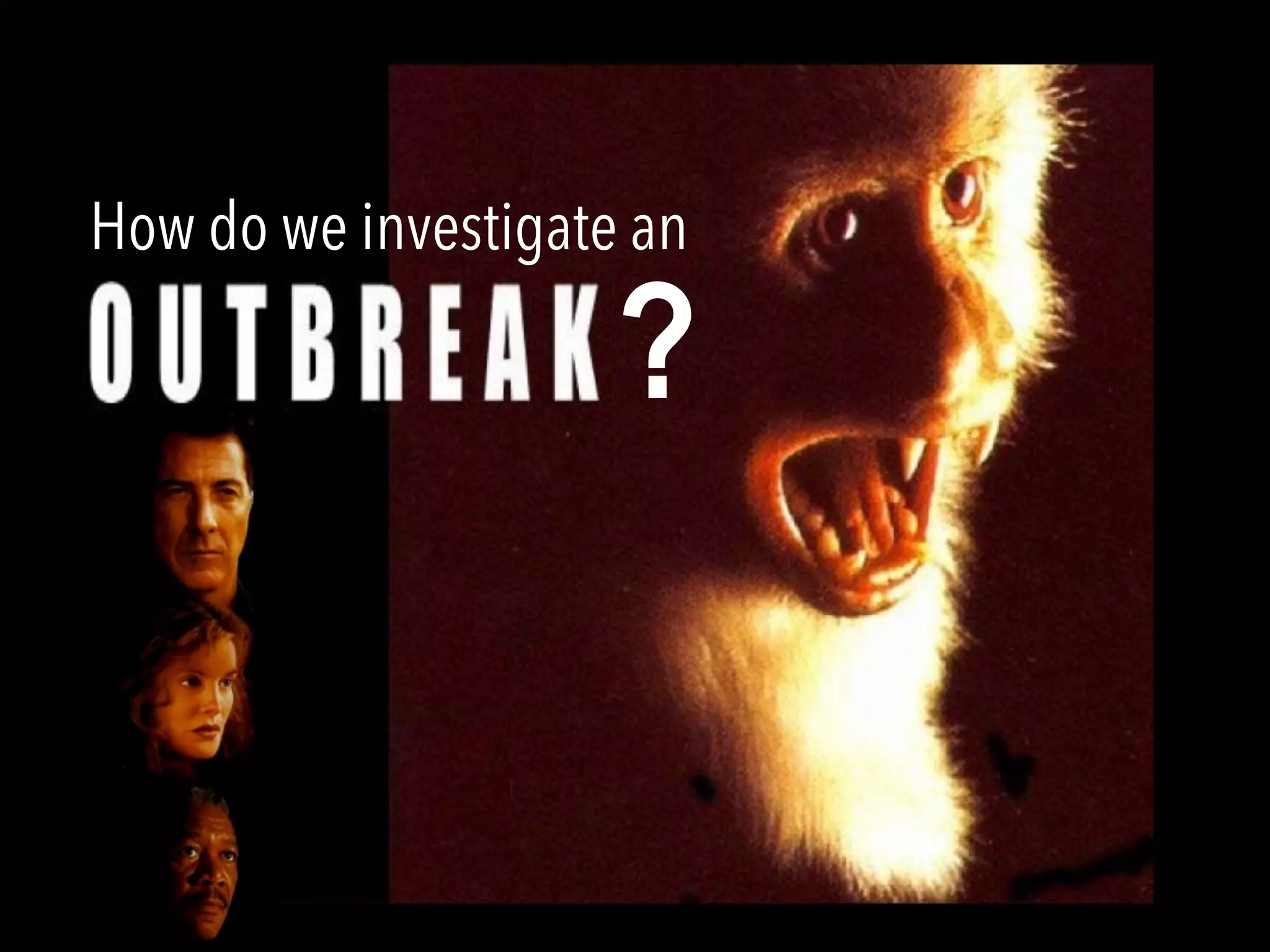
How do we investigate an
SURVEILLANCE IDENTIFIES CASES
MOLECULAR EPIDEMIOLOGY IDENTIFIES
POTENTIALLY RELATED CASES
Restrictiondigest(RFLP) Multilocussequencetyping(MLST)
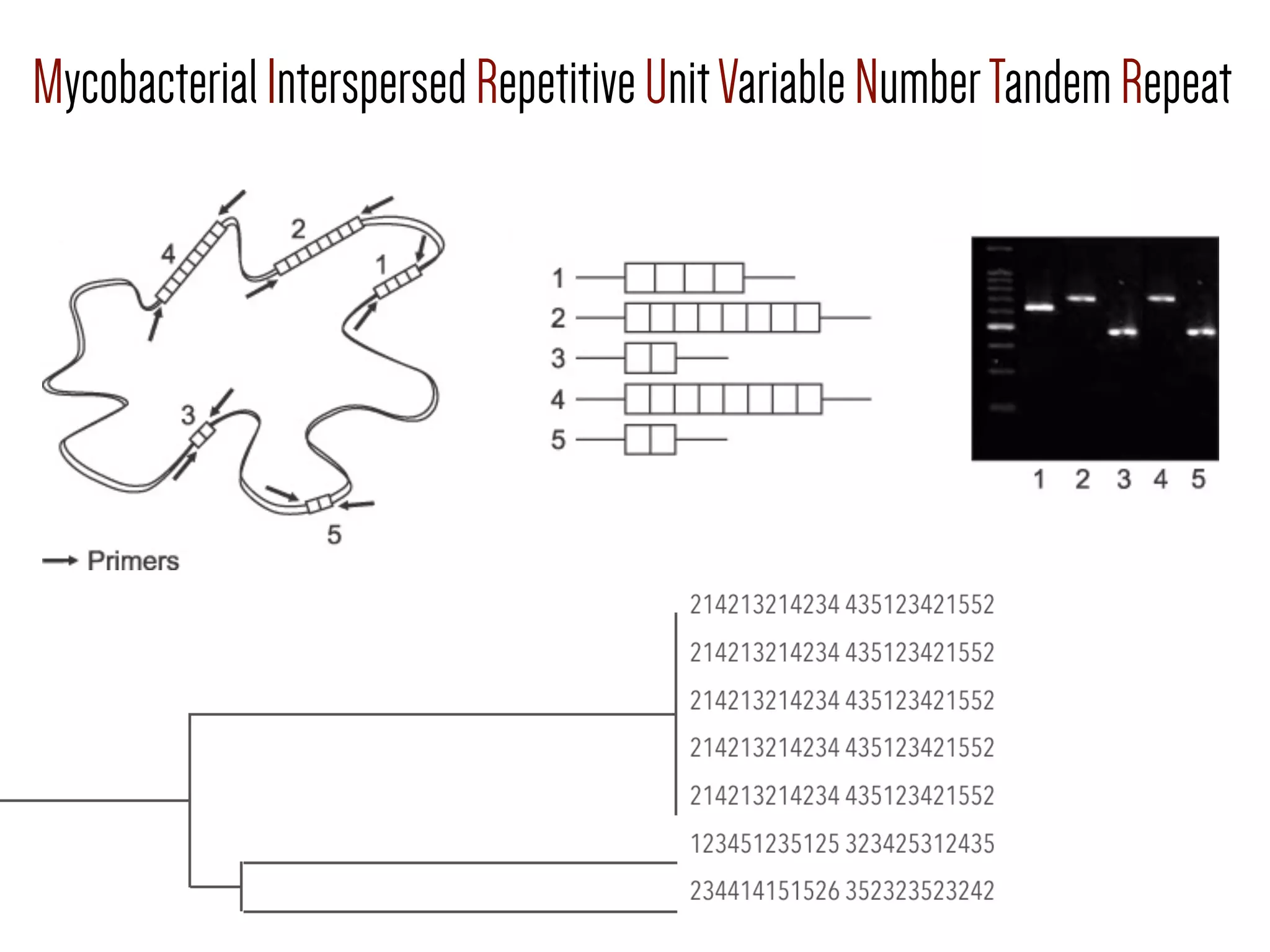
Multilocusvariablenumber
tandemrepeatanalysis(MLVA/VNTR)
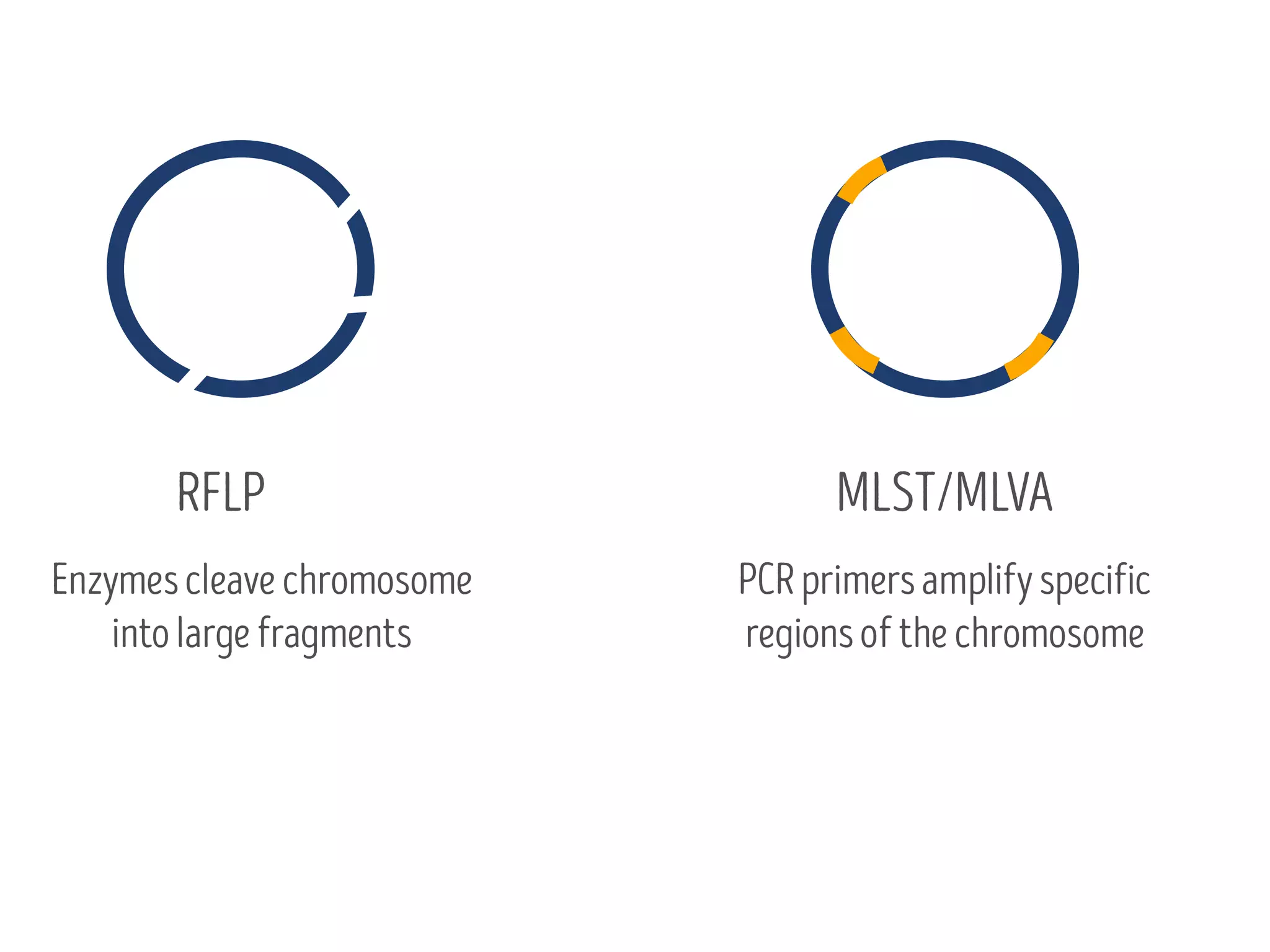
RFLP MLST/MLVA
Enzymescleavechromosome
intolargefragments
PCRprimersamplifyspecific
regionsofthechromosome
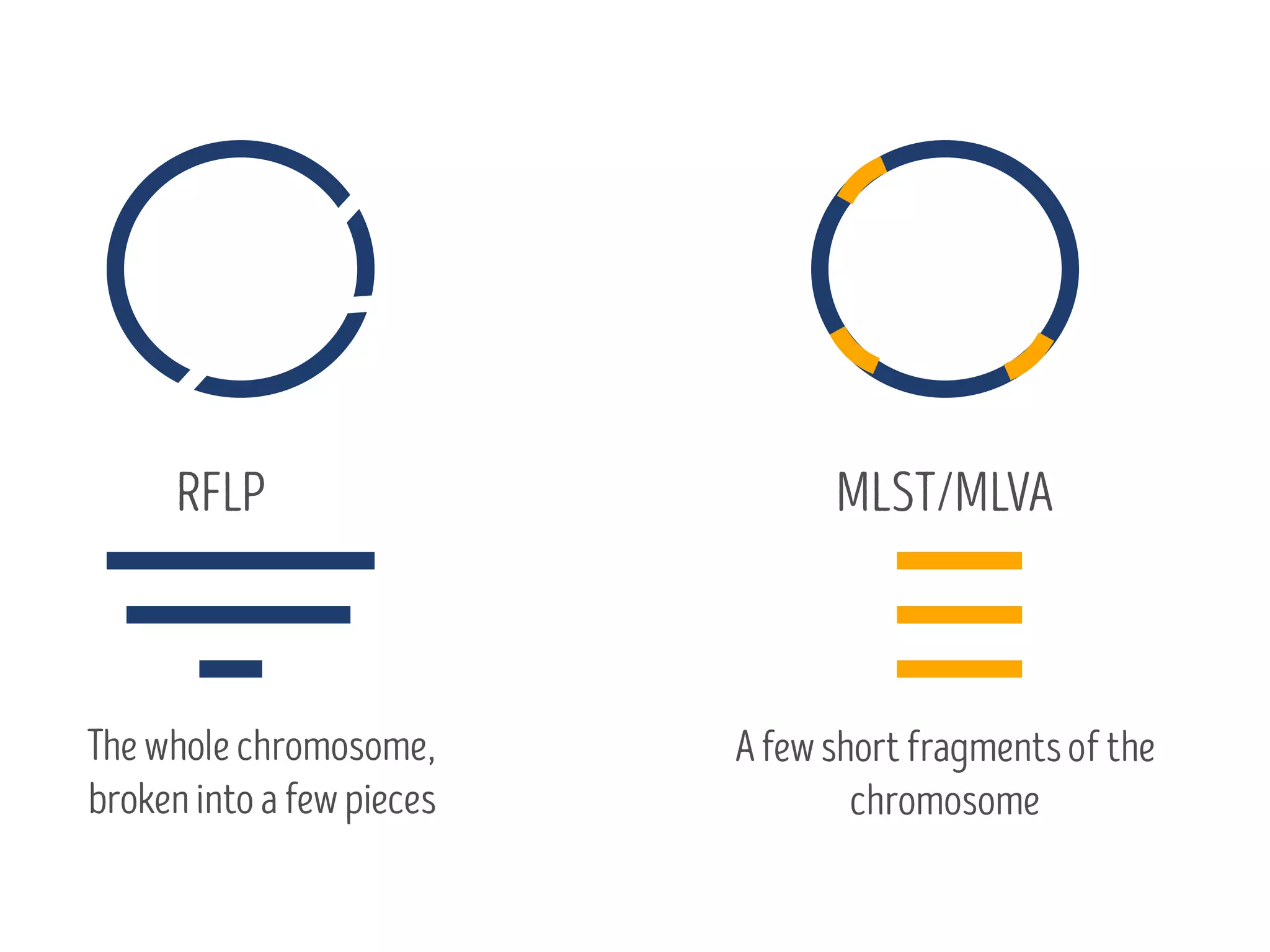
RFLP MLST/MLVA
Thewholechromosome,
brokenintoafewpieces
Afewshortfragmentsofthe
chromosome
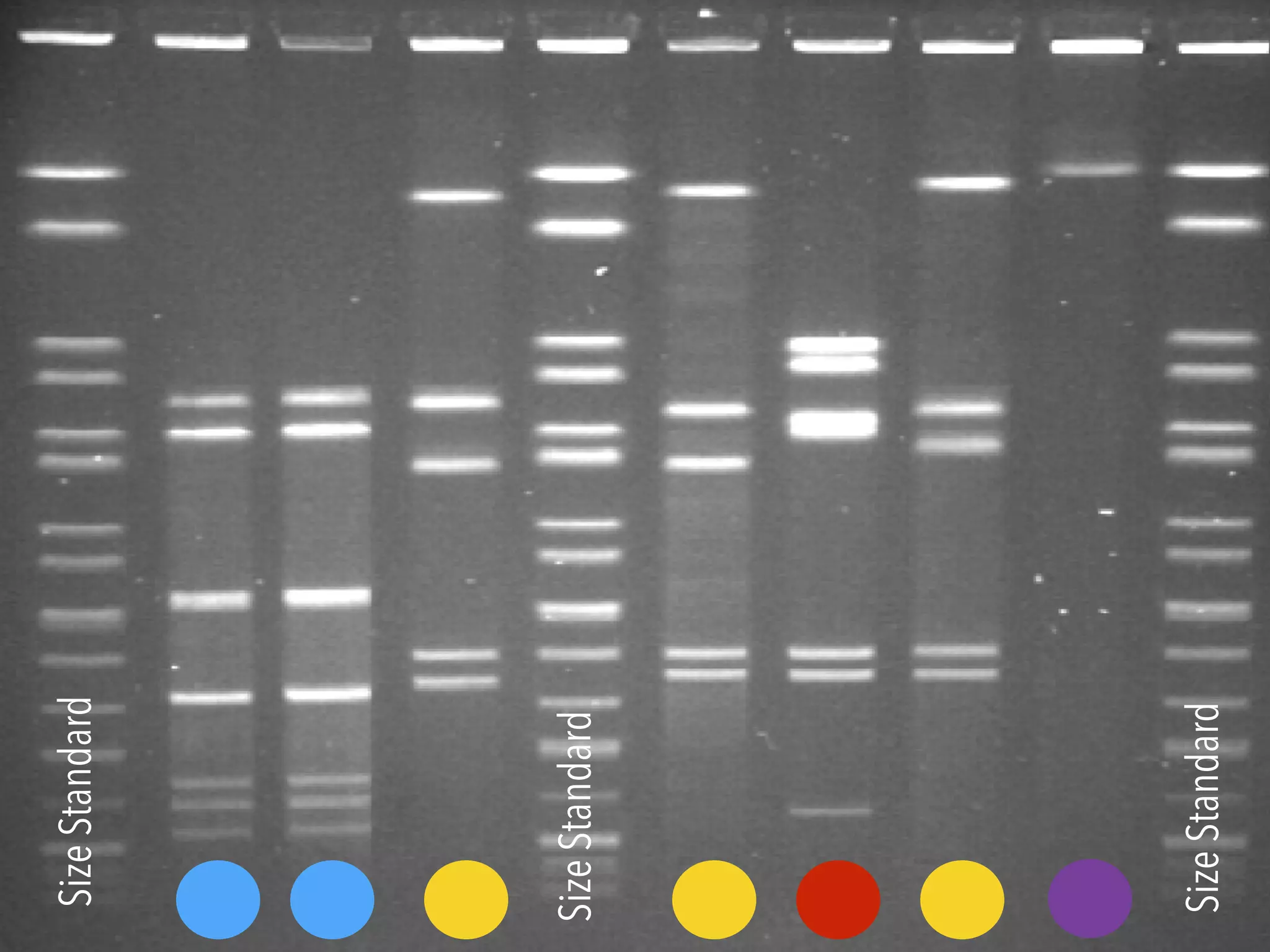
RFLP MLST/MLVA
Thewholechromosome,
brokenintoafewpieces
Runonagel
Afewshortfragmentsofthe
chromosome
Compareagainstdatabase
SizeStandard
SizeStandard
SizeStandard
SizeStandard
SizeStandard
SizeStandard
FIELD EPIDEMIOLOGY
SUGGESTS TRANSMISSIONS
Basic Principles of Field Epidemiology
• Identify cases and controls
• Structured or semi-structured interview
• Data collated into a line list
• Combined with clinical data to infer likely exposures and
transmissions
BUTWAIT.WEHAVEAPROBLEM.
• Genotypingmethodsonlytellyouaclusterofcasesexists,nottheorder/
directionoftransmission
• Size/membershipoftheclustervarieswiththetypingmethod(s)used
• Epidemiologicalinvestigationisrequiredtoderivethelinksbetweencases,
andmaynotbeavailableorofsufficientqualitY
a representative example:
mycobacterial GENOTYPING
MycobacterialInterspersedRepetitiveUnitVariableNumberTandemRepeat
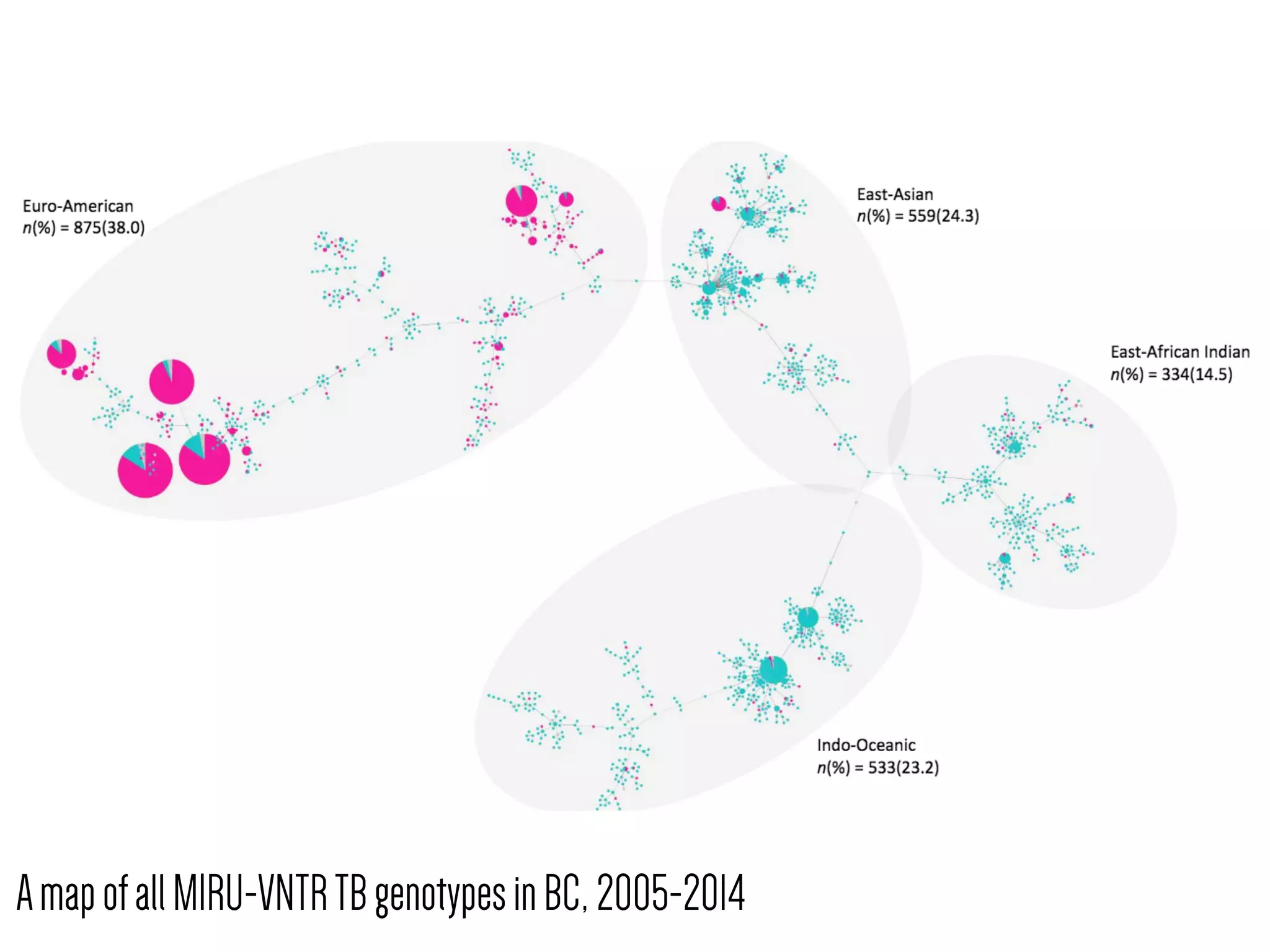
AmapofallMIRU-VNTRTBgenotypesinBC,2005-2014
asummaryofourroadblocks
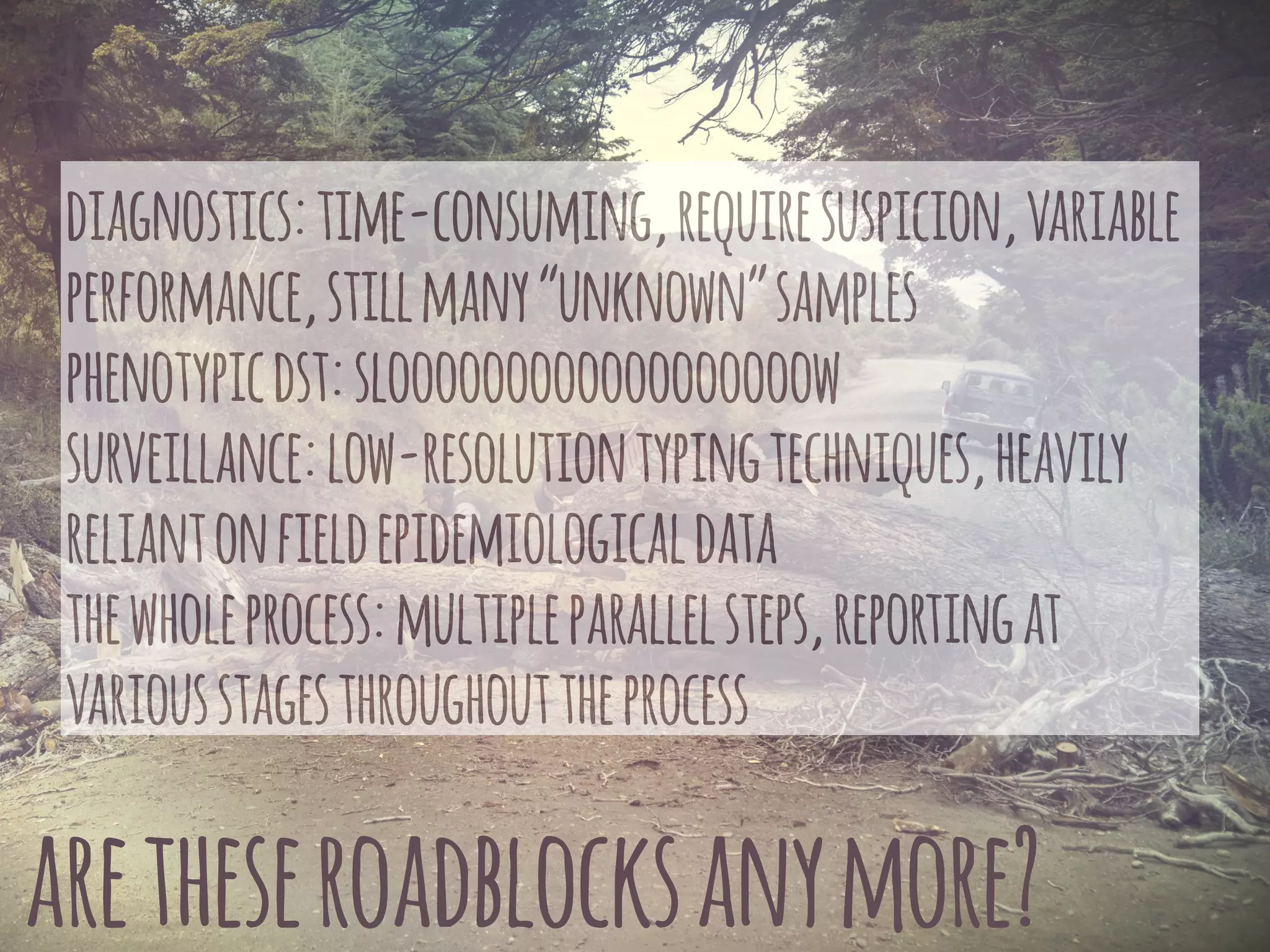
diagnostics:time-consuming,requiresuspicion,variable
performance,stillmany“unknown”samples
phenotypicdst:sloooooooooooooooooow
surveillance:low-resolutiontypingtechniques,heavily
reliantonfieldepidemiologicaldata
thewholeprocess:multipleparallelsteps,reportingat
variousstagesthroughouttheprocess
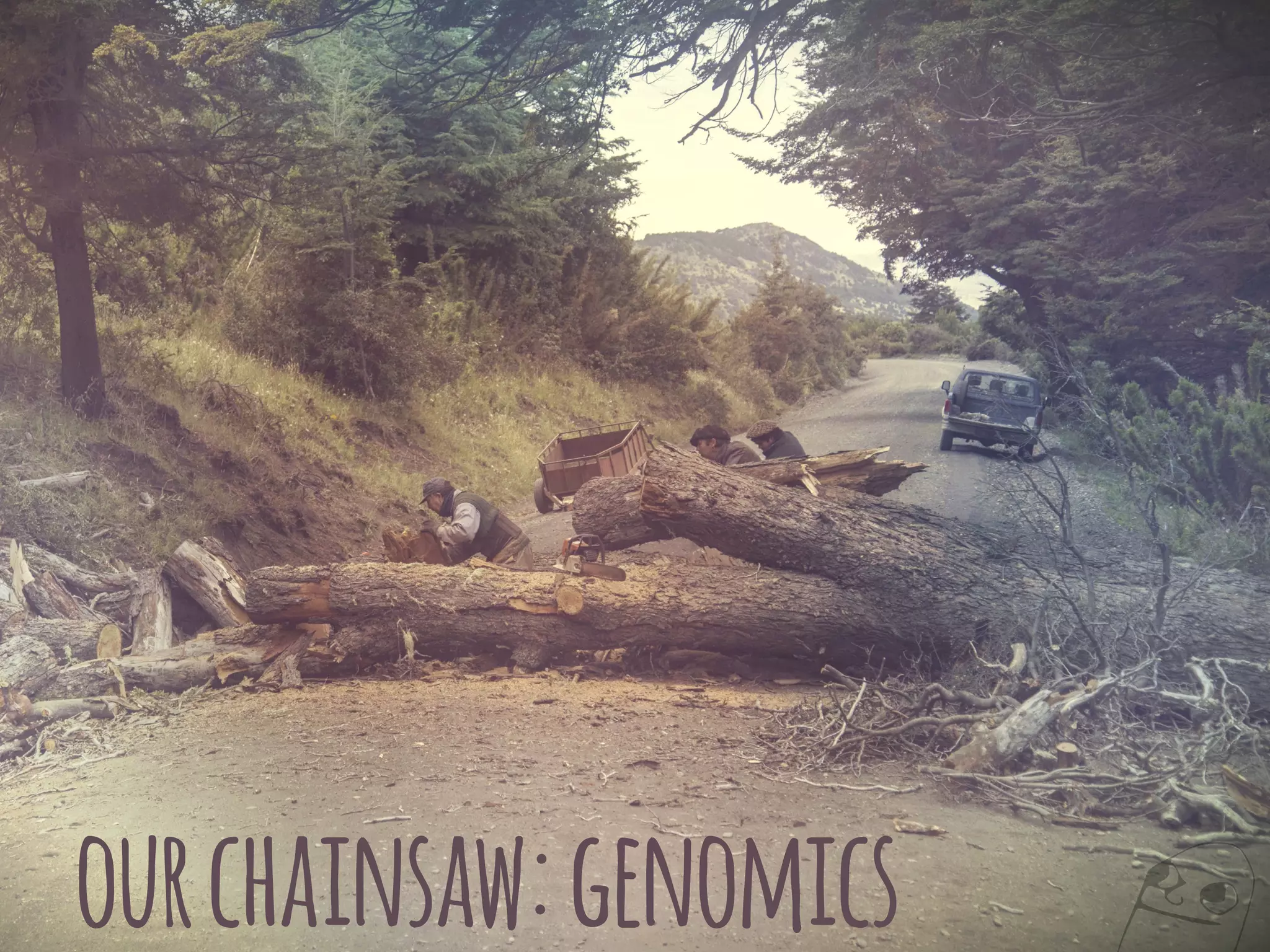
ourchainsaw:genomics
THE FIRST SEQUENCED GENOME
1995. 1 GENOME, 13 MONTHS, $600,000, ROOM FULL OF MACHINES
with the current technology
800-1000 GENOMEs, 5 days, <$100 each, one single machine
with the current technology
20 GENOMEs, 8 hours, <$150 each, one single machine
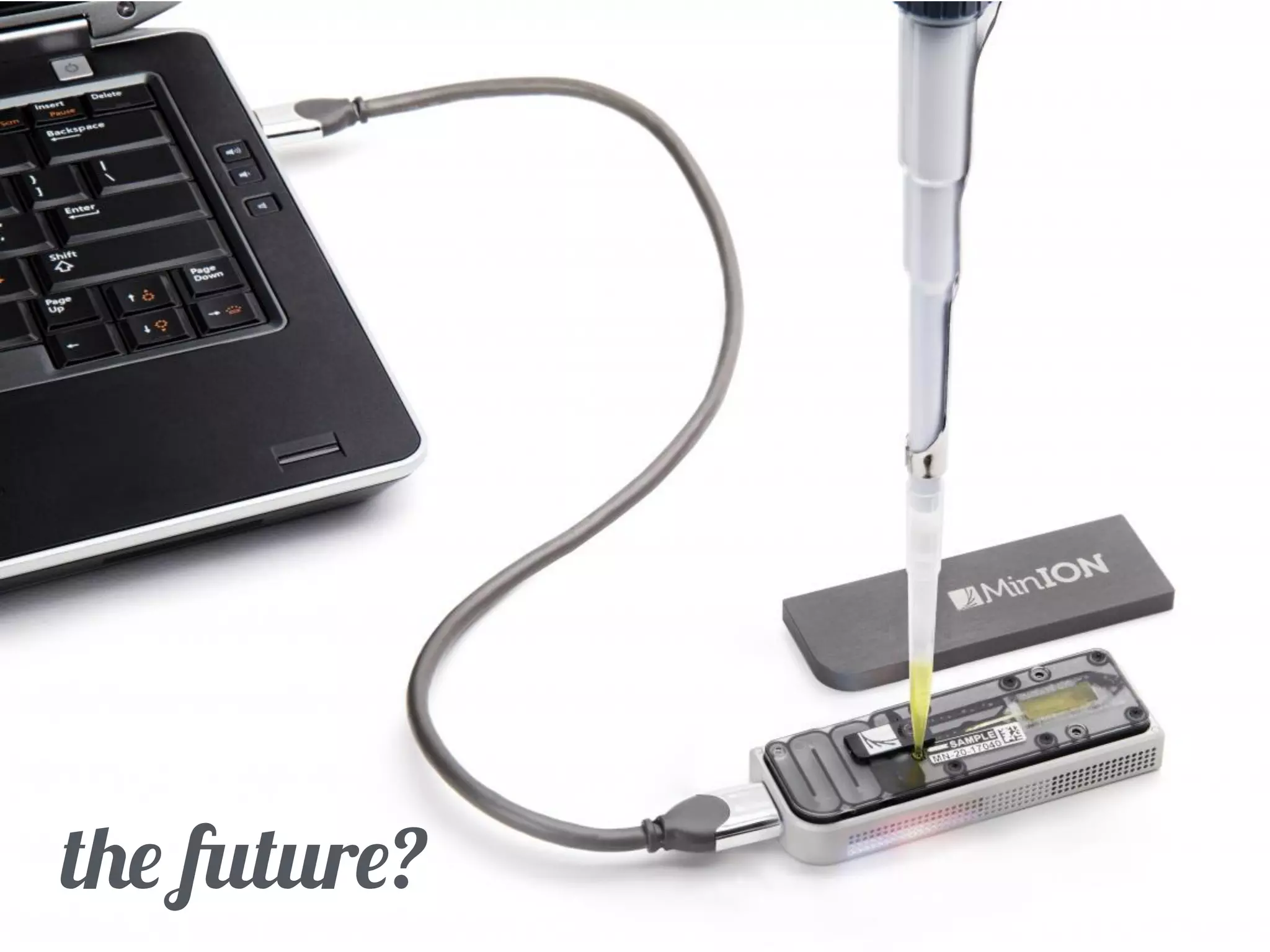
the future?
STARTING MATERIAL:
~weeks immediate
genomics is revolutionizing
public health microbiology
pathogen genomes contain nearly everything we need for
diagnosis, phenotyping, and surveillance
aretheseroadblocksanymore?
diagnostics:time-consuming,requiresuspicion,variable
performance,stillmany“unknown”samples
phenotypicdst:sloooooooooooooooooow
surveillance:low-resolutiontypingtechniques,heavily
reliantonfieldepidemiologicaldata
thewholeprocess:multipleparallelsteps,reportingat
variousstagesthroughouttheprocess
agenda of fun
Where does microbiology fit in public health?
What are we doing now?
The genomics revolution
Current genomics approaches in public health microbiology
Future directions
Story #1: Rapid WGS-based diagnosis
“Joshua Osborn, 14, lay in a coma at American
Family Children’s Hospital in Madison, Wis. For
weeks his brain had been swelling with fluid, and a
battery of tests had failed to reveal the cause.”
–Carl Zimmer, New York Times, June 2014
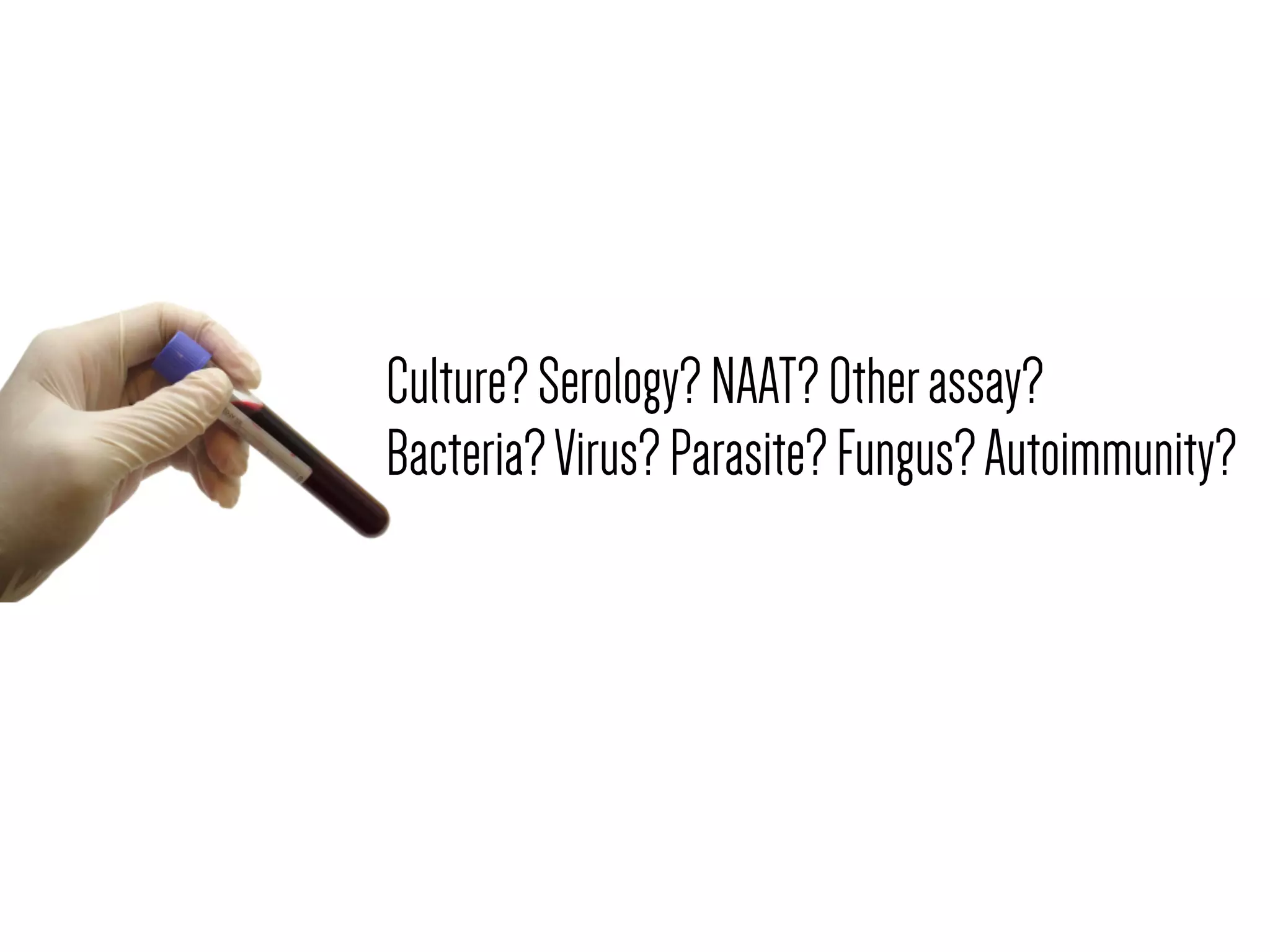
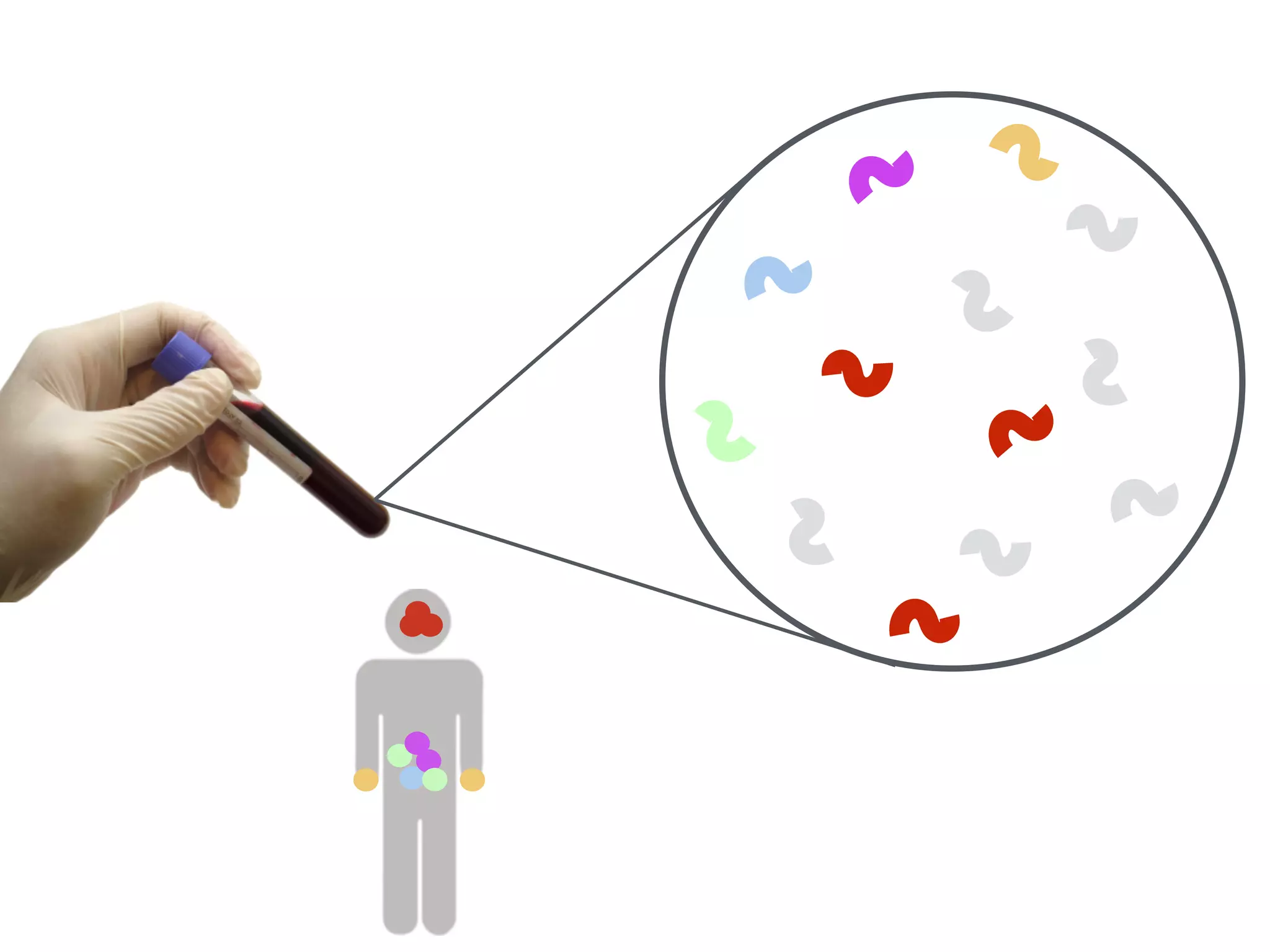
Culture?Serology?NAAT?Otherassay?
Bacteria?Virus?Parasite?Fungus?Autoimmunity?
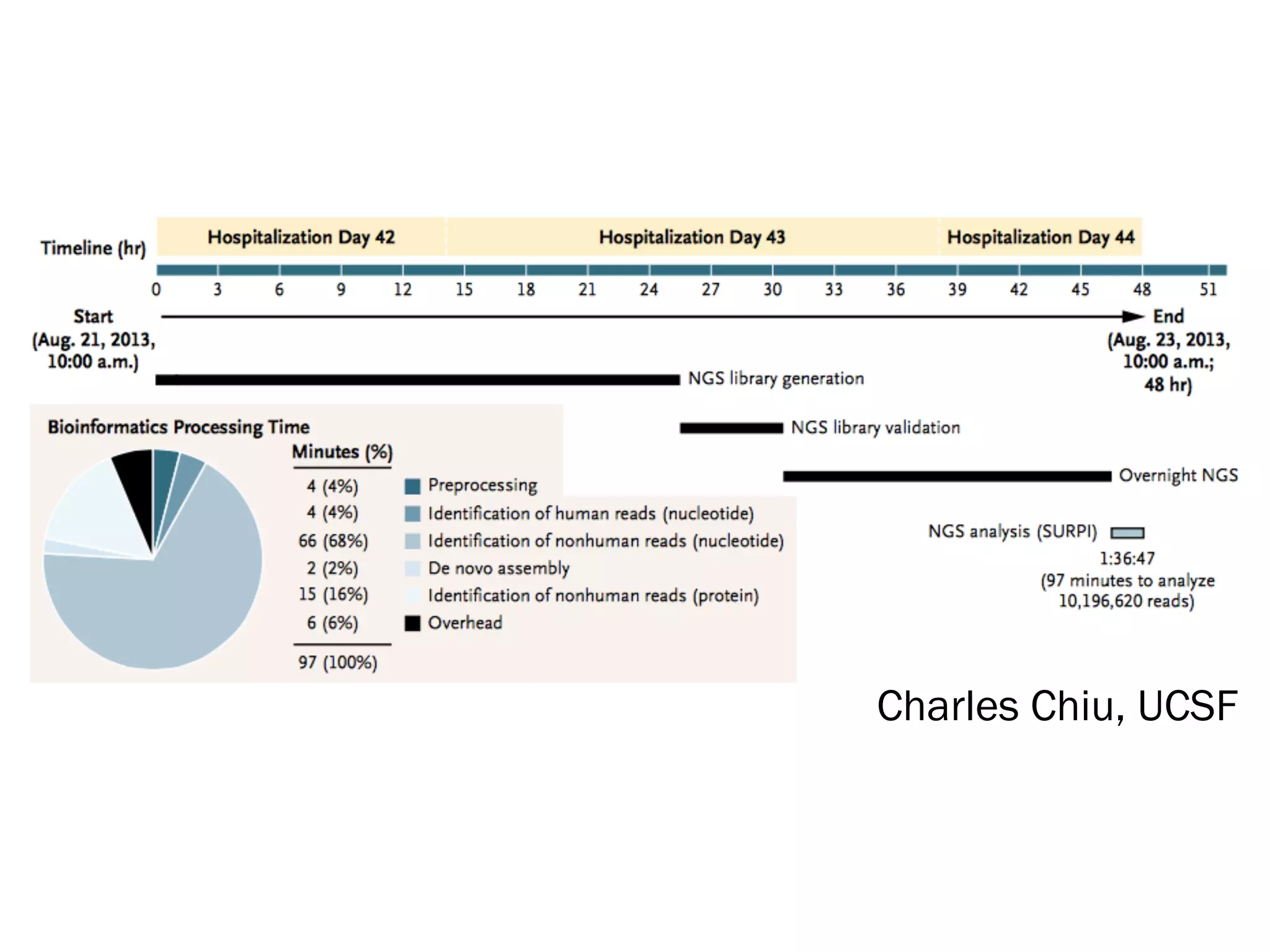
Charles Chiu, UCSF
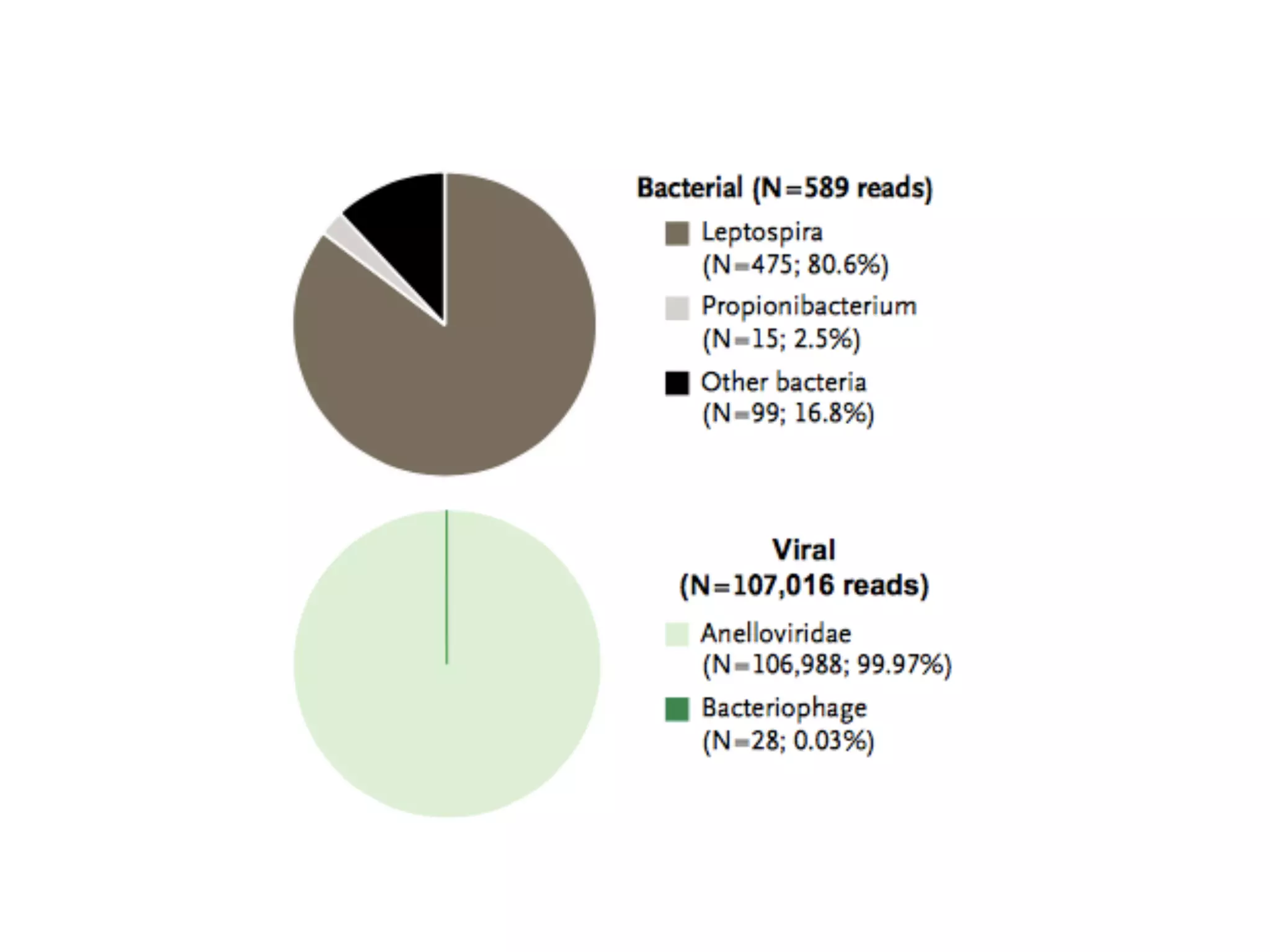
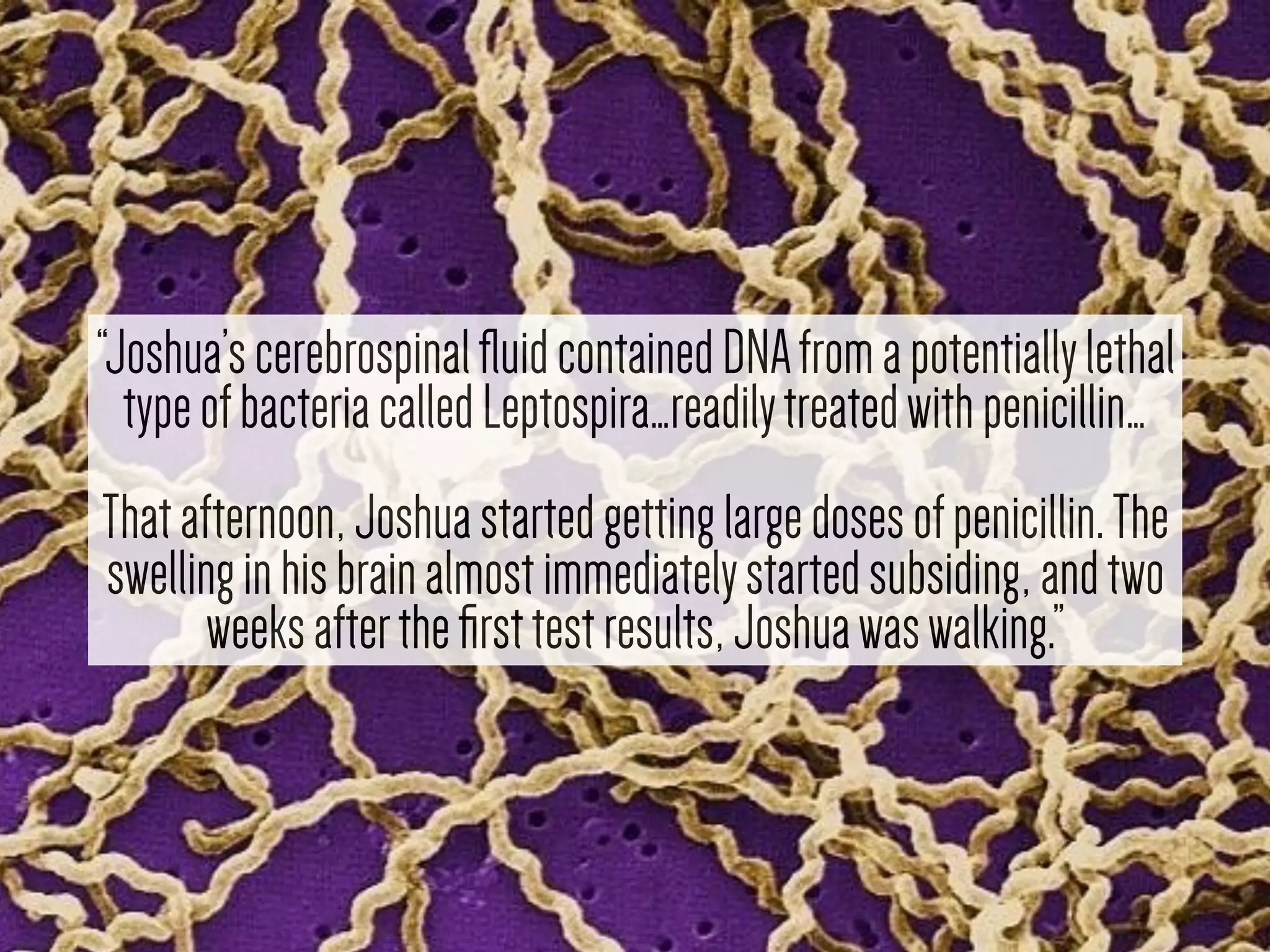
“Joshua’scerebrospinalfluidcontainedDNAfromapotentiallylethal
typeofbacteriacalledLeptospira…readilytreatedwithpenicillin…
Thatafternoon,Joshuastartedgettinglargedosesofpenicillin.The
swellinginhisbrainalmostimmediatelystartedsubsiding,andtwo
weeksafterthefirsttestresults,Joshuawaswalking.”
genomics for diagnostics
• FROM CULTURE OR DIRECT FROM
SPECIMEN
• SEQUENCE SAMPLE, REMOVE
HUMAN READS, COMPARE TO
DATABASE OF KNOWN SEQUENCES
(BUT WHO’S WHO?)
• FASTER THAN NAAT IN SOME
CASES, BUT NOT ALL
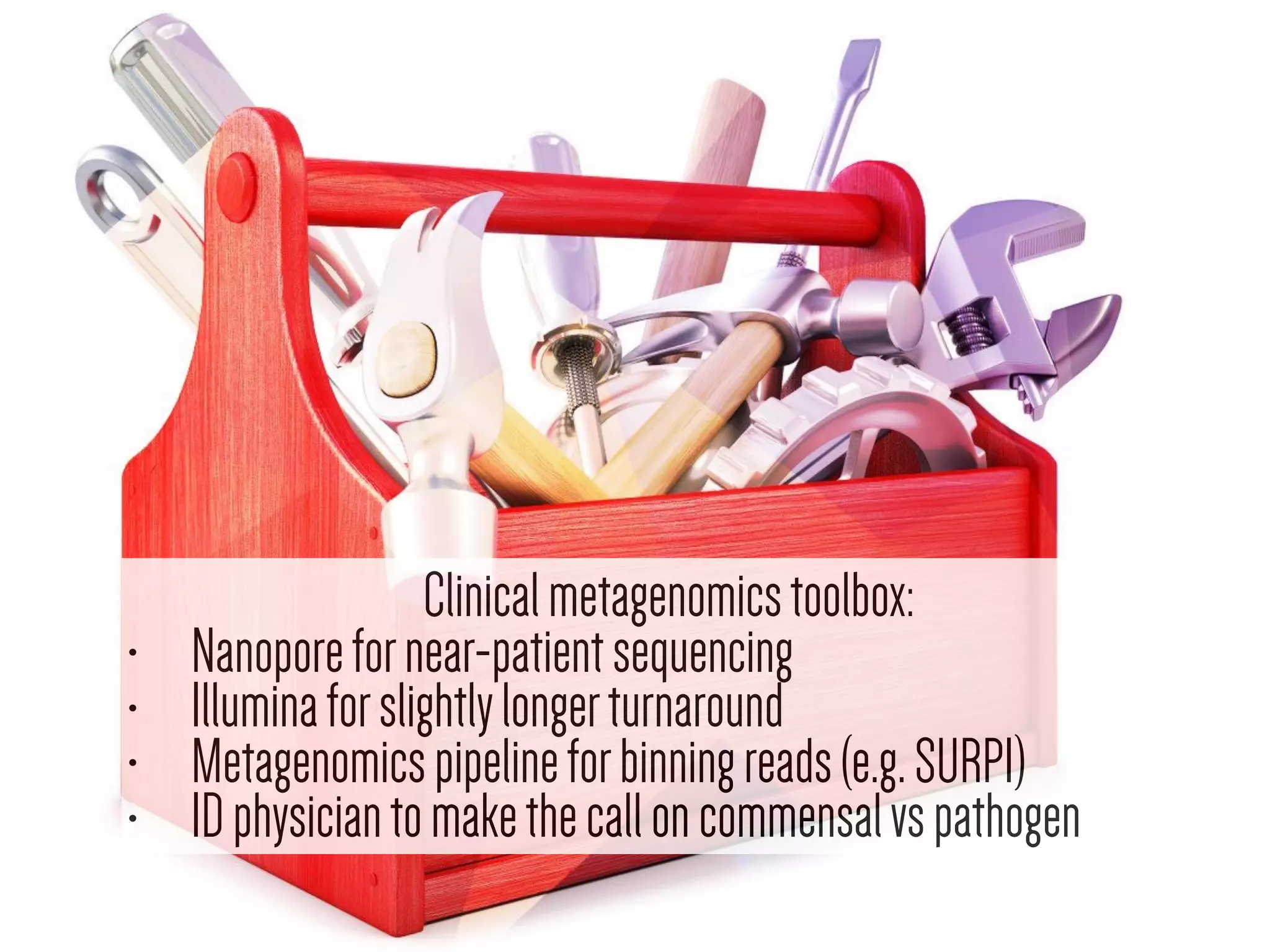
Clinicalmetagenomicstoolbox:
• Nanoporefornear-patientsequencing
• Illuminaforslightlylongerturnaround
• Metagenomicspipelineforbinningreads(e.g.SURPI)
• IDphysiciantomakethecalloncommensalvspathogen
Story #2: WGS-based tailored therapy
SPECIMEN
SPECIMEN
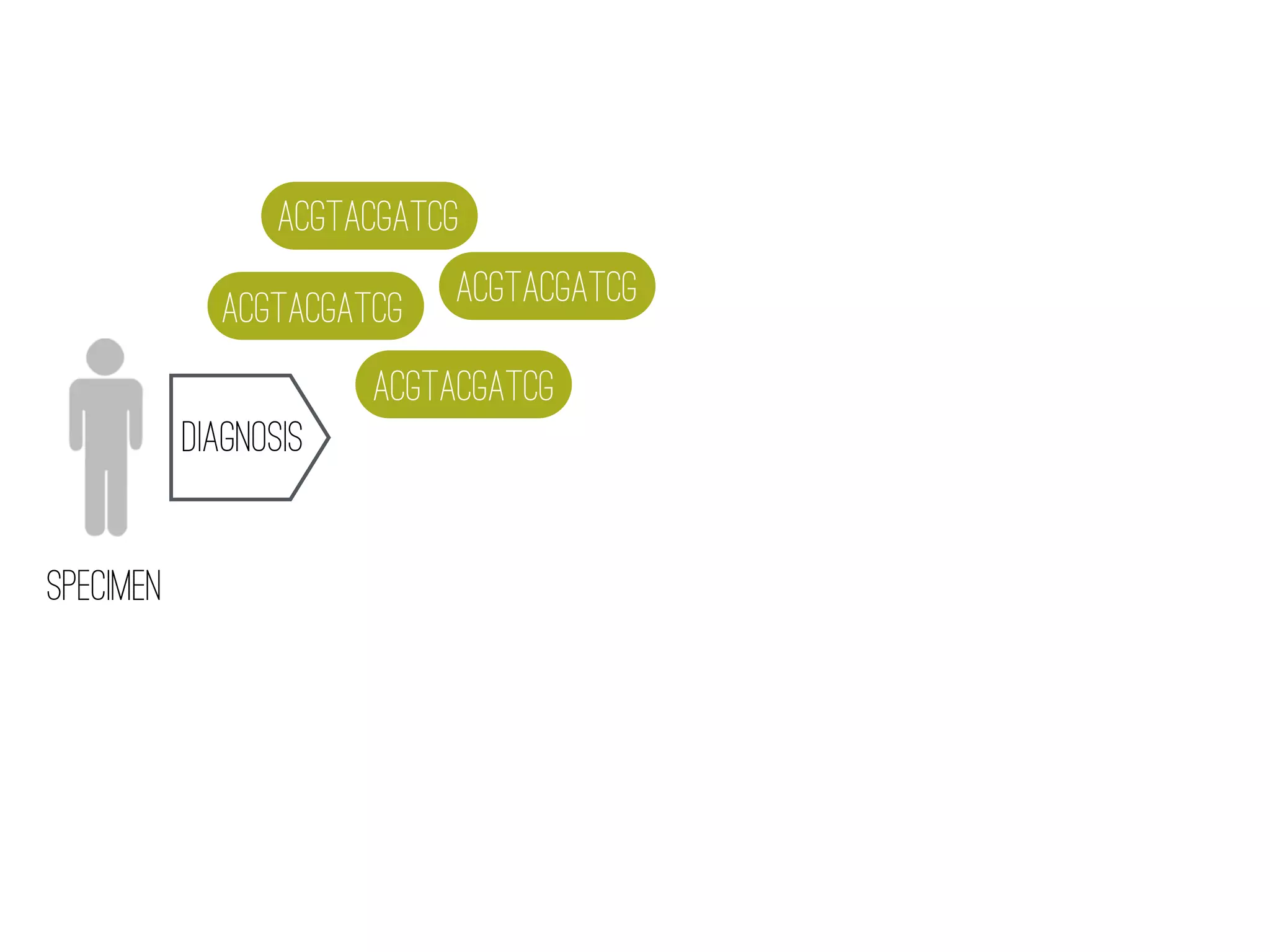
DIAGNOSIS
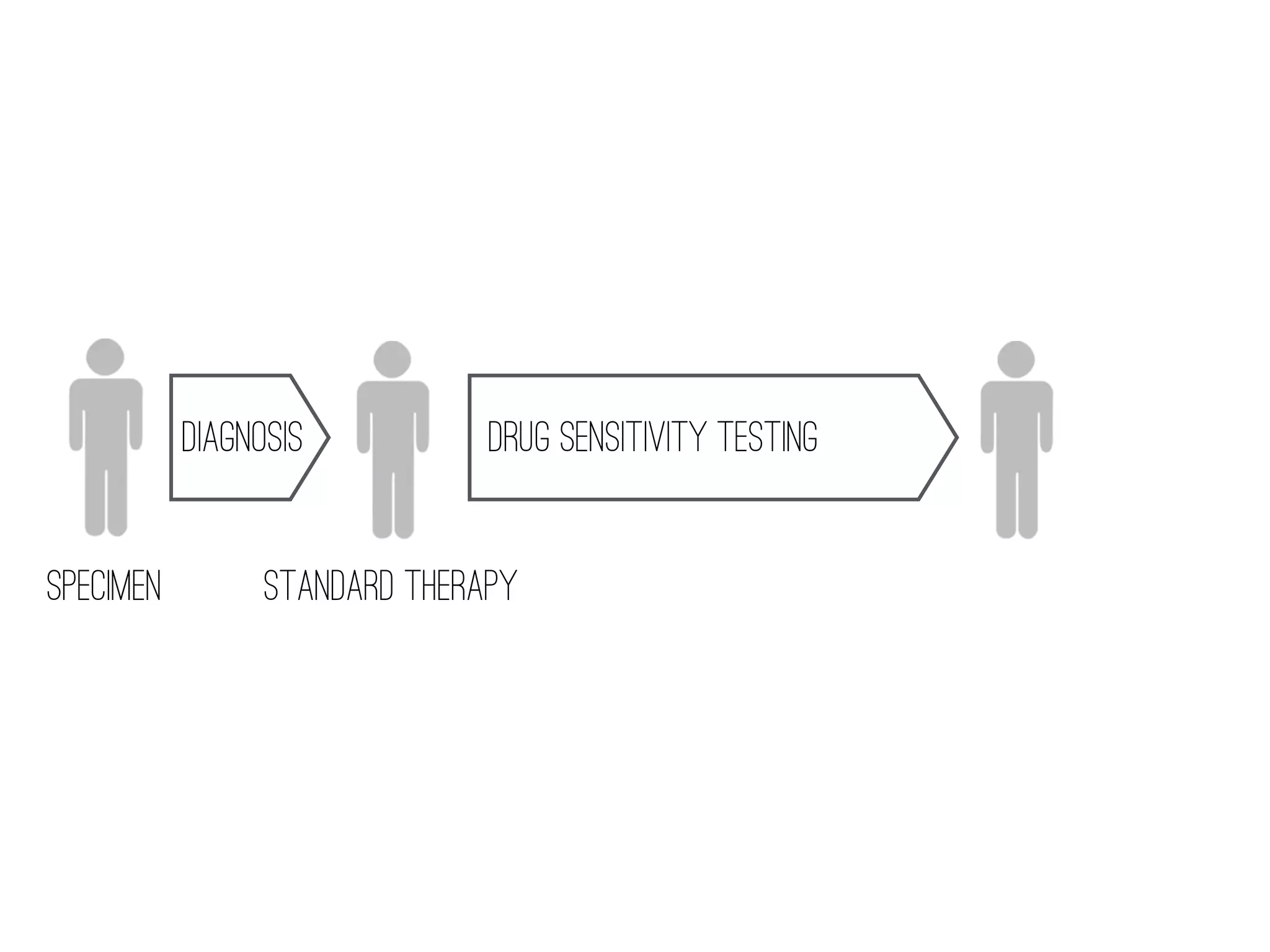
SPECIMEN STANDARD THERAPY
DIAGNOSIS
SPECIMEN STANDARD THERAPY
DIAGNOSIS DRUG SENSITIVITY TESTING
SPECIMEN STANDARD THERAPY
DIAGNOSIS DRUG SENSITIVITY TESTING
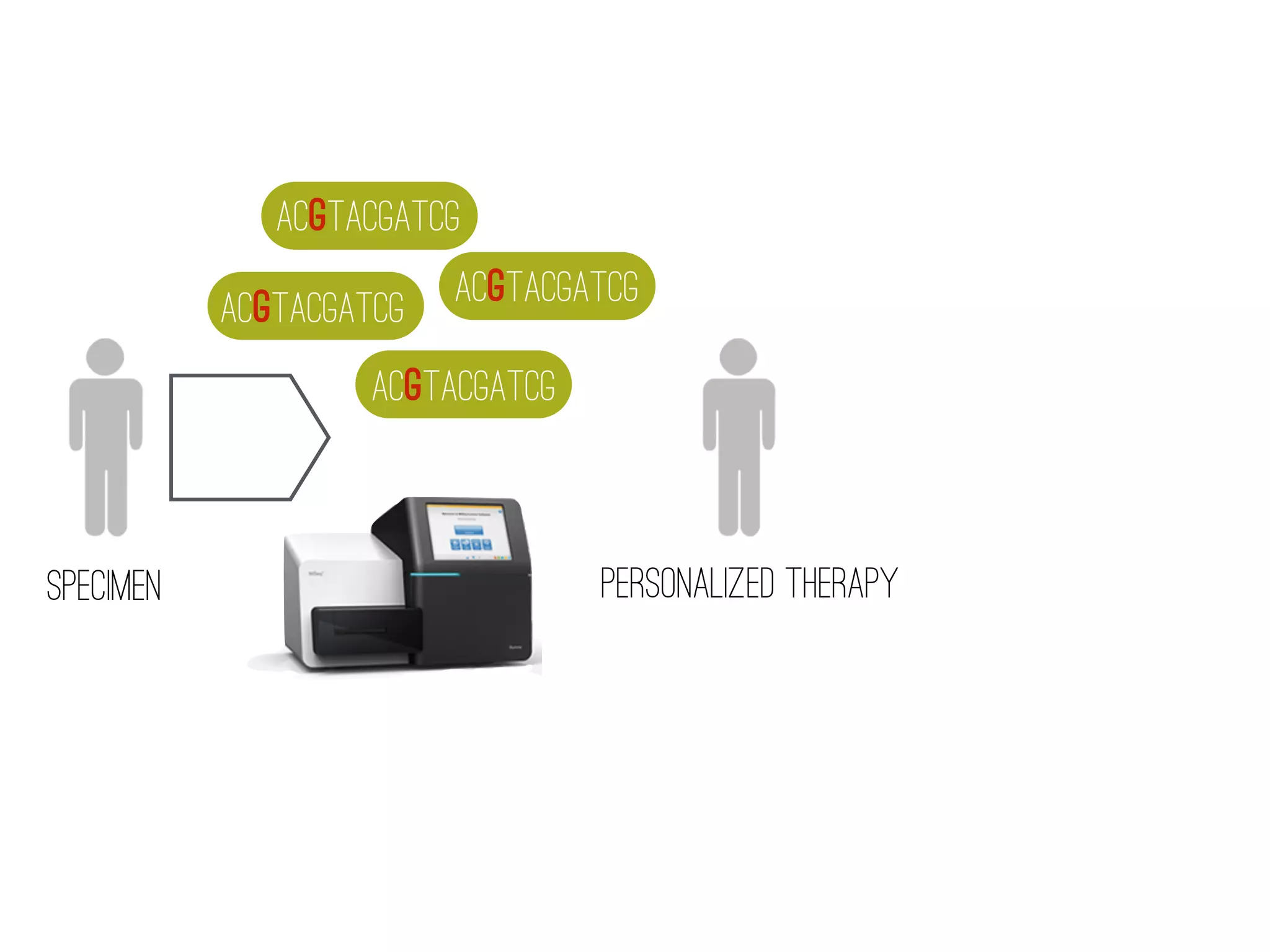
PERSONALIZED THERAPY
SPECIMEN STANDARD THERAPY
DIAGNOSIS DRUG SENSITIVITY TESTING
PERSONALIZED THERAPY
SPECIMEN
DIAGNOSIS
SPECIMEN
DIAGNOSIS
ACGTACGATCG
ACGTACGATCG ACGTACGATCG
ACGTACGATCG
ACGTACGATCGACGTACGATCGACGTACGATCGACGTACGATCGACGTACGATCGACGTACGATCGACGTACG
ATCGACGTACGATCGACGTACGATCGACGTACGATCGACGTACGATCGACGTACGATCGACGTACGATCGACG
TACGATCGACGTACGATCGACGTACGATCGACGTACGATCGCGCCGGACGTACGATCGACGTACGATCGACGT
ACGATCGACGTACGATCGACGTACGATCGACGTACGATCGACGTACGATCGACGTACGATCGACGTACGATCG
ACGTACGATCGACGTACGATCGACGTACGATCGACGTACGATCGACGTACGATCGACGTACGATCGACGTACG
ATCGACGTACGATCGACGTACGATCG
ACGTACGATCGACGTACGATCGACGTACGATCGACGTACGATCGACGTACGATCGACGTACGATCGACGTACG
ATCGACGTACGATCGACGTACGATCGACGTACGATCGACGTACGATCGACGTACGATCGACGTACGATCGACG
TACGATCGACGTACGATCGACGTACGATCGACGTACGATCGCGCCGGACGTACGATCGACGTACGATCGACGT
ACGATCGACGTACGATCGACGTACGATCGACGTACGATCGACGTACGATCGACGTACGATCGACGTACGATCG
ACGTACGATCGACGTACGATCGACGTACGATCGACGTACGATCGACGTACGATCGACGTACGATCGACGTACG
ATCGACGTACGATCGACGTACGATCG
SPECIMEN
ACGTACGATCG
ACGTACGATCG ACGTACGATCG
ACGTACGATCG
SPECIMEN
ACGTACGATCG
ACGTACGATCG ACGTACGATCG
ACGTACGATCG
PERSONALIZED THERAPY
SPECIMEN STANDARD THERAPY
DIAGNOSIS DRUG SENSITIVITY TESTING
PERSONALIZED THERAPY
SPECIMEN
diagnosis
& dst
PERSONALIZED THERAPY
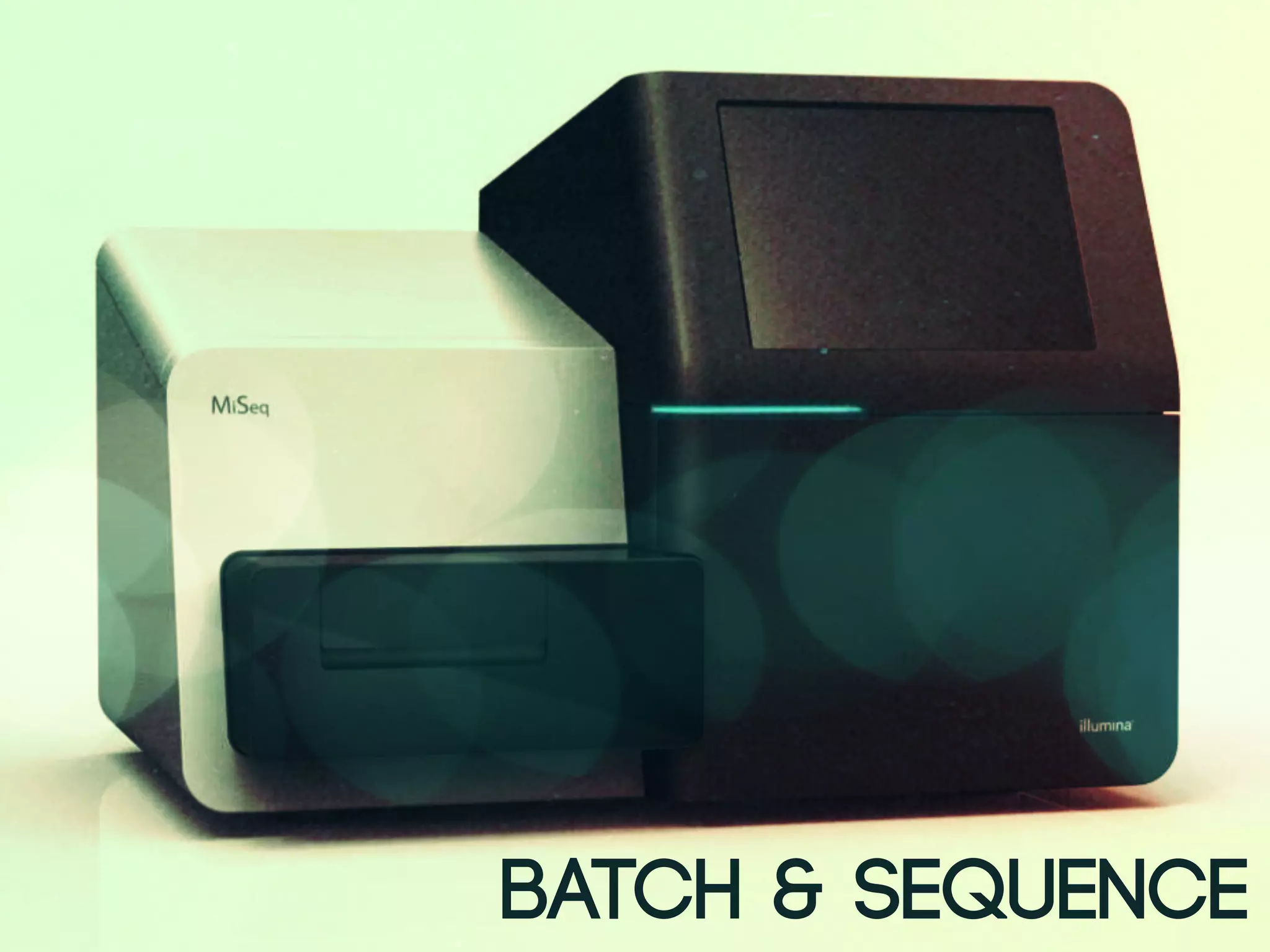
1-day positive MGIT
BATCH & SEQUENCE
UPLOAD & ANALYSE
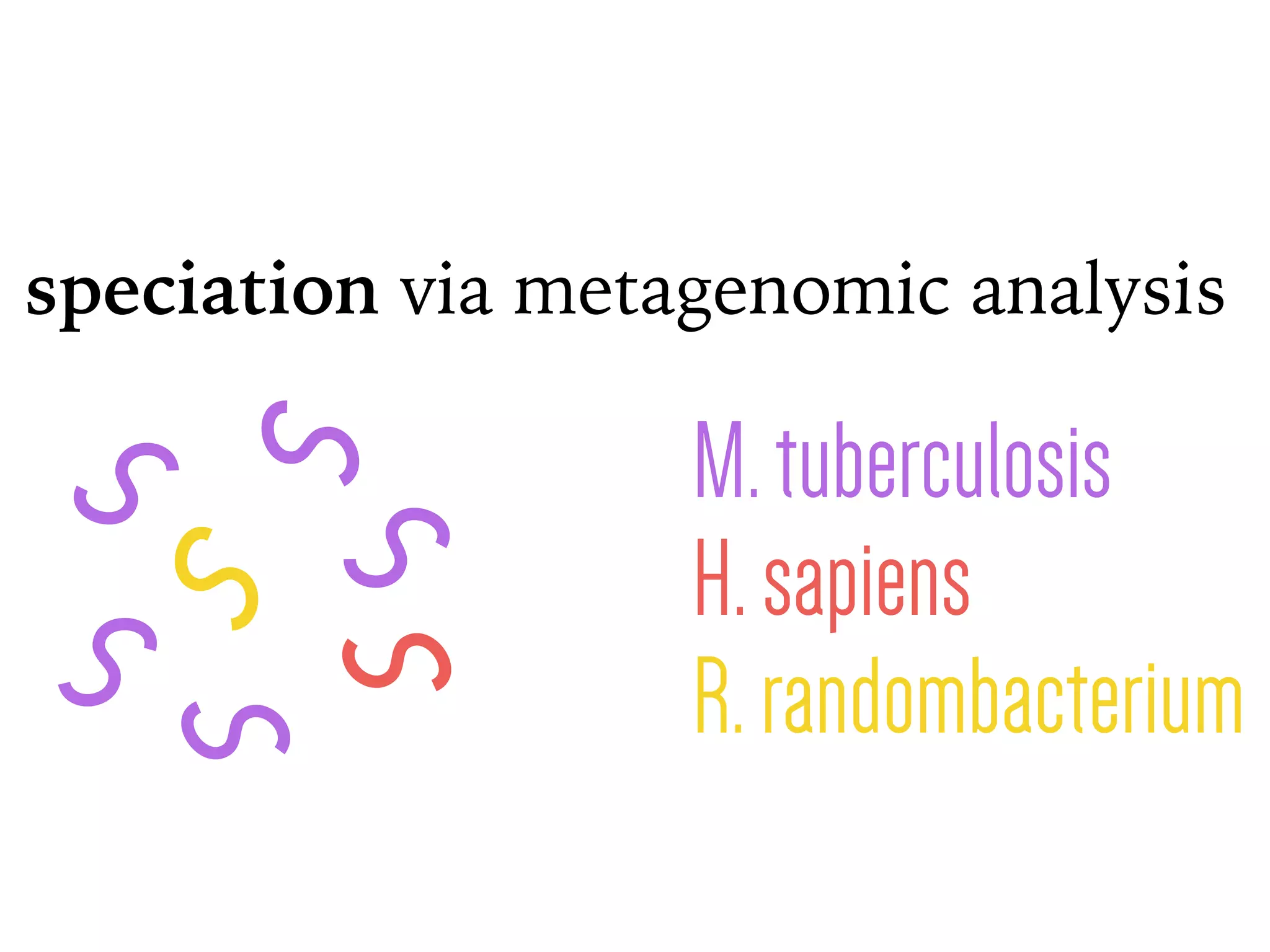
speciation via metagenomic analysis
M.tuberculosis
H.sapiens
R.randombacterium
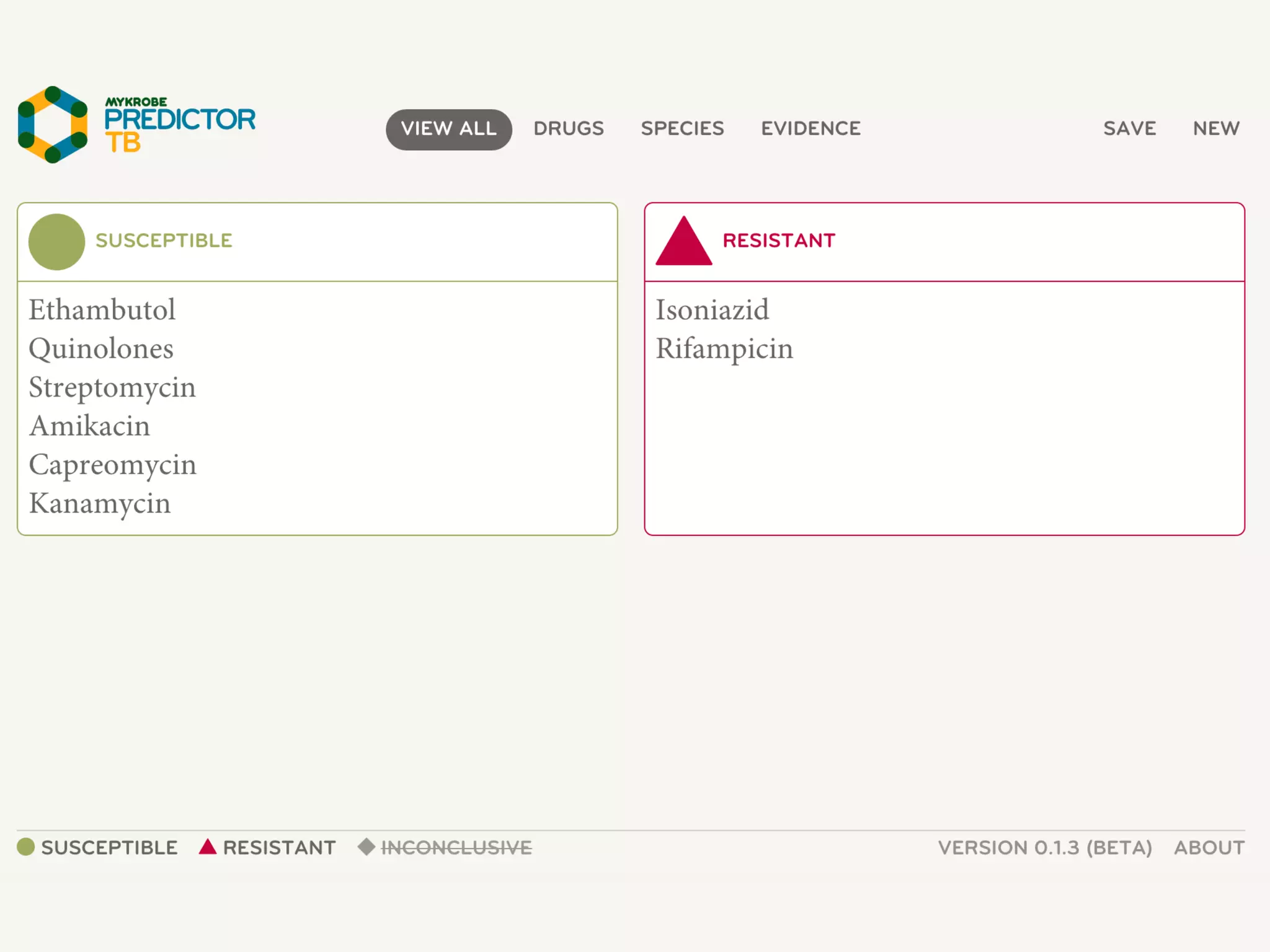
resistotyping via mutation catalogue
Personalizedtherapytoolbox:
• Illuminasequencingatreferencelab
• Rapidresistancepredictionfromgenomicdata(e.g.Mykrobe)
• Growingcatalogueofresistance-associatedmutations
Story #3: Tracking outbreaks with WGS
ge·no·mic ep·i·de·mi·ol·o·gy (jē
ˈnōmik ˌepiˌdēmēˈäləjē/)
n. reading whole genome
sequences from outbreak isolates
to track person-to-person spread
of an infectious disease.
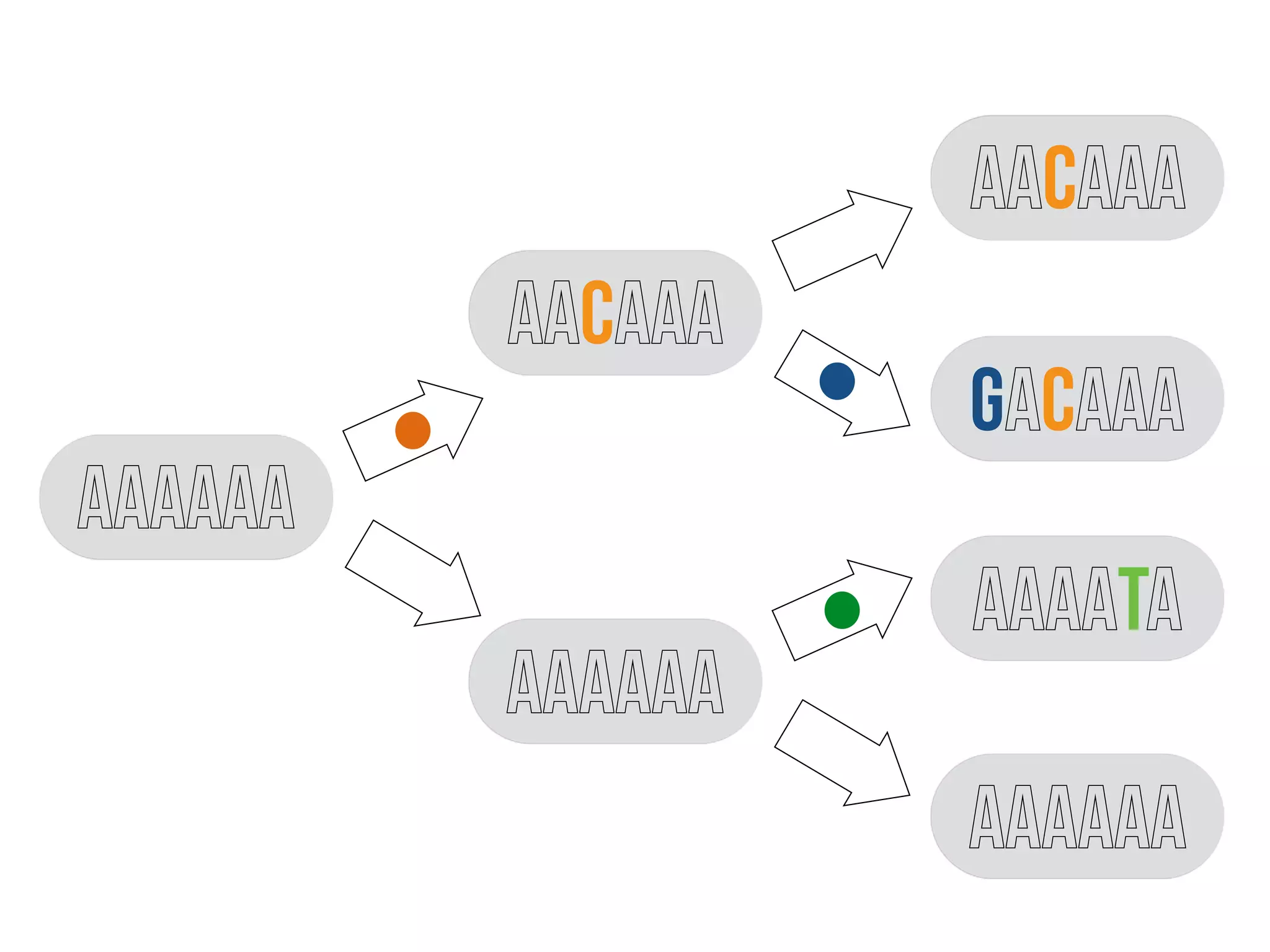
AAAAAA
AAAAAA
AAAAAA
AACAAA
AAAAAA
AAAAAA
AACAAA
AACAAA
GACAAA
AAAATA
AAAAAA
AAAAAA AACAAA
AACAAA
AACTAA AACTAA
AACAAG
TELEPHONE
ARTBYDEVIANTARTUSERSCUMMY
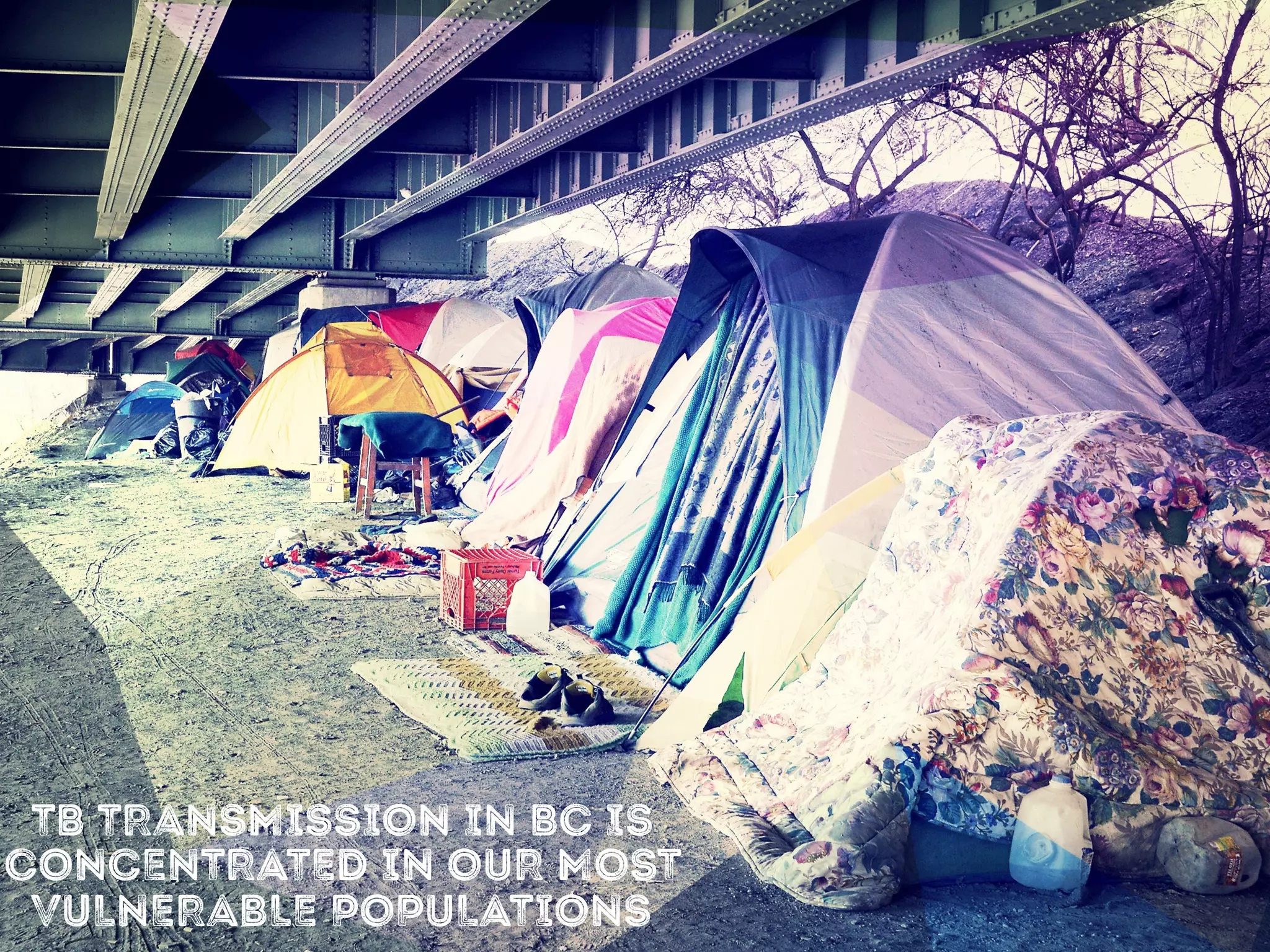
TB TRANSMISSION IN BC IS
CONCENTRATED IN OUR MOST
VULNERABLE POPULATIONS
December 2010: a phone call
May2008-personwithafb4+pulmonarytbvisitsshelter
december2008-shelterscreeningidentifiessixfurthercases
december2010-outbreakhasgrownto30cases,largelywithinafewblocks
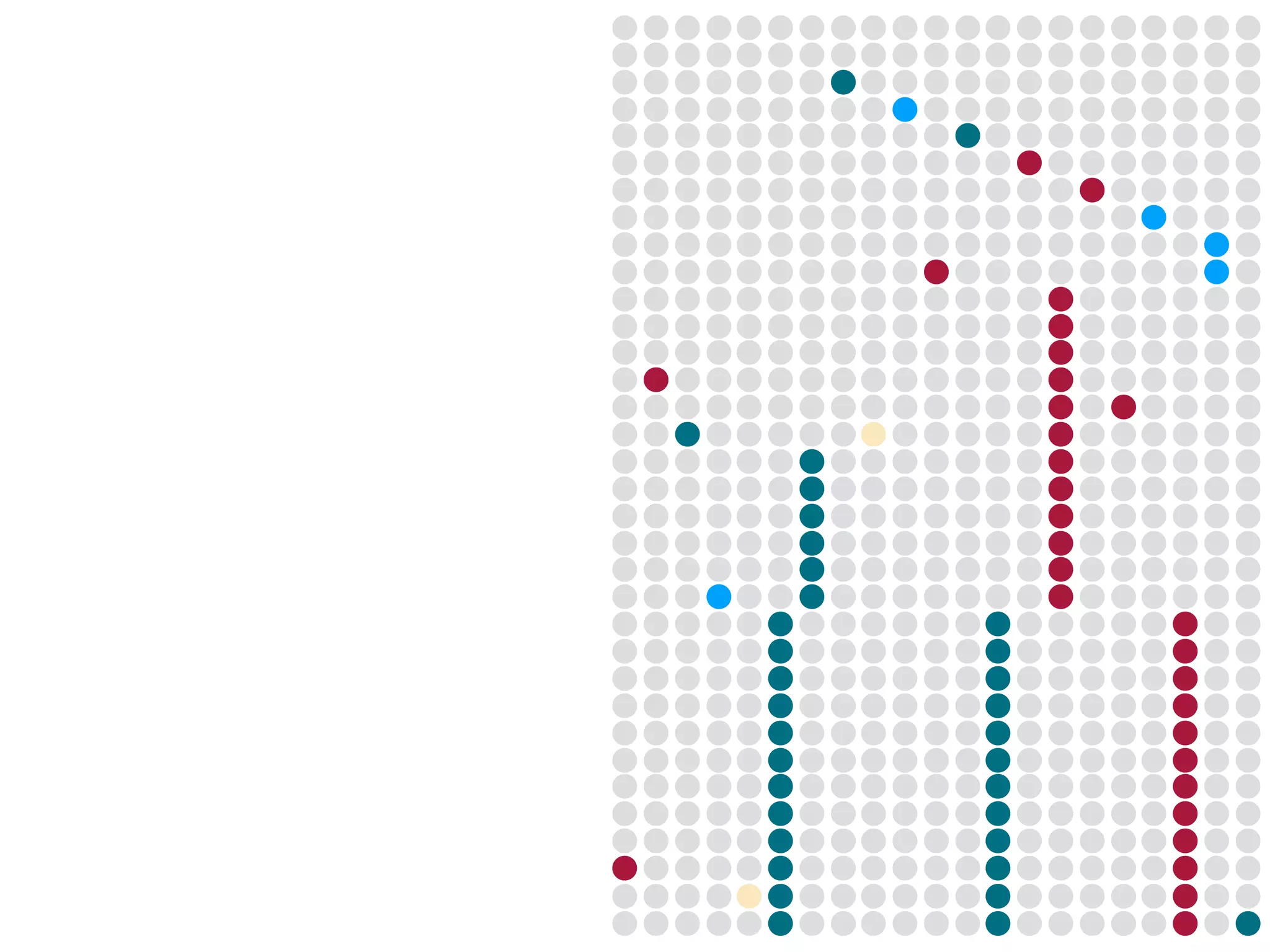
are the outbreak management
activities directed at the right
persons and locations?
TELEPHONE
ARTBYDEVIANTARTUSERSCUMMY
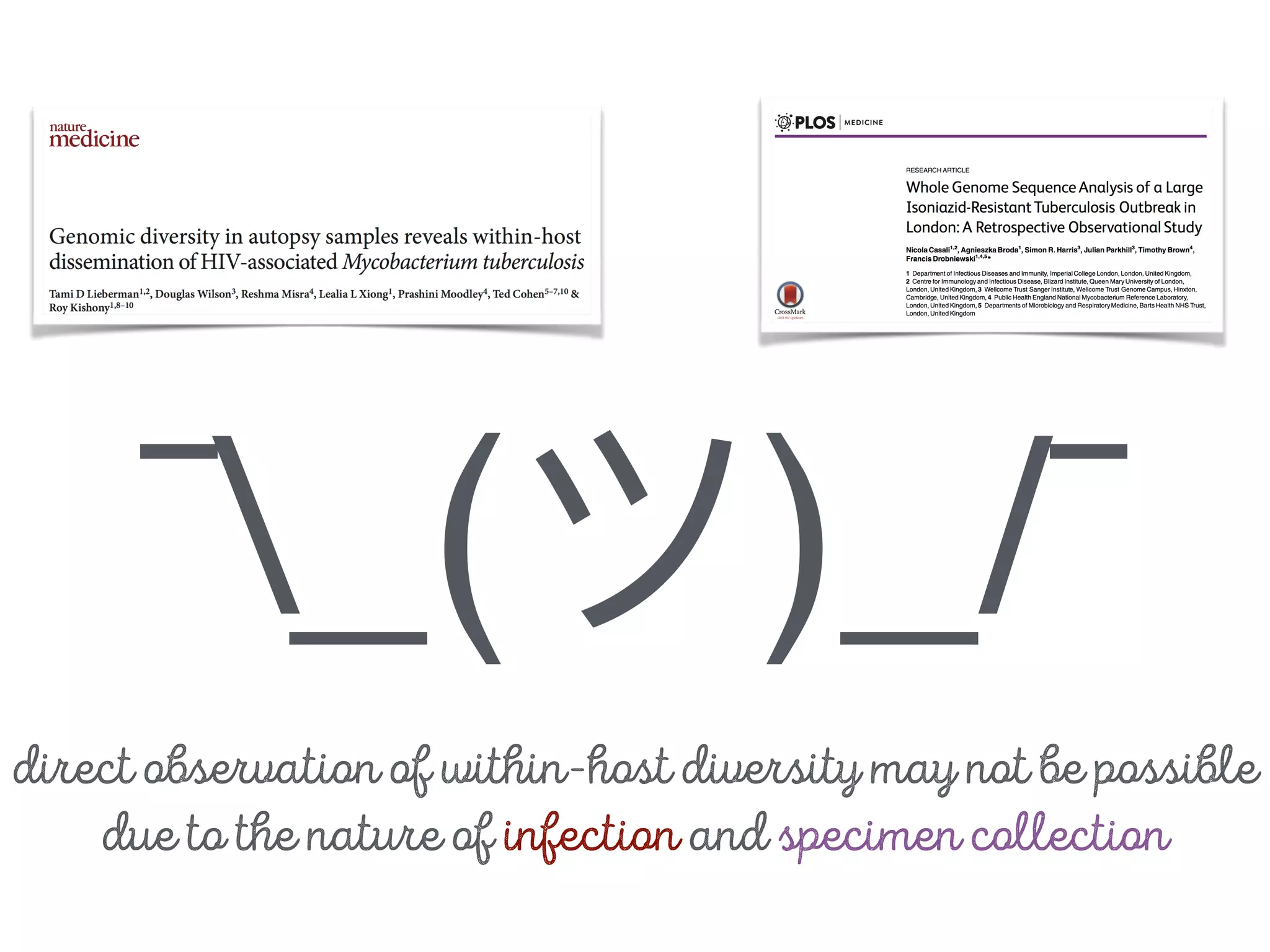
index case
second case
WE FORGOT ABOUT WITHIN-
HOST GENETIC DIVERSITY
detour: reconstructing a
transmission network in the
light of within-host diversity
With xavier didelot & caroline colijn
¯_( )_/¯
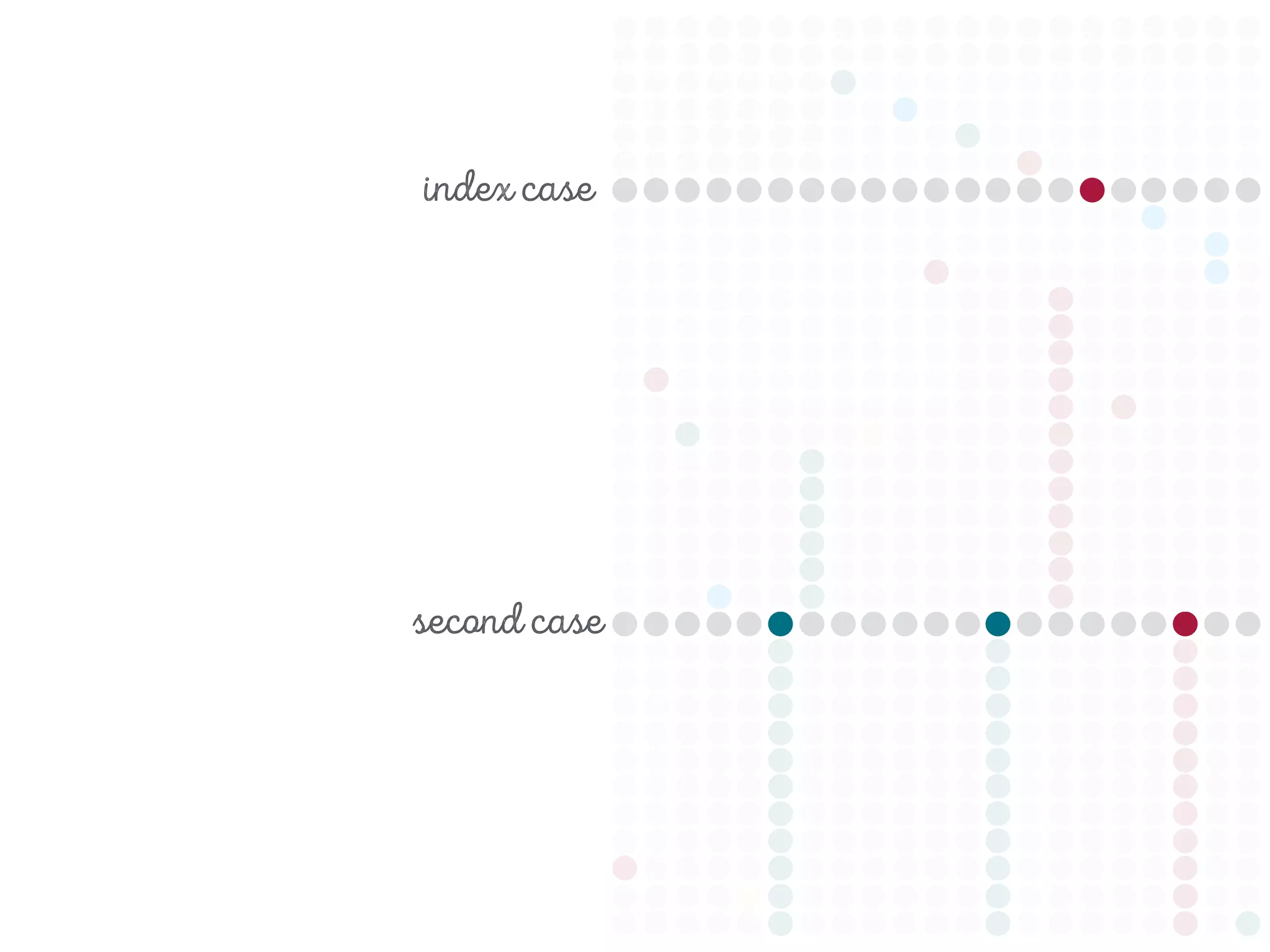
direct observation of within-host diversity may not be possible
due to the nature of infection and specimen collection
math modelling
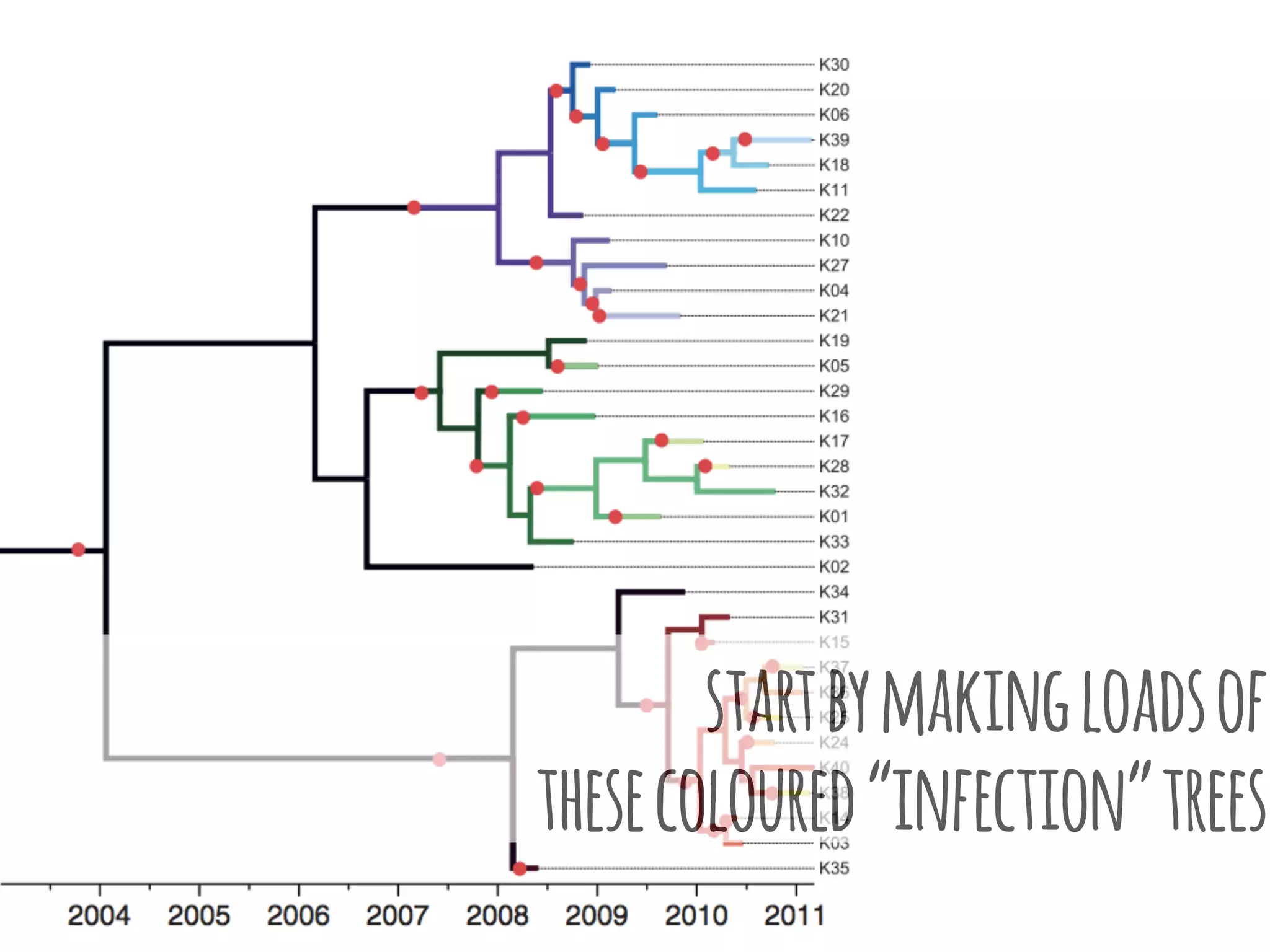
startbymakingloadsof
thesecoloured“infection”trees
createatransmissionsocial
networkfromthesuiteofinfectiontrees
combinewithyourepidemiological
datatoarriveatafinalreconstruction
m
iner
M
INOR
variants
m
iner
M
INOR
variants
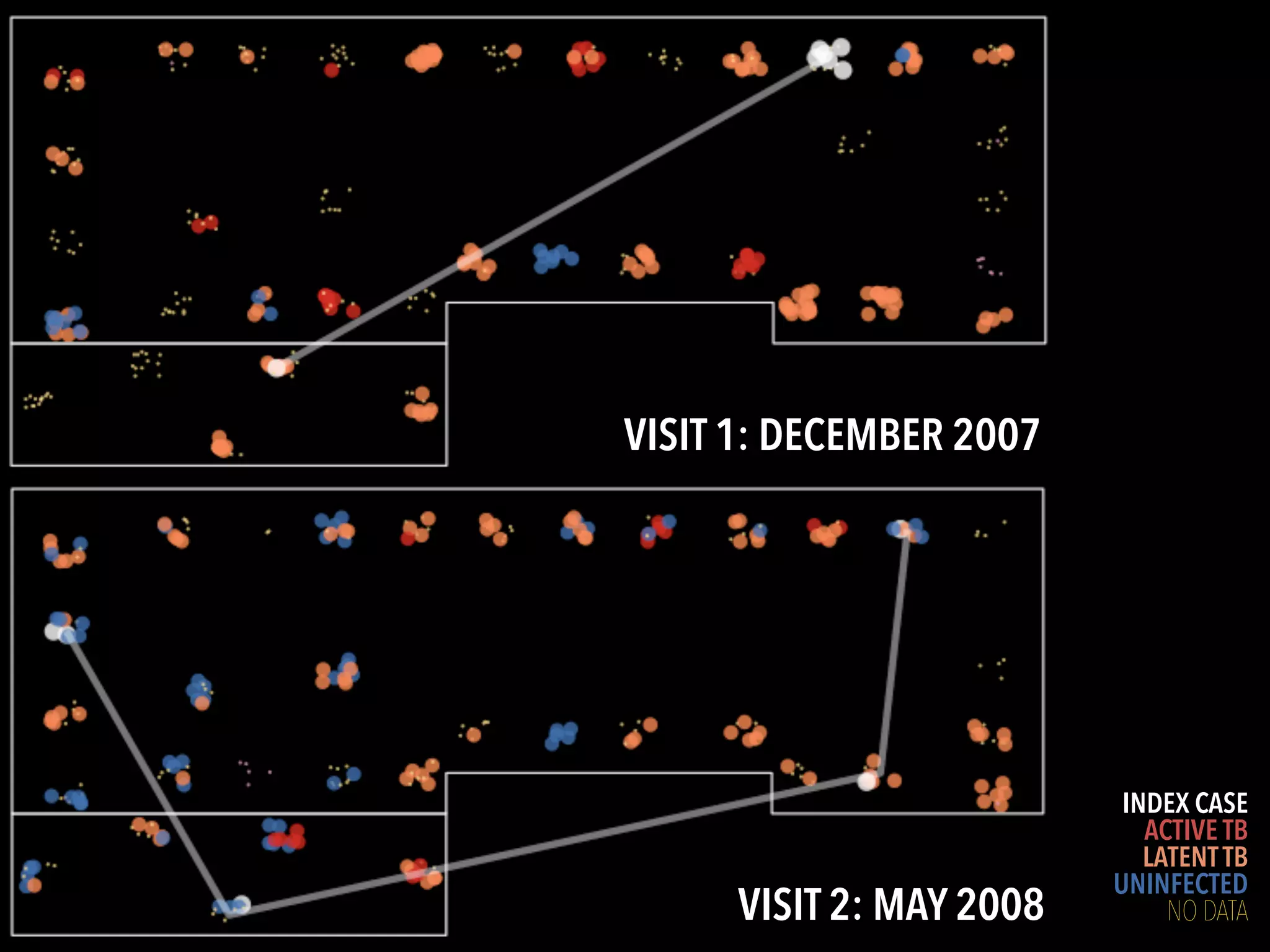
how did the shelter contribute to
infection?
With ANAMARIA CRISAN
INDEX CASE
ACTIVE TB
LATENTTB
UNINFECTED
NO DATA
VISIT 1: DECEMBER 2007
VISIT 2: MAY 2008
TIME IN THE SHELTER WAS ASSOCIATED WITH INCREASED RISK OF
INFECTION (OR 1.26), ESPECIALLY STAYS OF 5+ NIGHTS (OR 4.97)
September 2014: another phone call
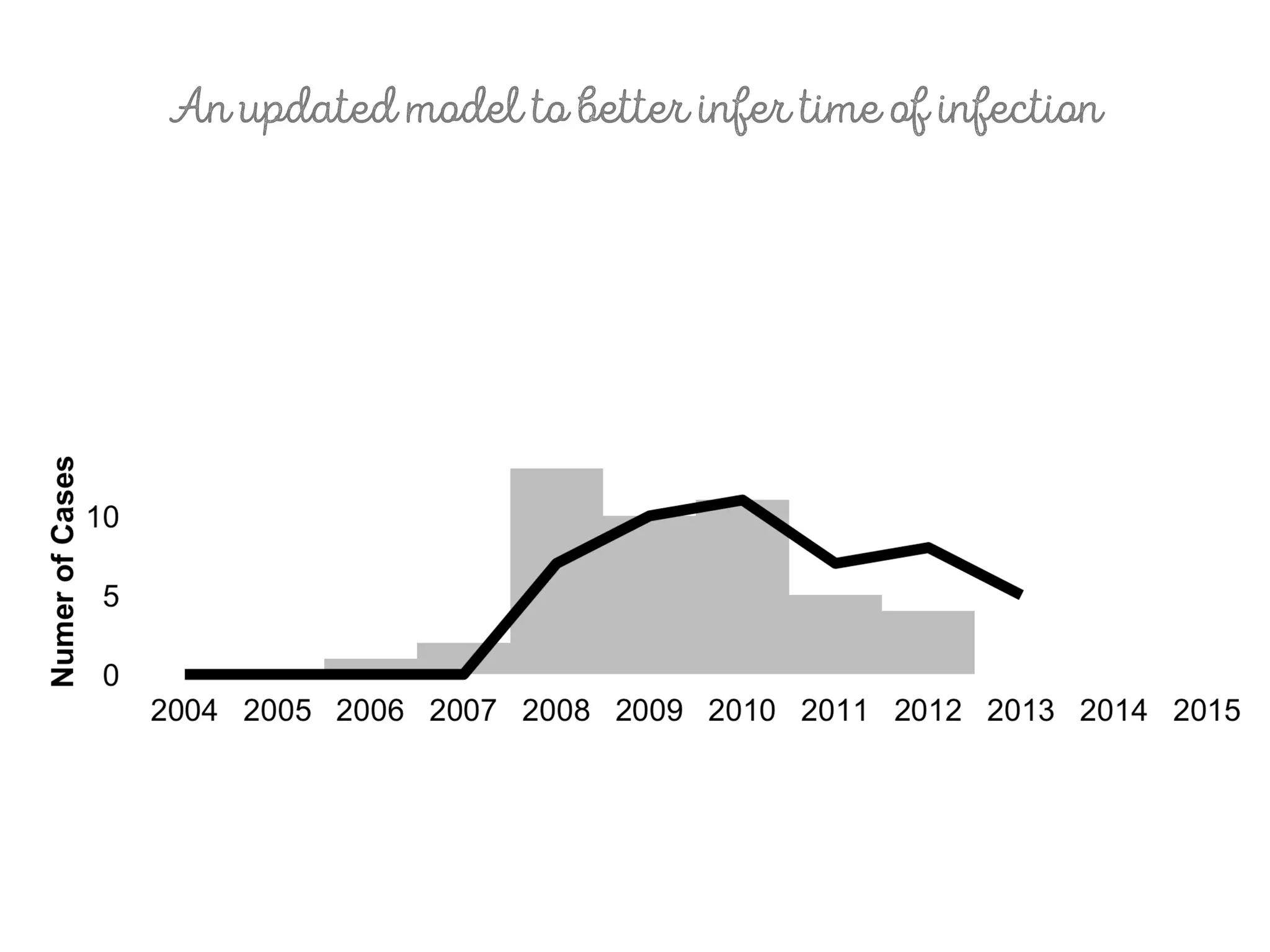
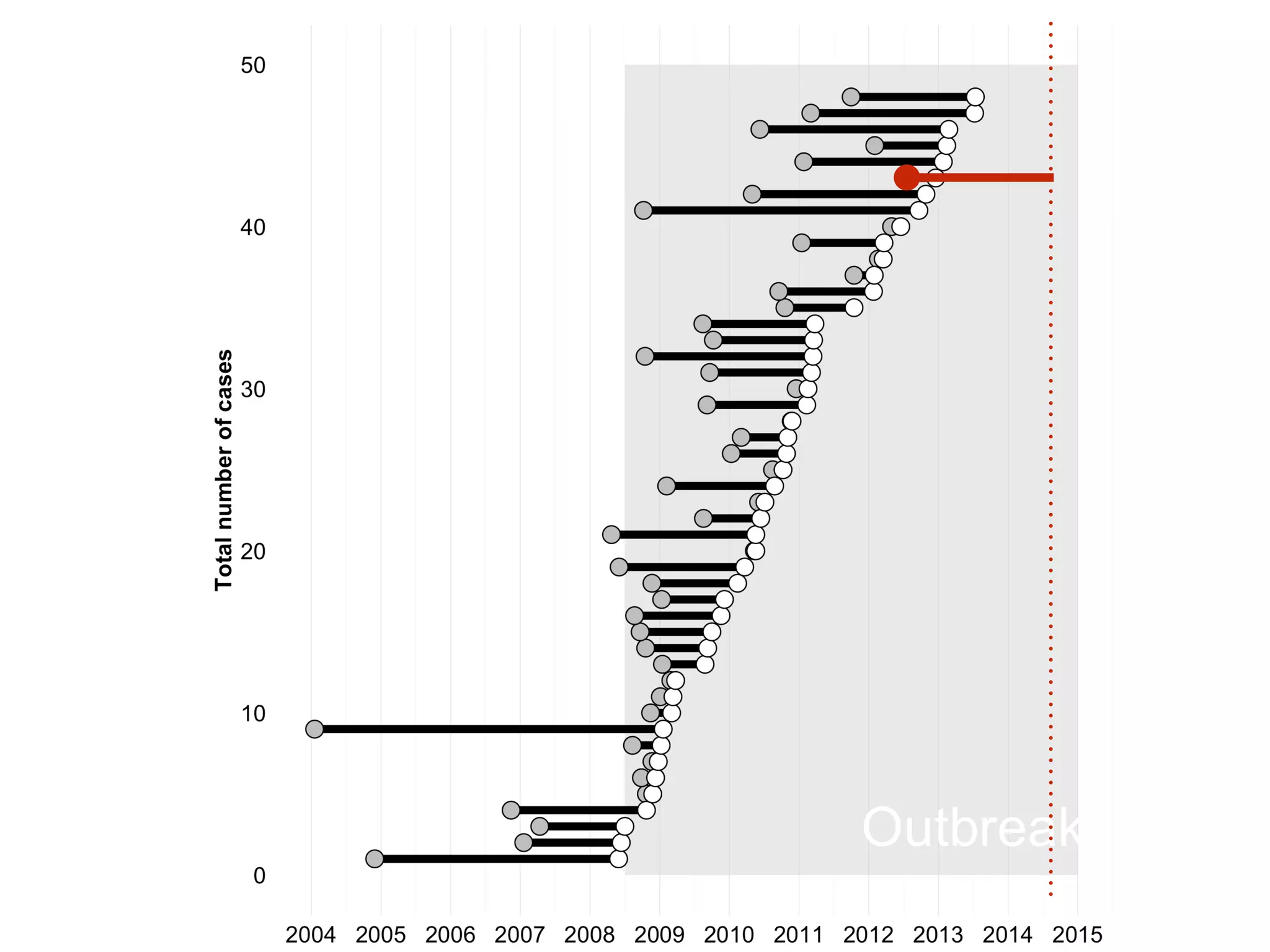
by 2014, the outbreak had grown to 52 cases and 2310 screened clients.
COULD THE OUTBREAK BE DECLARED OVER?
2008 2009 2010 2011 2012 2013
7 7
11
12
8
6
1
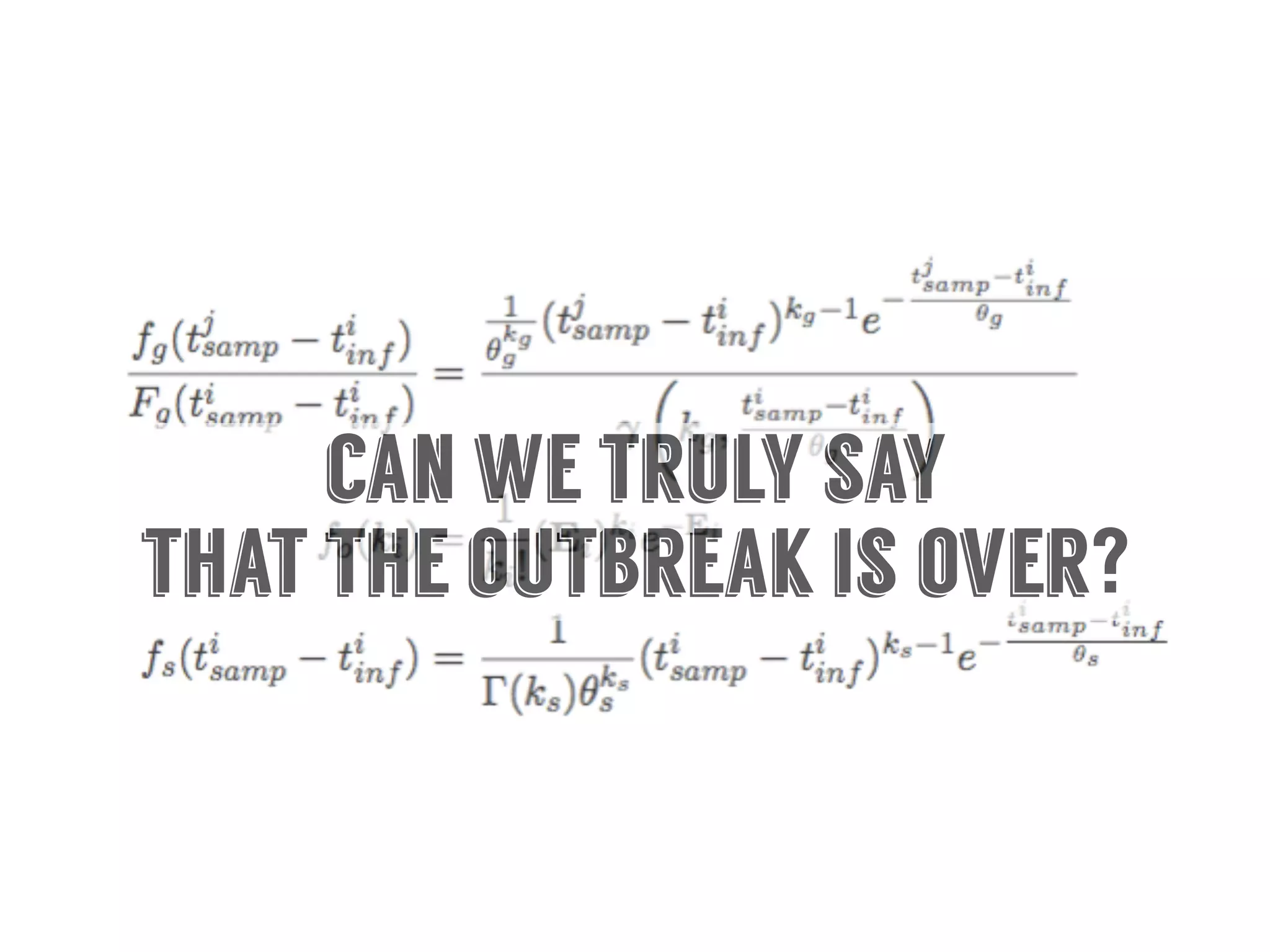
can we truly say
that the outbreak is over?
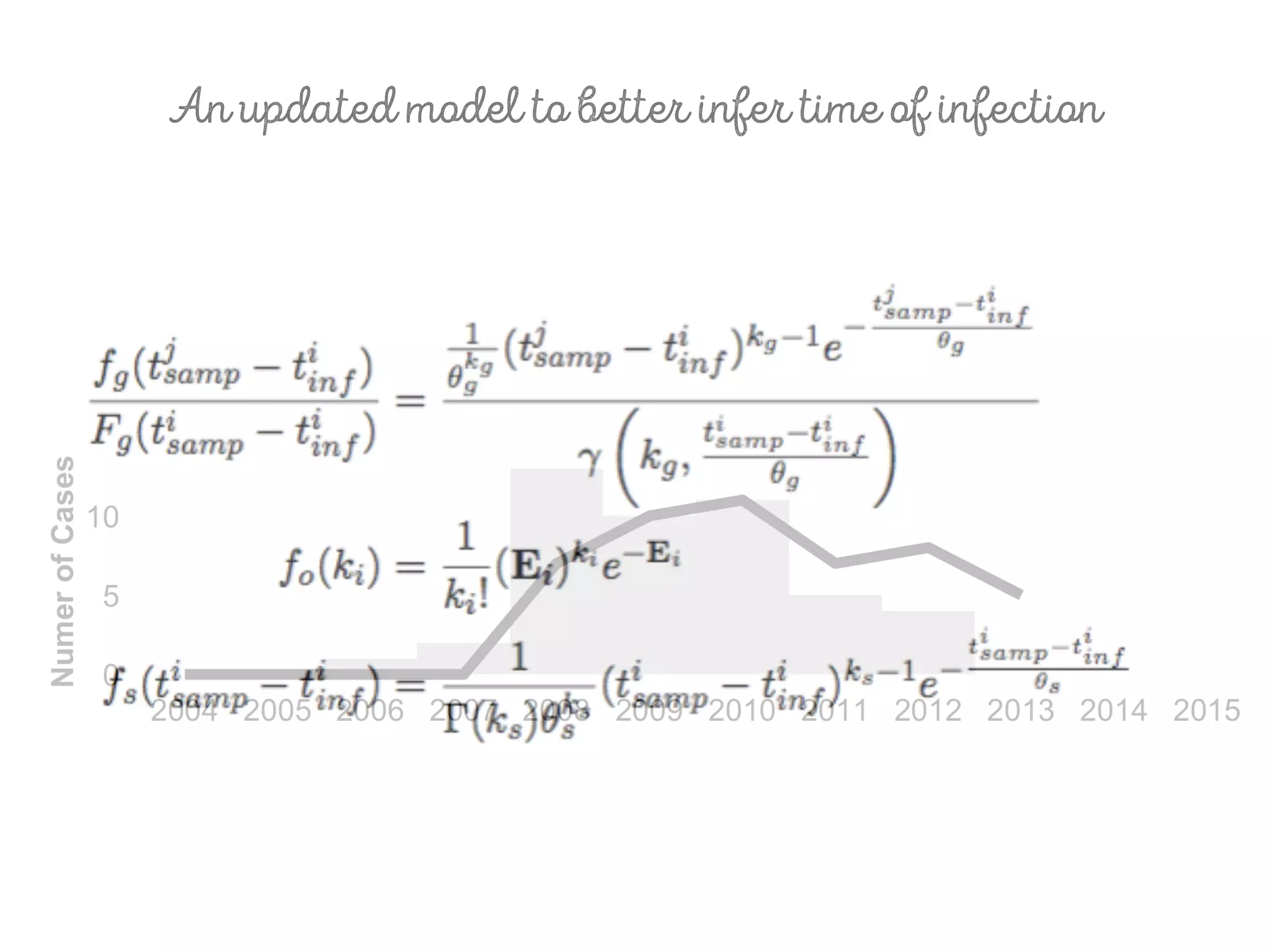
An updated model to better infer time of infection
MEMO
Bus: (250) 868-7818 Fax: (250) 868-7826 Kelowna Health Centre
Email: sue.pollock@interiorhealth.ca 1340 Ellis Street
www.interiorhealth.ca Kelowna, BC V1Y 9N1
Quality Integrity Respect Trust
In 2008, an outbreak of Mycobacterium Tuberculosis (TB) was declared after a higher-than-expected number of
TB cases were identified in the Central Okanagan. Between 2008 and 2014, 52 outbreak-related active TB cases
were identified. Most cases were homeless and/or street-involved persons in Kelowna with a small linked
cluster in Penticton, and several cases in Salmon Arm.
Interior Health’s TB Outbreak Management Team, in partnership with community organizations and the BC
Centre for Disease Control have used numerous strategies to identify and treat new cases and to minimize the
public health risk. Epidemiological and genomics (genetic fingerprinting) data demonstrate that the peak of the
outbreak occurred in late 2010/early 2011. There is currently no evidence of ongoing transmission and
incidence of new TB cases has returned to baseline (pre-outbreak) levels.
The Central Okanagan TB outbreak is declared over as of January 29, 2015.
We expect to see sporadic new TB diagnoses connected to the outbreak in the coming years; early detection of
these cases will be critical to preventing another outbreak. The CD Unit will disseminate further information
about next steps as the outbreak response is de-escalated.
Outbreaks of TB among homeless persons are strongly related to social determinants of health such as
employment, income, safe housing, and access to health care. Preventing and controlling future outbreaks
requires continued attention to these inequities through comprehensive policies and programs that aim to
reduce health disparities in our community.
On behalf of the Office of the Medical Health Officers, we thank each of you for your hard work and
collaboration in controlling this outbreak and for your continued dedication to TB prevention and control.
If you have any questions, please contact the Communicable Disease Unit at 1-866-778-7736 or by email
CDUnit@interiorhealth.ca.
To:
CIHS Promotion & Prevention; Infection Control, Workplace Health & Safety, KGH Administrators, PRH
Administrators, Senior Executive Team, CD Unit
From: Dr. Sue Pollock, Medical Health Officer & Medical Director, Communicable Disease
Date: February 4, 2015
RE: Central Okanagan TB Outbreak Declared Over
BUT WAIT!there’s more!
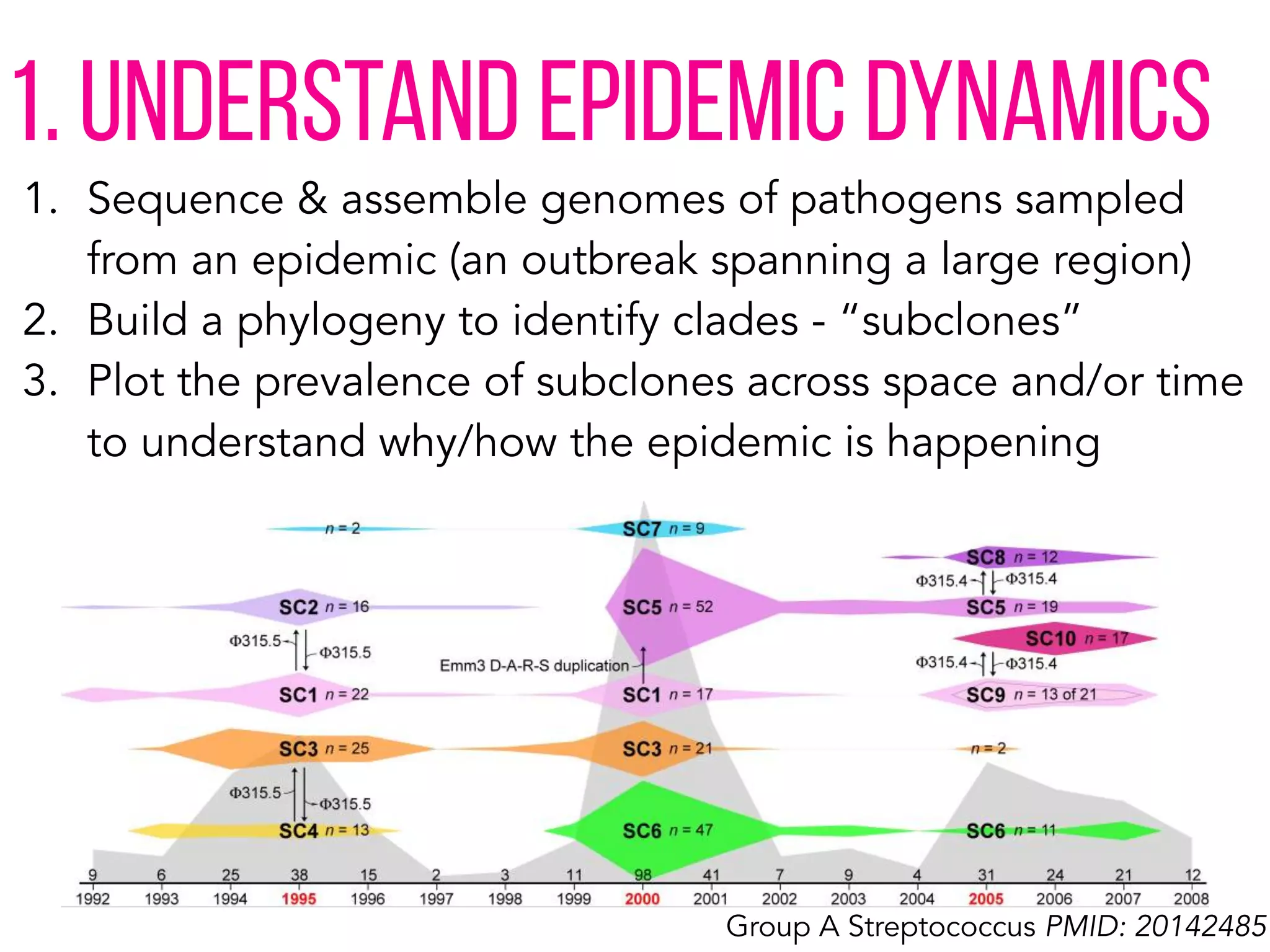
1. understand epidemic dynamics
Group A Streptococcus PMID: 20142485
1. Sequence & assemble genomes of pathogens sampled
from an epidemic (an outbreak spanning a large region)
2. Build a phylogeny to identify clades - “subclones”
3. Plot the prevalence of subclones across space and/or time
to understand why/how the epidemic is happening
2. discover a brand-new pathogen
Bas-Congo virus PMID: 23028323
1. Do metagenomics on a
sample from a patient with
an unknown disease
2. BLAST reads against a
database of all known
organisms
3. Look in the set of reads
that didn’t match to any
known organisms
4. Try some lab tricks to
sequence the whole virus
3. describe a novel pathogen
German outbreak E. coli O104:H4 PMID: 21793740
1. Sequence & assemble genome(s) of novel pathogen
2. Build a phylogeny to see how it relates to other members of
its genus
3. Do comparative genomics to identify genes/elements
present or absent in new pathogen relative to other species
PMC4556809
PMC4587932
4. understand
the drivers and
evolution of
within-host and
population-
level evolution
of resistance.
5. date the time of a viral infection
HIV PMID: 218322936
1. Sequence all the
viruses found in a
patient (the viral
“quasispecies”)
2. Build a phylogenetic
tree where branch
lengths correspond to
calendar time
3. Identify the time of the
TMRCA - this is the
infection time
6. therapeutic monitoring of DRUG resistance
HIV PMID: 20628644
1. Sequence all the viruses found in a patient (“quasispecies”)
at multiple times throughout their ART treatment
2. Scan the sequences for known mutations that confer drug
resistance - if you see them, change the treatment plan
PMID: 27150362 (OA)
7. understand pathogen
population structure
DIAGNOSIS
1. Sensitivity in sequencing directly from a
clinical sample
2. Clinical metagenomics - who’s the pathogen,
who’s a commensal, who’s a contaminant?
3. Building lab capacity
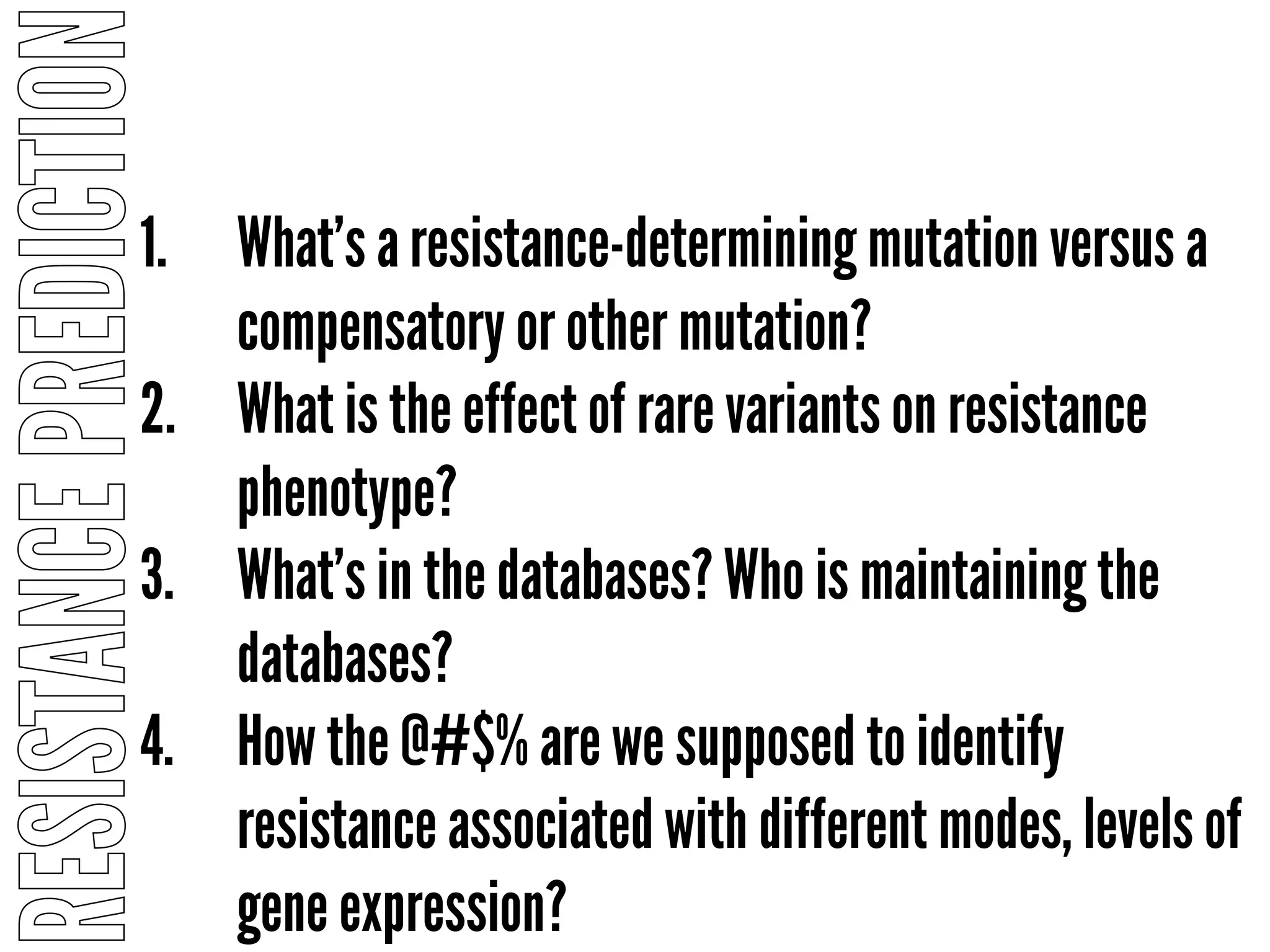
RESISTANCEPREDICTION
1. What’s a resistance-determining mutation versus a
compensatory or other mutation?
2. What is the effect of rare variants on resistance
phenotype?
3. What’s in the databases? Who is maintaining the
databases?
4. How the @#$% are we supposed to identify
resistance associated with different modes, levels of
gene expression?
EPIDEMIOLOGY
1. How can we infer transmission from genomic
data alone?
2. How can we infer transmission when it’s not
just a strain but an MGE that’s moving?
3. Do we have enough spatial and temporal
coverage of annotated genomes to make useful
inferences about population dynamics?
@jennifergardy

Genomics in Public Health