Melissa Louis
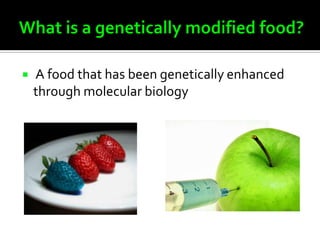
   A food that has been genetically enhanced
    through molecular biology
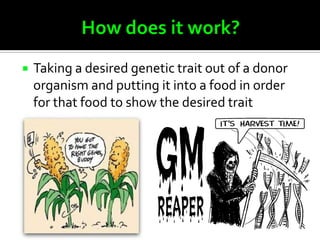
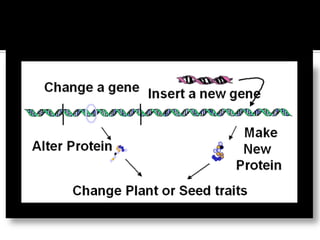
   Taking a desired genetic trait out of a donor
    organism and putting it into a food in order
    for that food to show the desired trait
ADVANTAGES                    DISADVANTAGES
 Enhances desired traits        Human health risks
 Pest resistance                 o Unfamiliar foreign proteins=
 Improve nutritional               allergic reactions
  content                        Genes resistant to
 Less time than controlled       antibiotics =dangerous
  breeding                        disease transmitable to
 Improves accuracy               humans
 Herbicide tolerance            Environmental hazards
 Cold tolerance                 Economic concerns
 Pharmaceuticals
1.   Develop a problem
2.   Identify a gene that produces a genetic trait of
     interest to solve this problem
3.   Find a donor organism
4.   Separate the gene from the rest of the
     genetic material of the donor
5.   Use gene gun or electricity to break through
     the cell wall and inject this gene into a food in
     order for it to show that trait
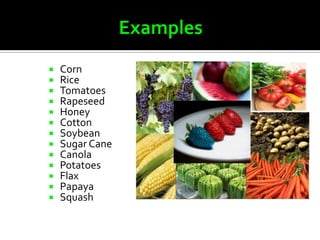
   Corn
   Rice
   Tomatoes
   Rapeseed
   Honey
   Cotton
   Soybean
   Sugar Cane
   Canola
   Potatoes
   Flax
   Papaya
   Squash
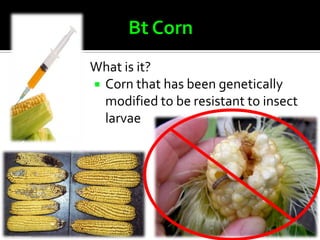
What is it?
 Corn that has been genetically
  modified to be resistant to insect
  larvae
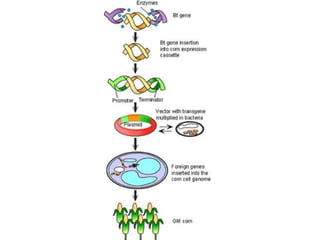
Steps of engineering corn
1. Identify that corn crop productions are being
   damaged by insect larvae.
2. Conclude that the bacterium bacillus
   thuringiensis produces a protein that kills
   Lepidoptera larvae.
3. Harvest this gene from the bacterium by
   separating it from the rest of the genetic
   material of the donor.
4. Inject removed gene into the cell wall of a corn
   cell.
5. The food then shows that trait.
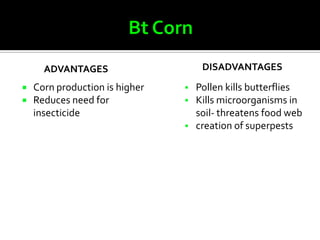
ADVANTAGES                     DISADVANTAGES
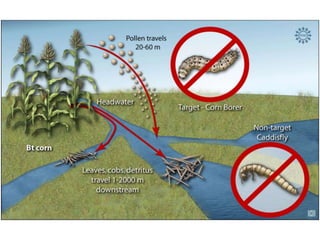
   Corn production is higher      Pollen kills butterflies
   Reduces need for               Kills microorganisms in
    insecticide                     soil- threatens food web
                                   creation of superpests
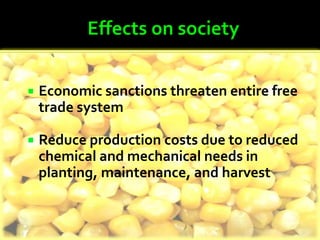
   Economic sanctions threaten entire free
    trade system

   Reduce production costs due to reduced
    chemical and mechanical needs in
    planting, maintenance, and harvest
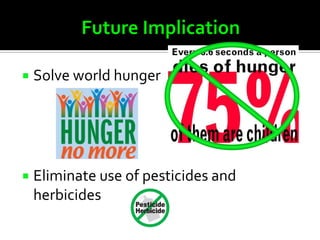
   Solve world hunger


   Eliminate use of pesticides and
    herbicides
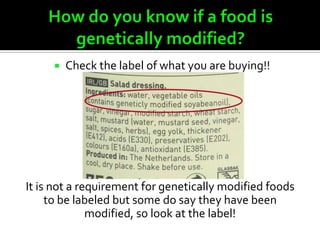
   Check the label of what you are buying!!


It is not a requirement for genetically modified foods
     to be labeled but some do say they have been
              modified, so look at the label!
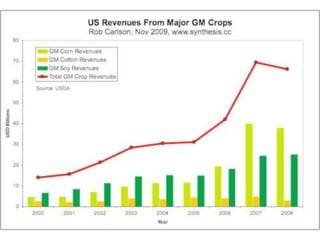
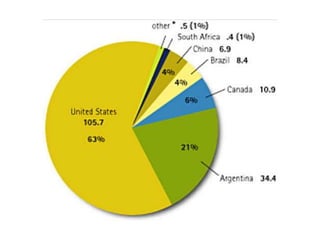
   70 - 75 % of U.S. food is genetically modified
   Leading producers of genetically modified
    crops
       1. United States – 74%
       2. Argentina – 15%
       3. Canada – 10%
Still don’t understand genetic engineering?
Then check out this video!

http://www.youtube.com/watch?v=FTfuAbzAe
  B8&feature=related
Genetically Modified Foods

Genetically Modified Foods

  • 1.
  • 2.
    A food that has been genetically enhanced through molecular biology
  • 3.
    Taking a desired genetic trait out of a donor organism and putting it into a food in order for that food to show the desired trait
  • 4.
    ADVANTAGES DISADVANTAGES  Enhances desired traits  Human health risks  Pest resistance o Unfamiliar foreign proteins=  Improve nutritional allergic reactions content  Genes resistant to  Less time than controlled antibiotics =dangerous breeding disease transmitable to  Improves accuracy humans  Herbicide tolerance  Environmental hazards  Cold tolerance  Economic concerns  Pharmaceuticals
  • 5.
    1. Develop a problem 2. Identify a gene that produces a genetic trait of interest to solve this problem 3. Find a donor organism 4. Separate the gene from the rest of the genetic material of the donor 5. Use gene gun or electricity to break through the cell wall and inject this gene into a food in order for it to show that trait
  • 7.
    Corn  Rice  Tomatoes  Rapeseed  Honey  Cotton  Soybean  Sugar Cane  Canola  Potatoes  Flax  Papaya  Squash
  • 8.
    What is it? Corn that has been genetically modified to be resistant to insect larvae
  • 9.
    Steps of engineeringcorn 1. Identify that corn crop productions are being damaged by insect larvae. 2. Conclude that the bacterium bacillus thuringiensis produces a protein that kills Lepidoptera larvae. 3. Harvest this gene from the bacterium by separating it from the rest of the genetic material of the donor. 4. Inject removed gene into the cell wall of a corn cell. 5. The food then shows that trait.
  • 11.
    ADVANTAGES DISADVANTAGES  Corn production is higher  Pollen kills butterflies  Reduces need for  Kills microorganisms in insecticide soil- threatens food web  creation of superpests
  • 14.
    Economic sanctions threaten entire free trade system  Reduce production costs due to reduced chemical and mechanical needs in planting, maintenance, and harvest
  • 15.
    Solve world hunger  Eliminate use of pesticides and herbicides
  • 16.
    Check the label of what you are buying!! It is not a requirement for genetically modified foods to be labeled but some do say they have been modified, so look at the label!
  • 17.
    70 - 75 % of U.S. food is genetically modified  Leading producers of genetically modified crops 1. United States – 74% 2. Argentina – 15% 3. Canada – 10%
  • 19.
    Still don’t understandgenetic engineering? Then check out this video! http://www.youtube.com/watch?v=FTfuAbzAe B8&feature=related