Downloaded 181 times
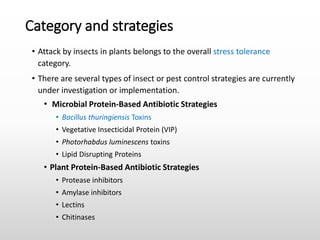
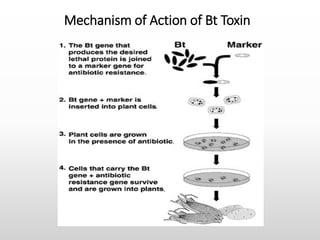
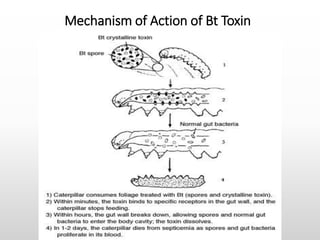


This document discusses developing insect resistance in crops using biotechnological approaches. It describes how some plants have natural mechanisms of insect resistance by secreting toxic chemicals. Current strategies to develop insect resistance include using microbial proteins from Bacillus thuringiensis (Bt) toxins, which are inserted into plant genomes using recombinant DNA techniques. The mechanisms of Bt toxins are described, including how they bind to receptors in insect guts and cause cell death. Advantages of Bt crops include reduced need for insecticides and improved pest management. However, there is a risk that insects may develop resistance to Bt toxins over time from repeated exposure.


