GENETICALLY MODIFIED
        FOODS

            KALPANA CHAUHAN
               IHM,PUSA
CONTENT

 What are GM foods?
 How Genetic Modifications is done?

 How to add a fish gene to a tomato?

 Common GM foods

 Positive impact of GM foods

 Negative impact of GM foods

 Social and Ethical concerns

 Conclusion
WHAT ARE GM FOODS            ?
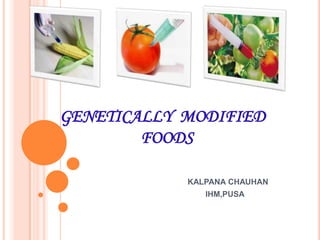
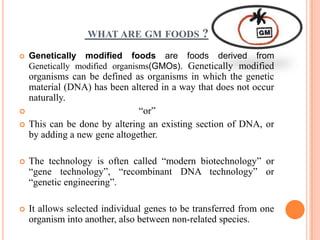
   Genetically modified foods are foods derived from
    Genetically modified organisms(GMOs). Genetically modified
    organisms can be defined as organisms in which the genetic
    material (DNA) has been altered in a way that does not occur
    naturally.
                              “or”
   This can be done by altering an existing section of DNA, or
    by adding a new gene altogether.

   The technology is often called “modern biotechnology” or
    “gene technology”, “recombinant DNA technology” or
    “genetic engineering”.

   It allows selected individual genes to be transferred from one
    organism into another, also between non-related species.
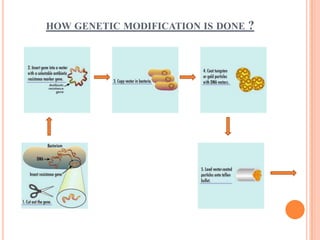
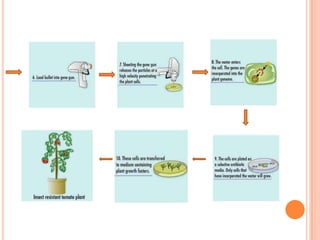
HOW GENETIC MODIFICATION IS DONE   ?
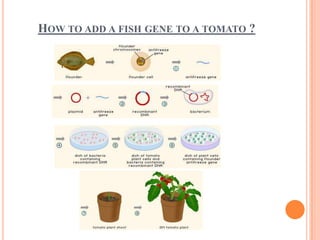
HOW TO ADD A FISH GENE TO A TOMATO ?
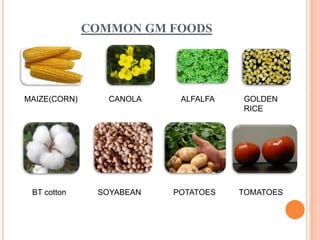
COMMON GM FOODS


MAIZE(CORN)      CANOLA    ALFALFA   GOLDEN
                                     RICE


 BT cotton     SOYABEAN   POTATOES   TOMATOES
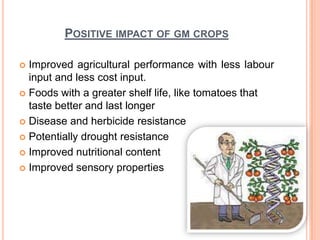
POSITIVE IMPACT OF GM CROPS

 Improved agricultural performance with less labour
  input and less cost input.
 Foods with a greater shelf life, like tomatoes that
  taste better and last longer
 Disease and herbicide resistance

 Potentially drought resistance

 Improved nutritional content

 Improved sensory properties
NEGATIVE IMPACT OF GM CROPS

   Environment:
   Cross-breeding the potential for cross-breeding between GM
    crops and surrounding vegetation, including weeds.
    This could result in weeds that are resistant to herbicides and
    would thus require a greater use of herbicides, which could
    lead to soil and water contamination.

   Herbicide tolerant (HR) crops the increasing acreage of HR
    crops (such as soybean and canola) has resulted in an
    increase in the types of weeds that are now glyphosate
    resistant (GR).Harm to other organisms
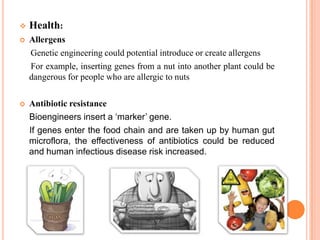
   Health:
   Allergens
    Genetic engineering could potential introduce or create allergens
    For example, inserting genes from a nut into another plant could be
    dangerous for people who are allergic to nuts

   Antibiotic resistance
    Bioengineers insert a ‘marker’ gene.
    If genes enter the food chain and are taken up by human gut
    microflora, the effectiveness of antibiotics could be reduced
    and human infectious disease risk increased.
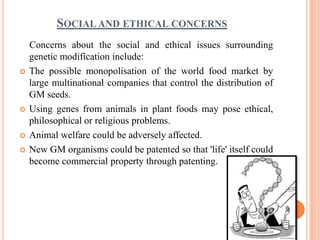
SOCIAL AND ETHICAL CONCERNS
    Concerns about the social and ethical issues surrounding
    genetic modification include:
   The possible monopolisation of the world food market by
    large multinational companies that control the distribution of
    GM seeds.
   Using genes from animals in plant foods may pose ethical,
    philosophical or religious problems.
   Animal welfare could be adversely affected.
   New GM organisms could be patented so that 'life' itself could
    become commercial property through patenting.
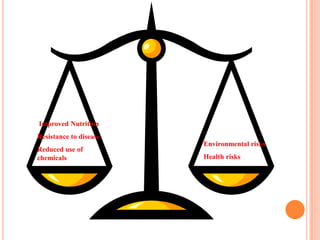
Improved Nutrition
Resistance to disease
                        Environmental risks
Reduced use of
chemicals               Health risks
CONCLUSION
   Genetically-modified foods have the potential to solve many of the
    world's hunger and malnutrition problems.

   To help protect and preserve the environment by increasing yield
    and reducing reliance upon chemical pesticides and herbicides.

   Yet there are many challenges ahead for governments, especially in
    the areas of safety testing, regulation, international policy.

   Many people feel that genetic engineering is the inevitable wave of
    the future and that we cannot afford to ignore a technology that has
    such enormous potential benefits.

   However, we must proceed with caution to avoid causing unintended
    harm to human health and the environment as a result of our
    enthusiasm for this powerful technology.
GENETICALLY MODIFIED FOODS

GENETICALLY MODIFIED FOODS

  • 1.
    GENETICALLY MODIFIED FOODS KALPANA CHAUHAN IHM,PUSA
  • 2.
    CONTENT  What areGM foods?  How Genetic Modifications is done?  How to add a fish gene to a tomato?  Common GM foods  Positive impact of GM foods  Negative impact of GM foods  Social and Ethical concerns  Conclusion
  • 3.
    WHAT ARE GMFOODS ?  Genetically modified foods are foods derived from Genetically modified organisms(GMOs). Genetically modified organisms can be defined as organisms in which the genetic material (DNA) has been altered in a way that does not occur naturally.  “or”  This can be done by altering an existing section of DNA, or by adding a new gene altogether.  The technology is often called “modern biotechnology” or “gene technology”, “recombinant DNA technology” or “genetic engineering”.  It allows selected individual genes to be transferred from one organism into another, also between non-related species.
  • 4.
  • 6.
    HOW TO ADDA FISH GENE TO A TOMATO ?
  • 7.
    COMMON GM FOODS MAIZE(CORN) CANOLA ALFALFA GOLDEN RICE BT cotton SOYABEAN POTATOES TOMATOES
  • 9.
    POSITIVE IMPACT OFGM CROPS  Improved agricultural performance with less labour input and less cost input.  Foods with a greater shelf life, like tomatoes that taste better and last longer  Disease and herbicide resistance  Potentially drought resistance  Improved nutritional content  Improved sensory properties
  • 10.
    NEGATIVE IMPACT OFGM CROPS  Environment:  Cross-breeding the potential for cross-breeding between GM crops and surrounding vegetation, including weeds. This could result in weeds that are resistant to herbicides and would thus require a greater use of herbicides, which could lead to soil and water contamination.  Herbicide tolerant (HR) crops the increasing acreage of HR crops (such as soybean and canola) has resulted in an increase in the types of weeds that are now glyphosate resistant (GR).Harm to other organisms
  • 11.
    Health:  Allergens Genetic engineering could potential introduce or create allergens For example, inserting genes from a nut into another plant could be dangerous for people who are allergic to nuts  Antibiotic resistance Bioengineers insert a ‘marker’ gene. If genes enter the food chain and are taken up by human gut microflora, the effectiveness of antibiotics could be reduced and human infectious disease risk increased.
  • 12.
    SOCIAL AND ETHICALCONCERNS Concerns about the social and ethical issues surrounding genetic modification include:  The possible monopolisation of the world food market by large multinational companies that control the distribution of GM seeds.  Using genes from animals in plant foods may pose ethical, philosophical or religious problems.  Animal welfare could be adversely affected.  New GM organisms could be patented so that 'life' itself could become commercial property through patenting.
  • 13.
    Improved Nutrition Resistance todisease Environmental risks Reduced use of chemicals Health risks
  • 14.
    CONCLUSION  Genetically-modified foods have the potential to solve many of the world's hunger and malnutrition problems.  To help protect and preserve the environment by increasing yield and reducing reliance upon chemical pesticides and herbicides.  Yet there are many challenges ahead for governments, especially in the areas of safety testing, regulation, international policy.  Many people feel that genetic engineering is the inevitable wave of the future and that we cannot afford to ignore a technology that has such enormous potential benefits.  However, we must proceed with caution to avoid causing unintended harm to human health and the environment as a result of our enthusiasm for this powerful technology.