Synchronous Generator
P R A S H A N T K U M A R S C H I N A M A L L I
A S S I S T A N T P R O F E S S O R , S E N I O R I E E E
M E M B E R
D E P A R T M E N T O F E L E C T R I C A L &
E L E C T R O N I C S E N G I N E E R I N G
F A C U L T Y O F E N G I N E E R I N G A N D
T E C H N O L O G Y ( C O - E D )
S H A R N B A S V A U N I V E R S I T Y , K A L A B U R A G I
Difference between DC generator
and Alternator
•
It is seen that in case of a D.C. generator, basically the nature of the induced E.M.F. in the
armature conductors is of alternating type. By using commutator and brush assembly it is
converted to D.C. and made available to the external circuit. If commutator is dropped from a
dc. generator and induced E.M.F. is tapped from an armature directly outside, the nature Of
such E.M.F. will be alternating. Such a machine without commutator, providing an A.C. E.M.F.
to the external circuit is called an alternator.
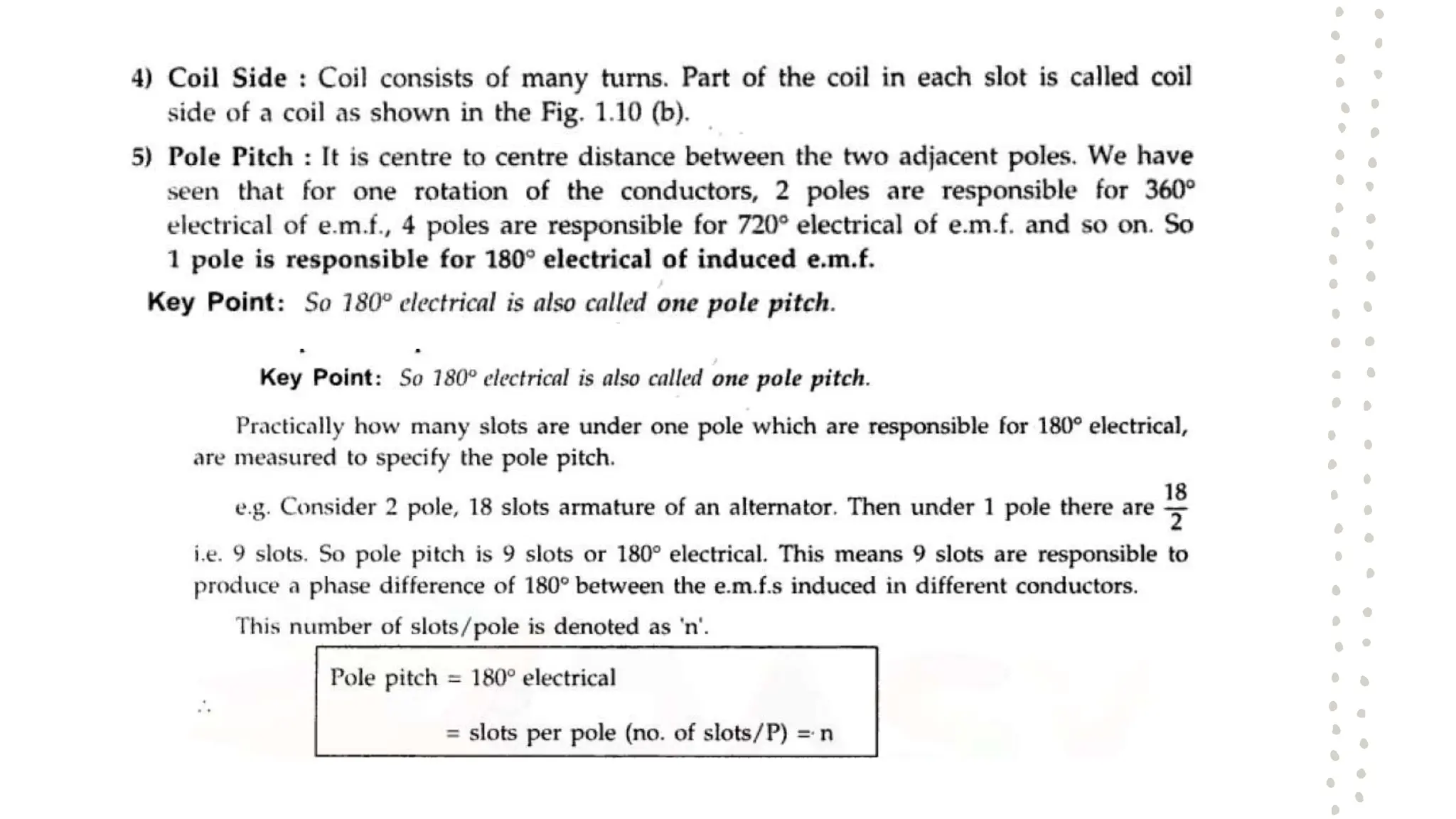
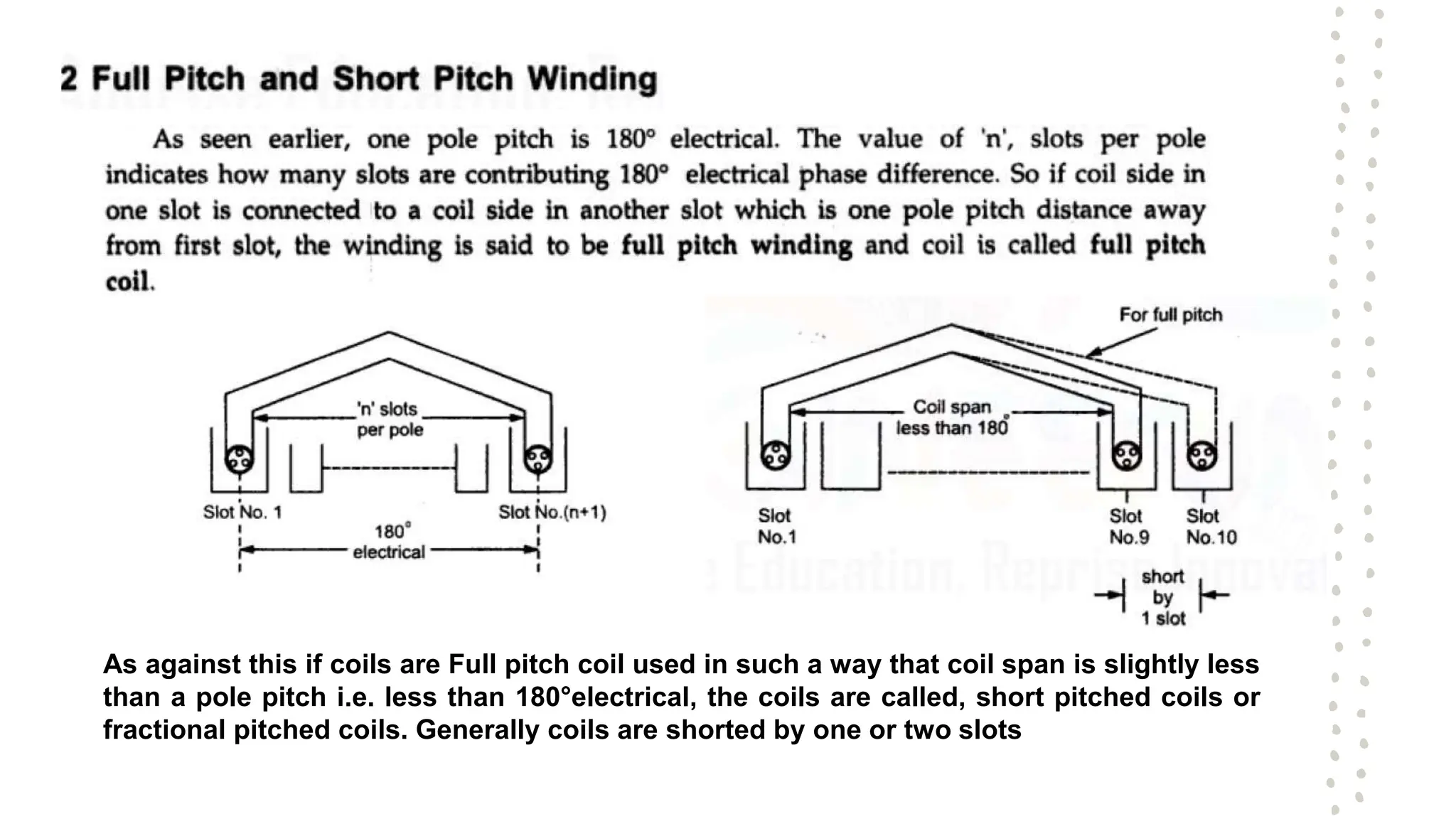
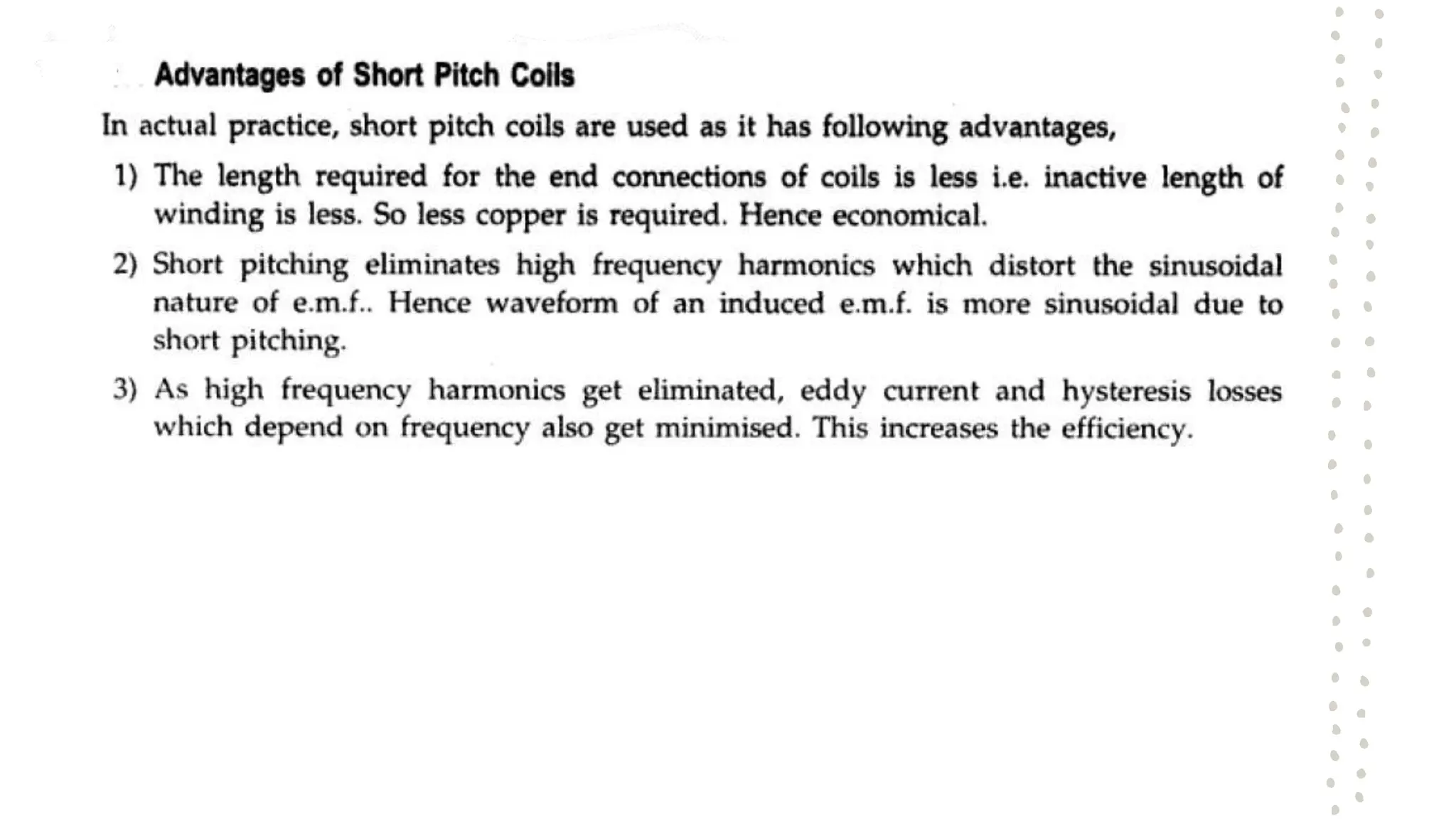
As against this if coils are Full pitch coil used in such a way that coil span is slightly less
than a pole pitch i.e. less than 180°electrical, the coils are called, short pitched coils or
fractional pitched coils. Generally coils are shorted by one or two slots
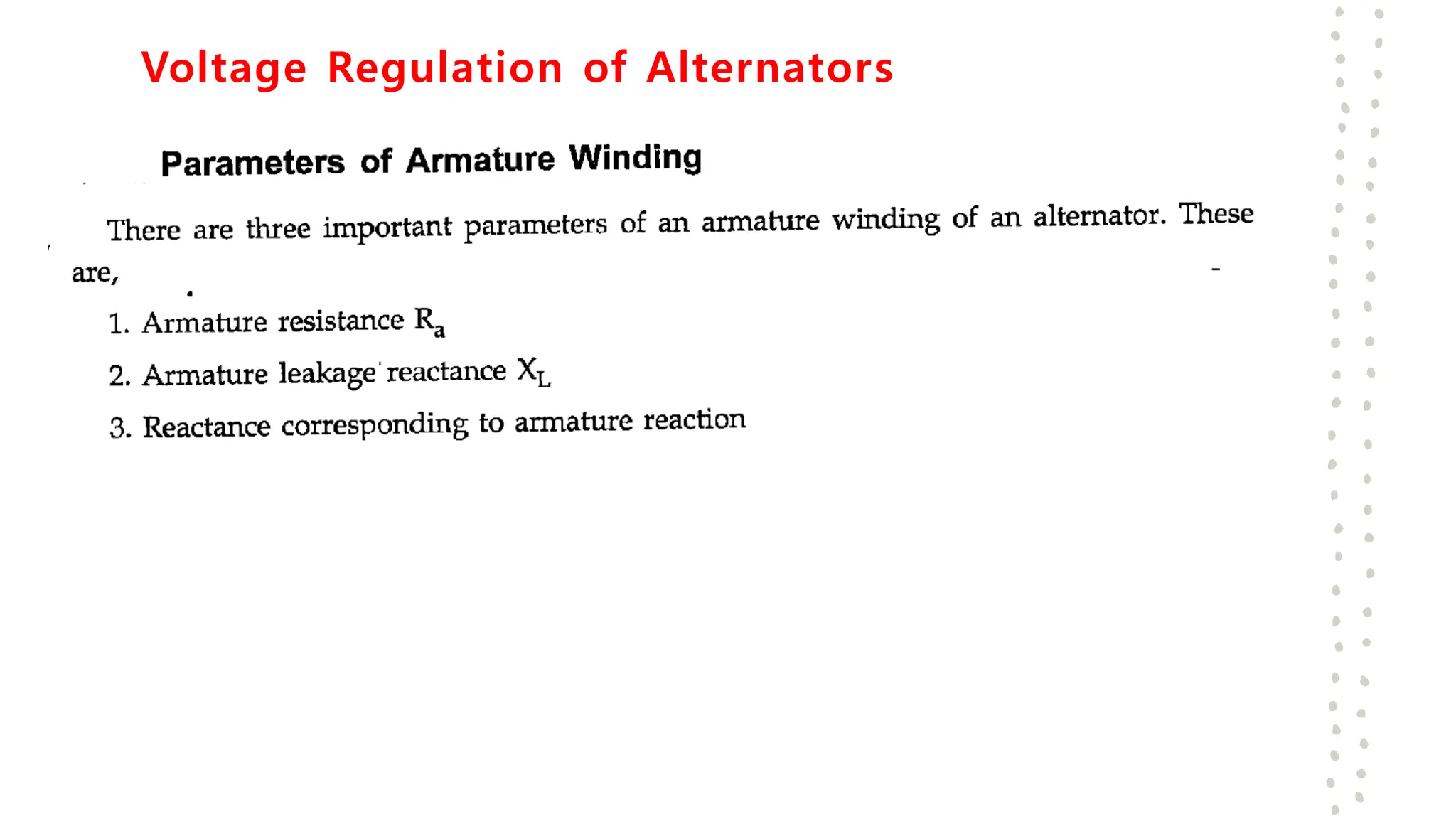
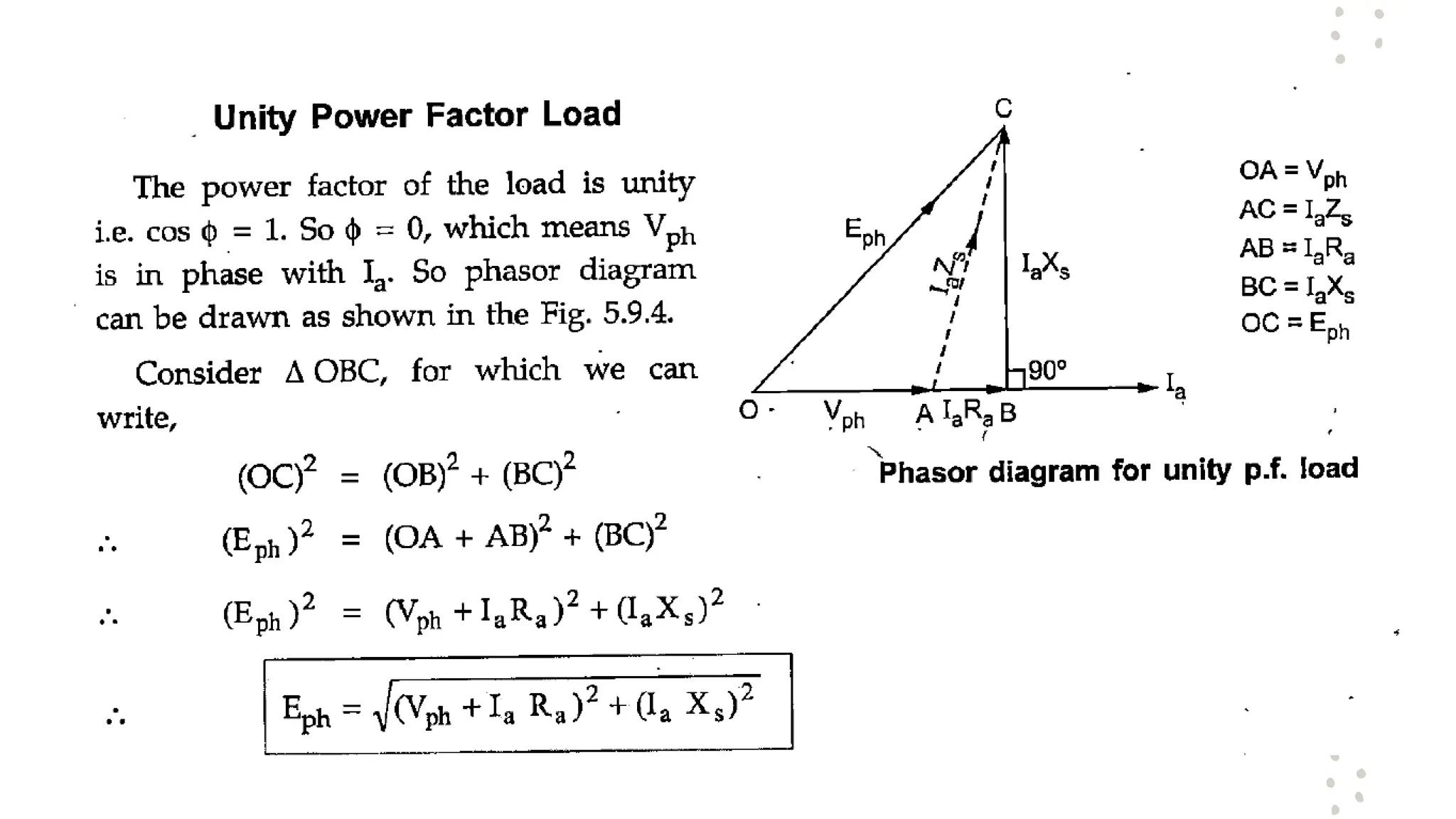
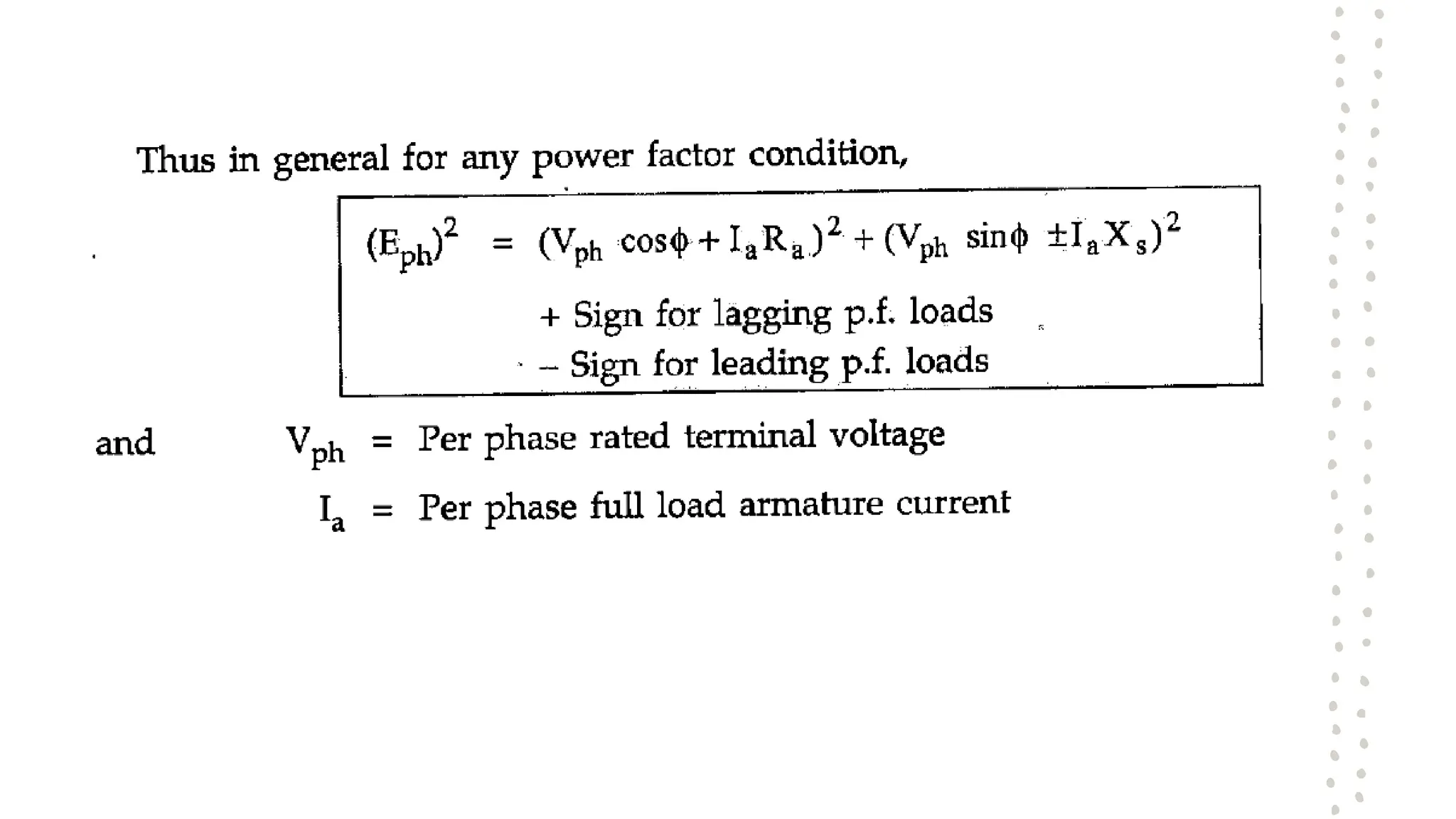
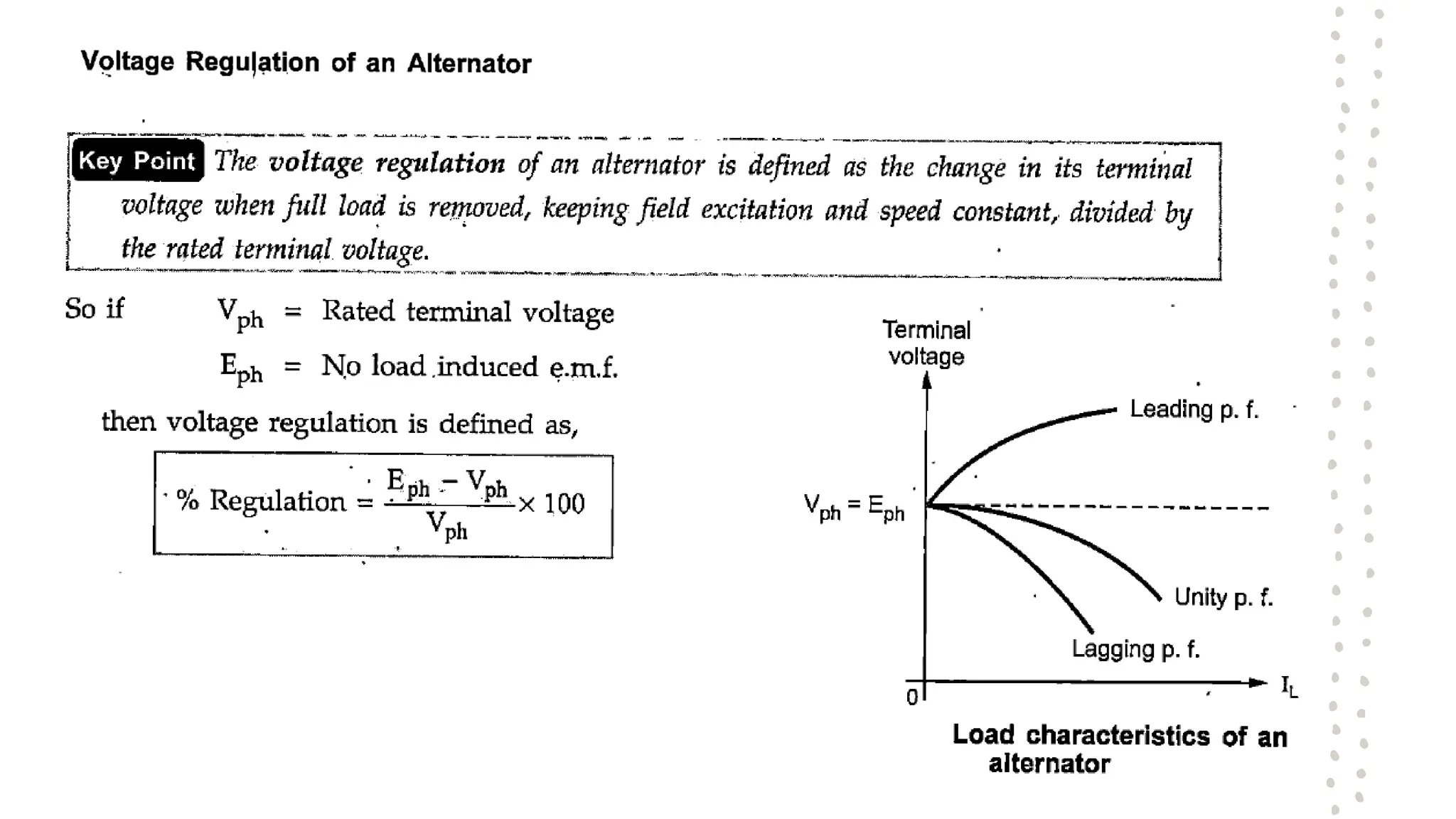
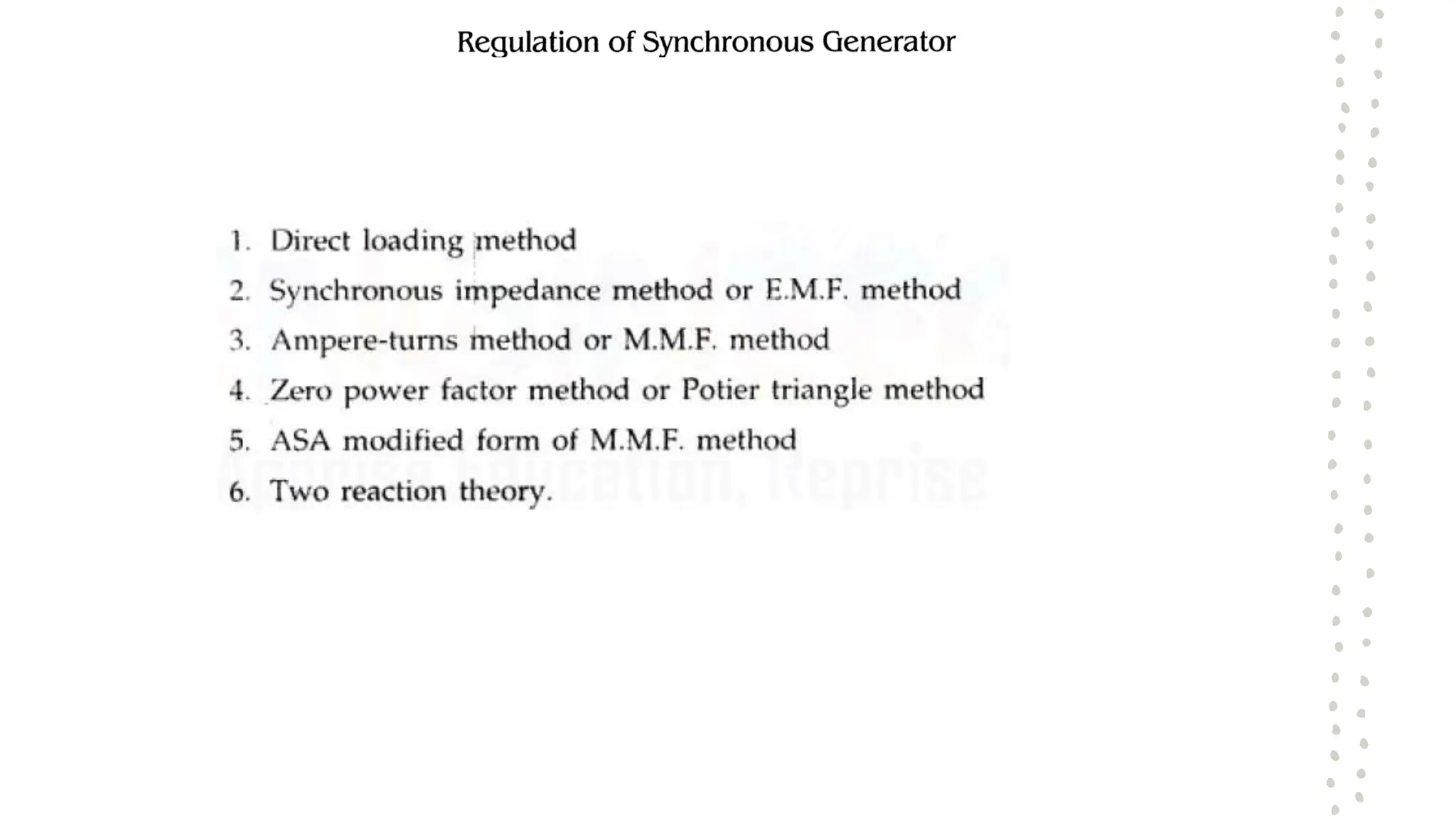
Voltage Regulation of Alternators
Synchronous Generator........................

Synchronous Generator........................

  • 1.
    Synchronous Generator P RA S H A N T K U M A R S C H I N A M A L L I A S S I S T A N T P R O F E S S O R , S E N I O R I E E E M E M B E R D E P A R T M E N T O F E L E C T R I C A L & E L E C T R O N I C S E N G I N E E R I N G F A C U L T Y O F E N G I N E E R I N G A N D T E C H N O L O G Y ( C O - E D ) S H A R N B A S V A U N I V E R S I T Y , K A L A B U R A G I
  • 2.
    Difference between DCgenerator and Alternator • It is seen that in case of a D.C. generator, basically the nature of the induced E.M.F. in the armature conductors is of alternating type. By using commutator and brush assembly it is converted to D.C. and made available to the external circuit. If commutator is dropped from a dc. generator and induced E.M.F. is tapped from an armature directly outside, the nature Of such E.M.F. will be alternating. Such a machine without commutator, providing an A.C. E.M.F. to the external circuit is called an alternator.
  • 12.
    As against thisif coils are Full pitch coil used in such a way that coil span is slightly less than a pole pitch i.e. less than 180°electrical, the coils are called, short pitched coils or fractional pitched coils. Generally coils are shorted by one or two slots
  • 23.