Gene Profiling in Clinical Oncology 8-9 April 2011 Viareggio, Italy New markers to define NSCLC and the potential of genomics L.Lacroix  PharmD PhD Institut Gustave Roussy, Villejuif, FR Friday, 8 April 2011
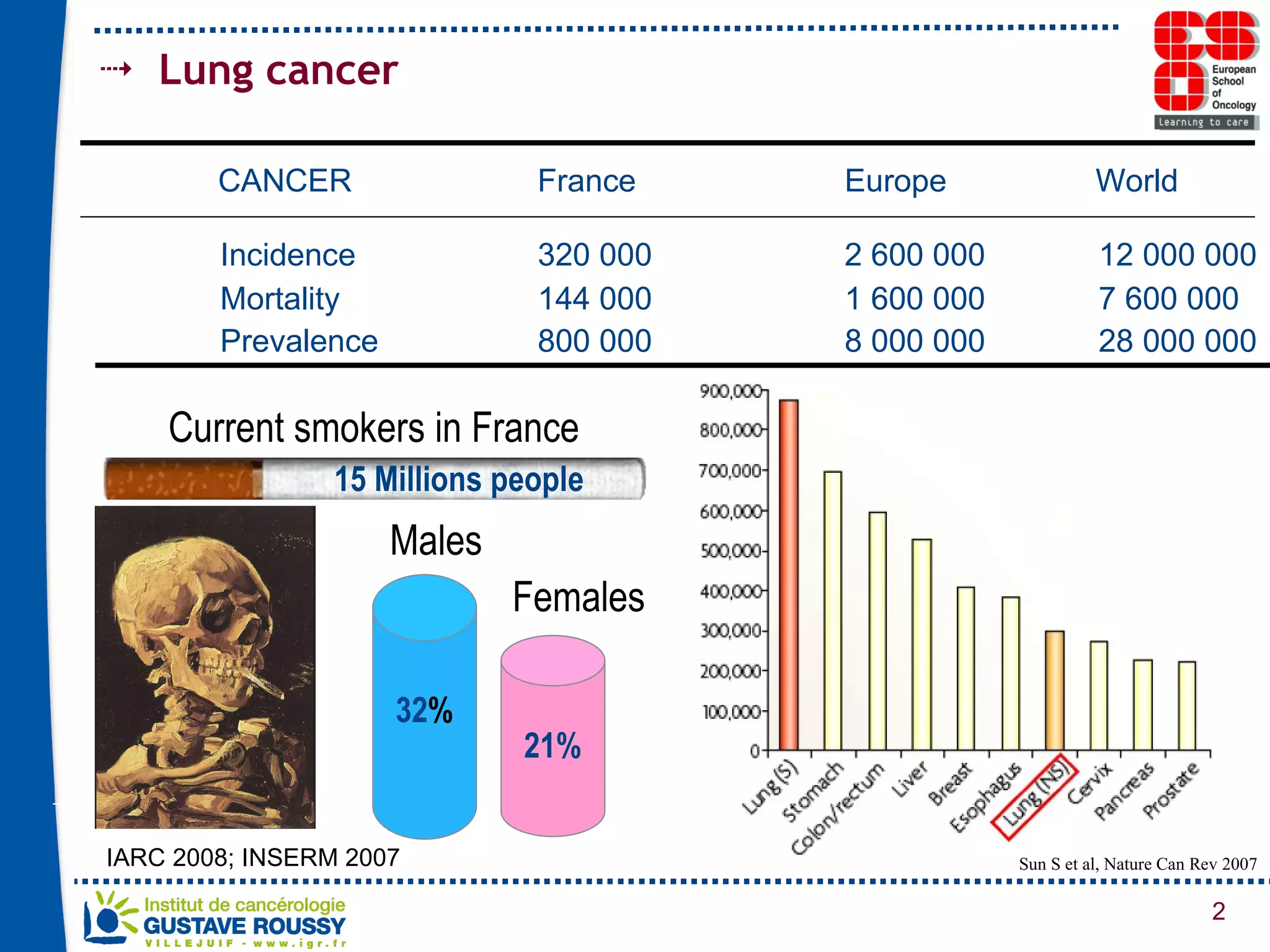
Lung cancer   Males Females Current smokers in France IARC 2008; INSERM 2007   Sun S et al, Nature Can Rev 2007 32 % 21% 15 Millions people CANCER France Europe World Incidence Mortality Prevalence 320 000 144 000 800 000 2 600 000 1 600 000 8 000 000 12 000 000 7 600 000 28 000 000
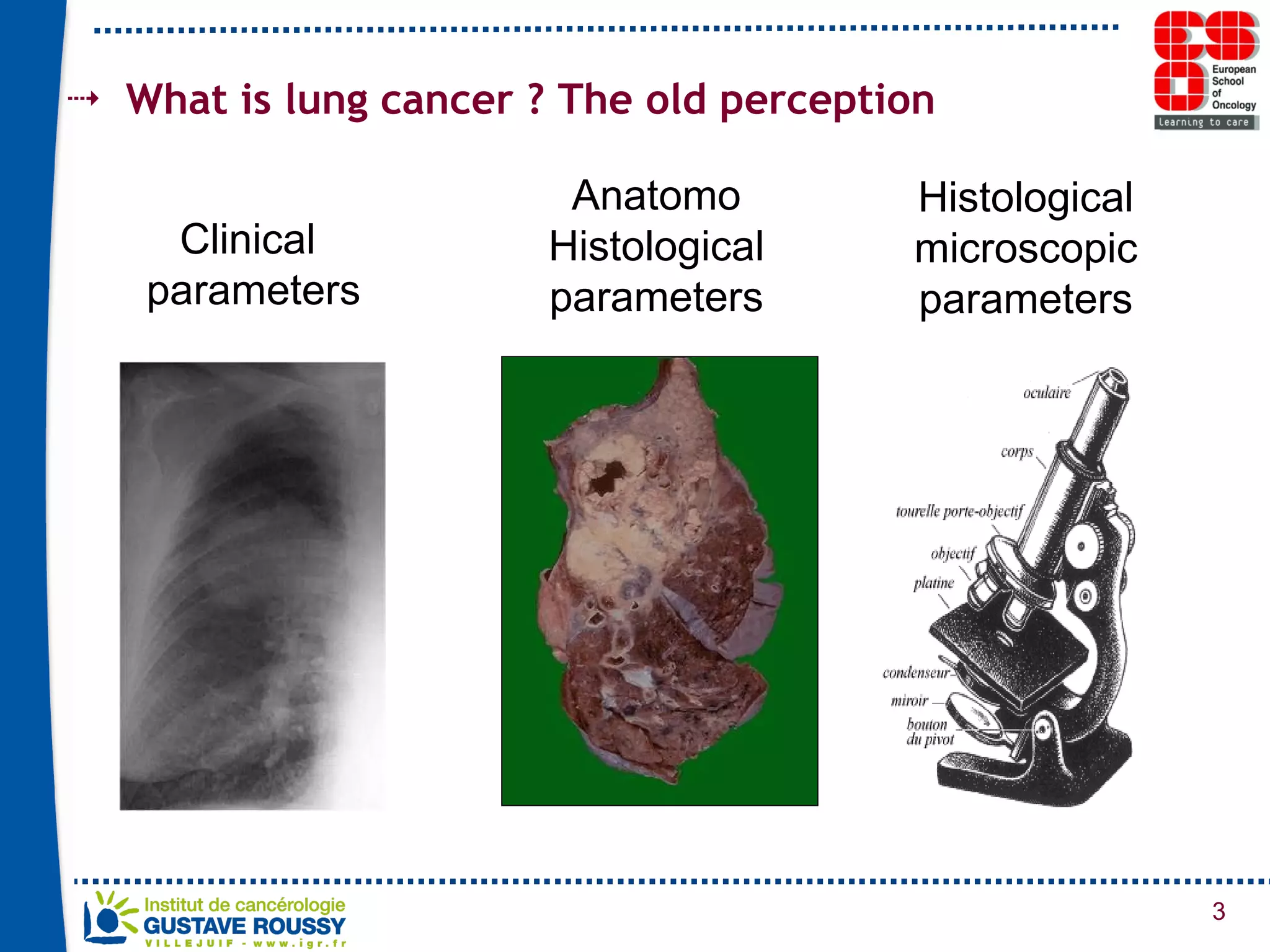
What is lung cancer ? The old perception Clinical  parameters Anatomo Histological parameters Histological microscopic parameters
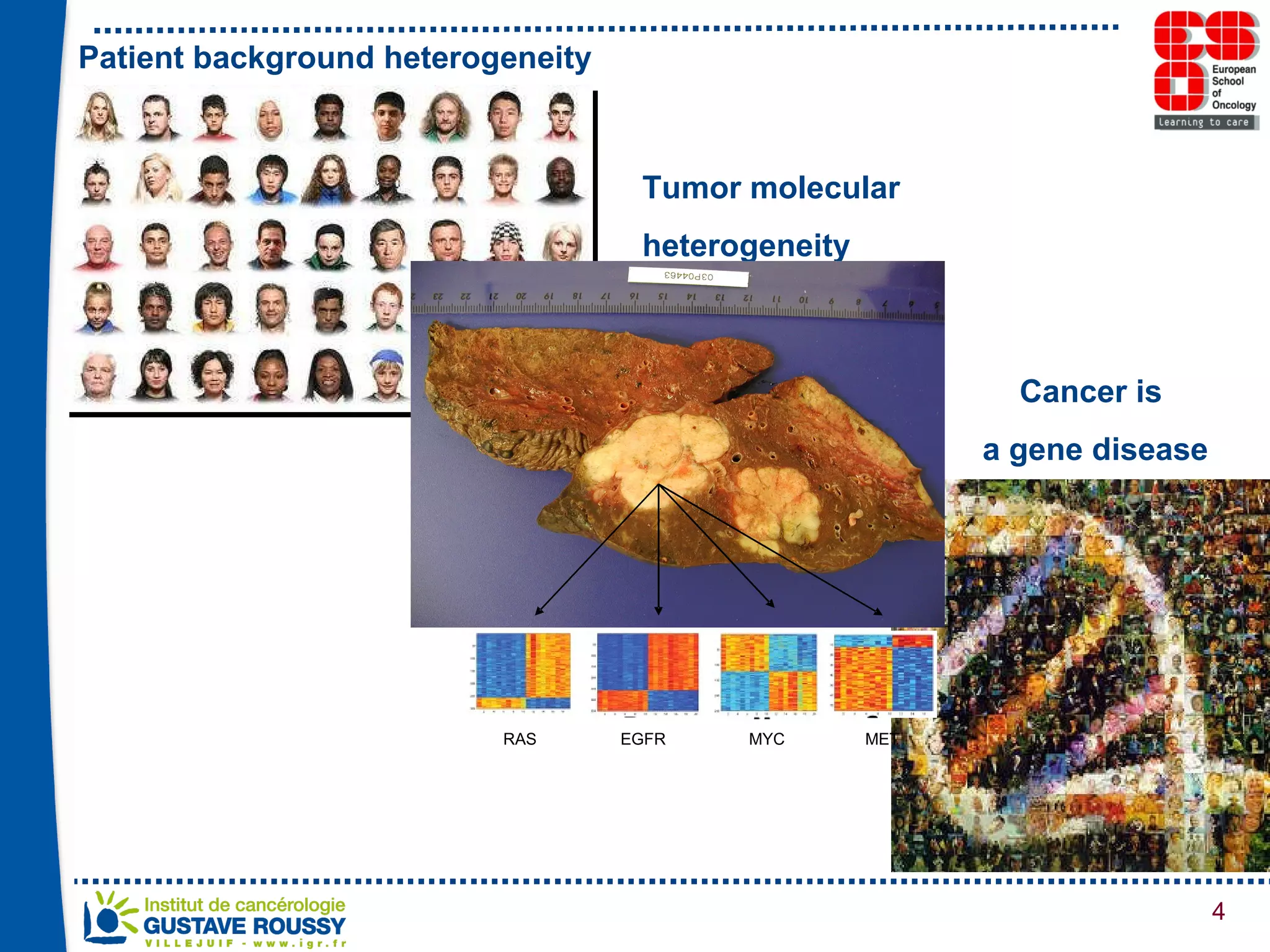
Patient background heterogeneity Tumor molecular  heterogeneity Cancer is  a gene disease
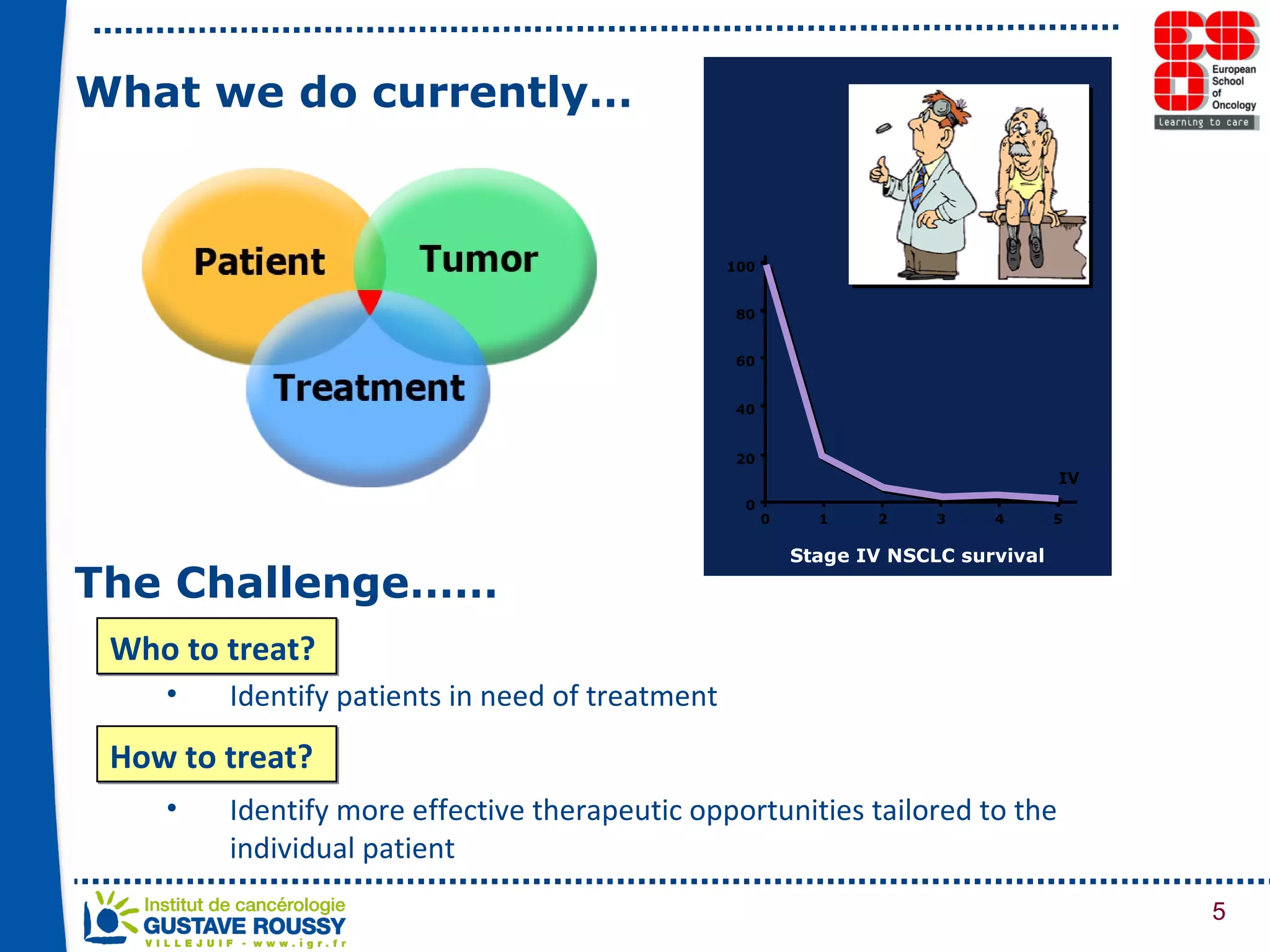
What we do currently… Identify patients in need of treatment Identify more effective therapeutic opportunities tailored to the individual patient The Challenge…… Who to treat? How to treat?
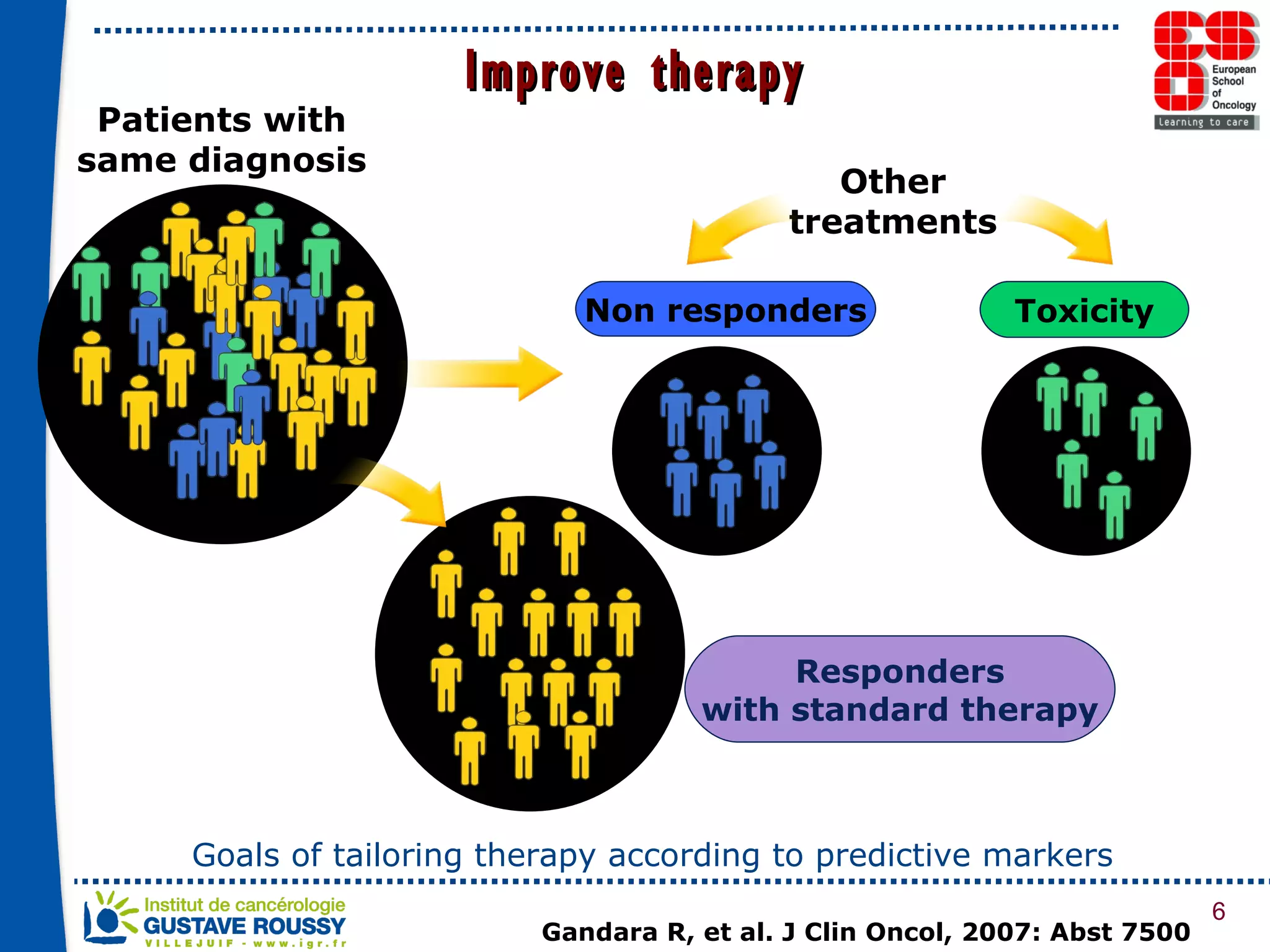
Goals of tailoring therapy according to predictive markers Other treatments Gandara R, et al. J Clin Oncol, 2007: Abst 7500 Responders with standard therapy Non responders Toxicity Patients with same diagnosis Improve therapy
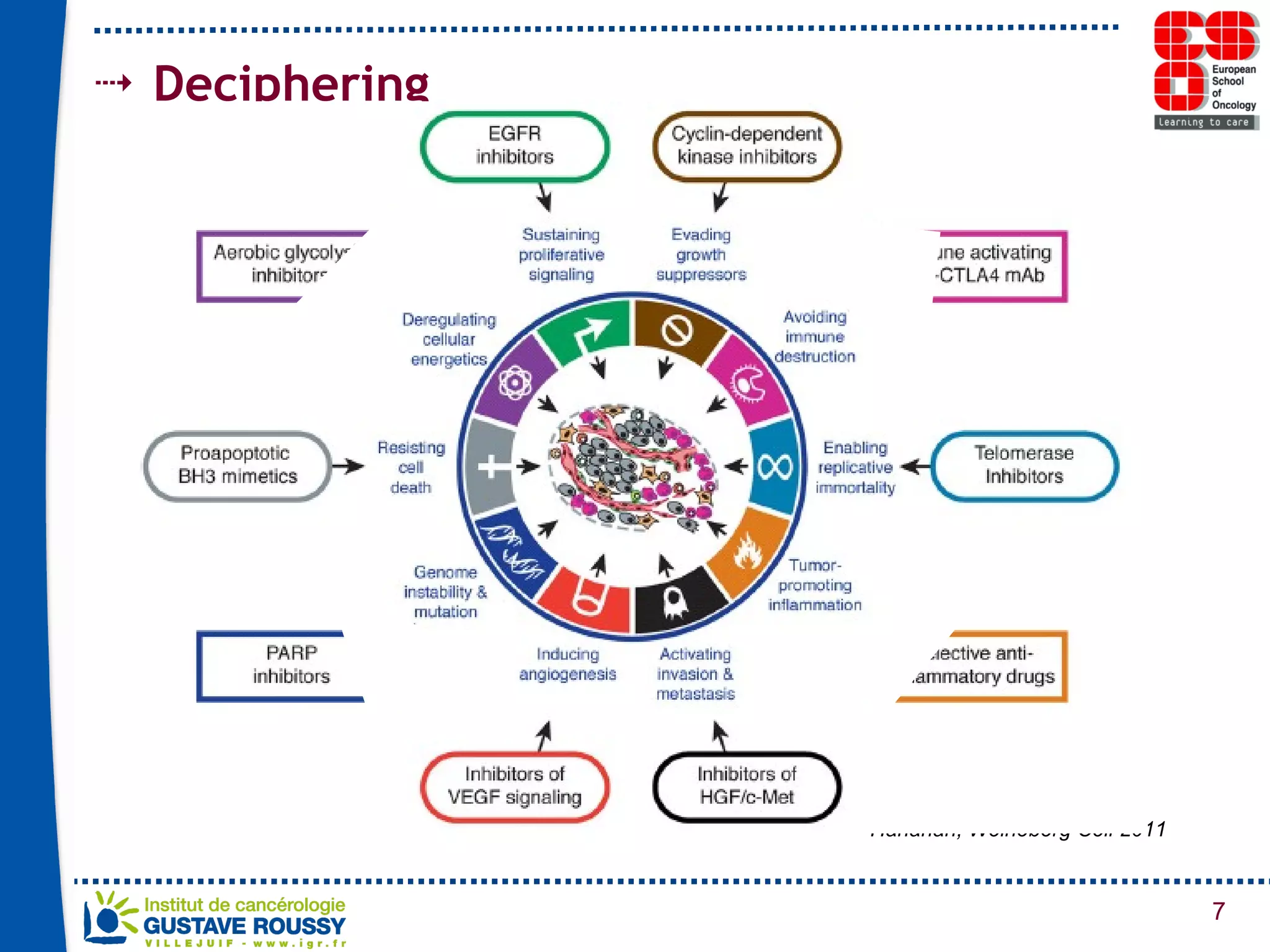
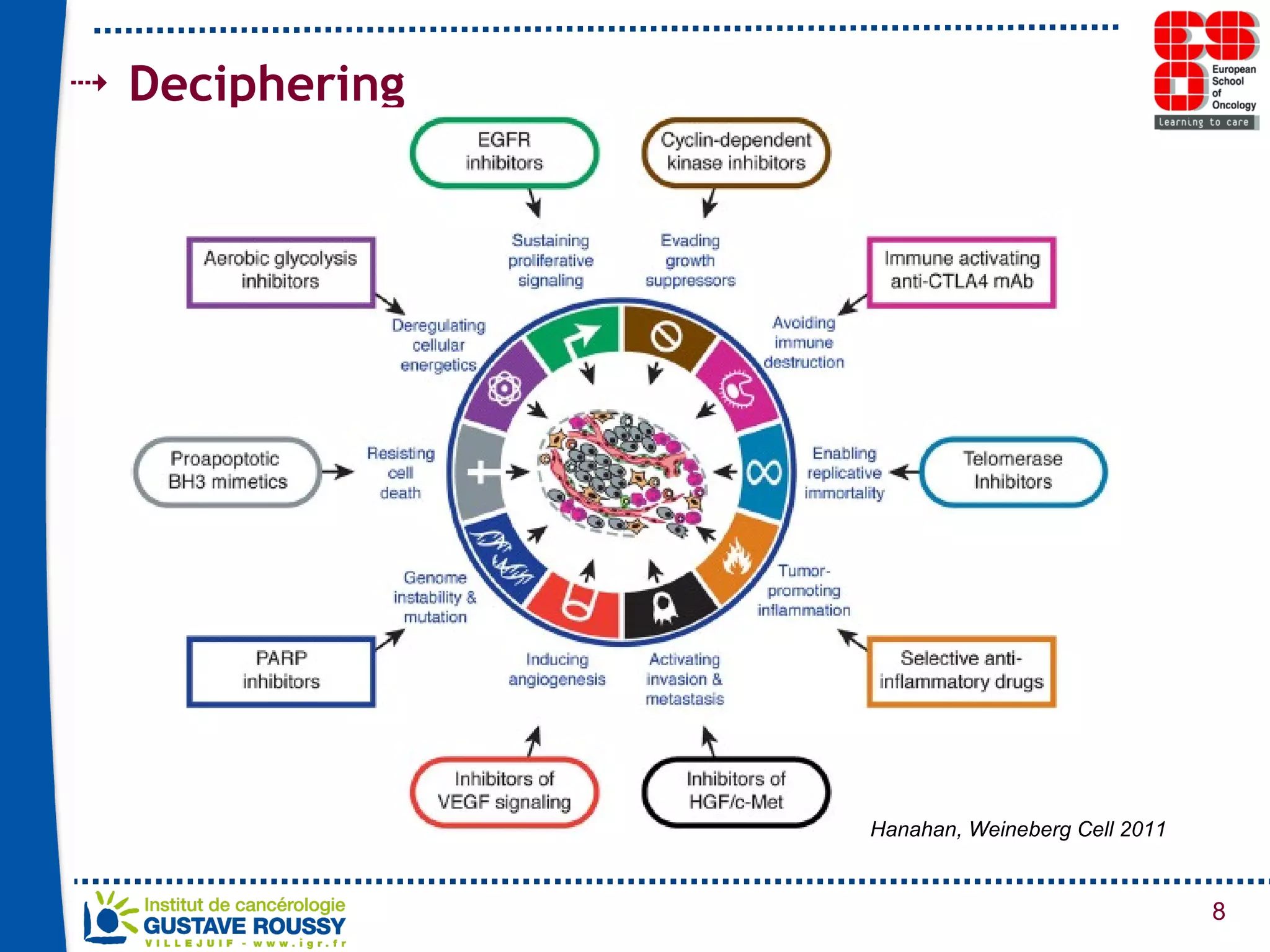
Deciphering  Hanahan, Weineberg Cell 2011
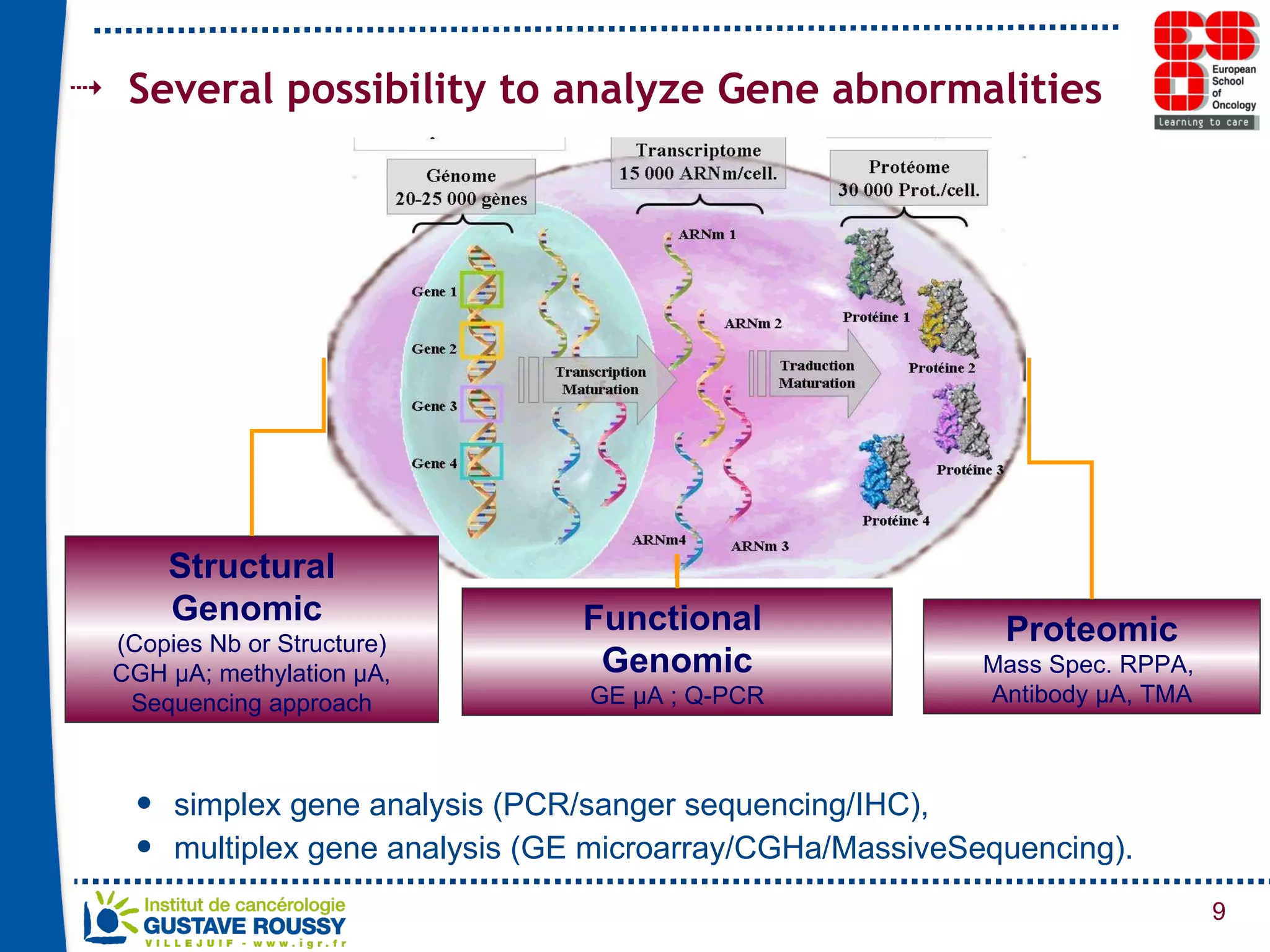
Several possibility to analyze Gene abnormalities simplex gene analysis (PCR/sanger sequencing/IHC), multiplex gene analysis (GE microarray/CGHa/MassiveSequencing). Proteomic Mass Spec. RPPA,  Antibody µA, TMA Structural Genomic  (Copies Nb or Structure) CGH µA; methylation µA, Sequencing approach Functional  Genomic GE µA ; Q-PCR
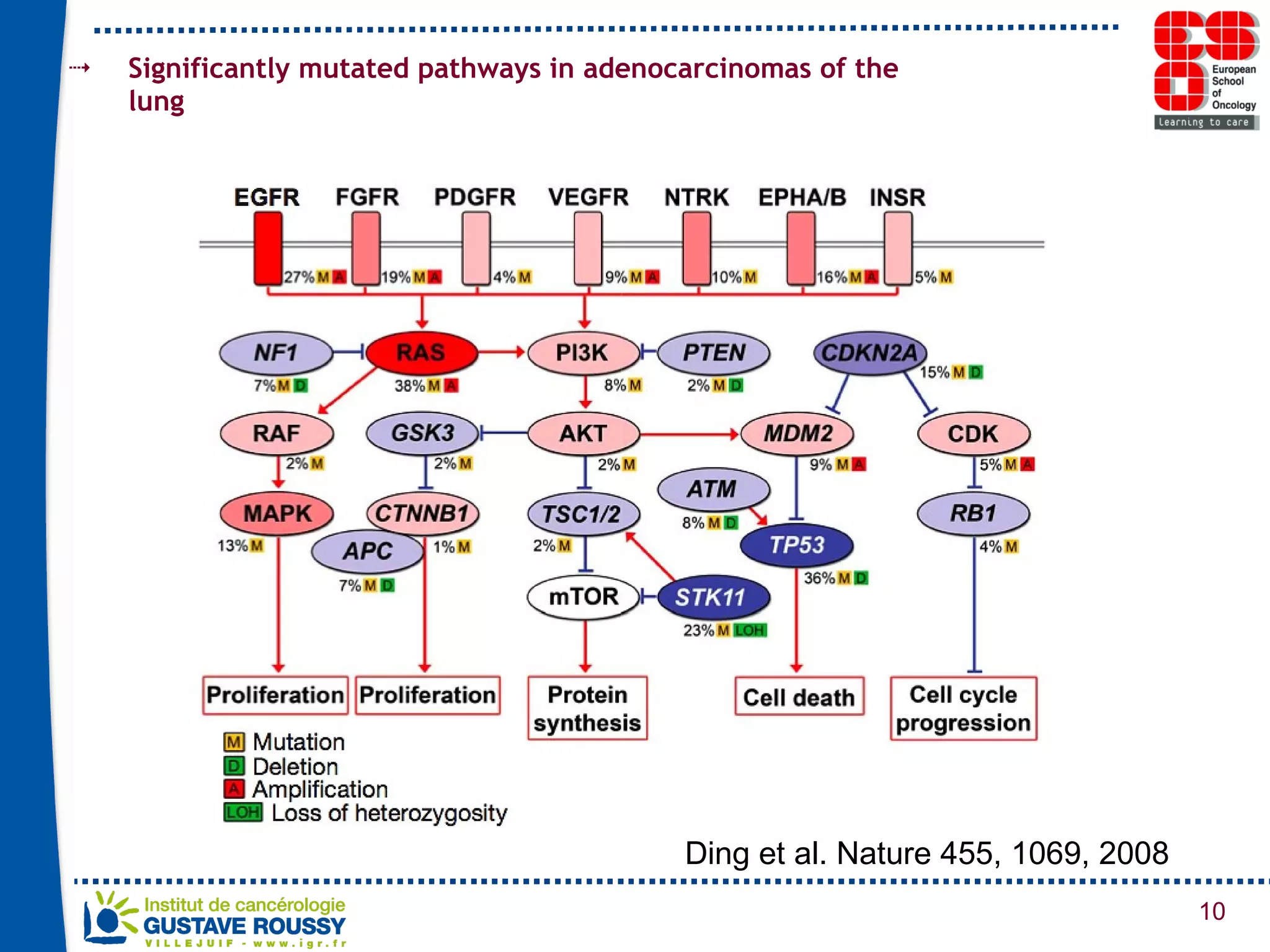
Significantly mutated pathways in adenocarcinomas of the lung Ding et al. Nature 455, 1069, 2008
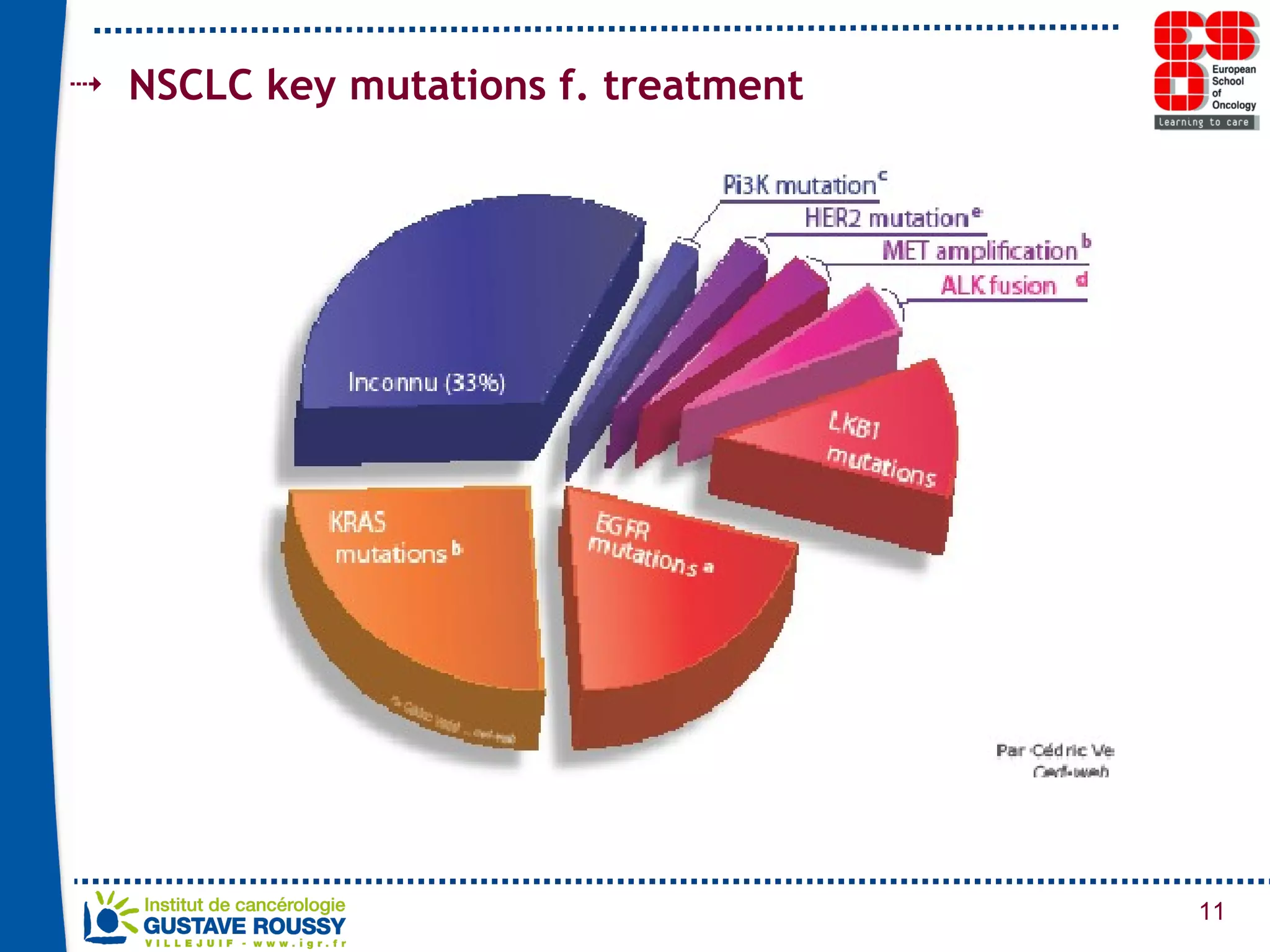
NSCLC key mutations f. treatment
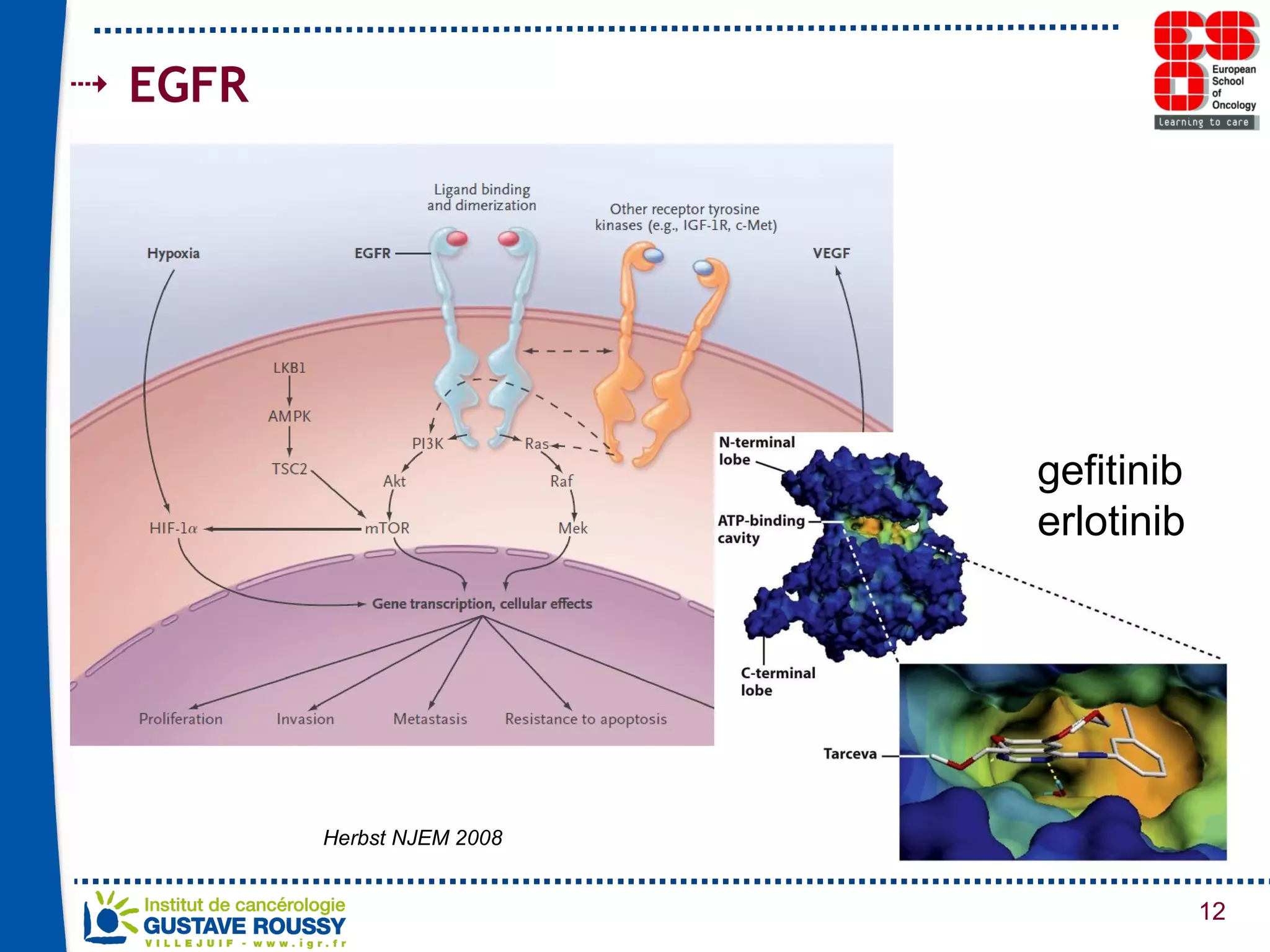
EGFR  Herbst NJEM 2008 gefitinib erlotinib
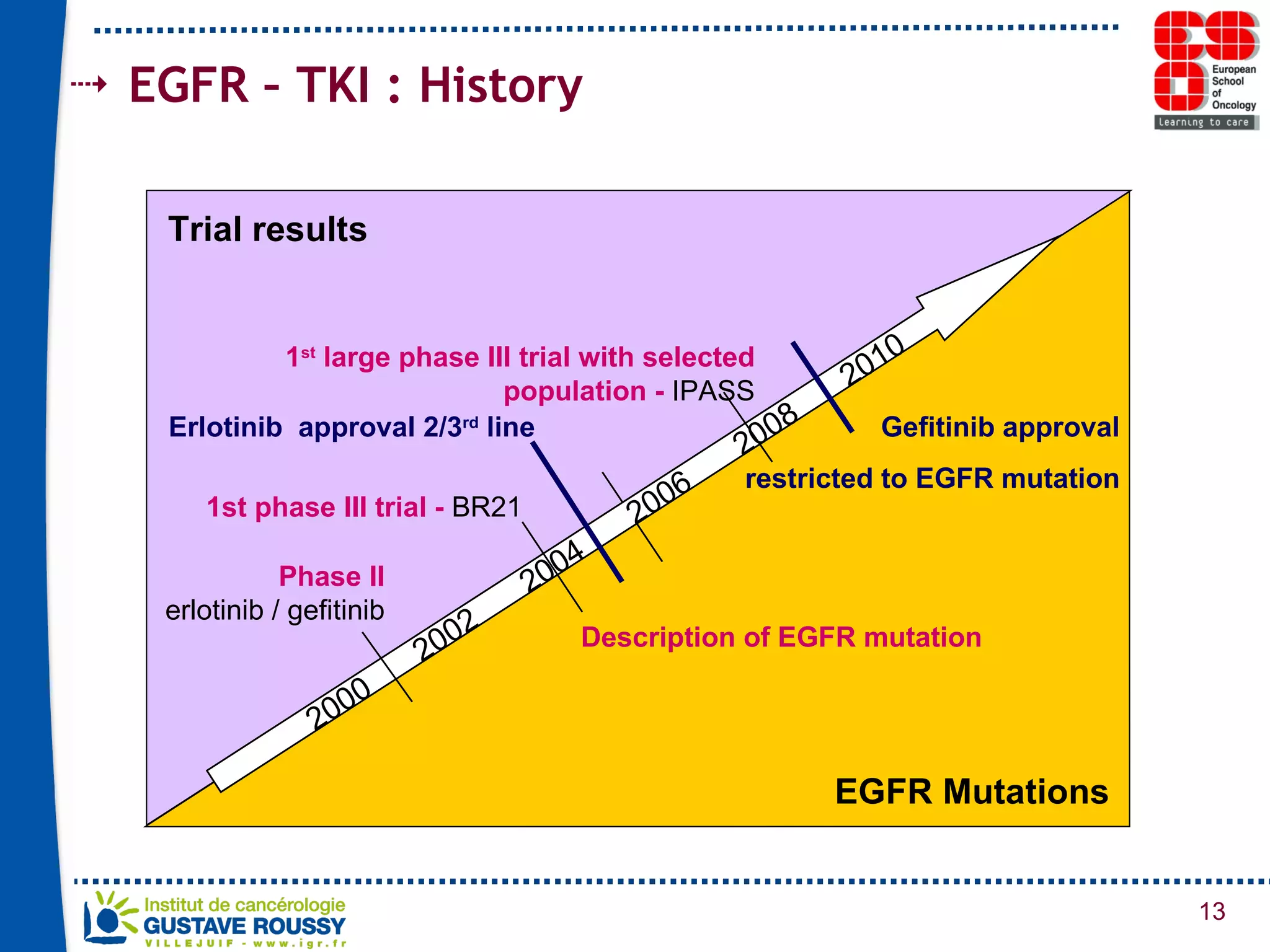
EGFR – TKI : History Description of EGFR mutation 2000 2002 2004 2006 2008 2010 Trial results EGFR Mutations Gefitinib approval restricted to EGFR mutation 1 st  large phase III trial with selected population -  IPASS Phase II erlotinib / gefitinib 1st phase III trial -  BR21  Erlotinib  approval 2/3 rd  line
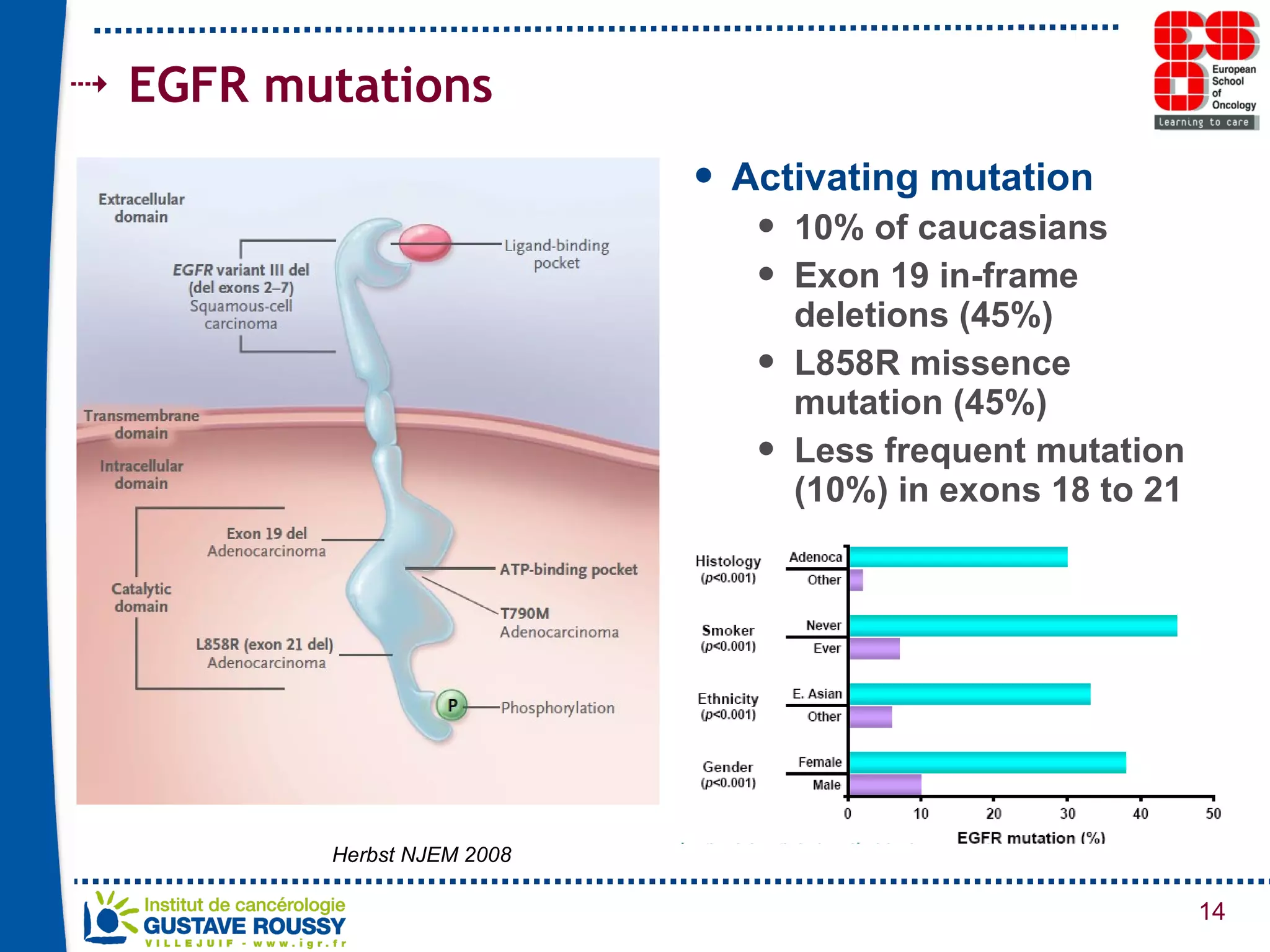
EGFR mutations Activating mutation 10% of caucasians Exon 19 in-frame deletions (45%) L858R missence mutation (45%) Less frequent mutation (10%) in exons 18 to 21 Herbst NJEM 2008
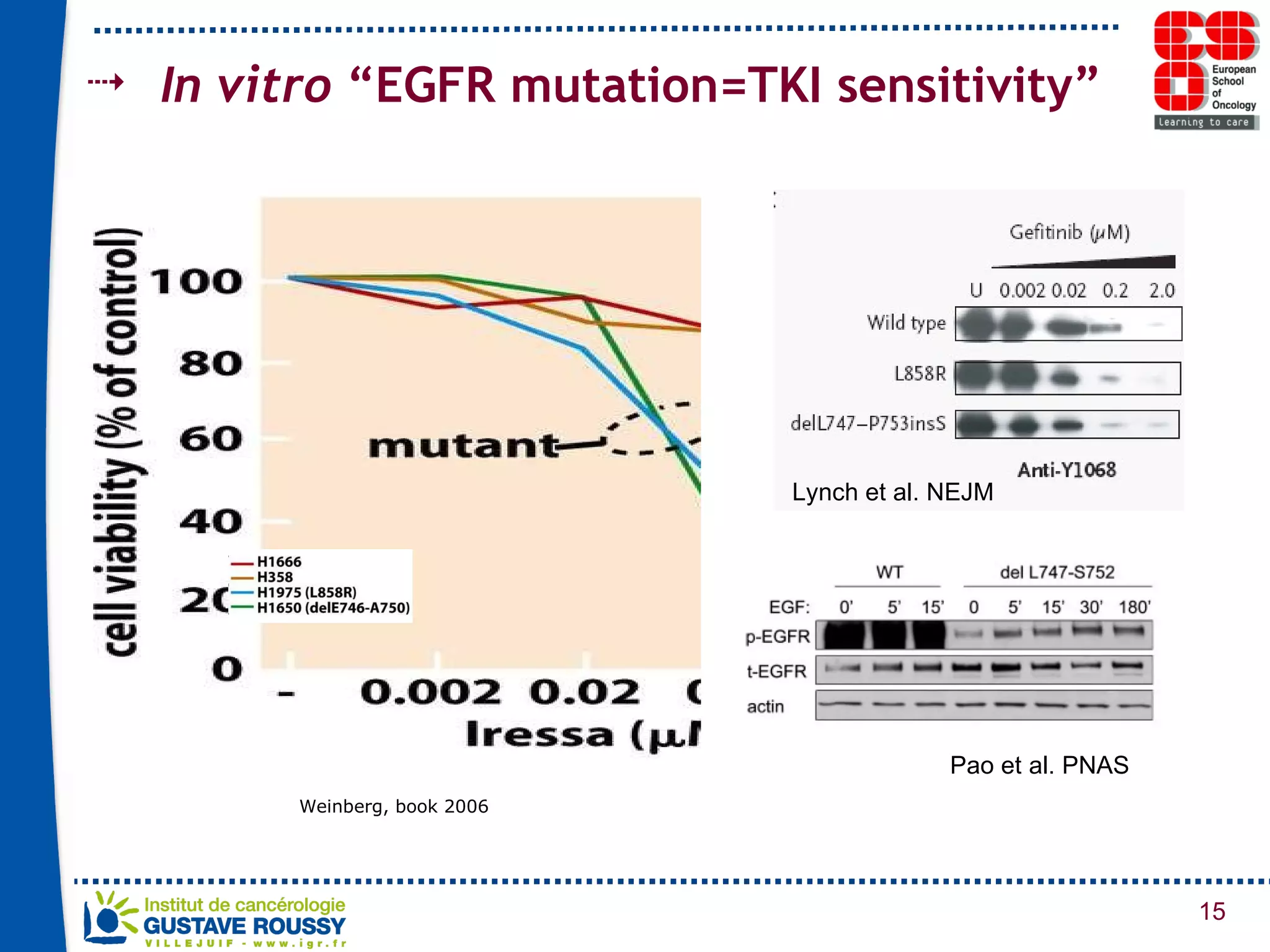
Lynch et al. NEJM Pao et al. PNAS In vitro  “EGFR mutation=TKI sensitivity” Weinberg, book 2006
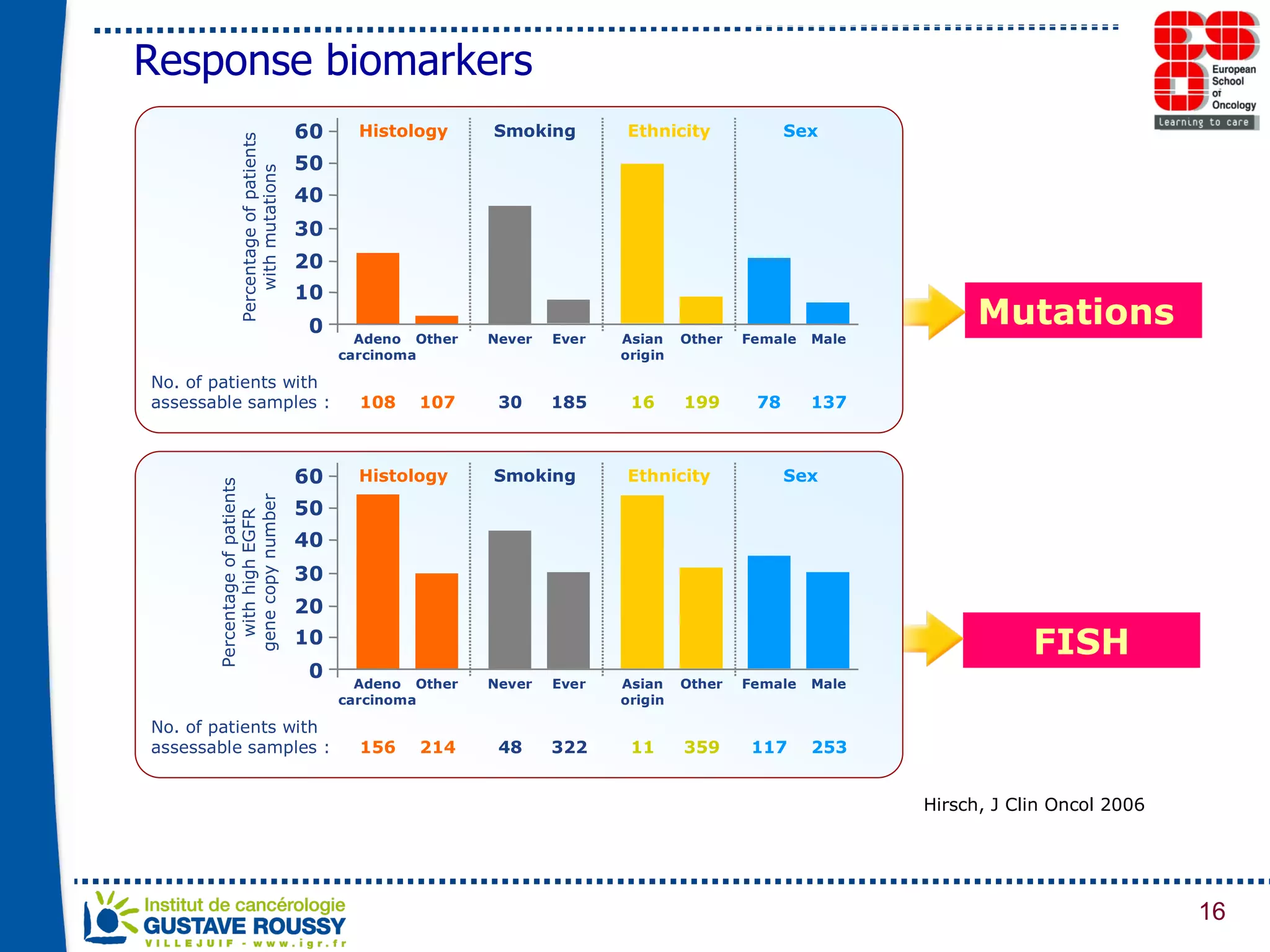
Mutations FISH Hirsch, J Clin Oncol 2006 Response biomarkers
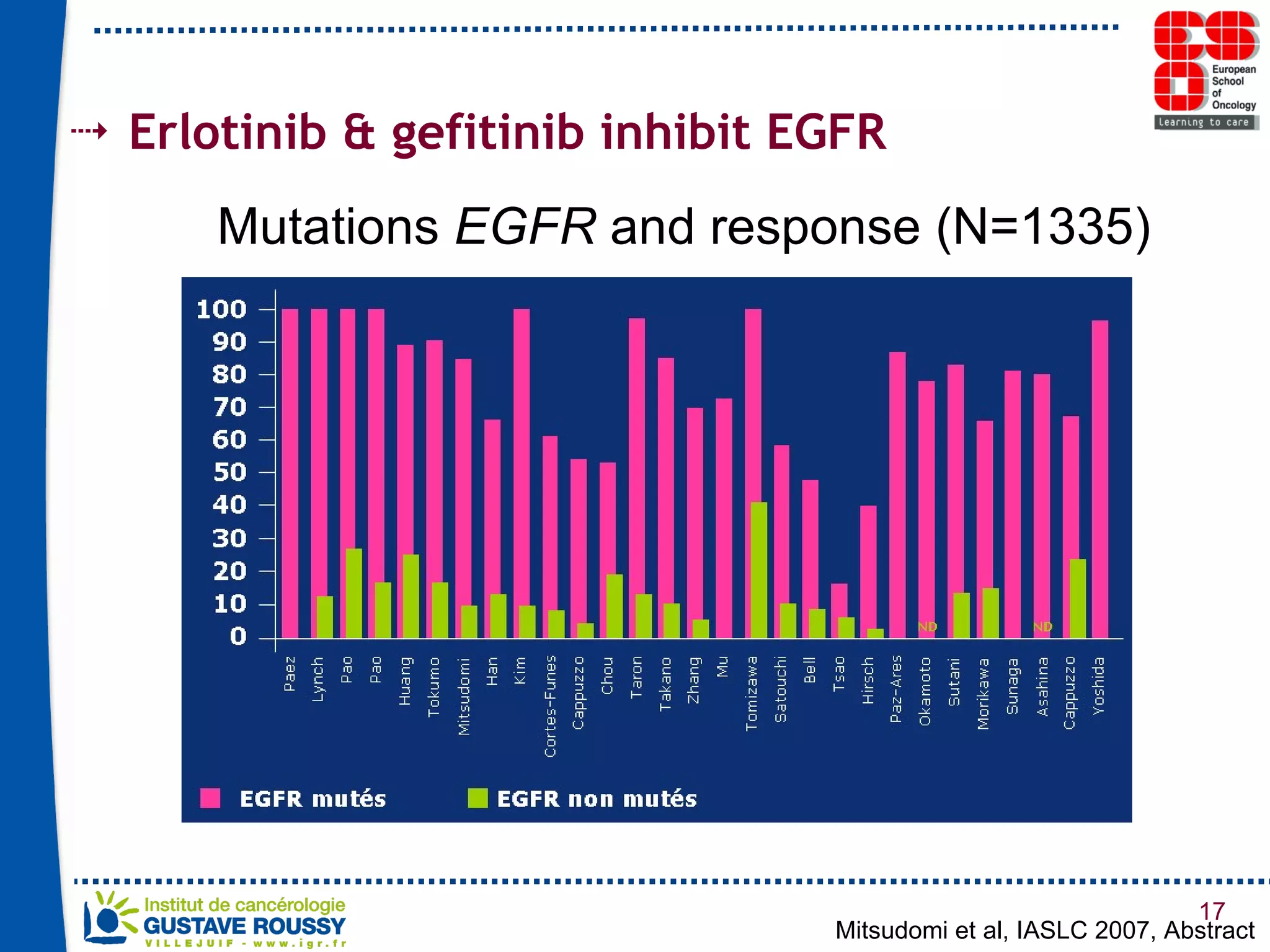
Erlotinib & gefitinib inhibit EGFR Mitsudomi et al, IASLC 2007, Abstract Mutations  EGFR  and response (N=1335)
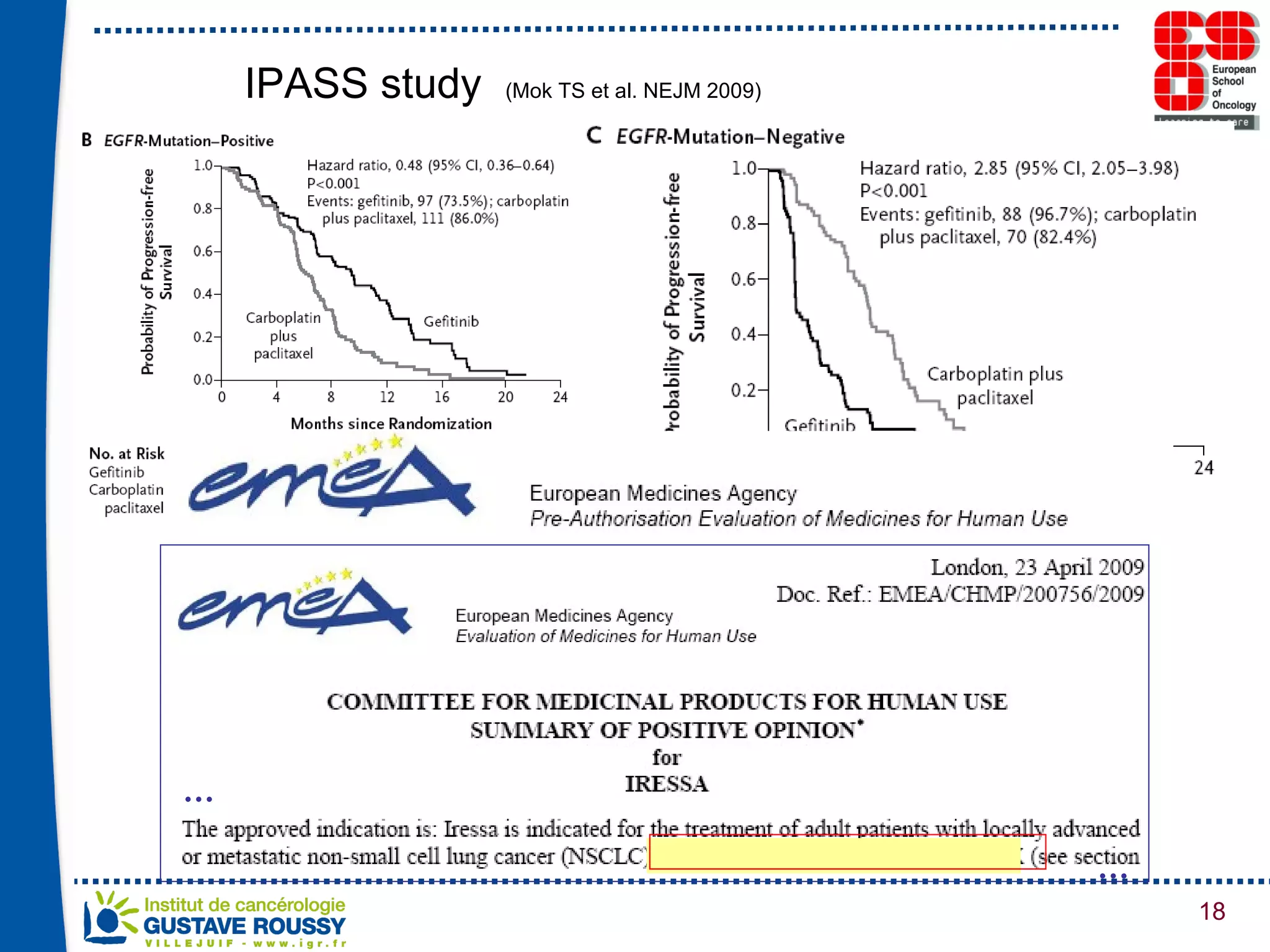
IPASS study  (Mok TS et al. NEJM 2009)
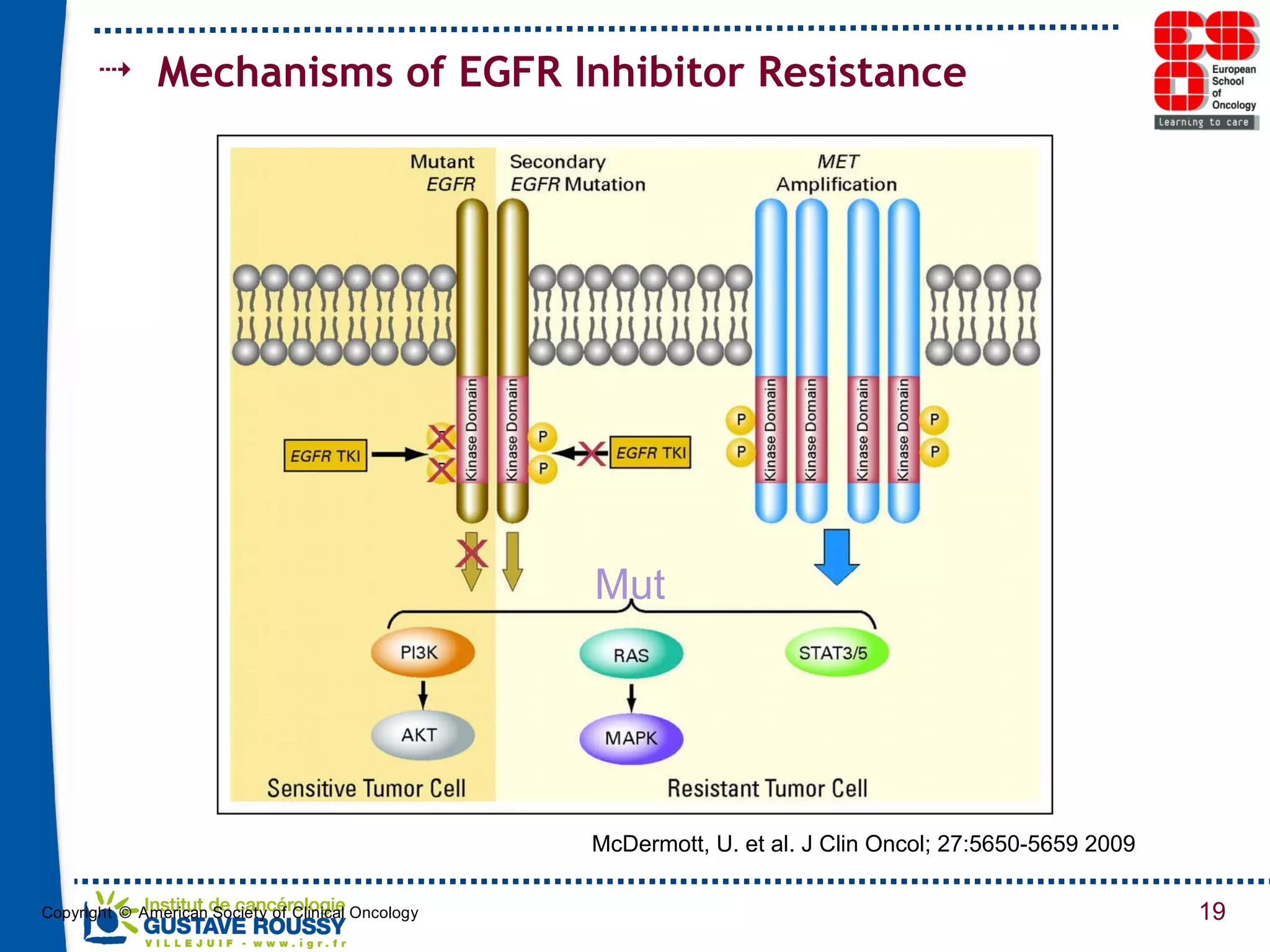
McDermott, U. et al. J Clin Oncol; 27:5650-5659 2009 Mechanisms of EGFR Inhibitor Resistance Mut
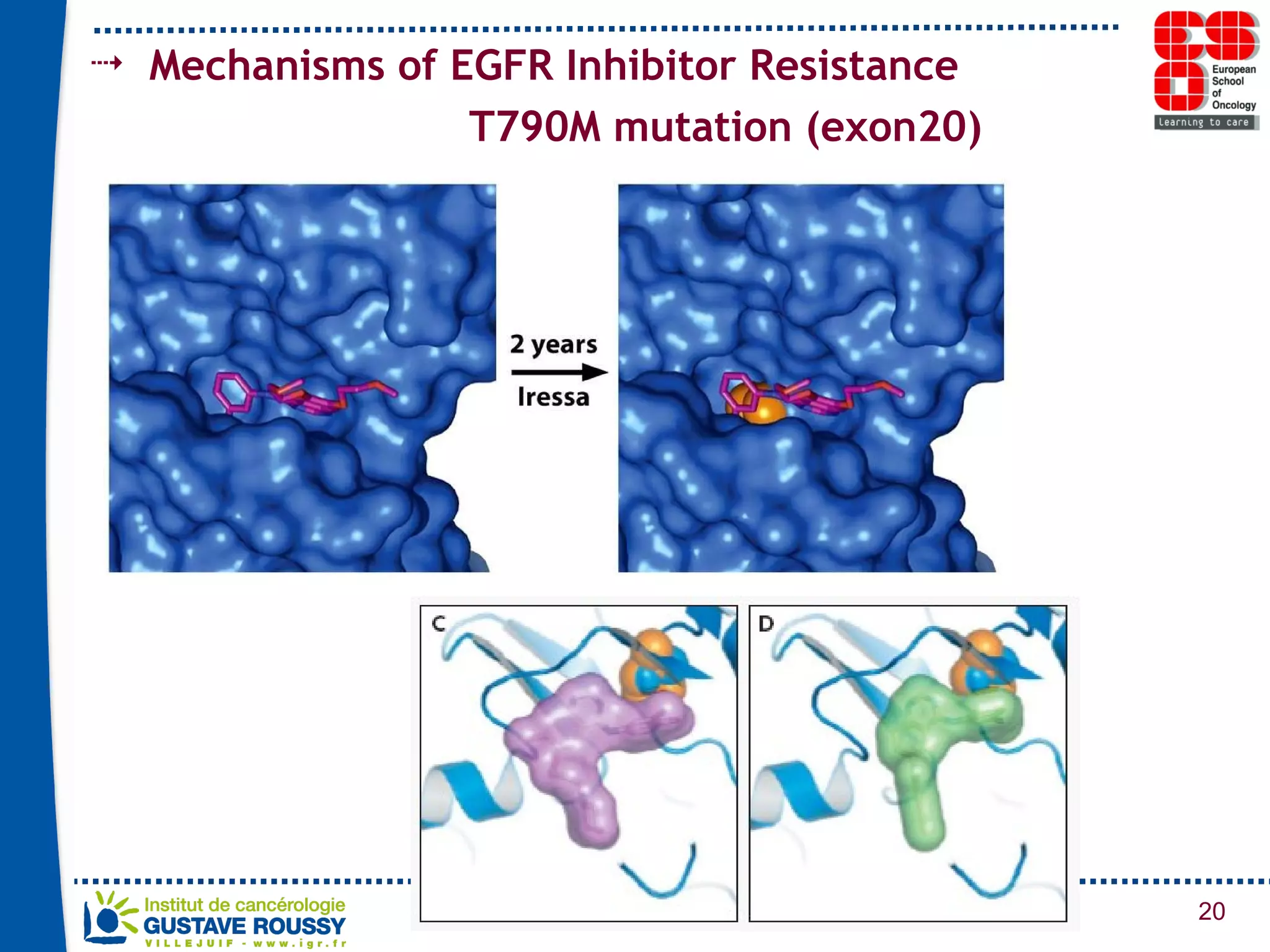
Mechanisms of EGFR Inhibitor Resistance T790M mutation (exon20)
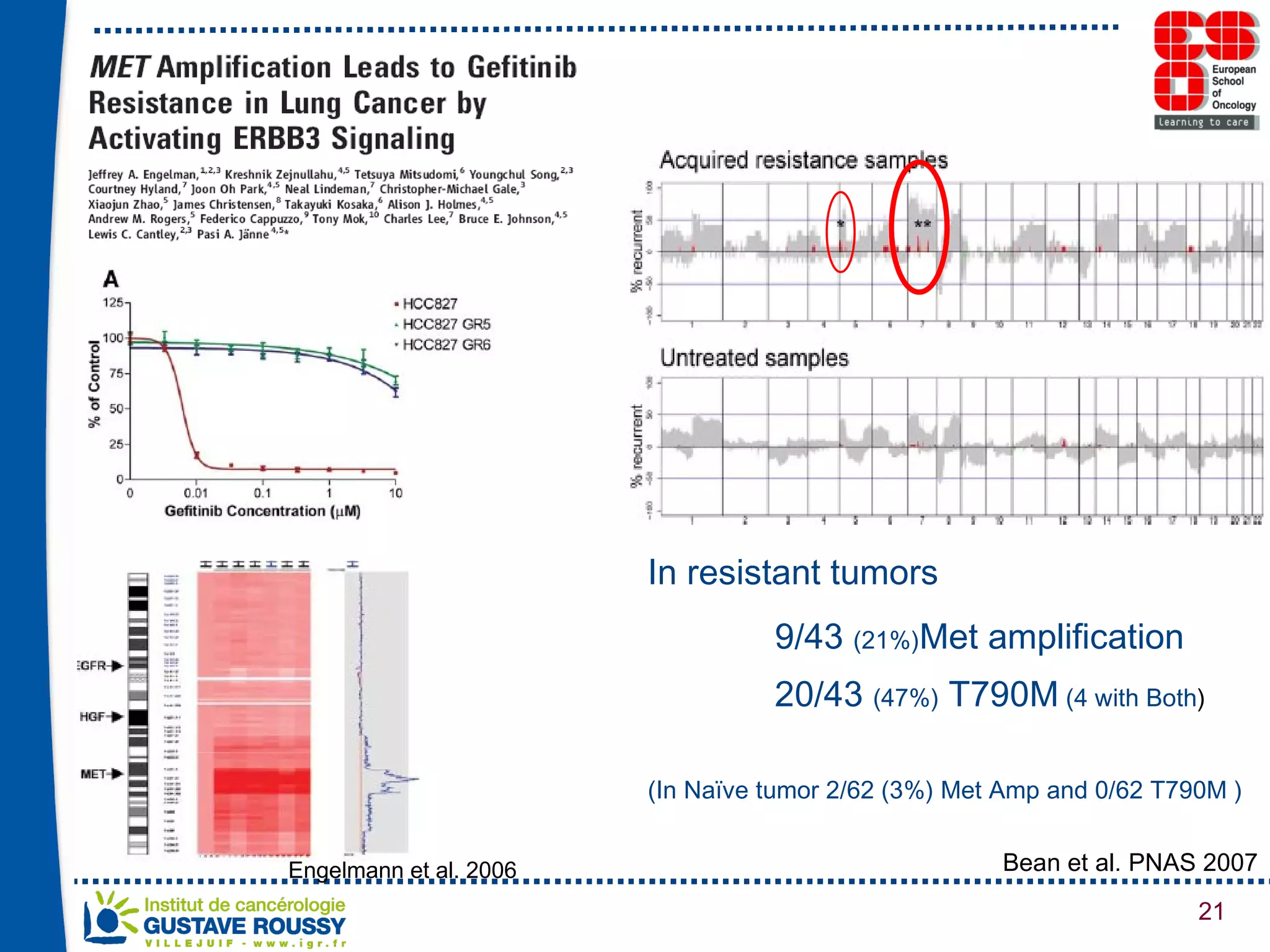
Engelmann et al. 2006  Bean et al. PNAS 2007 In resistant tumors 9/43  (21%) Met amplification  20/43  (47%)  T790M  (4 with Both ) (In Naïve tumor 2/62 (3%) Met Amp and 0/62 T790M )
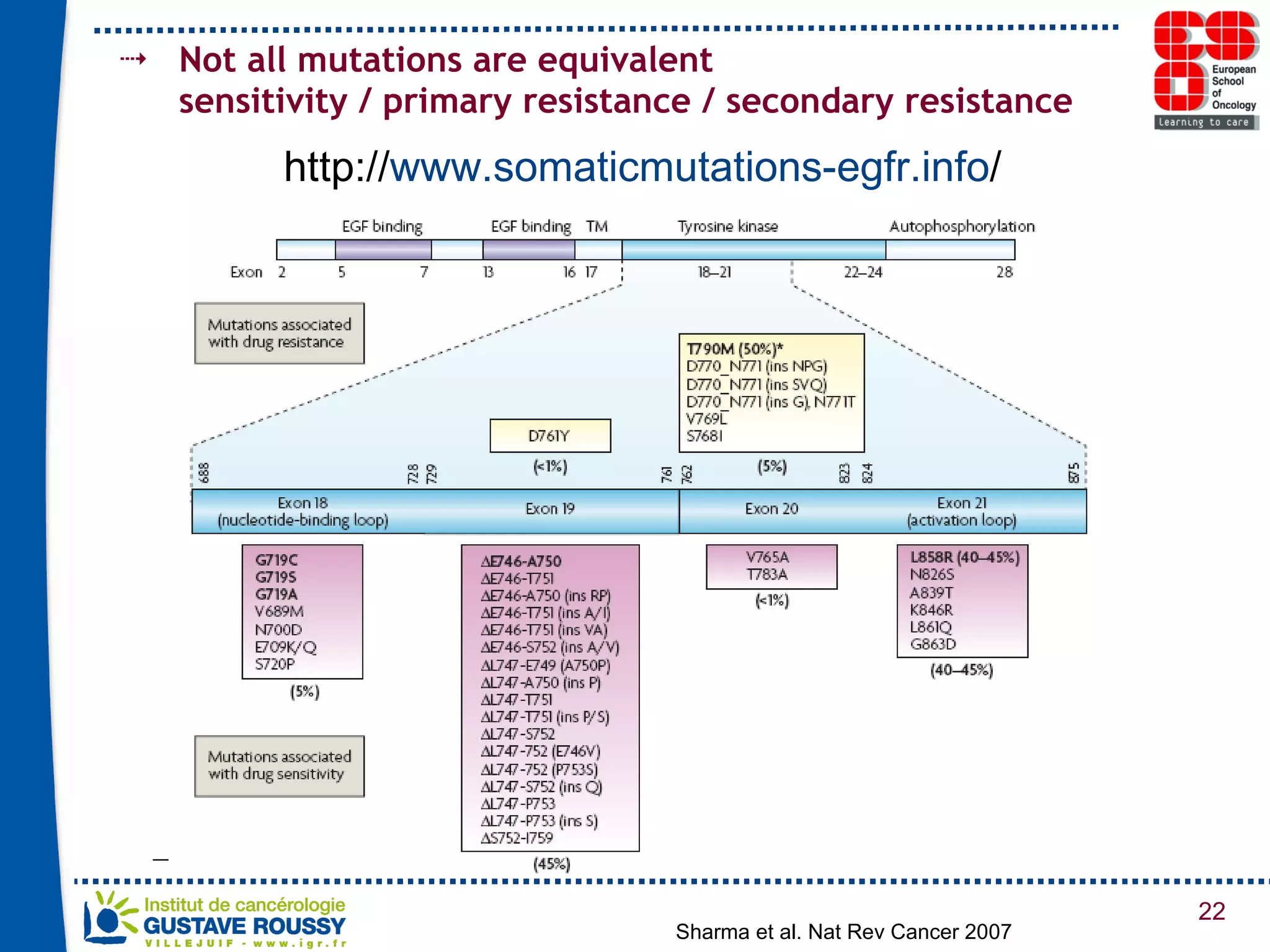
Not all mutations are equivalent  sensitivity / primary resistance / secondary resistance Sharma et al. Nat Rev Cancer 2007 http:// www.somaticmutations-egfr.info /
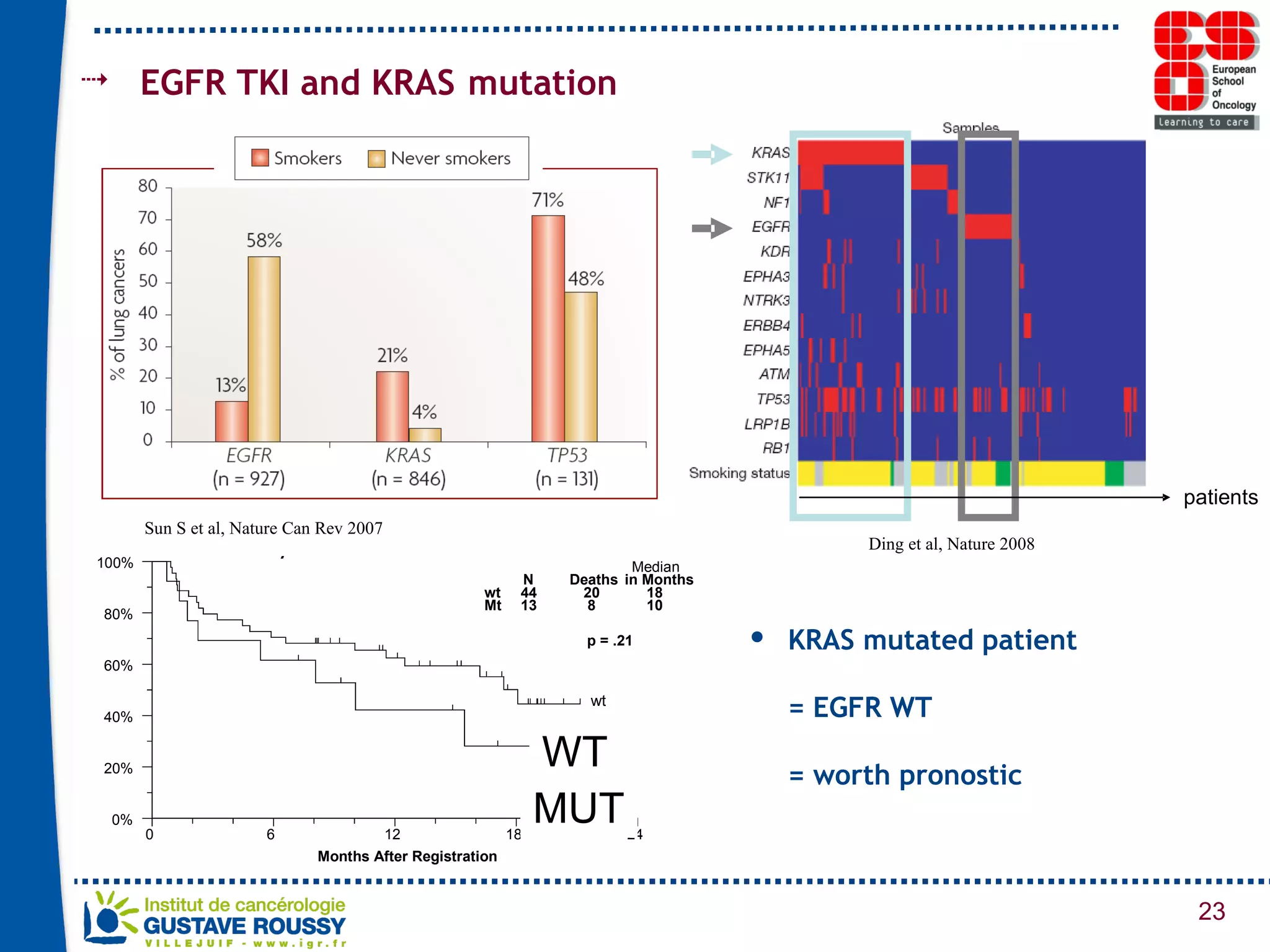
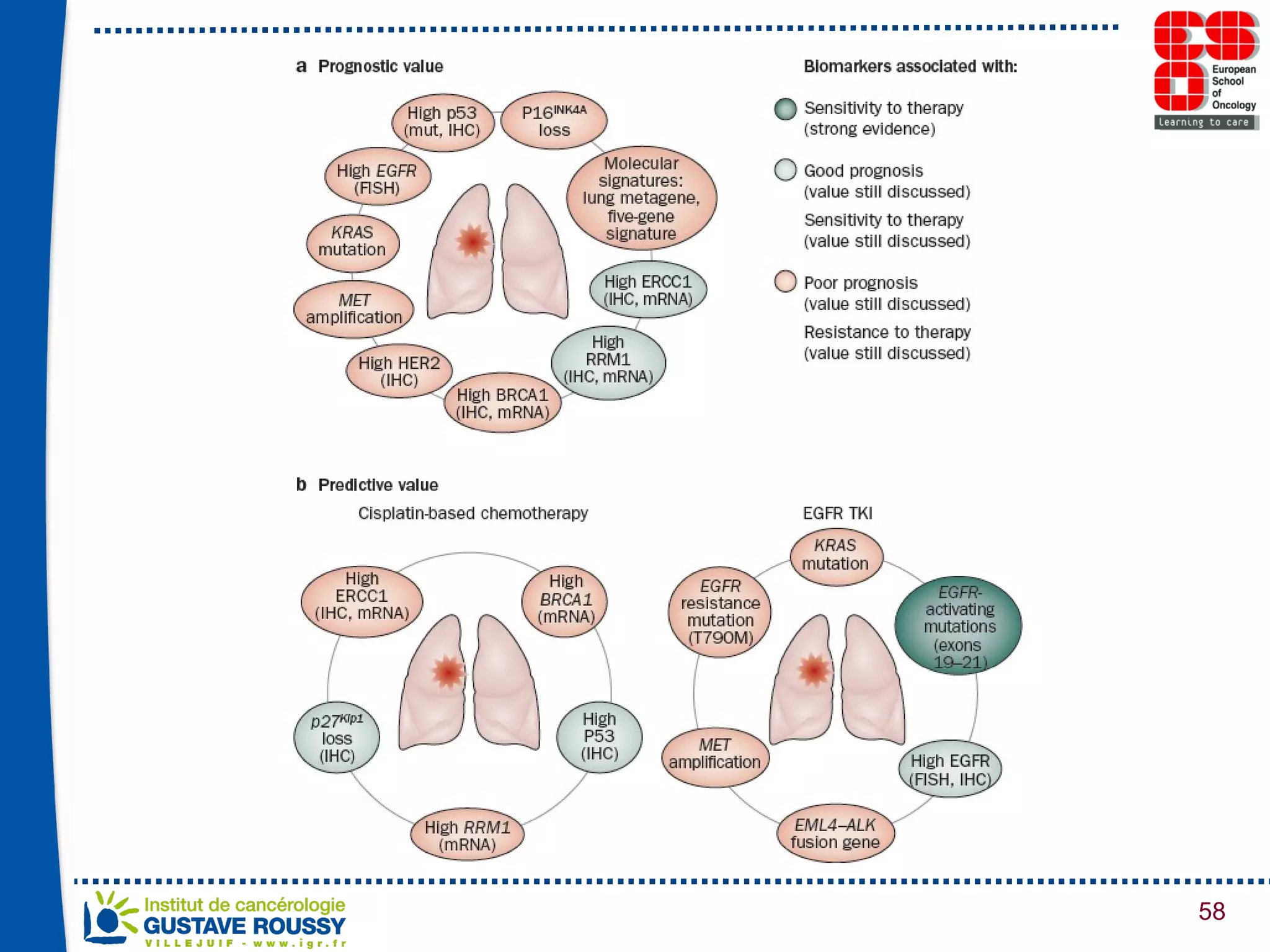
EGFR TKI and KRAS   mutation Sun S et al, Nature Can Rev 2007 Ding et al, Nature 2008 MUT WT KRAS mutated patient  = EGFR WT    = worth pronostic
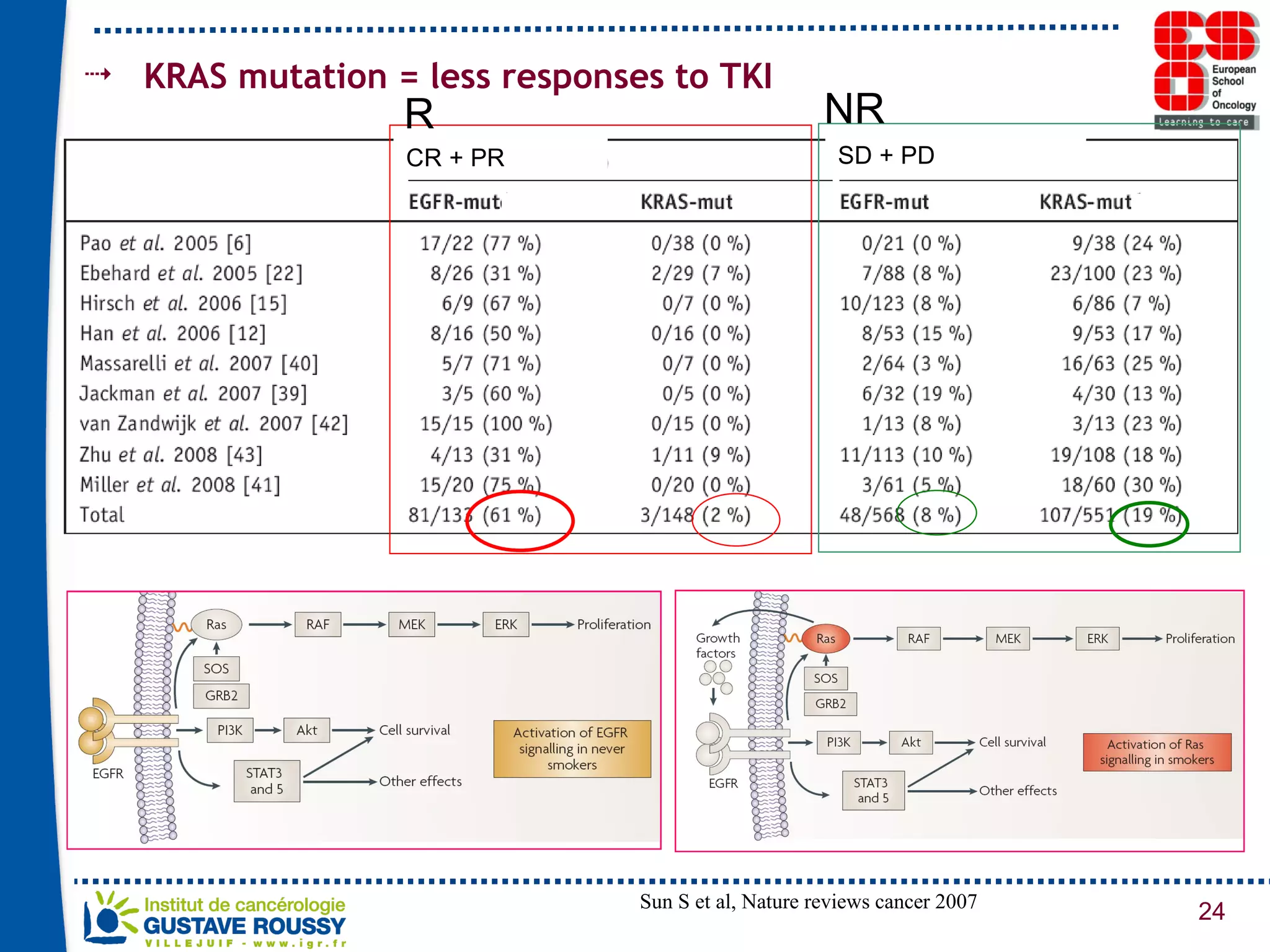
KRAS mutation = less responses to TKI CR + PR SD + PD Sun S et al, Nature reviews cancer 2007 R NR
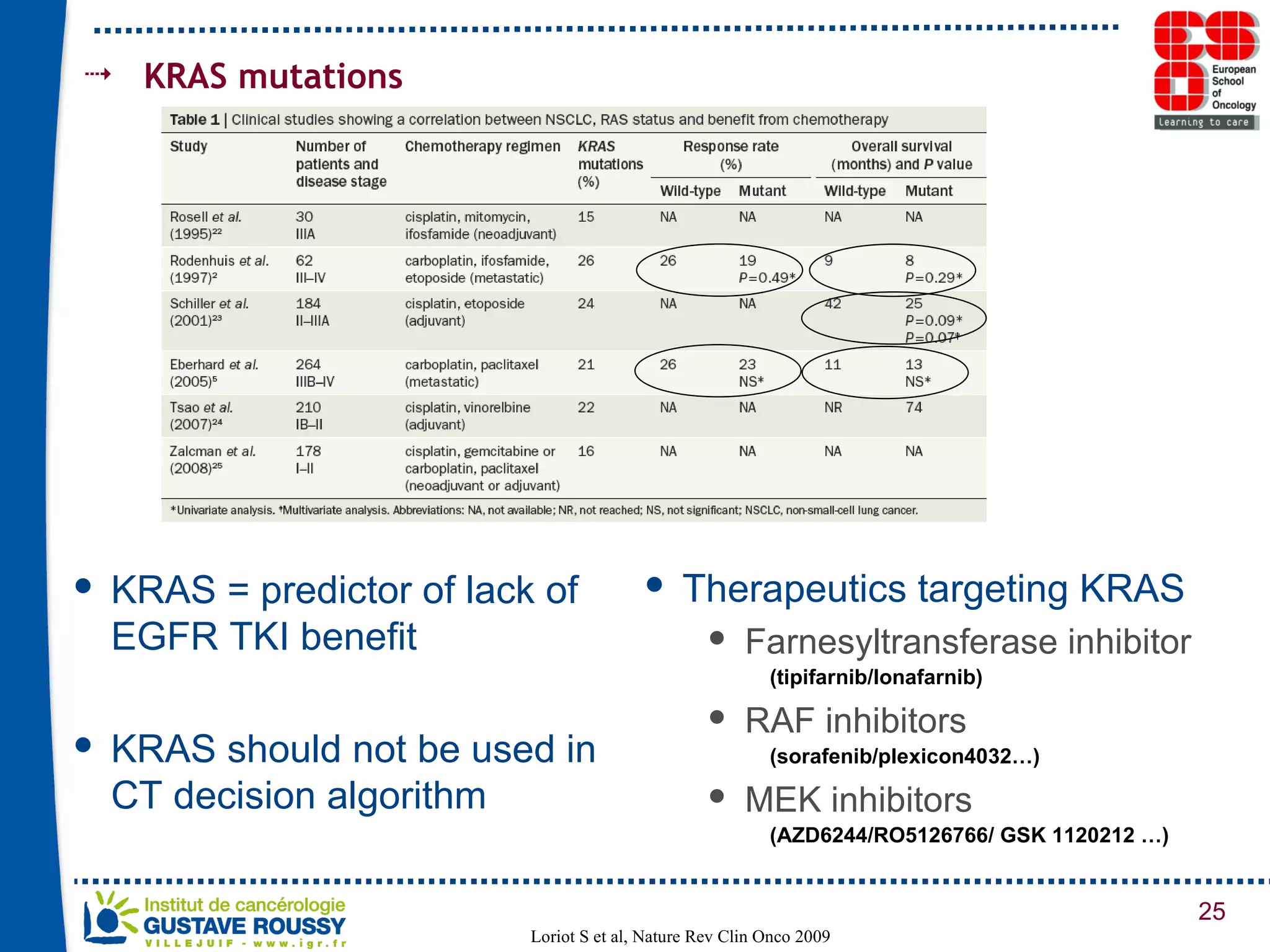
KRAS mutations KRAS = predictor of lack of EGFR TKI benefit KRAS should not be used in CT decision algorithm Therapeutics targeting KRAS Farnesyltransferase inhibitor (tipifarnib/lonafarnib) RAF inhibitors (sorafenib/plexicon4032…) MEK inhibitors (AZD6244/RO5126766/ GSK 1120212 …) Loriot S et al, Nature Rev Clin Onco 2009
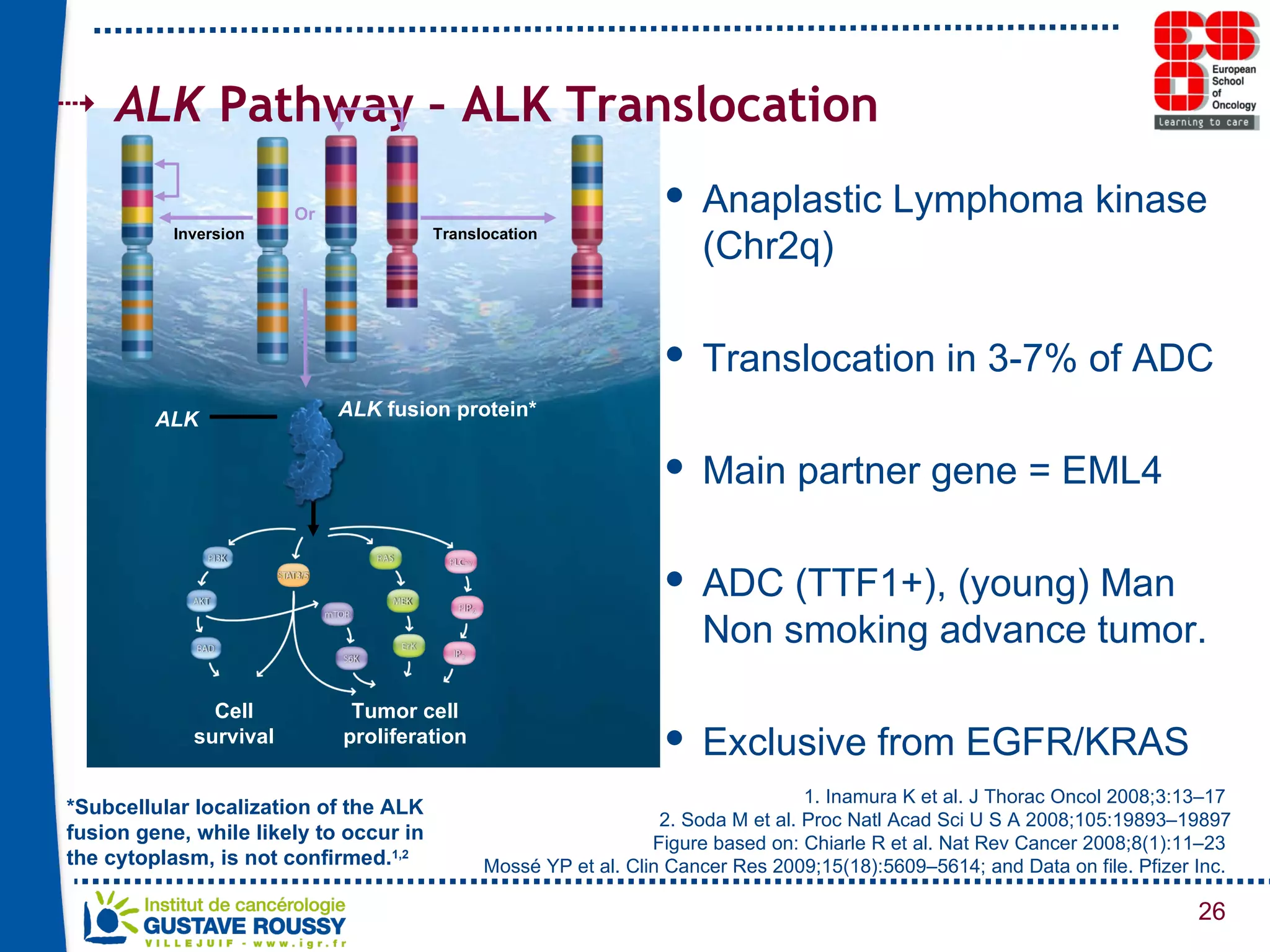
ALK  Pathway – ALK Translocation 1. Inamura K et al. J Thorac Oncol 2008;3:13–17  2. Soda M et al. Proc Natl Acad Sci U S A 2008;105:19893–19897 Figure based on: Chiarle R et al. Nat Rev Cancer 2008;8(1):11–23  Mossé YP et al. Clin Cancer Res 2009;15(18):5609–5614; and Data on file. Pfizer Inc.   *Subcellular localization of the ALK fusion gene, while likely to occur in the cytoplasm, is not confirmed. 1,2 Or ALK ALK  fusion protein* Cell survival Tumor cell proliferation Anaplastic Lymphoma kinase (Chr2q) Translocation in 3-7% of ADC Main partner gene = EML4 ADC (TTF1+), (young) Man Non smoking advance tumor. Exclusive from EGFR/KRAS Inversion Translocation
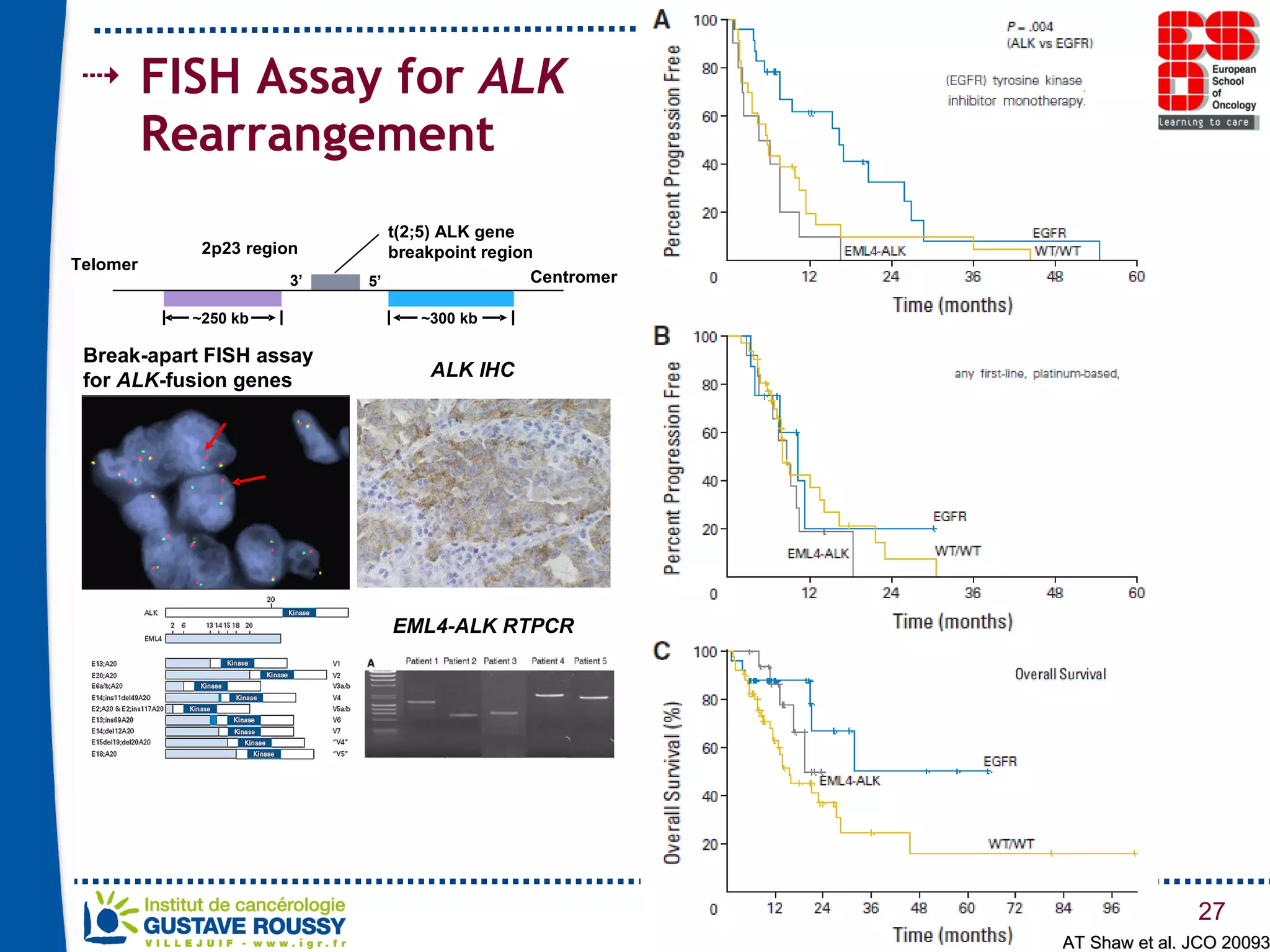
FISH Assay for  ALK  Rearrangement AT Shaw et al. JCO 20093
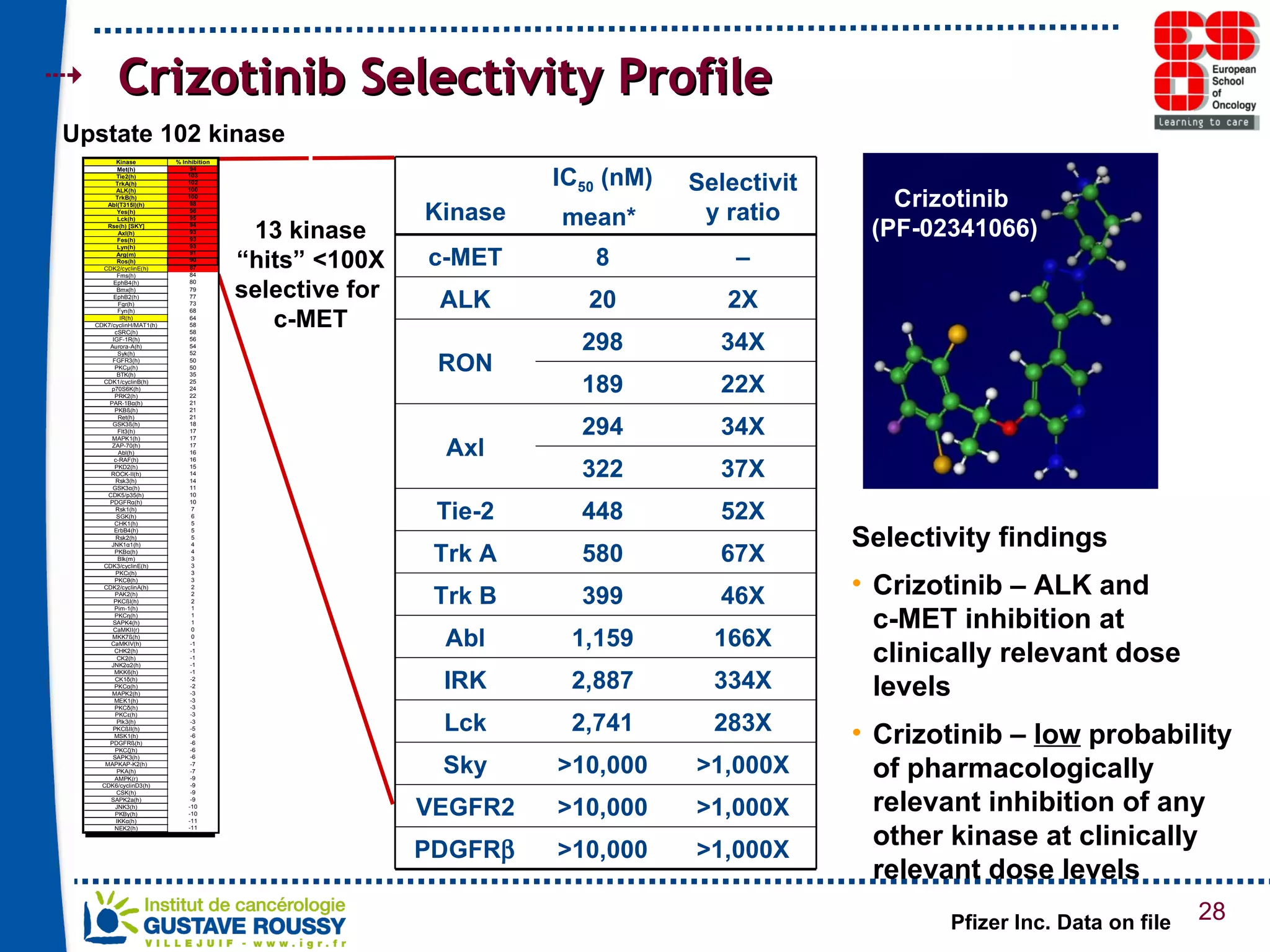
Crizotinib Selectivity Profile Selectivity findings Crizotinib – ALK and  c-MET inhibition at clinically relevant dose levels Crizotinib –  low  probability of pharmacologically relevant inhibition of any other kinase at clinically relevant dose levels Cellular selectivity on 10 of 13 relevant hits Upstate 102 kinase 13 kinase “hits” <100X selective for  c-MET *The cellular kinase activities were  measured using ELISA capture method Pfizer Inc. Data on file Crizotinib  (PF-02341066) Kinase IC 50  (nM) mean*  Selectivity ratio c-MET 8 – ALK 20 2X RON 298 34X 189 22X Axl 294 34X 322 37X Tie-2 448 52X Trk A 580 67X Trk B 399 46X Abl 1,159 166X IRK 2,887 334X Lck 2,741 283X Sky >10,000 >1,000X VEGFR2 >10,000 >1,000X PDGFR  >10,000 >1,000X
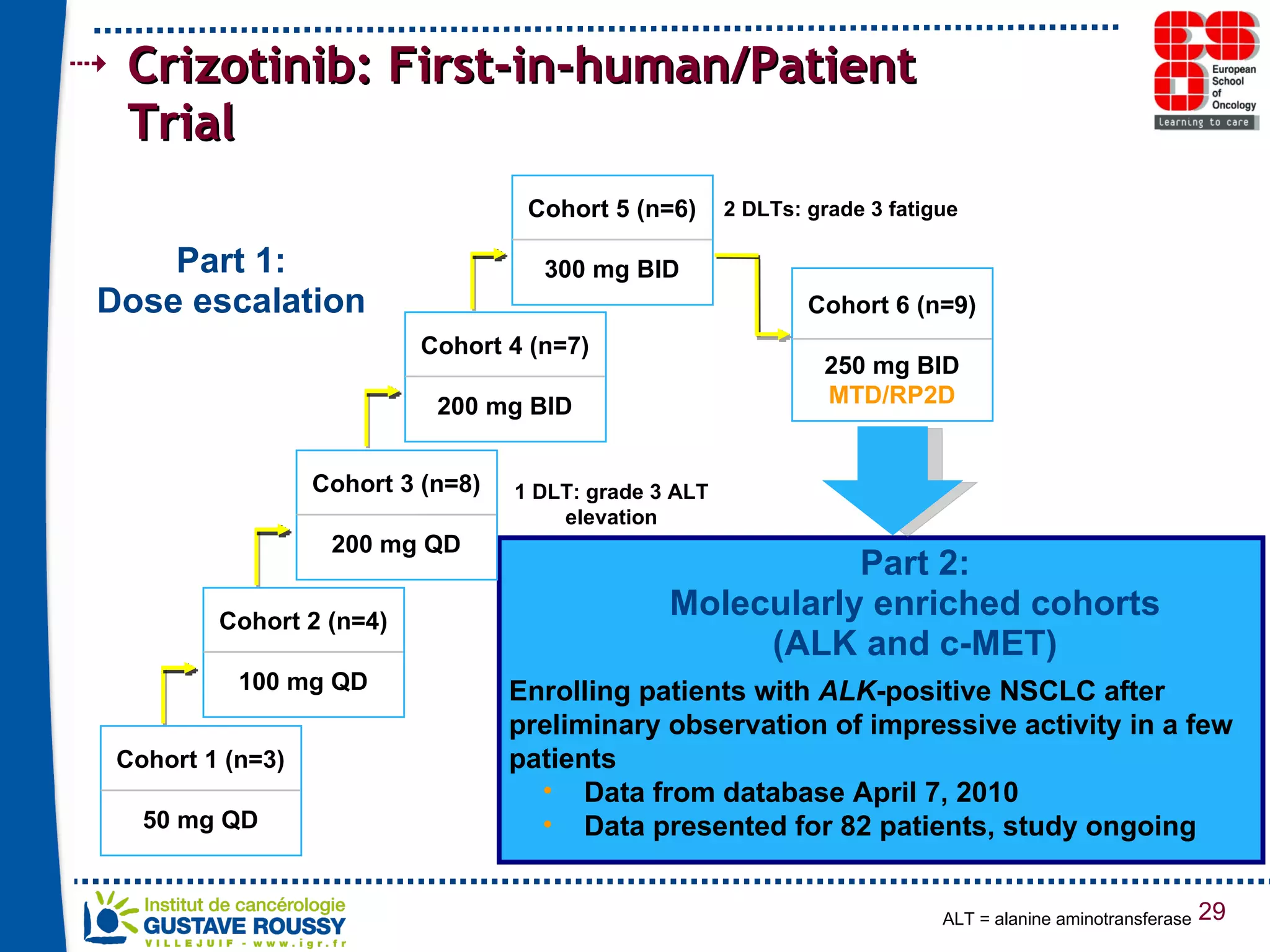
Crizotinib: First-in-human/Patient Trial Part 2: Molecularly enriched cohorts (ALK and c-MET) Enrolling patients with  ALK -positive NSCLC after preliminary observation of impressive activity in a few patients Data from database April 7, 2010 Data presented for 82 patients, study ongoing Part 1: Dose escalation 1 DLT: grade 3 ALT elevation 2 DLTs: grade 3 fatigue ALT = alanine aminotransferase Cohort 1 (n=3) 50 mg QD Cohort 2 (n=4) 100 mg QD Cohort 3 (n=8) 200 mg QD Cohort 4 (n=7) 200 mg BID Cohort 5 (n=6) 300 mg BID Cohort 6 (n=9) 250 mg BID MTD/RP2D
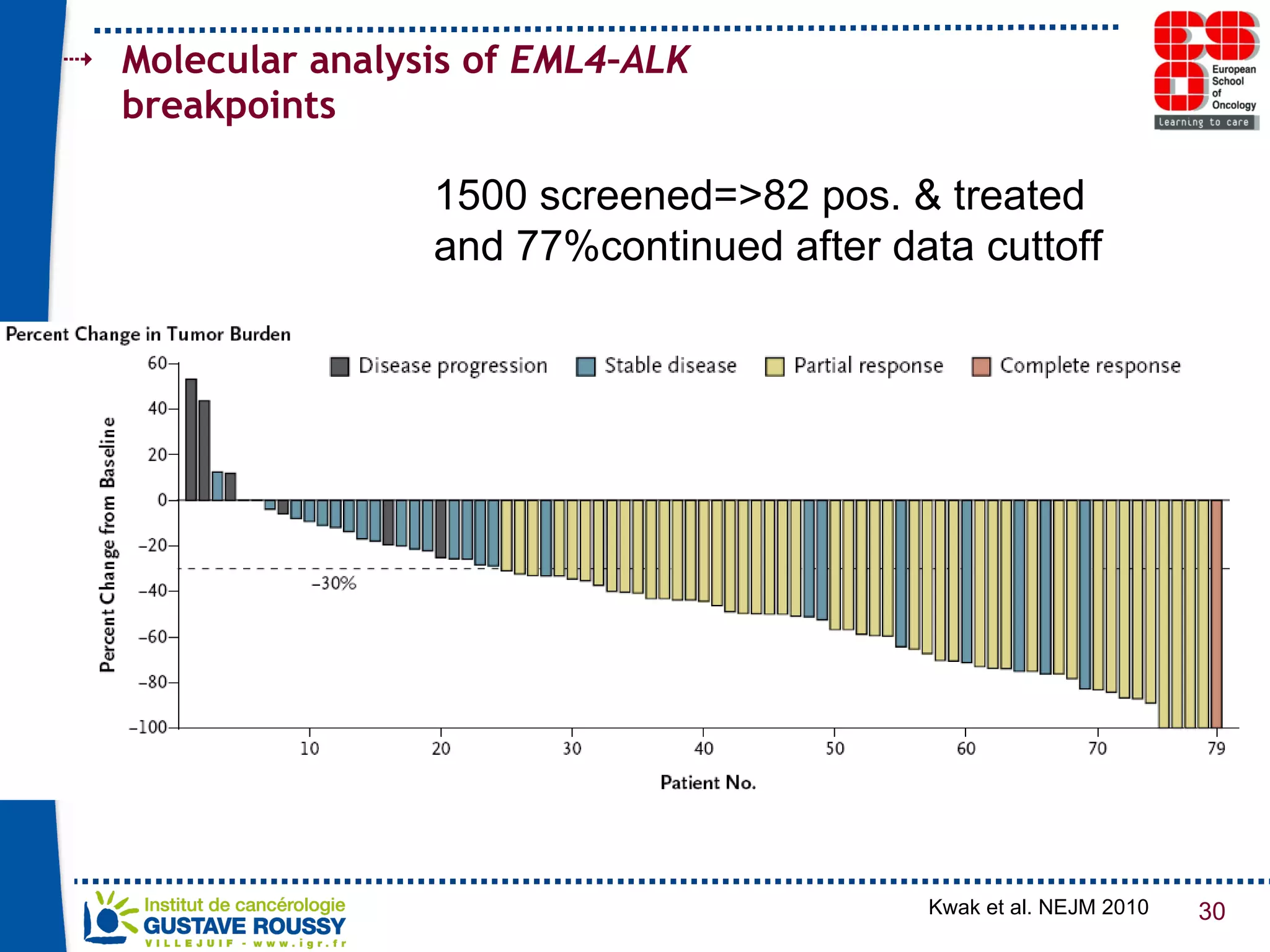
Molecular analysis of  EML4–ALK  breakpoints Kwak et al. NEJM 2010 1500 screened=>82 pos. & treated  and 77%continued after data cuttoff
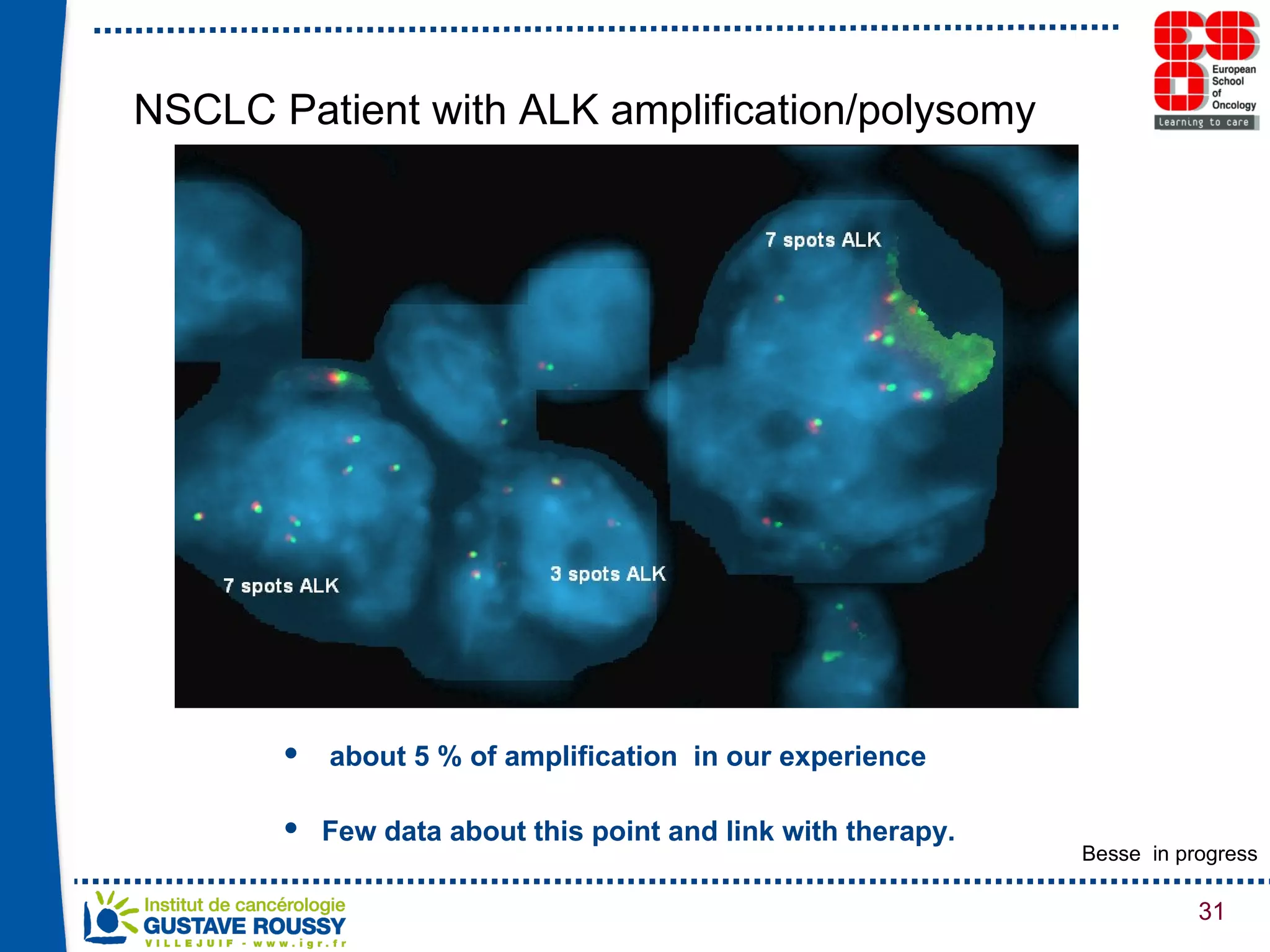
NSCLC Patient with ALK amplification/polysomy about 5 % of amplification  in our experience Few data about this point and link with therapy. Besse  in progress
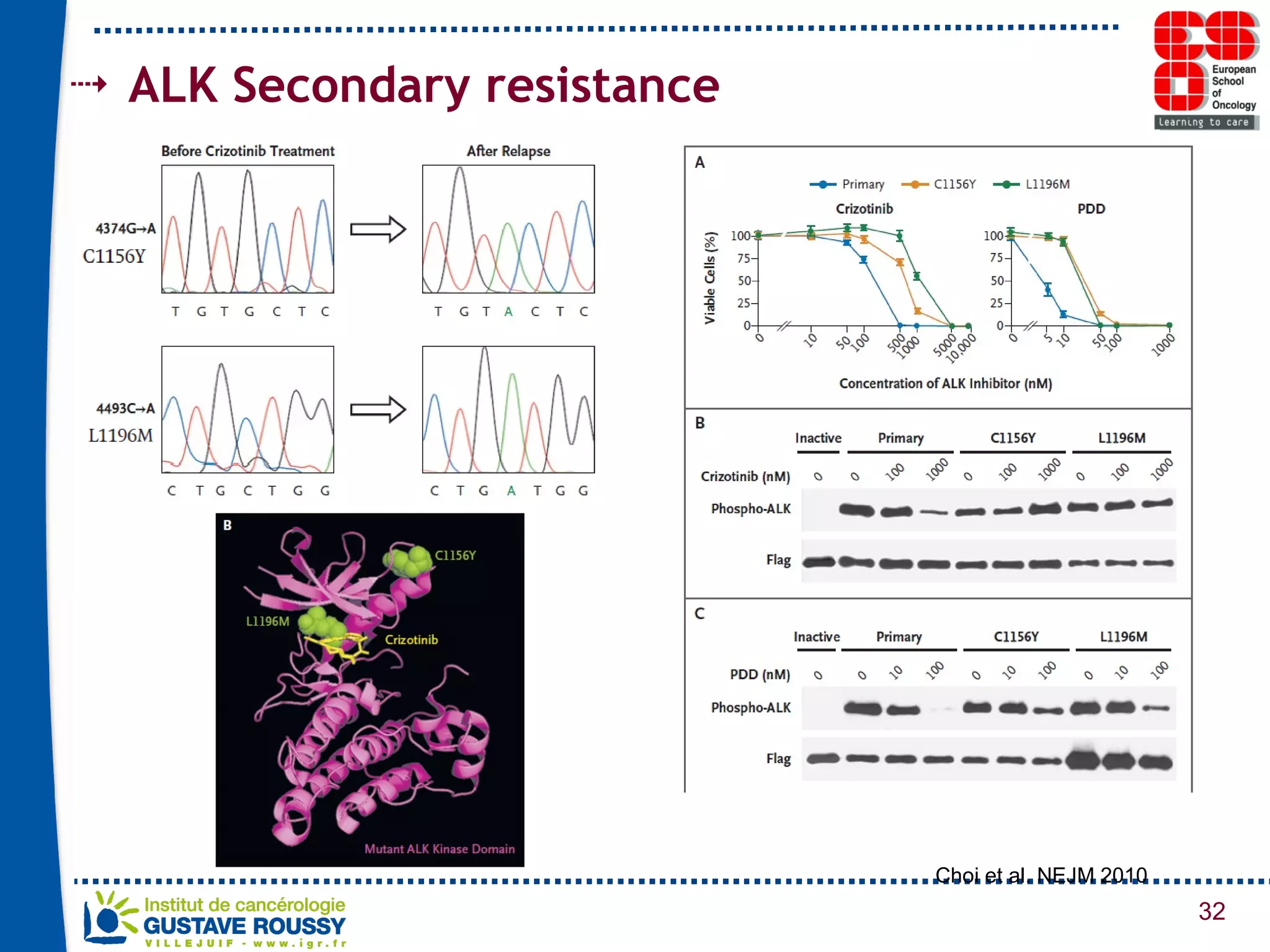
ALK Secondary resistance Choi et al. NEJM 2010
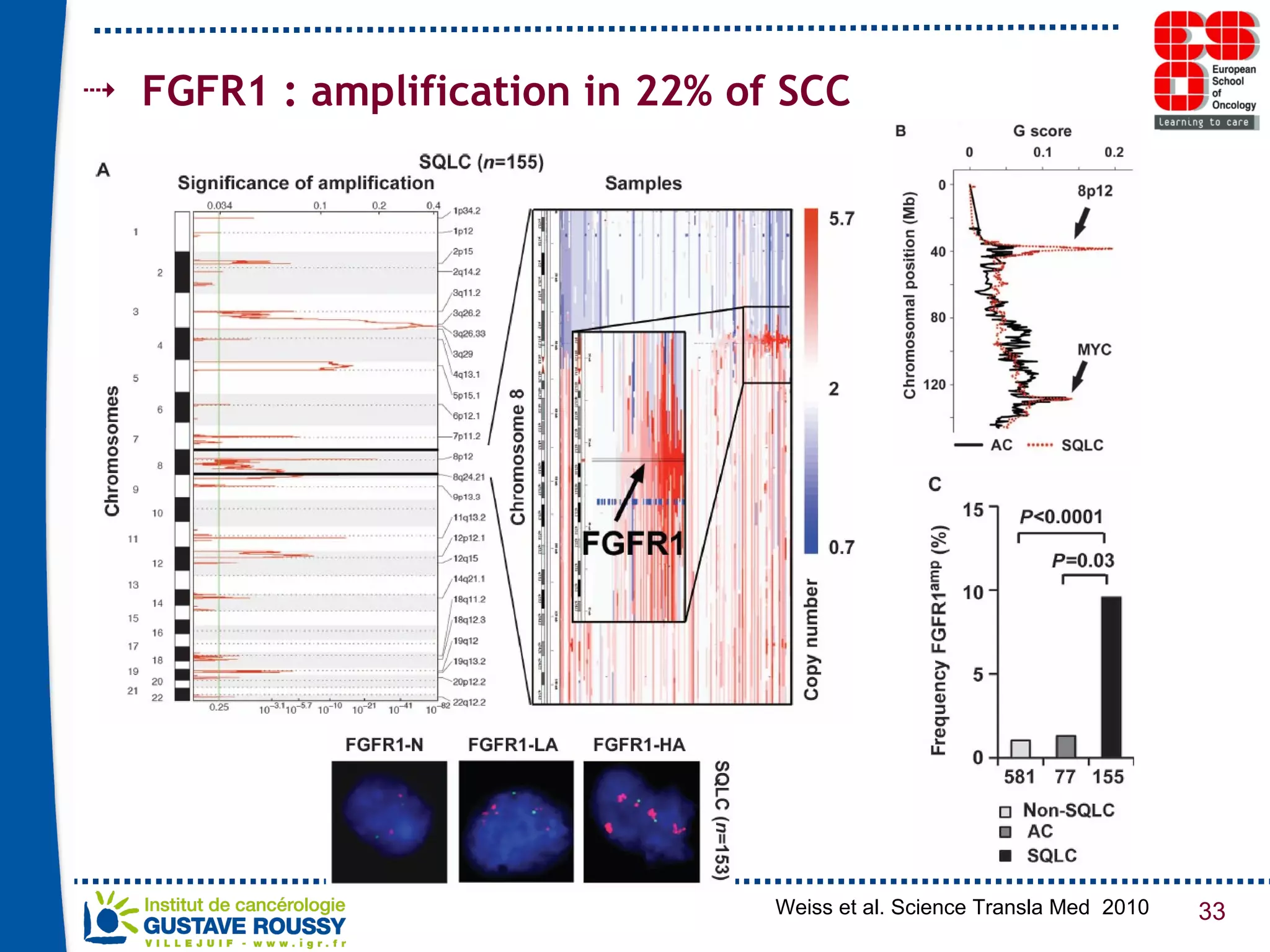
FGFR1 : amplification in 22% of SCC Weiss et al. Science Transla Med  2010
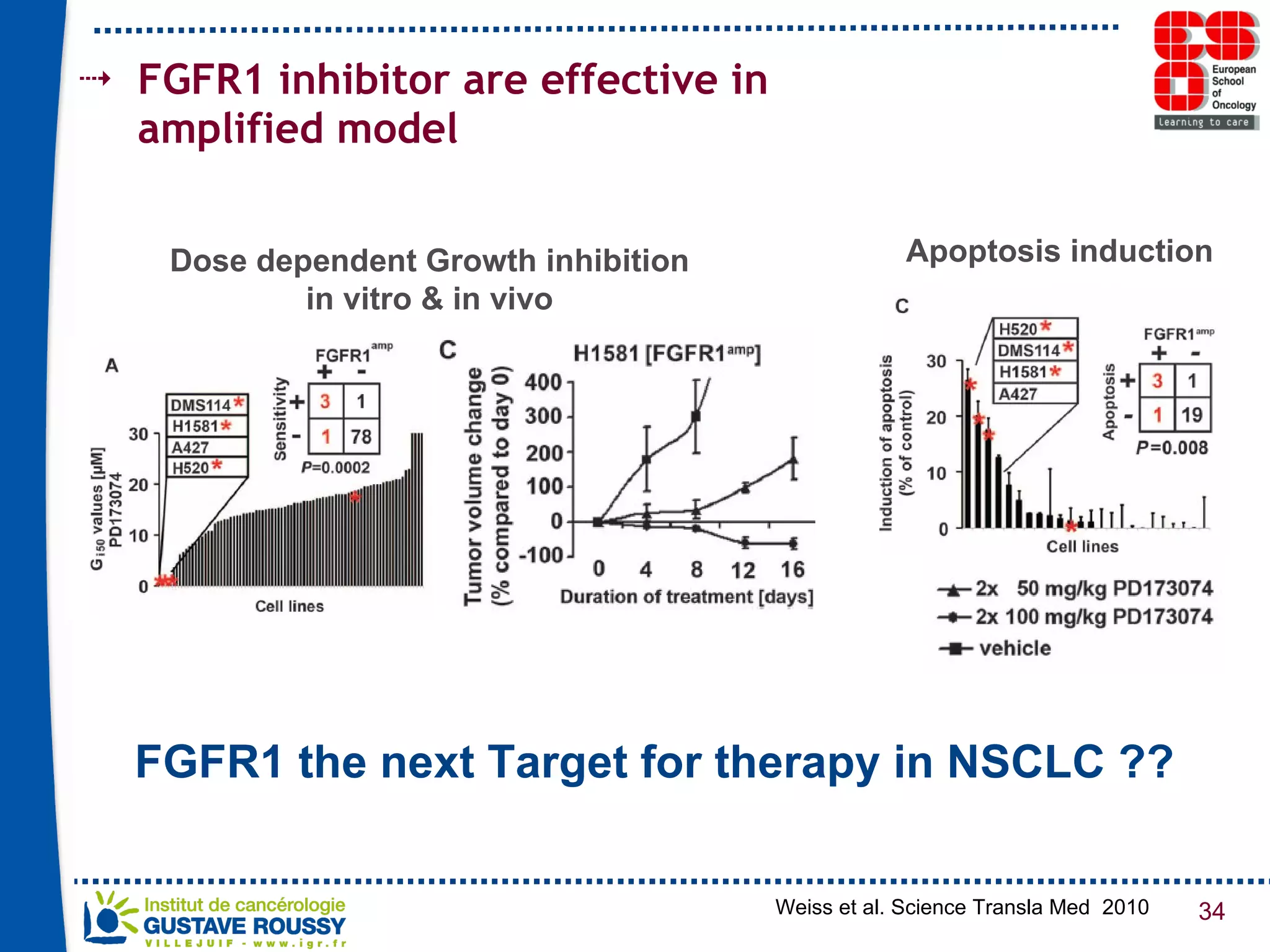
FGFR1 inhibitor are effective in amplified model FGFR1 the next Target for therapy in NSCLC ?? Dose dependent Growth inhibition in vitro & in vivo Apoptosis induction   Weiss et al. Science Transla Med  2010
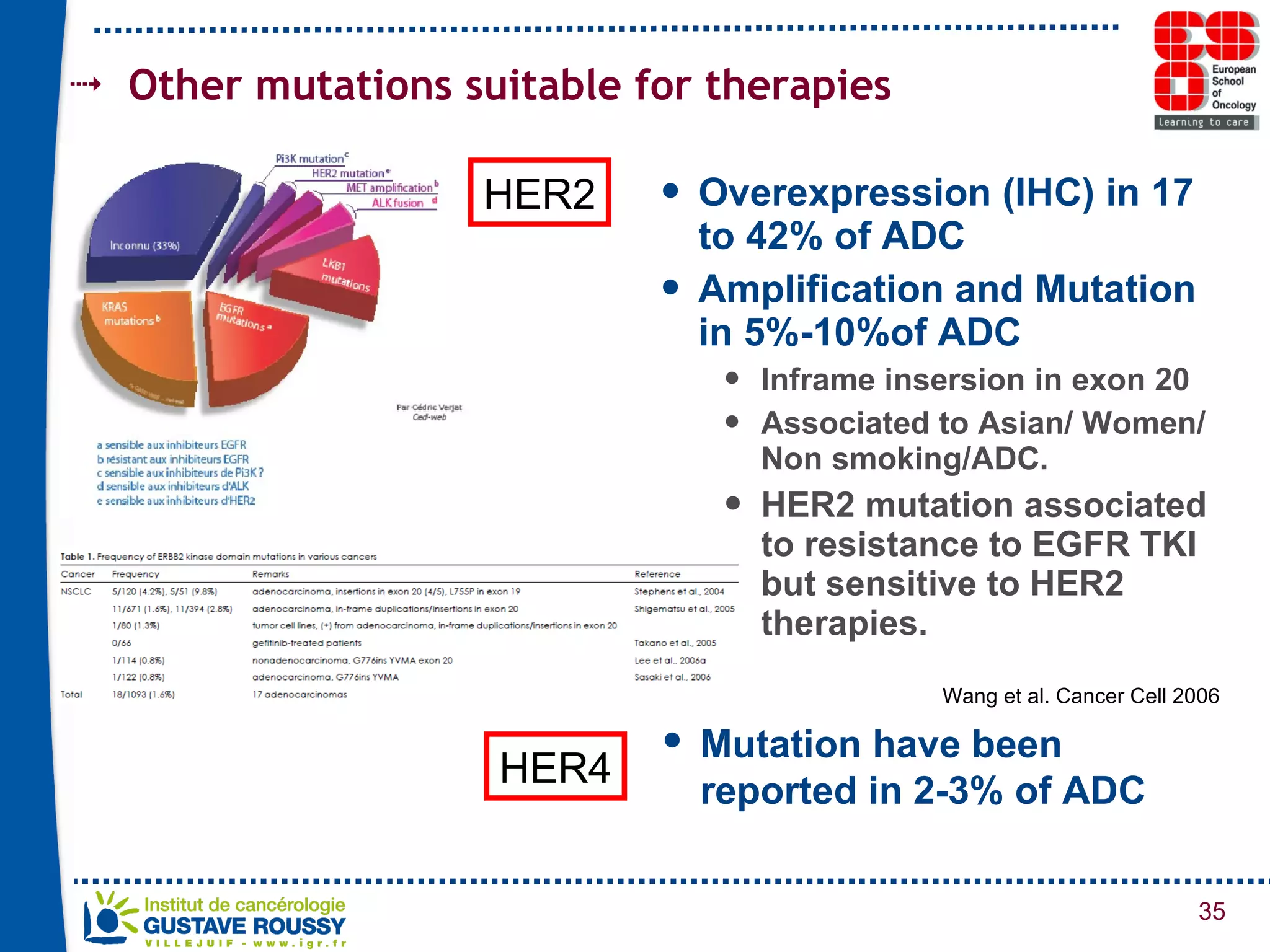
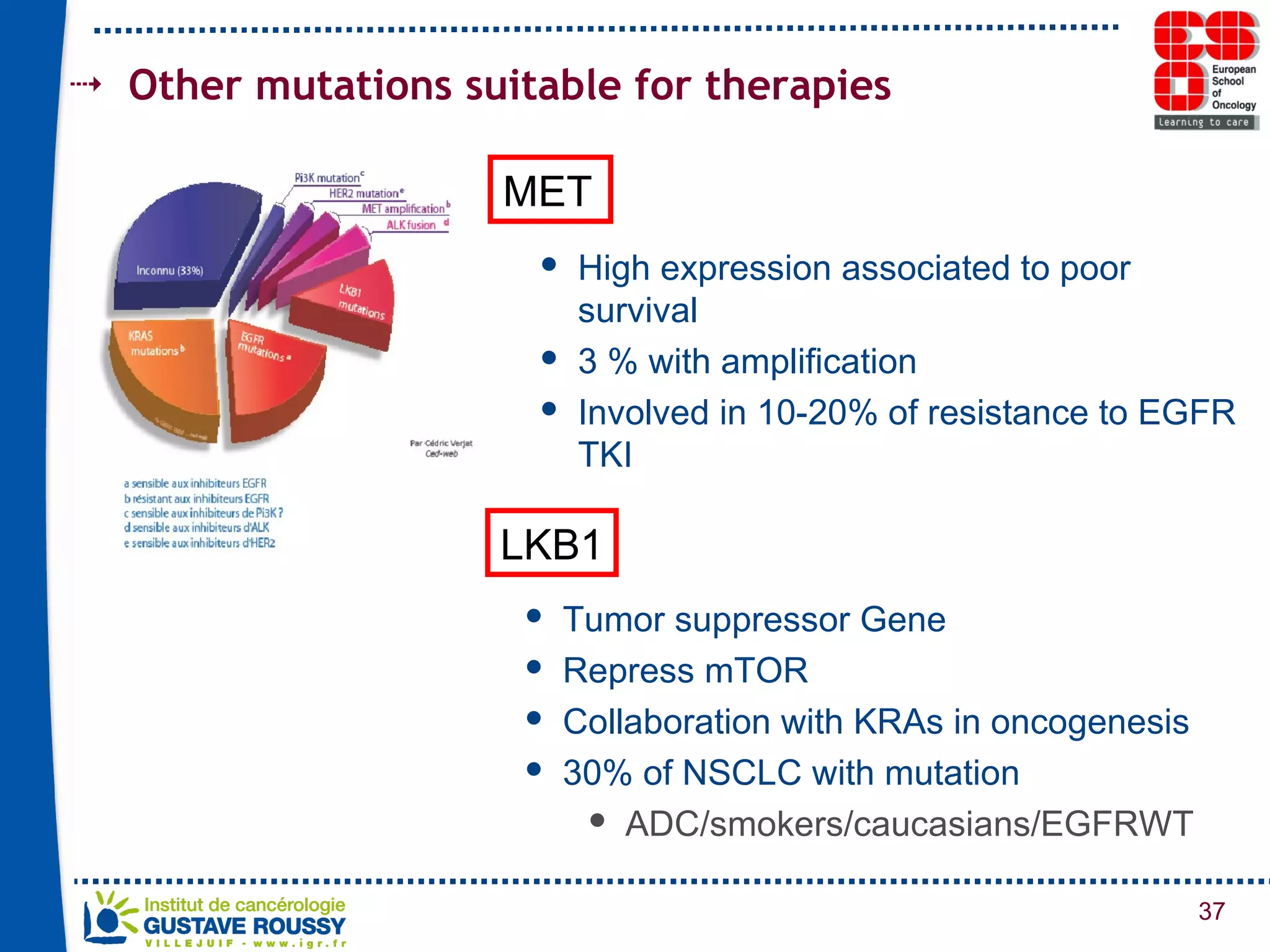
Other mutations suitable for therapies Overexpression (IHC) in 17 to 42% of ADC Amplification and Mutation in 5%-10%of ADC Inframe insersion in exon 20 Associated to Asian/ Women/ Non smoking/ADC. HER2 mutation associated to resistance to EGFR TKI but sensitive to HER2 therapies. HER2 Mutation have been reported in 2-3% of ADC HER4 Wang et al. Cancer Cell 2006
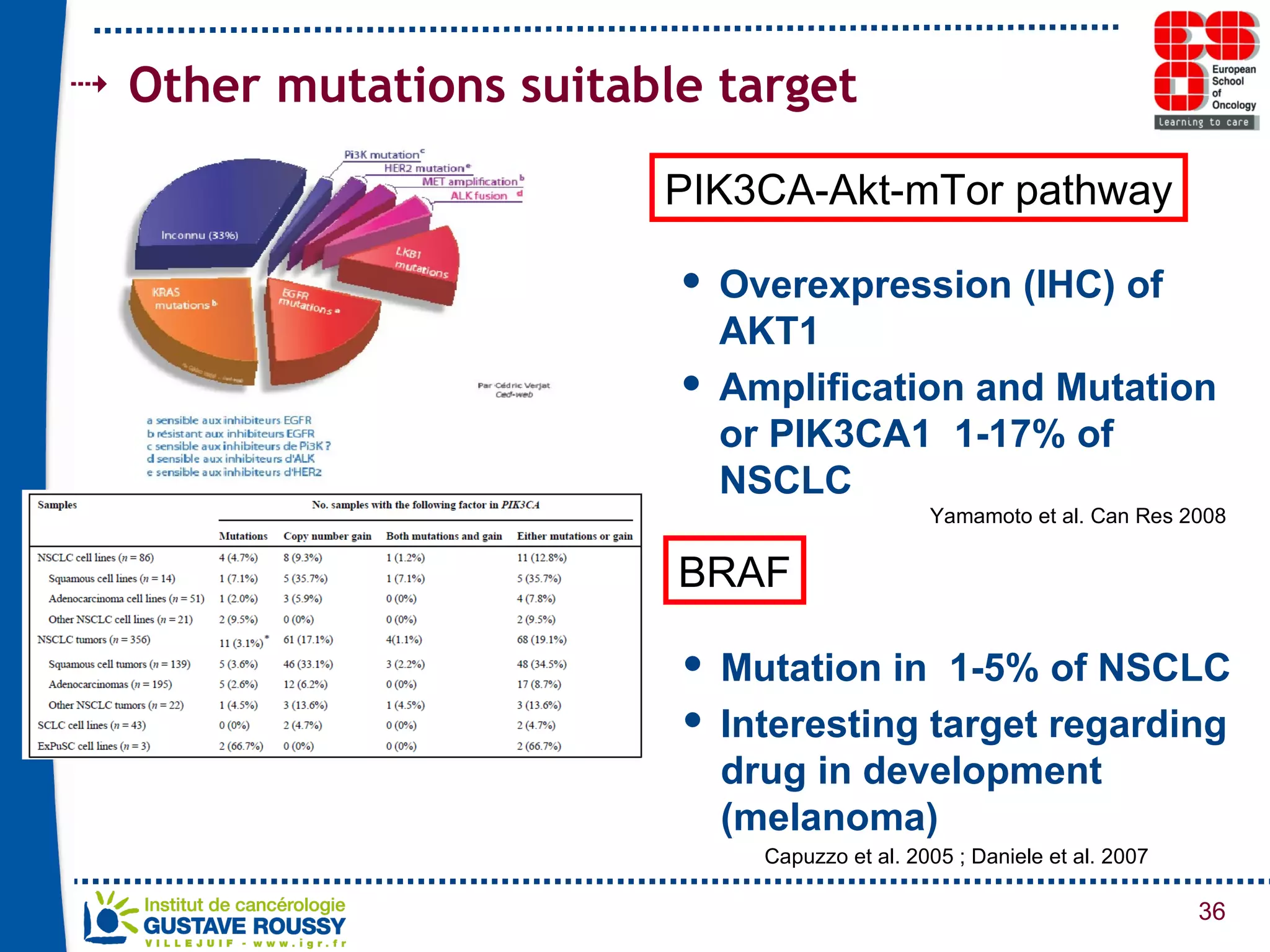
Other mutations suitable target PIK3CA-Akt-mTor pathway Mutation in  1-5% of NSCLC Interesting target regarding drug in development (melanoma) BRAF Overexpression (IHC) of AKT1  Amplification and Mutation or PIK3CA1  1-17% of NSCLC Capuzzo et al. 2005 ; Daniele et al. 2007 Yamamoto et al. Can Res 2008
Other mutations suitable for therapies LKB1 Tumor suppressor Gene  Repress mTOR Collaboration with KRAs in oncogenesis 30% of NSCLC with mutation ADC/smokers/caucasians/EGFRWT MET High expression associated to poor survival 3 % with amplification  Involved in 10-20% of resistance to EGFR TKI
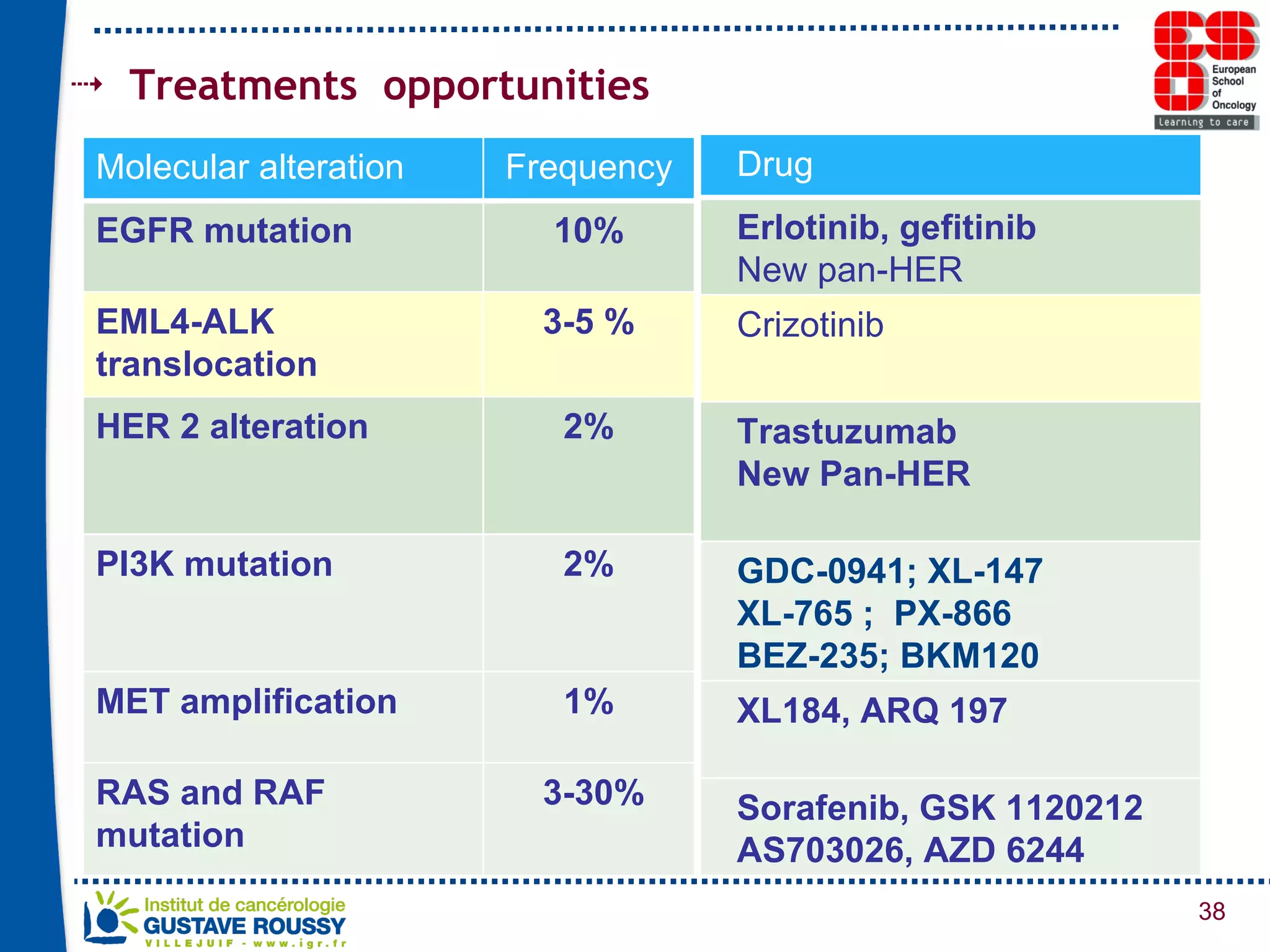
Treatments  opportunities Molecular alteration Frequency EGFR mutation 10% EML4-ALK translocation 3-5 % HER 2 alteration 2% PI3K mutation 2% MET amplification 1% RAS and RAF mutation 3-30% Drug Erlotinib, gefitinib New pan-HER Crizotinib Trastuzumab New Pan-HER GDC-0941; XL-147  XL-765 ;  PX-866 BEZ-235; BKM120 XL184, ARQ 197 Sorafenib, GSK 1120212 AS703026, AZD 6244
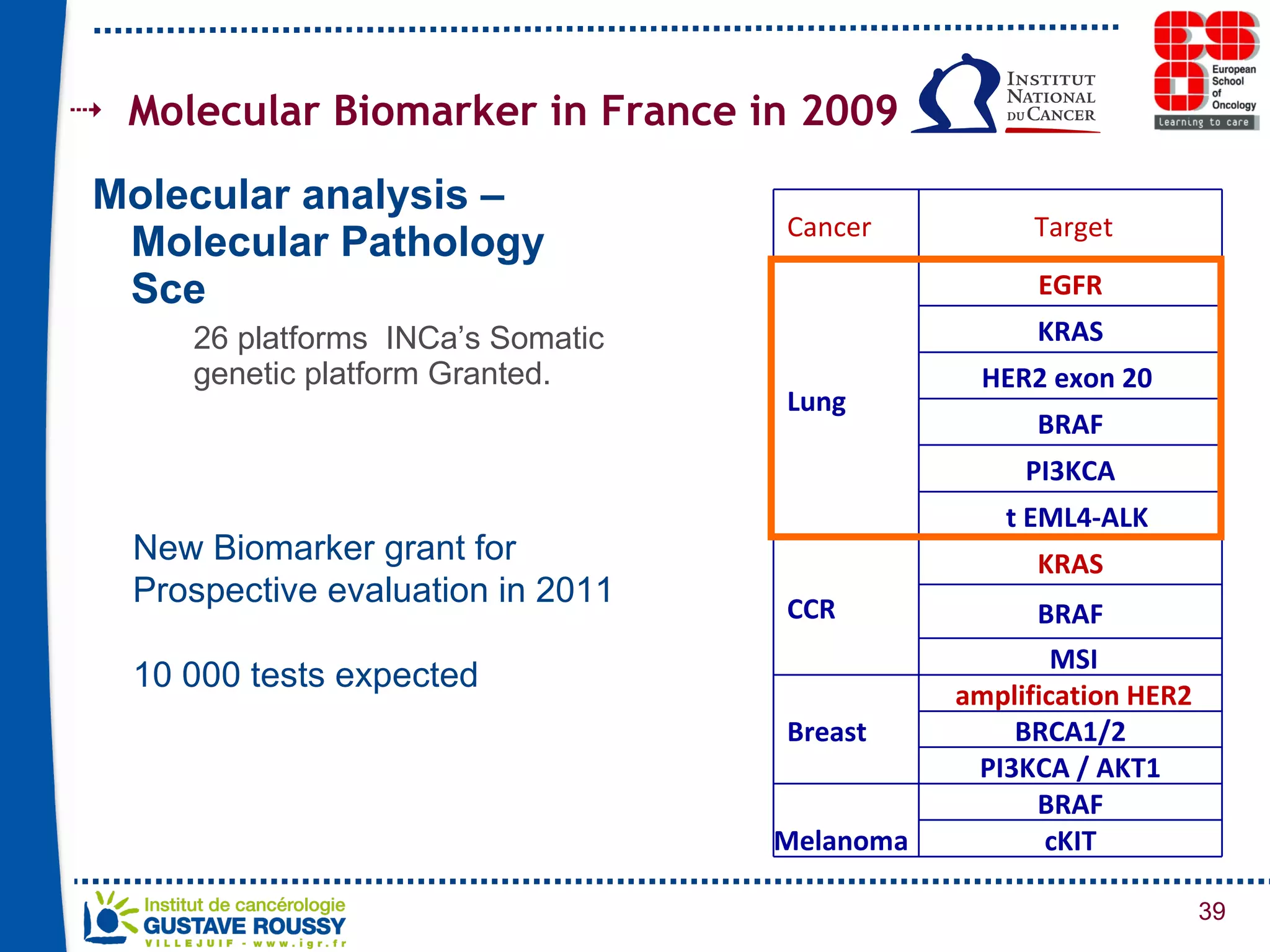
Molecular Biomarker in France in 2009 Molecular analysis – Molecular Pathology Sce 26 platforms  INCa’s Somatic genetic platform Granted. New Biomarker grant for  Prospective evaluation in 2011 10 000 tests expected Cancer Target Lung EGFR KRAS HER2 exon 20  BRAF PI3KCA t EML4-ALK CCR KRAS BRAF MSI Breast amplification HER2 BRCA1/2 PI3KCA / AKT1 Melanoma BRAF cKIT
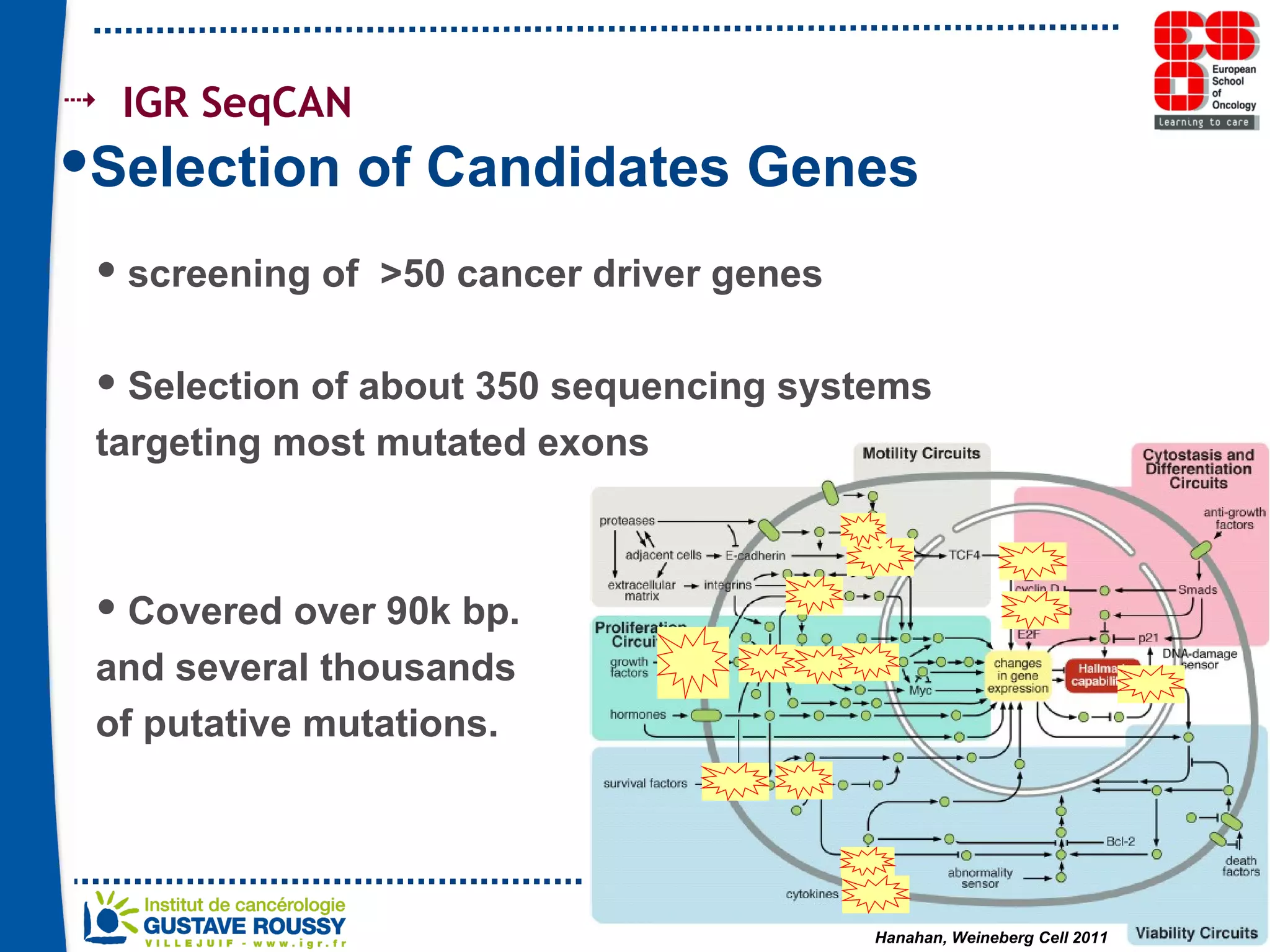
IGR SeqCAN  Selection of Candidates Genes screening of  >50 cancer driver genes  Selection of about 350 sequencing systems targeting most mutated exons  Covered over 90k bp. and several thousands  of putative mutations.
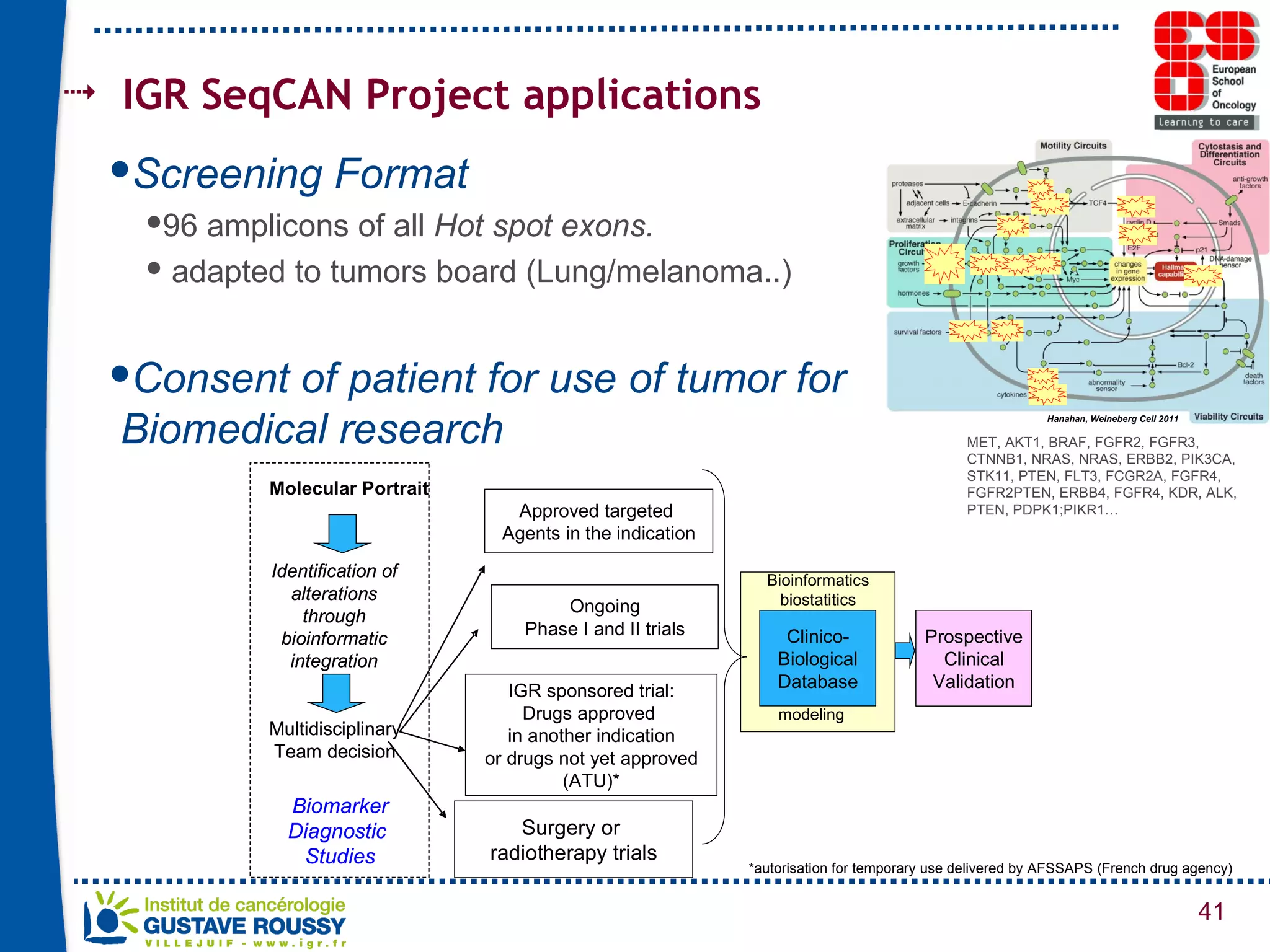
Screening Format 96 amplicons of all  Hot spot exons. adapted to tumors board (Lung/melanoma..) Consent of patient for use of tumor for  Biomedical research  IGR SeqCAN Project applications *autorisation for temporary use delivered by AFSSAPS (French drug agency) MET, AKT1, BRAF, FGFR2, FGFR3, CTNNB1, NRAS, NRAS, ERBB2, PIK3CA, STK11, PTEN, FLT3, FCGR2A, FGFR4, FGFR2PTEN, ERBB4, FGFR4, KDR, ALK, PTEN, PDPK1;PIKR1…
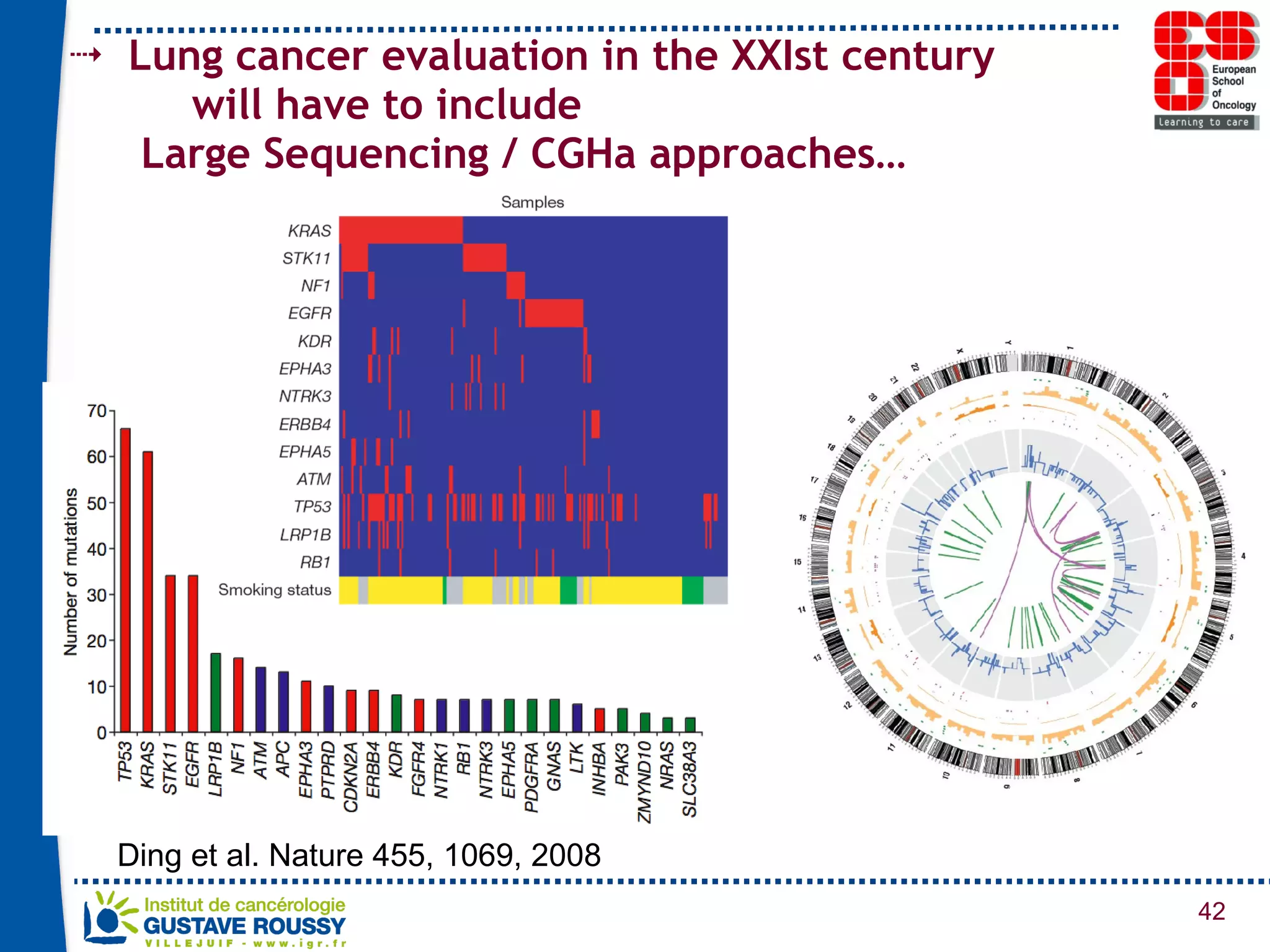
Lung cancer evaluation in the XXIst century   will have to include  Large Sequencing / CGHa approaches… Ding et al. Nature 455, 1069, 2008
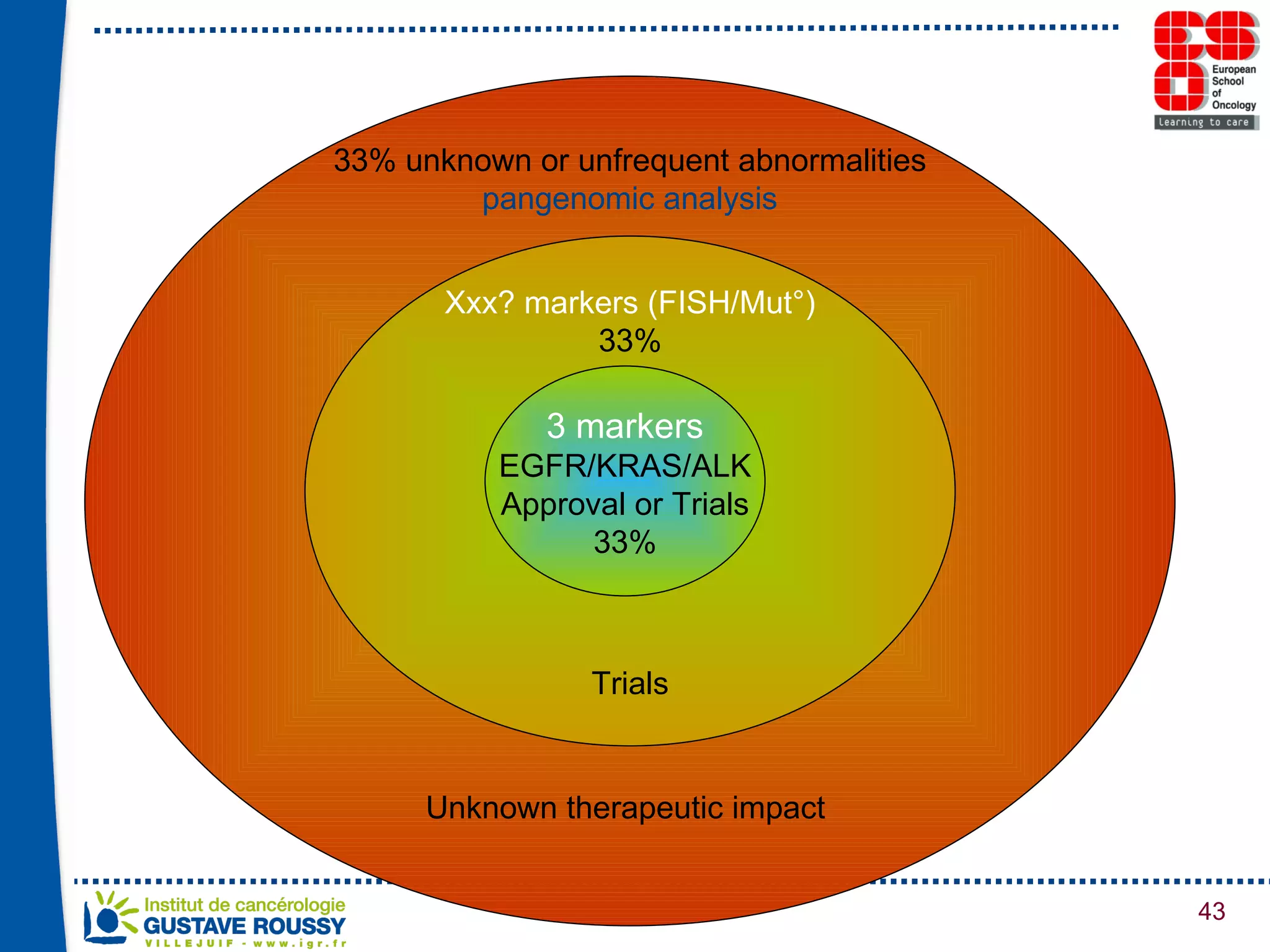
33% unknown or unfrequent abnormalities pangenomic analysis Unknown therapeutic impact  Xxx? markers (FISH/Mut°) 33% Trials 3 markers EGFR/KRAS/ALK Approval or Trials 33%
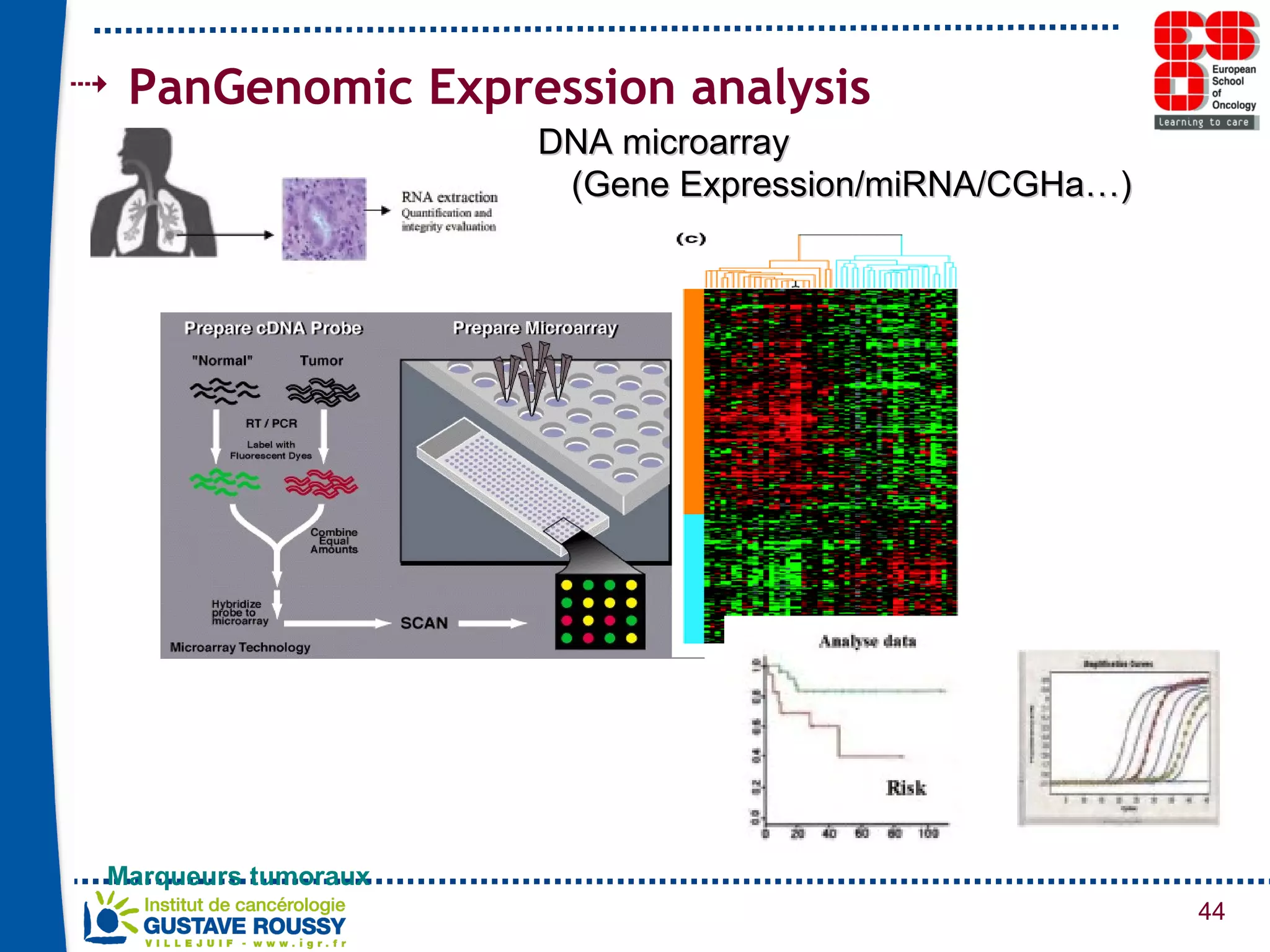
DNA microarray  (Gene Expression/miRNA/CGHa…) Marqueurs tumoraux PanGenomic Expression analysis
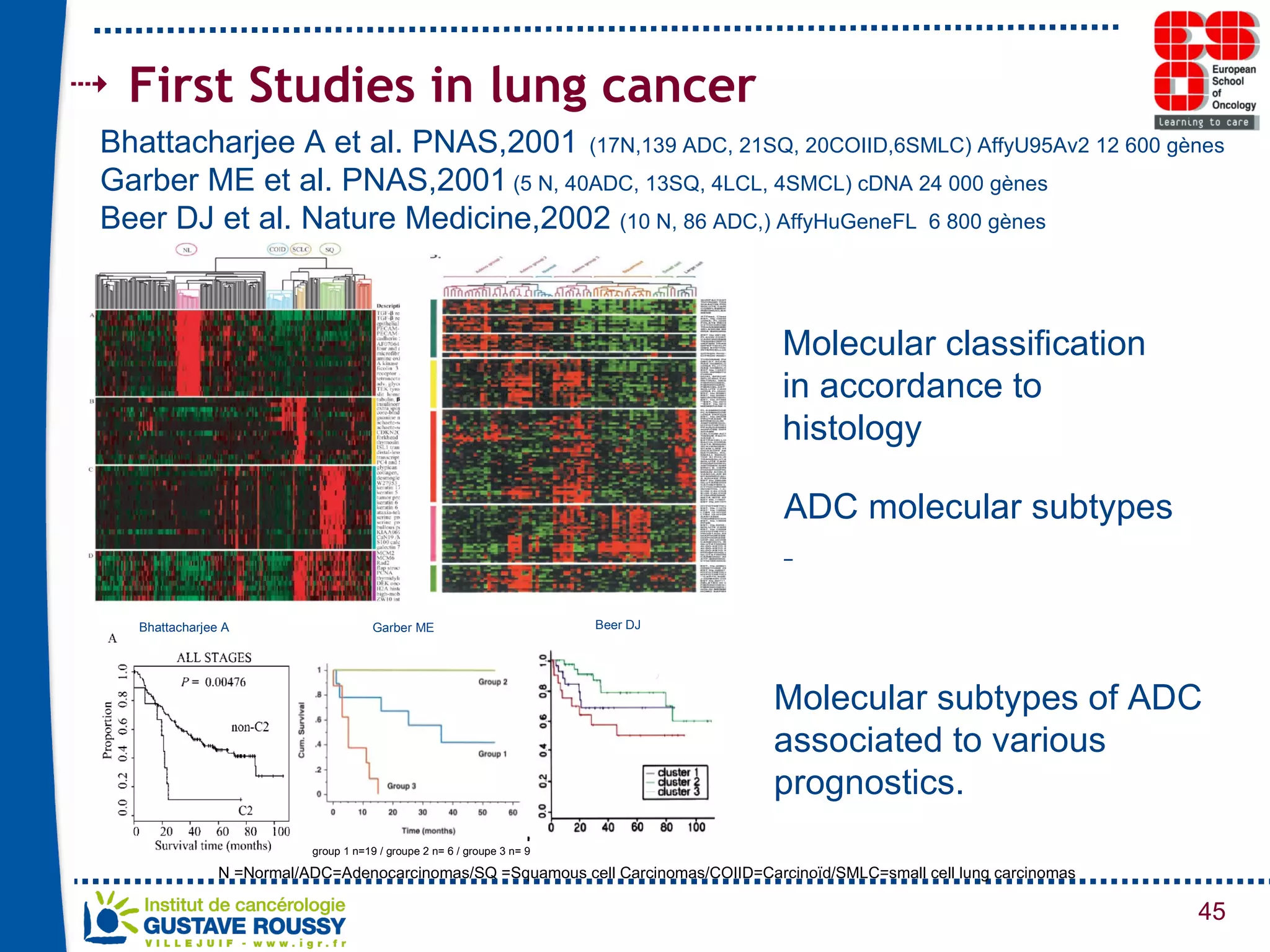
First Studies in lung cancer N =Normal/ADC=Adenocarcinomas/SQ =Squamous cell Carcinomas/COIID=Carcinoïd/SMLC=small cell lung carcinomas Molecular classification in accordance to histology  ADC molecular subtypes Bhattacharjee A et al. PNAS,2001   (17N,139 ADC, 21SQ, 20COIID,6SMLC) AffyU95Av2 12 600 gènes Garber ME et al. PNAS,2001  (5 N, 40ADC, 13SQ, 4LCL, 4SMCL) cDNA 24 000 gènes Beer DJ et al. Nature Medicine,2002  (10 N, 86 ADC,) AffyHuGeneFL  6 800 gènes  Molecular subtypes of ADC associated to various prognostics.
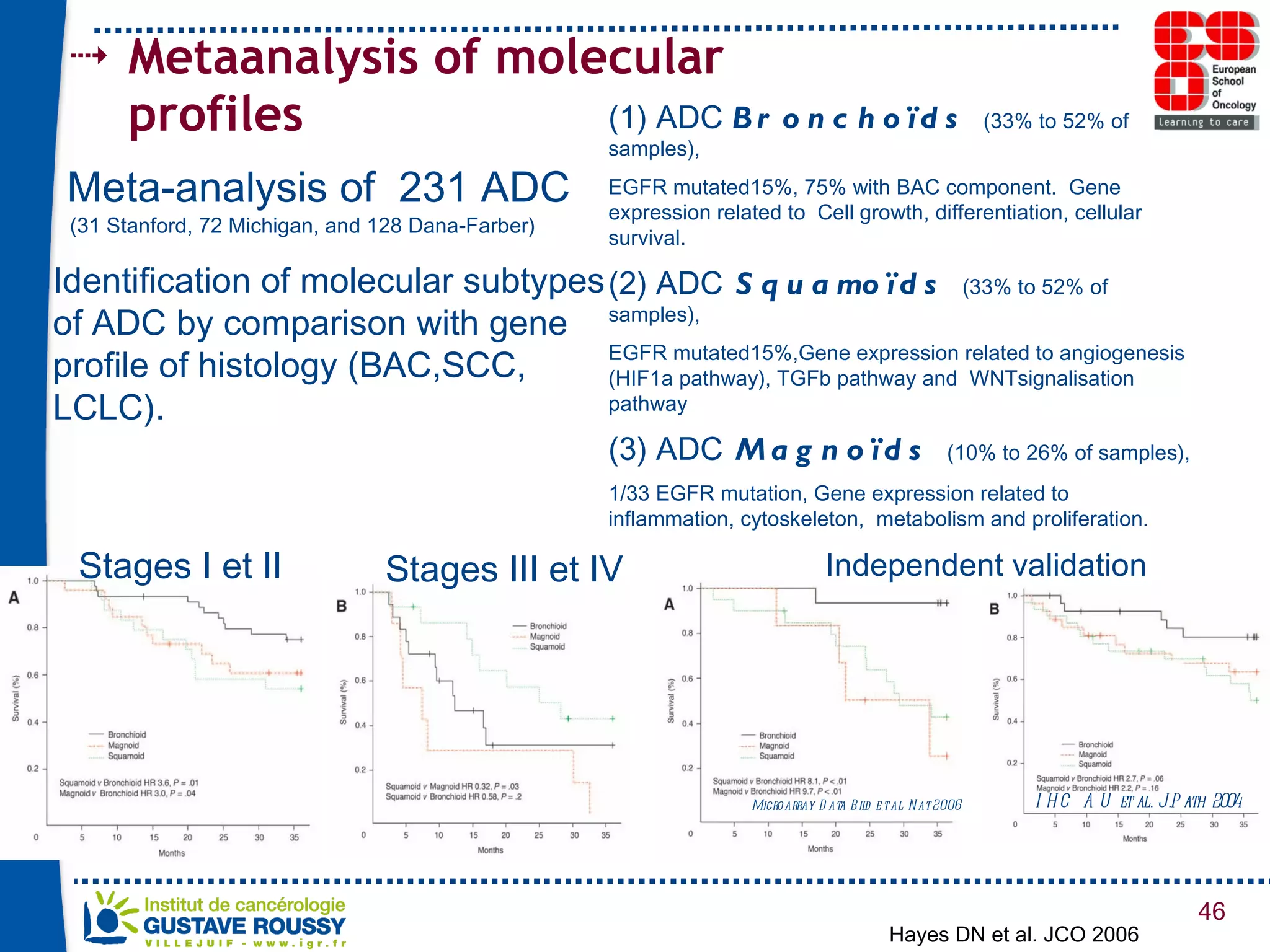
Metaanalysis of molecular profiles Meta-analysis of  231 ADC  (31 Stanford, 72 Michigan, and 128 Dana-Farber) Identification of molecular subtypes of ADC by comparison with gene profile of histology (BAC,SCC, LCLC).  Hayes DN et al. JCO 2006  (1) ADC  Bronchoïds  (33% to 52% of samples), EGFR mutated15%, 75% with BAC component.  Gene expression related to  Cell growth, differentiation, cellular survival. (2) ADC  Squamoïds  (33% to 52%  of samples ), EGFR mutated15%,Gene expression related to angiogenesis (HIF1a pathway), TGFb pathway and  WNTsignalisation pathway (3) ADC  Magnoïds  (10% to 26%  of samples ), 1/33 EGFR mutation, Gene expression related to inflammation, cytoskeleton,  metabolism and proliferation. IHC  AU et al. J.Path 2004
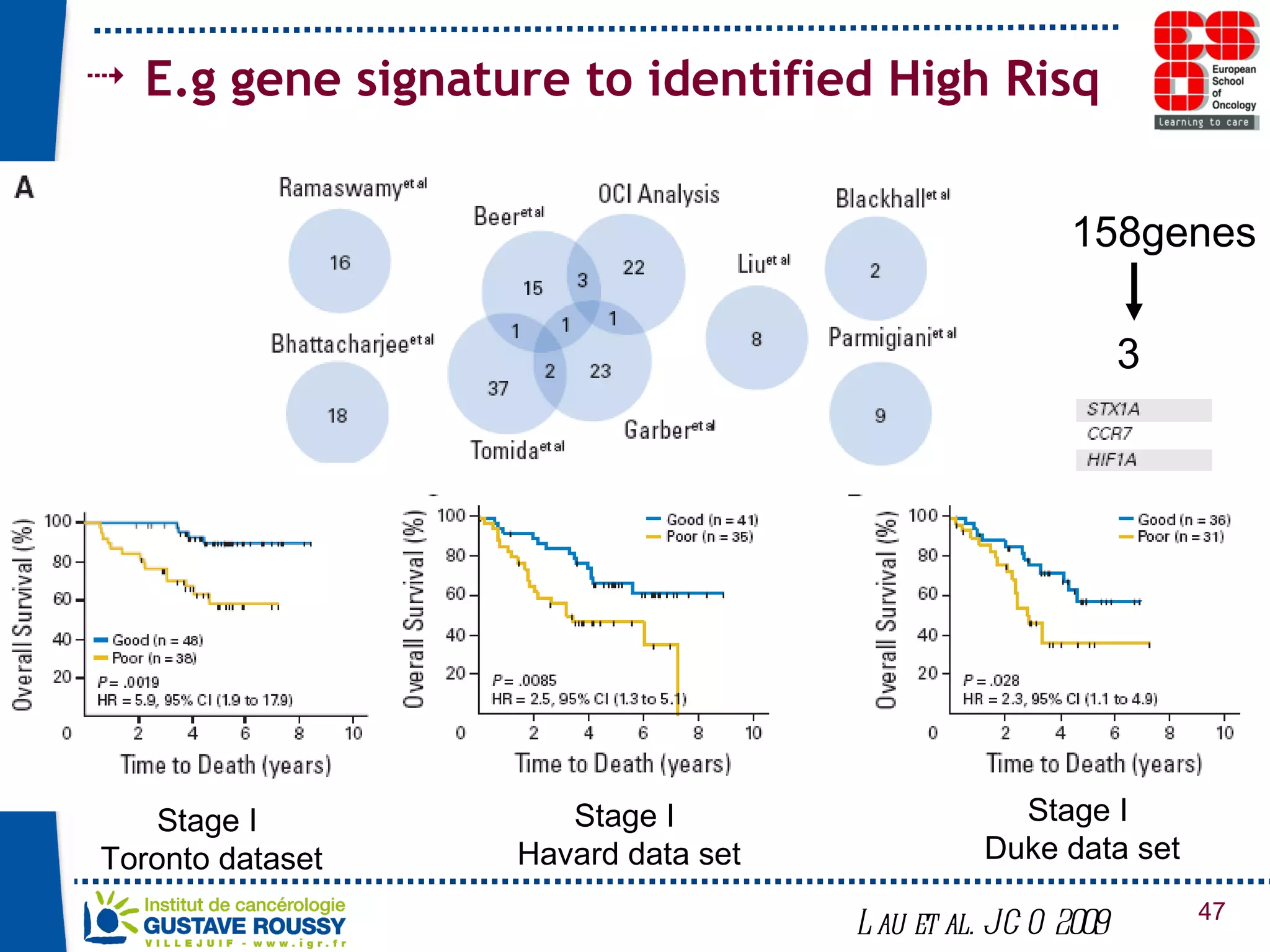
E.g gene signature to identified High Risq Lau et al. JCO 2009 158genes 3 Stage I  Toronto dataset Stage I  Duke data set Stage I  Havard data set
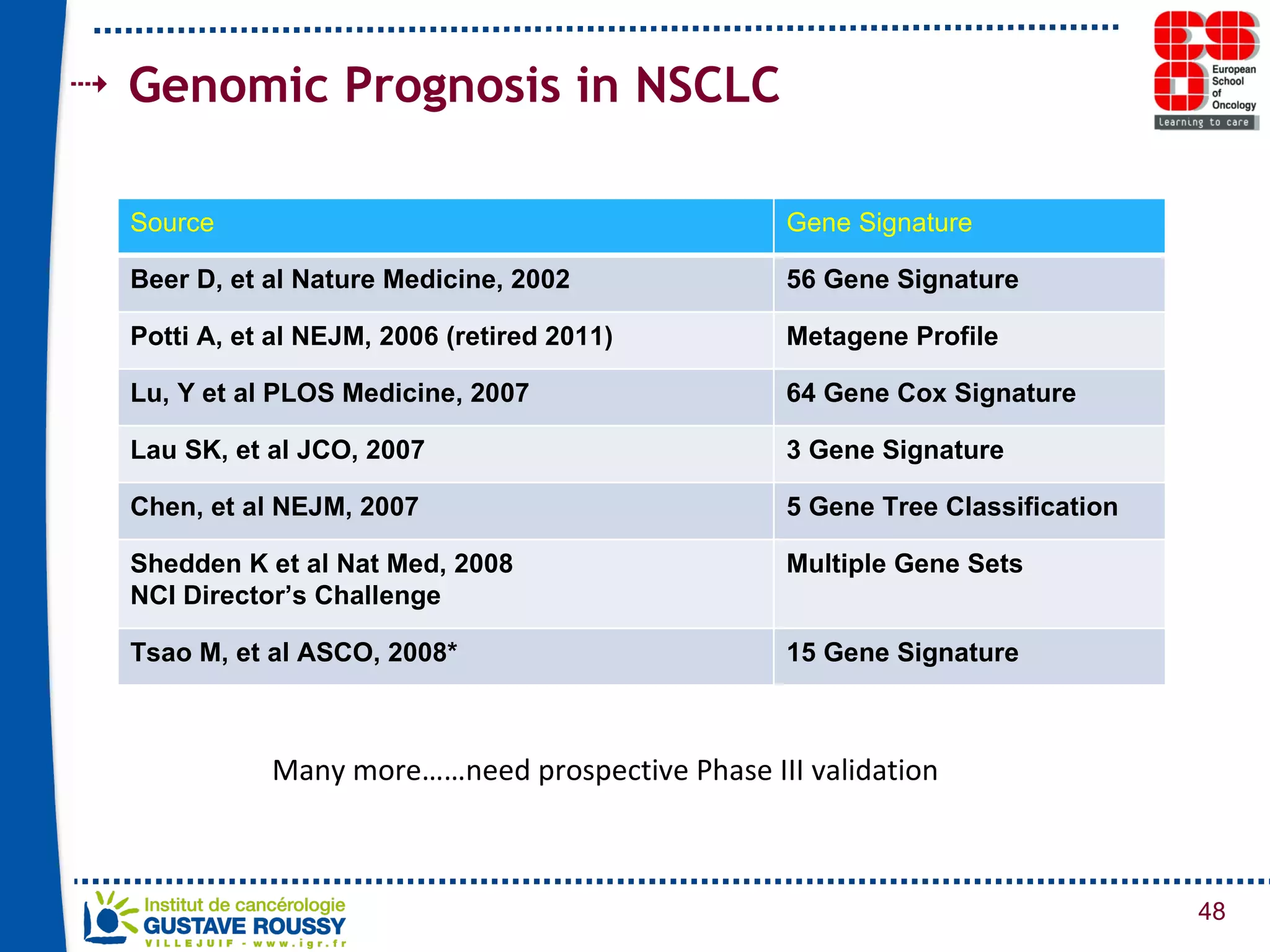
Genomic Prognosis in NSCLC Many more……need prospective Phase III validation Source Gene Signature Beer D, et al Nature Medicine, 2002 56 Gene Signature Potti A, et al NEJM, 2006 (retired 2011) Metagene Profile Lu, Y et al PLOS Medicine, 2007 64 Gene Cox Signature Lau SK, et al JCO, 2007 3 Gene Signature Chen, et al NEJM, 2007 5 Gene Tree Classification Shedden K et al Nat Med, 2008  NCI Director’s Challenge Multiple Gene Sets Tsao M, et al ASCO, 2008* 15 Gene Signature
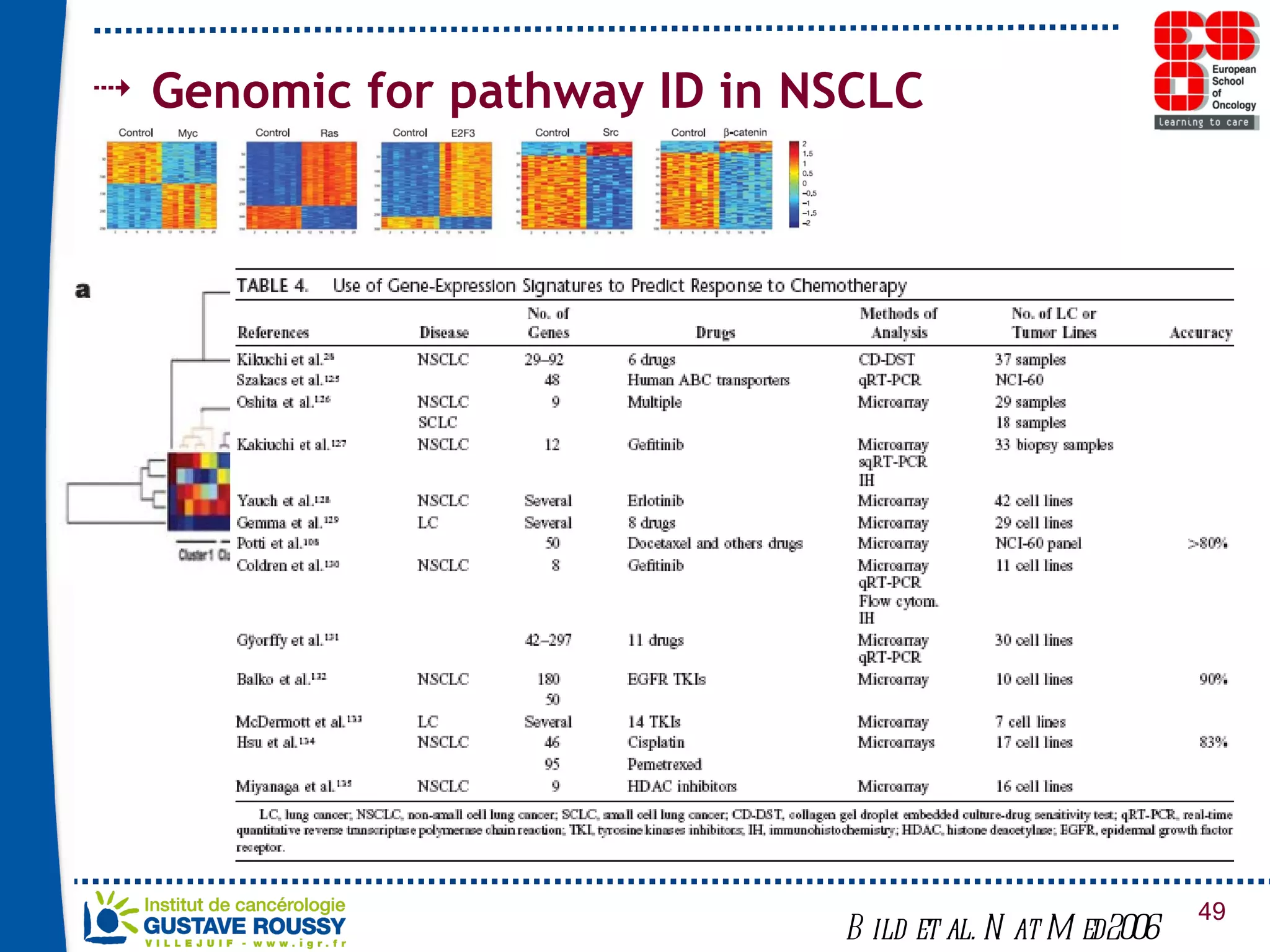
Genomic for pathway ID in NSCLC Bild et al. Nat Med2006
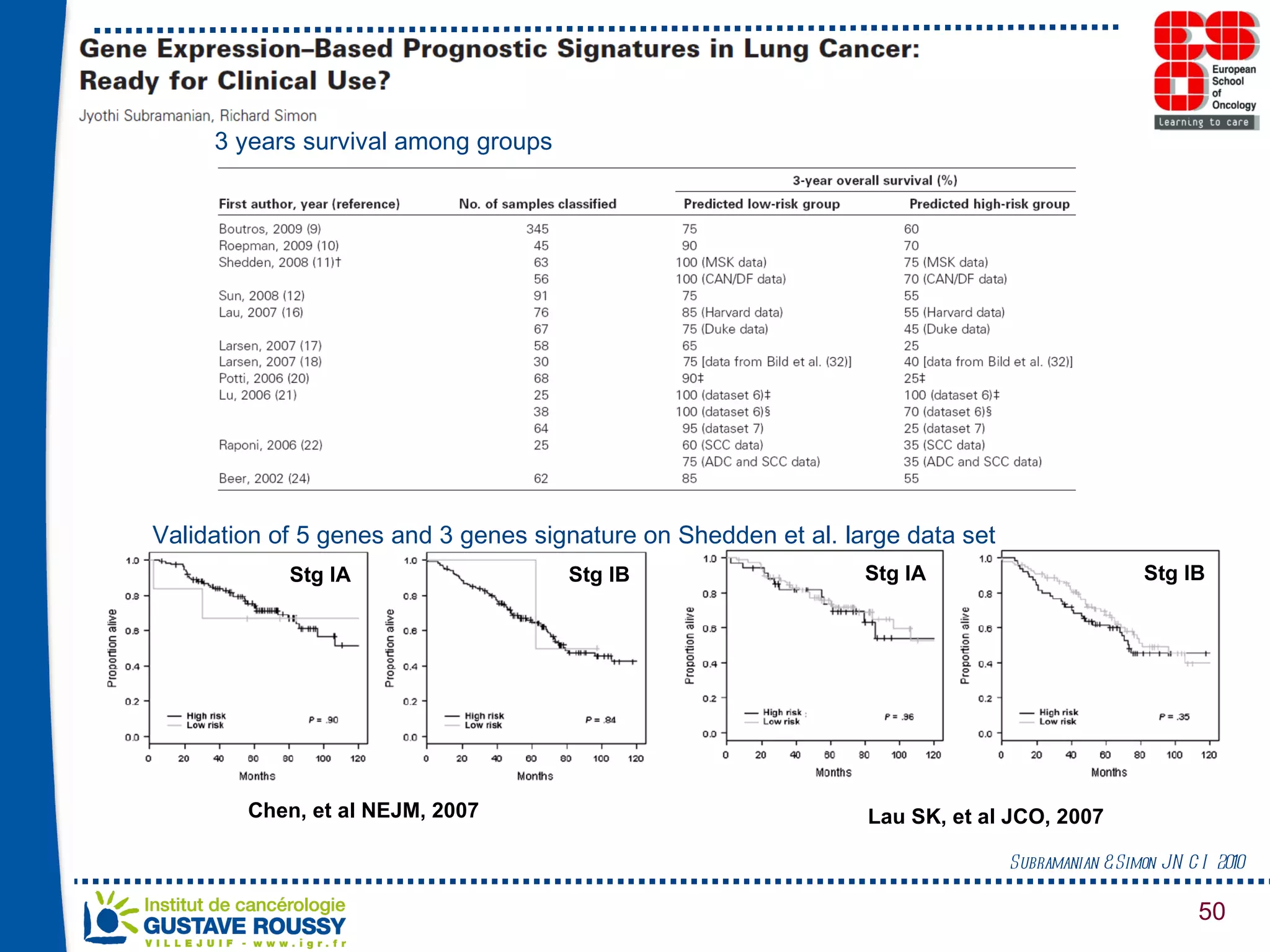
Subramanian & Simon JNCI 2010 Chen, et al NEJM, 2007 Lau SK, et al JCO, 2007 Stg IA Stg IB Stg IA Stg IB 3 years survival among groups Validation of 5 genes and 3 genes signature on Shedden et al. large data set
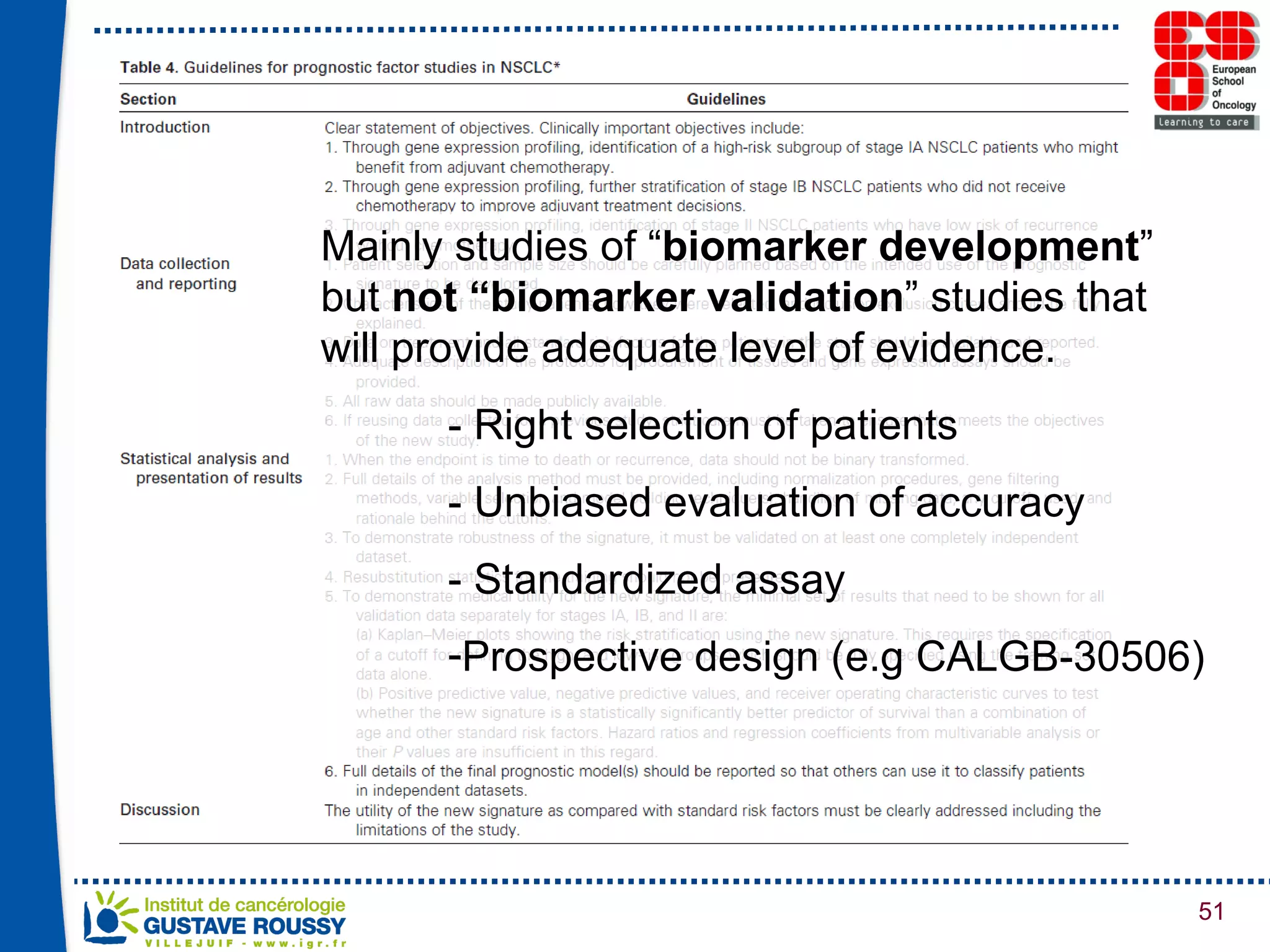
Mainly studies of “ biomarker development ” but  not “biomarker validation ” studies that will provide adequate level of evidence.  - Right selection of patients - Unbiased evaluation of accuracy - Standardized assay Prospective design (e.g CALGB-30506)
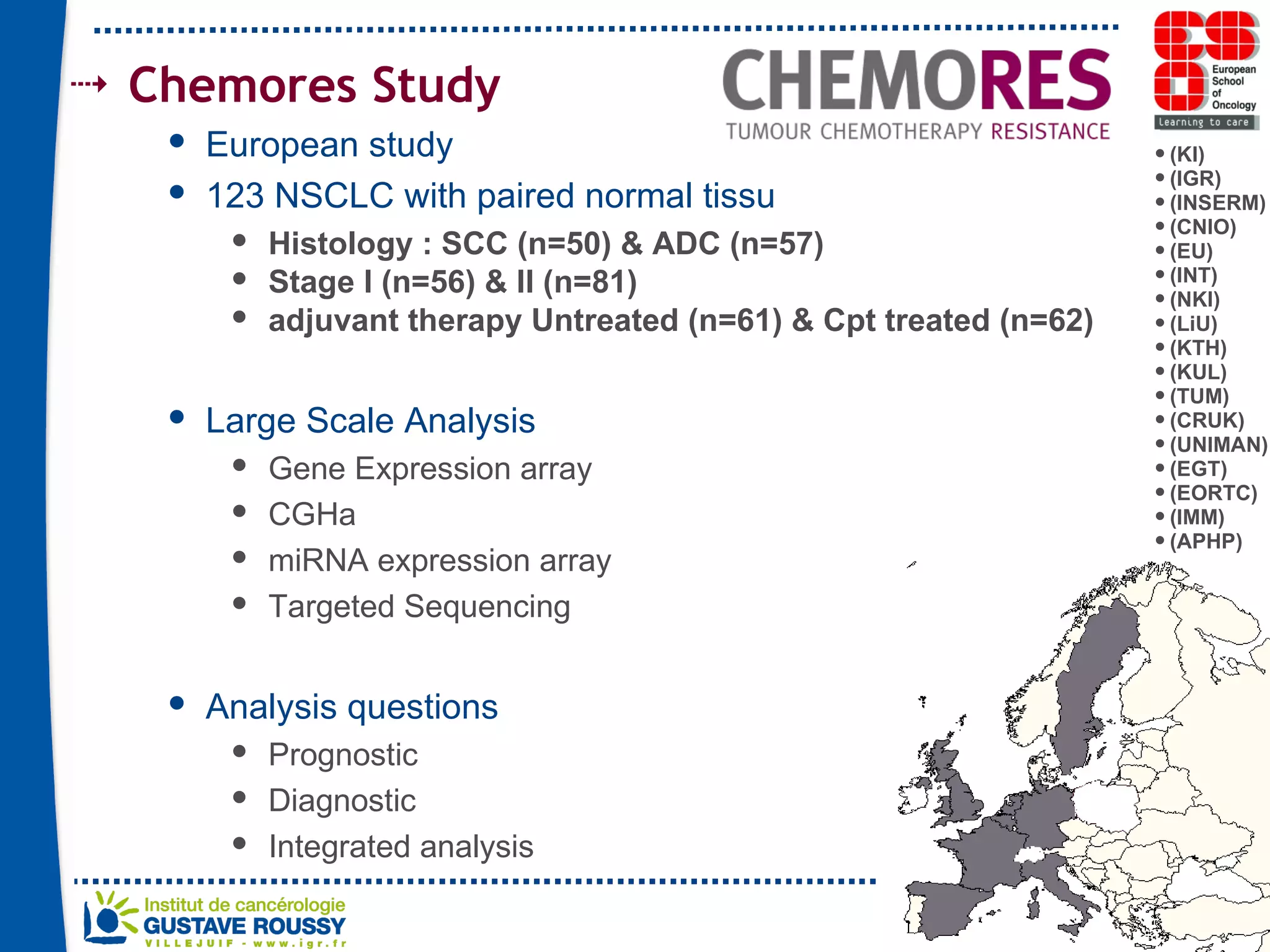
Chemores Study  (KI)  (IGR) (INSERM) (CNIO) (EU)  (INT) (NKI) (LiU) (KTH) (KUL) (TUM) (CRUK) (UNIMAN) (EGT) (EORTC) (IMM) (APHP) European study  123 NSCLC with paired normal tissu Histology : SCC (n=50) & ADC (n=57) Stage I (n=56) & II (n=81) adjuvant therapy Untreated (n=61) & Cpt treated (n=62)  Large Scale Analysis  Gene Expression array CGHa miRNA expression array Targeted Sequencing Analysis questions Prognostic Diagnostic Integrated analysis
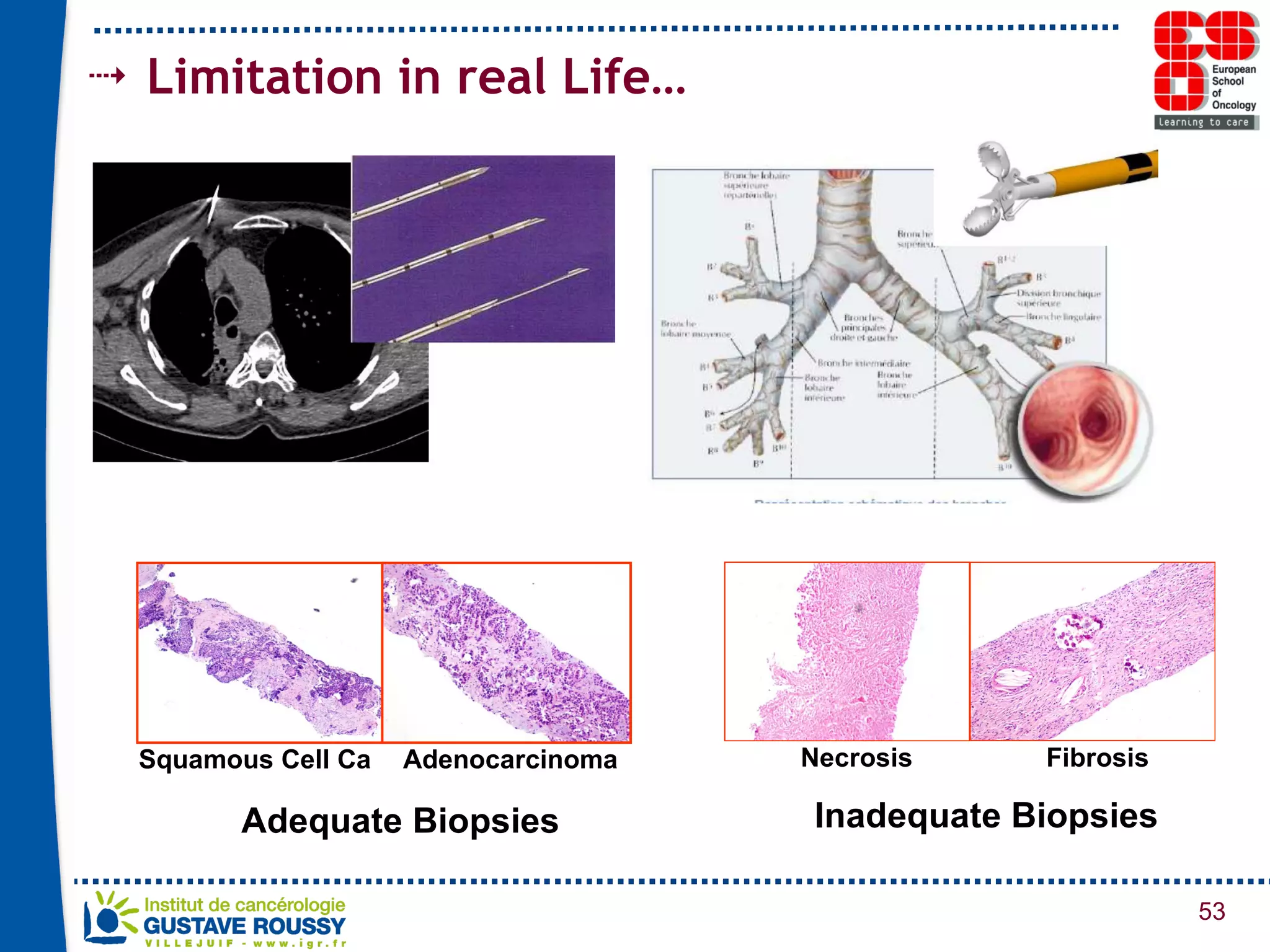
Limitation in real Life… Adequate Biopsies  Inadequate Biopsies  Squamous Cell Ca Adenocarcinoma Necrosis Fibrosis
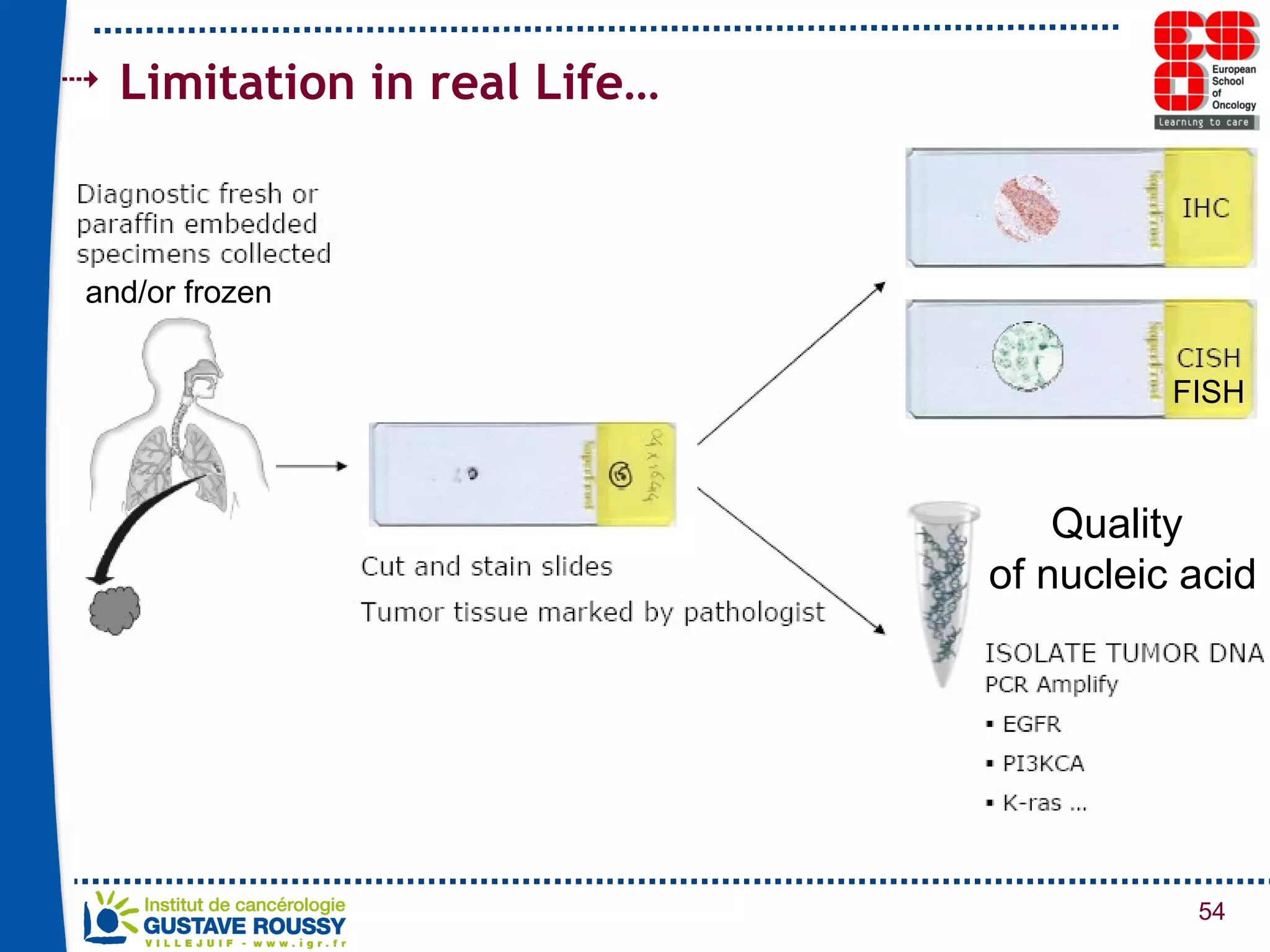
Limitation in real Life… Quality  of nucleic acid FISH and/or frozen
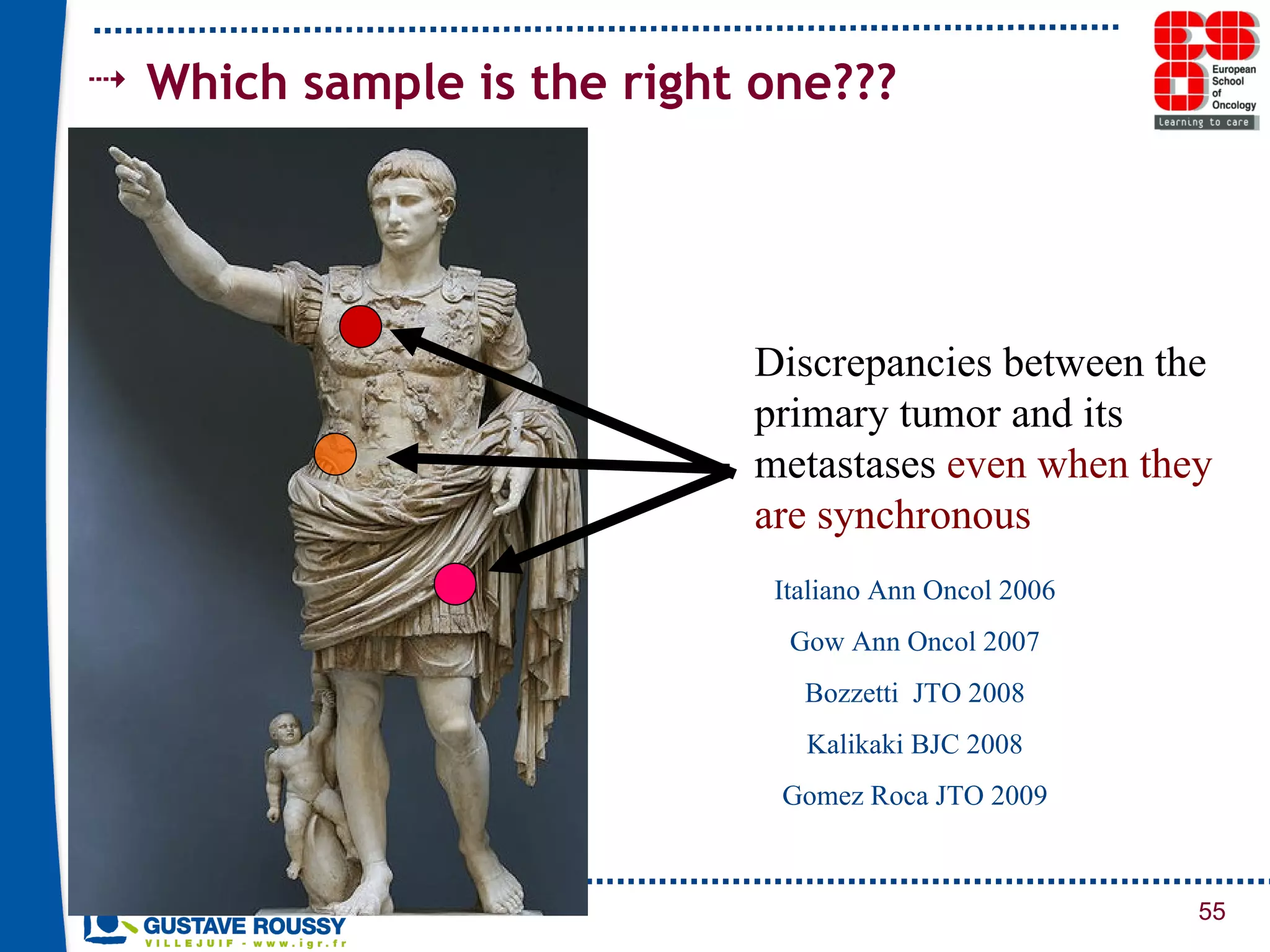
Discrepancies between the primary tumor and its metastases  even when they are synchronous Italiano Ann Oncol 2006 Gow Ann Oncol 2007 Bozzetti  JTO 2008 Kalikaki BJC 2008 Gomez Roca JTO 2009 Which sample is the right one???
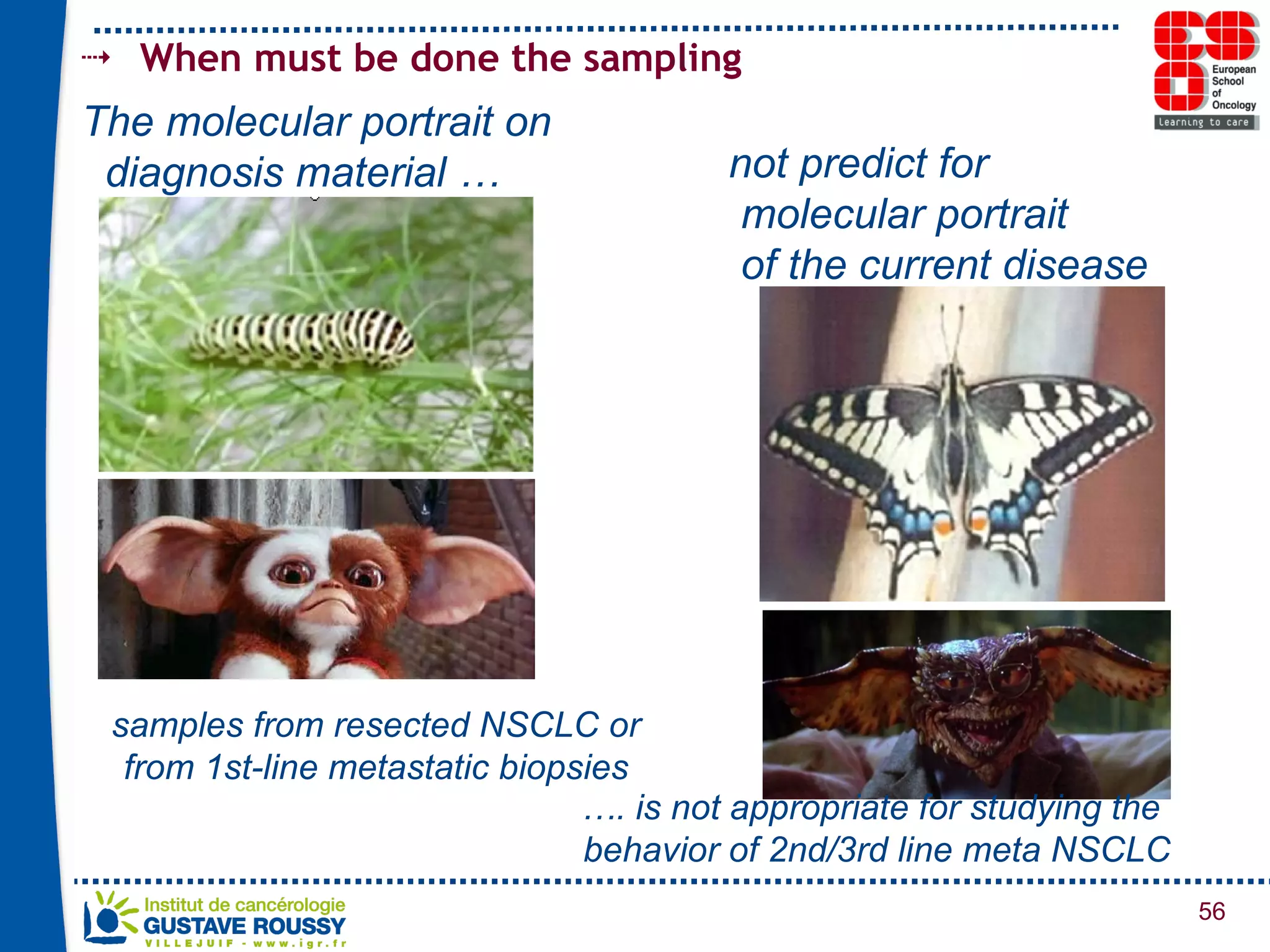
When must be done the sampling samples from resected NSCLC or from 1st-line metastatic biopsies The molecular portrait on   diagnosis material … not predict for  molecular portrait  of the current disease … . is not appropriate for studying the behavior of 2nd/3rd line meta NSCLC
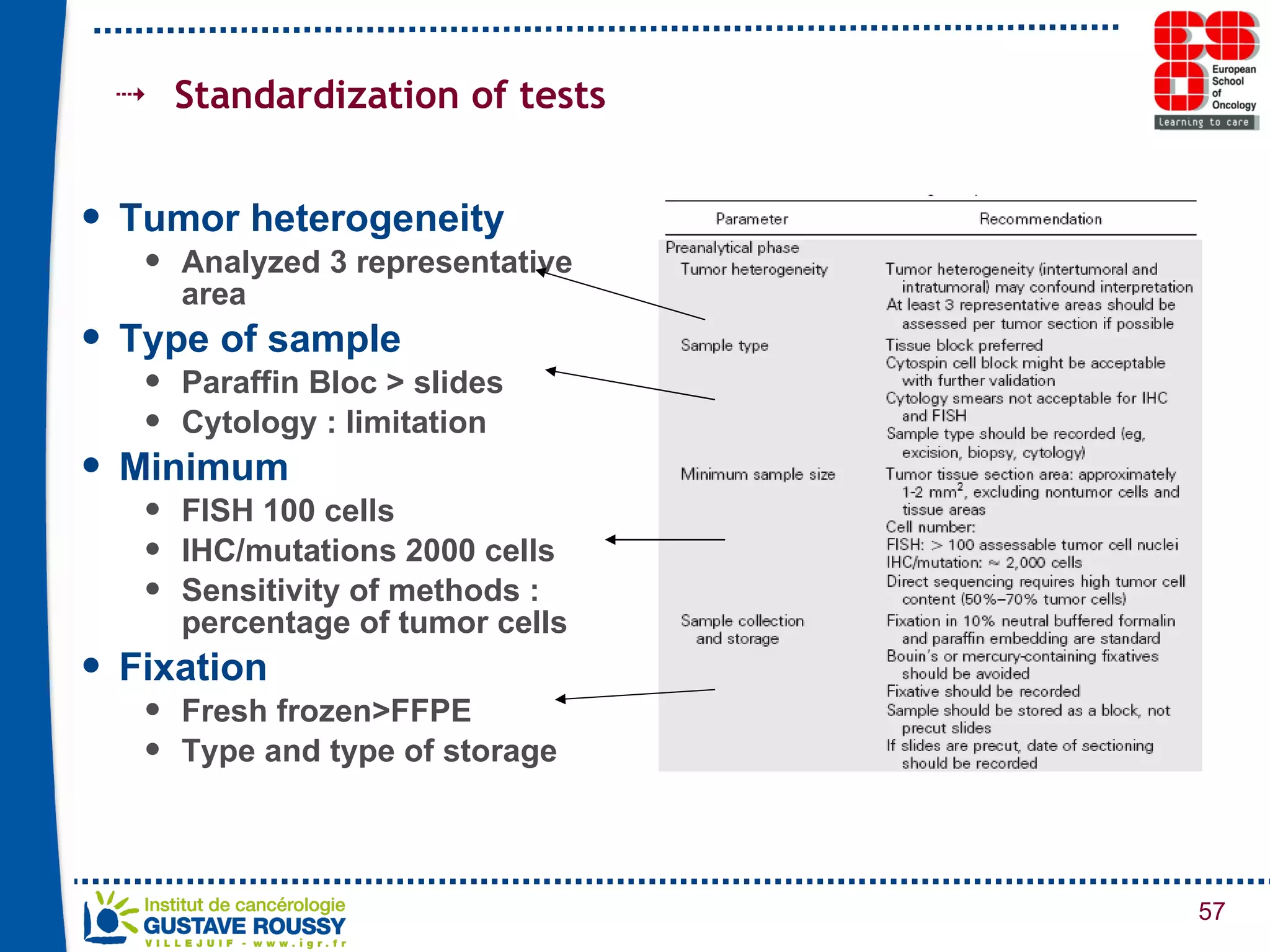
Tumor heterogeneity Analyzed 3 representative area Type of sample Paraffin Bloc > slides Cytology : limitation Minimum FISH 100 cells IHC/mutations 2000 cells Sensitivity of methods : percentage of tumor cells Fixation Fresh frozen>FFPE Type and type of storage Standardization of tests
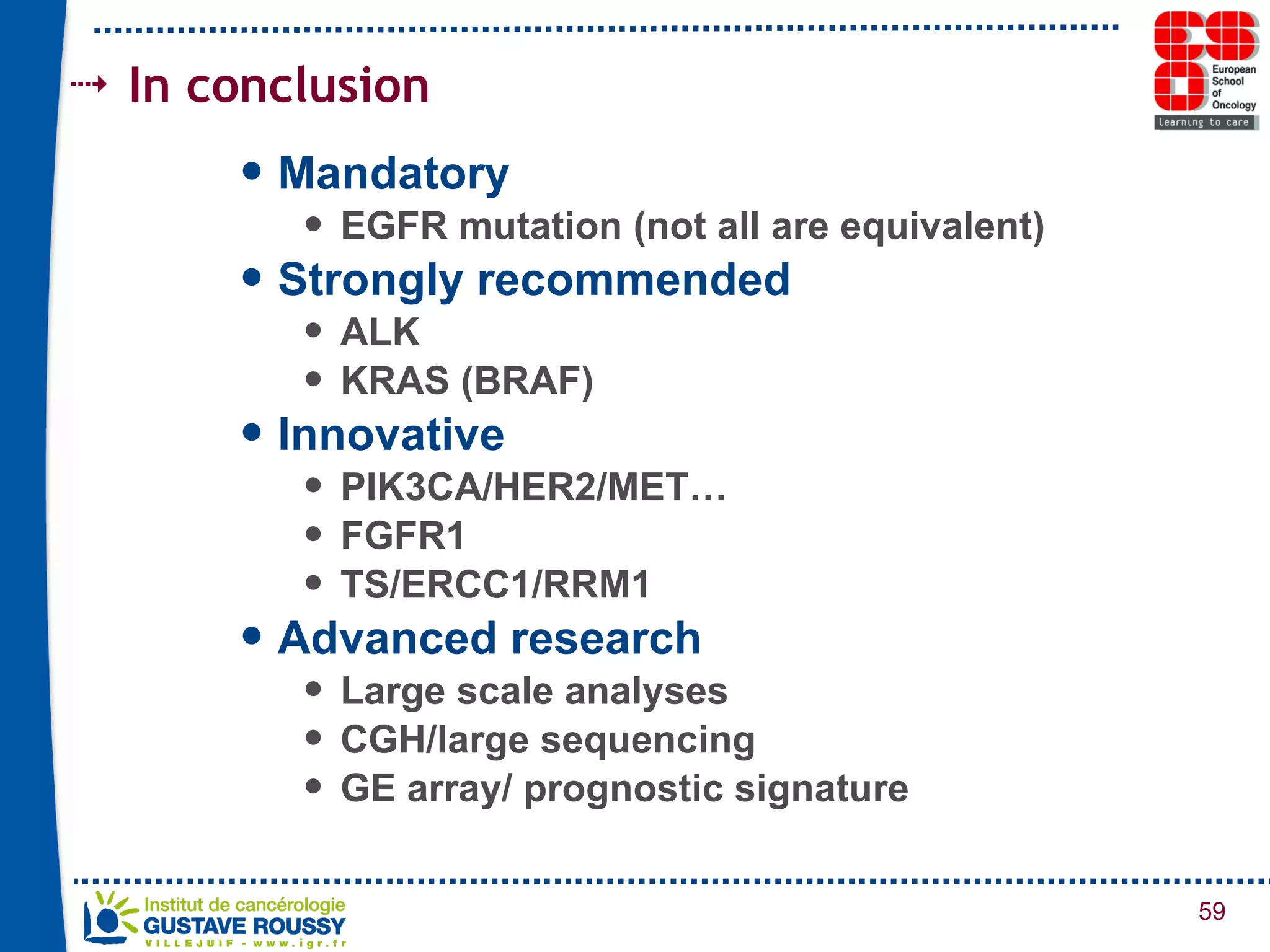
In conclusion Mandatory  EGFR mutation (not all are equivalent) Strongly recommended ALK KRAS (BRAF) Innovative PIK3CA/HER2/MET… FGFR1 TS/ERCC1/RRM1 Advanced research Large scale analyses CGH/large sequencing GE array/ prognostic signature
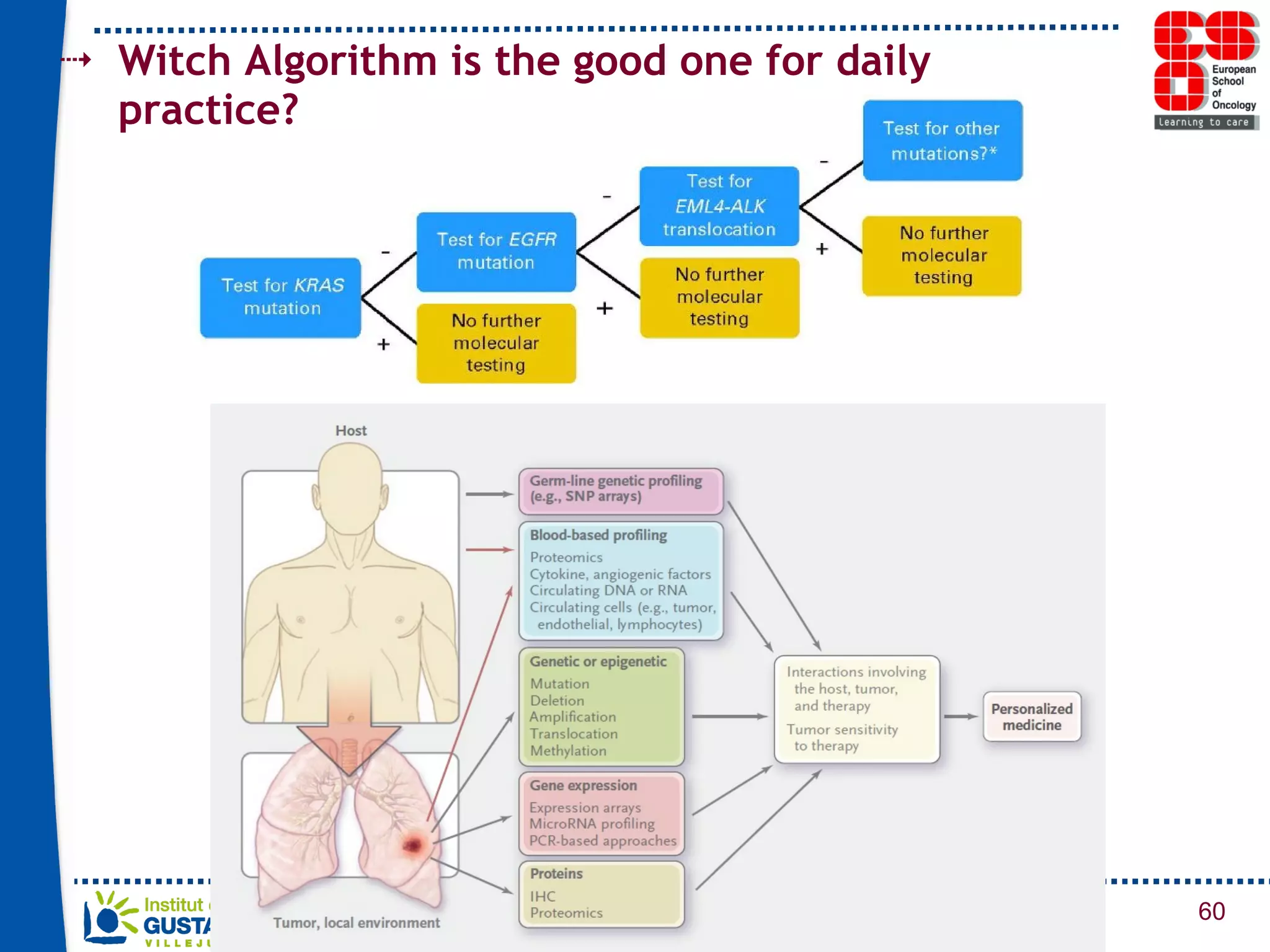
Witch Algorithm is the good one for daily practice?
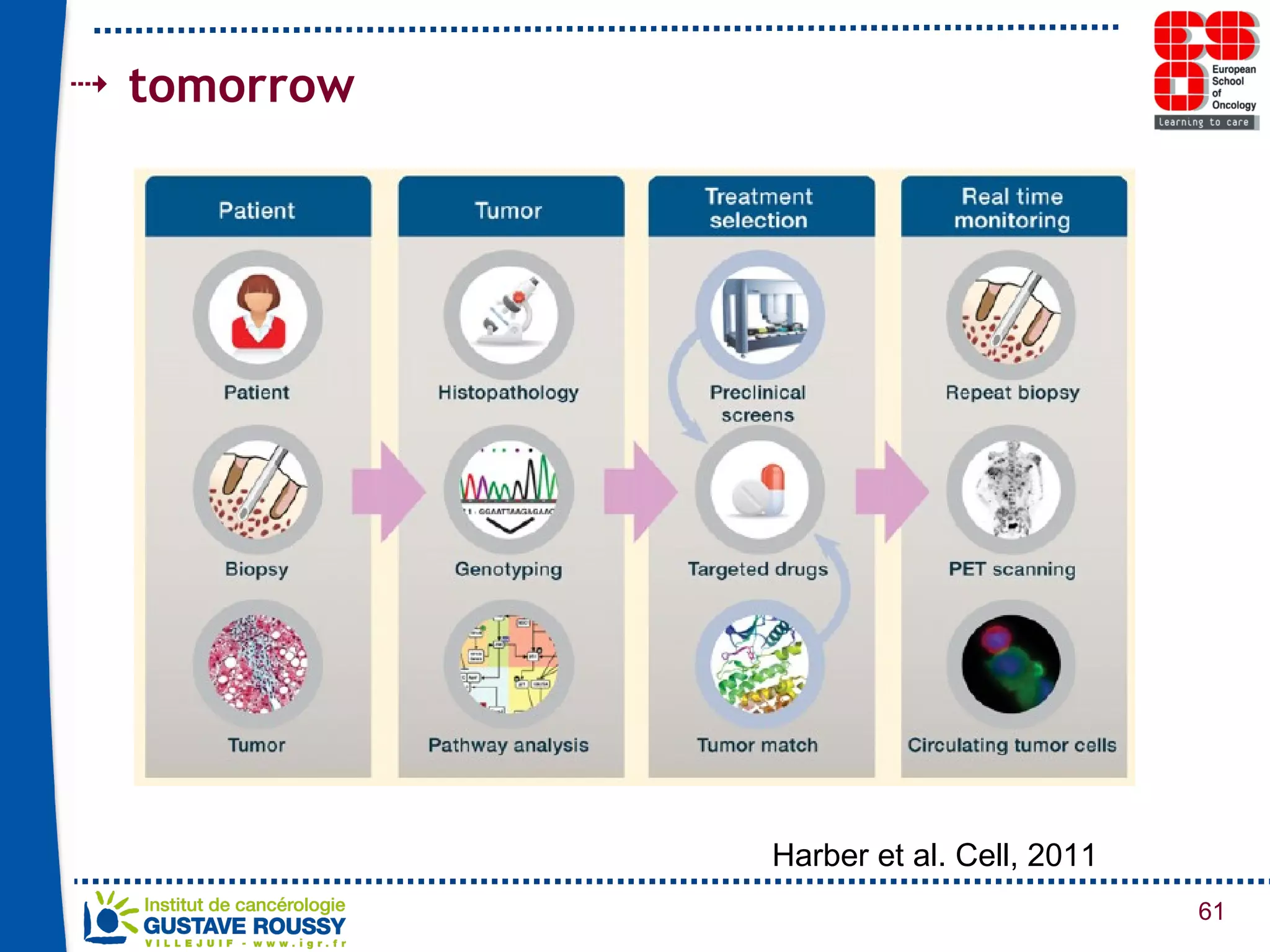
tomorrow Harber et al. Cell, 2011
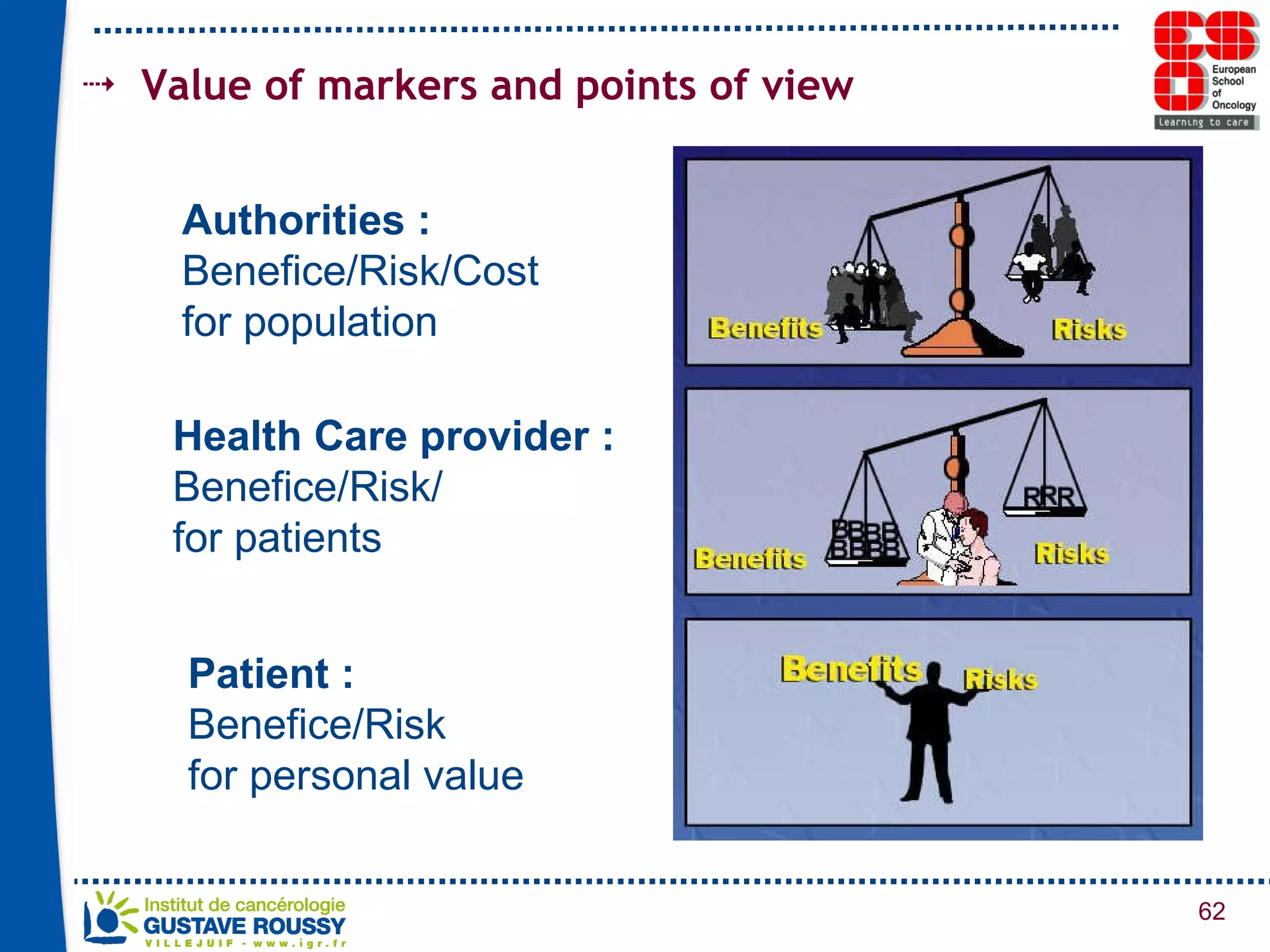
Value of markers and points of view Authorities : Benefice/Risk/Cost for population Health Care provider : Benefice/Risk/ for patients Patient : Benefice/Risk for personal value

Gene Profiling in Clinical Oncology - Slide 4 - L. Lacroix - New markers to define NSCLC and the potential of genomics (part 1)

  • 1.
    Gene Profiling inClinical Oncology 8-9 April 2011 Viareggio, Italy New markers to define NSCLC and the potential of genomics L.Lacroix PharmD PhD Institut Gustave Roussy, Villejuif, FR Friday, 8 April 2011
  • 2.
    Lung cancer Males Females Current smokers in France IARC 2008; INSERM 2007 Sun S et al, Nature Can Rev 2007 32 % 21% 15 Millions people CANCER France Europe World Incidence Mortality Prevalence 320 000 144 000 800 000 2 600 000 1 600 000 8 000 000 12 000 000 7 600 000 28 000 000
  • 3.
    What is lungcancer ? The old perception Clinical parameters Anatomo Histological parameters Histological microscopic parameters
  • 4.
    Patient background heterogeneityTumor molecular heterogeneity Cancer is a gene disease
  • 5.
    What we docurrently… Identify patients in need of treatment Identify more effective therapeutic opportunities tailored to the individual patient The Challenge…… Who to treat? How to treat?
  • 6.
    Goals of tailoringtherapy according to predictive markers Other treatments Gandara R, et al. J Clin Oncol, 2007: Abst 7500 Responders with standard therapy Non responders Toxicity Patients with same diagnosis Improve therapy
  • 7.
    Deciphering Hanahan,Weineberg Cell 2011
  • 8.
    Deciphering Hanahan,Weineberg Cell 2011
  • 9.
    Several possibility toanalyze Gene abnormalities simplex gene analysis (PCR/sanger sequencing/IHC), multiplex gene analysis (GE microarray/CGHa/MassiveSequencing). Proteomic Mass Spec. RPPA, Antibody µA, TMA Structural Genomic (Copies Nb or Structure) CGH µA; methylation µA, Sequencing approach Functional Genomic GE µA ; Q-PCR
  • 10.
    Significantly mutated pathwaysin adenocarcinomas of the lung Ding et al. Nature 455, 1069, 2008
  • 11.
    NSCLC key mutationsf. treatment
  • 12.
    EGFR HerbstNJEM 2008 gefitinib erlotinib
  • 13.
    EGFR – TKI: History Description of EGFR mutation 2000 2002 2004 2006 2008 2010 Trial results EGFR Mutations Gefitinib approval restricted to EGFR mutation 1 st large phase III trial with selected population - IPASS Phase II erlotinib / gefitinib 1st phase III trial - BR21 Erlotinib approval 2/3 rd line
  • 14.
    EGFR mutations Activatingmutation 10% of caucasians Exon 19 in-frame deletions (45%) L858R missence mutation (45%) Less frequent mutation (10%) in exons 18 to 21 Herbst NJEM 2008
  • 15.
    Lynch et al.NEJM Pao et al. PNAS In vitro “EGFR mutation=TKI sensitivity” Weinberg, book 2006
  • 16.
    Mutations FISH Hirsch,J Clin Oncol 2006 Response biomarkers
  • 17.
    Erlotinib & gefitinibinhibit EGFR Mitsudomi et al, IASLC 2007, Abstract Mutations EGFR and response (N=1335)
  • 18.
    IPASS study (Mok TS et al. NEJM 2009)
  • 19.
    McDermott, U. etal. J Clin Oncol; 27:5650-5659 2009 Mechanisms of EGFR Inhibitor Resistance Mut
  • 20.
    Mechanisms of EGFRInhibitor Resistance T790M mutation (exon20)
  • 21.
    Engelmann et al.2006 Bean et al. PNAS 2007 In resistant tumors 9/43 (21%) Met amplification 20/43 (47%) T790M (4 with Both ) (In Naïve tumor 2/62 (3%) Met Amp and 0/62 T790M )
  • 22.
    Not all mutationsare equivalent sensitivity / primary resistance / secondary resistance Sharma et al. Nat Rev Cancer 2007 http:// www.somaticmutations-egfr.info /
  • 23.
    EGFR TKI andKRAS mutation Sun S et al, Nature Can Rev 2007 Ding et al, Nature 2008 MUT WT KRAS mutated patient = EGFR WT = worth pronostic
  • 24.
    KRAS mutation =less responses to TKI CR + PR SD + PD Sun S et al, Nature reviews cancer 2007 R NR
  • 25.
    KRAS mutations KRAS= predictor of lack of EGFR TKI benefit KRAS should not be used in CT decision algorithm Therapeutics targeting KRAS Farnesyltransferase inhibitor (tipifarnib/lonafarnib) RAF inhibitors (sorafenib/plexicon4032…) MEK inhibitors (AZD6244/RO5126766/ GSK 1120212 …) Loriot S et al, Nature Rev Clin Onco 2009
  • 26.
    ALK Pathway– ALK Translocation 1. Inamura K et al. J Thorac Oncol 2008;3:13–17 2. Soda M et al. Proc Natl Acad Sci U S A 2008;105:19893–19897 Figure based on: Chiarle R et al. Nat Rev Cancer 2008;8(1):11–23 Mossé YP et al. Clin Cancer Res 2009;15(18):5609–5614; and Data on file. Pfizer Inc. *Subcellular localization of the ALK fusion gene, while likely to occur in the cytoplasm, is not confirmed. 1,2 Or ALK ALK fusion protein* Cell survival Tumor cell proliferation Anaplastic Lymphoma kinase (Chr2q) Translocation in 3-7% of ADC Main partner gene = EML4 ADC (TTF1+), (young) Man Non smoking advance tumor. Exclusive from EGFR/KRAS Inversion Translocation
  • 27.
    FISH Assay for ALK Rearrangement AT Shaw et al. JCO 20093
  • 28.
    Crizotinib Selectivity ProfileSelectivity findings Crizotinib – ALK and c-MET inhibition at clinically relevant dose levels Crizotinib – low probability of pharmacologically relevant inhibition of any other kinase at clinically relevant dose levels Cellular selectivity on 10 of 13 relevant hits Upstate 102 kinase 13 kinase “hits” <100X selective for c-MET *The cellular kinase activities were measured using ELISA capture method Pfizer Inc. Data on file Crizotinib (PF-02341066) Kinase IC 50 (nM) mean* Selectivity ratio c-MET 8 – ALK 20 2X RON 298 34X 189 22X Axl 294 34X 322 37X Tie-2 448 52X Trk A 580 67X Trk B 399 46X Abl 1,159 166X IRK 2,887 334X Lck 2,741 283X Sky >10,000 >1,000X VEGFR2 >10,000 >1,000X PDGFR  >10,000 >1,000X
  • 29.
    Crizotinib: First-in-human/Patient TrialPart 2: Molecularly enriched cohorts (ALK and c-MET) Enrolling patients with ALK -positive NSCLC after preliminary observation of impressive activity in a few patients Data from database April 7, 2010 Data presented for 82 patients, study ongoing Part 1: Dose escalation 1 DLT: grade 3 ALT elevation 2 DLTs: grade 3 fatigue ALT = alanine aminotransferase Cohort 1 (n=3) 50 mg QD Cohort 2 (n=4) 100 mg QD Cohort 3 (n=8) 200 mg QD Cohort 4 (n=7) 200 mg BID Cohort 5 (n=6) 300 mg BID Cohort 6 (n=9) 250 mg BID MTD/RP2D
  • 30.
    Molecular analysis of EML4–ALK breakpoints Kwak et al. NEJM 2010 1500 screened=>82 pos. & treated and 77%continued after data cuttoff
  • 31.
    NSCLC Patient withALK amplification/polysomy about 5 % of amplification in our experience Few data about this point and link with therapy. Besse in progress
  • 32.
    ALK Secondary resistanceChoi et al. NEJM 2010
  • 33.
    FGFR1 : amplificationin 22% of SCC Weiss et al. Science Transla Med 2010
  • 34.
    FGFR1 inhibitor areeffective in amplified model FGFR1 the next Target for therapy in NSCLC ?? Dose dependent Growth inhibition in vitro & in vivo Apoptosis induction Weiss et al. Science Transla Med 2010
  • 35.
    Other mutations suitablefor therapies Overexpression (IHC) in 17 to 42% of ADC Amplification and Mutation in 5%-10%of ADC Inframe insersion in exon 20 Associated to Asian/ Women/ Non smoking/ADC. HER2 mutation associated to resistance to EGFR TKI but sensitive to HER2 therapies. HER2 Mutation have been reported in 2-3% of ADC HER4 Wang et al. Cancer Cell 2006
  • 36.
    Other mutations suitabletarget PIK3CA-Akt-mTor pathway Mutation in 1-5% of NSCLC Interesting target regarding drug in development (melanoma) BRAF Overexpression (IHC) of AKT1 Amplification and Mutation or PIK3CA1 1-17% of NSCLC Capuzzo et al. 2005 ; Daniele et al. 2007 Yamamoto et al. Can Res 2008
  • 37.
    Other mutations suitablefor therapies LKB1 Tumor suppressor Gene Repress mTOR Collaboration with KRAs in oncogenesis 30% of NSCLC with mutation ADC/smokers/caucasians/EGFRWT MET High expression associated to poor survival 3 % with amplification Involved in 10-20% of resistance to EGFR TKI
  • 38.
    Treatments opportunitiesMolecular alteration Frequency EGFR mutation 10% EML4-ALK translocation 3-5 % HER 2 alteration 2% PI3K mutation 2% MET amplification 1% RAS and RAF mutation 3-30% Drug Erlotinib, gefitinib New pan-HER Crizotinib Trastuzumab New Pan-HER GDC-0941; XL-147 XL-765 ; PX-866 BEZ-235; BKM120 XL184, ARQ 197 Sorafenib, GSK 1120212 AS703026, AZD 6244
  • 39.
    Molecular Biomarker inFrance in 2009 Molecular analysis – Molecular Pathology Sce 26 platforms INCa’s Somatic genetic platform Granted. New Biomarker grant for Prospective evaluation in 2011 10 000 tests expected Cancer Target Lung EGFR KRAS HER2 exon 20 BRAF PI3KCA t EML4-ALK CCR KRAS BRAF MSI Breast amplification HER2 BRCA1/2 PI3KCA / AKT1 Melanoma BRAF cKIT
  • 40.
    IGR SeqCAN Selection of Candidates Genes screening of >50 cancer driver genes Selection of about 350 sequencing systems targeting most mutated exons Covered over 90k bp. and several thousands of putative mutations.
  • 41.
    Screening Format 96amplicons of all Hot spot exons. adapted to tumors board (Lung/melanoma..) Consent of patient for use of tumor for Biomedical research IGR SeqCAN Project applications *autorisation for temporary use delivered by AFSSAPS (French drug agency) MET, AKT1, BRAF, FGFR2, FGFR3, CTNNB1, NRAS, NRAS, ERBB2, PIK3CA, STK11, PTEN, FLT3, FCGR2A, FGFR4, FGFR2PTEN, ERBB4, FGFR4, KDR, ALK, PTEN, PDPK1;PIKR1…
  • 42.
    Lung cancer evaluationin the XXIst century will have to include Large Sequencing / CGHa approaches… Ding et al. Nature 455, 1069, 2008
  • 43.
    33% unknown orunfrequent abnormalities pangenomic analysis Unknown therapeutic impact Xxx? markers (FISH/Mut°) 33% Trials 3 markers EGFR/KRAS/ALK Approval or Trials 33%
  • 44.
    DNA microarray (Gene Expression/miRNA/CGHa…) Marqueurs tumoraux PanGenomic Expression analysis
  • 45.
    First Studies inlung cancer N =Normal/ADC=Adenocarcinomas/SQ =Squamous cell Carcinomas/COIID=Carcinoïd/SMLC=small cell lung carcinomas Molecular classification in accordance to histology ADC molecular subtypes Bhattacharjee A et al. PNAS,2001 (17N,139 ADC, 21SQ, 20COIID,6SMLC) AffyU95Av2 12 600 gènes Garber ME et al. PNAS,2001 (5 N, 40ADC, 13SQ, 4LCL, 4SMCL) cDNA 24 000 gènes Beer DJ et al. Nature Medicine,2002 (10 N, 86 ADC,) AffyHuGeneFL 6 800 gènes Molecular subtypes of ADC associated to various prognostics.
  • 46.
    Metaanalysis of molecularprofiles Meta-analysis of 231 ADC (31 Stanford, 72 Michigan, and 128 Dana-Farber) Identification of molecular subtypes of ADC by comparison with gene profile of histology (BAC,SCC, LCLC). Hayes DN et al. JCO 2006 (1) ADC Bronchoïds (33% to 52% of samples), EGFR mutated15%, 75% with BAC component. Gene expression related to Cell growth, differentiation, cellular survival. (2) ADC Squamoïds (33% to 52% of samples ), EGFR mutated15%,Gene expression related to angiogenesis (HIF1a pathway), TGFb pathway and WNTsignalisation pathway (3) ADC Magnoïds (10% to 26% of samples ), 1/33 EGFR mutation, Gene expression related to inflammation, cytoskeleton, metabolism and proliferation. IHC AU et al. J.Path 2004
  • 47.
    E.g gene signatureto identified High Risq Lau et al. JCO 2009 158genes 3 Stage I Toronto dataset Stage I Duke data set Stage I Havard data set
  • 48.
    Genomic Prognosis inNSCLC Many more……need prospective Phase III validation Source Gene Signature Beer D, et al Nature Medicine, 2002 56 Gene Signature Potti A, et al NEJM, 2006 (retired 2011) Metagene Profile Lu, Y et al PLOS Medicine, 2007 64 Gene Cox Signature Lau SK, et al JCO, 2007 3 Gene Signature Chen, et al NEJM, 2007 5 Gene Tree Classification Shedden K et al Nat Med, 2008 NCI Director’s Challenge Multiple Gene Sets Tsao M, et al ASCO, 2008* 15 Gene Signature
  • 49.
    Genomic for pathwayID in NSCLC Bild et al. Nat Med2006
  • 50.
    Subramanian & SimonJNCI 2010 Chen, et al NEJM, 2007 Lau SK, et al JCO, 2007 Stg IA Stg IB Stg IA Stg IB 3 years survival among groups Validation of 5 genes and 3 genes signature on Shedden et al. large data set
  • 51.
    Mainly studies of“ biomarker development ” but not “biomarker validation ” studies that will provide adequate level of evidence. - Right selection of patients - Unbiased evaluation of accuracy - Standardized assay Prospective design (e.g CALGB-30506)
  • 52.
    Chemores Study (KI) (IGR) (INSERM) (CNIO) (EU) (INT) (NKI) (LiU) (KTH) (KUL) (TUM) (CRUK) (UNIMAN) (EGT) (EORTC) (IMM) (APHP) European study 123 NSCLC with paired normal tissu Histology : SCC (n=50) & ADC (n=57) Stage I (n=56) & II (n=81) adjuvant therapy Untreated (n=61) & Cpt treated (n=62) Large Scale Analysis Gene Expression array CGHa miRNA expression array Targeted Sequencing Analysis questions Prognostic Diagnostic Integrated analysis
  • 53.
    Limitation in realLife… Adequate Biopsies Inadequate Biopsies Squamous Cell Ca Adenocarcinoma Necrosis Fibrosis
  • 54.
    Limitation in realLife… Quality of nucleic acid FISH and/or frozen
  • 55.
    Discrepancies between theprimary tumor and its metastases even when they are synchronous Italiano Ann Oncol 2006 Gow Ann Oncol 2007 Bozzetti JTO 2008 Kalikaki BJC 2008 Gomez Roca JTO 2009 Which sample is the right one???
  • 56.
    When must bedone the sampling samples from resected NSCLC or from 1st-line metastatic biopsies The molecular portrait on diagnosis material … not predict for molecular portrait of the current disease … . is not appropriate for studying the behavior of 2nd/3rd line meta NSCLC
  • 57.
    Tumor heterogeneity Analyzed3 representative area Type of sample Paraffin Bloc > slides Cytology : limitation Minimum FISH 100 cells IHC/mutations 2000 cells Sensitivity of methods : percentage of tumor cells Fixation Fresh frozen>FFPE Type and type of storage Standardization of tests
  • 59.
    In conclusion Mandatory EGFR mutation (not all are equivalent) Strongly recommended ALK KRAS (BRAF) Innovative PIK3CA/HER2/MET… FGFR1 TS/ERCC1/RRM1 Advanced research Large scale analyses CGH/large sequencing GE array/ prognostic signature
  • 60.
    Witch Algorithm isthe good one for daily practice?
  • 61.
    tomorrow Harber etal. Cell, 2011
  • 62.
    Value of markersand points of view Authorities : Benefice/Risk/Cost for population Health Care provider : Benefice/Risk/ for patients Patient : Benefice/Risk for personal value

Editor's Notes

  • #4 10 septembre 2006
  • #5 10 septembre 2006
  • #6 10 septembre 2006
  • #7 10 septembre 2006
  • #11 10 septembre 2006
  • #31 Molecular analysis of EML4-ALK breakpoints The break-apart FISH assay detects disruption of the ALK locus but it does not confirm that EML4 is the partner fusion gene. Therefore, RT-PCR was used to analyze the exon breakpoints in 31 ALK FISH-positive cases. Using this technique, the most frequently identified genotype was exon 13 of EML4 fused to exon 20 of ALK. This was present in 12 out of 29 cases or 41%. (Note that two cases failed the analysis.) Other breakpoints included EML4 at exon 6, alternative exon 6b, exon 18, and exon 20. An EML4-ALK fusion transcript could not be identified in nine cases, suggesting that either alternative EML4 exons were involved or that EML4 was not the ALK fusion partner. Unfortunately, there were insufficient data to correlate EML4-ALK breakpoint with smoking history or response rate. One heavy smoker among the responding patients, No obvious correlation between IHC ALK expression signal (last row), ALK positivity by FISH, breakpoint and clinical outcome
  • #43 10 septembre 2006
  • #46 Les premières grosses études datent des années 2001 avec la publication de 3 grosses cohortes (Harvard_Bhattacharjee/Stanford_Garber/Michigan_Beer) Ces premières études montrent une bonne concordance entre les types histologiques (SCLC/ADC/Ep./Norm…) On note également l’existence de sous groupes moléculaires pour le ADC.
  • #47 De nombreuses études ont été publiés à partir de ré-analyse des données précédemment citées. Une métanalyses de données des ces 3 études permet de pooler tout les résultats. En comparant les profils d’expression des gènes on peut rapprocher chaque groupe d’un autre type histologique.
  • #48 De plus ces groupes présentent des pronostics différents , plus particulièrement pour les stades I/II.
  • #58 Hétérogénéité tumorale : zones de nécroses, de tissus normal et parfois tumeurs mixte (ADK+SCC ou CBNPC + CPC…) ; d’où l’importance d’une vision ‘globale’ de la tumeur Les différentes techniques ont des impératifs de ‘minimum tissulaire’ pour être réalisée. Lorsque le diagnostic est porté par cytologie, peu d’études complémentaires pourront être proposées. Le Fixateur Bouin a été beaucoup utilisé en France, il l’est de moins en moins. Il colore les tissus en jaune car il contient, en plus du formol, de l’acide picrique qui endommage l’ADN+++ et inhibe les enzymes utilisé dans les réactions de PCR. Les études de biologies moléculaires sont alors difficiles ou impossibles.