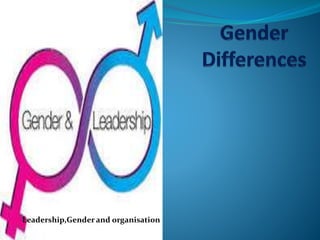
Leadership,Gender and organisation
What is Gender?
 Gender:
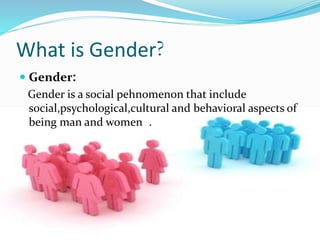
Gender is a social pehnomenon that include
social,psychological,cultural and behavioral aspects of
being man and women .
What isLeadership?
 Leadership:
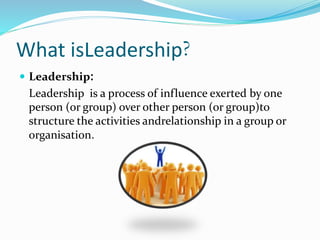
Leadership is a process of influence exerted by one
person (or group) over other person (or group)to
structure the activities andrelationship in a group or
organisation.
Main characteristics of leader
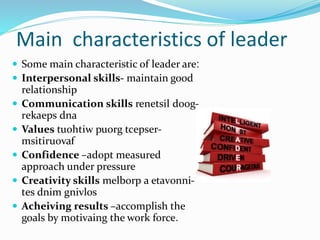
 Some main characteristic of leader are:
 Interpersonal skills- maintain good
relationship
 Communication skills -renetsil doog
rekaeps dna
 Values -tuohtiw puorg tcepser
msitiruovaf
 Confidence –adopt measured
approach under pressure
 Creativity skills -melborp a etavonni
tes dnim gnivlos
 Acheiving results –accomplish the
goals by motivaing the work force.
Impact of gender on leadership
Masculine leadership Feminine leadership
 Practices Transactional
leadership style
 More autocratic less
democratic
 Assertive
 Task oriented
 Competitive
 Passimistic
 Pragmatic
 Self –contained
 Indiviualist
 Persuasive
 Practices Transformational
leadership style
 Less autocratic more
democratic
 flexible
 People oriented
 Cooperative
 Optimistic
 Perfectionistic
 Expressive
 Collectivist
 Consensual
Effective leadership
Cooperation
Trust
Support
Empowerment
Confidence
Task oriented
Competitivenesss
Objectivity
Assertion
Causes of Gender Inequality
 Implict theories about gender
 Gender stereotypes
 Role expectations
Culture and traditions
Gender and Organization
Effectiveness
 Gender often plays an impoartant role in determining
how individuals behave in organization.
 Males and females have differents traits.When they
interact with each other mixing traits creates a strong
organization.
 Males focus on the logistics of the negotiation while
the women makes the relationship strong with the
parties and proceeds the relationships on long term
basis.
Cont....
Benefits of Gender diversity
on Organisation:
 Gender diversity means the proportion of male
and female in the work place
 Diversity is beneficial to both organizations and
the members
 Diversity brings sustantial potential benefits such
as better decision making and improved problem
solving, greater creativity and more successful
marketing to different types of customers
 Diverse organisation will be successful as long as
there is sufficient amount of communication with
in them.
Cont...
 The planning and implementing organizational syestem
and practices to manage gender diversity so that the
potential advantages of diversity are maximized while its
potential disadvantages are minimized
Challenges faced by Women
 Gender bias:
We live in a male dominated
enviornment where we give priority to
the man then women .There is
continous prejudice towards women
abilities
 Gender stereotypes views
 Work –life balance pressure
 Lack of Networking opportunities
 Lack of encouragement
Glass ceiling
 The invisible barrier that keeps women away from
progressing in their careers.
 Current ratio of women contribution in Pakistan
boardrooms is just 4.6%. So, primarily Pakistan is male-
dominating society
 Women have to face many glass ceiling barriers in
organisation.
 Glass ceiling pay :ehTegarevAyralasfonemowni
noitasinagroerewsselnahtegarevayralasfonem.
 Effect of Glass Ceiling: Example,Hina shahid full time
investment banker. She said that she feels very
disappointed because her work is not appreciated and
paid-off . Resultantly, she resign from job .
Conclusion
 Women work collaborative because every man is part
of whole.On the other side man work independently
without the assistance of others. So, we deduce that
women tend to be more supportive manager than man
but she has to face so many challanges within
workplace. All in all: “we overestimate men and
underestimate women“

Gender differences

  • 1.
  • 2.
    What is Gender? Gender: Gender is a social pehnomenon that include social,psychological,cultural and behavioral aspects of being man and women .
  • 3.
    What isLeadership?  Leadership: Leadershipis a process of influence exerted by one person (or group) over other person (or group)to structure the activities andrelationship in a group or organisation.
  • 4.
    Main characteristics ofleader  Some main characteristic of leader are:  Interpersonal skills- maintain good relationship  Communication skills -renetsil doog rekaeps dna  Values -tuohtiw puorg tcepser msitiruovaf  Confidence –adopt measured approach under pressure  Creativity skills -melborp a etavonni tes dnim gnivlos  Acheiving results –accomplish the goals by motivaing the work force.
  • 5.
    Impact of genderon leadership Masculine leadership Feminine leadership  Practices Transactional leadership style  More autocratic less democratic  Assertive  Task oriented  Competitive  Passimistic  Pragmatic  Self –contained  Indiviualist  Persuasive  Practices Transformational leadership style  Less autocratic more democratic  flexible  People oriented  Cooperative  Optimistic  Perfectionistic  Expressive  Collectivist  Consensual
  • 6.
  • 7.
    Causes of GenderInequality  Implict theories about gender  Gender stereotypes  Role expectations Culture and traditions
  • 8.
    Gender and Organization Effectiveness Gender often plays an impoartant role in determining how individuals behave in organization.  Males and females have differents traits.When they interact with each other mixing traits creates a strong organization.  Males focus on the logistics of the negotiation while the women makes the relationship strong with the parties and proceeds the relationships on long term basis.
  • 9.
    Cont.... Benefits of Genderdiversity on Organisation:  Gender diversity means the proportion of male and female in the work place  Diversity is beneficial to both organizations and the members  Diversity brings sustantial potential benefits such as better decision making and improved problem solving, greater creativity and more successful marketing to different types of customers  Diverse organisation will be successful as long as there is sufficient amount of communication with in them.
  • 10.
    Cont...  The planningand implementing organizational syestem and practices to manage gender diversity so that the potential advantages of diversity are maximized while its potential disadvantages are minimized
  • 11.
    Challenges faced byWomen  Gender bias: We live in a male dominated enviornment where we give priority to the man then women .There is continous prejudice towards women abilities  Gender stereotypes views  Work –life balance pressure  Lack of Networking opportunities  Lack of encouragement
  • 12.
    Glass ceiling  Theinvisible barrier that keeps women away from progressing in their careers.  Current ratio of women contribution in Pakistan boardrooms is just 4.6%. So, primarily Pakistan is male- dominating society  Women have to face many glass ceiling barriers in organisation.  Glass ceiling pay :ehTegarevAyralasfonemowni noitasinagroerewsselnahtegarevayralasfonem.  Effect of Glass Ceiling: Example,Hina shahid full time investment banker. She said that she feels very disappointed because her work is not appreciated and paid-off . Resultantly, she resign from job .
  • 13.
    Conclusion  Women workcollaborative because every man is part of whole.On the other side man work independently without the assistance of others. So, we deduce that women tend to be more supportive manager than man but she has to face so many challanges within workplace. All in all: “we overestimate men and underestimate women“