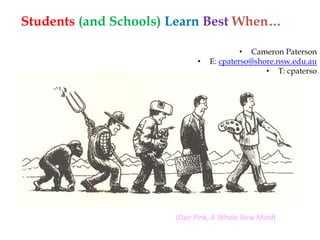




Students (and Schools) Learn Best When…Cameron Paterson
E: cpaterso@shore.nsw.edu.au
T: cpaterso(Dan Pink, A Whole New Mind)
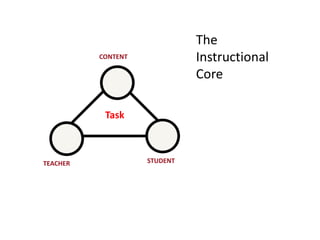
The Instructional CoreCONTENTTaskSTUDENTTEACHER
“The majority of the 20,000 tasks that make a school career are teacher specified, cognitively simple, and done either by oneself or involve listening to the monologue of an adult.”Fisher & Hiebert
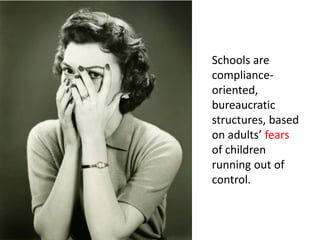
Schools are compliance-oriented, bureaucratic structures, based on adults’ fearsof children running out of control.
What is something that you understand really well?
How did you develop that understanding?
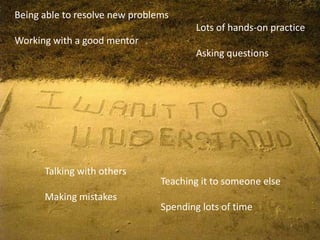
Being able to resolve new problemsWorking with a good mentorLots of hands-on practiceAsking questionsTalking with othersMaking mistakesTeaching it to someone elseSpending lots of time
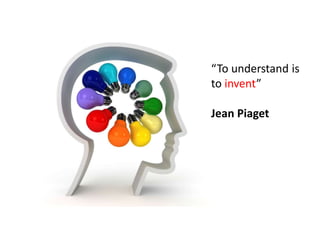
“To understand is to invent” Jean Piaget
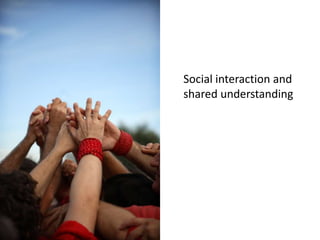
Social interaction and shared understanding
“To be confused is good. Glorify confusion.” Eleanor Duckworth
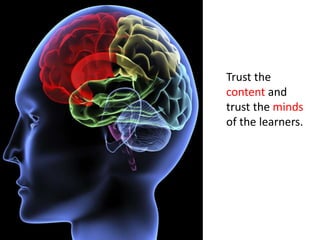
Trust the content and trust the minds of the learners.
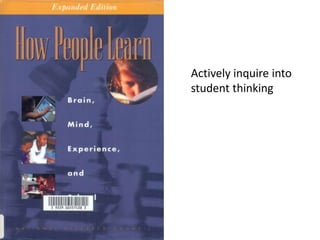
Actively inquire into student thinking
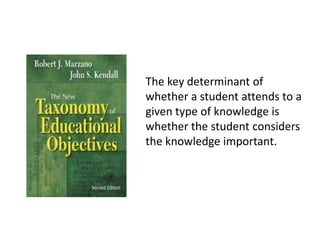
The key determinant of whether a student attends to a given type of knowledge is whether the student considers the knowledge important.
Ask them
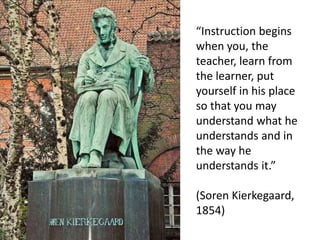
“Instruction begins when you, the teacher, learn from the learner, put yourself in his place so that you may understand what he understands and in the way he understands it.”(SorenKierkegaard, 1854)
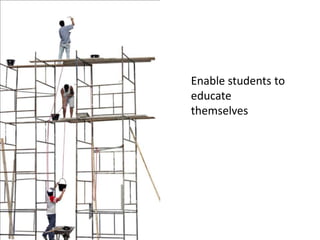
Enable students to educate themselves
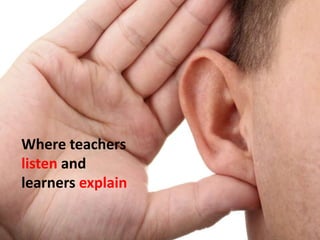
Where teachers listen and learners explain
Classroom isolation leads teachers to fall back on the ‘apprenticeship of observation’ that they undertook as school students.
Spray and praySchools persist in practices that do not work.
“Conventional forms of professional development are virtually a waste of time.”Vivian Troen & Kitty Boles
“Teachers continue to work alone in cell-like classrooms, separated from other teachers, in physical structures that resemble prisons and mental hospitals.”Vivian Troen & Kitty Boles
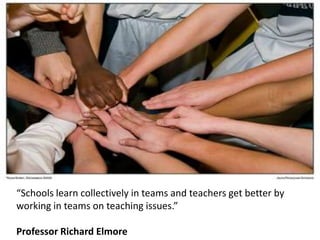
“Schools learn collectively in teamsand teachers get better by working in teams on teaching issues.”Professor Richard Elmore
“Watching most teams operate in schools is like watching Astroturf grow. “Professor Richard Elmore
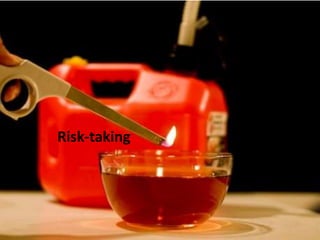
Risk-taking
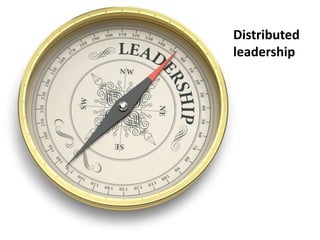
Distributed leadership
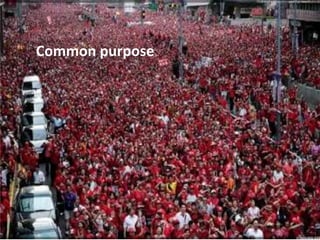
Common purpose
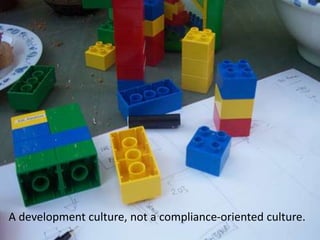
A development culture, not a compliance-oriented culture.
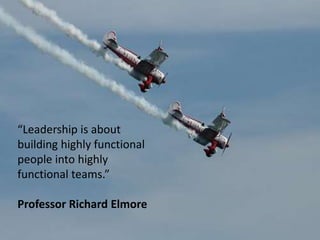
“Leadership is about building highly functional people into highly functional teams.”Professor Richard Elmore
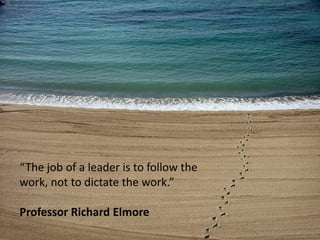
“The job of a leader is to follow the work, not to dictate the work.”Professor Richard Elmore
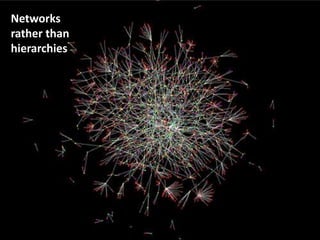
Networks rather than hierarchies

GELS 2011