Ethical Online Learning
Jesse Stommel
@Jessifer
Tools are made by people, and most (or even all) educational
technologies have pedagogies hard-coded into them in advance.
This is why it is so essential we consider them carefully and
critically—that we empty all our LEGOs onto the table and sift
through them before we start building. Some tools are decidedly
less innocuous than others.
Not all tools can be hacked to good use.
The Turnitin End-User Agreement is a blur of words and phrases
separated by commas, of which ‘royalty-free, perpetual, world-wide,
irrevocable’ are but a scary few.The rat-a-tat-tat of nouns, verbs,
and adjectives is so bewildering that almost anyone would blindly
click ‘agree’ just to avoid the deluge of legalese. But these words
are serious and their ramifications pedagogical.
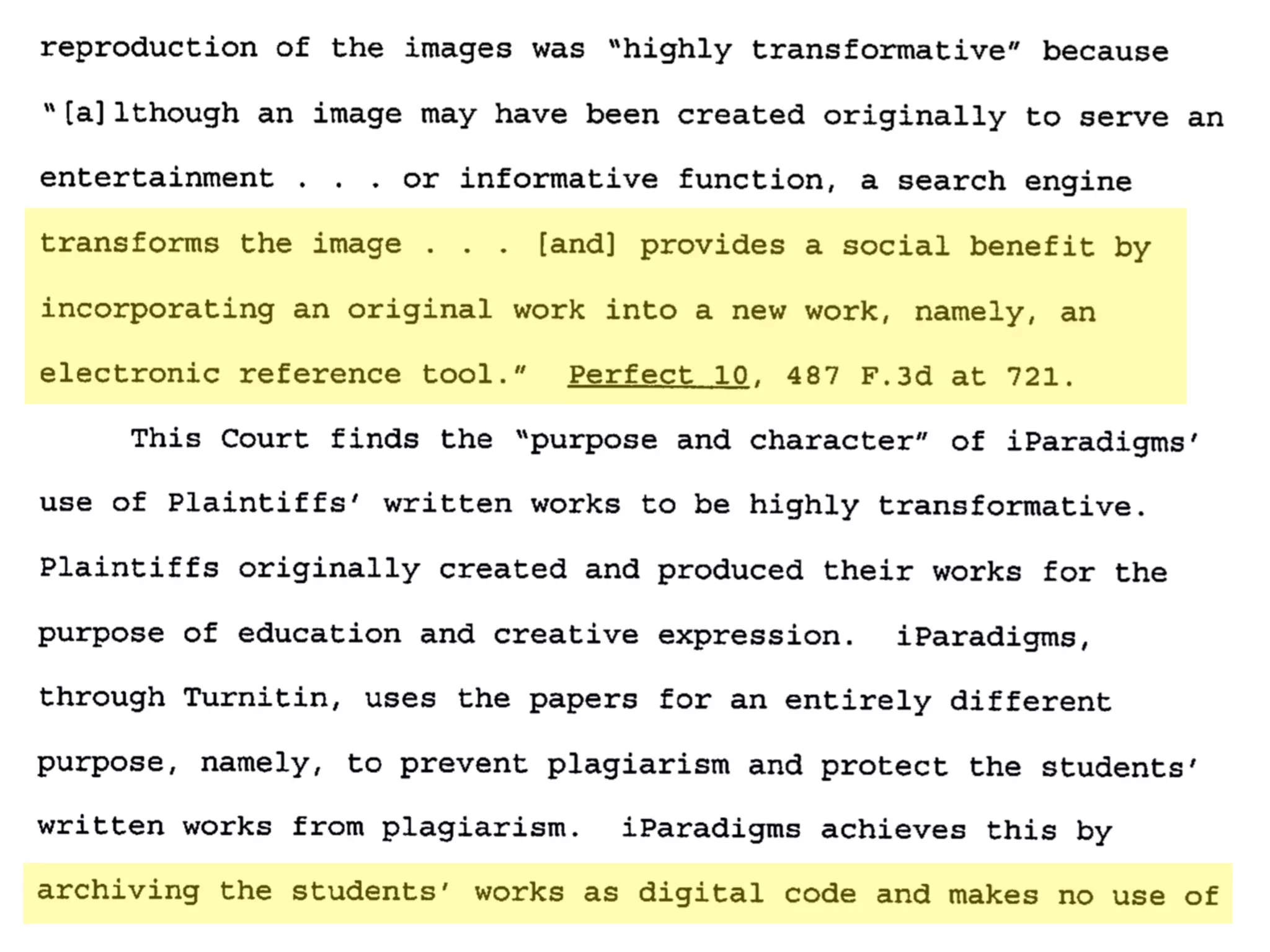
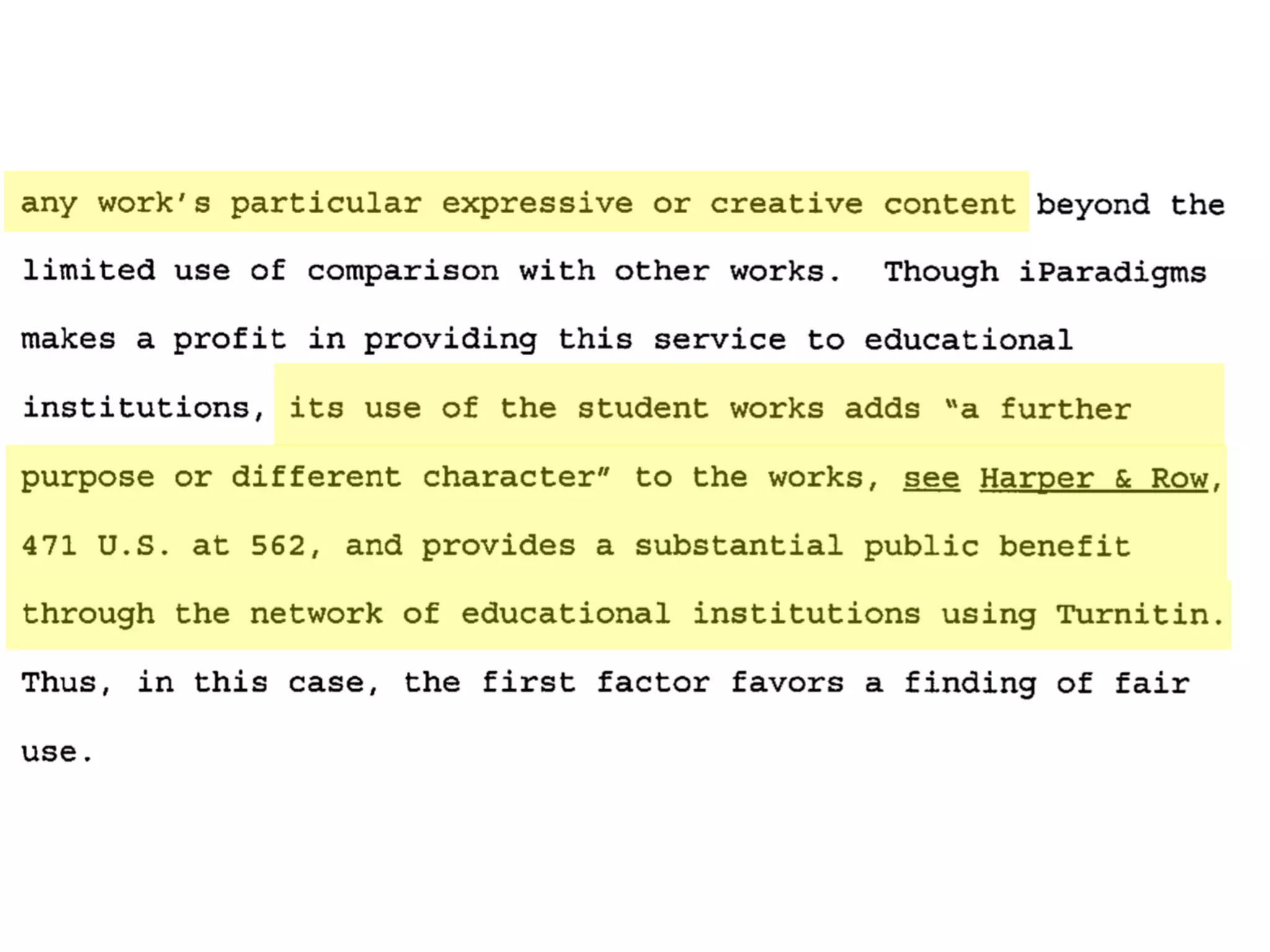
According to the company’s website,Turnitin has a “non-exclusive,
royalty-free, perpetual, worldwide, irrevocable license” to more
than 734 million student papers.
“Many of our colleagues are entrenched in an agonistic stance
toward students in the aggregate: students are lazy, illiterate, anti-
intellectual cheaters who must prove their worth to the instructor.
Turnitin and its automated assessment of student writing is a tool
for that proof.”
~ Rebecca Moore Howard
Remote proctoring tools can’t ensure that students will not cheat.
Turnitin won’t make students better writers.TheVLE can’t ensure
that students will learn.All will, however, ensure that students feel
more thoroughly policed.All will ensure that students (and
teachers) are more compliant.
When ourVLE or LMS reports how many minutes students have
spent accessing a course, what do we do with that information?
What will we do with the information when we also know the
heart rate of students as they’re accessing (or not accessing) a
course? How can teachers see courses as more than just a series
of tasks and see students as more than just rows in a spreadsheet?
“Unless the mass of workers are to be blind cogs and pinions in
the apparatus they employ, they must have some understanding of
the physical and social facts behind and ahead of the material and
appliances with which they are dealing.”
~ John Dewey, Schools ofTo-Morrow
The development and dissemination of educational technology has
always had political, as well as practical, ramifications.
The first mistake of many online programs is that they try to
replicate something we do in face-to-face classes, mapping the
(sometimes pedagogically-sound, sometimes bizarre) traditions of
on-ground institutions onto digital space.
We need to recognize that online learning uses a different
platform, builds community in different ways, demands different
pedagogies, has a different economy, functions at different scales,
and requires different choices regarding curriculum than does on-
ground education. Even where the same goal is desired, very
different methods must be used to reach that goal.
“I would not like to be a man or a woman if the impossibility of
changing the world were something as obvious as that Saturdays
precede Sundays. I would not like to be a woman or a man if the
impossibility of changing the world were objective reality, one
purely realized and around which nothing could be discussed.”
~ Paulo Freire, Pedagogy of Indignation
When we teach an on-ground class, the room in which we teach
has been built for us in advance. Usually, it’s in a school, on a
campus, has chairs, desks, tables, windows, walls, a door. Sometimes
there’s a computer, a projector, a screen. Hopefully, the desks and
chairs are moveable and there are chalkboards on multiple walls.
When we enter these rooms, we still make intentional design
decisions. How will the chairs be arranged? What direction will we
face? Will the room have a front? Will we re-arrange from day to
day or maintain a consistent configuration?
Letting the default configuration of a classroom dictate how we’ll
teach is to allow the bureaucratic trappings of schooling subsume
our pedagogies.
Educational campuses have libraries, coffee shops, cafeterias, quads,
lawns, amphitheaters, stadiums, hallways, student lounges, trees,
park benches, and fountains.Ample space for rallies, study-groups,
conversation, debate, student clubs, and special events. Few
institutions pay much attention to re-creating these spaces online.
When we teach online, we have to build the course and also the
classroom, the quad, the fountain, the field, the student lounge, the
park benches.
A good virtual learning environment is a tool that can help with
this process; however, we should never let its design decisions —
its architecture — dictate our pedagogies.
Rather than simply transplanting the Lego castle of education from
one platform to another, we need to start dismantling it piece by
piece, examining those pieces and how they fit together. Only then
can we reassemble the pieces thoughtfully inside the digital
environment. Nothing can be taken for granted.The course.The
degree.Accreditation.Assessment. Rubrics. Peer review.The power
dynamics of teachers and students.
What do we need to break and how do we rebuild?
The internet didn’t invent collaboration or solve the problems of
institutional access, but it does allow for new forms of
collaboration and does bring educational opportunities to new
audiences. (In my own online classes, I’ve taught housebound
students, new mothers in rural areas hundreds of miles from a
university, and soldiers stationed abroad.)
OUR ASSUMPTIONS
Technology is a pedagogical decision. Supporting innovative digital
pedagogies means hiring and creating a culture for the
development of digital pedagogues. Institutions shouldn’t
outsource online learning as a substitute for developing internal
expertise in and discussion about online learning.
EDTECH AND THE FETISHIZATION OF TOOLS
The best online learning should engage us in an immediate and
physical way. Learning shouldn’t happen entirely at a desk.The best
online courses — the best courses of all types — ask students to
do work in the world (outside the classroom and outside the
virtual learning environment).
TIDY ONLINE / ON-GROUND DISTINCTIONS
The semester.The quarter.The credit-hour.The module.We need
to devise learning activities that take organic (and less arbitrary)
shapes in space and time.We need to recognize that the best
learning happens not inside courses but between them.
THE COURSE
Learning can not be reduced to or packaged as a series of static,
self-contained content. Rather, learning happens in tangents,
diversions, interruptions — in a series of clauses (parentheticals)
… and gaps.
At many institutions there’s a problematic divide between those
building online courses and those teaching them.The voices of
authority should proliferate not congeal. Instructional designers
are teachers.Authors are teachers. Students are teachers.
AUTHORITY
“Students come to learning, to those of us lucky to be their
teachers, with their stories.They hope for opportunities to share
them, and they hope too that we will understand the truth of their
experiences.”
~ Lora Taub,“Ethical Online Learning: Critical Pedagogy and Social Justice”
We need to give students reasons less banal than points to do the
work of learning. For example, I tell the students in my classes,
“You should consider this course a ‘busy-work-free zone.’ If an
assignment does not feel productive, we can find ways to modify,
remix, or repurpose the instructions.”
ASSESSMENT
“We’re so obsessed with assessment we’re missing the fact that, in
the real world, excitement and joy and challenge are real
motivators of learning and, indeed, success.”
~ Cathy N. Davidson
I say ignore “best practices” or “quality assurance” measures that
encourage us to drift away from the kind of trust and risk that
make learning ecstatic.The quality of learning is what we should
concern ourselves with, not whether we meet expectations too
often set before the arrival of students to our courses.As Sean
Michael Morris remarks, too many best practices,“guard us against
the incalculable difference of students we can’t see.”
QUALITY
Don’t wield outcomes like a weapon. Online learning activities
should not be overly designed or too-strictly standardized.
Improvisation, play, and experimentation are essential to learning.
OUTCOMES
These two words are, for me, fundamentally at odds.We need to
encourage sharing, remixing, and productive and creative forms of
plagiarism.This is how children learn language, and we don’t police
their plagiarisms.
INTELLECTUAL PROPERTY
Community and dialogue shouldn’t be an accident or by-product
of a course.They should be the course.
CONTENT
Photo by flickr user Fio
In “Explaining Rhizomatic Learning to My FiveYear Old,” Dave
Cormier writes,“We shouldn’t decide beforehand what we’re
going to learn.” My own favorite learning outcome, to have an
epiphany, is literally impossible to anticipate, impossible to
objectively assess.
Intellectual elitism. Anti-intellectualism. Gatekeeping. Online
learning should be more friendly, more collaborative, more open,
and more accepting.We need to create pedagogies of care online.
COMPETITION
Educators at every level must begin by listening to and trusting
students.Teachers stand to learn more from students about online
learning than we could ever teach. Many students come to an
online or hybrid class knowing very well how to learn online, even
if they don’t always know how to learn in an online course.
It’s often our failure to know as well how to learn online that
leads to many of the design mistakes in this generation of online
courses. Recognizing this demands a culture-shift — demands that
we acknowledge the diverse expertise of students as sometimes
tantamount to our own.

Ethical Online Learning

  • 1.
  • 2.
    Tools are madeby people, and most (or even all) educational technologies have pedagogies hard-coded into them in advance. This is why it is so essential we consider them carefully and critically—that we empty all our LEGOs onto the table and sift through them before we start building. Some tools are decidedly less innocuous than others.
  • 3.
    Not all toolscan be hacked to good use.
  • 5.
    The Turnitin End-UserAgreement is a blur of words and phrases separated by commas, of which ‘royalty-free, perpetual, world-wide, irrevocable’ are but a scary few.The rat-a-tat-tat of nouns, verbs, and adjectives is so bewildering that almost anyone would blindly click ‘agree’ just to avoid the deluge of legalese. But these words are serious and their ramifications pedagogical.
  • 11.
    According to thecompany’s website,Turnitin has a “non-exclusive, royalty-free, perpetual, worldwide, irrevocable license” to more than 734 million student papers.
  • 12.
    “Many of ourcolleagues are entrenched in an agonistic stance toward students in the aggregate: students are lazy, illiterate, anti- intellectual cheaters who must prove their worth to the instructor. Turnitin and its automated assessment of student writing is a tool for that proof.” ~ Rebecca Moore Howard
  • 13.
    Remote proctoring toolscan’t ensure that students will not cheat. Turnitin won’t make students better writers.TheVLE can’t ensure that students will learn.All will, however, ensure that students feel more thoroughly policed.All will ensure that students (and teachers) are more compliant.
  • 14.
    When ourVLE orLMS reports how many minutes students have spent accessing a course, what do we do with that information? What will we do with the information when we also know the heart rate of students as they’re accessing (or not accessing) a course? How can teachers see courses as more than just a series of tasks and see students as more than just rows in a spreadsheet?
  • 15.
    “Unless the massof workers are to be blind cogs and pinions in the apparatus they employ, they must have some understanding of the physical and social facts behind and ahead of the material and appliances with which they are dealing.” ~ John Dewey, Schools ofTo-Morrow
  • 16.
    The development anddissemination of educational technology has always had political, as well as practical, ramifications.
  • 17.
    The first mistake ofmany online programs is that they try to replicate something we do in face-to-face classes, mapping the (sometimes pedagogically-sound, sometimes bizarre) traditions of on-ground institutions onto digital space.
  • 18.
    We need torecognize that online learning uses a different platform, builds community in different ways, demands different pedagogies, has a different economy, functions at different scales, and requires different choices regarding curriculum than does on- ground education. Even where the same goal is desired, very different methods must be used to reach that goal.
  • 19.
    “I would notlike to be a man or a woman if the impossibility of changing the world were something as obvious as that Saturdays precede Sundays. I would not like to be a woman or a man if the impossibility of changing the world were objective reality, one purely realized and around which nothing could be discussed.” ~ Paulo Freire, Pedagogy of Indignation
  • 20.
    When we teachan on-ground class, the room in which we teach has been built for us in advance. Usually, it’s in a school, on a campus, has chairs, desks, tables, windows, walls, a door. Sometimes there’s a computer, a projector, a screen. Hopefully, the desks and chairs are moveable and there are chalkboards on multiple walls. When we enter these rooms, we still make intentional design decisions. How will the chairs be arranged? What direction will we face? Will the room have a front? Will we re-arrange from day to day or maintain a consistent configuration?
  • 21.
    Letting the defaultconfiguration of a classroom dictate how we’ll teach is to allow the bureaucratic trappings of schooling subsume our pedagogies.
  • 22.
    Educational campuses havelibraries, coffee shops, cafeterias, quads, lawns, amphitheaters, stadiums, hallways, student lounges, trees, park benches, and fountains.Ample space for rallies, study-groups, conversation, debate, student clubs, and special events. Few institutions pay much attention to re-creating these spaces online.
  • 23.
    When we teachonline, we have to build the course and also the classroom, the quad, the fountain, the field, the student lounge, the park benches.
  • 24.
    A good virtuallearning environment is a tool that can help with this process; however, we should never let its design decisions — its architecture — dictate our pedagogies.
  • 25.
    Rather than simplytransplanting the Lego castle of education from one platform to another, we need to start dismantling it piece by piece, examining those pieces and how they fit together. Only then can we reassemble the pieces thoughtfully inside the digital environment. Nothing can be taken for granted.The course.The degree.Accreditation.Assessment. Rubrics. Peer review.The power dynamics of teachers and students.
  • 26.
    What do weneed to break and how do we rebuild?
  • 27.
    The internet didn’tinvent collaboration or solve the problems of institutional access, but it does allow for new forms of collaboration and does bring educational opportunities to new audiences. (In my own online classes, I’ve taught housebound students, new mothers in rural areas hundreds of miles from a university, and soldiers stationed abroad.) OUR ASSUMPTIONS
  • 28.
    Technology is apedagogical decision. Supporting innovative digital pedagogies means hiring and creating a culture for the development of digital pedagogues. Institutions shouldn’t outsource online learning as a substitute for developing internal expertise in and discussion about online learning. EDTECH AND THE FETISHIZATION OF TOOLS
  • 29.
    The best onlinelearning should engage us in an immediate and physical way. Learning shouldn’t happen entirely at a desk.The best online courses — the best courses of all types — ask students to do work in the world (outside the classroom and outside the virtual learning environment). TIDY ONLINE / ON-GROUND DISTINCTIONS
  • 30.
    The semester.The quarter.Thecredit-hour.The module.We need to devise learning activities that take organic (and less arbitrary) shapes in space and time.We need to recognize that the best learning happens not inside courses but between them. THE COURSE
  • 31.
    Learning can notbe reduced to or packaged as a series of static, self-contained content. Rather, learning happens in tangents, diversions, interruptions — in a series of clauses (parentheticals) … and gaps.
  • 32.
    At many institutionsthere’s a problematic divide between those building online courses and those teaching them.The voices of authority should proliferate not congeal. Instructional designers are teachers.Authors are teachers. Students are teachers. AUTHORITY
  • 33.
    “Students come tolearning, to those of us lucky to be their teachers, with their stories.They hope for opportunities to share them, and they hope too that we will understand the truth of their experiences.” ~ Lora Taub,“Ethical Online Learning: Critical Pedagogy and Social Justice”
  • 34.
    We need togive students reasons less banal than points to do the work of learning. For example, I tell the students in my classes, “You should consider this course a ‘busy-work-free zone.’ If an assignment does not feel productive, we can find ways to modify, remix, or repurpose the instructions.” ASSESSMENT
  • 35.
    “We’re so obsessedwith assessment we’re missing the fact that, in the real world, excitement and joy and challenge are real motivators of learning and, indeed, success.” ~ Cathy N. Davidson
  • 36.
    I say ignore“best practices” or “quality assurance” measures that encourage us to drift away from the kind of trust and risk that make learning ecstatic.The quality of learning is what we should concern ourselves with, not whether we meet expectations too often set before the arrival of students to our courses.As Sean Michael Morris remarks, too many best practices,“guard us against the incalculable difference of students we can’t see.” QUALITY
  • 37.
    Don’t wield outcomeslike a weapon. Online learning activities should not be overly designed or too-strictly standardized. Improvisation, play, and experimentation are essential to learning. OUTCOMES
  • 38.
    These two wordsare, for me, fundamentally at odds.We need to encourage sharing, remixing, and productive and creative forms of plagiarism.This is how children learn language, and we don’t police their plagiarisms. INTELLECTUAL PROPERTY
  • 39.
    Community and dialogueshouldn’t be an accident or by-product of a course.They should be the course. CONTENT
  • 40.
    Photo by flickruser Fio In “Explaining Rhizomatic Learning to My FiveYear Old,” Dave Cormier writes,“We shouldn’t decide beforehand what we’re going to learn.” My own favorite learning outcome, to have an epiphany, is literally impossible to anticipate, impossible to objectively assess.
  • 41.
    Intellectual elitism. Anti-intellectualism. Gatekeeping. Online learningshould be more friendly, more collaborative, more open, and more accepting.We need to create pedagogies of care online. COMPETITION
  • 42.
    Educators at everylevel must begin by listening to and trusting students.Teachers stand to learn more from students about online learning than we could ever teach. Many students come to an online or hybrid class knowing very well how to learn online, even if they don’t always know how to learn in an online course.
  • 43.
    It’s often our failure toknow as well how to learn online that leads to many of the design mistakes in this generation of online courses. Recognizing this demands a culture-shift — demands that we acknowledge the diverse expertise of students as sometimes tantamount to our own.