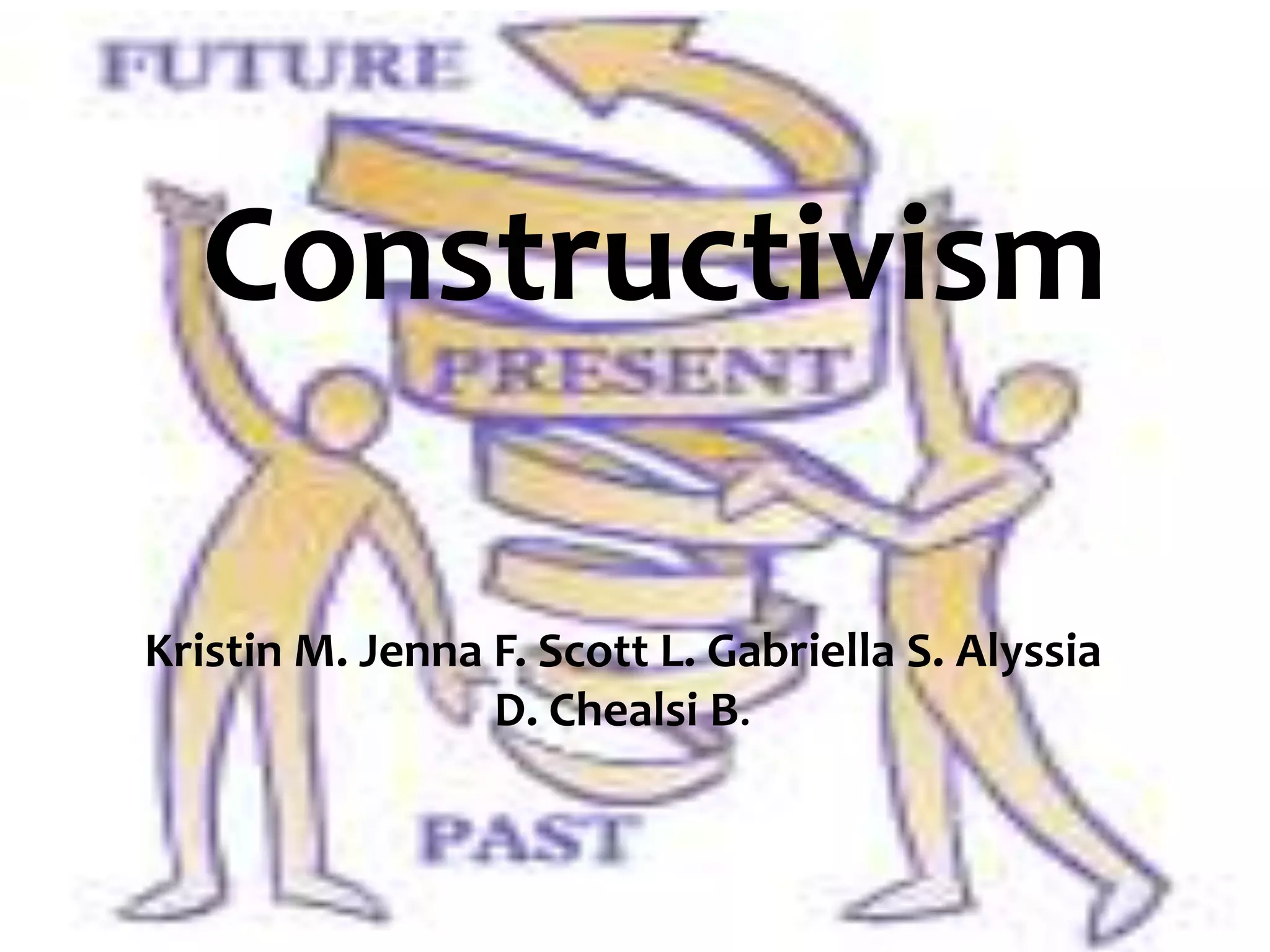
Constructivism

Kristin M. Jenna F. Scott L. Gabriella S. Alyssia
                 D. Chealsi B.
What Is Constructivism?


Constructivism is a learning theory that says that
people construct their own understanding and
knowledge of the world, through experiencing things
and reflecting on those experiences.
Key People

Jean Piaget
 Psychologist who developed the cognitive learning
 theory
 Believed children were constructing new
 knowledge as they moved through different
 cognitive stages
 Defined four cognitive stages :
 Sensorimotor, Preoperational, concrete
 operational, and formal operational.
Key People

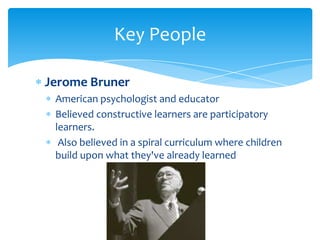
Jerome Bruner
 American psychologist and educator
 Believed constructive learners are participatory
 learners.
  Also believed in a spiral curriculum where children
 build upon what they've already learned
Key People


-Lev Vygotsky
 Russian educational psychologist
 Believed learning was significantly influenced by
 social development
 Proposed that children have a zone of proximal
 development
 Also proposed scaffolding and anchored instruction
Key People

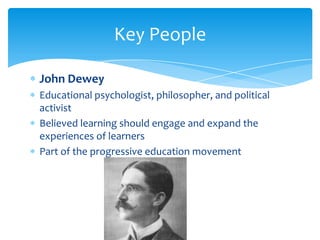
John Dewey
Educational psychologist, philosopher, and political
activist
Believed learning should engage and expand the
experiences of learners
Part of the progressive education movement
Key Points

Constructivism is a type of learning in which the learner
forms, or constructs, much of what he or she learns or
comprehends.
Constructivism focuses on interactive student-centered
instruction rather than traditional teacher-centered
instruction.
Constructionists believe learning is an
active, contextualized process of constructing
knowledge rather than acquiring it.
The learner is not a blank slate ... brings past
experiences and culture to new situations.
Classroom Implications

What the teacher does under this theory.
  Constructivist teachers encourage:
  Students to assess how the activity is helping them gain understanding.
  Questions their:
  Strategies
  Themselves
     Through doing this, the student learns how to learn and they become
     experts at doing so.
  Constructivism modifies the teacher's role so that they can help students
  construct knowledge and understand instead of just listing facts.
  Problem solving & Inquiry-based learning activities
  With the use of technology today, the teacher is able to give the students
  even more information to process and help them to use a higher level of
  thinking when learning the material instead of students being solely
  limited to the teacher's knowledge or a textbook.
What the student does under this theory
  Students need to have an open mind. Students will learn
  better if they figure out the answers instead of just sitting
  there and listen to a lecture. Students can learn about a
  topic through the internet, videos, television. This can be
  through take home projects or computers in the
  classroom.
What you think about the theory for
       your own teaching


  We believe constructivism is a great way to teach and
  learn. A lot of the time a teacher will spend time
  explaining something but the student wont
  understand what to do until they are actively involved
  in the problem. A teacher can write whatever they
  want on a board and explain in detail, but until a
  student tries themselves they wont grasp what they
  need to know.
Credits

Picture Credits:
"Technology Conference." Pittsburg State University.
N.p., n.d. Web. 08 Apr. 2013.
"Stephen Hicks, Ph.D." Stephen Hicks PhD RSS.
N.p., n.d. Web. 08 Apr. 2013.
"Karen Jeanette Corn." Karen Jeanette Corn.
N.p., n.d. Web. 08 Apr. 2013.
"Life @ U of T." Life U of T. N.p., n.d. Web. 08 Apr.
2013.

Constructivism

  • 1.
    Constructivism Kristin M. JennaF. Scott L. Gabriella S. Alyssia D. Chealsi B.
  • 2.
    What Is Constructivism? Constructivismis a learning theory that says that people construct their own understanding and knowledge of the world, through experiencing things and reflecting on those experiences.
  • 3.
    Key People Jean Piaget Psychologist who developed the cognitive learning theory Believed children were constructing new knowledge as they moved through different cognitive stages Defined four cognitive stages : Sensorimotor, Preoperational, concrete operational, and formal operational.
  • 4.
    Key People Jerome Bruner American psychologist and educator Believed constructive learners are participatory learners. Also believed in a spiral curriculum where children build upon what they've already learned
  • 5.
    Key People -Lev Vygotsky Russian educational psychologist Believed learning was significantly influenced by social development Proposed that children have a zone of proximal development Also proposed scaffolding and anchored instruction
  • 6.
    Key People John Dewey Educationalpsychologist, philosopher, and political activist Believed learning should engage and expand the experiences of learners Part of the progressive education movement
  • 7.
    Key Points Constructivism isa type of learning in which the learner forms, or constructs, much of what he or she learns or comprehends. Constructivism focuses on interactive student-centered instruction rather than traditional teacher-centered instruction. Constructionists believe learning is an active, contextualized process of constructing knowledge rather than acquiring it. The learner is not a blank slate ... brings past experiences and culture to new situations.
  • 8.
    Classroom Implications What theteacher does under this theory. Constructivist teachers encourage: Students to assess how the activity is helping them gain understanding. Questions their: Strategies Themselves Through doing this, the student learns how to learn and they become experts at doing so. Constructivism modifies the teacher's role so that they can help students construct knowledge and understand instead of just listing facts. Problem solving & Inquiry-based learning activities With the use of technology today, the teacher is able to give the students even more information to process and help them to use a higher level of thinking when learning the material instead of students being solely limited to the teacher's knowledge or a textbook.
  • 9.
    What the studentdoes under this theory Students need to have an open mind. Students will learn better if they figure out the answers instead of just sitting there and listen to a lecture. Students can learn about a topic through the internet, videos, television. This can be through take home projects or computers in the classroom.
  • 10.
    What you thinkabout the theory for your own teaching We believe constructivism is a great way to teach and learn. A lot of the time a teacher will spend time explaining something but the student wont understand what to do until they are actively involved in the problem. A teacher can write whatever they want on a board and explain in detail, but until a student tries themselves they wont grasp what they need to know.
  • 11.
    Credits Picture Credits: "Technology Conference."Pittsburg State University. N.p., n.d. Web. 08 Apr. 2013. "Stephen Hicks, Ph.D." Stephen Hicks PhD RSS. N.p., n.d. Web. 08 Apr. 2013. "Karen Jeanette Corn." Karen Jeanette Corn. N.p., n.d. Web. 08 Apr. 2013. "Life @ U of T." Life U of T. N.p., n.d. Web. 08 Apr. 2013.