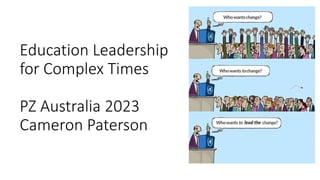
Education Leadership
for Complex Times
PZ Australia 2023
Cameron Paterson
Norms
• Be gentle and
generous
• Cultivate curiosity
• Expect and embrace
a lack of closure
Workshop Outline
• Adaptive leadership
• Churchill fellowship
• Some research
What qualities do
education leaders
need in complex
times?
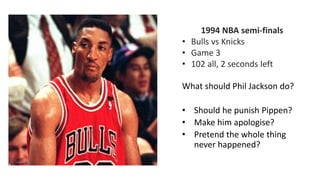
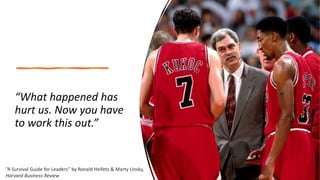
1994 NBA semi-finals
• Bulls vs Knicks
• Game 3
• 102 all, 2 seconds left
What should Phil Jackson do?
• Should he punish Pippen?
• Make him apologise?
• Pretend the whole thing
never happened?
“What happened has
hurt us. Now you have
to work this out.”
“A Survival Guide for Leaders” by Ronald Heifetz & Marty Linsky,
Harvard Business Review
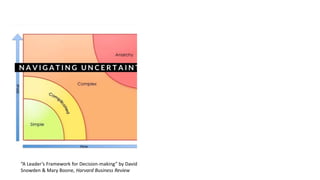
“A Leader’s Framework for Decision-making” by David
Snowden & Mary Boone, Harvard Business Review
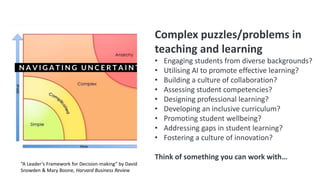
Complex puzzles/problems in
teaching and learning
• Engaging students from diverse backgrounds?
• Utilising AI to promote effective learning?
• Building a culture of collaboration?
• Assessing student competencies?
• Designing professional learning?
• Developing an inclusive curriculum?
• Promoting student wellbeing?
• Addressing gaps in student learning?
• Fostering a culture of innovation?
Think of something you can work with…
“A Leader’s Framework for Decision-making” by David
Snowden & Mary Boone, Harvard Business Review
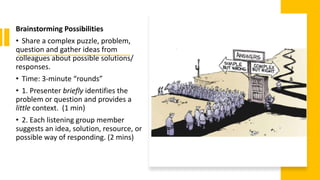
Brainstorming Possibilities
• Share a complex puzzle, problem,
question and gather ideas from
colleagues about possible solutions/
responses.
• Time: 3-minute “rounds”
• 1. Presenter briefly identifies the
problem or question and provides a
little context. (1 min)
• 2. Each listening group member
suggests an idea, solution, resource, or
possible way of responding. (2 mins)
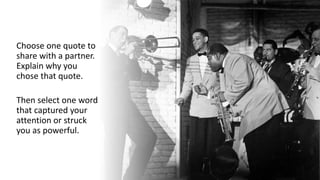
Choose one quote to
share with a partner.
Explain why you
chose that quote.
Then select one word
that captured your
attention or struck
you as powerful.
“Leading complex pedagogical change in schools requires patience for the
slow and messy nature of the work, respectful and trusting relationships
with people, listening with curiosity and authenticity, and respect for
context and history.
It isn’t about applying a formula; it is about engaging in a conversation.
Effective leaders are intellectually curious, make people feel seen and
heard, and invite people into change instead of telling them what they
need to change.”
Churchill Fellowship Report 2019
file:///C:/Users/PatersonC/Downloads/projectReport-
Paterson,Cameron2019%20(3).pdf
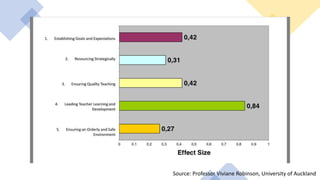
Source: Professor Viviane Robinson, University of Auckland
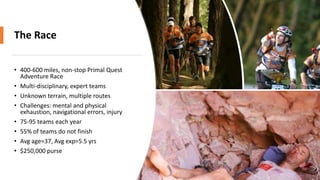
The Race
• 400-600 miles, non-stop Primal Quest
Adventure Race
• Multi-disciplinary, expert teams
• Unknown terrain, multiple routes
• Challenges: mental and physical
exhaustion, navigational errors, injury
• 75-95 teams each year
• 55% of teams do not finish
• Avg age=37, Avg exp=5.5 yrs
• $250,000 purse
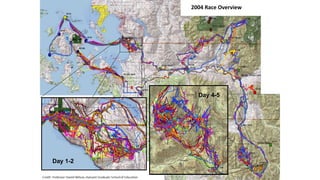
Day 1-2
Day 4-5
2004 Race Overview
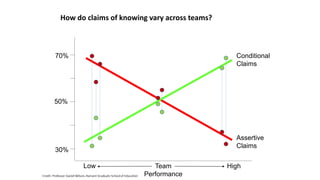
50%
70% Conditional
Claims
Assertive
Claims
Team
Performance
High
Low
30%
How do claims of knowing vary across teams?
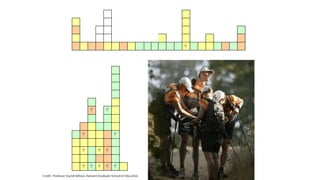
?
? ?
? ?
? ? ?
? ? ? ? ?
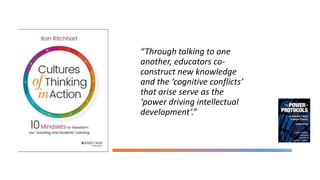
“Through talking to one
another, educators co-
construct new knowledge
and the ‘cognitive conflicts’
that arise serve as the
‘power driving intellectual
development’.”
“Speeding up Team Learning” by Amy
Edmondson et al, Harvard Business Review
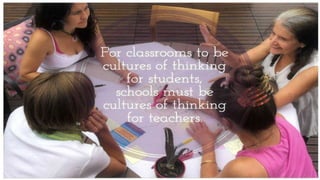
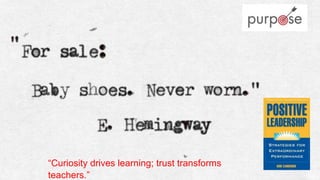
“Curiosity drives learning; trust transforms
teachers.”
“Spend time with people who are the sparklers, the energisers. Spend
time with the plusses; the ‘Yes, And…?’ people.”
- Erik Lindemann, 3rd Grade Teacher at Osborne Elementary, Michigan.
One-word whip reflections
Education Leadership presentation.pptx

Education Leadership presentation.pptx

  • 1.
    Education Leadership for ComplexTimes PZ Australia 2023 Cameron Paterson
  • 3.
    Norms • Be gentleand generous • Cultivate curiosity • Expect and embrace a lack of closure Workshop Outline • Adaptive leadership • Churchill fellowship • Some research
  • 4.
    What qualities do educationleaders need in complex times?
  • 5.
    1994 NBA semi-finals •Bulls vs Knicks • Game 3 • 102 all, 2 seconds left What should Phil Jackson do? • Should he punish Pippen? • Make him apologise? • Pretend the whole thing never happened?
  • 6.
    “What happened has hurtus. Now you have to work this out.” “A Survival Guide for Leaders” by Ronald Heifetz & Marty Linsky, Harvard Business Review
  • 7.
    “A Leader’s Frameworkfor Decision-making” by David Snowden & Mary Boone, Harvard Business Review
  • 8.
    Complex puzzles/problems in teachingand learning • Engaging students from diverse backgrounds? • Utilising AI to promote effective learning? • Building a culture of collaboration? • Assessing student competencies? • Designing professional learning? • Developing an inclusive curriculum? • Promoting student wellbeing? • Addressing gaps in student learning? • Fostering a culture of innovation? Think of something you can work with… “A Leader’s Framework for Decision-making” by David Snowden & Mary Boone, Harvard Business Review
  • 9.
    Brainstorming Possibilities • Sharea complex puzzle, problem, question and gather ideas from colleagues about possible solutions/ responses. • Time: 3-minute “rounds” • 1. Presenter briefly identifies the problem or question and provides a little context. (1 min) • 2. Each listening group member suggests an idea, solution, resource, or possible way of responding. (2 mins)
  • 10.
    Choose one quoteto share with a partner. Explain why you chose that quote. Then select one word that captured your attention or struck you as powerful.
  • 11.
    “Leading complex pedagogicalchange in schools requires patience for the slow and messy nature of the work, respectful and trusting relationships with people, listening with curiosity and authenticity, and respect for context and history. It isn’t about applying a formula; it is about engaging in a conversation. Effective leaders are intellectually curious, make people feel seen and heard, and invite people into change instead of telling them what they need to change.” Churchill Fellowship Report 2019 file:///C:/Users/PatersonC/Downloads/projectReport- Paterson,Cameron2019%20(3).pdf
  • 12.
    Source: Professor VivianeRobinson, University of Auckland
  • 14.
    The Race • 400-600miles, non-stop Primal Quest Adventure Race • Multi-disciplinary, expert teams • Unknown terrain, multiple routes • Challenges: mental and physical exhaustion, navigational errors, injury • 75-95 teams each year • 55% of teams do not finish • Avg age=37, Avg exp=5.5 yrs • $250,000 purse
  • 15.
    Day 1-2 Day 4-5 2004Race Overview
  • 16.
  • 17.
    ? ? ? ? ? ?? ? ? ? ? ? ?
  • 20.
    “Through talking toone another, educators co- construct new knowledge and the ‘cognitive conflicts’ that arise serve as the ‘power driving intellectual development’.”
  • 21.
    “Speeding up TeamLearning” by Amy Edmondson et al, Harvard Business Review
  • 25.
    “Curiosity drives learning;trust transforms teachers.”
  • 26.
    “Spend time withpeople who are the sparklers, the energisers. Spend time with the plusses; the ‘Yes, And…?’ people.” - Erik Lindemann, 3rd Grade Teacher at Osborne Elementary, Michigan.
  • 27.