Gait Abnormalities And
Physiological Basis
Dr. G.T. Wijesinghe
Dip. in med. Physiology
Different types
A. Hemiplegic gait
B. Spastic gait
C. Neuropathic gait
D. Myopathic gait
E. Ataxic gait (cerebellar)
F. Choreiform gait
G. Parkinsonian gait
H. Non neurological gaits
Hemiplegic gait
Arm flexed, adducted and internally rotated
- Flexion hypertonia
Leg extended, plantar flexed
Pelvis lifted
- extensor hypertonia in lower limb
- weakness in distal muscles – (foot drop)
- Circumduction – semi circle walking
Unilateral upper motor neuron lesion
stroke
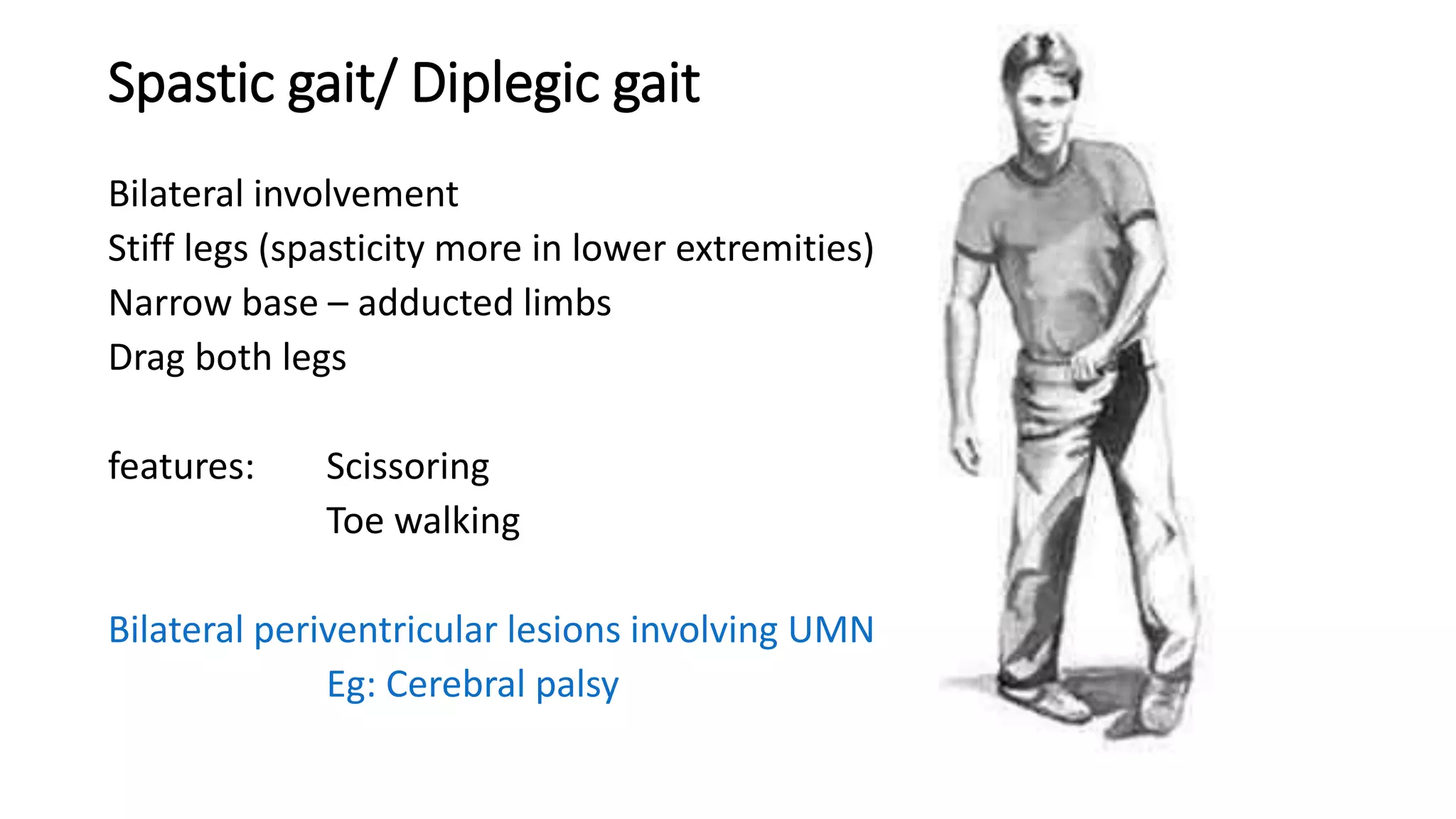
Spastic gait/ Diplegic gait
Bilateral involvement
Stiff legs (spasticity more in lower extremities)
Narrow base – adducted limbs
Drag both legs
features: Scissoring
Toe walking
Bilateral periventricular lesions involving UMN
Eg: Cerebral palsy
Neuropathic gait
Steppage gait, Equine gait
Foot drop (weakness of foot dorsiflexion)
Lift the knee high enough, not to drag the foot
on the floor
Unilateral or bilateral LMN palsies
Unilateral : Peroneal nerve palsy
L5 radiculopathy
Bilateral : Amyotrophic lateral sclerosis
Diabetic neuropathy
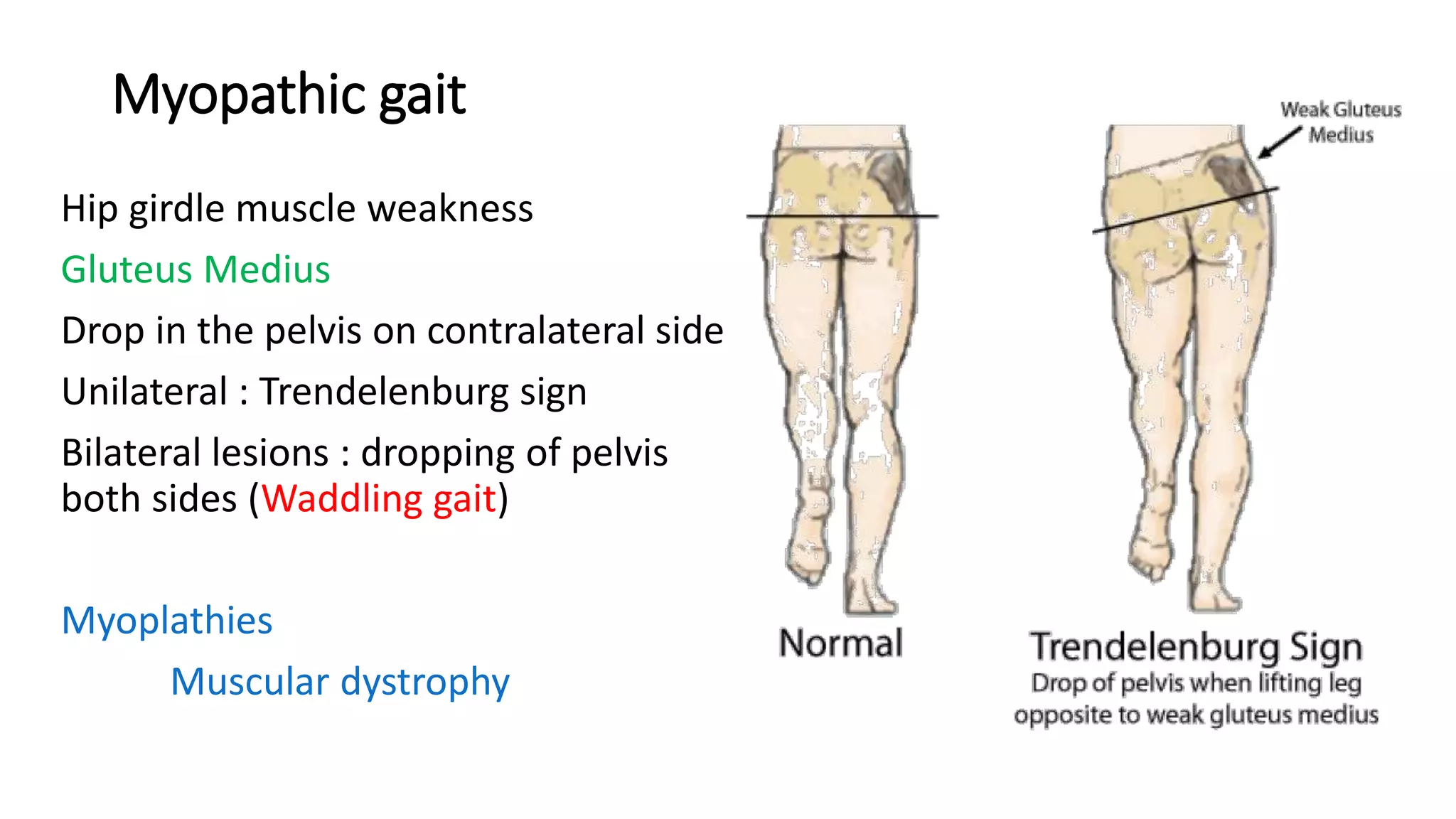
Myopathic gait
Hip girdle muscle weakness
Gluteus Medius
Drop in the pelvis on contralateral side
Unilateral : Trendelenburg sign
Bilateral lesions : dropping of pelvis
both sides (Waddling gait)
Myoplathies
Muscular dystrophy
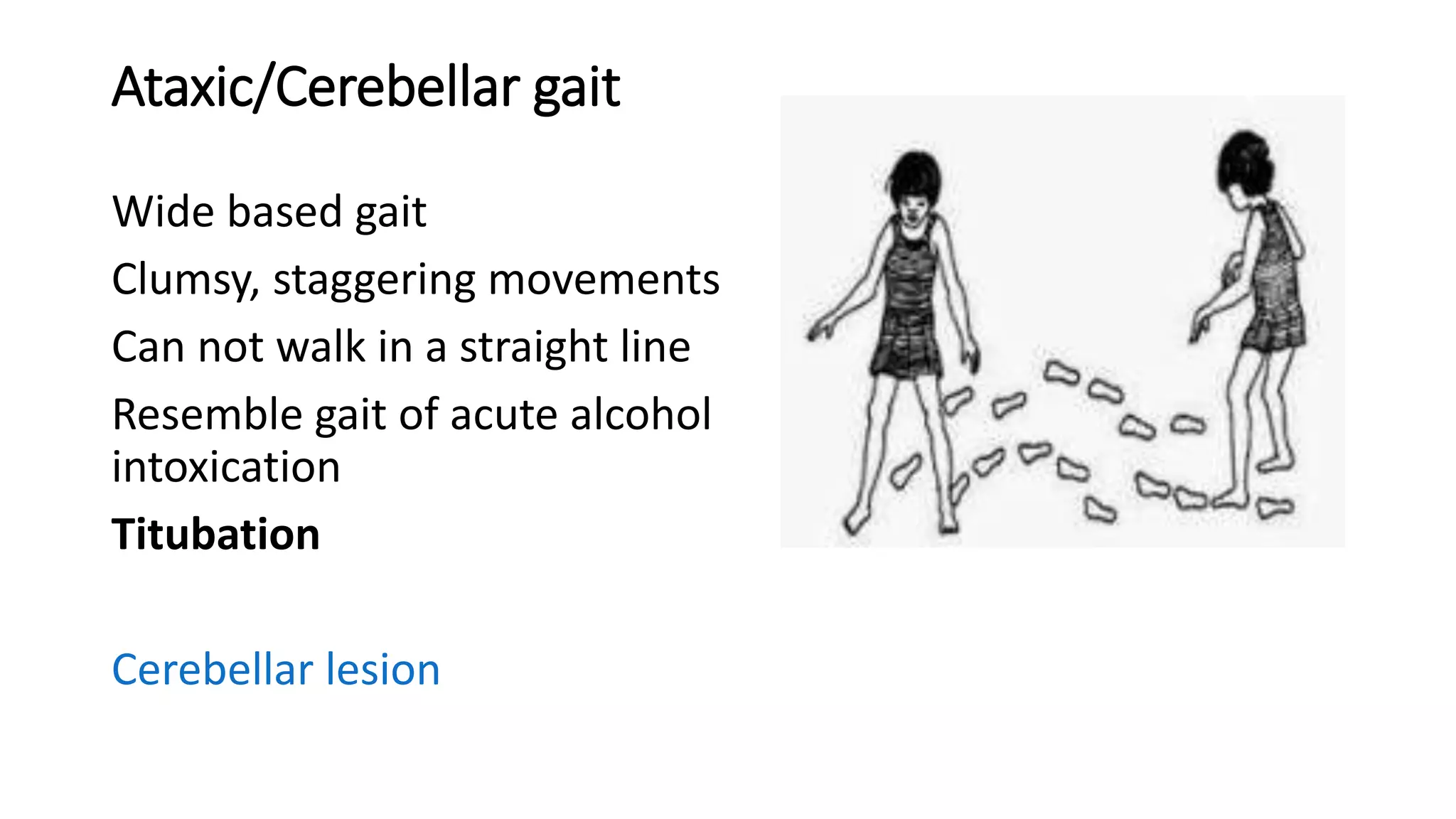
Ataxic/Cerebellar gait
Wide based gait
Clumsy, staggering movements
Can not walk in a straight line
Resemble gait of acute alcohol
intoxication
Titubation
Cerebellar lesion
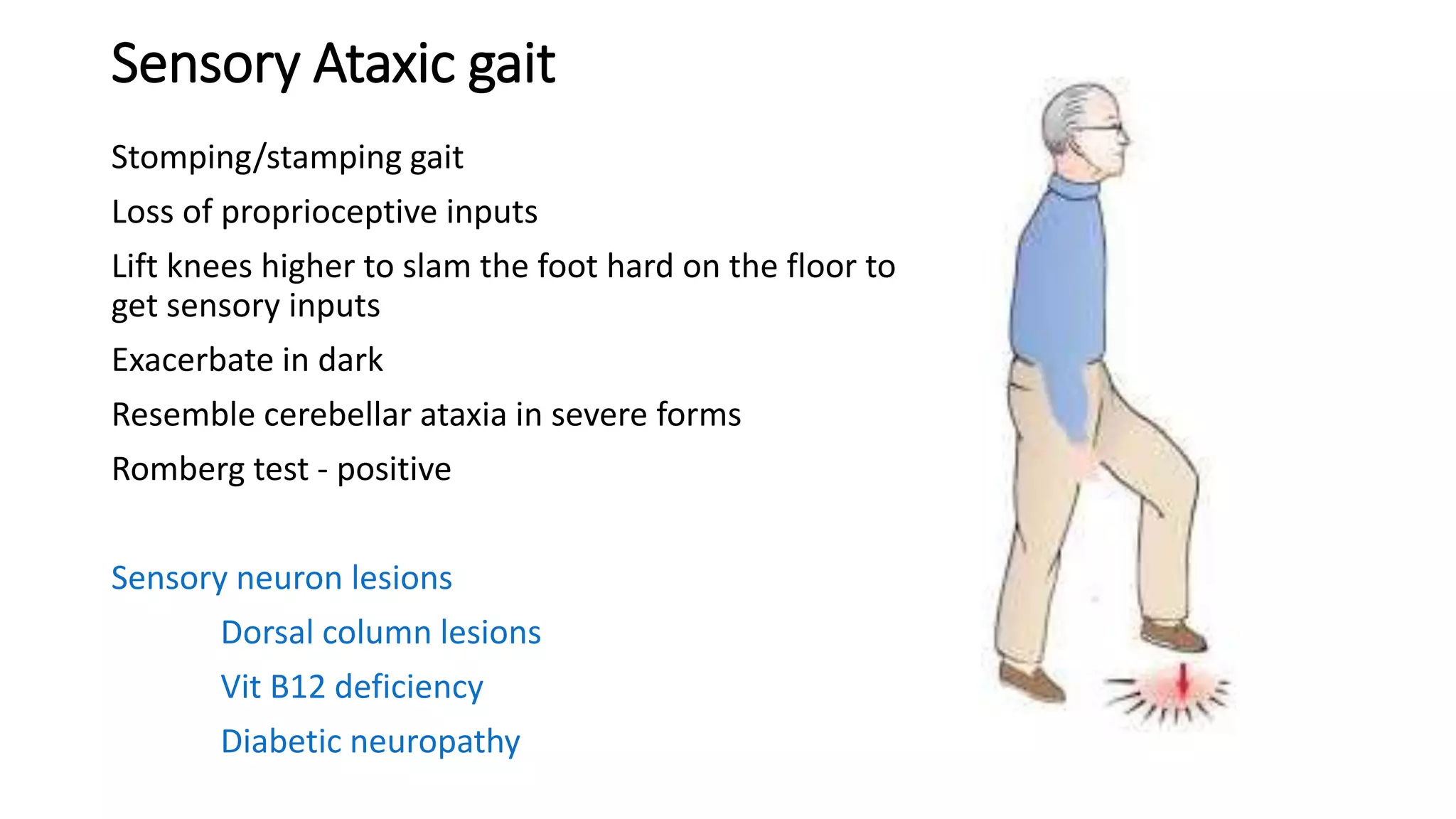
Sensory Ataxic gait
Stomping/stamping gait
Loss of proprioceptive inputs
Lift knees higher to slam the foot hard on the floor to
get sensory inputs
Exacerbate in dark
Resemble cerebellar ataxia in severe forms
Romberg test - positive
Sensory neuron lesions
Dorsal column lesions
Vit B12 deficiency
Diabetic neuropathy
Choreiform gait
Hyperkinetic
Irregular jerky, involuntary movements
in all extremities
Walking may accentuate the baseline
movement disorder
Basal ganglia disorder
Indirect pathway lesion
Parkinsonian gait
Rigidity, bradykinesia
Stooped with head and neck forward
Knee flexion
Upper extremity flexed with fingers extended
Short steps
Slow, difficult initiation
Shuffling gait
Basal ganglia disorder (direct pathway)
Substantia nigra lesion
Parkinson’s disease
Non neurologic gaits
Antalgic gait
Associated with pain in
lower limbs, back etc
Psycogenic gait
Voluntary
Thank you

Gait abnormalities

  • 1.
    Gait Abnormalities And PhysiologicalBasis Dr. G.T. Wijesinghe Dip. in med. Physiology
  • 2.
    Different types A. Hemiplegicgait B. Spastic gait C. Neuropathic gait D. Myopathic gait E. Ataxic gait (cerebellar) F. Choreiform gait G. Parkinsonian gait H. Non neurological gaits
  • 3.
    Hemiplegic gait Arm flexed,adducted and internally rotated - Flexion hypertonia Leg extended, plantar flexed Pelvis lifted - extensor hypertonia in lower limb - weakness in distal muscles – (foot drop) - Circumduction – semi circle walking Unilateral upper motor neuron lesion stroke
  • 4.
    Spastic gait/ Diplegicgait Bilateral involvement Stiff legs (spasticity more in lower extremities) Narrow base – adducted limbs Drag both legs features: Scissoring Toe walking Bilateral periventricular lesions involving UMN Eg: Cerebral palsy
  • 5.
    Neuropathic gait Steppage gait,Equine gait Foot drop (weakness of foot dorsiflexion) Lift the knee high enough, not to drag the foot on the floor Unilateral or bilateral LMN palsies Unilateral : Peroneal nerve palsy L5 radiculopathy Bilateral : Amyotrophic lateral sclerosis Diabetic neuropathy
  • 6.
    Myopathic gait Hip girdlemuscle weakness Gluteus Medius Drop in the pelvis on contralateral side Unilateral : Trendelenburg sign Bilateral lesions : dropping of pelvis both sides (Waddling gait) Myoplathies Muscular dystrophy
  • 7.
    Ataxic/Cerebellar gait Wide basedgait Clumsy, staggering movements Can not walk in a straight line Resemble gait of acute alcohol intoxication Titubation Cerebellar lesion
  • 8.
    Sensory Ataxic gait Stomping/stampinggait Loss of proprioceptive inputs Lift knees higher to slam the foot hard on the floor to get sensory inputs Exacerbate in dark Resemble cerebellar ataxia in severe forms Romberg test - positive Sensory neuron lesions Dorsal column lesions Vit B12 deficiency Diabetic neuropathy
  • 9.
    Choreiform gait Hyperkinetic Irregular jerky,involuntary movements in all extremities Walking may accentuate the baseline movement disorder Basal ganglia disorder Indirect pathway lesion
  • 10.
    Parkinsonian gait Rigidity, bradykinesia Stoopedwith head and neck forward Knee flexion Upper extremity flexed with fingers extended Short steps Slow, difficult initiation Shuffling gait Basal ganglia disorder (direct pathway) Substantia nigra lesion Parkinson’s disease
  • 11.
    Non neurologic gaits Antalgicgait Associated with pain in lower limbs, back etc Psycogenic gait Voluntary
  • 12.