Abnormal Gait
Neurological
gait
Muscular
weakness gait
Leg length
discrepancy
gait
Joint or
muscular
limitation gait
Painful gait
Neurological gait
Parkinsons gait
Hemiplegic gait
Ataxic gait –cerebral ataxia
-Sensory ataxia
Scissoring Gait (crossed leg gait)
Parkinsons Gait (shuffling gait)
• Flex posture of neck, trunk hip and knee due torigidity
• COG falls anteriorly
• Short steps lacking heel strike and toe off, loss of arm
swing and pelvic rotation.
• Parkinsons disease, willson disease, cerebral
atherosclorosis
Hemiplegic gait
Pt rotates the hip sideways during swing phase due to hip flexor tightness
Absence of heelstrike
Ataxic Gait
• Lacking coordination
• Resembles drunken gait
• If cerebral lesion in on one side the other side
movement will be normal
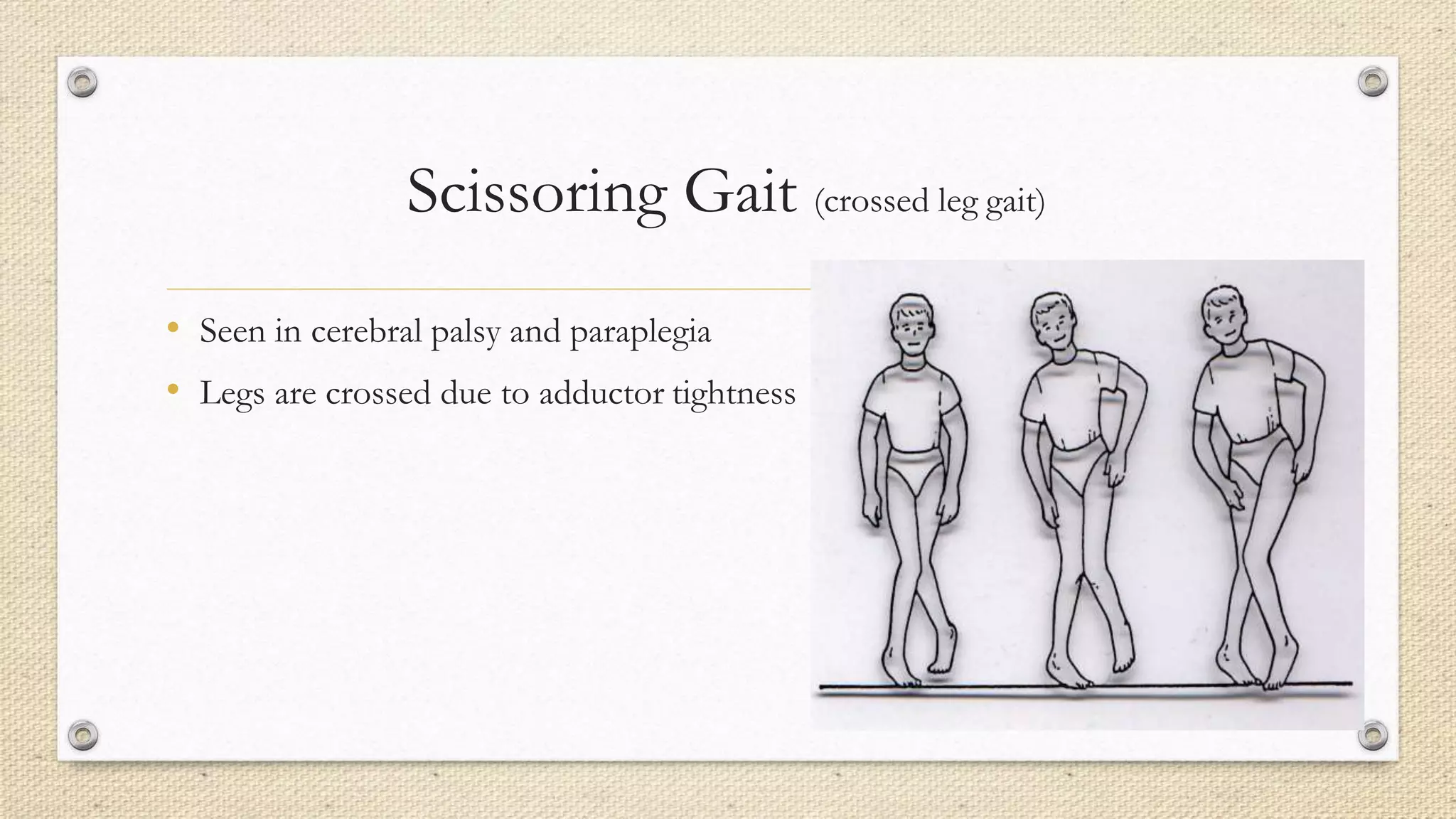
Scissoring Gait (crossed leg gait)
• Seen in cerebral palsy and paraplegia
• Legs are crossed due to adductor tightness
Muscular Weakness Gait
1. Gluteus medius gait
• One side gluteus medius paralysis results in
Trendelenburg gait
• Both the side paralysis results in duck walking
Duck Walking Gait
• Both abductors of hipparalyzed
• The patient bends his trunk towards the stance phase
2. Gluteus Maximus Gait
• If paralyzed, posteriortilting
• COG shifts towards to stance hip
• So, while walking forward and backward
movement of the trunk occurs is called as
‘rocking horse gait’
Quadricep(hand to knee gait)
• Quadricap paralysis
• During midstance , to transmit the weight on the stance lowe leg
• The knee should be locked
• This knocking is not possible if the quadriceps areparalyzes
High Steping Gait (foot drop gait)
• During heel strike the ankle goes for dorsiflexion
• If the dorsiflexors are paralyzed the planter flexoroveracts
• Foot drops and toes strike the ground first,
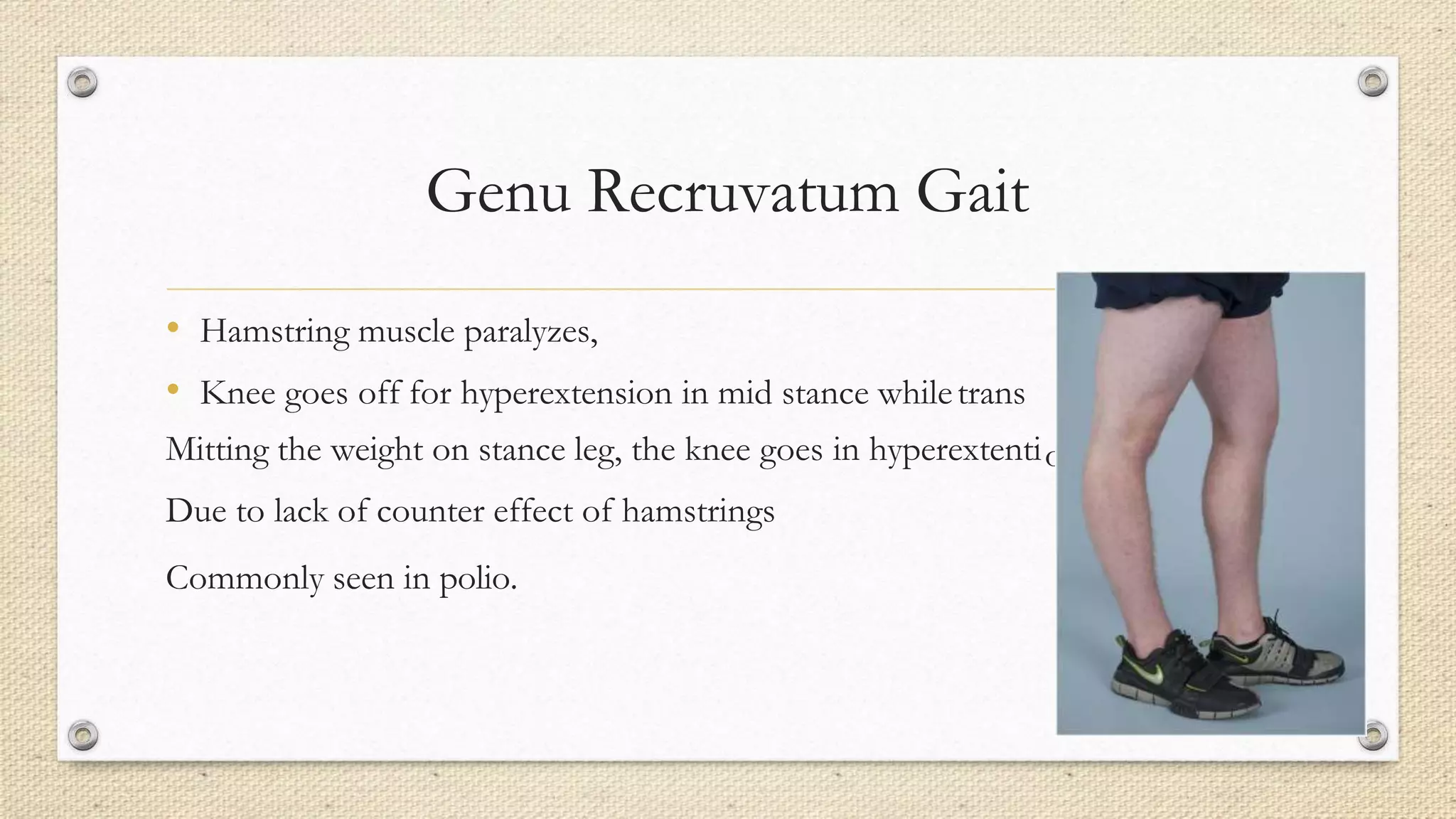
Genu Recruvatum Gait
on
• Hamstring muscle paralyzes,
• Knee goes off for hyperextension in mid stance whiletrans
Mitting the weight on stance leg, the knee goes in hyperextenti
Due to lack of counter effect of hamstrings
Commonly seen in polio.
THANKS!!

Walking Gait abnormalities.pptx

  • 1.
    Abnormal Gait Neurological gait Muscular weakness gait Leglength discrepancy gait Joint or muscular limitation gait Painful gait
  • 2.
    Neurological gait Parkinsons gait Hemiplegicgait Ataxic gait –cerebral ataxia -Sensory ataxia Scissoring Gait (crossed leg gait)
  • 3.
    Parkinsons Gait (shufflinggait) • Flex posture of neck, trunk hip and knee due torigidity • COG falls anteriorly • Short steps lacking heel strike and toe off, loss of arm swing and pelvic rotation. • Parkinsons disease, willson disease, cerebral atherosclorosis
  • 4.
    Hemiplegic gait Pt rotatesthe hip sideways during swing phase due to hip flexor tightness Absence of heelstrike
  • 5.
    Ataxic Gait • Lackingcoordination • Resembles drunken gait • If cerebral lesion in on one side the other side movement will be normal
  • 7.
    Scissoring Gait (crossedleg gait) • Seen in cerebral palsy and paraplegia • Legs are crossed due to adductor tightness
  • 9.
  • 10.
    1. Gluteus mediusgait • One side gluteus medius paralysis results in Trendelenburg gait • Both the side paralysis results in duck walking
  • 12.
    Duck Walking Gait •Both abductors of hipparalyzed • The patient bends his trunk towards the stance phase
  • 13.
    2. Gluteus MaximusGait • If paralyzed, posteriortilting • COG shifts towards to stance hip • So, while walking forward and backward movement of the trunk occurs is called as ‘rocking horse gait’
  • 14.
    Quadricep(hand to kneegait) • Quadricap paralysis • During midstance , to transmit the weight on the stance lowe leg • The knee should be locked • This knocking is not possible if the quadriceps areparalyzes
  • 15.
    High Steping Gait(foot drop gait) • During heel strike the ankle goes for dorsiflexion • If the dorsiflexors are paralyzed the planter flexoroveracts • Foot drops and toes strike the ground first,
  • 16.
    Genu Recruvatum Gait on •Hamstring muscle paralyzes, • Knee goes off for hyperextension in mid stance whiletrans Mitting the weight on stance leg, the knee goes in hyperextenti Due to lack of counter effect of hamstrings Commonly seen in polio.
  • 17.