Future of the Internet: Role of the Web
 and New Media in the Public Sector

    Webmanager University – Joseph Pagano Memorial Lecture
    December 13, 2011
    Lee Rainie: Director, Pew Internet Project
    Email: Lrainie@pewinternet.org
    Twitter: @Lrainie


                                                             PewInternet.org
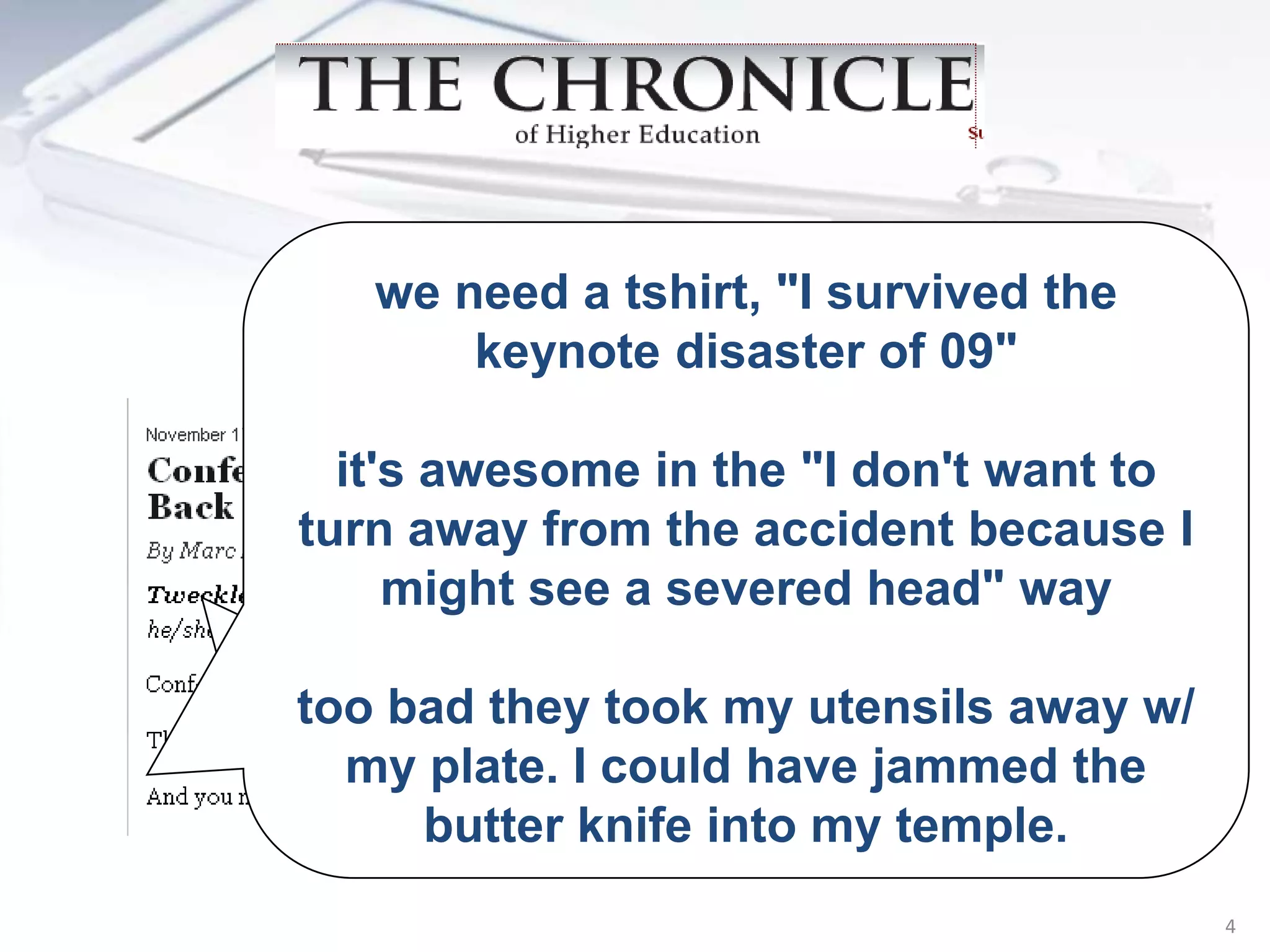
we need a tshirt, "I survived the
       keynote disaster of 09"
  “Tweckle (twek’ul) vt. To
abuse a speakerdon'tTwitter
  it's awesome in the "I to want to
turn away from the accident because I
 followers ain the audience
     might see severed head" way
while he/she is speaking.”
too bad they took my utensils away w/
  my plate. I could have jammed the
     butter knife into my temple.
                                        4
Three revolutions
  have created a
    new world
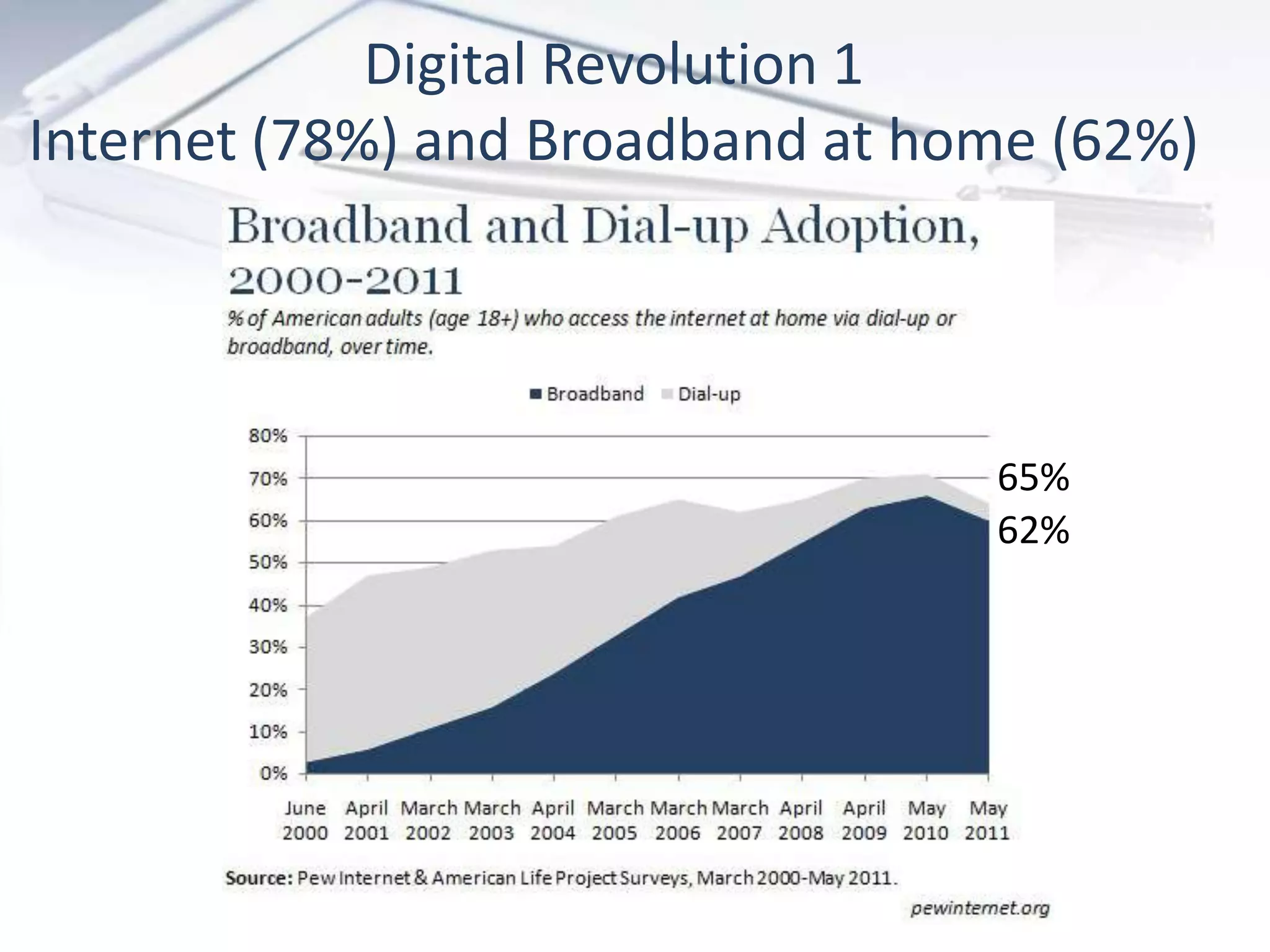
Digital Revolution 1
Internet (78%) and Broadband at home (62%)


                                  65%
                                  62%
Networked creators among internet users
•   65% are social networking site users
•   55% share photos
•   37% contribute rankings and ratings
•   33% create content tags
•   30% share personal creations
•   26% post comments on sites and blogs
•   15% have personal website
•   15% are content remixers
•   14% are bloggers
•   13% use Twitter
•    6% location services – 9% allow location
    awareness from social media
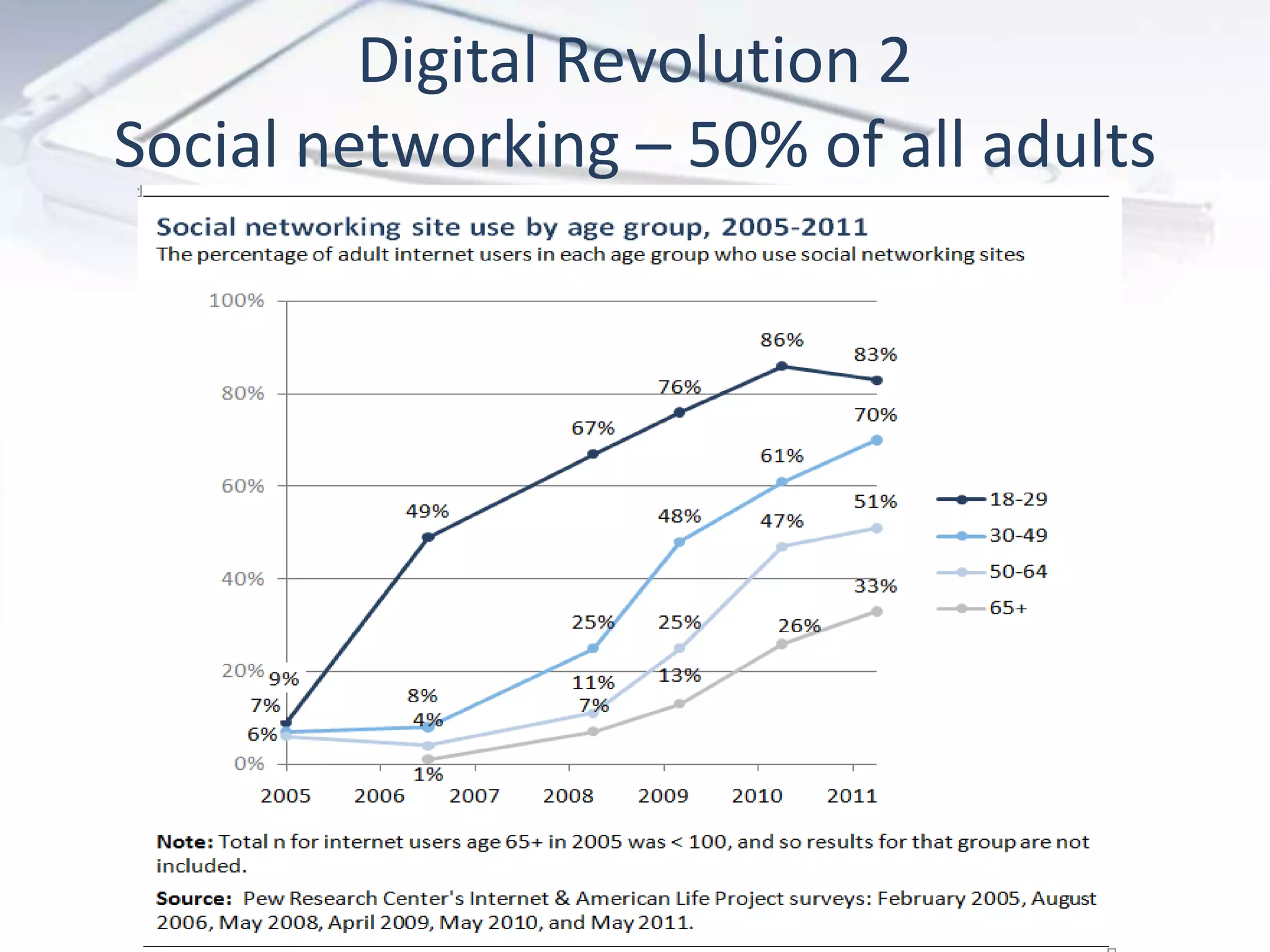
Digital Revolution 2
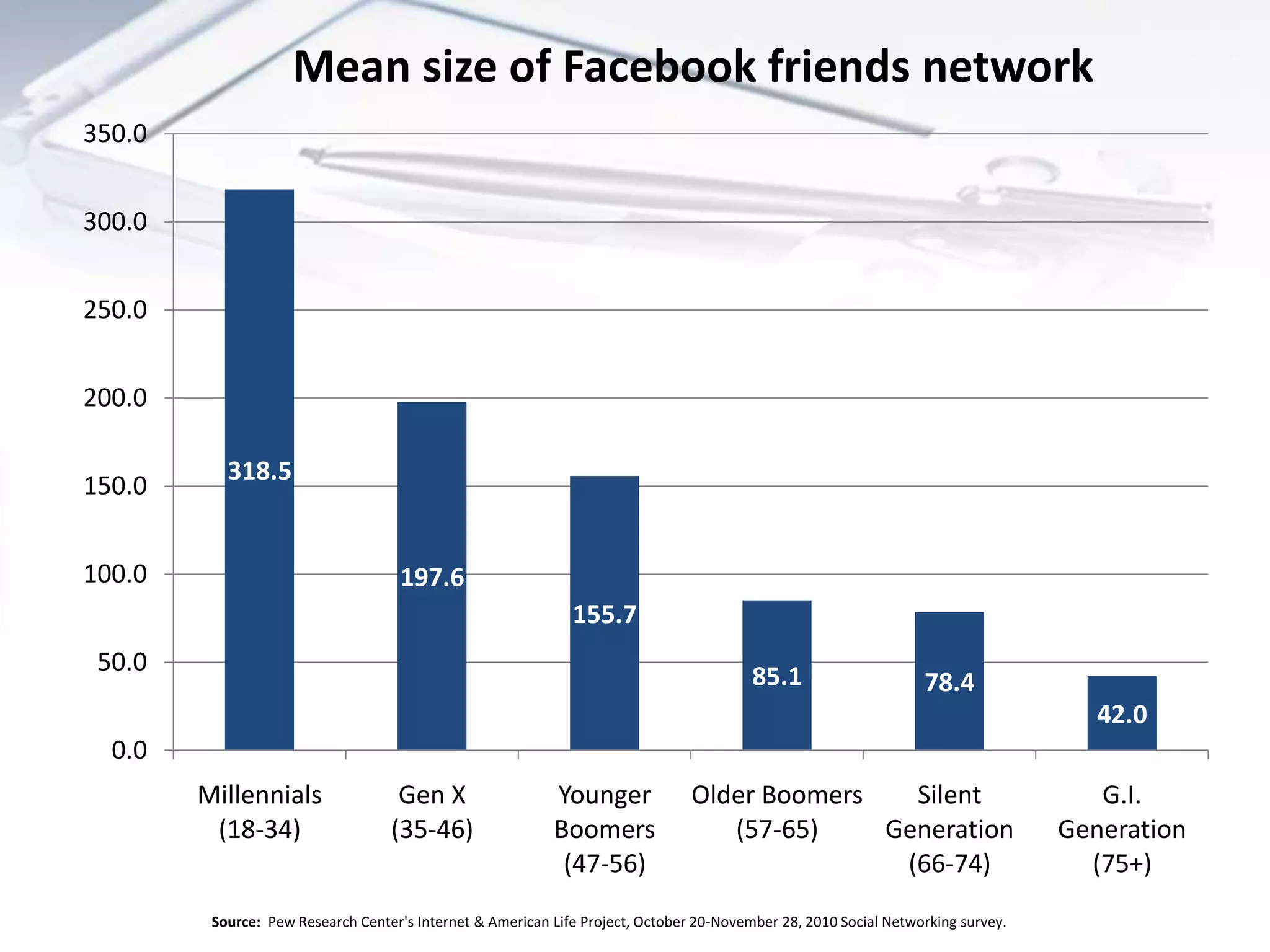
Social networking – 50% of all adults
Mean size of Facebook friends network
350.0


300.0


250.0


200.0

           318.5
150.0


100.0                               197.6
                                                              155.7
 50.0
                                                                                         85.1                     78.4
                                                                                                                                     42.0
  0.0
        Millennials                 Gen X                  Younger              Older Boomers   Silent                               G.I.
         (18-34)                   (35-46)                 Boomers                 (57-65)    Generation                          Generation
                                                            (47-56)                            (66-74)                              (75+)
         Source: Pew Research Center's Internet & American Life Project, October 20-November 28, 2010 Social Networking survey.
Digital Revolution 3
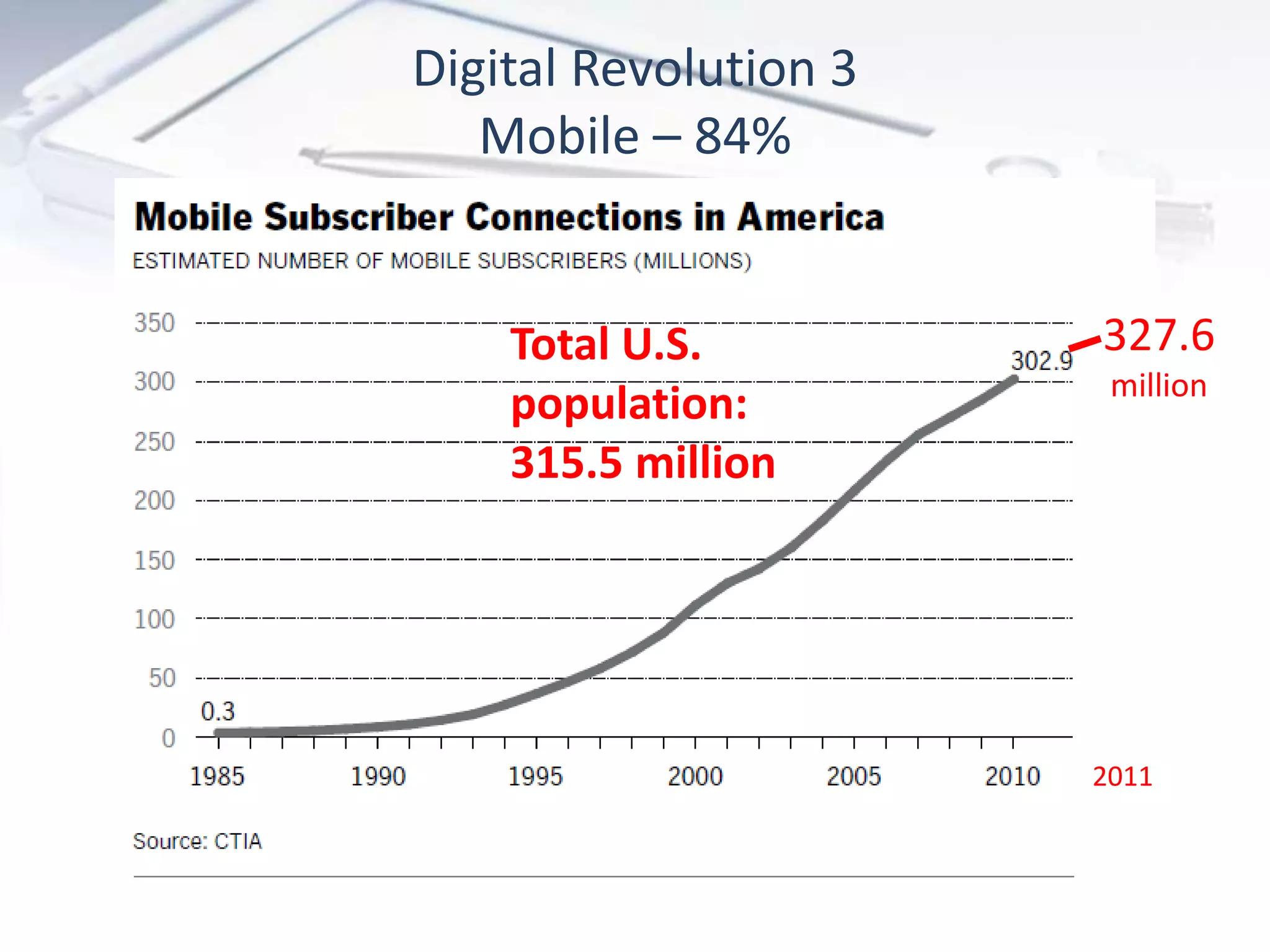
   Mobile – 84%


    Total U.S.         327.6
                        million
    population:
    315.5 million


                       2011
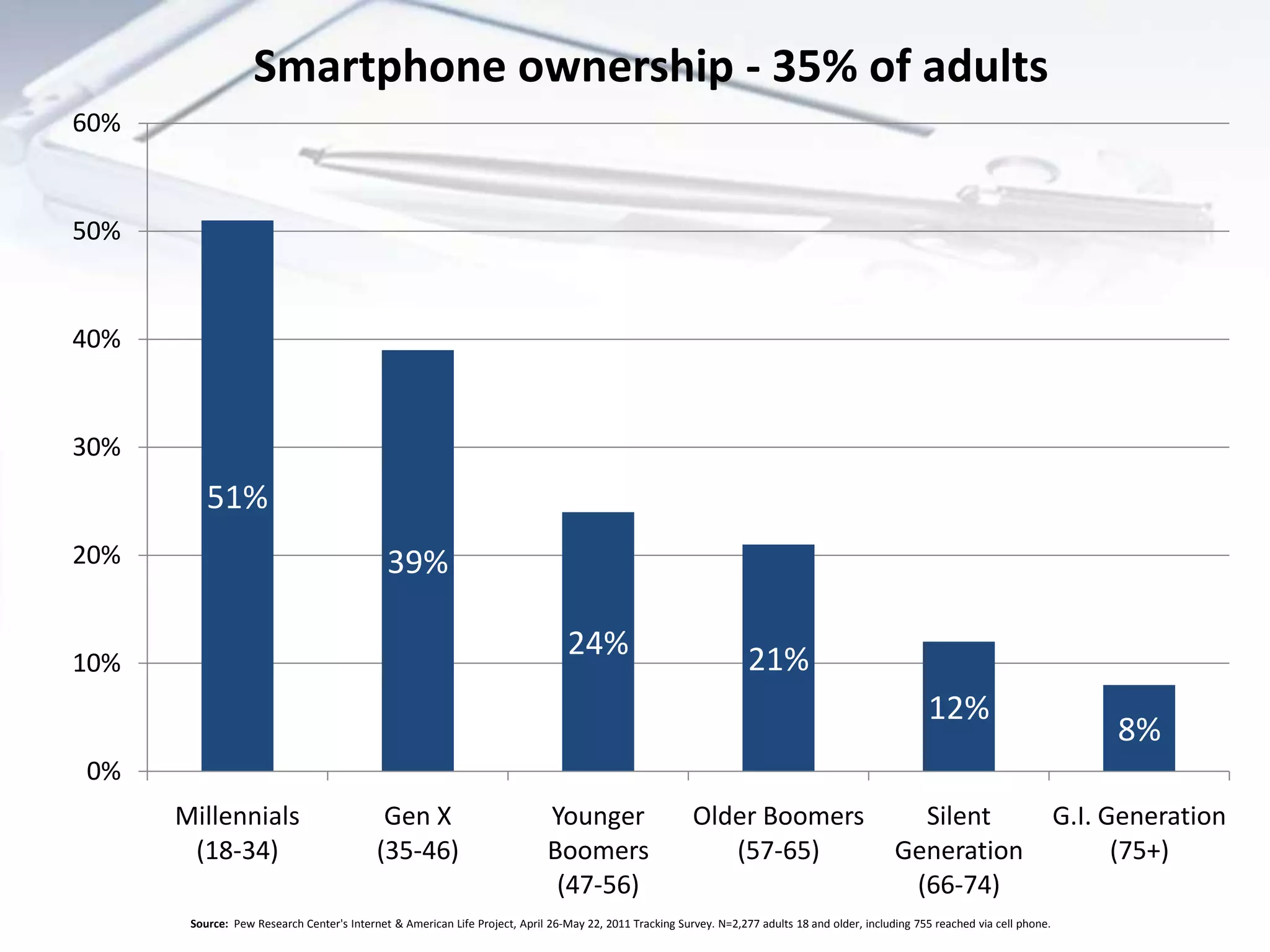
Smartphone ownership - 35% of adults
60%


50%


40%


30%
          51%
20%                                          39%

10%
                                                                                 24%                                21%
                                                                                                                                                       12%
                                                                                                                                                                                        8%
0%
      Millennials                           Gen X                            Younger                     Older Boomers                             Silent                          G.I. Generation
       (18-34)                             (35-46)                           Boomers                        (57-65)                              Generation                              (75+)
                                                                              (47-56)                                                             (66-74)
       Source: Pew Research Center's Internet & American Life Project, April 26-May 22, 2011 Tracking Survey. N=2,277 adults 18 and older, including 755 reached via cell phone.
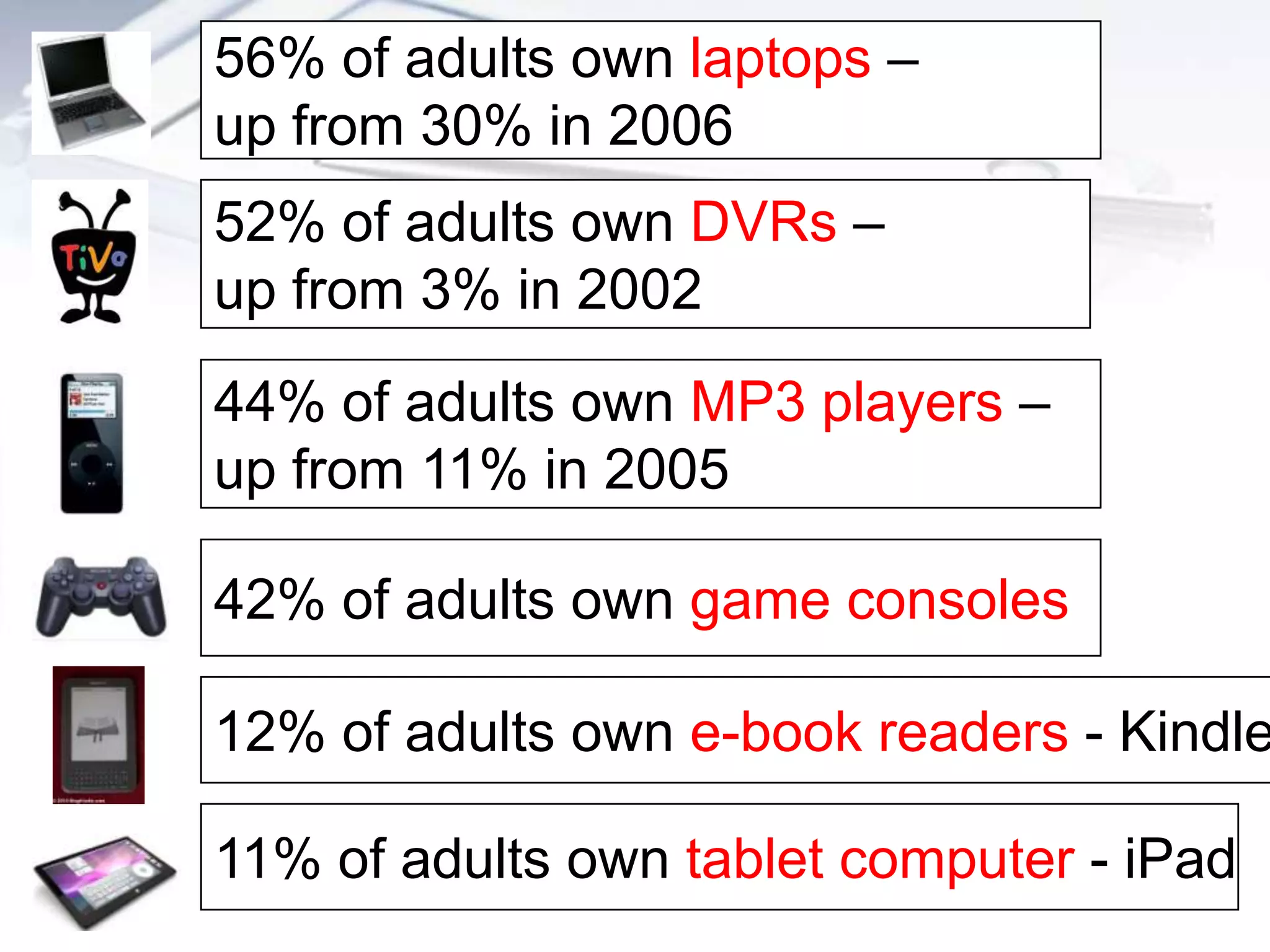
56% of adults own laptops –
up from 30% in 2006
52% of adults own DVRs –
up from 3% in 2002
44% of adults own MP3 players –
up from 11% in 2005

42% of adults own game consoles

12% of adults own e-book readers - Kindle

11% of adults own tablet computer - iPad
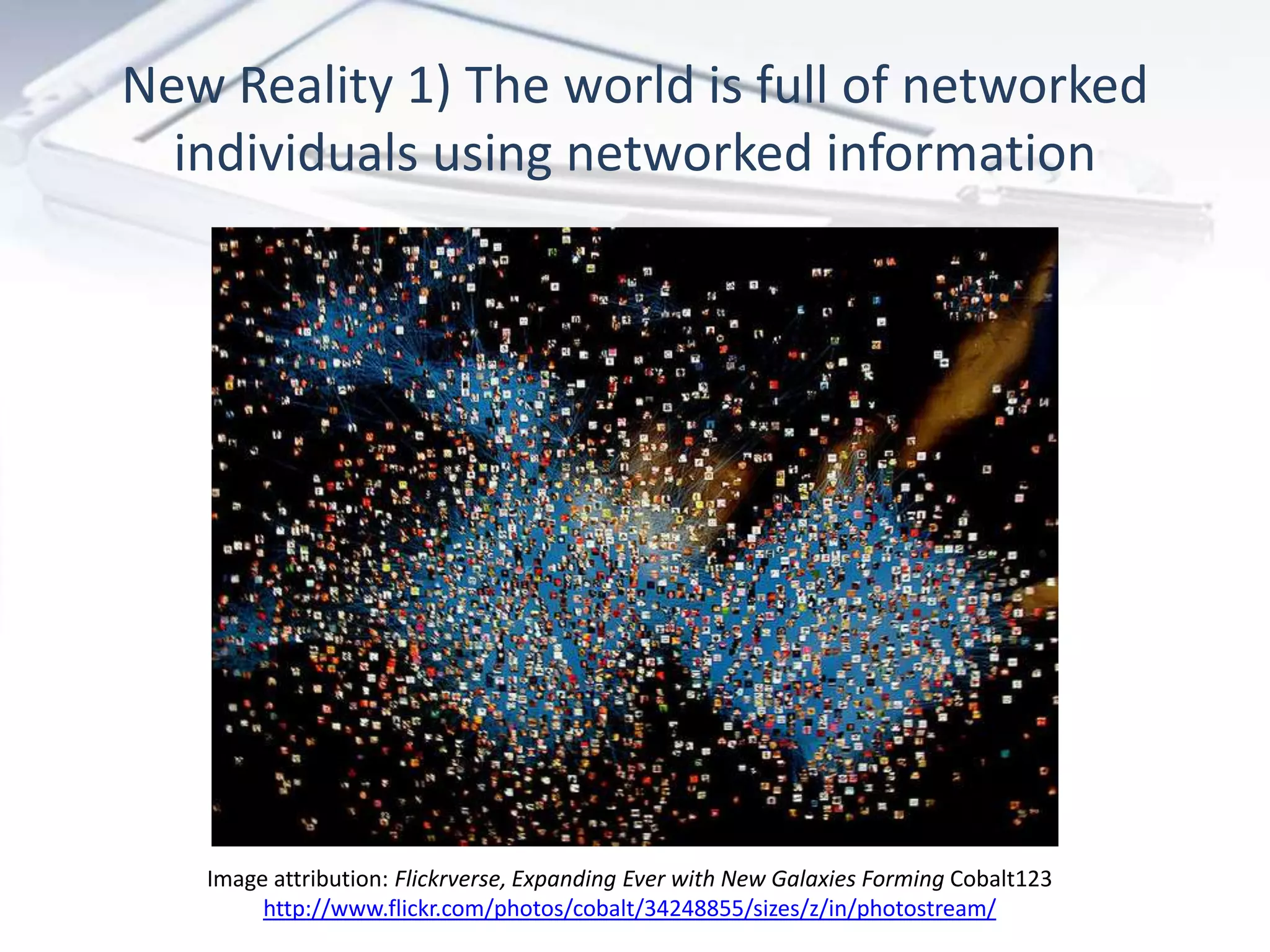
New Reality 1) The world is full of networked
  individuals using networked information


   Image attribution: Flickrverse, Expanding Ever with New Galaxies Forming Cobalt123
        http://www.flickr.com/photos/cobalt/34248855/sizes/z/in/photostream/
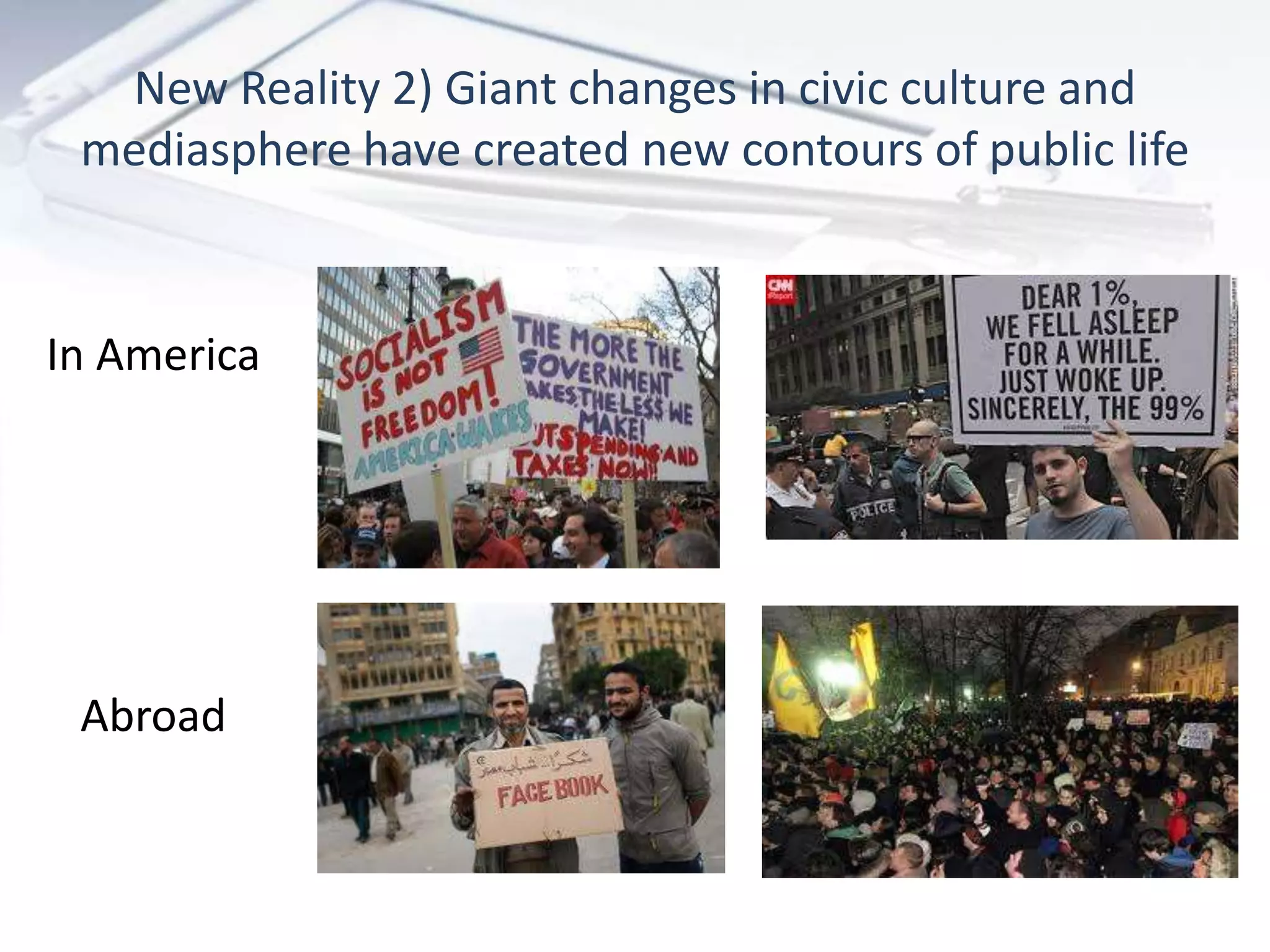
New Reality 2) Giant changes in civic culture and
 mediasphere have created new contours of public life


In America


 Abroad
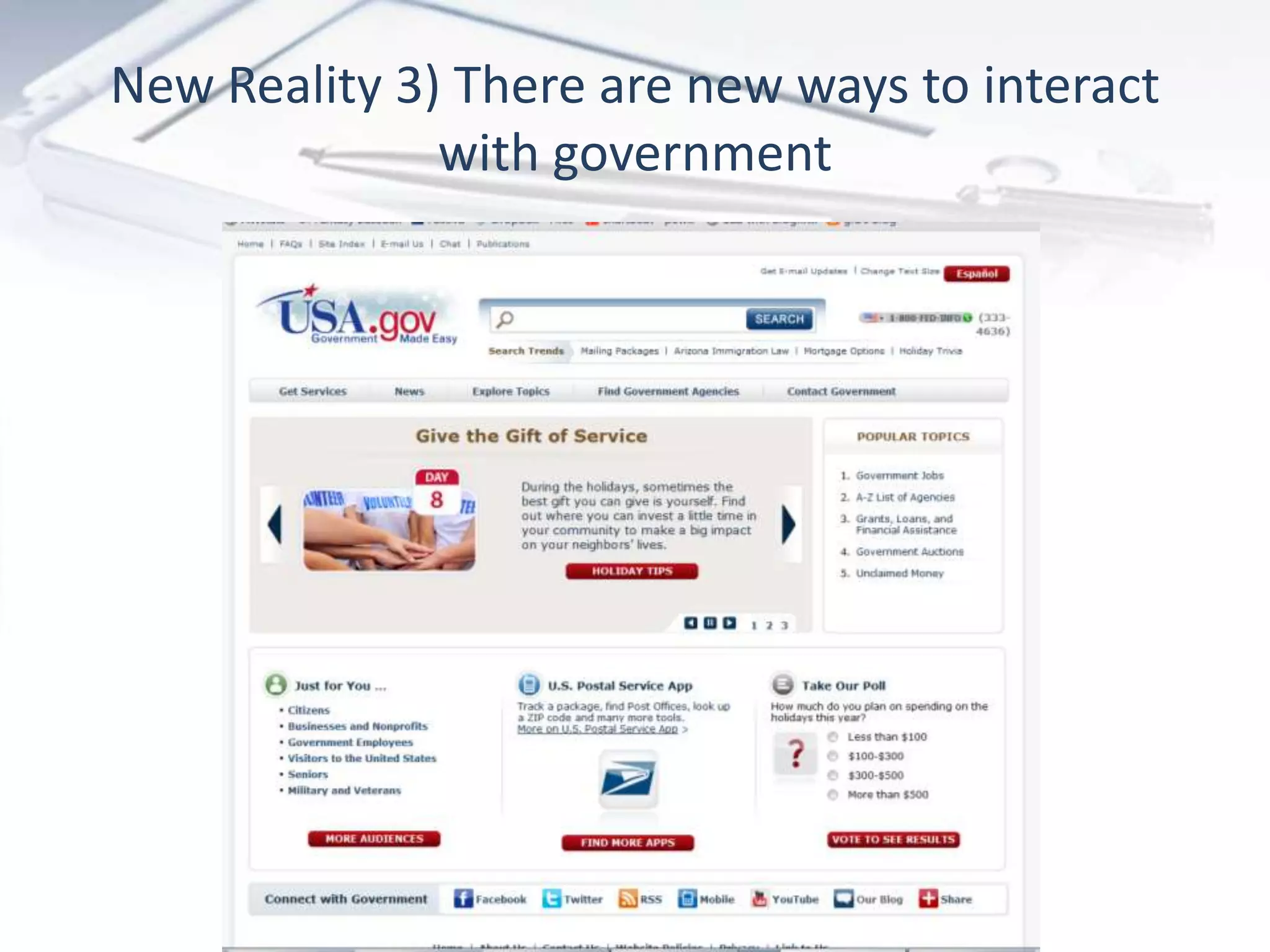
New Reality 3) There are new ways to interact
              with government
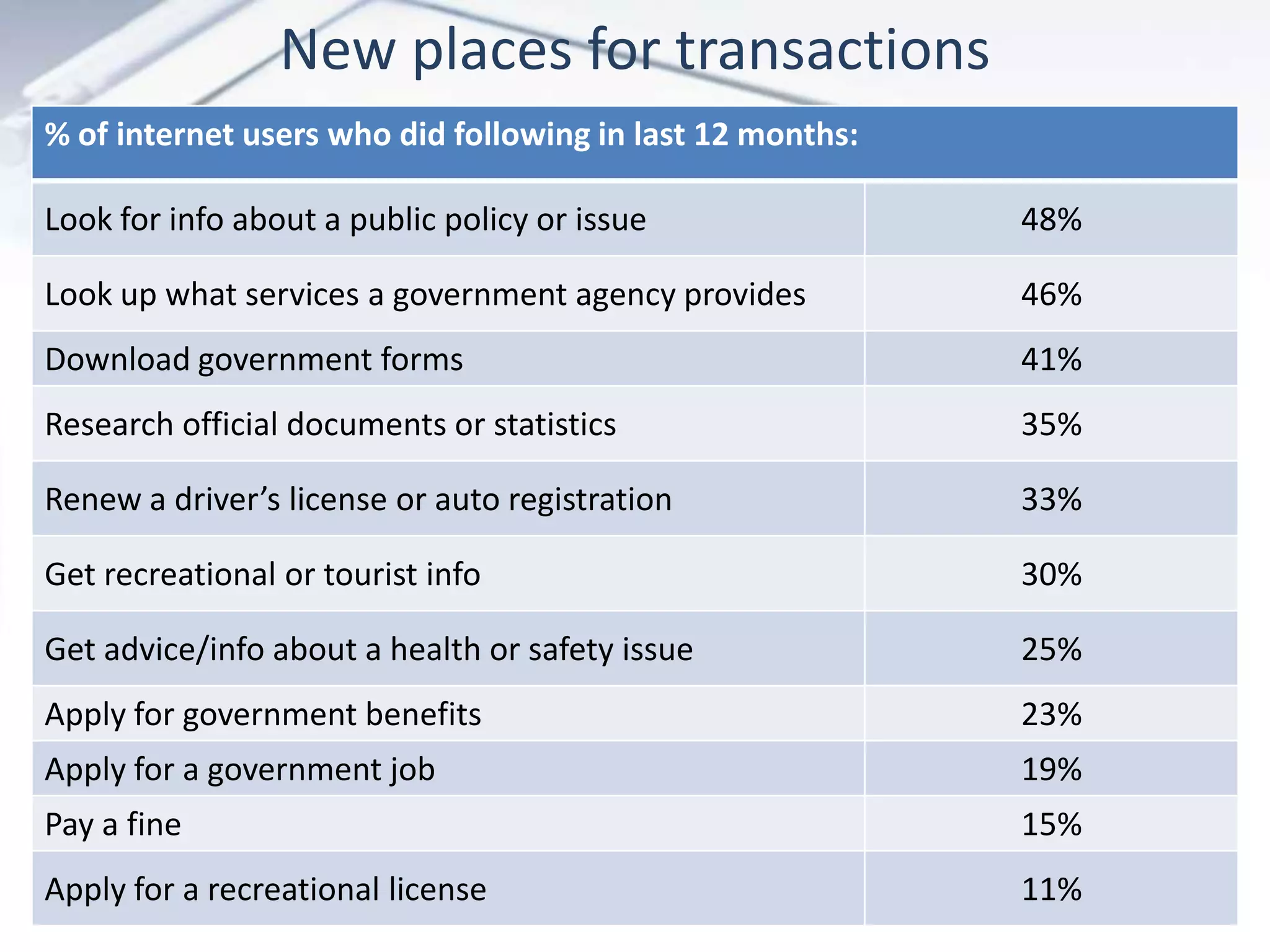
New places for transactions
% of internet users who did following in last 12 months:

Look for info about a public policy or issue               48%

Look up what services a government agency provides         46%
Download government forms                                  41%
Research official documents or statistics                  35%

Renew a driver’s license or auto registration              33%

Get recreational or tourist info                           30%

Get advice/info about a health or safety issue             25%
Apply for government benefits                              23%
Apply for a government job                                 19%
Pay a fine                                                 15%
Apply for a recreational license                           11%
Other avenues for gov. info and
                   interaction
 31% of internet users did at least one of the following activities in the
                         preceding 12 months:
• 15% of internet users watched a video on a government website
• 15% of email users signed up to receive email alerts from a
  government agency or official
• 13% of internet users read the blog of a government agency or
  official
• 5% of internet users followed or become a fan of a government
  agency or official on a social networking site
• 4% of texters signed up to receive text messages from a government
  agency or official
• 2% of internet users followed a government agency or official on
  Twitter
            Trends in Online Government               2/3/2011         17
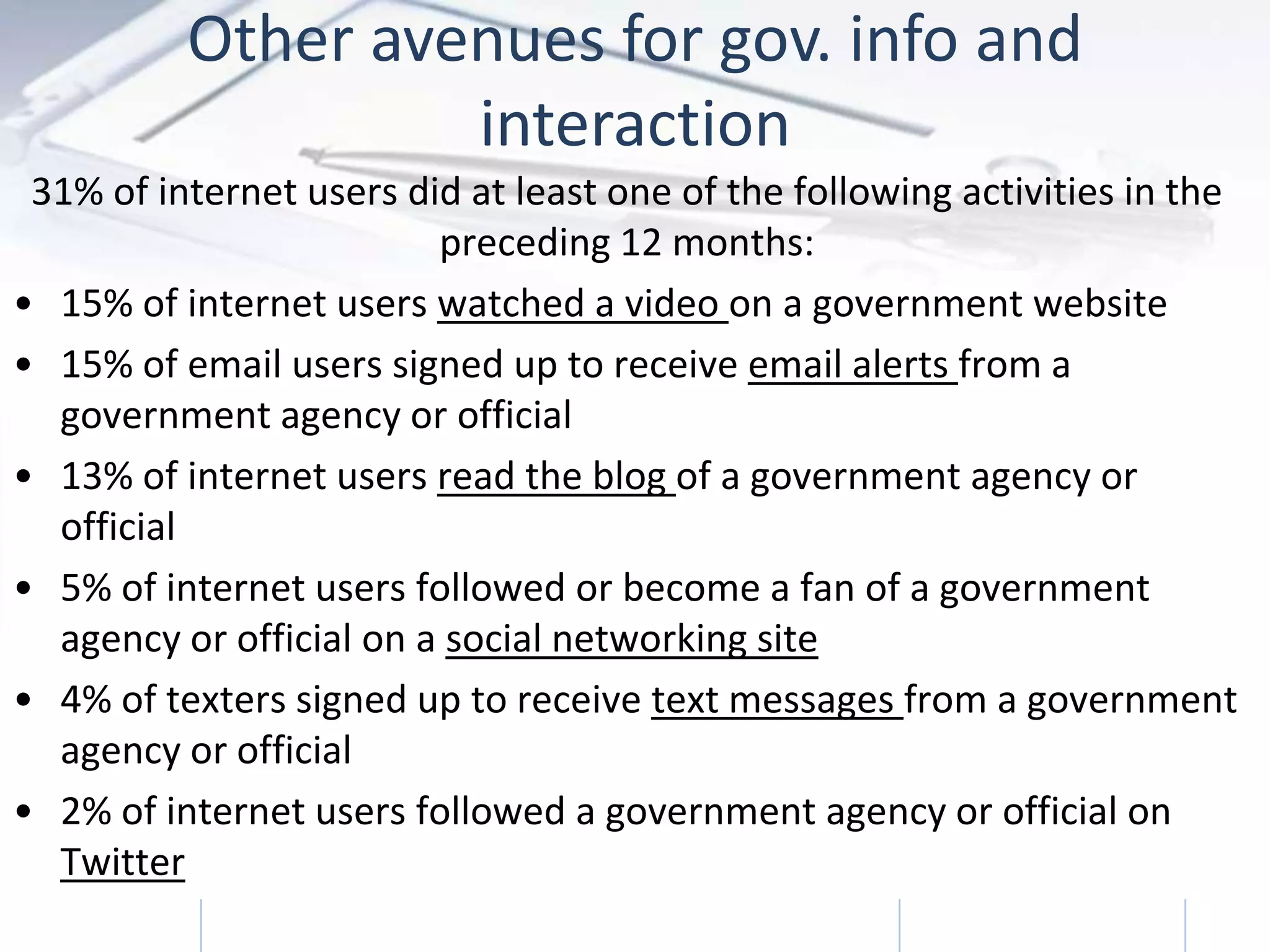
Mixed views on social media outreach


    Trends in Online Government   2/3/2011   18
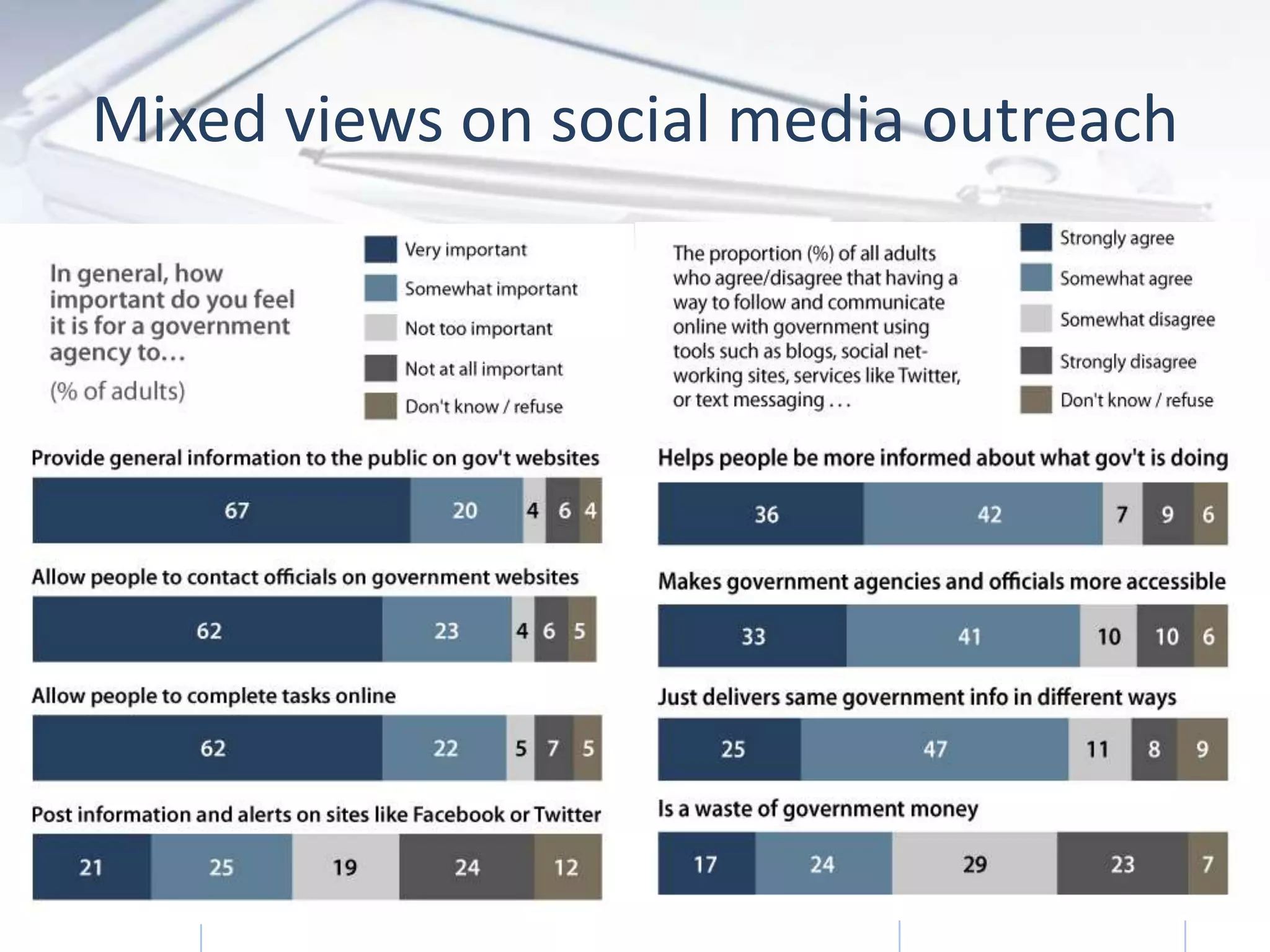
Nearly one-quarter of internet users
  are “government participators”


   Trends in Online Government   2/3/2011   19
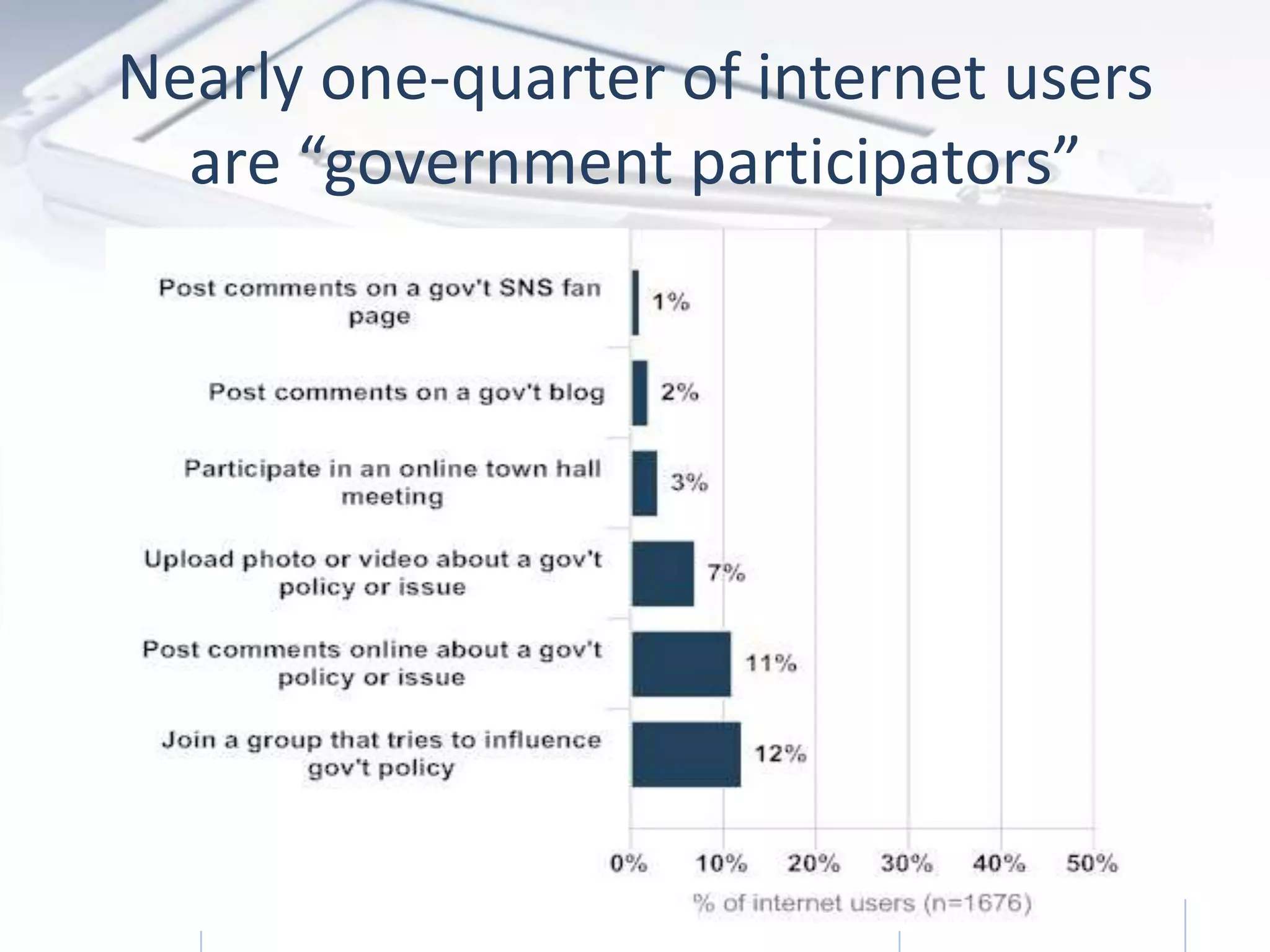
40% of internet users go online for
data about government operations


   Trends in Online Government   2/3/2011   20
New Reality 4) Influence is migrating from
    organizations to networks and new “experts”

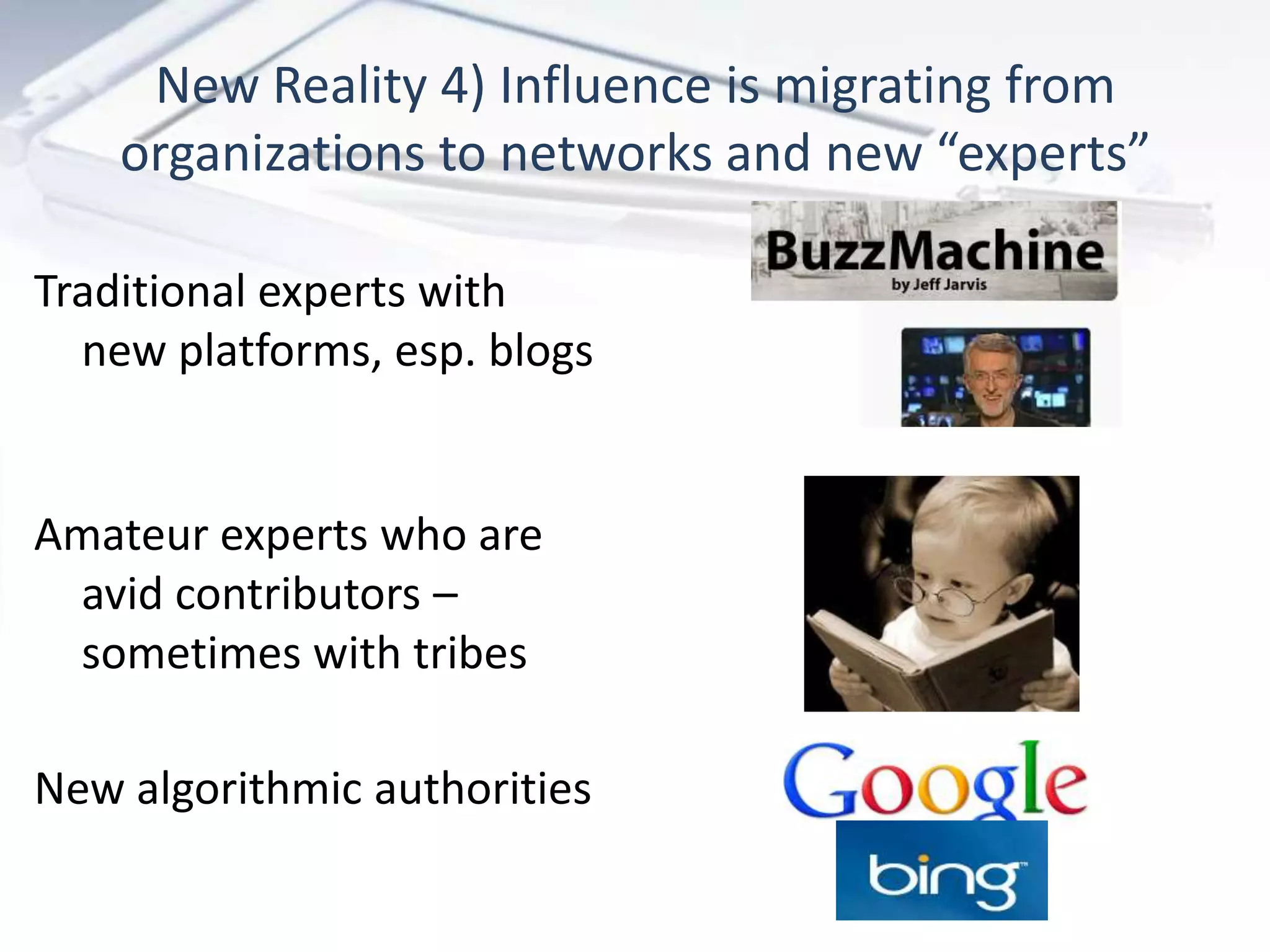
Traditional experts with
  new platforms, esp. blogs


Amateur experts who are
 avid contributors –
 sometimes with tribes
New algorithmic authorities
New Reality 4) Corollaries
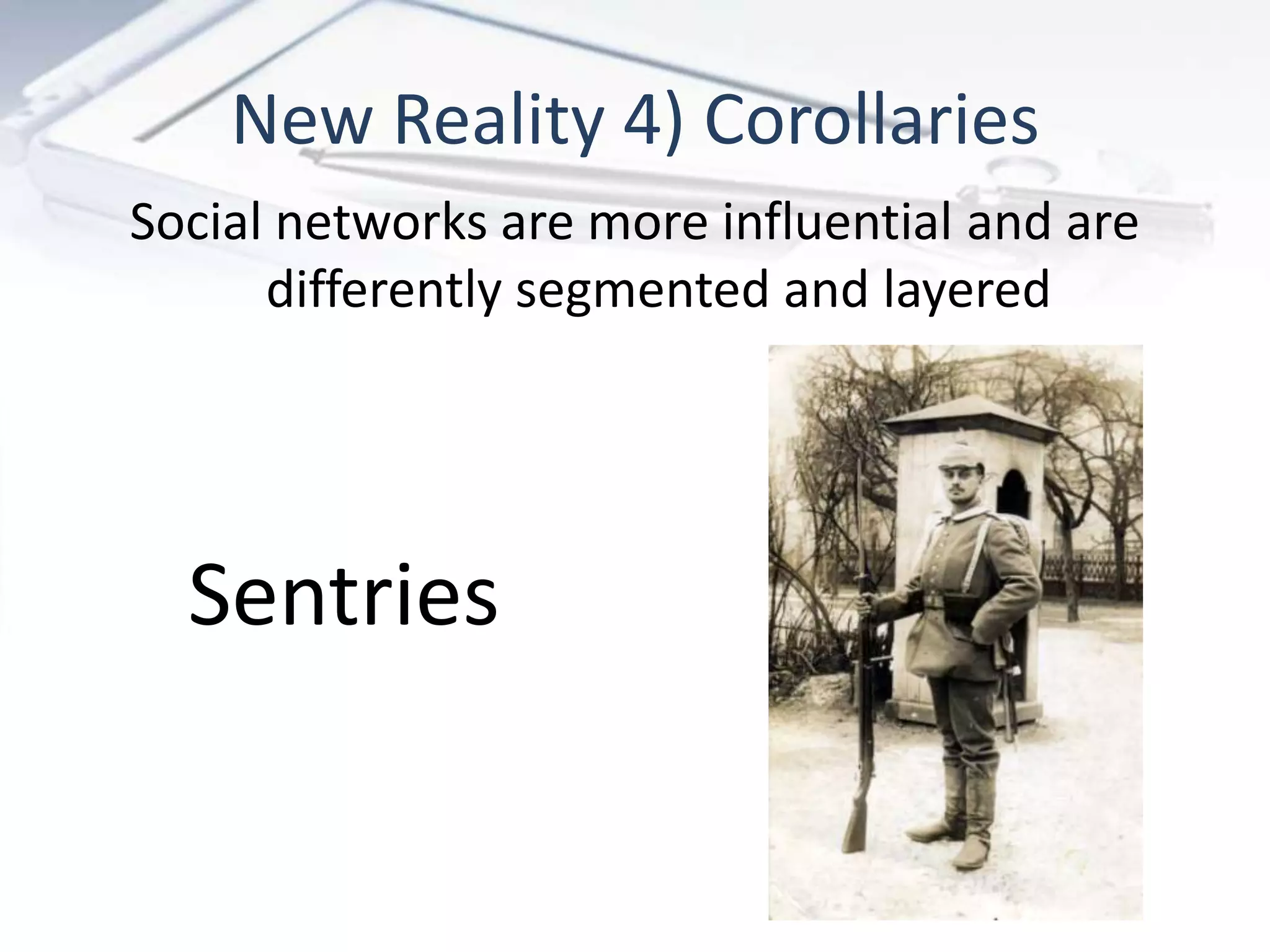
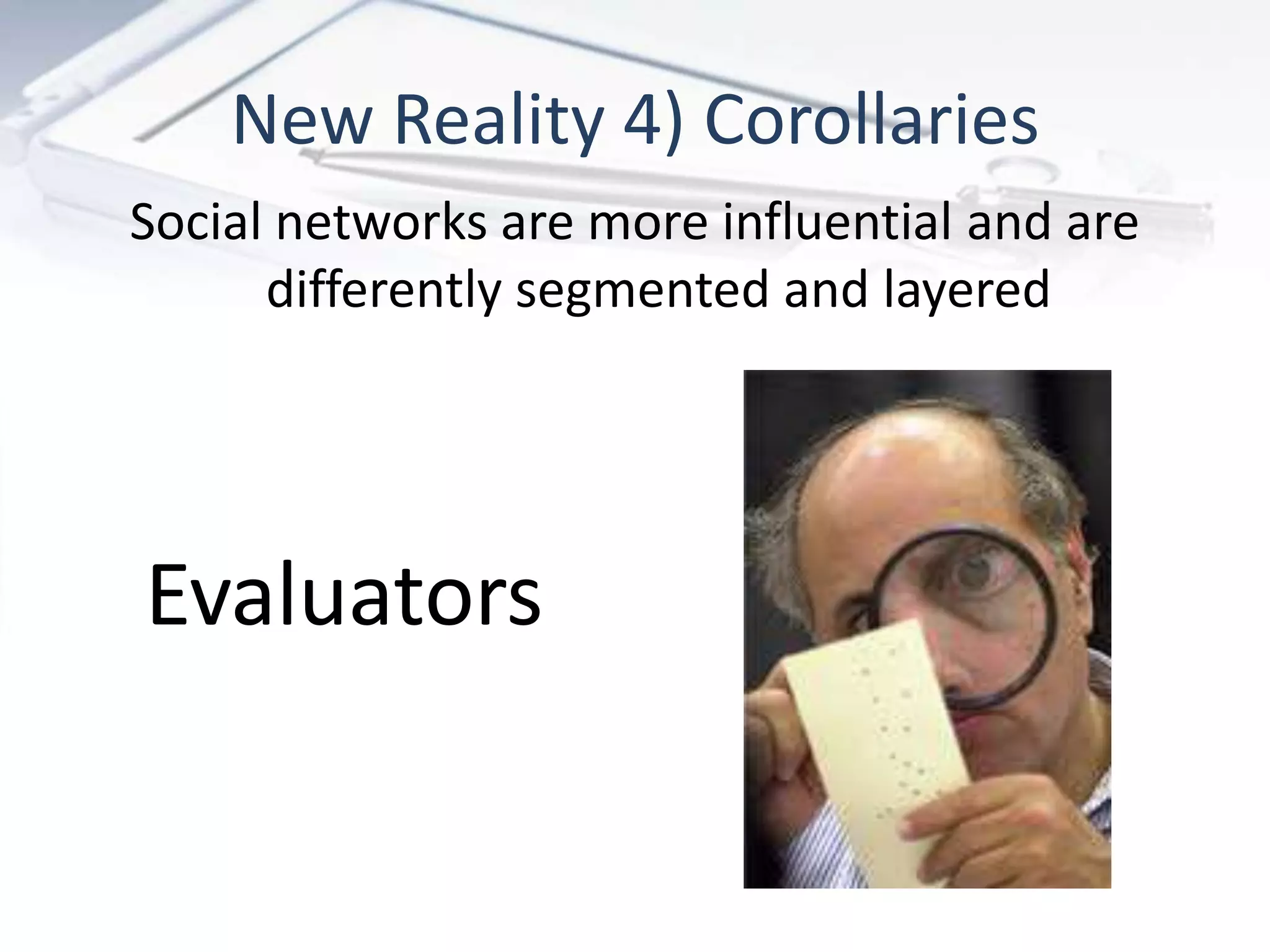
Social networks are more influential and are
      differently segmented and layered


  Sentries
New Reality 4) Corollaries
Social networks are more influential and are
      differently segmented and layered


Evaluators
New Reality 4) Corollaries
Social networks are more influential and are
      differently segmented and layered


 Audience
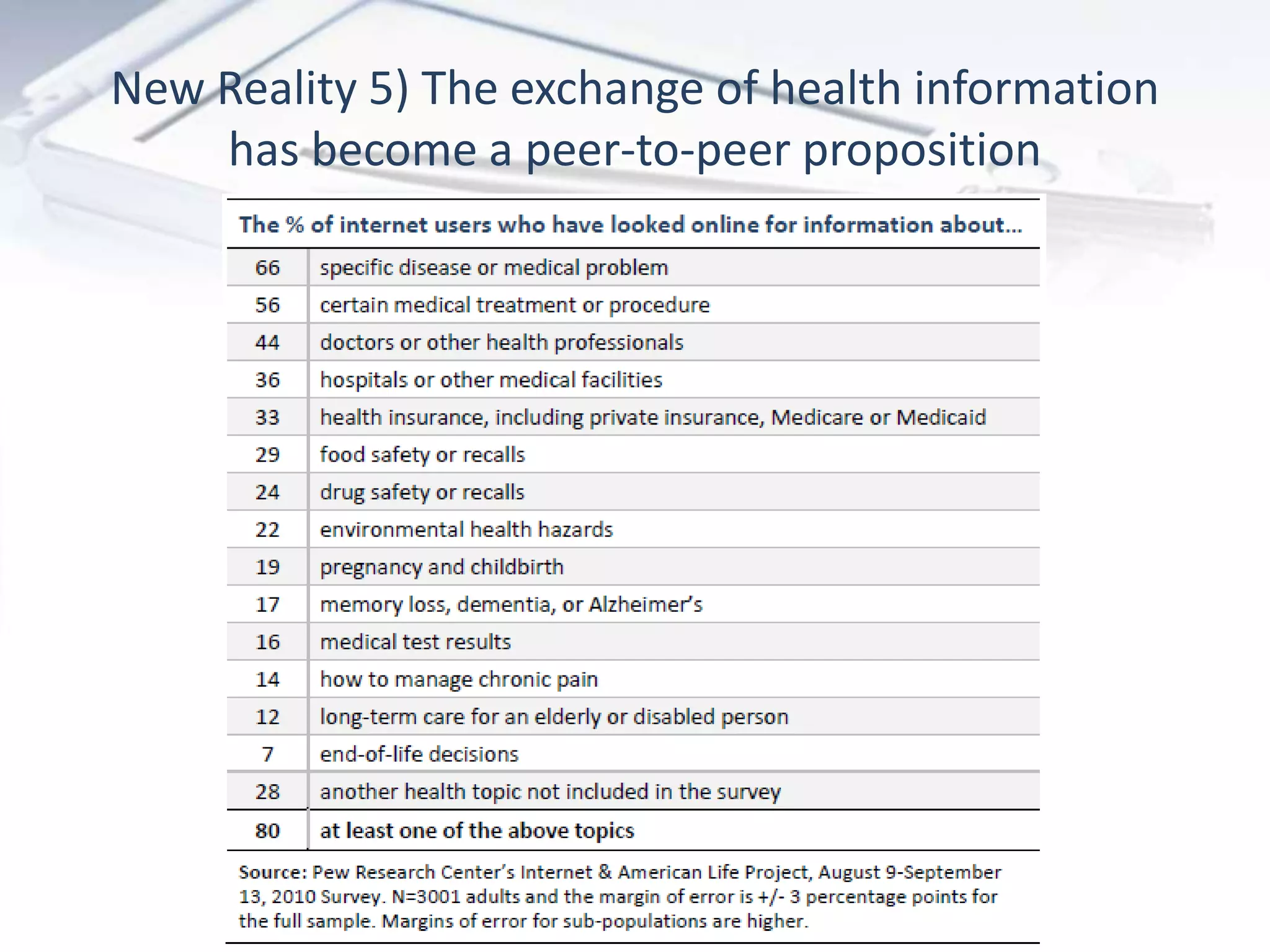
New Reality 5) The exchange of health information
    has become a peer-to-peer proposition
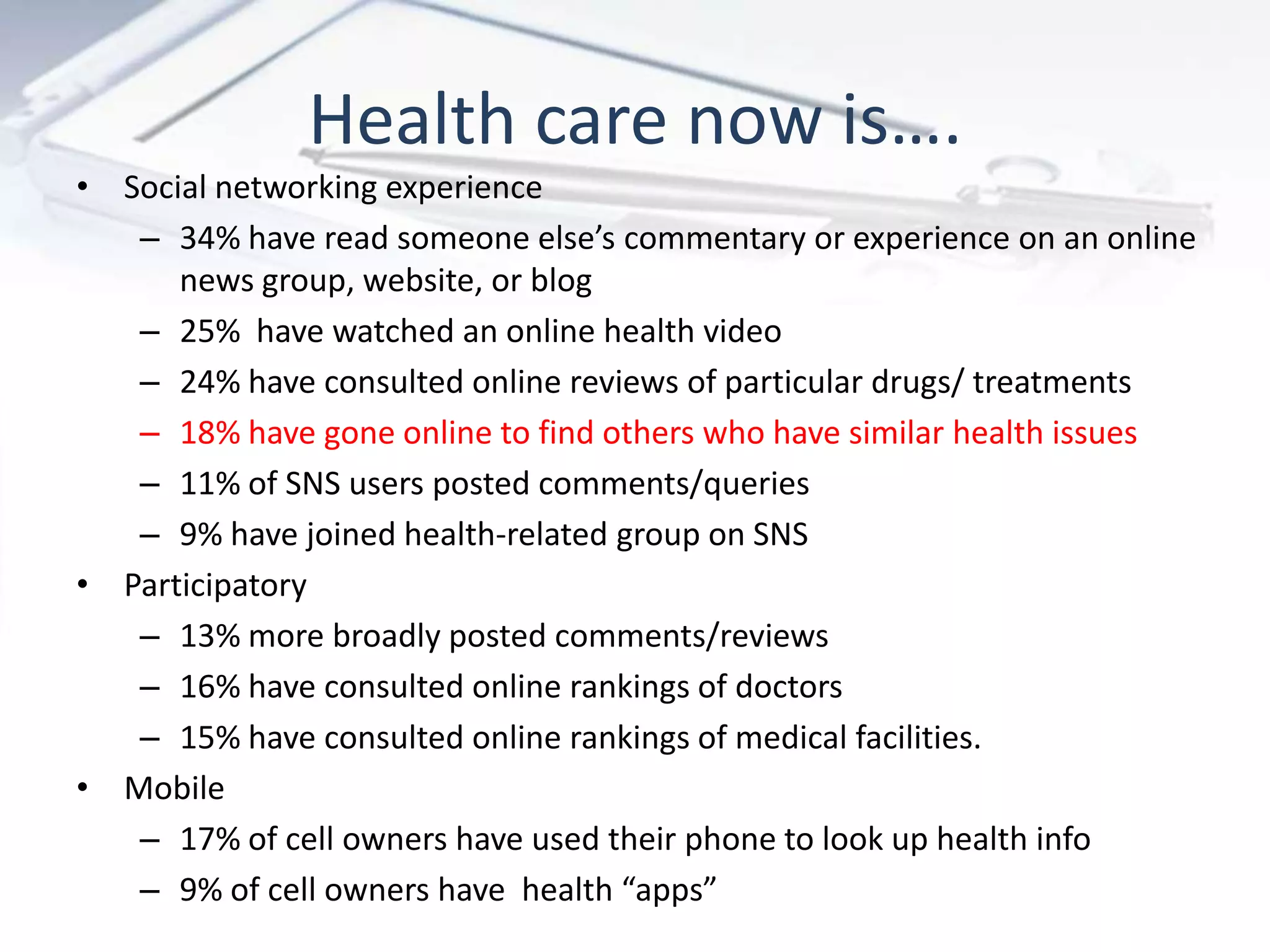
Health care now is….
• Social networking experience
   – 34% have read someone else’s commentary or experience on an online
      news group, website, or blog
   – 25% have watched an online health video
   – 24% have consulted online reviews of particular drugs/ treatments
   – 18% have gone online to find others who have similar health issues
   – 11% of SNS users posted comments/queries
   – 9% have joined health-related group on SNS
• Participatory
   – 13% more broadly posted comments/reviews
   – 16% have consulted online rankings of doctors
   – 15% have consulted online rankings of medical facilities.
• Mobile
   – 17% of cell owners have used their phone to look up health info
   – 9% of cell owners have health “apps”
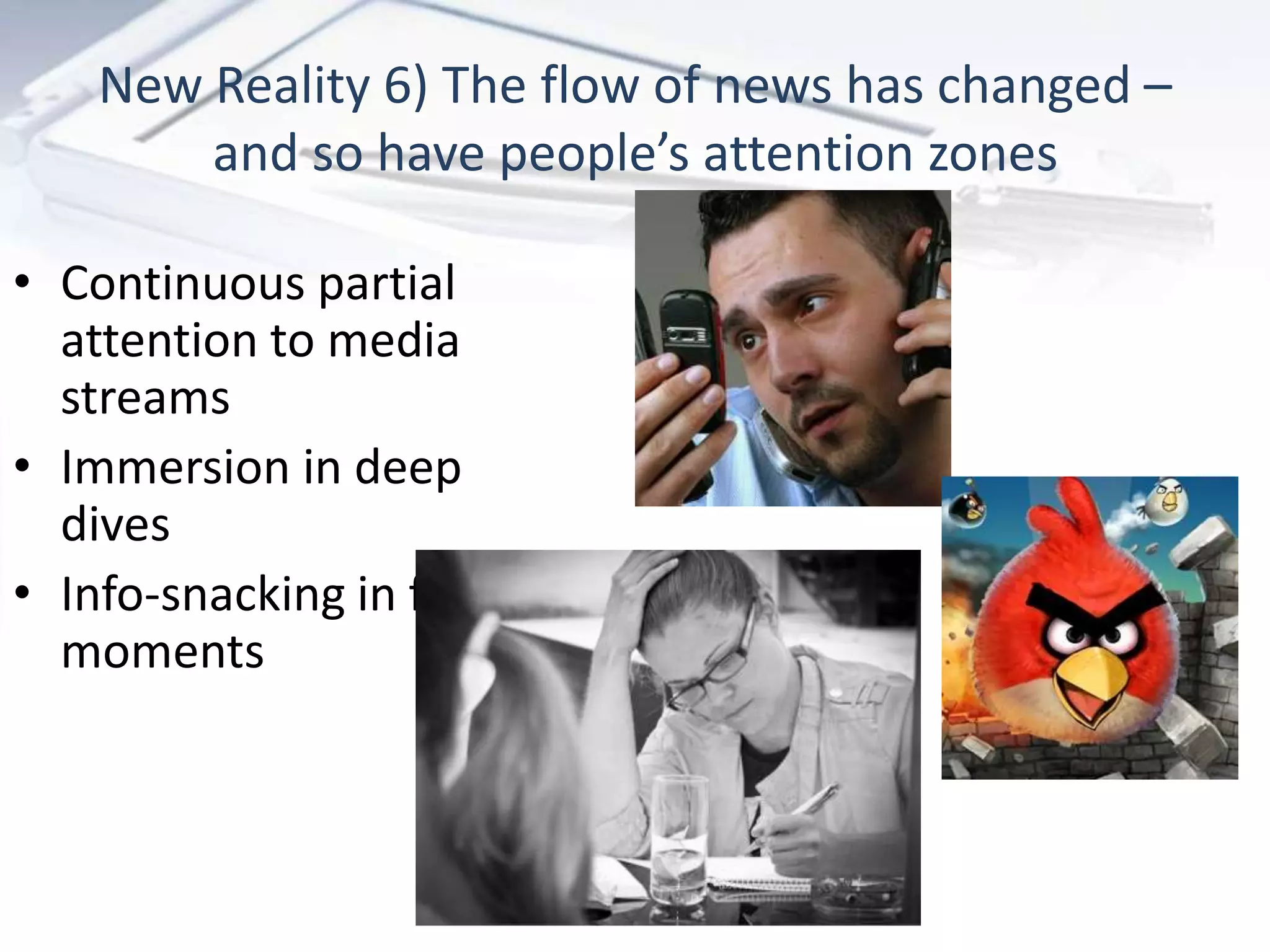
New Reality 6) The flow of news has changed –
        and so have people’s attention zones

• Continuous partial
  attention to media
  streams
• Immersion in deep
  dives
• Info-snacking in free
  moments
New Reality 7) All organizations are under more
  scrutiny and transparency is a new marker of trust


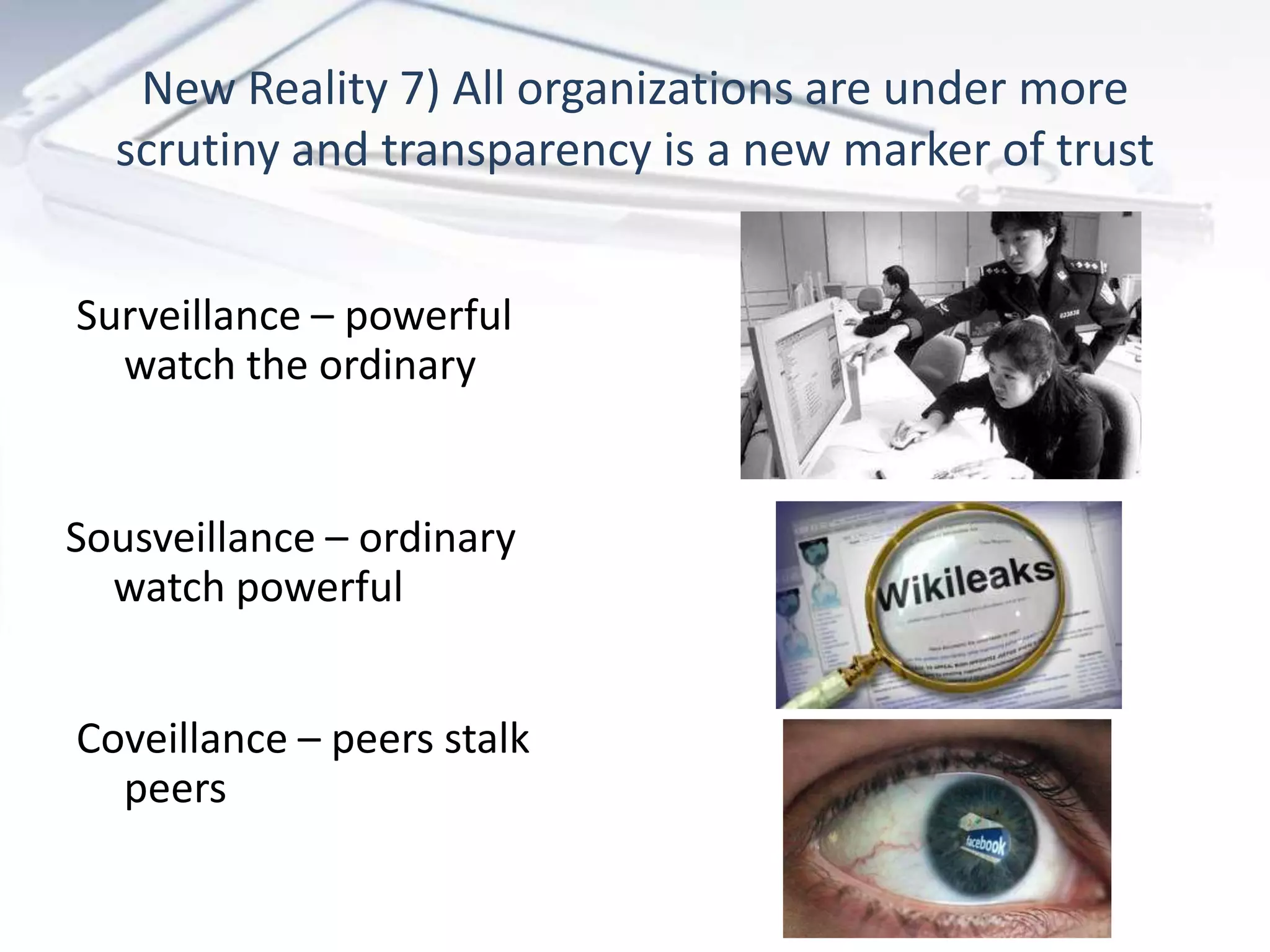
Surveillance – powerful
  watch the ordinary


Sousveillance – ordinary
  watch powerful


Coveillance – peers stalk
  peers
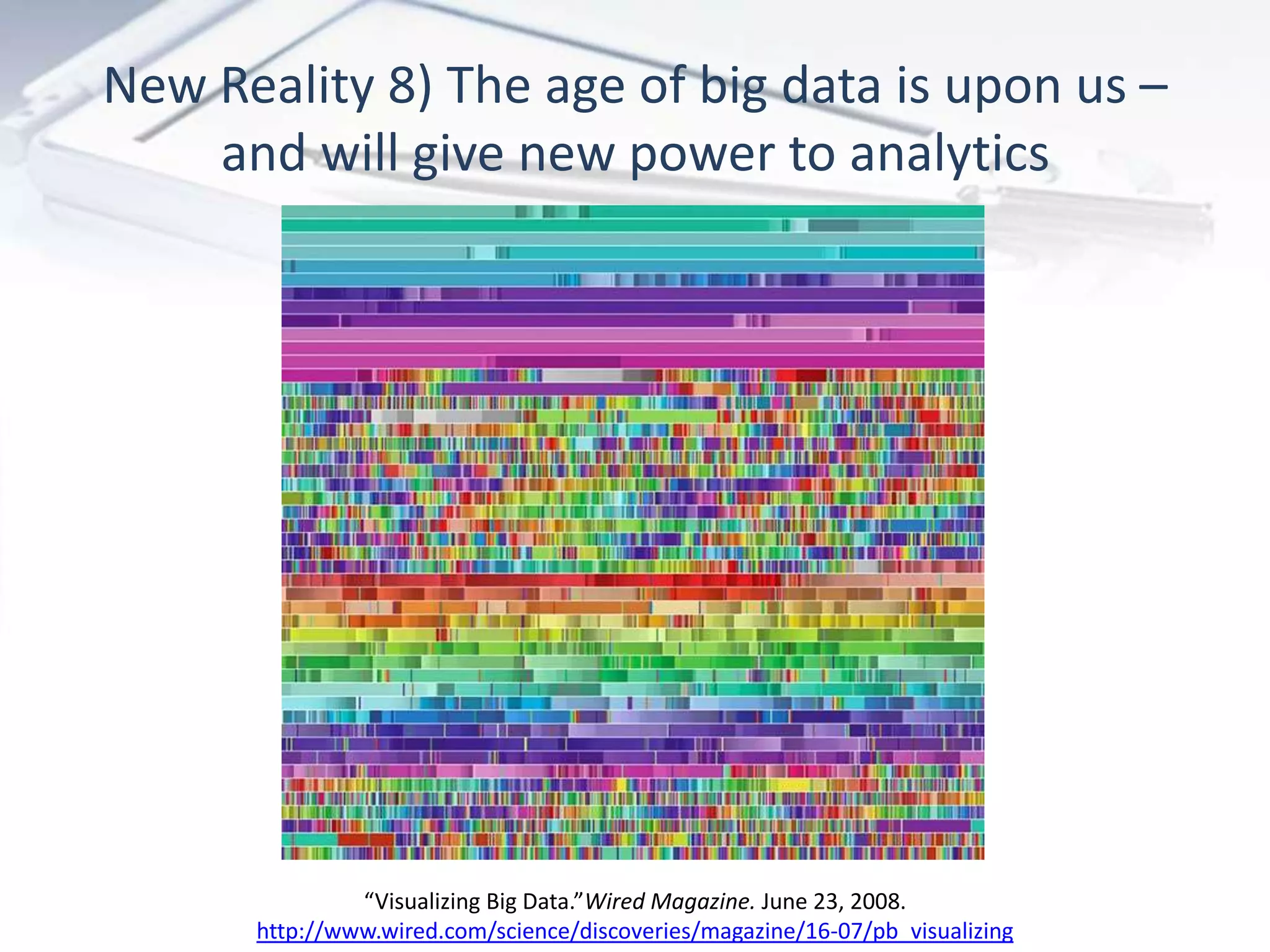
New Reality 8) The age of big data is upon us –
    and will give new power to analytics


               “Visualizing Big Data.”Wired Magazine. June 23, 2008.
      http://www.wired.com/science/discoveries/magazine/16-07/pb_visualizing
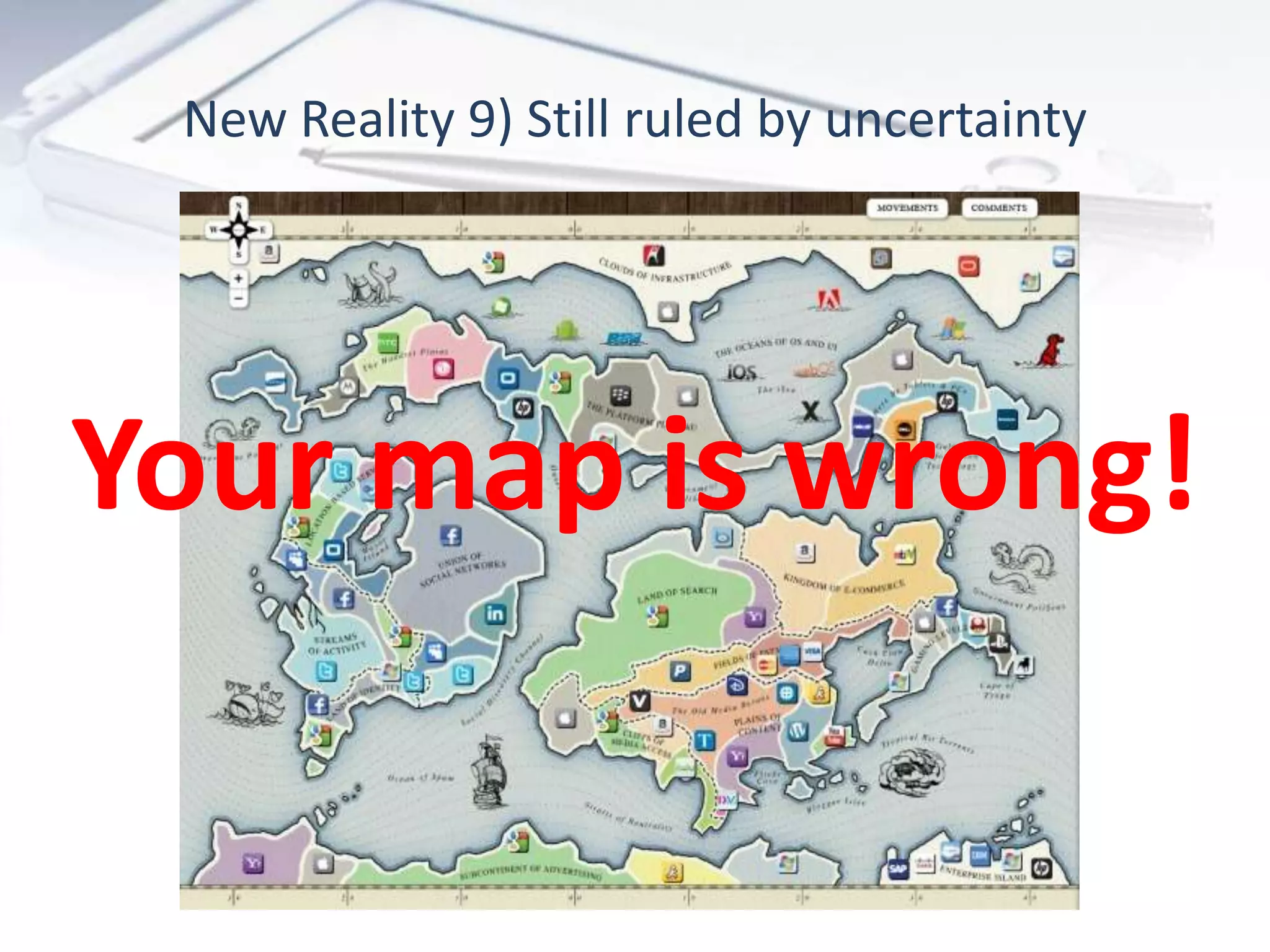
New Reality 9) Still ruled by uncertainty


Your map is wrong!
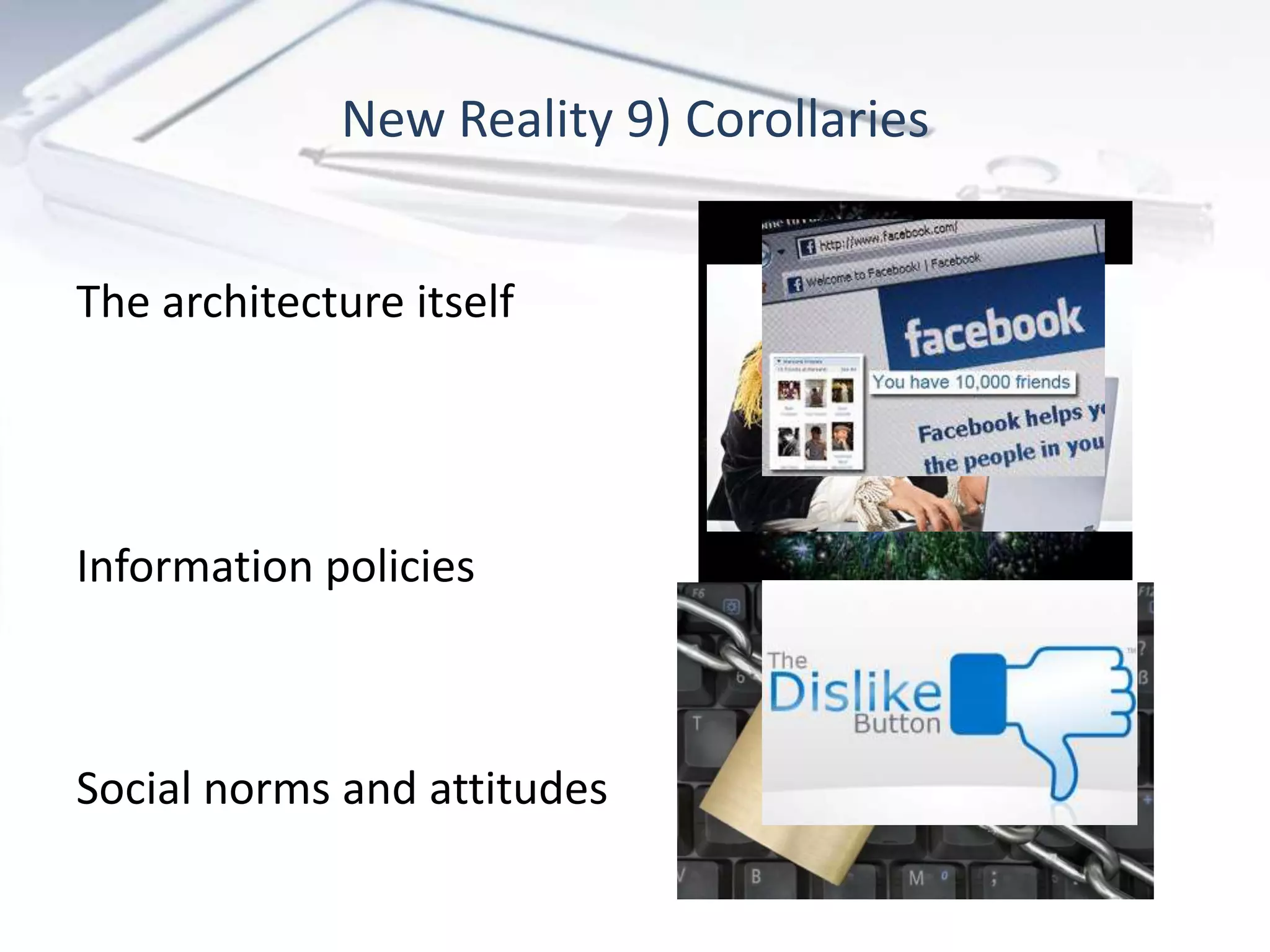
New Reality 9) Corollaries


The architecture itself


Information policies


Social norms and attitudes
Eat food
Not too much
Mostly plants
Be unforgettable
Engage the crowd
Adjust accordingly
Share ideas
On many platforms
Measure well
Thank you!

Future of the Internet: Role of the Web and New Media in the Public Sector

  • 1.
    Future of theInternet: Role of the Web and New Media in the Public Sector Webmanager University – Joseph Pagano Memorial Lecture December 13, 2011 Lee Rainie: Director, Pew Internet Project Email: Lrainie@pewinternet.org Twitter: @Lrainie PewInternet.org
  • 4.
    we need atshirt, "I survived the keynote disaster of 09" “Tweckle (twek’ul) vt. To abuse a speakerdon'tTwitter it's awesome in the "I to want to turn away from the accident because I followers ain the audience might see severed head" way while he/she is speaking.” too bad they took my utensils away w/ my plate. I could have jammed the butter knife into my temple. 4
  • 5.
    Three revolutions have created a new world
  • 6.
    Digital Revolution 1 Internet(78%) and Broadband at home (62%) 65% 62%
  • 7.
    Networked creators amonginternet users • 65% are social networking site users • 55% share photos • 37% contribute rankings and ratings • 33% create content tags • 30% share personal creations • 26% post comments on sites and blogs • 15% have personal website • 15% are content remixers • 14% are bloggers • 13% use Twitter • 6% location services – 9% allow location awareness from social media
  • 8.
    Digital Revolution 2 Socialnetworking – 50% of all adults
  • 9.
    Mean size ofFacebook friends network 350.0 300.0 250.0 200.0 318.5 150.0 100.0 197.6 155.7 50.0 85.1 78.4 42.0 0.0 Millennials Gen X Younger Older Boomers Silent G.I. (18-34) (35-46) Boomers (57-65) Generation Generation (47-56) (66-74) (75+) Source: Pew Research Center's Internet & American Life Project, October 20-November 28, 2010 Social Networking survey.
  • 10.
    Digital Revolution 3 Mobile – 84% Total U.S. 327.6 million population: 315.5 million 2011
  • 11.
    Smartphone ownership -35% of adults 60% 50% 40% 30% 51% 20% 39% 10% 24% 21% 12% 8% 0% Millennials Gen X Younger Older Boomers Silent G.I. Generation (18-34) (35-46) Boomers (57-65) Generation (75+) (47-56) (66-74) Source: Pew Research Center's Internet & American Life Project, April 26-May 22, 2011 Tracking Survey. N=2,277 adults 18 and older, including 755 reached via cell phone.
  • 12.
    56% of adultsown laptops – up from 30% in 2006 52% of adults own DVRs – up from 3% in 2002 44% of adults own MP3 players – up from 11% in 2005 42% of adults own game consoles 12% of adults own e-book readers - Kindle 11% of adults own tablet computer - iPad
  • 13.
    New Reality 1)The world is full of networked individuals using networked information Image attribution: Flickrverse, Expanding Ever with New Galaxies Forming Cobalt123 http://www.flickr.com/photos/cobalt/34248855/sizes/z/in/photostream/
  • 14.
    New Reality 2)Giant changes in civic culture and mediasphere have created new contours of public life In America Abroad
  • 15.
    New Reality 3)There are new ways to interact with government
  • 16.
    New places fortransactions % of internet users who did following in last 12 months: Look for info about a public policy or issue 48% Look up what services a government agency provides 46% Download government forms 41% Research official documents or statistics 35% Renew a driver’s license or auto registration 33% Get recreational or tourist info 30% Get advice/info about a health or safety issue 25% Apply for government benefits 23% Apply for a government job 19% Pay a fine 15% Apply for a recreational license 11%
  • 17.
    Other avenues forgov. info and interaction 31% of internet users did at least one of the following activities in the preceding 12 months: • 15% of internet users watched a video on a government website • 15% of email users signed up to receive email alerts from a government agency or official • 13% of internet users read the blog of a government agency or official • 5% of internet users followed or become a fan of a government agency or official on a social networking site • 4% of texters signed up to receive text messages from a government agency or official • 2% of internet users followed a government agency or official on Twitter Trends in Online Government 2/3/2011 17
  • 18.
    Mixed views onsocial media outreach Trends in Online Government 2/3/2011 18
  • 19.
    Nearly one-quarter ofinternet users are “government participators” Trends in Online Government 2/3/2011 19
  • 20.
    40% of internetusers go online for data about government operations Trends in Online Government 2/3/2011 20
  • 21.
    New Reality 4)Influence is migrating from organizations to networks and new “experts” Traditional experts with new platforms, esp. blogs Amateur experts who are avid contributors – sometimes with tribes New algorithmic authorities

  • 22.
    New Reality 4)Corollaries Social networks are more influential and are differently segmented and layered Sentries
  • 23.
    New Reality 4)Corollaries Social networks are more influential and are differently segmented and layered Evaluators
  • 24.
    New Reality 4)Corollaries Social networks are more influential and are differently segmented and layered Audience
  • 25.
    New Reality 5)The exchange of health information has become a peer-to-peer proposition
  • 26.
    Health care nowis…. • Social networking experience – 34% have read someone else’s commentary or experience on an online news group, website, or blog – 25% have watched an online health video – 24% have consulted online reviews of particular drugs/ treatments – 18% have gone online to find others who have similar health issues – 11% of SNS users posted comments/queries – 9% have joined health-related group on SNS • Participatory – 13% more broadly posted comments/reviews – 16% have consulted online rankings of doctors – 15% have consulted online rankings of medical facilities. • Mobile – 17% of cell owners have used their phone to look up health info – 9% of cell owners have health “apps”
  • 28.
    New Reality 6)The flow of news has changed – and so have people’s attention zones • Continuous partial attention to media streams • Immersion in deep dives • Info-snacking in free moments
  • 29.
    New Reality 7)All organizations are under more scrutiny and transparency is a new marker of trust Surveillance – powerful watch the ordinary Sousveillance – ordinary watch powerful Coveillance – peers stalk peers
  • 30.
    New Reality 8)The age of big data is upon us – and will give new power to analytics “Visualizing Big Data.”Wired Magazine. June 23, 2008. http://www.wired.com/science/discoveries/magazine/16-07/pb_visualizing
  • 31.
    New Reality 9)Still ruled by uncertainty Your map is wrong!
  • 32.
    New Reality 9)Corollaries The architecture itself Information policies Social norms and attitudes
  • 33.
    Eat food Not toomuch Mostly plants
  • 34.
    Be unforgettable Engage thecrowd Adjust accordingly
  • 35.
    Share ideas On manyplatforms Measure well
  • 36.

Editor's Notes

  • #8 This is the way Pew Internet measures content creation….
  • #14 Part of broad social, political, economic trend in social arrangements away from tight-knit groups and hierarchies towards loose-knit networksTechnology gives people more capacity to do things on their ownMore connected via technologyMore capable of creating and sharing information via technologySocial networks are instruments of learning, community building, and influenceInstitutions can become “nodes” in people’s social networks
  • #15 http://cspcs.sanford.duke.edu/sites/default/files/DisruptingPhil_online_FINAL.pdfHuge cultural debate over role of public and private institutions – philanthropists have always filled those gapsTroubles in news media have left key civic arenas uncovered or undercoveredMore people and organizations can act to confront problems
  • #29 PervasivePortablePersonalizedParticipatorySocial Filtered by old media and newEncountered and evaluated in social networksTwo step-flow is now feedback loopNew intermediaries and experts in the process--------Be ready for your closeupBe findableExpect serendipityNew metrics
  • #31 Metrics and DIY analyticsObservation, conversation, feedback are hallmarks of social media ageCorrelations and meaningBrute numbers vs. representativenesshttp://www.wired.com/science/discoveries/magazine/16-07/pb_visualizing
  • #34 The New York Times held a Seven-Word Wisdom contest . Here are my favorite entries:Eat pie. Very good pie. Not often.Call Mom. Let her talk. Don’t argue.Make promises. Don’t break them. Find loopholes.