BODIES &
BUILDINGS
NYU ITP LECTURE COURSE SPRING 2013
APRIL 8, 2013
JEN VAN DER MEER @JENVANDERMEER WWW.JENVANDERMEER.COM
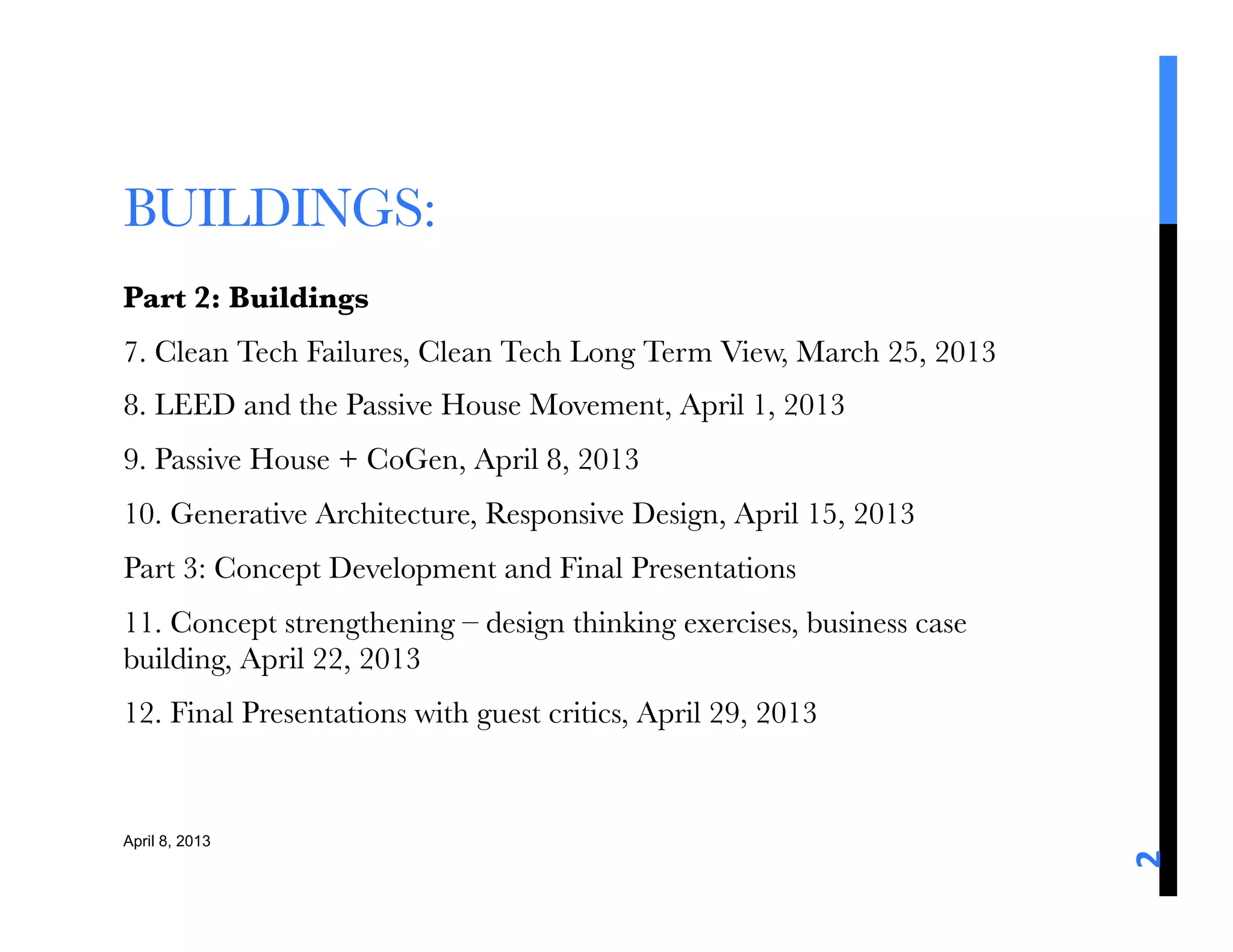
BUILDINGS: 
Part 2: Buildings
7. Clean Tech Failures, Clean Tech Long Term View, March 25, 2013
8. LEED and the Passive House Movement, April 1, 2013
9. Passive House + CoGen, April 8, 2013
10. Generative Architecture, Responsive Design, April 15, 2013
Part 3: Concept Development and Final Presentations
11. Concept strengthening – design thinking exercises, business case
building, April 22, 2013
12. Final Presentations with guest critics, April 29, 2013


 8, 2013
April


                                                                       2	
  
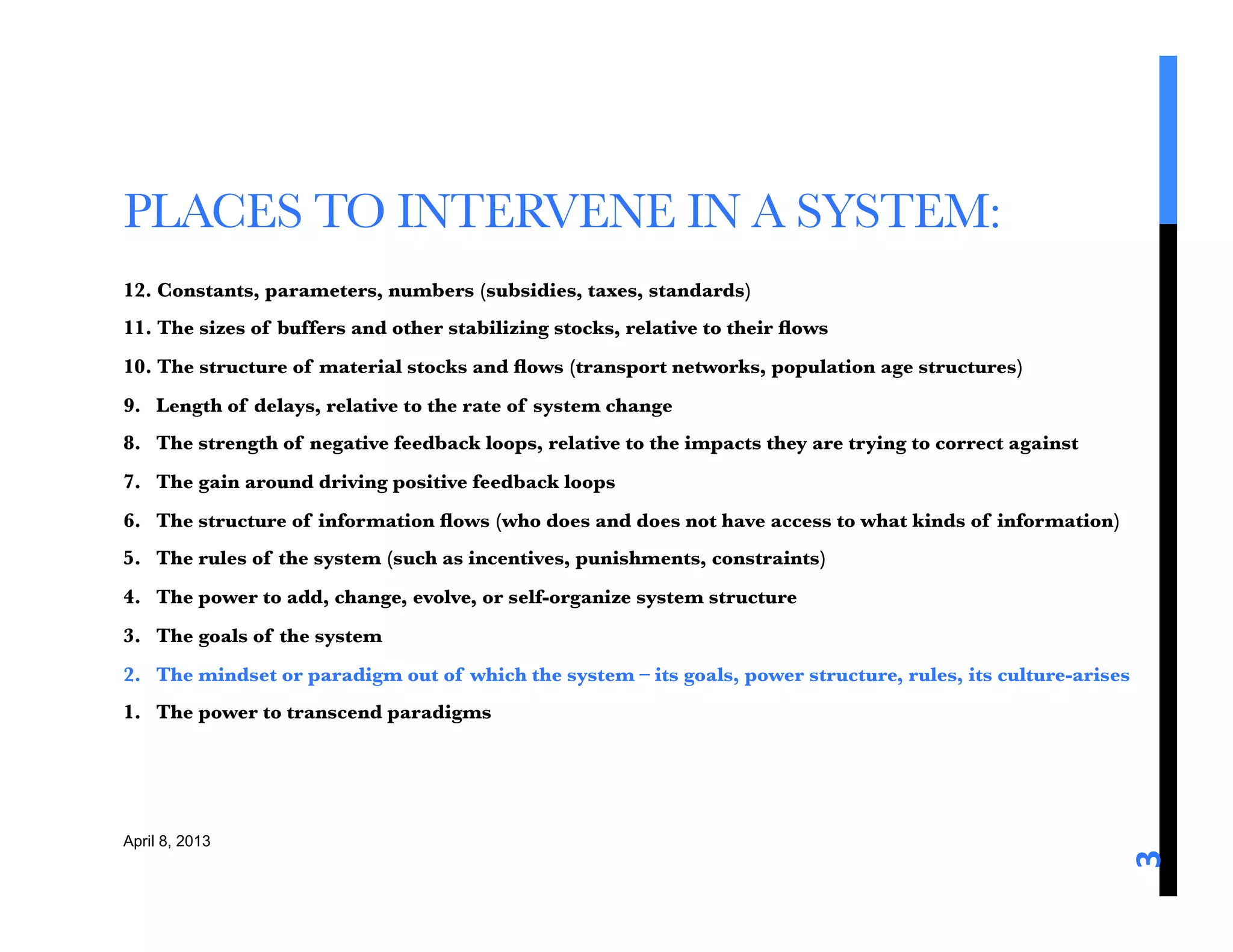
PLACES TO INTERVENE IN A SYSTEM: 
12. Constants, parameters, numbers (subsidies, taxes, standards)
11. The sizes of buffers and other stabilizing stocks, relative to their flows
10. The structure of material stocks and flows (transport networks, population age structures)
9. Length of delays, relative to the rate of system change
8. The strength of negative feedback loops, relative to the impacts they are trying to correct against
7. The gain around driving positive feedback loops
6. The structure of information flows (who does and does not have access to what kinds of information)
5. The rules of the system (such as incentives, punishments, constraints)
4. The power to add, change, evolve, or self-organize system structure
3. The goals of the system
2. The mindset or paradigm out of which the system – its goals, power structure, rules, its culture-arises
1. The power to transcend paradigms


April 8, 2013


                                                                                                          3	
  
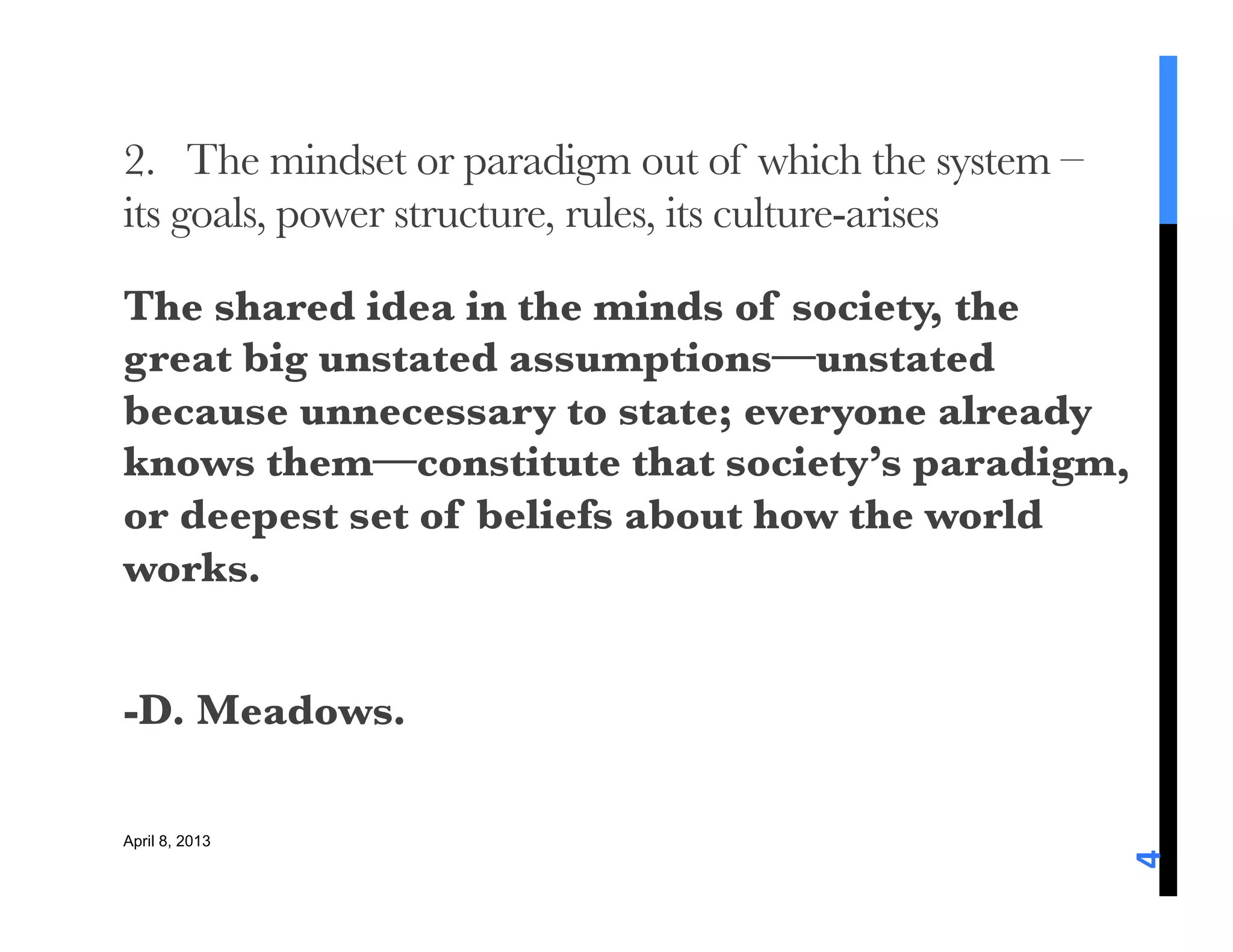
2. The mindset or paradigm out of which the system –
its goals, power structure, rules, its culture-arises

The shared idea in the minds of society, the
great big unstated assumptions—unstated
because unnecessary to state; everyone already
knows them—constitute that society’s paradigm,
or deepest set of beliefs about how the world
works.

-D. Meadows. 

April 8, 2013


                                                         4	
  
What paradigmatic assumptions do we follow?
There is a difference between nouns and verbs.
Money measures something real and has meaning.
(people who are paid less are literally worth less).
Growth is good.
Nature is a stock of resources to be converted for
human purposes. 
One can own the land.


 8, 2013
April


                                                        5	
  
Paradigms are the sources of systems
From them, form shared social agreements about the
nature of reality, come system goals and information
flows, feedbacks, stocks, flows, and everything else
about systems. 


April 8, 2013


                                                       6	
  
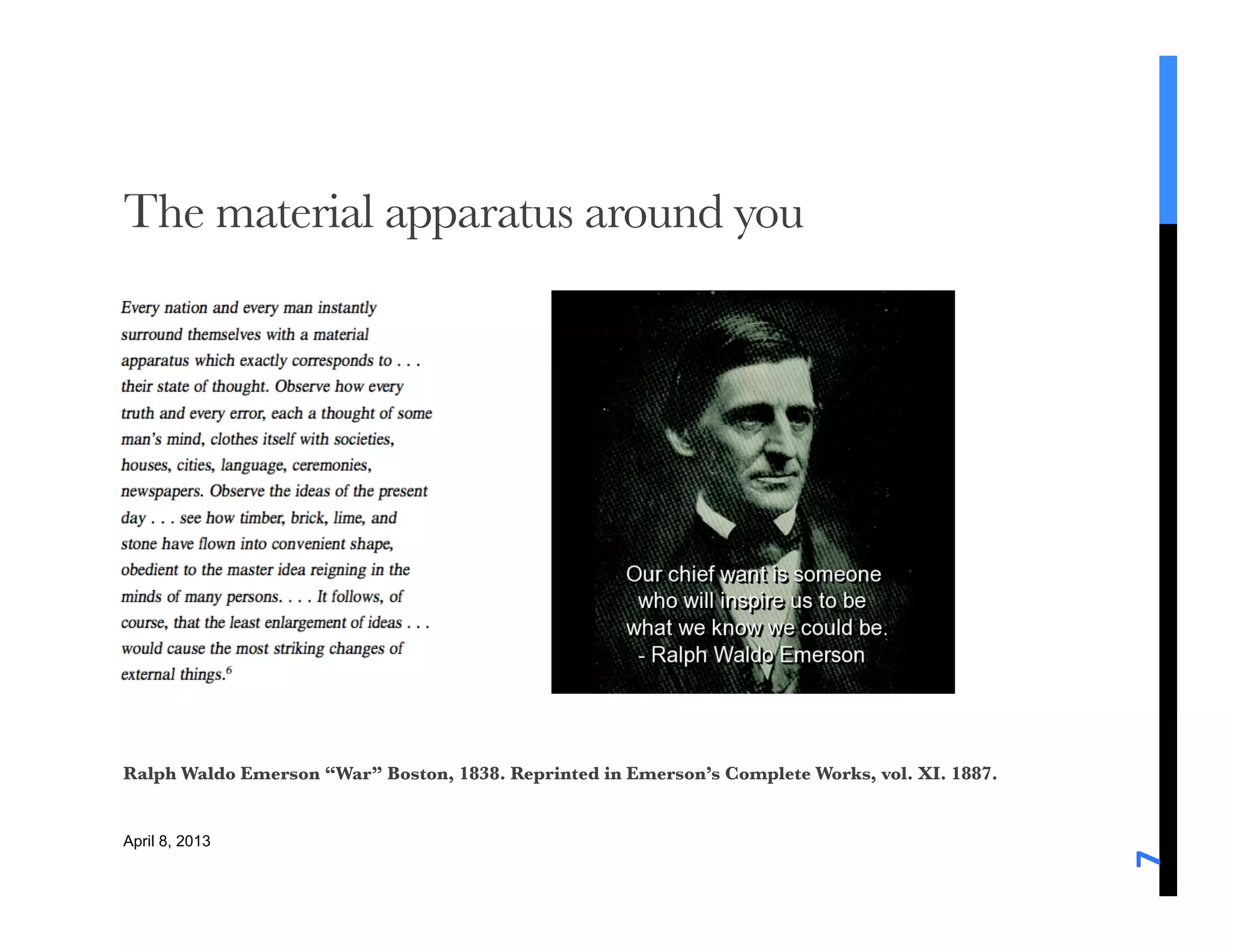
The material apparatus around you


Ralph Waldo Emerson “War” Boston, 1838. Reprinted in Emerson’s Complete Works, vol. XI. 1887. 

April 8, 2013


                                                                                                  7	
  
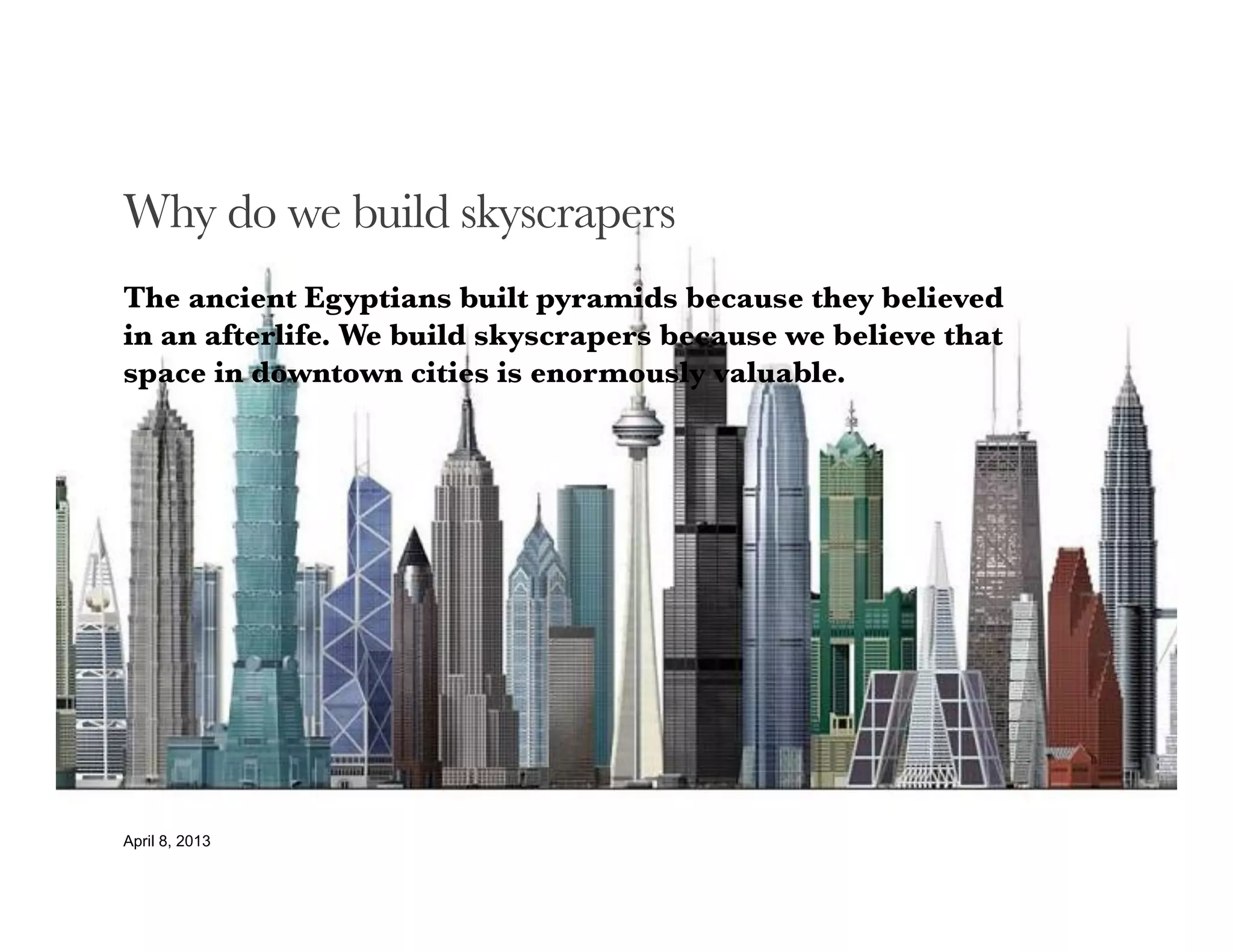
Why do we build skyscrapers
The ancient Egyptians built pyramids because they believed
in an afterlife. We build skyscrapers because we believe that
space in downtown cities is enormously valuable.


April 8, 2013
Who has changed paradigms?
Whether it was Copernicus and Kepler showing that the earth
is not the center of the universe
Or Einstein hypothesizing that matter and energy are
interchangable
Or Adam Smith postulating that the selfish actions of
individual players in markets wonderfully accumulate to the
common good
People who have managed to intervene in systems at the level
of paradigm have hit a leverage point that totally transforms
systems. 


April 8, 2013


                                                                9	
  
So how do you change paradigms?
D. Meadows paraphrasing Thomas Kuhn: 
You keep pointing at the anomalies and failures in the old
paradigm, you keep speaking louder and with assurance from
the new one, you insert people with the new paradigm in
places of public visibility and power. 
You don’t waste time with reactionaries; rather you work with
active change agents and with the vast middle groun of people
who are open minded.


                                                                10	
  
April 8, 2013
BUILDINGS:
FAILURES AND
ANOMOLIES 
BODIES & BUILDINGS


                      11	
  
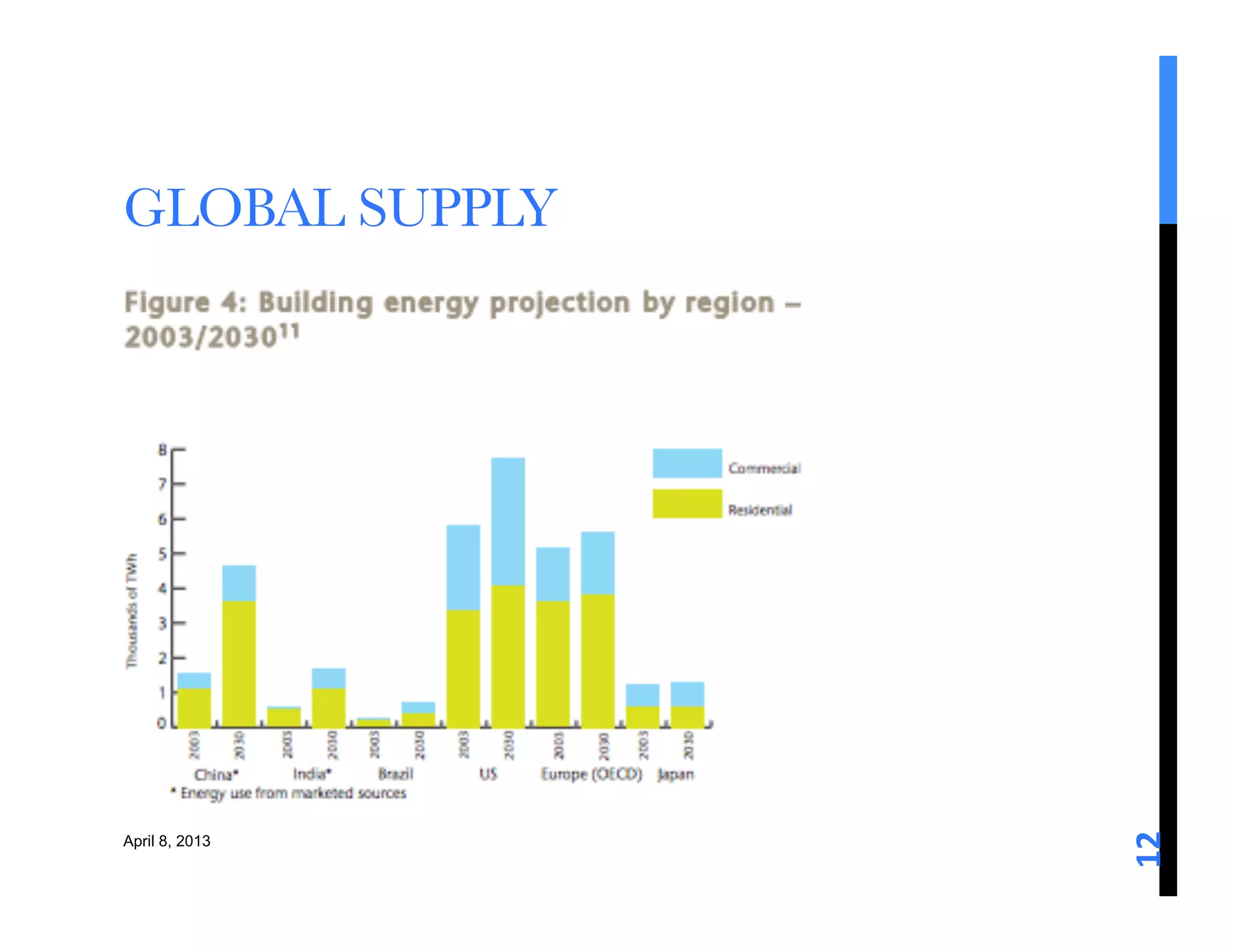
GLOBAL SUPPLY 


                  12	
  
April 8, 2013
ASSIGNMENT:
APRIL 15


                13	
  
April 8, 2013
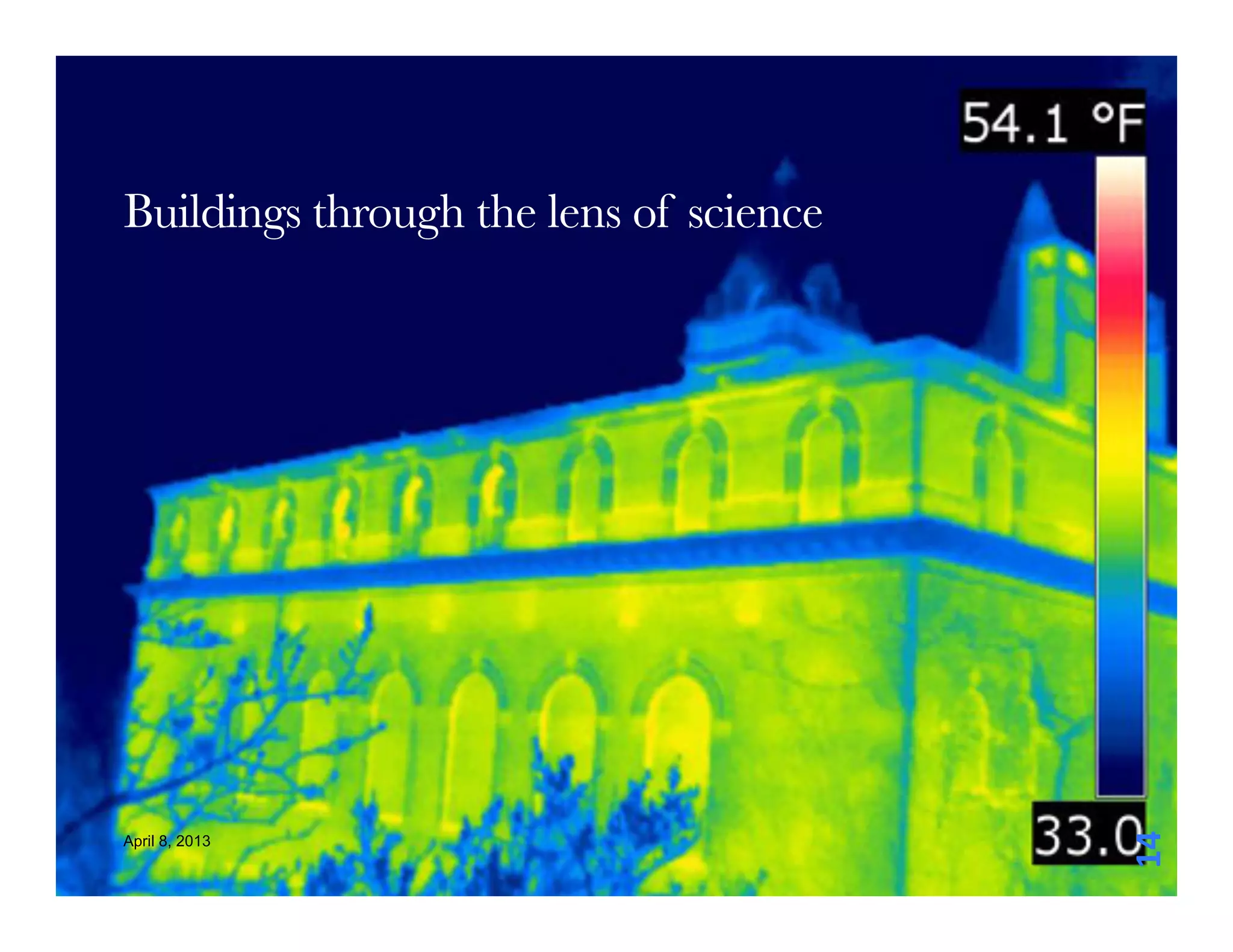
Buildings through the lens of science


                                         14	
  
April 8, 2013
Parallels
Bodies: 
       Buildings: 


                               15	
  
April 8, 2013
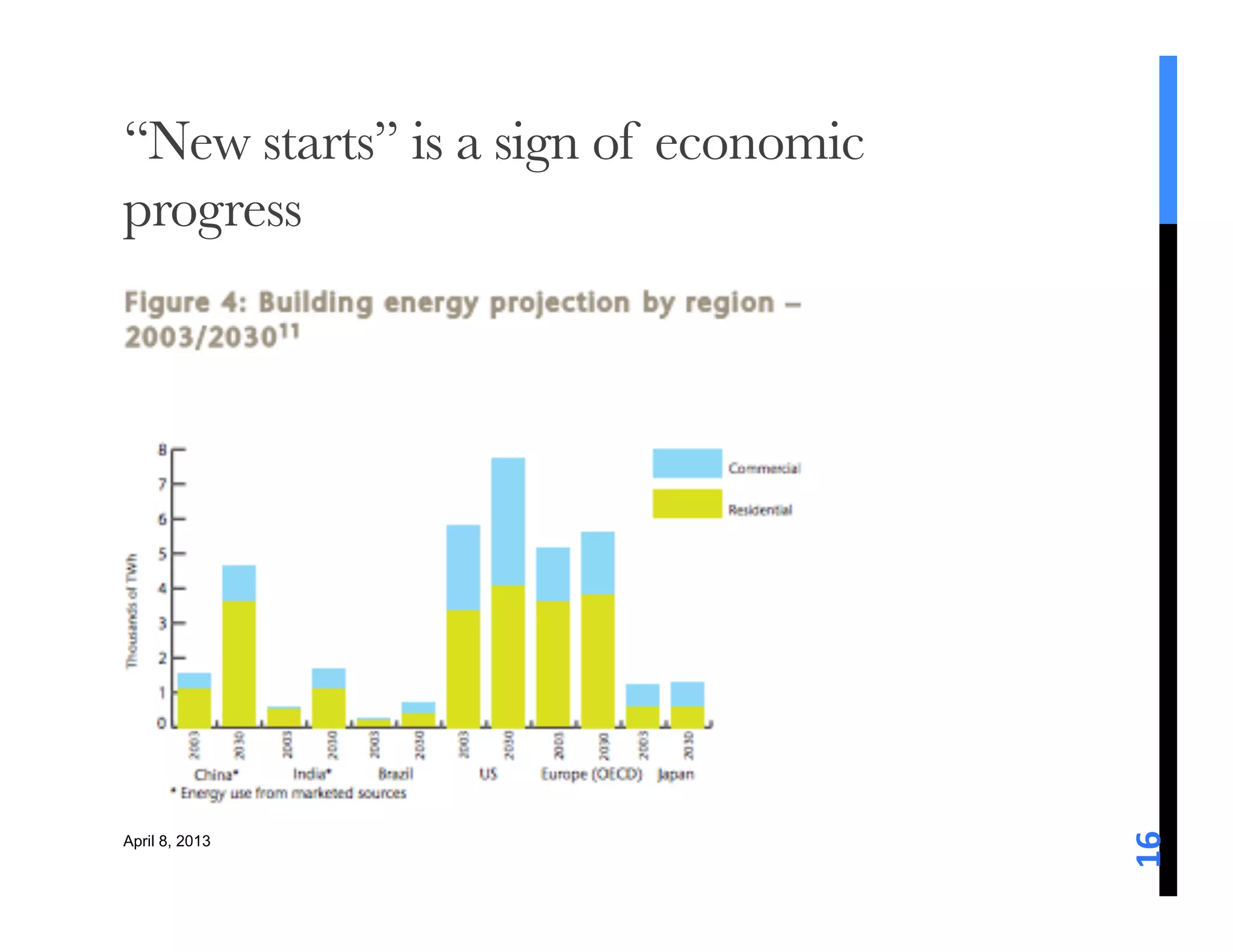
“New starts” is a sign of economic
progress


                                     16	
  
April 8, 2013
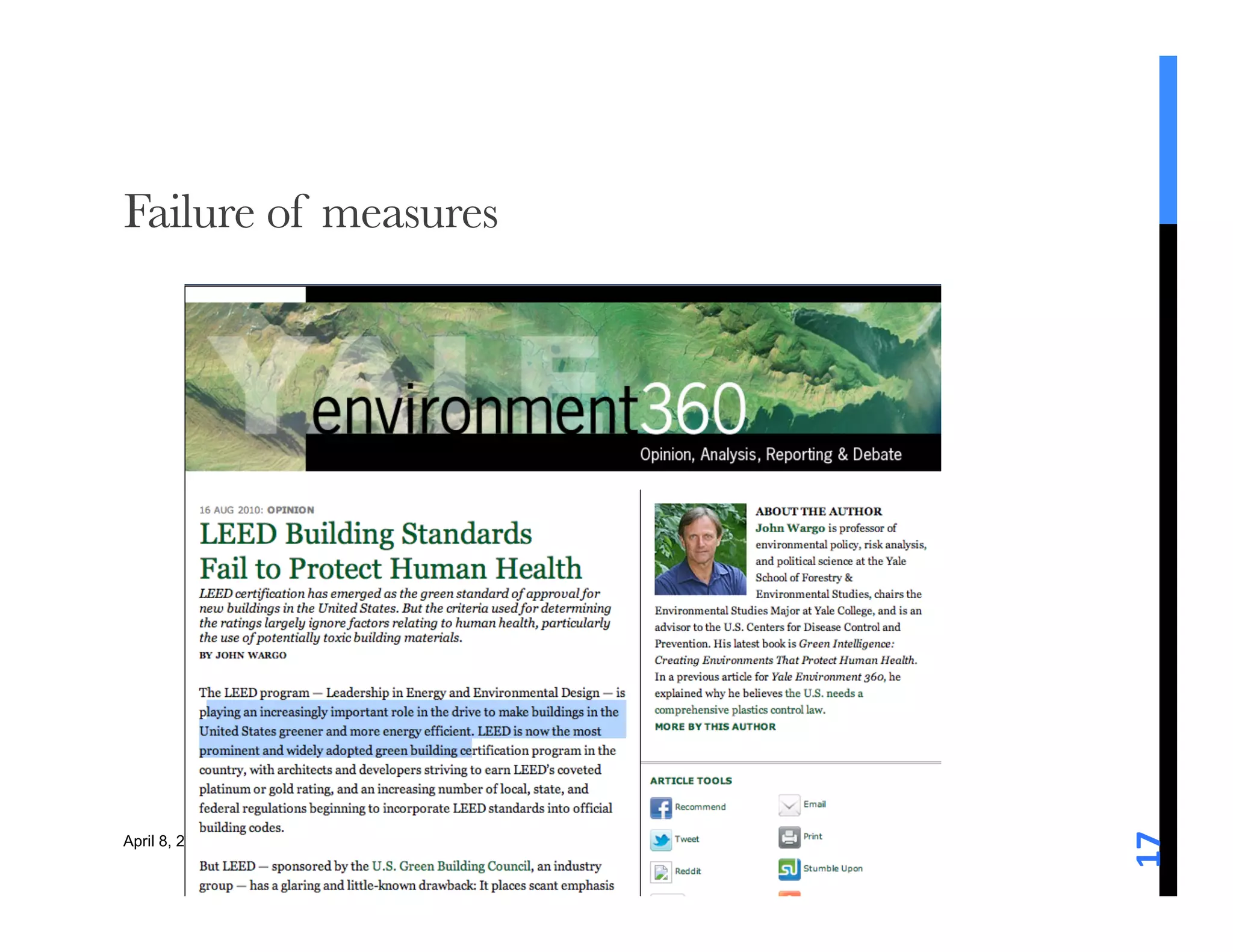
Failure of measures


                       17	
  
April 8, 2013
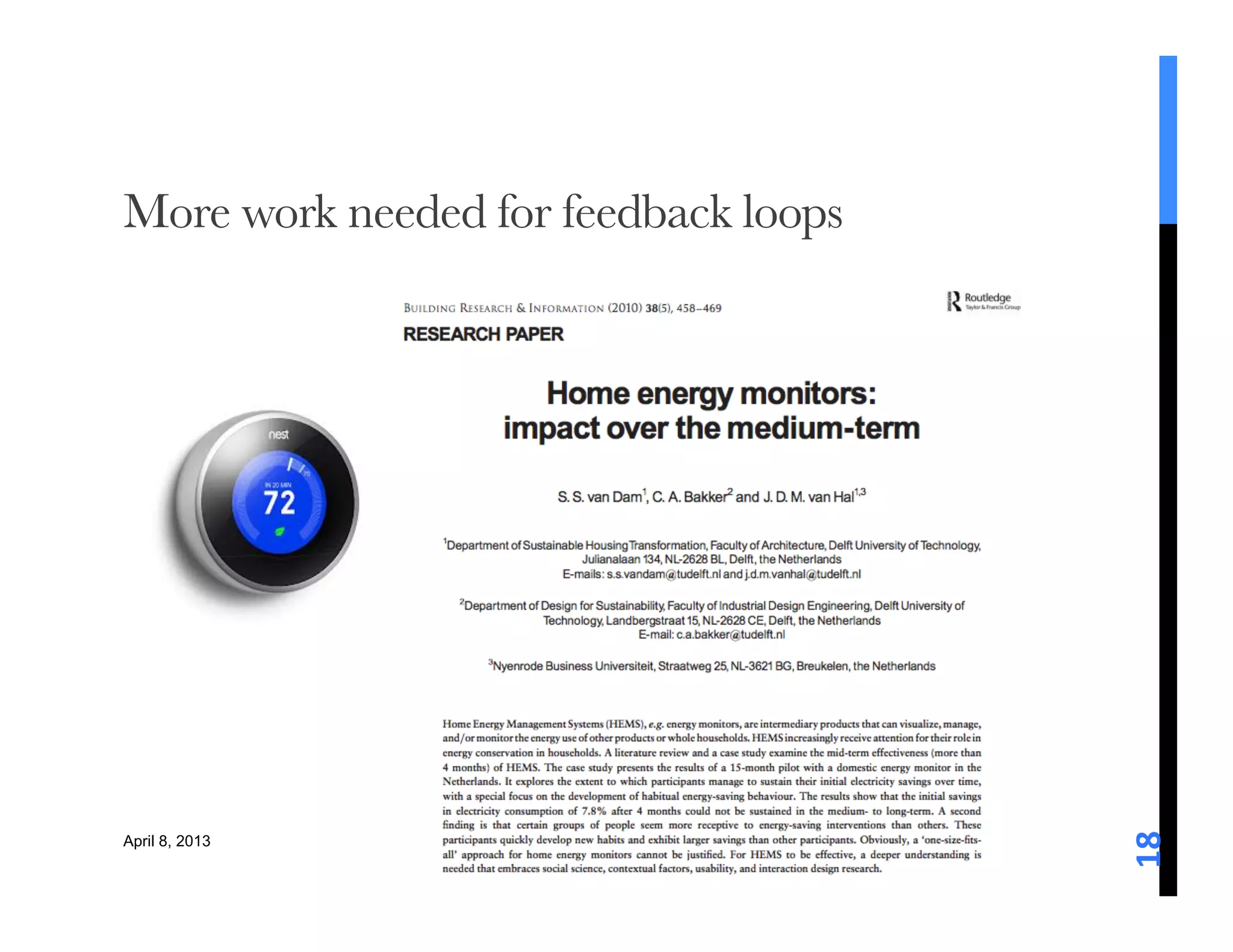
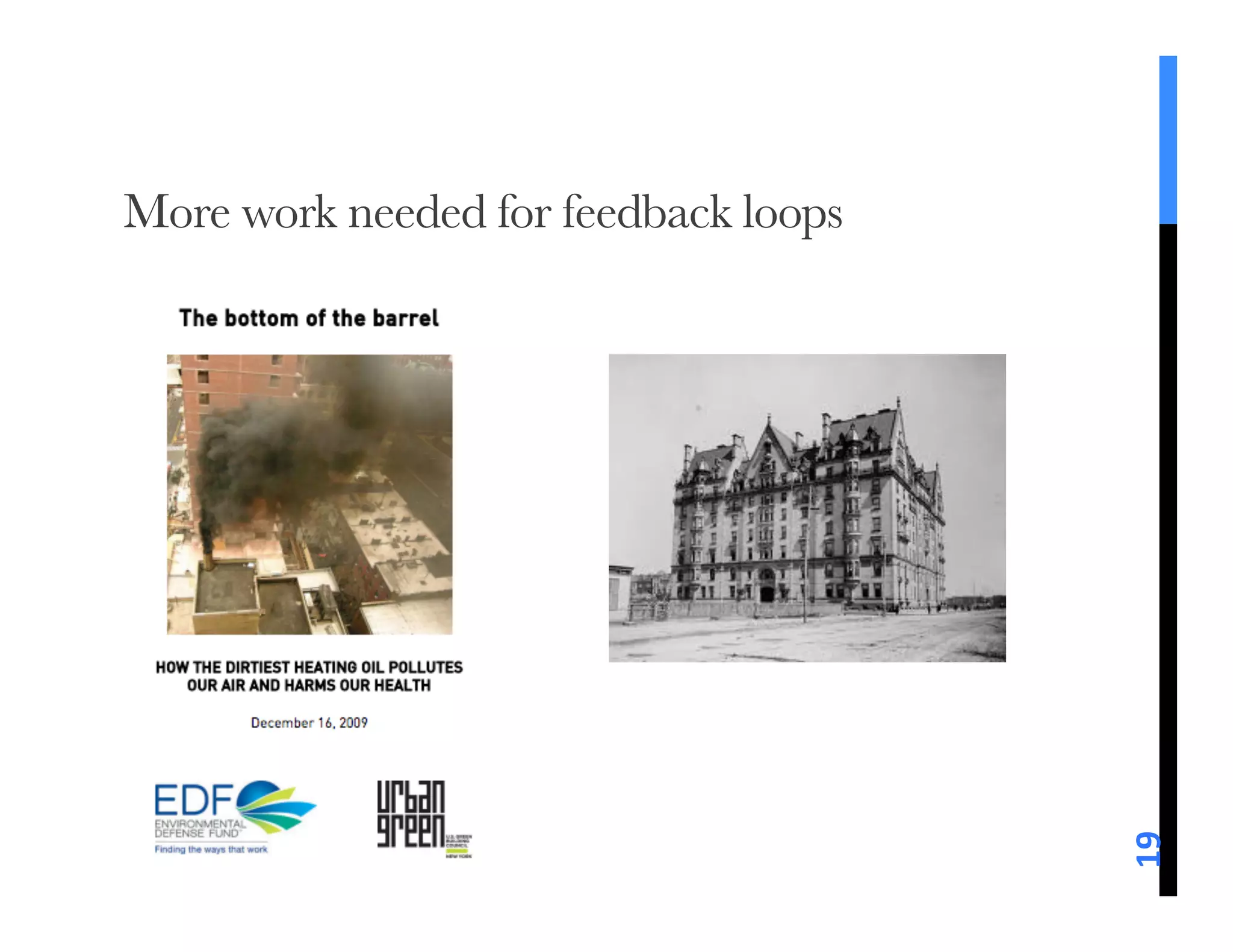
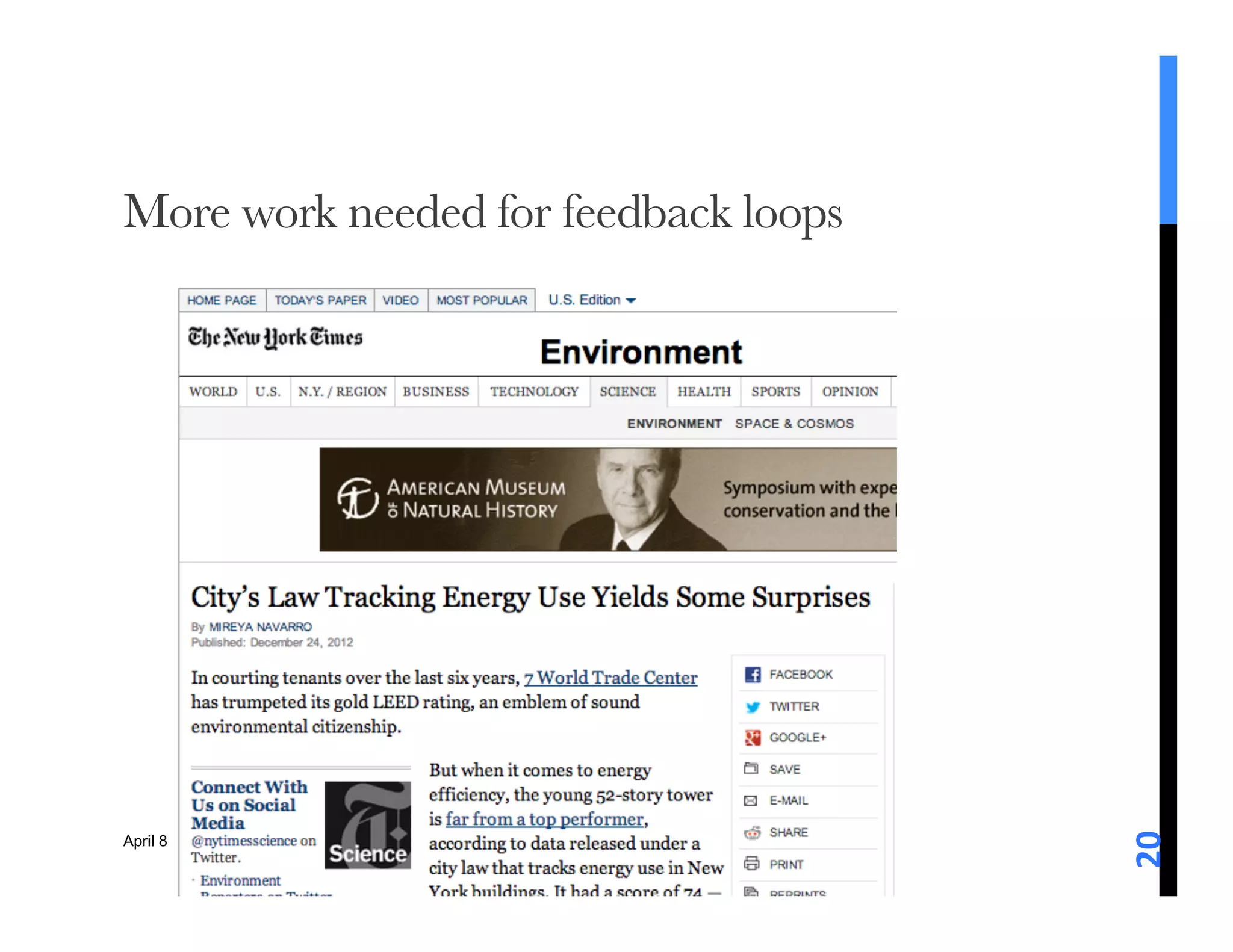
More work needed for feedback loops


                                       18	
  
April 8, 2013
More work needed for feedback loops


                                       19	
  
April 8, 2013
More work needed for feedback loops


                                       20	
  
April 8, 2013
ASSIGNMENT 
Concept source and exploration? 
What part of the system of how we care for bodies, or how we
make and maintain our buildings, interests you the most? 
What are the anomalies and failures that irk you?
What possibilities do you see?


                                                               21	
  
April 8, 2013
READING
Pick any one of the “Facsicles” from ArtFarm on architecture
theory: 
http://www.archfarm.org/en/ 


                                                               22	
  
April 8, 2013
LINKS AND PRESENTATION 
Today’s class presentation is available 

http://www.slideshare.net/bettybluegreen/bodies-and-
buildings-nyu-itp-4-8-2013


                                                       23	
  
April 8, 2013

Bodies and buildings nyu itp 4 8 2013

  • 1.
    BODIES & BUILDINGS NYU ITPLECTURE COURSE SPRING 2013 APRIL 8, 2013 JEN VAN DER MEER @JENVANDERMEER WWW.JENVANDERMEER.COM
  • 2.
    BUILDINGS: Part 2:Buildings 7. Clean Tech Failures, Clean Tech Long Term View, March 25, 2013 8. LEED and the Passive House Movement, April 1, 2013 9. Passive House + CoGen, April 8, 2013 10. Generative Architecture, Responsive Design, April 15, 2013 Part 3: Concept Development and Final Presentations 11. Concept strengthening – design thinking exercises, business case building, April 22, 2013 12. Final Presentations with guest critics, April 29, 2013 8, 2013 April 2  
  • 3.
    PLACES TO INTERVENEIN A SYSTEM: 12. Constants, parameters, numbers (subsidies, taxes, standards) 11. The sizes of buffers and other stabilizing stocks, relative to their flows 10. The structure of material stocks and flows (transport networks, population age structures) 9. Length of delays, relative to the rate of system change 8. The strength of negative feedback loops, relative to the impacts they are trying to correct against 7. The gain around driving positive feedback loops 6. The structure of information flows (who does and does not have access to what kinds of information) 5. The rules of the system (such as incentives, punishments, constraints) 4. The power to add, change, evolve, or self-organize system structure 3. The goals of the system 2. The mindset or paradigm out of which the system – its goals, power structure, rules, its culture-arises 1. The power to transcend paradigms April 8, 2013 3  
  • 4.
    2. The mindsetor paradigm out of which the system – its goals, power structure, rules, its culture-arises The shared idea in the minds of society, the great big unstated assumptions—unstated because unnecessary to state; everyone already knows them—constitute that society’s paradigm, or deepest set of beliefs about how the world works. -D. Meadows. April 8, 2013 4  
  • 5.
    What paradigmatic assumptionsdo we follow? There is a difference between nouns and verbs. Money measures something real and has meaning. (people who are paid less are literally worth less). Growth is good. Nature is a stock of resources to be converted for human purposes. One can own the land. 8, 2013 April 5  
  • 6.
    Paradigms are thesources of systems From them, form shared social agreements about the nature of reality, come system goals and information flows, feedbacks, stocks, flows, and everything else about systems. April 8, 2013 6  
  • 7.
    The material apparatusaround you Ralph Waldo Emerson “War” Boston, 1838. Reprinted in Emerson’s Complete Works, vol. XI. 1887. April 8, 2013 7  
  • 8.
    Why do webuild skyscrapers The ancient Egyptians built pyramids because they believed in an afterlife. We build skyscrapers because we believe that space in downtown cities is enormously valuable. April 8, 2013
  • 9.
    Who has changedparadigms? Whether it was Copernicus and Kepler showing that the earth is not the center of the universe Or Einstein hypothesizing that matter and energy are interchangable Or Adam Smith postulating that the selfish actions of individual players in markets wonderfully accumulate to the common good People who have managed to intervene in systems at the level of paradigm have hit a leverage point that totally transforms systems. April 8, 2013 9  
  • 10.
    So how doyou change paradigms? D. Meadows paraphrasing Thomas Kuhn: You keep pointing at the anomalies and failures in the old paradigm, you keep speaking louder and with assurance from the new one, you insert people with the new paradigm in places of public visibility and power. You don’t waste time with reactionaries; rather you work with active change agents and with the vast middle groun of people who are open minded. 10   April 8, 2013
  • 11.
  • 12.
    GLOBAL SUPPLY 12   April 8, 2013
  • 13.
    ASSIGNMENT: APRIL 15 13   April 8, 2013
  • 14.
    Buildings through thelens of science 14   April 8, 2013
  • 15.
    Parallels Bodies: Buildings: 15   April 8, 2013
  • 16.
    “New starts” isa sign of economic progress 16   April 8, 2013
  • 17.
    Failure of measures 17   April 8, 2013
  • 18.
    More work neededfor feedback loops 18   April 8, 2013
  • 19.
    More work neededfor feedback loops 19   April 8, 2013
  • 20.
    More work neededfor feedback loops 20   April 8, 2013
  • 21.
    ASSIGNMENT Concept sourceand exploration? What part of the system of how we care for bodies, or how we make and maintain our buildings, interests you the most? What are the anomalies and failures that irk you? What possibilities do you see? 21   April 8, 2013
  • 22.
    READING Pick any oneof the “Facsicles” from ArtFarm on architecture theory: http://www.archfarm.org/en/ 22   April 8, 2013
  • 23.
    LINKS AND PRESENTATION Today’s class presentation is available http://www.slideshare.net/bettybluegreen/bodies-and- buildings-nyu-itp-4-8-2013 23   April 8, 2013