PHYSICAL AND SPORTS
  ACTIVITIES IN DIFFERENT
       ENVIRONMENTS
COMENIUS PROJECT
2010-2012
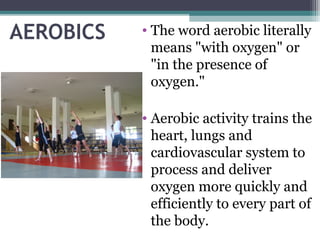
AEROBICS   • The word aerobic literally
             means "with oxygen" or
             "in the presence of
             oxygen."

           • Aerobic activity trains the
             heart, lungs and
             cardiovascular system to
             process and deliver
             oxygen more quickly and
             efficiently to every part of
             the body.
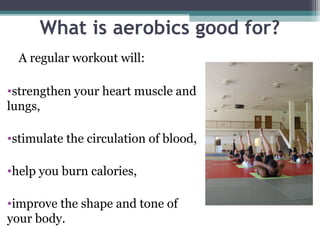
What is aerobics good for?
  A regular workout will:

•strengthen your heart muscle and
lungs,

•stimulate the circulation of blood,

•help you burn calories,

•improve the shape and tone of
your body.
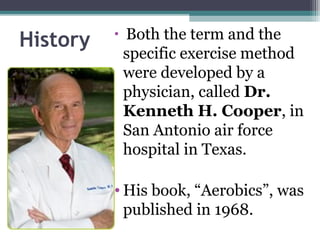
History   •   Both the term and the
              specific exercise method
              were developed by a
              physician, called Dr.
              Kenneth H. Cooper, in
              San Antonio air force
              hospital in Texas.

          • His book, “Aerobics”, was
            published in 1968.
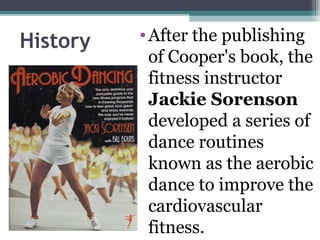
History   • After the publishing
            of Cooper's book, the
            fitness instructor
            Jackie Sorenson
            developed a series of
            dance routines
            known as the aerobic
            dance to improve the
            cardiovascular
            fitness.
Equipment
• Aerobic equipment can comprehend
  floor mats, dumbbells, balls, steps,
  ropes, bicycles, trampolines.
Kinds of aerobics

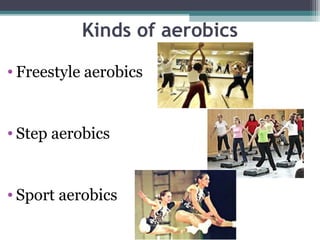
• Freestyle aerobics


• Step aerobics


• Sport aerobics
Kinds of aerobics
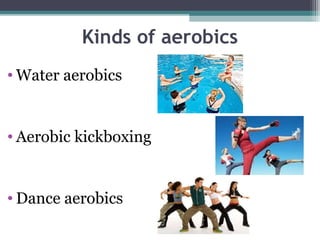
• Water aerobics


• Aerobic kickboxing


• Dance aerobics
Rules of Sport aerobics
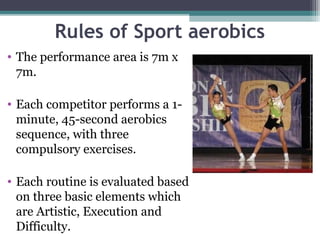
• The performance area is 7m x
  7m.

• Each competitor performs a 1-
  minute, 45-second aerobics
  sequence, with three
  compulsory exercises.

• Each routine is evaluated based
  on three basic elements which
  are Artistic, Execution and
  Difficulty.
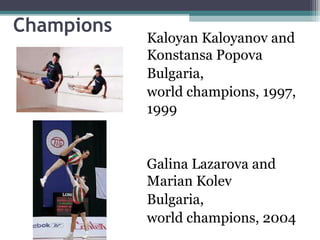
Champions
            Kaloyan Kaloyanov and
            Konstansa Popova
            Bulgaria,
            world champions, 1997,
            1999


            Galina Lazarova and
            Marian Kolev
            Bulgaria,
            world champions, 2004
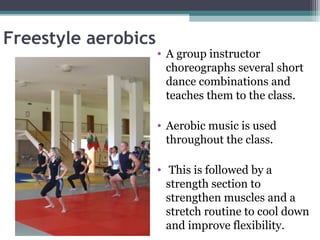
Freestyle aerobics
                     • A group instructor
                       choreographs several short
                       dance combinations and
                       teaches them to the class.

                     • Aerobic music is used
                       throughout the class.

                     • This is followed by a
                       strength section to
                       strengthen muscles and a
                       stretch routine to cool down
                       and improve flexibility.
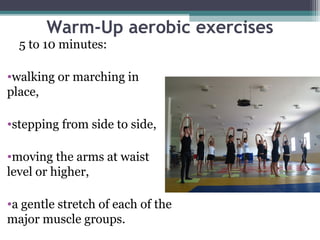
Warm-Up aerobic exercises
  5 to 10 minutes:

•walking or marching in
place,

•stepping from side to side,

•moving the arms at waist
level or higher,

•a gentle stretch of each of the
major muscle groups.
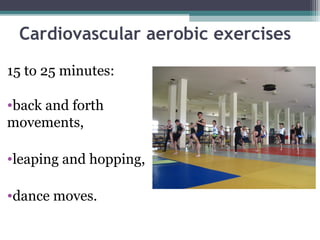
Cardiovascular aerobic exercises

15 to 25 minutes:

•back and forth
movements,

•leaping and hopping,

•dance moves.
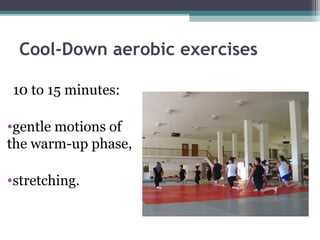
Cool-Down aerobic exercises

10 to 15 minutes:

•gentle motions of
the warm-up phase,

•stretching.
The Presentation is made by:

Professional High School of
Electronics
and Electrical Engineering
“Marie Curie”
     
Sliven, Bulgaria

Aerobics

  • 1.
    PHYSICAL AND SPORTS ACTIVITIES IN DIFFERENT ENVIRONMENTS COMENIUS PROJECT 2010-2012
  • 2.
    AEROBICS • The word aerobic literally means "with oxygen" or "in the presence of oxygen." • Aerobic activity trains the heart, lungs and cardiovascular system to process and deliver oxygen more quickly and efficiently to every part of the body.
  • 3.
    What is aerobicsgood for? A regular workout will: •strengthen your heart muscle and lungs, •stimulate the circulation of blood, •help you burn calories, •improve the shape and tone of your body.
  • 4.
    History • Both the term and the specific exercise method were developed by a physician, called Dr. Kenneth H. Cooper, in San Antonio air force hospital in Texas. • His book, “Aerobics”, was published in 1968.
  • 5.
    History • After the publishing of Cooper's book, the fitness instructor Jackie Sorenson developed a series of dance routines known as the aerobic dance to improve the cardiovascular fitness.
  • 6.
    Equipment • Aerobic equipmentcan comprehend floor mats, dumbbells, balls, steps, ropes, bicycles, trampolines.
  • 7.
    Kinds of aerobics •Freestyle aerobics • Step aerobics • Sport aerobics
  • 8.
    Kinds of aerobics •Water aerobics • Aerobic kickboxing • Dance aerobics
  • 9.
    Rules of Sportaerobics • The performance area is 7m x 7m. • Each competitor performs a 1- minute, 45-second aerobics sequence, with three compulsory exercises. • Each routine is evaluated based on three basic elements which are Artistic, Execution and Difficulty.
  • 10.
    Champions Kaloyan Kaloyanov and Konstansa Popova Bulgaria, world champions, 1997, 1999 Galina Lazarova and Marian Kolev Bulgaria, world champions, 2004
  • 11.
    Freestyle aerobics • A group instructor choreographs several short dance combinations and teaches them to the class. • Aerobic music is used throughout the class. • This is followed by a strength section to strengthen muscles and a stretch routine to cool down and improve flexibility.
  • 12.
    Warm-Up aerobic exercises 5 to 10 minutes: •walking or marching in place, •stepping from side to side, •moving the arms at waist level or higher, •a gentle stretch of each of the major muscle groups.
  • 13.
    Cardiovascular aerobic exercises 15to 25 minutes: •back and forth movements, •leaping and hopping, •dance moves.
  • 14.
    Cool-Down aerobic exercises 10to 15 minutes: •gentle motions of the warm-up phase, •stretching.
  • 15.
    The Presentation ismade by: Professional High School of Electronics and Electrical Engineering “Marie Curie”   Sliven, Bulgaria