

FUNCTIONS OF
CAPILLARIES AND ITS
PERMIABILITY
By
Dr Shailesh
1
CONTENTS
 MICROCIRCULATION
 CAPILLARY AND ITS GENERAL
CHARACTERISTICS
 TYPES OF CAPILLARIES
 FUNCTIONS OF CAPILLARIES AND ITS
PERMIABILITY
 DISCUSSION
 CONCLUSION
2
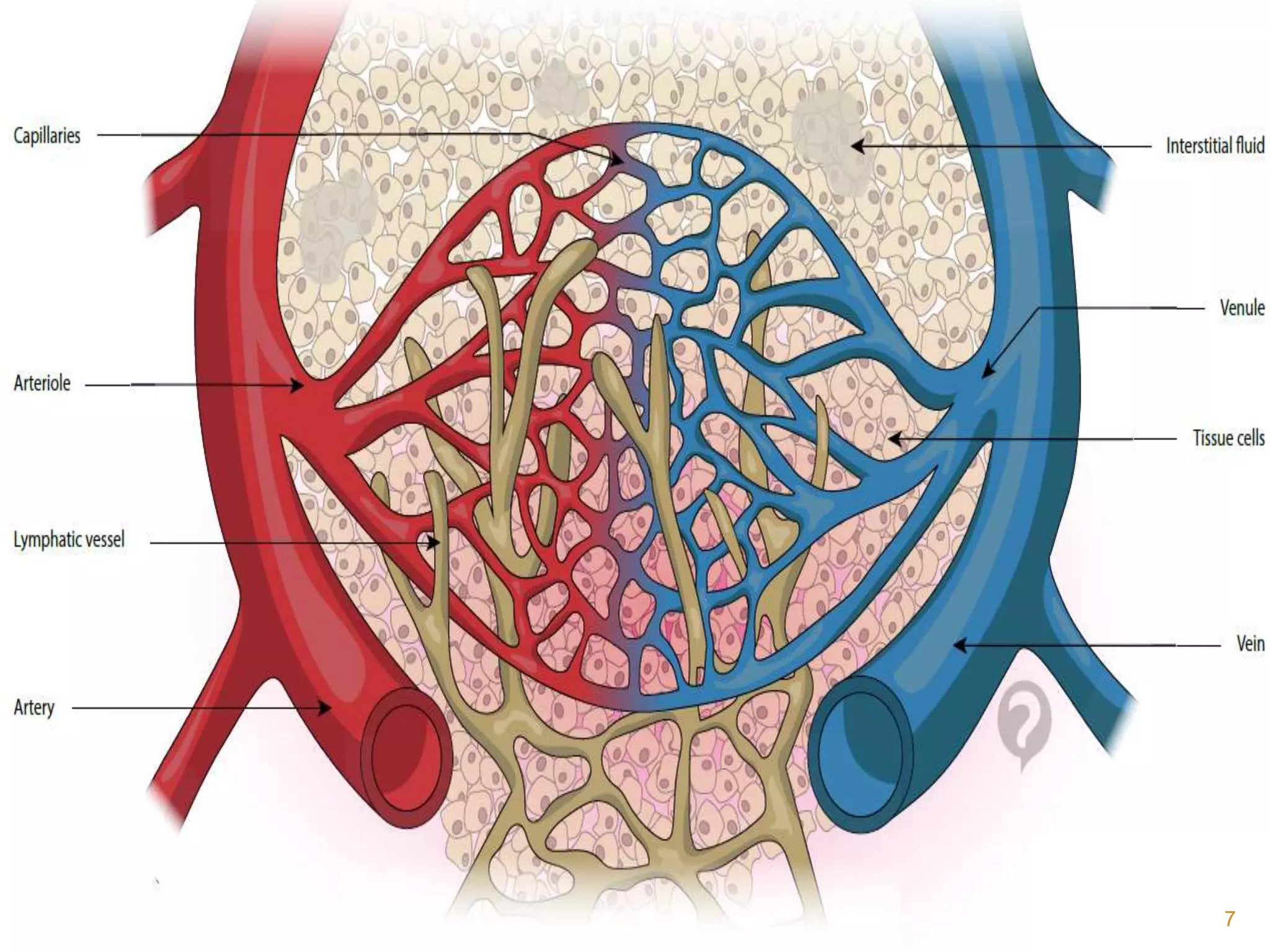
MICROCIRCULATION
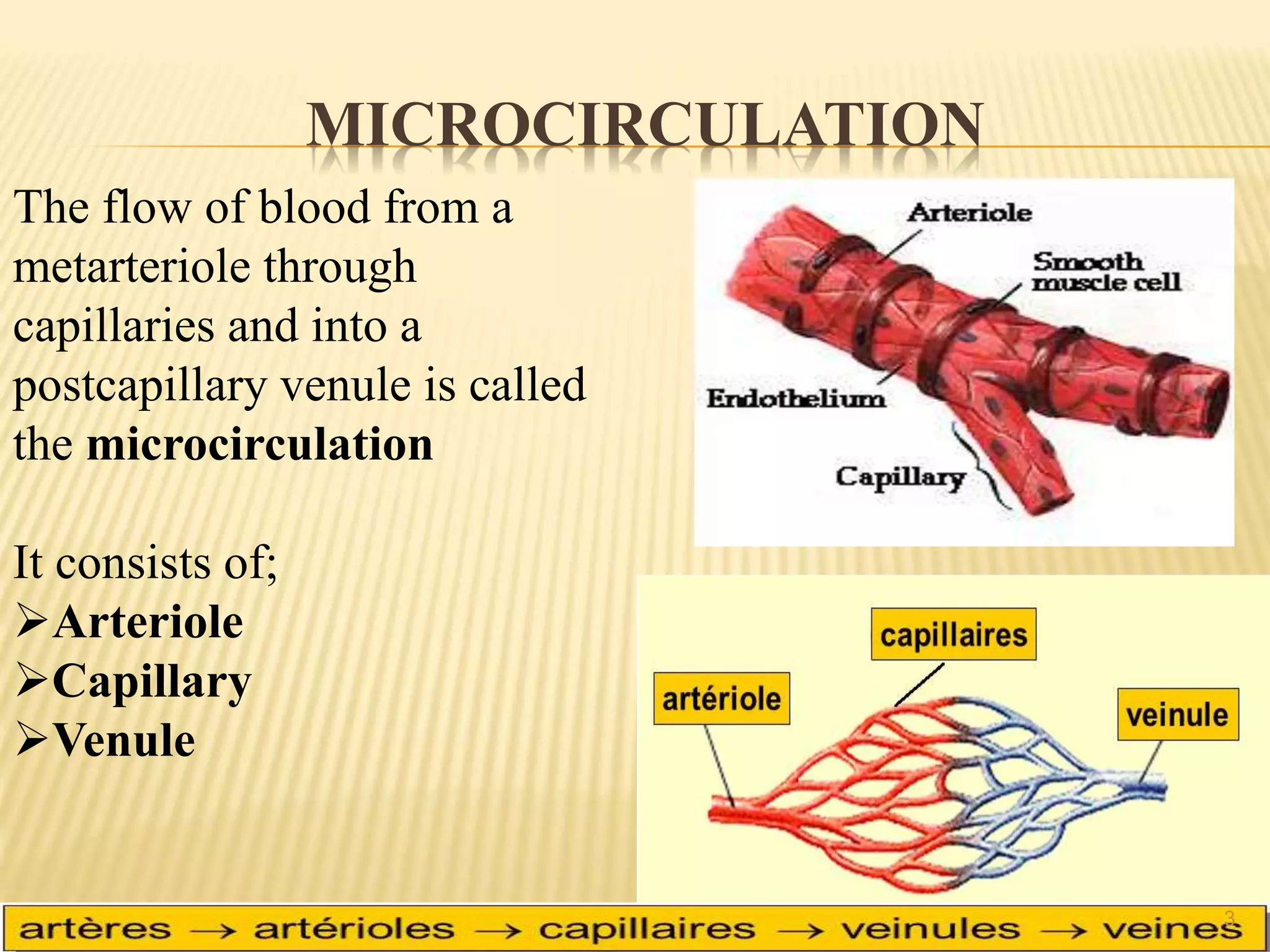
The flow of blood from a
metarteriole through
capillaries and into a
postcapillary venule is called
the microcirculation
It consists of;
Arteriole
Capillary
Venule
3
MICROCIRCULATION
4
CAPILLARIES
Capillaries (capillus~little hair) are the smallest of blood vessels
whose primary function is exchange of substances between the blood and
interstitial fluid.
Capillaries form an extensive network, approximately 10 billion in
number.
Total surface area of capillaries is estimated to be 500 to 700sq mts.
It is very rare that any single functional cell of a body is more than 20
to 30 µm away from a capillary.
Internal diameter of capillary is 4 to 9 µm, total thickness of capillary
is about 0.5 µm, Because of the above characteristics, these thin-walled
vessels are
referred to
as exchange
vessels.
5
Body tissues with high metabolic requirements, such as
muscles, the brain, the liver, the kidneys, and the nervous system,
use more O2 and nutrients and thus have extensive capillary
networks.
Tissues with lower metabolic requirements, such as tendons and
ligaments, contain fewer capillaries.
Capillaries are absent in a few tissues, such as all covering and lining
epithelia, the cornea and lens of the eye, and cartilage.
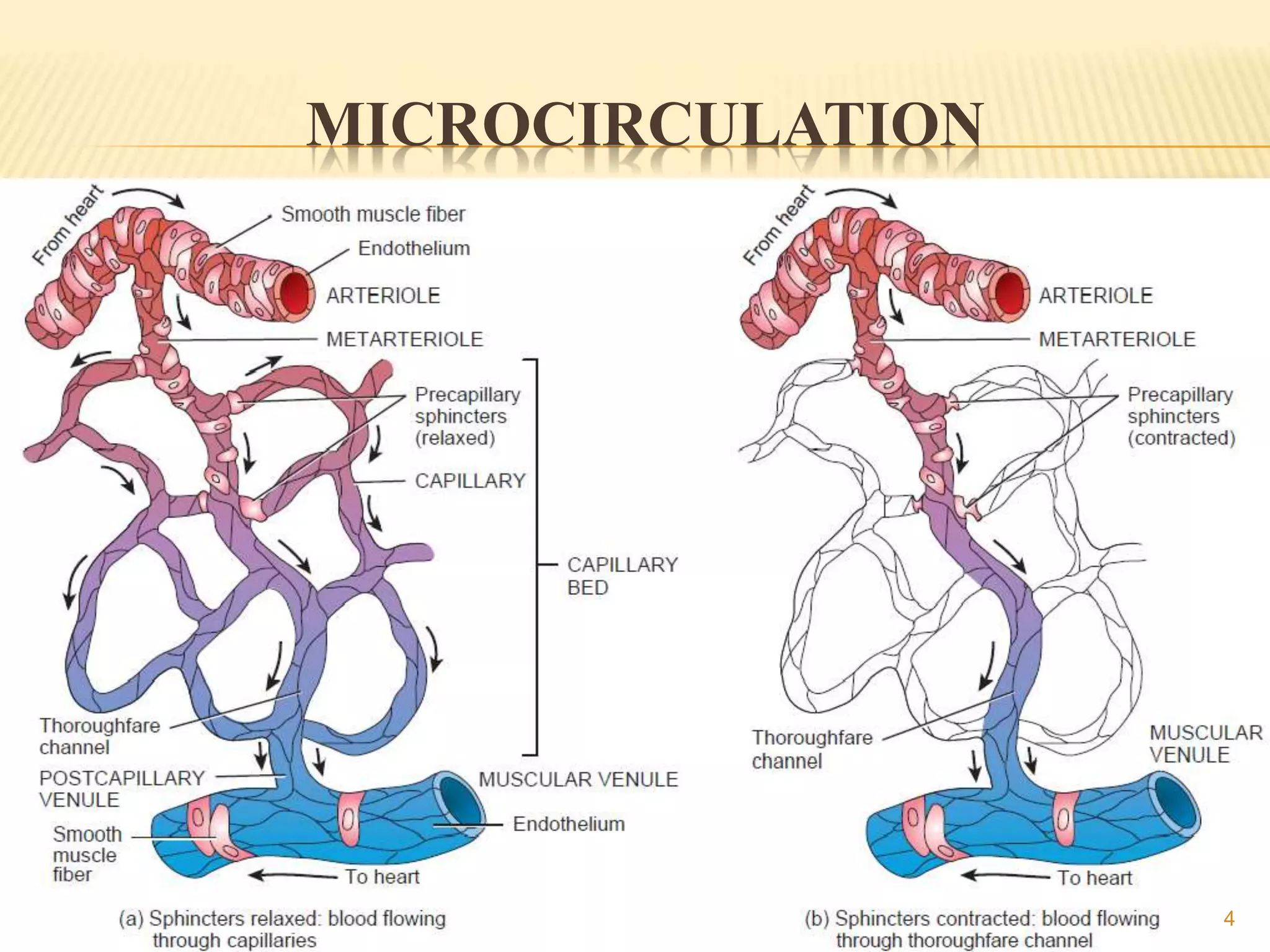
Throughout the body, capillaries function as part of a capillary bed, a
network of 10–100 capillaries that arises from a single metarteriole. In
most parts of the body, blood can flow through a capillary network from
an arteriole into a venule.
Typically, blood flows intermittently through capillaries due to
alternating contraction and relaxation of the smooth muscle of
metarterioles and the precapillary sphincters, which may occur 5 to 10
times per minute, is called vasomotion
6
7
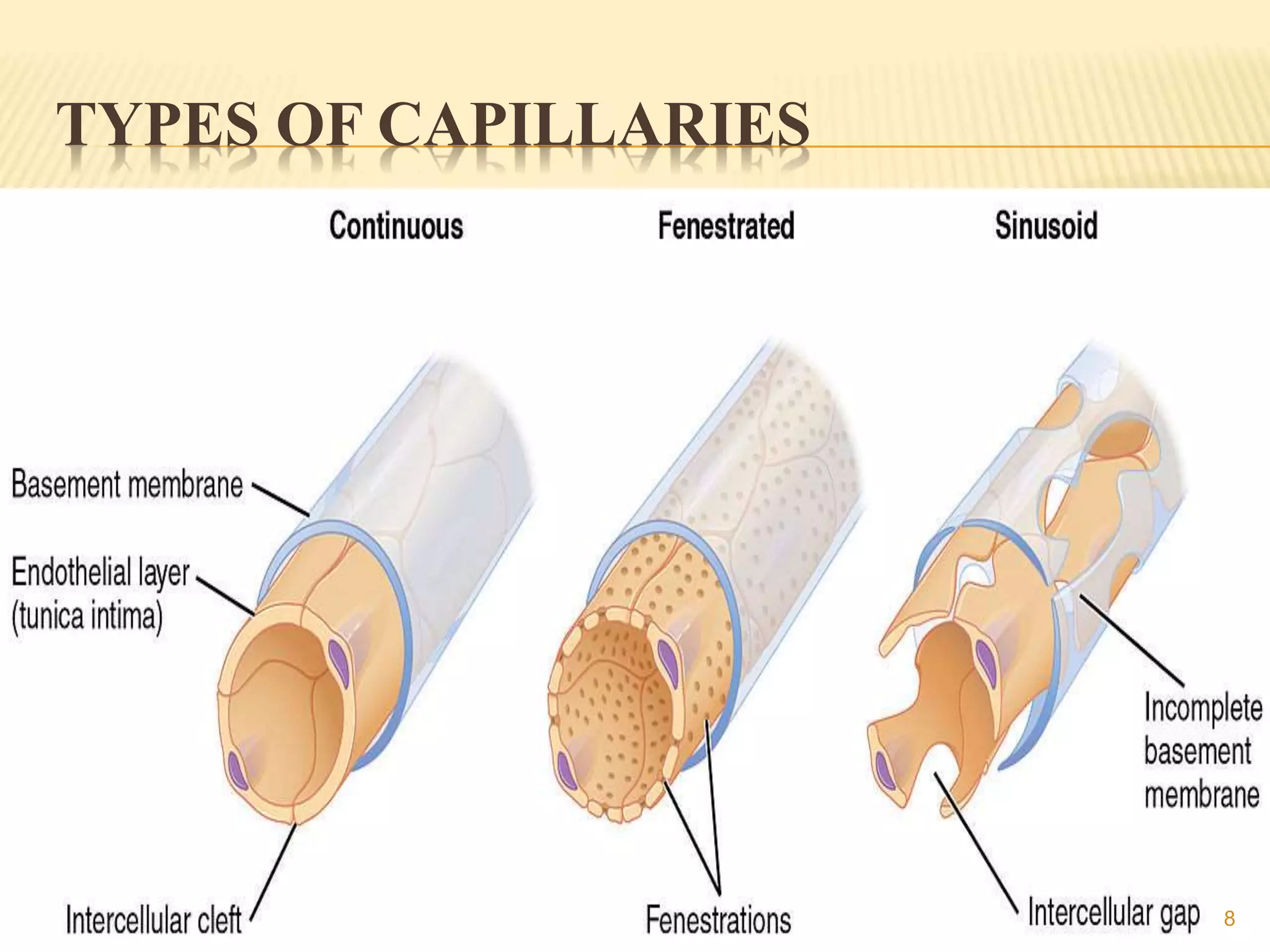
TYPES OF CAPILLARIES
8
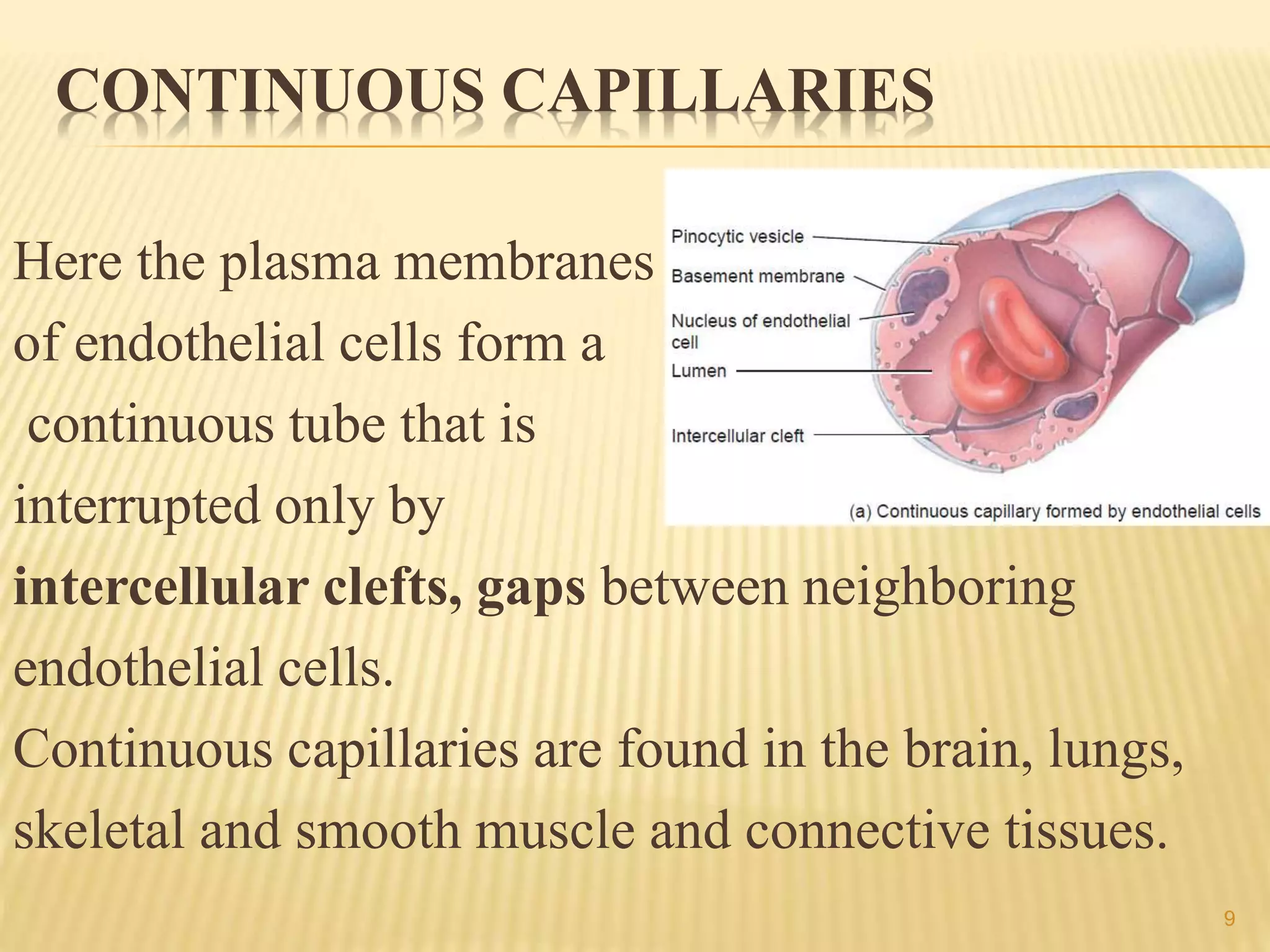
CONTINUOUS CAPILLARIES
Here the plasma membranes
of endothelial cells form a
continuous tube that is
interrupted only by
intercellular clefts, gaps between neighboring
endothelial cells.
Continuous capillaries are found in the brain, lungs,
skeletal and smooth muscle and connective tissues.
9
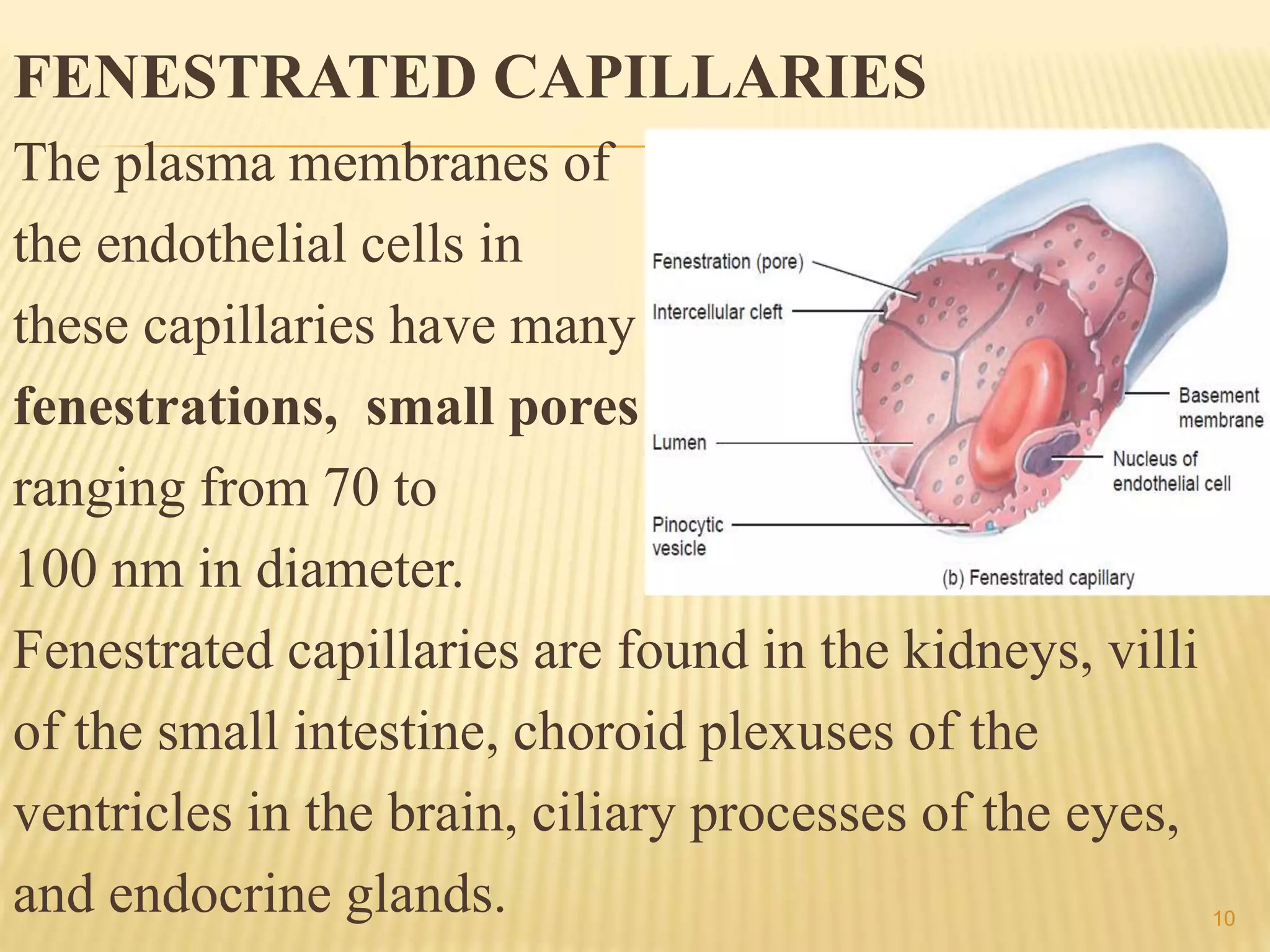
FENESTRATED CAPILLARIES
The plasma membranes of
the endothelial cells in
these capillaries have many
fenestrations, small pores
ranging from 70 to
100 nm in diameter.
Fenestrated capillaries are found in the kidneys, villi
of the small intestine, choroid plexuses of the
ventricles in the brain, ciliary processes of the eyes,
and endocrine glands. 10
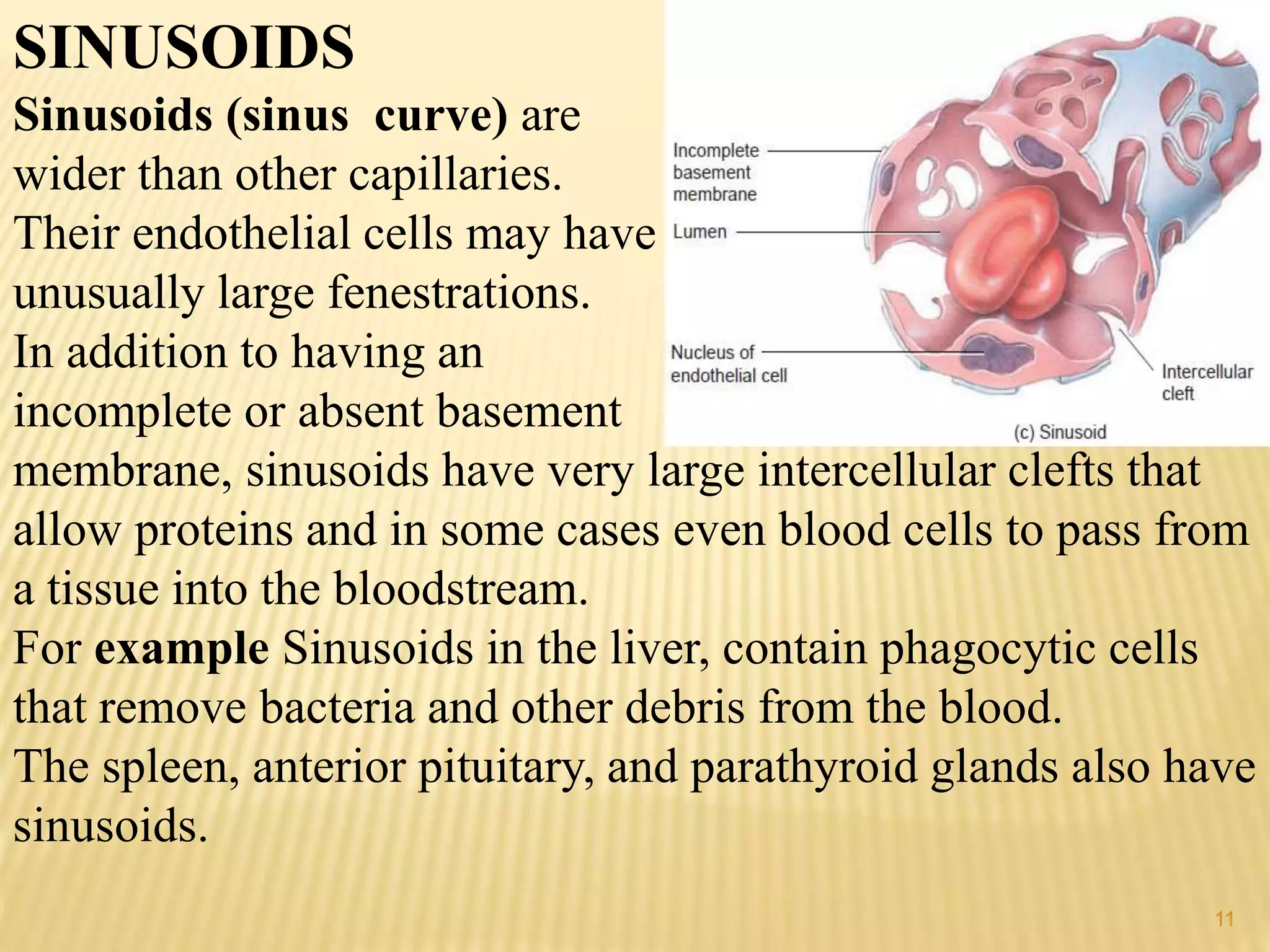
SINUSOIDS
Sinusoids (sinus curve) are
wider than other capillaries.
Their endothelial cells may have
unusually large fenestrations.
In addition to having an
incomplete or absent basement
membrane, sinusoids have very large intercellular clefts that
allow proteins and in some cases even blood cells to pass from
a tissue into the bloodstream.
For example Sinusoids in the liver, contain phagocytic cells
that remove bacteria and other debris from the blood.
The spleen, anterior pituitary, and parathyroid glands also have
sinusoids.
11
FUNCTIONS OF CAPILLARIES
 „Diffusion
 Pinocytosis.
 Filtration and Reabsorption
12
DIFFUSION
The most important method of capillary exchange is simple diffusion.
Many substances, such as oxygen , carbon dioxide, glucose, amino acids,
and hormones, enter and leave capillaries by simple diffusion.
Since, O2 and nutrients normally are present in higher concentrations in
blood, they diffuse down their concentration gradients into interstitial
fluid and then into body cells.
CO2 and other wastes released by body cells are present in higher
concentrations in interstitial fluid, so they diffuse into blood.
Water-soluble substances such as glucose and amino acids pass across
capillary walls through intercellular clefts or fenestrations.
Lipid-soluble materials, such as O2, CO2, and steroid hormones, may
pass across capillary walls directly through the lipid bilayer of
endothelial cell plasma membranes.
13
In sinusoids,the intercellular clefts are so large that they allow even
proteins and blood cells to pass through their walls.
For example, hepatocytes (liver cells) synthesize and release many
plasma proteins, such as fibrinogen (the main clotting protein) and
albumin, which then diffuse into the bloodstream through sinusoids.
In red bone marrow, blood cells are formed (hemopoiesis) and then enter
the bloodstream through sinusoids.
In contrast to sinusoids are the capillaries of the brain. Most areas of the
brain contain continuous capillaries; however, these capillaries are very
“tight.” The endothelial cells of most brain capillaries are sealed together
by tight junctions. The resulting blockade to movement of materials into
and out of brain capillaries is known as the blood–brain barrier.
In brain areas that lack the blood–brain barrier, for example, the
hypothalamus, pineal gland, and pituitary gland, here materials undergo
capillary exchange more freely.
14
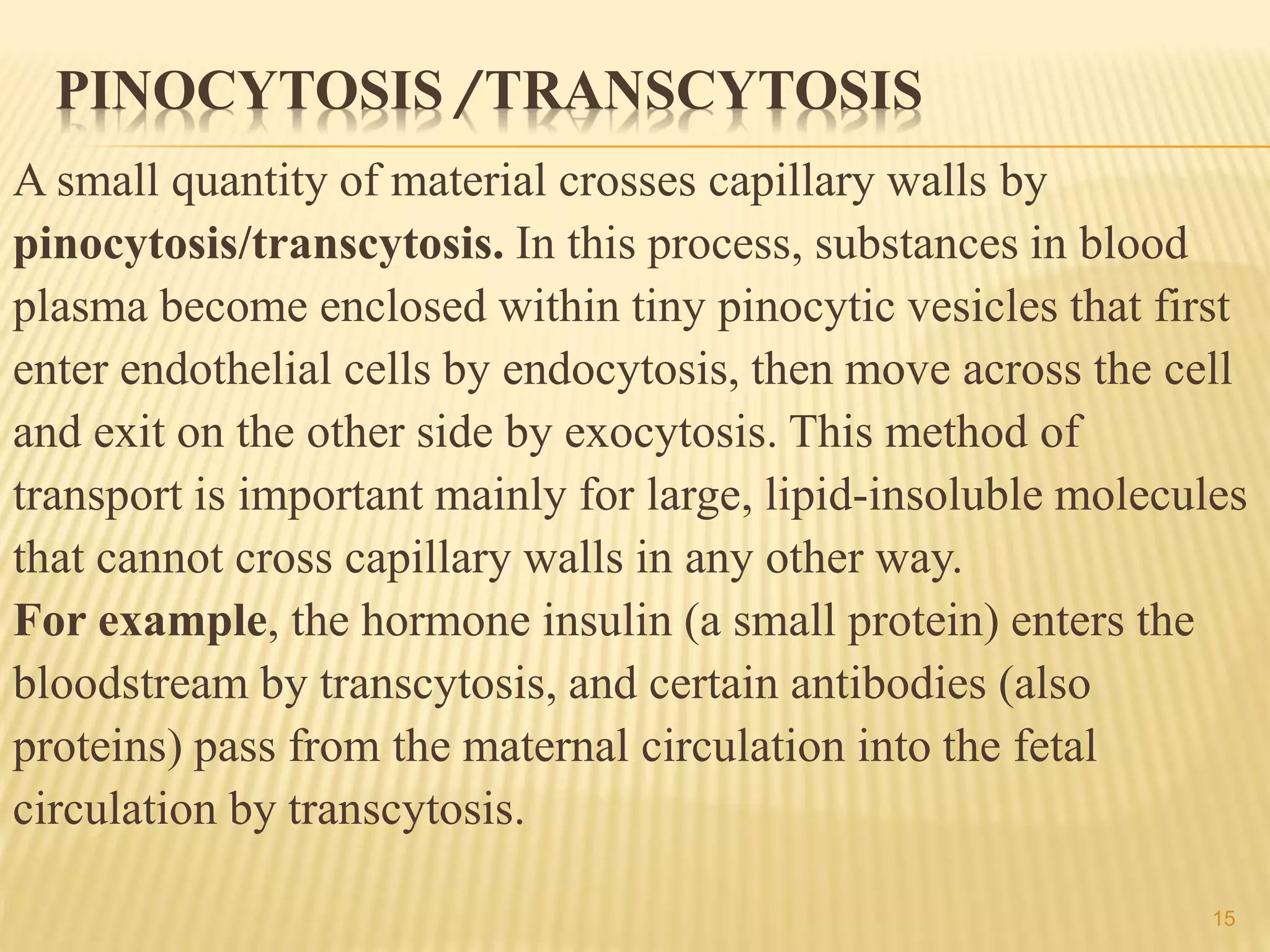
PINOCYTOSIS /TRANSCYTOSIS
A small quantity of material crosses capillary walls by
pinocytosis/transcytosis. In this process, substances in blood
plasma become enclosed within tiny pinocytic vesicles that first
enter endothelial cells by endocytosis, then move across the cell
and exit on the other side by exocytosis. This method of
transport is important mainly for large, lipid-insoluble molecules
that cannot cross capillary walls in any other way.
For example, the hormone insulin (a small protein) enters the
bloodstream by transcytosis, and certain antibodies (also
proteins) pass from the maternal circulation into the fetal
circulation by transcytosis.
15
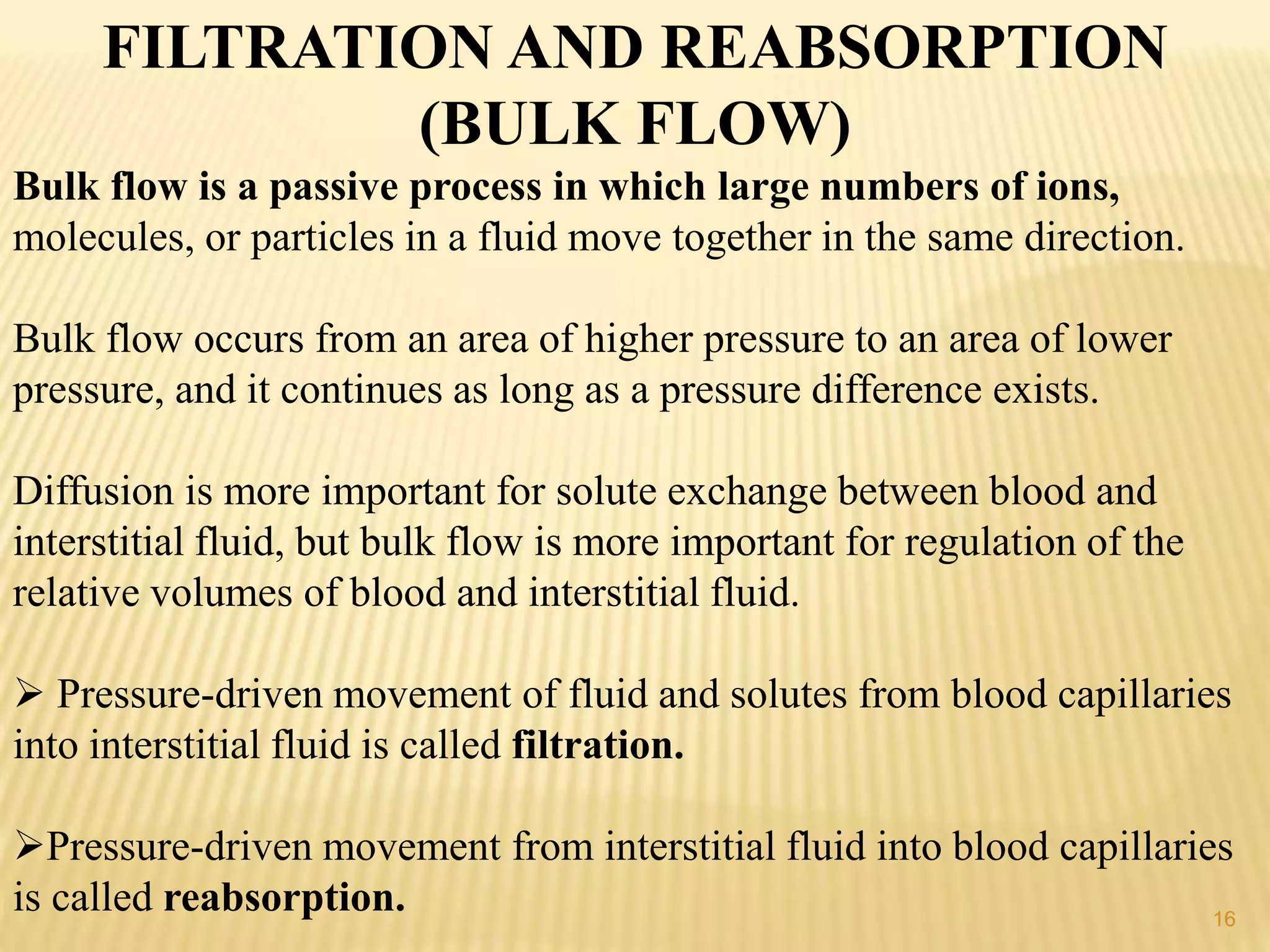
FILTRATION AND REABSORPTION
(BULK FLOW)
Bulk flow is a passive process in which large numbers of ions,
molecules, or particles in a fluid move together in the same direction.
Bulk flow occurs from an area of higher pressure to an area of lower
pressure, and it continues as long as a pressure difference exists.
Diffusion is more important for solute exchange between blood and
interstitial fluid, but bulk flow is more important for regulation of the
relative volumes of blood and interstitial fluid.
 Pressure-driven movement of fluid and solutes from blood capillaries
into interstitial fluid is called filtration.
Pressure-driven movement from interstitial fluid into blood capillaries
is called reabsorption. 16
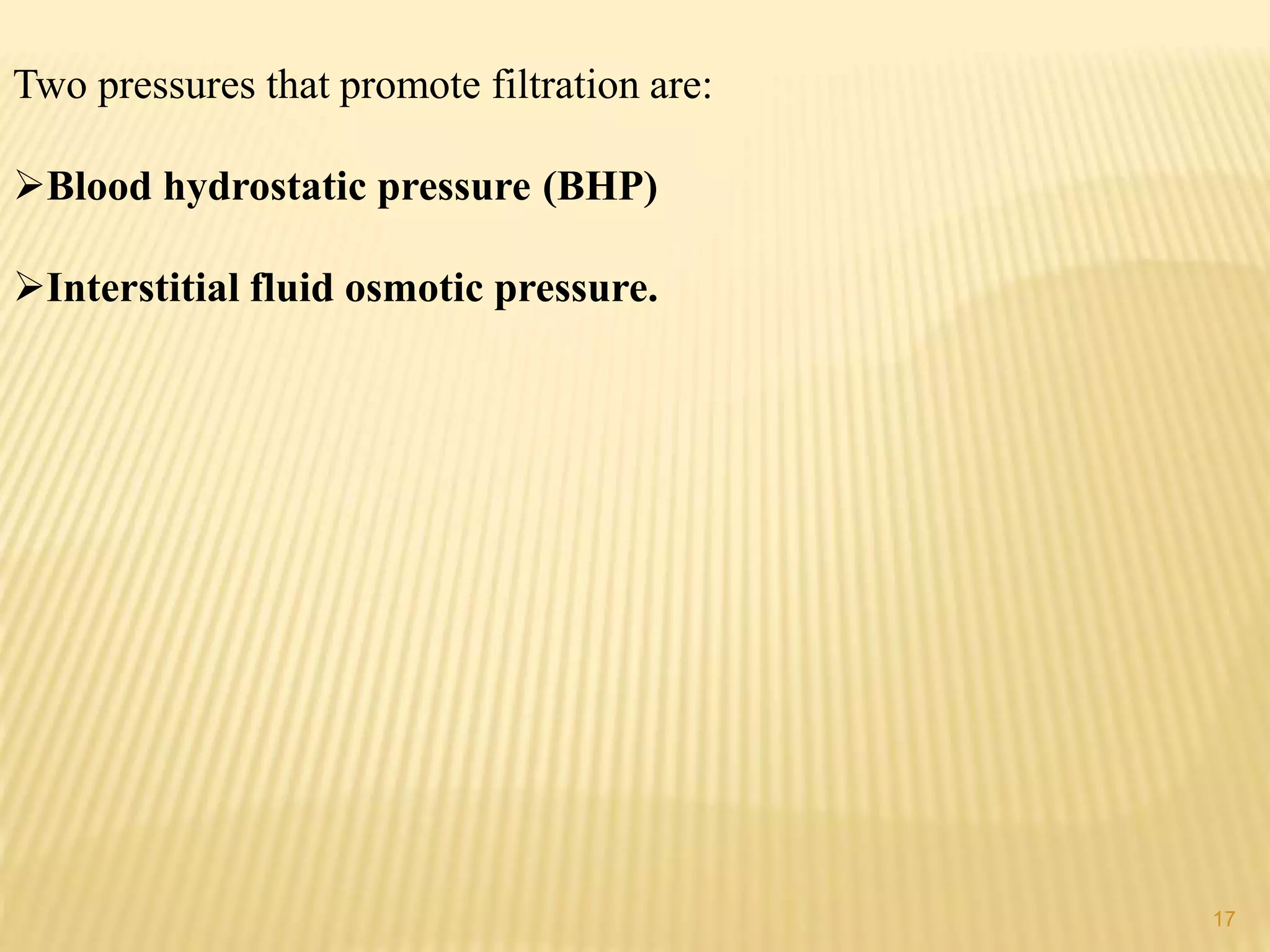
Two pressures that promote filtration are:
Blood hydrostatic pressure (BHP)
Interstitial fluid osmotic pressure.
17
VARIOUS TERMS USED IN CAPILLARY EXCHANGE
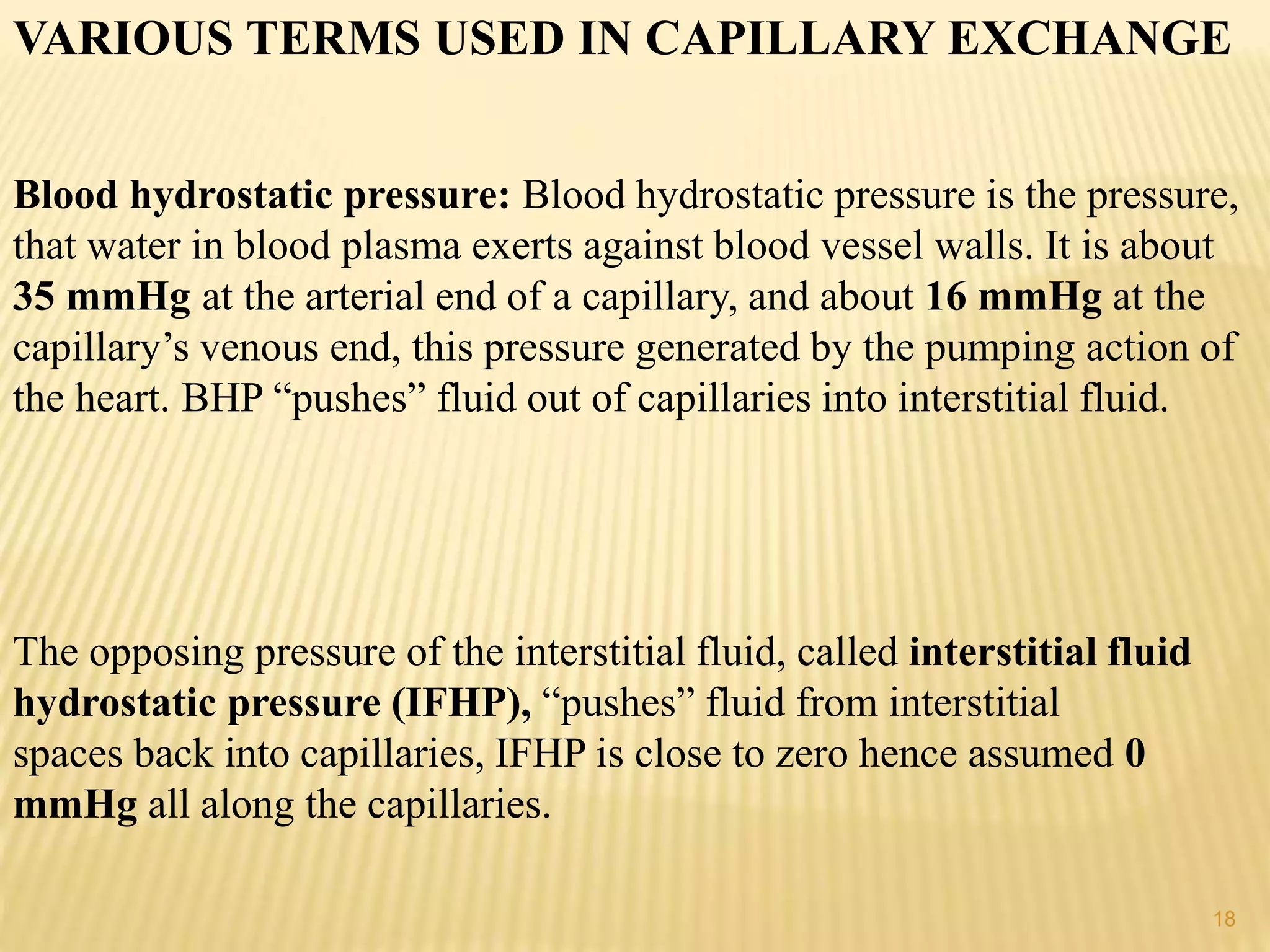
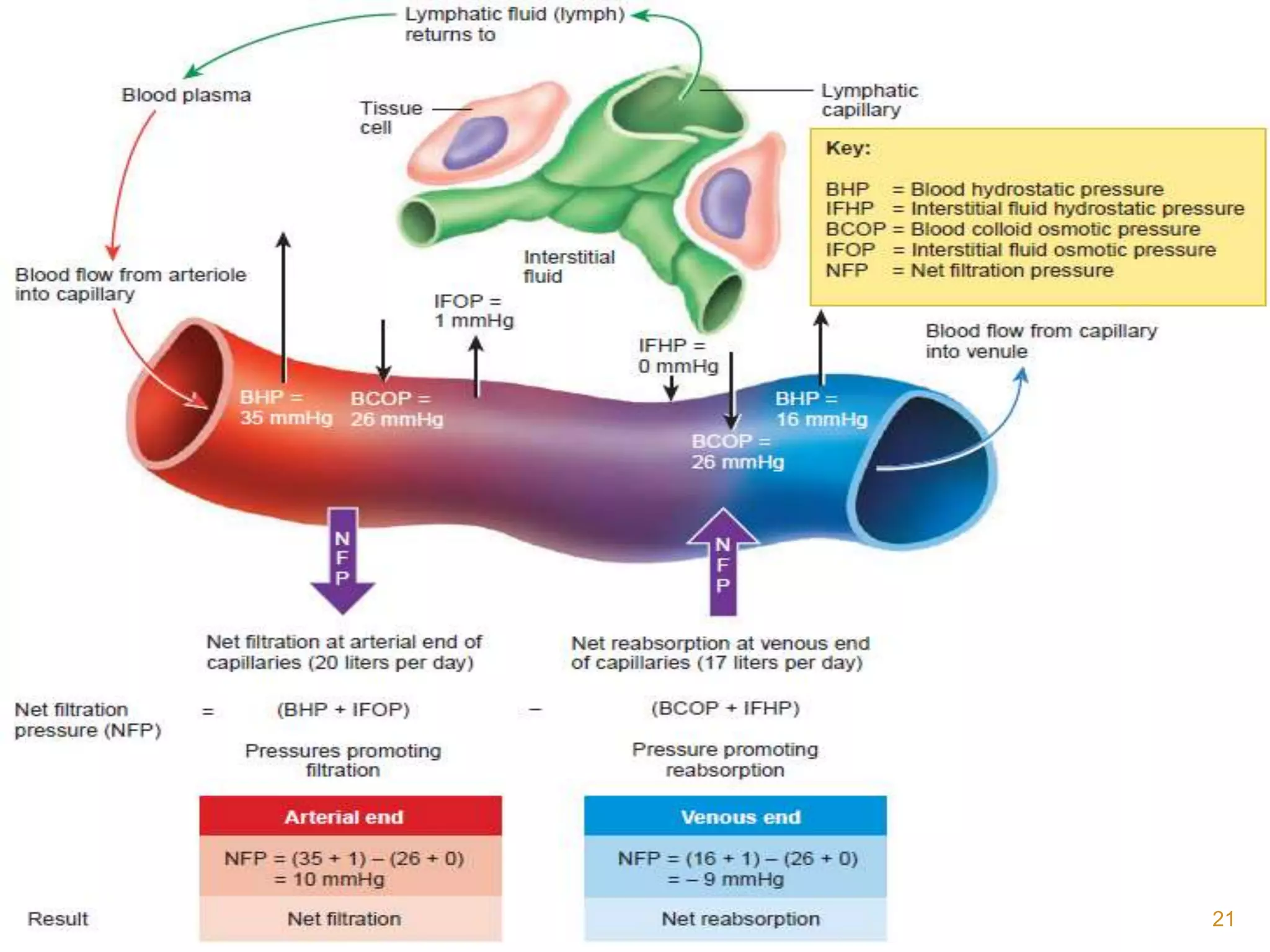
Blood hydrostatic pressure: Blood hydrostatic pressure is the pressure,
that water in blood plasma exerts against blood vessel walls. It is about
35 mmHg at the arterial end of a capillary, and about 16 mmHg at the
capillary’s venous end, this pressure generated by the pumping action of
the heart. BHP “pushes” fluid out of capillaries into interstitial fluid.
The opposing pressure of the interstitial fluid, called interstitial fluid
hydrostatic pressure (IFHP), “pushes” fluid from interstitial
spaces back into capillaries, IFHP is close to zero hence assumed 0
mmHg all along the capillaries.
18
Blood colloid osmotic pressure (BCOP): It is a force caused by the
colloidal suspension of the large proteins in plasma that averages 26
mmHg in most capillaries. The effect of BCOP is to “pull” fluid from
interstitial spaces into capillaries.
Opposing BCOP is interstitial fluid osmotic pressure (IFOP), which
“pulls” fluid out of capillaries into interstitial fluid. Normally, IFOP is
very small 0.1–5 mmHg because only tiny amounts of protein are present
in interstitial fluid.
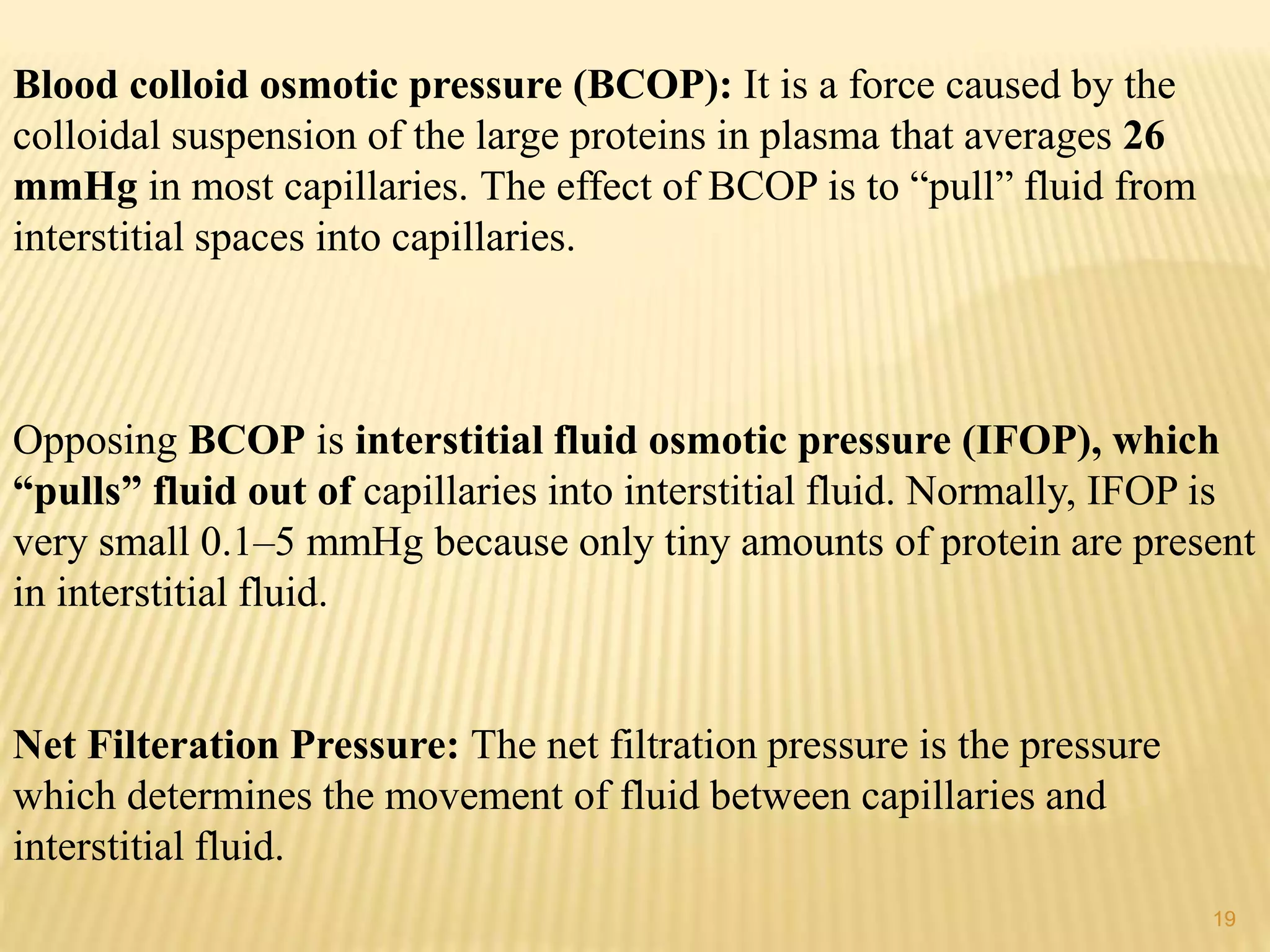
Net Filteration Pressure: The net filtration pressure is the pressure
which determines the movement of fluid between capillaries and
interstitial fluid.
19
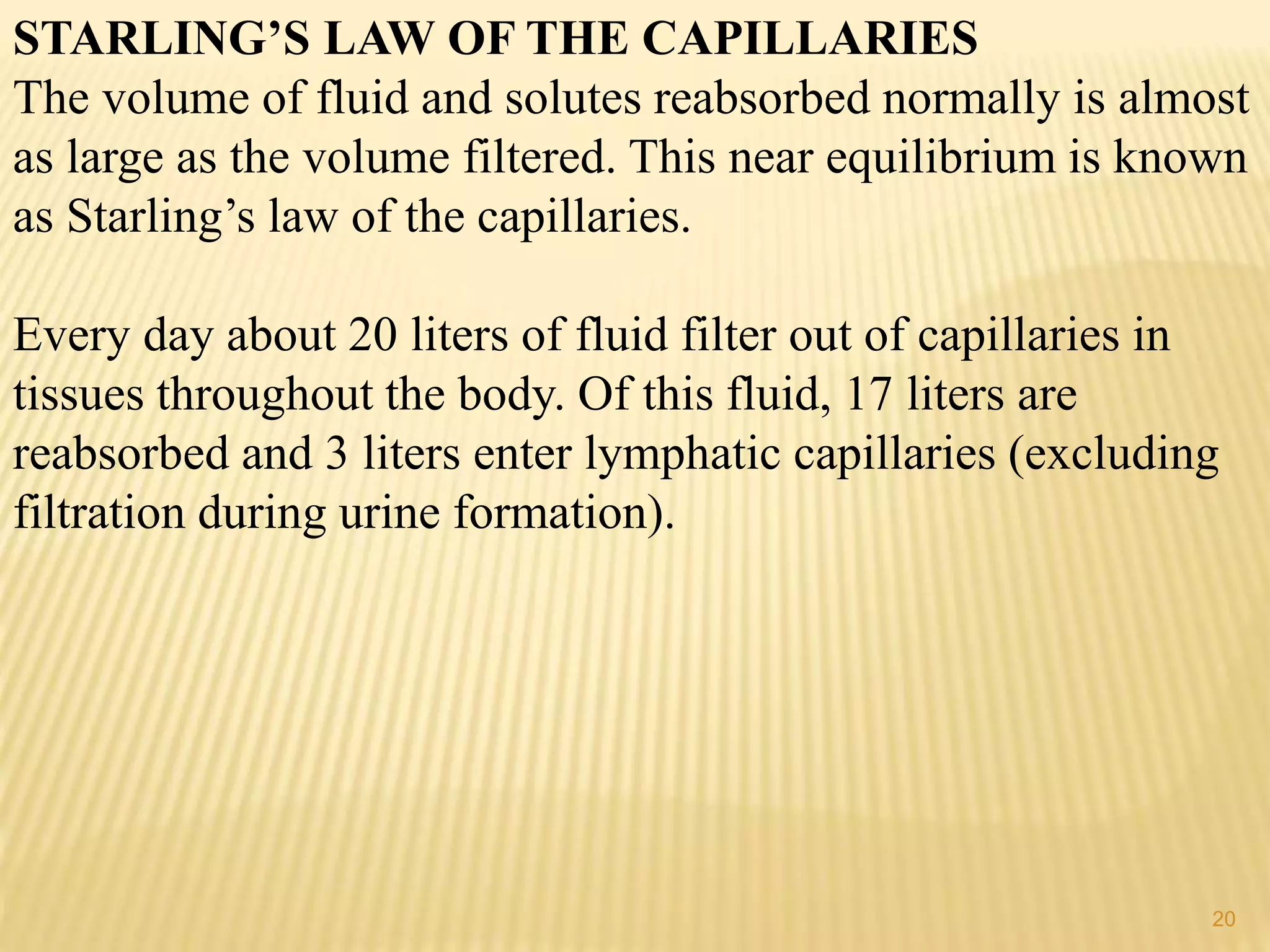
STARLING’S LAW OF THE CAPILLARIES
The volume of fluid and solutes reabsorbed normally is almost
as large as the volume filtered. This near equilibrium is known
as Starling’s law of the capillaries.
Every day about 20 liters of fluid filter out of capillaries in
tissues throughout the body. Of this fluid, 17 liters are
reabsorbed and 3 liters enter lymphatic capillaries (excluding
filtration during urine formation).
20
21
Effects of heat on Capillary Permiability
Heat applied on body surface causes vasodilation
and increase in blood flow to that area
Carries oxygen, nutrients, antibodies and leukocytes
to that area aiding in the healing process.
Relives pain, relaxes muscles, reduces tissue
swelling and decreases joint swelling
22
DISCUSSION
 Action of panchkarma procedures can be explained
on the basis of capillary physiology
 Any hot or warm aid applied to skin will cause
capillary dilation this phenomenon can be applied
to abhyanga – warm sneha (fat) applied on the skin
enters the dilated capillaries into the interstitial fluid
 Applying heat in the form of swedana – increased
body temperature – vasodilation – increased blood
flow through the area- necessary oxygen and
nutrient supply to the cell and excreation of waste
products
23
Water and fat soluble drugs administered through
basti can easily be absorbed through colon by simple
or passive diffusion into capillaries
It has been approximately calculated as 22% of total
dilatation of cerebral capillaries caused by the facial
efferent stimulation will lead to 150% of total blood
flow forcing more transfusion of nasya medicaments
through olfactory pathway into brain tissue
24
CONCLUSION
Capillaries serve through exchange of substances
between blood and tissues.
Oxygen, nutrients and other essential substances enter
the tissues from capillary blood; carbon dioxide,
metabolites and other unwanted substances are
removed from the tissues by capillary blood.
25
26

functions of capillaries and its permiability-ayurveda-panchakarma

  • 1.
    FUNCTIONS OF CAPILLARIES ANDITS PERMIABILITY By Dr Shailesh 1
  • 2.
    CONTENTS  MICROCIRCULATION  CAPILLARYAND ITS GENERAL CHARACTERISTICS  TYPES OF CAPILLARIES  FUNCTIONS OF CAPILLARIES AND ITS PERMIABILITY  DISCUSSION  CONCLUSION 2
  • 3.
    MICROCIRCULATION The flow ofblood from a metarteriole through capillaries and into a postcapillary venule is called the microcirculation It consists of; Arteriole Capillary Venule 3
  • 4.
  • 5.
    CAPILLARIES Capillaries (capillus~little hair)are the smallest of blood vessels whose primary function is exchange of substances between the blood and interstitial fluid. Capillaries form an extensive network, approximately 10 billion in number. Total surface area of capillaries is estimated to be 500 to 700sq mts. It is very rare that any single functional cell of a body is more than 20 to 30 µm away from a capillary. Internal diameter of capillary is 4 to 9 µm, total thickness of capillary is about 0.5 µm, Because of the above characteristics, these thin-walled vessels are referred to as exchange vessels. 5
  • 6.
    Body tissues withhigh metabolic requirements, such as muscles, the brain, the liver, the kidneys, and the nervous system, use more O2 and nutrients and thus have extensive capillary networks. Tissues with lower metabolic requirements, such as tendons and ligaments, contain fewer capillaries. Capillaries are absent in a few tissues, such as all covering and lining epithelia, the cornea and lens of the eye, and cartilage. Throughout the body, capillaries function as part of a capillary bed, a network of 10–100 capillaries that arises from a single metarteriole. In most parts of the body, blood can flow through a capillary network from an arteriole into a venule. Typically, blood flows intermittently through capillaries due to alternating contraction and relaxation of the smooth muscle of metarterioles and the precapillary sphincters, which may occur 5 to 10 times per minute, is called vasomotion 6
  • 7.
  • 8.
  • 9.
    CONTINUOUS CAPILLARIES Here theplasma membranes of endothelial cells form a continuous tube that is interrupted only by intercellular clefts, gaps between neighboring endothelial cells. Continuous capillaries are found in the brain, lungs, skeletal and smooth muscle and connective tissues. 9
  • 10.
    FENESTRATED CAPILLARIES The plasmamembranes of the endothelial cells in these capillaries have many fenestrations, small pores ranging from 70 to 100 nm in diameter. Fenestrated capillaries are found in the kidneys, villi of the small intestine, choroid plexuses of the ventricles in the brain, ciliary processes of the eyes, and endocrine glands. 10
  • 11.
    SINUSOIDS Sinusoids (sinus curve)are wider than other capillaries. Their endothelial cells may have unusually large fenestrations. In addition to having an incomplete or absent basement membrane, sinusoids have very large intercellular clefts that allow proteins and in some cases even blood cells to pass from a tissue into the bloodstream. For example Sinusoids in the liver, contain phagocytic cells that remove bacteria and other debris from the blood. The spleen, anterior pituitary, and parathyroid glands also have sinusoids. 11
  • 12.
    FUNCTIONS OF CAPILLARIES „Diffusion  Pinocytosis.  Filtration and Reabsorption 12
  • 13.
    DIFFUSION The most importantmethod of capillary exchange is simple diffusion. Many substances, such as oxygen , carbon dioxide, glucose, amino acids, and hormones, enter and leave capillaries by simple diffusion. Since, O2 and nutrients normally are present in higher concentrations in blood, they diffuse down their concentration gradients into interstitial fluid and then into body cells. CO2 and other wastes released by body cells are present in higher concentrations in interstitial fluid, so they diffuse into blood. Water-soluble substances such as glucose and amino acids pass across capillary walls through intercellular clefts or fenestrations. Lipid-soluble materials, such as O2, CO2, and steroid hormones, may pass across capillary walls directly through the lipid bilayer of endothelial cell plasma membranes. 13
  • 14.
    In sinusoids,the intercellularclefts are so large that they allow even proteins and blood cells to pass through their walls. For example, hepatocytes (liver cells) synthesize and release many plasma proteins, such as fibrinogen (the main clotting protein) and albumin, which then diffuse into the bloodstream through sinusoids. In red bone marrow, blood cells are formed (hemopoiesis) and then enter the bloodstream through sinusoids. In contrast to sinusoids are the capillaries of the brain. Most areas of the brain contain continuous capillaries; however, these capillaries are very “tight.” The endothelial cells of most brain capillaries are sealed together by tight junctions. The resulting blockade to movement of materials into and out of brain capillaries is known as the blood–brain barrier. In brain areas that lack the blood–brain barrier, for example, the hypothalamus, pineal gland, and pituitary gland, here materials undergo capillary exchange more freely. 14
  • 15.
    PINOCYTOSIS /TRANSCYTOSIS A smallquantity of material crosses capillary walls by pinocytosis/transcytosis. In this process, substances in blood plasma become enclosed within tiny pinocytic vesicles that first enter endothelial cells by endocytosis, then move across the cell and exit on the other side by exocytosis. This method of transport is important mainly for large, lipid-insoluble molecules that cannot cross capillary walls in any other way. For example, the hormone insulin (a small protein) enters the bloodstream by transcytosis, and certain antibodies (also proteins) pass from the maternal circulation into the fetal circulation by transcytosis. 15
  • 16.
    FILTRATION AND REABSORPTION (BULKFLOW) Bulk flow is a passive process in which large numbers of ions, molecules, or particles in a fluid move together in the same direction. Bulk flow occurs from an area of higher pressure to an area of lower pressure, and it continues as long as a pressure difference exists. Diffusion is more important for solute exchange between blood and interstitial fluid, but bulk flow is more important for regulation of the relative volumes of blood and interstitial fluid.  Pressure-driven movement of fluid and solutes from blood capillaries into interstitial fluid is called filtration. Pressure-driven movement from interstitial fluid into blood capillaries is called reabsorption. 16
  • 17.
    Two pressures thatpromote filtration are: Blood hydrostatic pressure (BHP) Interstitial fluid osmotic pressure. 17
  • 18.
    VARIOUS TERMS USEDIN CAPILLARY EXCHANGE Blood hydrostatic pressure: Blood hydrostatic pressure is the pressure, that water in blood plasma exerts against blood vessel walls. It is about 35 mmHg at the arterial end of a capillary, and about 16 mmHg at the capillary’s venous end, this pressure generated by the pumping action of the heart. BHP “pushes” fluid out of capillaries into interstitial fluid. The opposing pressure of the interstitial fluid, called interstitial fluid hydrostatic pressure (IFHP), “pushes” fluid from interstitial spaces back into capillaries, IFHP is close to zero hence assumed 0 mmHg all along the capillaries. 18
  • 19.
    Blood colloid osmoticpressure (BCOP): It is a force caused by the colloidal suspension of the large proteins in plasma that averages 26 mmHg in most capillaries. The effect of BCOP is to “pull” fluid from interstitial spaces into capillaries. Opposing BCOP is interstitial fluid osmotic pressure (IFOP), which “pulls” fluid out of capillaries into interstitial fluid. Normally, IFOP is very small 0.1–5 mmHg because only tiny amounts of protein are present in interstitial fluid. Net Filteration Pressure: The net filtration pressure is the pressure which determines the movement of fluid between capillaries and interstitial fluid. 19
  • 20.
    STARLING’S LAW OFTHE CAPILLARIES The volume of fluid and solutes reabsorbed normally is almost as large as the volume filtered. This near equilibrium is known as Starling’s law of the capillaries. Every day about 20 liters of fluid filter out of capillaries in tissues throughout the body. Of this fluid, 17 liters are reabsorbed and 3 liters enter lymphatic capillaries (excluding filtration during urine formation). 20
  • 21.
  • 22.
    Effects of heaton Capillary Permiability Heat applied on body surface causes vasodilation and increase in blood flow to that area Carries oxygen, nutrients, antibodies and leukocytes to that area aiding in the healing process. Relives pain, relaxes muscles, reduces tissue swelling and decreases joint swelling 22
  • 23.
    DISCUSSION  Action ofpanchkarma procedures can be explained on the basis of capillary physiology  Any hot or warm aid applied to skin will cause capillary dilation this phenomenon can be applied to abhyanga – warm sneha (fat) applied on the skin enters the dilated capillaries into the interstitial fluid  Applying heat in the form of swedana – increased body temperature – vasodilation – increased blood flow through the area- necessary oxygen and nutrient supply to the cell and excreation of waste products 23
  • 24.
    Water and fatsoluble drugs administered through basti can easily be absorbed through colon by simple or passive diffusion into capillaries It has been approximately calculated as 22% of total dilatation of cerebral capillaries caused by the facial efferent stimulation will lead to 150% of total blood flow forcing more transfusion of nasya medicaments through olfactory pathway into brain tissue 24
  • 25.
    CONCLUSION Capillaries serve throughexchange of substances between blood and tissues. Oxygen, nutrients and other essential substances enter the tissues from capillary blood; carbon dioxide, metabolites and other unwanted substances are removed from the tissues by capillary blood. 25
  • 26.