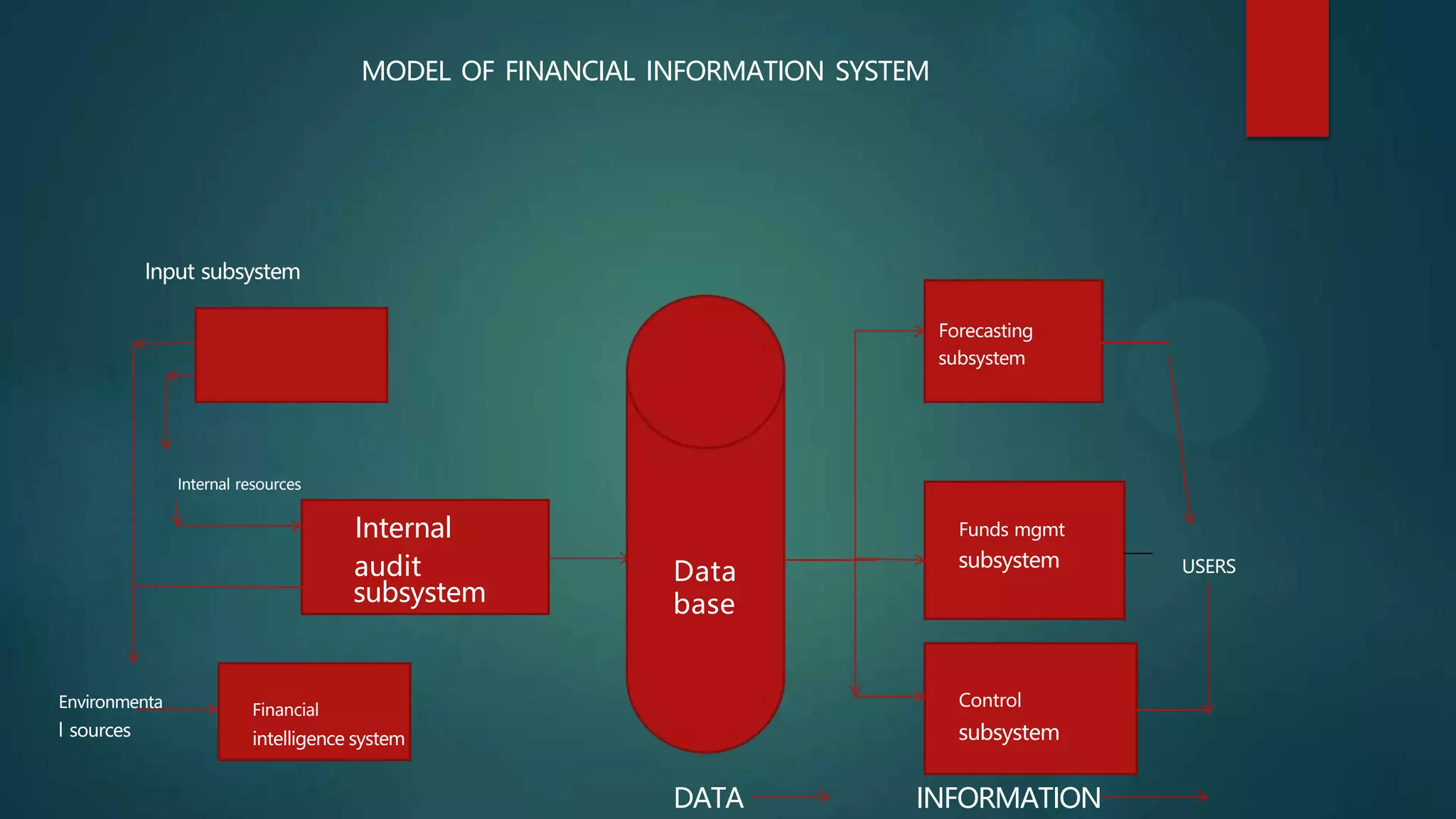
1. A functional information system provides detailed information for a specific activity or related group of activities, as well as summarized information for management control.
2. Functional information systems have characteristics like large databases with many small changes, systematic and mostly numerical records, routine actions and updating, and data preparation as a large effort.
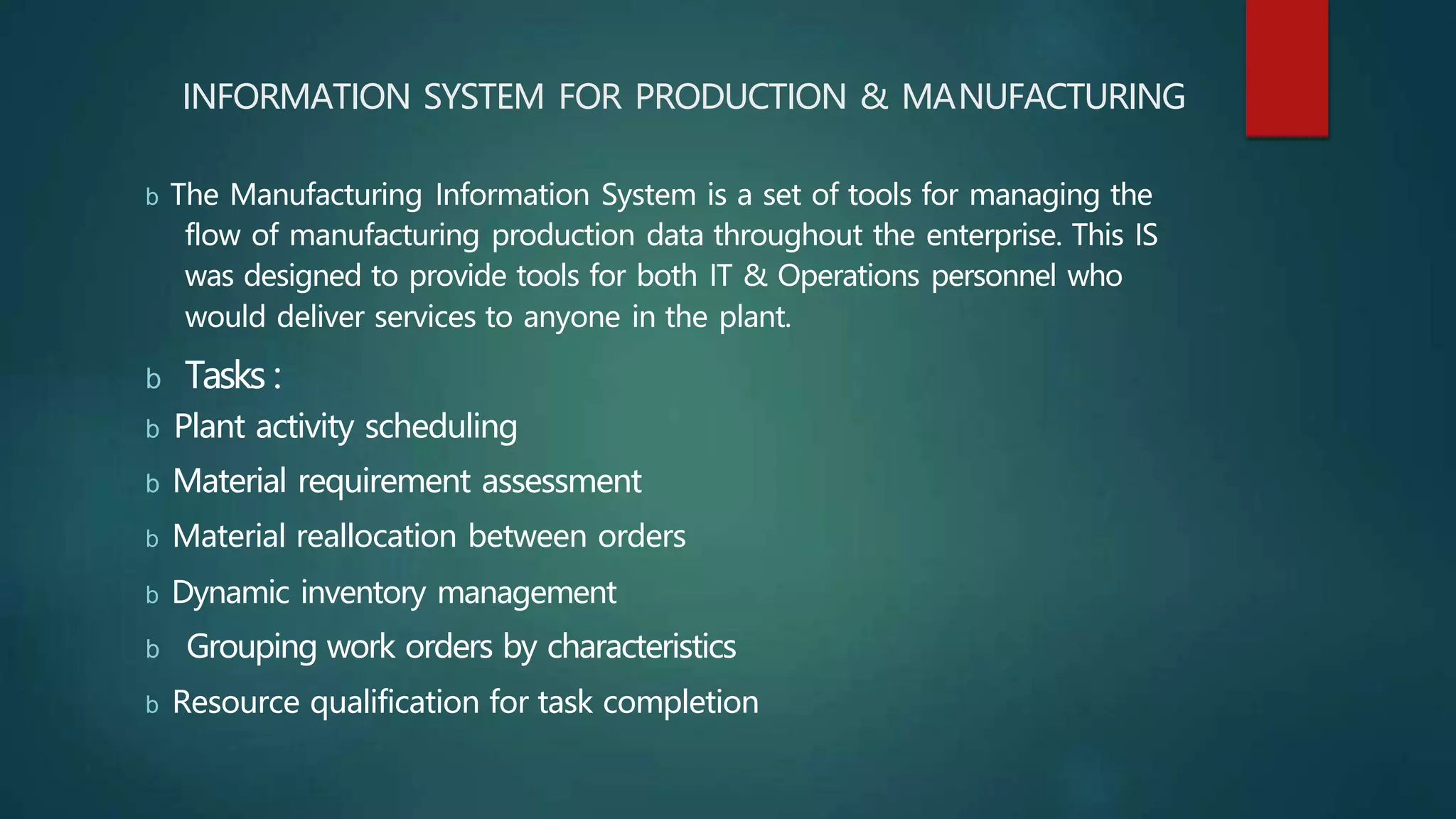
3. Examples of functional information systems include marketing information systems, human resources information systems, accounting information systems, production and manufacturing information systems, and finance management information systems.