Introduction to Communication Theory
 Everyday view of communication is the flow
of information from one person to another.
 Communication: the process by which people
interactively create, sustain, and manage
meaning.
 Communication competence: balancing
effectiveness and appropriateness.
◦ Effectiveness: extent to which you achieve your
goals in interaction.
◦ Appropriateness: fulfilling social expectations for a
particular situation.
 Understanding theory will allow for a proper
balance of effectiveness and appropriateness
 Abstract understanding of communication
process.
 Move beyond describing a single event by
providing a means by which all like events can be
described.
 Defined: systematic summary about the nature of
the communication process.
 Functions include:
◦ Focusing attention on particular concepts
◦ Clarifying our observations
◦ Predicting communication behavior
◦ Generating personal and social change
 Commonsense theory
◦ Theories-in-use
◦ Created through personal experiences
◦ Are often the basis for our decisions on how to
communicate
◦ E.g.: Never date a colleague; it always ends up badly
 Working theory
◦ Generalizations made in particular professions
about the best technique for doing something
◦ More systematic than commonsense theory
represent agreed-on ways of doing things in
professions.
◦ E.g.: Audience analysis should be done prior to
presenting a speech.
 Scholarly theory
◦ Has undergone systematic research
◦ Provide more thorough, accurate, and abstract
explanations for communication
◦ Typically more complex and difficult to understand
◦ E.g.: The media do not tell us what to think, but
what to think about (agenda-setting theory)
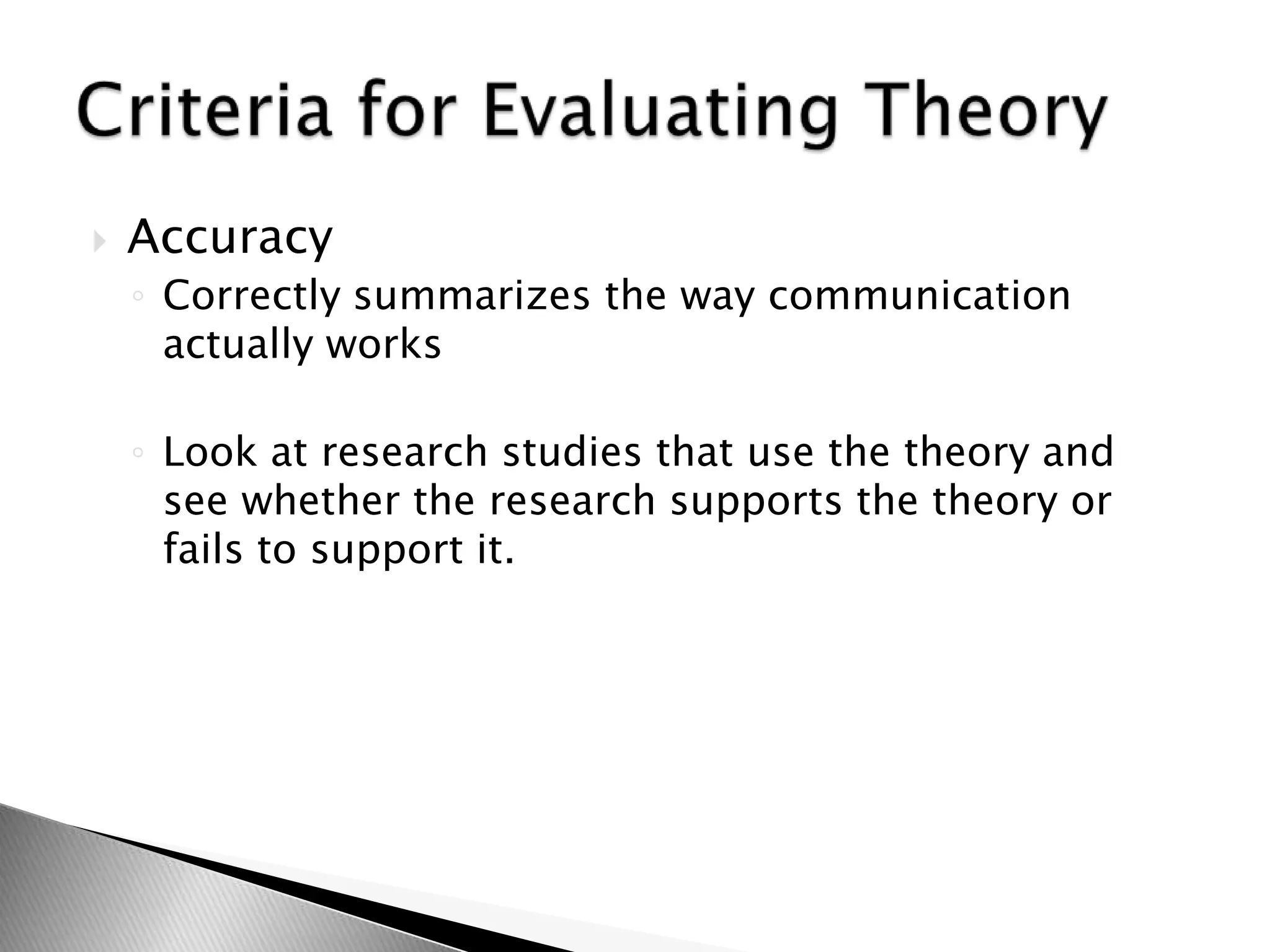
 Accuracy
◦ Correctly summarizes the way communication
actually works
◦ Look at research studies that use the theory and
see whether the research supports the theory or
fails to support it.
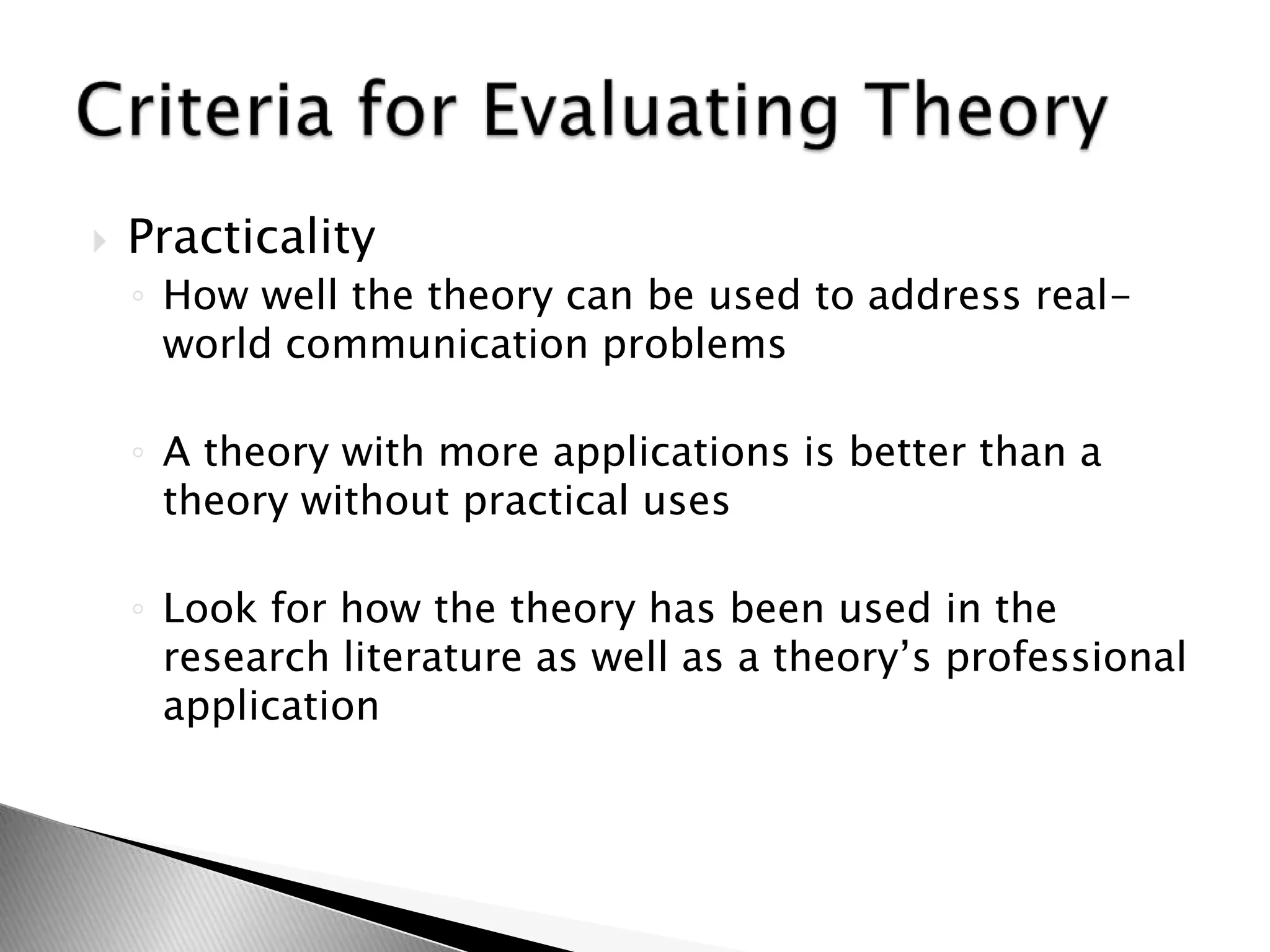
 Practicality
◦ How well the theory can be used to address real-
world communication problems
◦ A theory with more applications is better than a
theory without practical uses
◦ Look for how the theory has been used in the
research literature as well as a theory’s professional
application
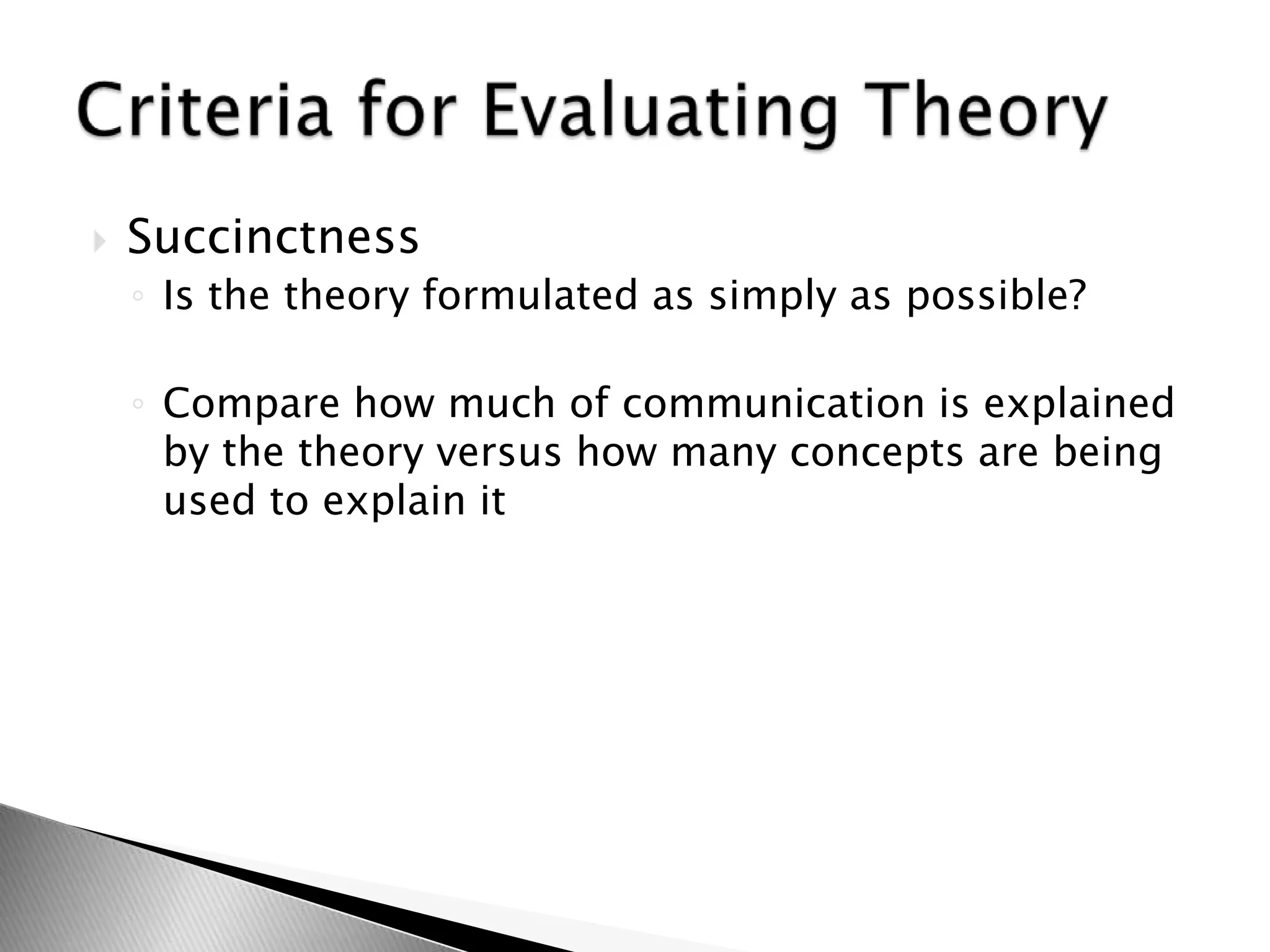
 Succinctness
◦ Is the theory formulated as simply as possible?
◦ Compare how much of communication is explained
by the theory versus how many concepts are being
used to explain it
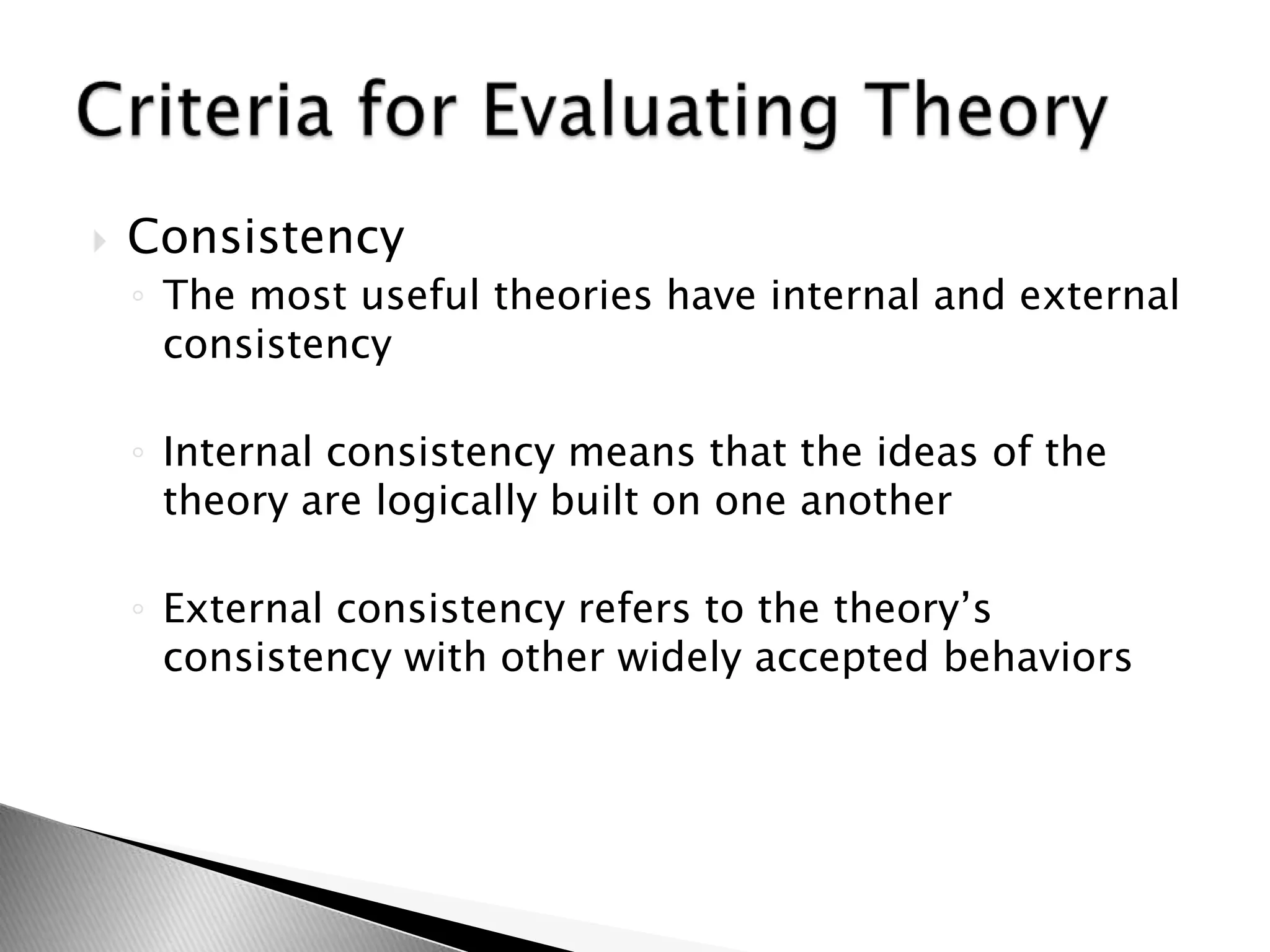
 Consistency
◦ The most useful theories have internal and external
consistency
◦ Internal consistency means that the ideas of the
theory are logically built on one another
◦ External consistency refers to the theory’s
consistency with other widely accepted behaviors
 Acuity
◦ The ability of a theory to provide insight into an
otherwise intricate issue
◦ You need to think, “Wow, I never realized that!”
 Case Study 1: Evaluating Groupthink
◦ How accurate is groupthink?
◦ How practical is groupthink?
◦ Is the theory appropriately succinct? Or is it overly
simple or overly complex?
◦ Is groupthink consistent with other theories about
group communication? Does it demonstrate internal
consistency?
◦ Does groupthink demonstrate acuity?
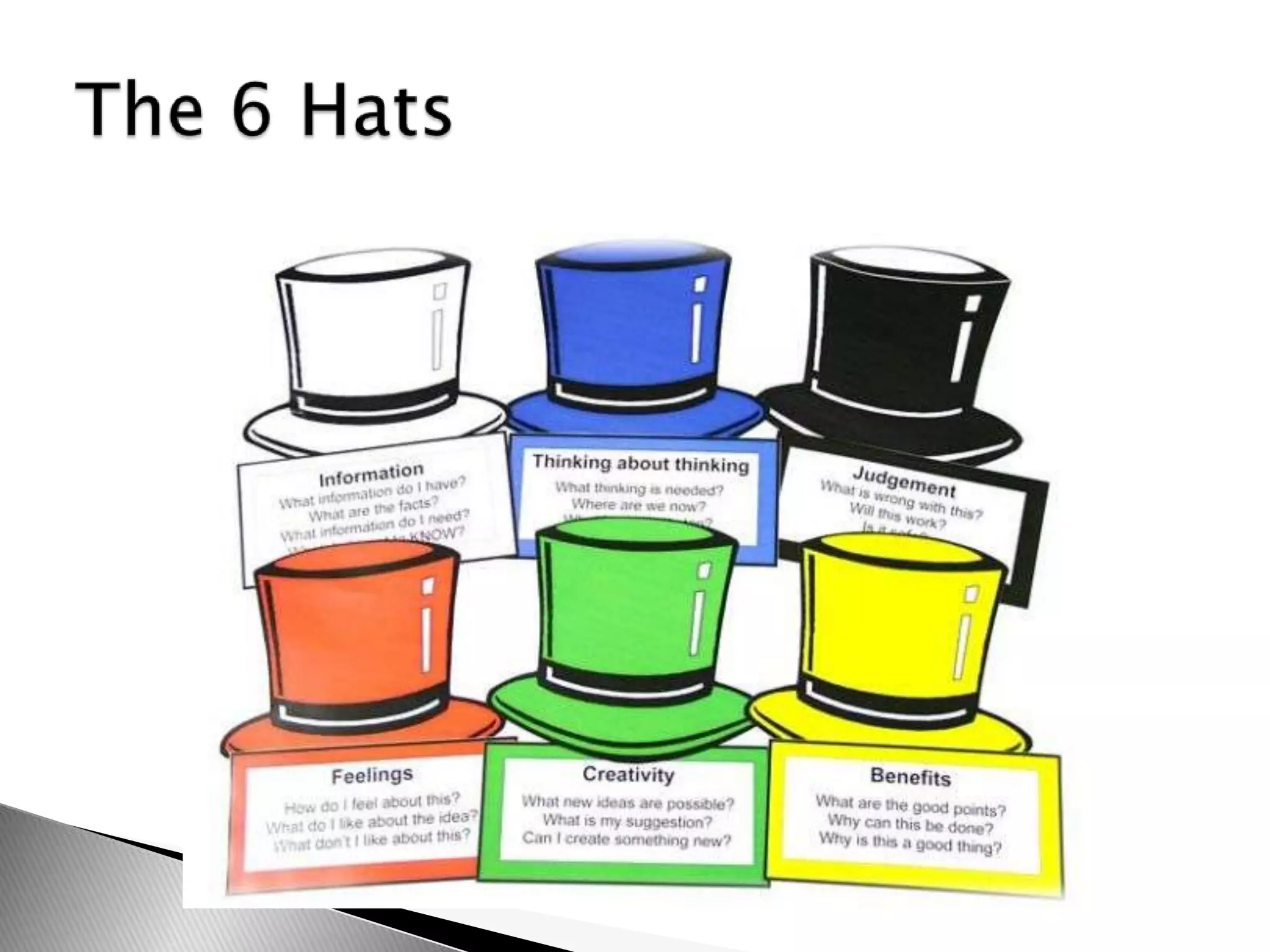
Edward de Bono
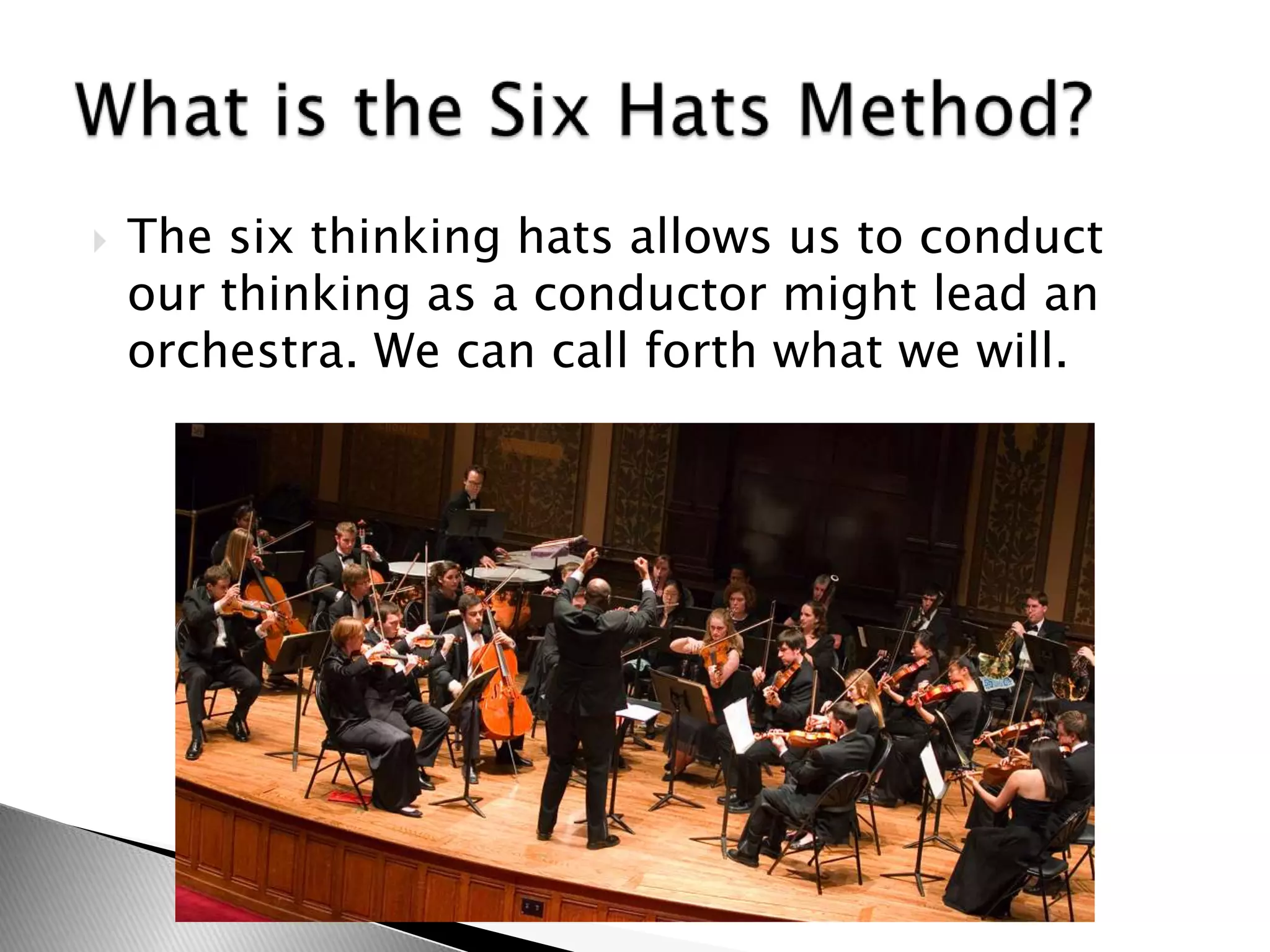
 The six thinking hats allows us to conduct
our thinking as a conductor might lead an
orchestra. We can call forth what we will.
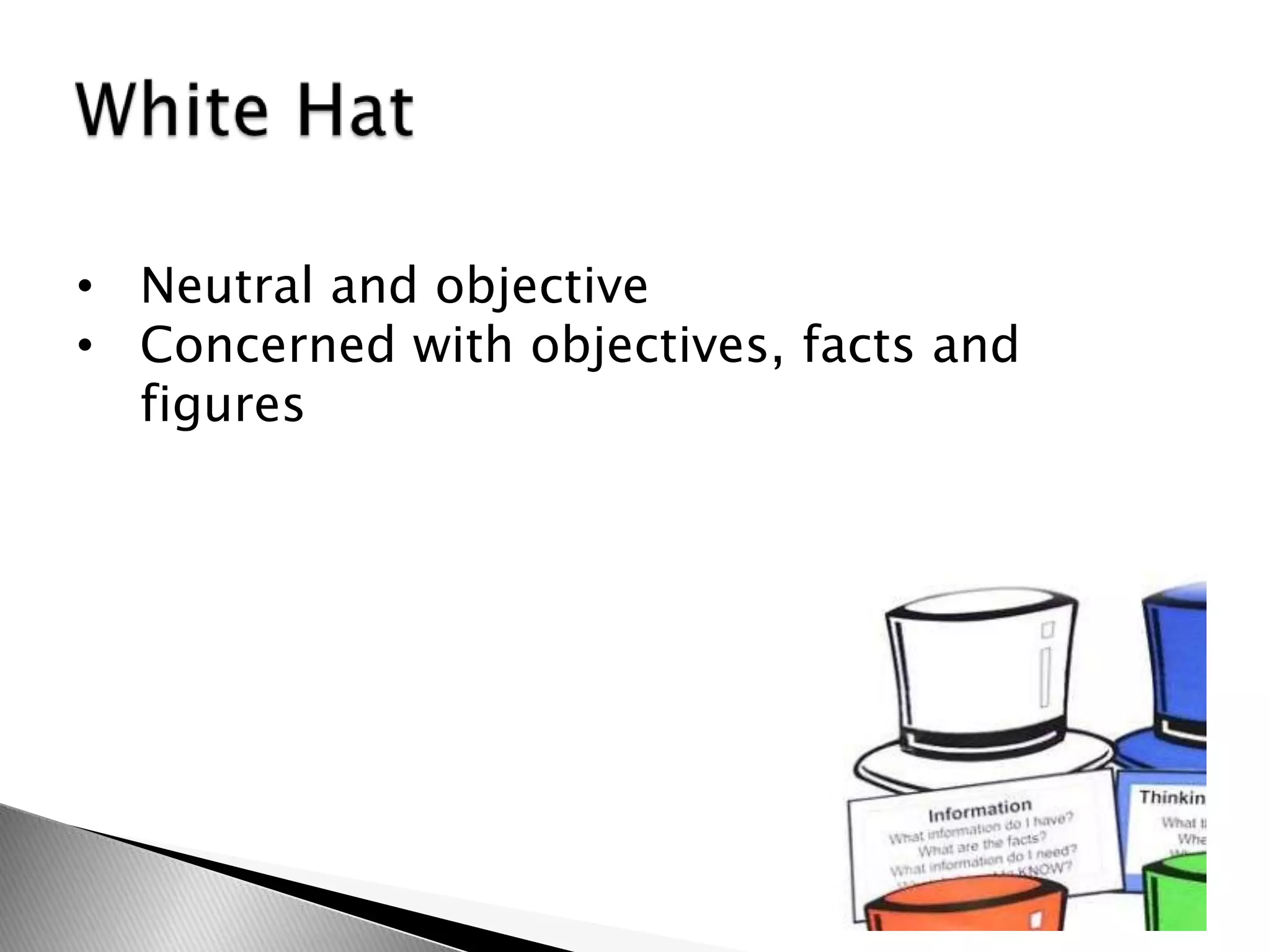
• Neutral and objective
• Concerned with objectives, facts and
figures
• Cool…
• Organization of thinking
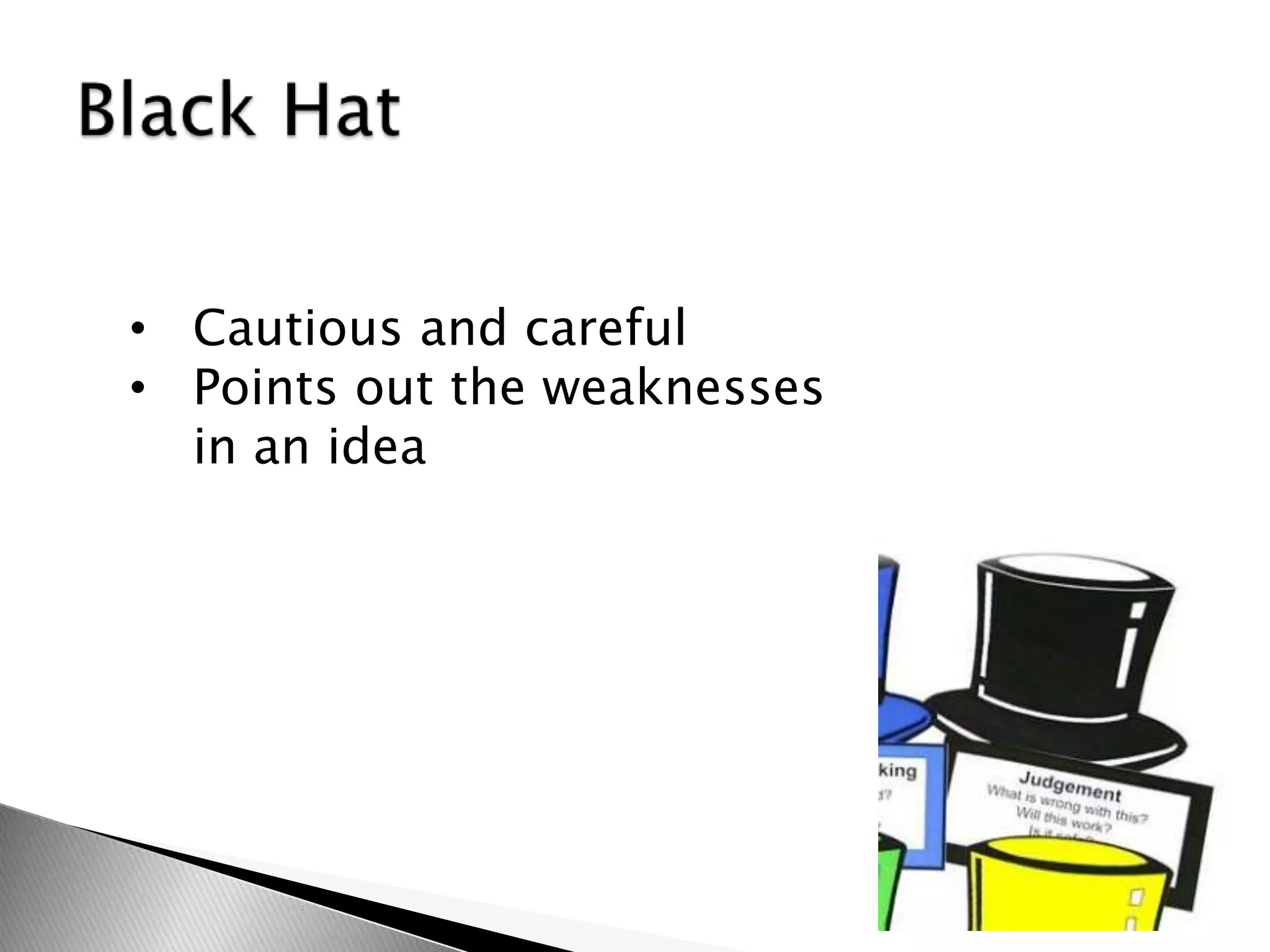
• Cautious and careful
• Points out the weaknesses
in an idea
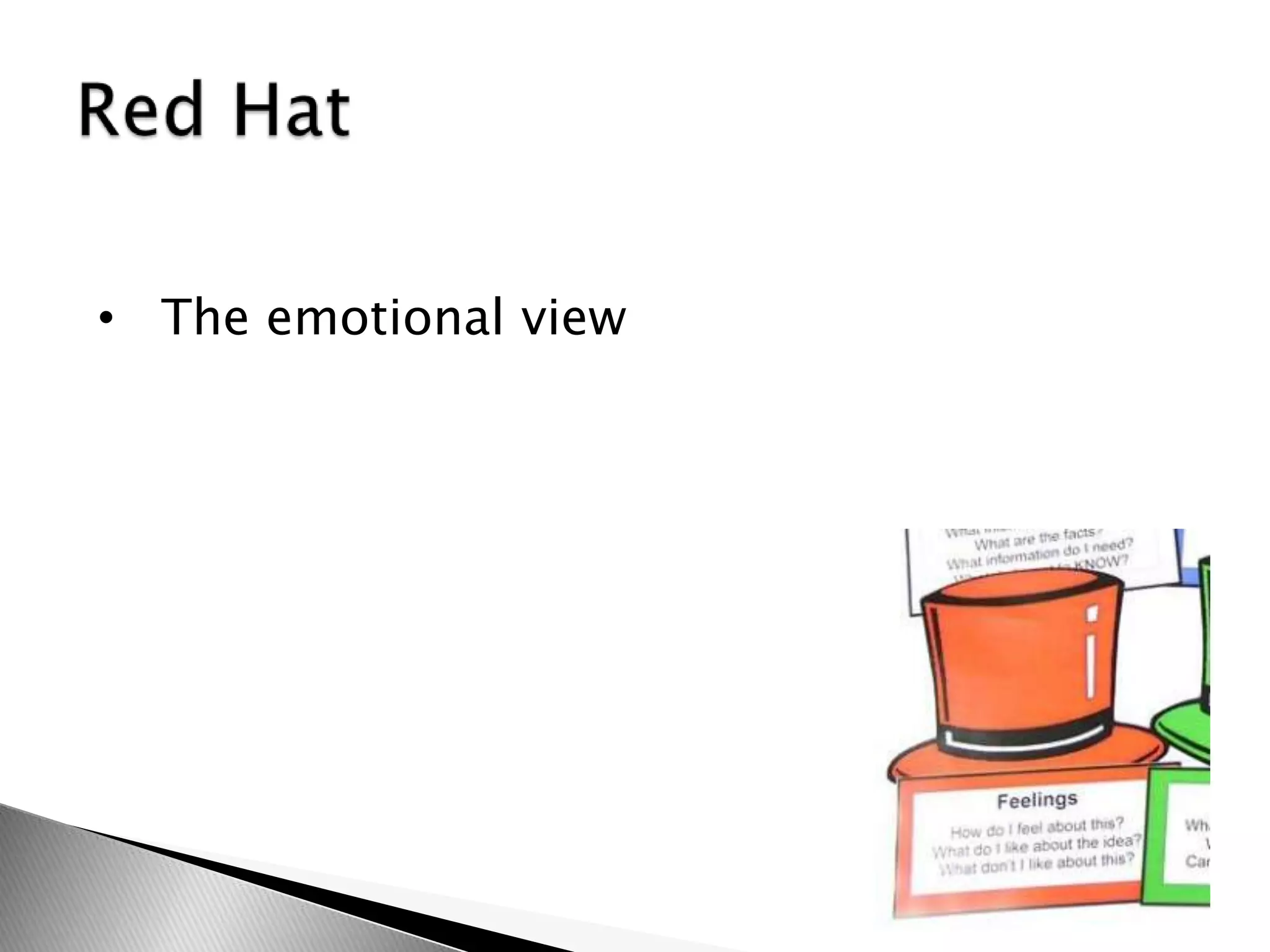
• The emotional view
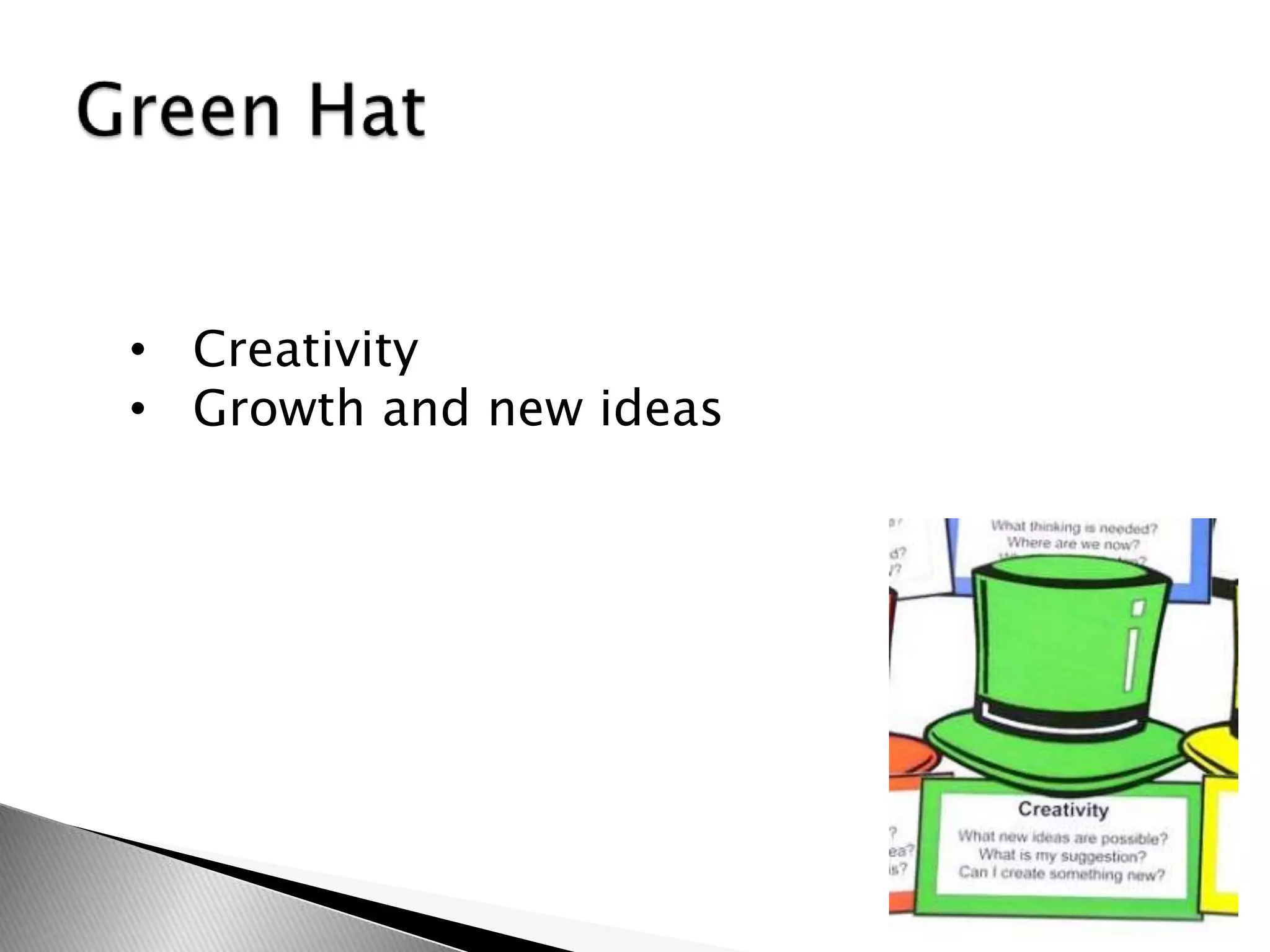
• Creativity
• Growth and new ideas
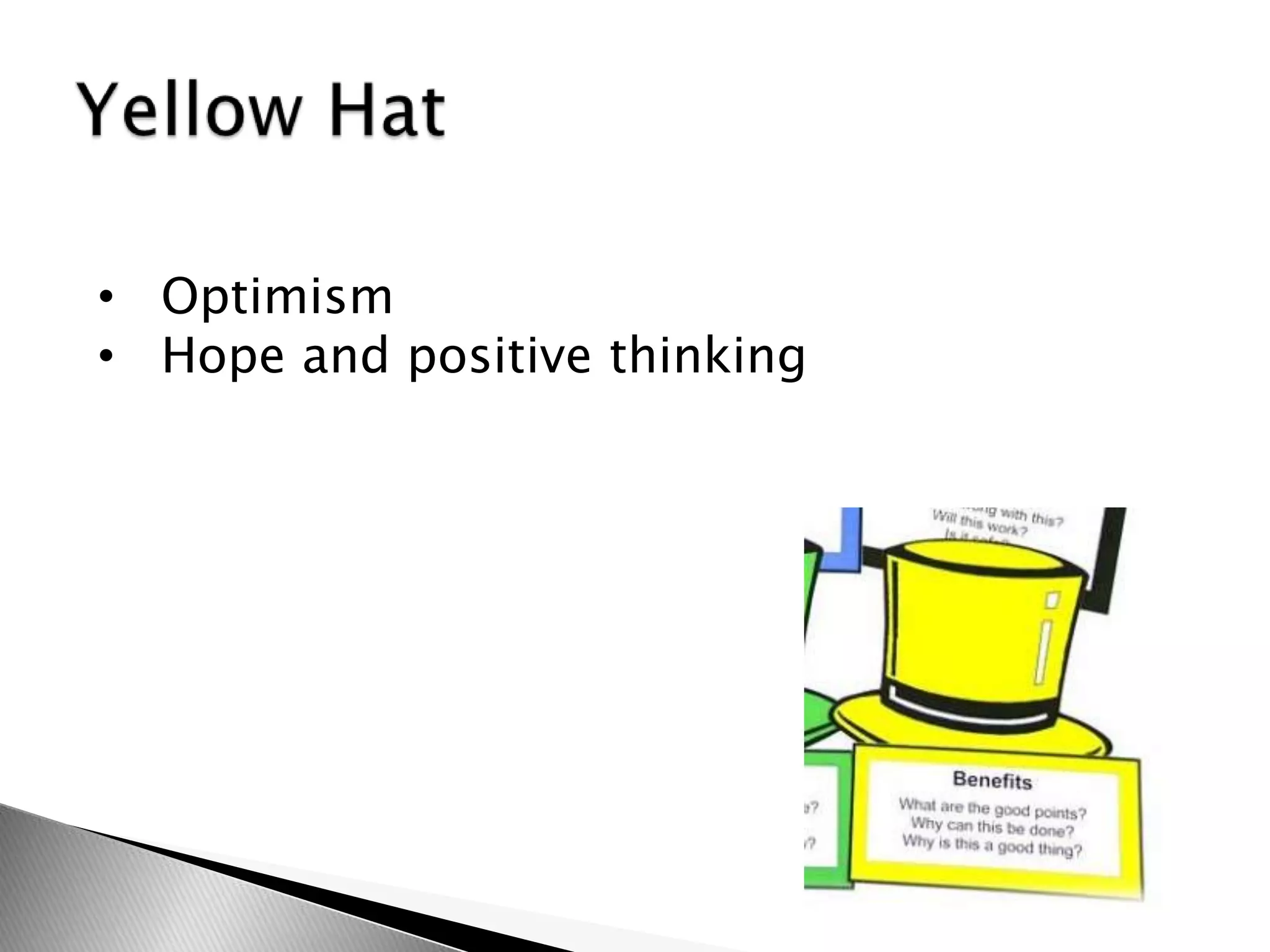
• Optimism
• Hope and positive thinking
 https://www.youtube.com/watch?v=smEqnnk
lfYs
 Describe the “I Have a Dream” speech to a
class of MBA students in Estonia.

Mba612 chapter 1

  • 1.
  • 2.
     Everyday viewof communication is the flow of information from one person to another.  Communication: the process by which people interactively create, sustain, and manage meaning.
  • 4.
     Communication competence:balancing effectiveness and appropriateness. ◦ Effectiveness: extent to which you achieve your goals in interaction. ◦ Appropriateness: fulfilling social expectations for a particular situation.  Understanding theory will allow for a proper balance of effectiveness and appropriateness
  • 5.
     Abstract understandingof communication process.  Move beyond describing a single event by providing a means by which all like events can be described.  Defined: systematic summary about the nature of the communication process.  Functions include: ◦ Focusing attention on particular concepts ◦ Clarifying our observations ◦ Predicting communication behavior ◦ Generating personal and social change
  • 6.
     Commonsense theory ◦Theories-in-use ◦ Created through personal experiences ◦ Are often the basis for our decisions on how to communicate ◦ E.g.: Never date a colleague; it always ends up badly
  • 7.
     Working theory ◦Generalizations made in particular professions about the best technique for doing something ◦ More systematic than commonsense theory represent agreed-on ways of doing things in professions. ◦ E.g.: Audience analysis should be done prior to presenting a speech.
  • 8.
     Scholarly theory ◦Has undergone systematic research ◦ Provide more thorough, accurate, and abstract explanations for communication ◦ Typically more complex and difficult to understand ◦ E.g.: The media do not tell us what to think, but what to think about (agenda-setting theory)
  • 9.
     Accuracy ◦ Correctlysummarizes the way communication actually works ◦ Look at research studies that use the theory and see whether the research supports the theory or fails to support it.
  • 10.
     Practicality ◦ Howwell the theory can be used to address real- world communication problems ◦ A theory with more applications is better than a theory without practical uses ◦ Look for how the theory has been used in the research literature as well as a theory’s professional application
  • 11.
     Succinctness ◦ Isthe theory formulated as simply as possible? ◦ Compare how much of communication is explained by the theory versus how many concepts are being used to explain it
  • 12.
     Consistency ◦ Themost useful theories have internal and external consistency ◦ Internal consistency means that the ideas of the theory are logically built on one another ◦ External consistency refers to the theory’s consistency with other widely accepted behaviors
  • 13.
     Acuity ◦ Theability of a theory to provide insight into an otherwise intricate issue ◦ You need to think, “Wow, I never realized that!”
  • 14.
     Case Study1: Evaluating Groupthink ◦ How accurate is groupthink? ◦ How practical is groupthink? ◦ Is the theory appropriately succinct? Or is it overly simple or overly complex? ◦ Is groupthink consistent with other theories about group communication? Does it demonstrate internal consistency? ◦ Does groupthink demonstrate acuity?
  • 15.
  • 16.
     The sixthinking hats allows us to conduct our thinking as a conductor might lead an orchestra. We can call forth what we will.
  • 18.
    • Neutral andobjective • Concerned with objectives, facts and figures
  • 19.
  • 20.
    • Cautious andcareful • Points out the weaknesses in an idea
  • 21.
  • 22.
  • 23.
    • Optimism • Hopeand positive thinking
  • 24.
     https://www.youtube.com/watch?v=smEqnnk lfYs  Describethe “I Have a Dream” speech to a class of MBA students in Estonia.