Functional Neurology
What’s it all about?
Dr Naomi Warren
Content
 Background
 Clinical presentations
 Investigations
 Management
 Future aims
Background
 Historically:
 hysteria (the “wandering womb”)
 conversion disorders
 dissociative disorders
 psychogenic
 medically unexplained
 non-organic
 psychosomatic
 functional
Functional symptoms
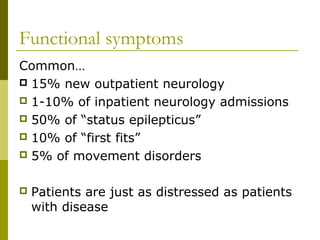
Common…
 15% new outpatient neurology
 1-10% of inpatient neurology admissions
 50% of “status epilepticus”
 10% of “first fits”
 5% of movement disorders
 Patients are just as distressed as patients
with disease
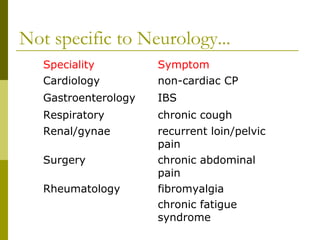
Not specific to Neurology...
Speciality Symptom
Cardiology non-cardiac CP
Gastroenterology IBS
Respiratory chronic cough
Renal/gynae recurrent loin/pelvic
pain
Surgery chronic abdominal
pain
Rheumatology fibromyalgia
chronic fatigue
syndrome
Case 1
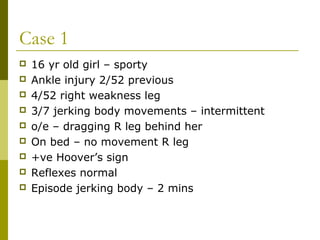
 16 yr old girl – sporty
 Ankle injury 2/52 previous
 4/52 right weakness leg
 3/7 jerking body movements – intermittent
 o/e – dragging R leg behind her
 On bed – no movement R leg
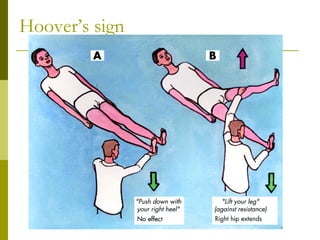
 +ve Hoover’s sign
 Reflexes normal
 Episode jerking body – 2 mins
Hoover’s sign
Case cont….
 Explained
 Functional
 Not seizure
 Denied stresses initially
 Parents – due to leave UK  stress
 Treatment
 Physio
 Snowboarding!!
 www.neurosymptoms.org
 Good outcome
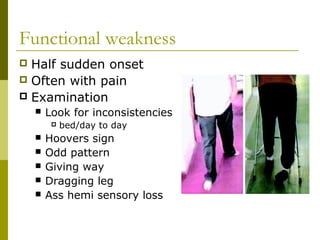
Functional weakness
 Half sudden onset
 Often with pain
 Examination
 Look for inconsistencies
 bed/day to day
 Hoovers sign
 Odd pattern
 Giving way
 Dragging leg
 Ass hemi sensory loss
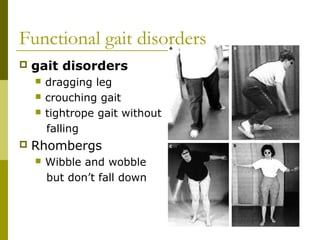
Functional gait disorders
 gait disorders
 dragging leg
 crouching gait
 tightrope gait without
falling
 Rhombergs
 Wibble and wobble
but don’t fall down
Case 2
 34 yr old R handed woman
 FT administrator
 Sudden onset tremor right hand 4 days
previous
 Present constantly
 No previous history
 video
Functional movement disorders
 Can be more difficult to identify
 Mostly sudden onset
 Eg after injury
 Tremor
 Disappears with distraction, entrainment,
variable
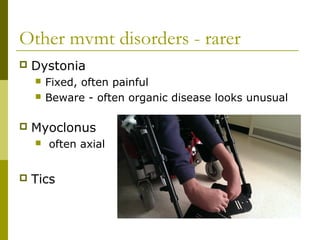
Other mvmt disorders - rarer
 Dystonia
 Fixed, often painful
 Beware - often organic disease looks unusual
 Myoclonus
 often axial
 Tics
Non-epileptic attacks
 Aura
 Not stereotyped
 Variable time
 Attack
 Violent
 Long/multiple
 Violent
 No “tonic” phase
 Fast resp
 Post ictal
 Crying
 No true confusion
• Not helpful
Incontinence
Injuries
• Some help
Tongue biting - lateral
Other functional presentations
 Cognitive decline
 subjective cognitive problems although can
usually give a very clear account of themselves
 Visual loss
 tunnel vision or
 blindness with preserved pupil reflexes and
optico-kinetic nystagmus
 Globus
 Dysphonia
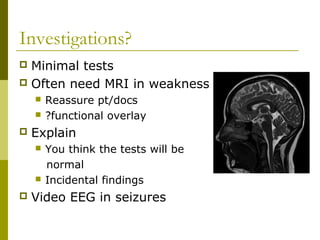
Investigations?
 Minimal tests
 Often need MRI in weakness
 Reassure pt/docs
 ?functional overlay
 Explain
 You think the tests will be
normal
 Incidental findings
 Video EEG in seizures
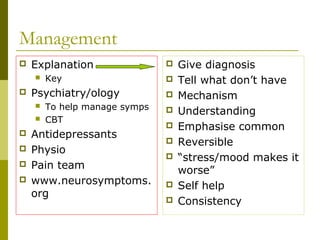
Management
 Explanation
 Key
 Psychiatry/ology
 To help manage symps
 CBT
 Antidepressants
 Physio
 Pain team
 www.neurosymptoms.
org
 Give diagnosis
 Tell what don’t have
 Mechanism
 Understanding
 Emphasise common
 Reversible
 “stress/mood makes it
worse”
 Self help
 Consistency
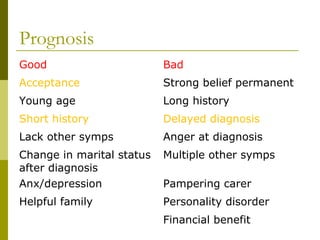
Prognosis
Good Bad
Acceptance Strong belief permanent
Young age Long history
Short history Delayed diagnosis
Lack other symps Anger at diagnosis
Change in marital status
after diagnosis
Multiple other symps
Anx/depression Pampering carer
Helpful family Personality disorder
Financial benefit
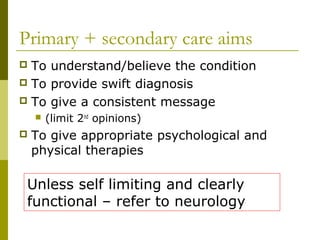
Primary + secondary care aims
 To understand/believe the condition
 To provide swift diagnosis
 To give a consistent message
 (limit 2nd
opinions)
 To give appropriate psychological and
physical therapies
Unless self limiting and clearly
functional – refer to neurology
Conclusion
 Very common problem in neurology
 Huge cause disability
 Needs swift investigation and mgmt
 Careful explanation
 Appropriate psychological help
 Questions?

Functional Neurology for GP Event March 2015 - NW

  • 1.
    Functional Neurology What’s itall about? Dr Naomi Warren
  • 2.
    Content  Background  Clinicalpresentations  Investigations  Management  Future aims
  • 3.
    Background  Historically:  hysteria(the “wandering womb”)  conversion disorders  dissociative disorders  psychogenic  medically unexplained  non-organic  psychosomatic  functional
  • 4.
    Functional symptoms Common…  15%new outpatient neurology  1-10% of inpatient neurology admissions  50% of “status epilepticus”  10% of “first fits”  5% of movement disorders  Patients are just as distressed as patients with disease
  • 5.
    Not specific toNeurology... Speciality Symptom Cardiology non-cardiac CP Gastroenterology IBS Respiratory chronic cough Renal/gynae recurrent loin/pelvic pain Surgery chronic abdominal pain Rheumatology fibromyalgia chronic fatigue syndrome
  • 6.
    Case 1  16yr old girl – sporty  Ankle injury 2/52 previous  4/52 right weakness leg  3/7 jerking body movements – intermittent  o/e – dragging R leg behind her  On bed – no movement R leg  +ve Hoover’s sign  Reflexes normal  Episode jerking body – 2 mins
  • 7.
  • 8.
    Case cont….  Explained Functional  Not seizure  Denied stresses initially  Parents – due to leave UK  stress  Treatment  Physio  Snowboarding!!  www.neurosymptoms.org  Good outcome
  • 9.
    Functional weakness  Halfsudden onset  Often with pain  Examination  Look for inconsistencies  bed/day to day  Hoovers sign  Odd pattern  Giving way  Dragging leg  Ass hemi sensory loss
  • 10.
    Functional gait disorders gait disorders  dragging leg  crouching gait  tightrope gait without falling  Rhombergs  Wibble and wobble but don’t fall down
  • 11.
    Case 2  34yr old R handed woman  FT administrator  Sudden onset tremor right hand 4 days previous  Present constantly  No previous history
  • 12.
  • 13.
    Functional movement disorders Can be more difficult to identify  Mostly sudden onset  Eg after injury  Tremor  Disappears with distraction, entrainment, variable
  • 14.
    Other mvmt disorders- rarer  Dystonia  Fixed, often painful  Beware - often organic disease looks unusual  Myoclonus  often axial  Tics
  • 15.
    Non-epileptic attacks  Aura Not stereotyped  Variable time  Attack  Violent  Long/multiple  Violent  No “tonic” phase  Fast resp  Post ictal  Crying  No true confusion • Not helpful Incontinence Injuries • Some help Tongue biting - lateral
  • 16.
    Other functional presentations Cognitive decline  subjective cognitive problems although can usually give a very clear account of themselves  Visual loss  tunnel vision or  blindness with preserved pupil reflexes and optico-kinetic nystagmus  Globus  Dysphonia
  • 17.
    Investigations?  Minimal tests Often need MRI in weakness  Reassure pt/docs  ?functional overlay  Explain  You think the tests will be normal  Incidental findings  Video EEG in seizures
  • 18.
    Management  Explanation  Key Psychiatry/ology  To help manage symps  CBT  Antidepressants  Physio  Pain team  www.neurosymptoms. org  Give diagnosis  Tell what don’t have  Mechanism  Understanding  Emphasise common  Reversible  “stress/mood makes it worse”  Self help  Consistency
  • 19.
    Prognosis Good Bad Acceptance Strongbelief permanent Young age Long history Short history Delayed diagnosis Lack other symps Anger at diagnosis Change in marital status after diagnosis Multiple other symps Anx/depression Pampering carer Helpful family Personality disorder Financial benefit
  • 20.
    Primary + secondarycare aims  To understand/believe the condition  To provide swift diagnosis  To give a consistent message  (limit 2nd opinions)  To give appropriate psychological and physical therapies Unless self limiting and clearly functional – refer to neurology
  • 21.
    Conclusion  Very commonproblem in neurology  Huge cause disability  Needs swift investigation and mgmt  Careful explanation  Appropriate psychological help  Questions?