Cattle fattening value chain development
                                                 Interventions and lessons

                                                                                                                                                                               Knowledge
Va l u e c h a i n i n t e r v e n t i o n s                                                                                                                                   management /
Input supply interventions                                                                                                                                                     Capacity development
                                                                                                                                                                                Ta r g e t i n g


                                                                                                                                                                               Targeting women and farmers
                                                                                                                                                                               with entrepreunial skills willing
                                                                                                                                                                               to invest


Existing rural shops : suppliers of suplemental feed and veterinary drugs
                                                                                                                                                                                Knowledge management / skill
                                                                                                                                                                                development


                                                                                                                                                                               Study tours within and outside      Training of paravets
                                                                                                                                                                               the woreda

Organising farmers to ensure quality concentrate supply
                                                                                        Cattle fattening value chain actors
Production interventions
                                                                                                   and their roles


                                                                                              Knowledge/Skills                                  Input supply
                                                                                          MoARD, BoARD, OoARD,                                    services
                                                                                          EARS
                                                                                          Private Sector                                 Cooperative shops                    Training farmers in chopping, UMB preparation and urea treatment
                                                                                          Cooperatives                                   Shops
                                                                                          Specialized farmers                            Veterinary Clinics
                                                                                          Consultants                                    Government
                                                                                          NGOs                                           NGOs
 Use of indigenous breeds for fattening     Promoting the use of adequate
                                            forage
                                                                                          Students


                                                                                                                                                                               Organising awards for best          Woreda knowledge centers :
                                                                                                                                                                               practitioners                       powerful institutions
                                                                                                                          Fatteners


 Urea molasses block locally produced        Better use of concentrates for fattening
 for supplemental feed

                                                                                                     Credit                                       Marketing
                                                                                                                                                                                     Additional ICT-supported
                                                                                          Microfinance	institutions                                                                information /knowledge via
                                                                                          Cooperatives                                                                             Ethiopian Agriculture Portal
                                                                                                                                          Private industry                              (EAP) www.eap.gov.et
                                                                                          Private industry                                Cooperatives
                                                                                          Shops                                           Traders
                                                                                          Feed suppliers


 Chopping and       urea treatment of        Better animal care for better results
 sorghum stover                                                                          Lessons & Challenges
Processing / Marketing interventions                                                    •	 The meat value chain development through fattening of large ruminants is a continuous process, which requires new responses in
                                                                                           knowledge, skills and interventions and sets of actors depending on differences in the level of commercialization of households and Dis-
                                                                                           tricts.
                                                                                        •	 In general the public sector staff and farmers knowledge and skills required for commercial fattening were inadequate and were there-
                                                                                           fore	augmented	with	i)	study	tours,	ii)	in	service	training	with	follow	up	learning	sessions	in	the	field	,	iii)	improved	access	to	knowledge	
                                                                                           through Woreda Knowledge Centers and FTCs and iv) use of trainers from research and consultants.
                                                                                        •	 In general, fattening of animals was relatively easily adopted by farmers and resulted in positive contribution to income. Some women
                                                                                           farmers are involved, however this is not widespread.
                                                                                        •	 Differences existed between Districts and households in fattening practices, i.e. at the early stages of commercialization Districts/house-
                                                                                           holds fattened their own draft animals, while at a more advanced stage farmers purchased animals mainly for fattening. To stimulate
                                                                                           this development, credit to purchase animals is required. The project demonstrated successfully the use of credit to purchase a varying
                                                                                           number of animals, depending on the skills of the fattener. However supply of such animals is limited and will become a constraint when
                                                                                           scaling out.
 Use livestock fairs to promote fattening and marketing activity
                                                                                        •	 To improve the productivity of fattened animals, the project partners stimulated the use of stall feeding in sheltered environments. This
                                                                                           practice was successfully adopted by most farmers. Urea treated straw for stall feeding is not easily adopted by fatteners.
                                                                                        •	 The main production intervention was the supplementary feeding of animals with agricultural industrial by products. Many farmers are
                                                                                           experimenting, especially since availability and prices of different products varied over time and between Districts. More knowledge is
                                                                                           required to assist farmers in formulating economically viable rations.
                                                                                        •	 The third major production intervention was the introduction of improved breeds on an experimental scale. While farmers like the ani-
                                                                                           mals, no tangible impact can be seen as yet.
                                                                                        •	 The project facilitated the introduction of privatized paravet services with credit. The effectiveness of this system is still to be studied.
                                                                                        •	 Linkages with concentrate shops/suppliers were facilitated. This has contributed to the development of the fattening system. The produc-
                                                                                           tion and supply of UMB had however limited adoption.
                                                                                        •	 Market	potential	varied	between	Districts,	reflected	in	considerable	price	differences.	Most	sales	are	targeted	to	the	domestic	seasonal	
Linking farmers/pastoralists with traders   Use local markets as linkeage platforms        holiday market. Market price information, linkages with traders and marketing group formation helped in obtaining better prices. To enter
on livestock fair                           between traders and fatteners                  the export markets regulatory bodies and quarantine services need improvement.
                                                                                        •	 “Livestock fair” is successful in promoting and marketing of animals.
                                                                                        •	 While	not	yet	significant,	stall	feeding	of	stover	for	fattening	can	lead	to	a	loss	of	nutrients	and	organic	material	for	crop	production.


Addressing demands of urban markets as driver for fattening development

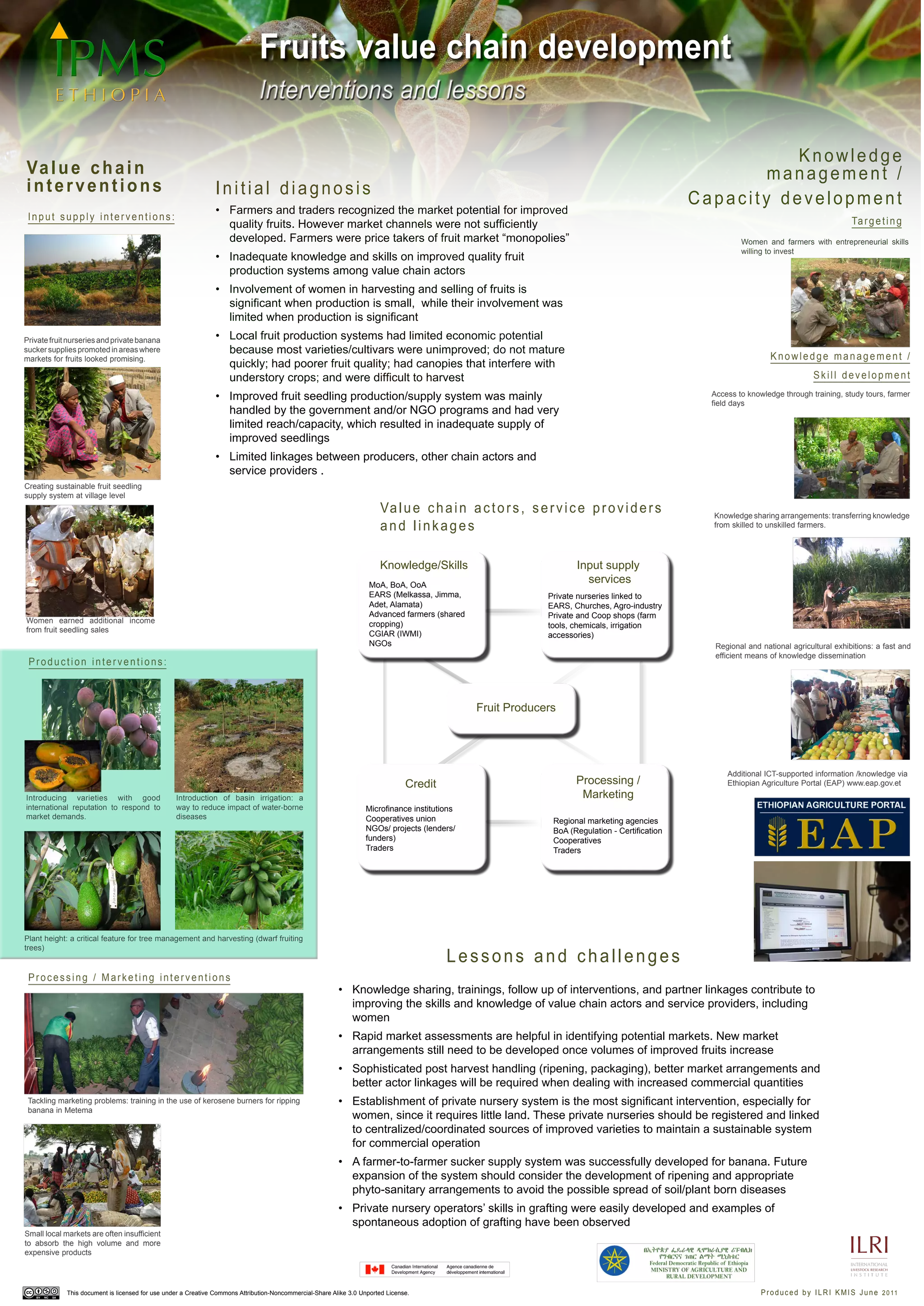
Fruits value chain development: interventions and lessons

  • 1.
    Cattle fattening valuechain development Interventions and lessons Knowledge Va l u e c h a i n i n t e r v e n t i o n s management / Input supply interventions Capacity development Ta r g e t i n g Targeting women and farmers with entrepreunial skills willing to invest Existing rural shops : suppliers of suplemental feed and veterinary drugs Knowledge management / skill development Study tours within and outside Training of paravets the woreda Organising farmers to ensure quality concentrate supply Cattle fattening value chain actors Production interventions and their roles Knowledge/Skills Input supply MoARD, BoARD, OoARD, services EARS Private Sector Cooperative shops Training farmers in chopping, UMB preparation and urea treatment Cooperatives Shops Specialized farmers Veterinary Clinics Consultants Government NGOs NGOs Use of indigenous breeds for fattening Promoting the use of adequate forage Students Organising awards for best Woreda knowledge centers : practitioners powerful institutions Fatteners Urea molasses block locally produced Better use of concentrates for fattening for supplemental feed Credit Marketing Additional ICT-supported Microfinance institutions information /knowledge via Cooperatives Ethiopian Agriculture Portal Private industry (EAP) www.eap.gov.et Private industry Cooperatives Shops Traders Feed suppliers Chopping and urea treatment of Better animal care for better results sorghum stover Lessons & Challenges Processing / Marketing interventions • The meat value chain development through fattening of large ruminants is a continuous process, which requires new responses in knowledge, skills and interventions and sets of actors depending on differences in the level of commercialization of households and Dis- tricts. • In general the public sector staff and farmers knowledge and skills required for commercial fattening were inadequate and were there- fore augmented with i) study tours, ii) in service training with follow up learning sessions in the field , iii) improved access to knowledge through Woreda Knowledge Centers and FTCs and iv) use of trainers from research and consultants. • In general, fattening of animals was relatively easily adopted by farmers and resulted in positive contribution to income. Some women farmers are involved, however this is not widespread. • Differences existed between Districts and households in fattening practices, i.e. at the early stages of commercialization Districts/house- holds fattened their own draft animals, while at a more advanced stage farmers purchased animals mainly for fattening. To stimulate this development, credit to purchase animals is required. The project demonstrated successfully the use of credit to purchase a varying number of animals, depending on the skills of the fattener. However supply of such animals is limited and will become a constraint when scaling out. Use livestock fairs to promote fattening and marketing activity • To improve the productivity of fattened animals, the project partners stimulated the use of stall feeding in sheltered environments. This practice was successfully adopted by most farmers. Urea treated straw for stall feeding is not easily adopted by fatteners. • The main production intervention was the supplementary feeding of animals with agricultural industrial by products. Many farmers are experimenting, especially since availability and prices of different products varied over time and between Districts. More knowledge is required to assist farmers in formulating economically viable rations. • The third major production intervention was the introduction of improved breeds on an experimental scale. While farmers like the ani- mals, no tangible impact can be seen as yet. • The project facilitated the introduction of privatized paravet services with credit. The effectiveness of this system is still to be studied. • Linkages with concentrate shops/suppliers were facilitated. This has contributed to the development of the fattening system. The produc- tion and supply of UMB had however limited adoption. • Market potential varied between Districts, reflected in considerable price differences. Most sales are targeted to the domestic seasonal Linking farmers/pastoralists with traders Use local markets as linkeage platforms holiday market. Market price information, linkages with traders and marketing group formation helped in obtaining better prices. To enter on livestock fair between traders and fatteners the export markets regulatory bodies and quarantine services need improvement. • “Livestock fair” is successful in promoting and marketing of animals. • While not yet significant, stall feeding of stover for fattening can lead to a loss of nutrients and organic material for crop production. Addressing demands of urban markets as driver for fattening development