
MLIS 9152L
                                          Microteach Session
                                                June 20, 2012
                                            Sandy Gallipeau

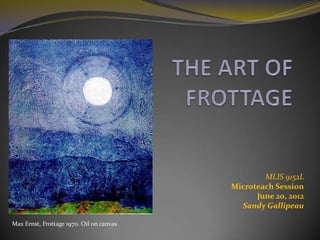
Max Ernst, Frottage 1970. Oil on canvas
AGENDA
 What is the Art of Frottage?
 Materials
 Activity
 Reflection
 Summary
Frottage
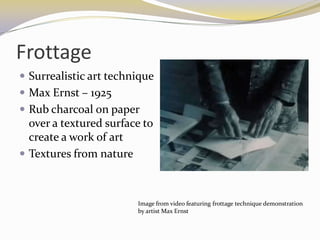
 Surrealistic art technique
 Max Ernst – 1925
 Rub charcoal on paper
  over a textured surface to
  create a work of art
 Textures from nature


                        Image from video featuring frottage technique demonstration
                        by artist Max Ernst
Frottage


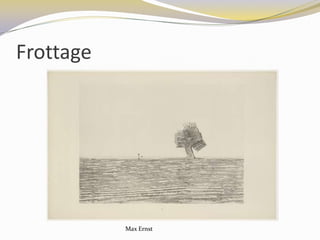
           Max Ernst
Frottage
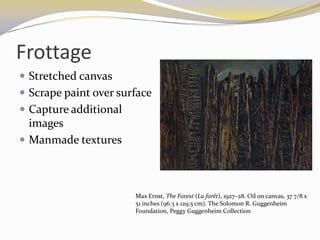
 Stretched canvas
 Scrape paint over surface
 Capture additional
  images
 Manmade textures


                       Max Ernst, The Forest (La forêt), 1927–28. Oil on canvas, 37 7/8 x
                       51 inches (96.3 x 129.5 cm). The Solomon R. Guggenheim
                       Foundation, Peggy Guggenheim Collection
Medieval Church Brasses
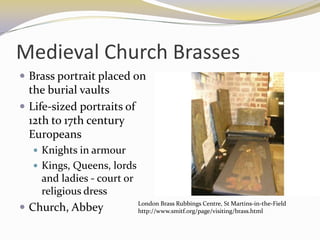
 Brass portrait placed on
  the burial vaults
 Life-sized portraits of
  12th to 17th century
  Europeans
   Knights in armour
   Kings, Queens, lords
    and ladies - court or
    religious dress
                            London Brass Rubbings Centre, St Martins-in-the-Field
 Church, Abbey             http://www.smitf.org/page/visiting/brass.html
Gravestone Rubbings
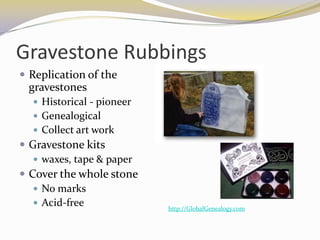
 Replication of the
 gravestones
   Historical - pioneer
   Genealogical
   Collect art work
 Gravestone kits
    waxes, tape & paper
 Cover the whole stone
    No marks
    Acid-free
                           http://GlobalGenealogy.com
Texture
Library
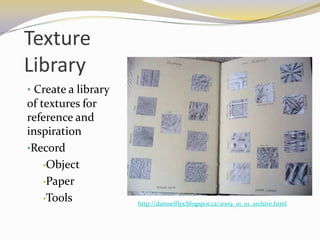
• Create a library
of textures for
reference and
inspiration
•Record
    •Object

    •Paper

    •Tools
                     http://damselflys.blogspot.ca/2009_01_01_archive.html
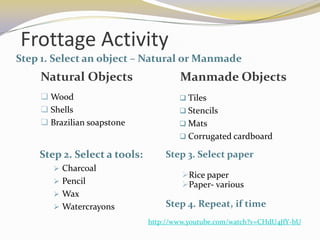
Frottage Activity
Step 1. Select an object – Natural or Manmade
    Natural Objects                   Manmade Objects
     Wood                             Tiles
     Shells                           Stencils
     Brazilian soapstone              Mats
                                       Corrugated cardboard

    Step 2. Select a tools:       Step 3. Select paper
        Charcoal
                                       Rice paper
        Pencil                        Paper- various
        Wax
        Watercrayons             Step 4. Repeat, if time
                              http://www.youtube.com/watch?v=CHdU4JfY-bU
Reflection
   Natural Objects          Manmade Objects
 What did you create?      What did you create?
 What worked?              What worked?
 What didn’t work?         What didn’t work?
 Favorite texture?         Favorite texture?


                  Other comments?
Summary
Sources
 Gardner’s Art through the Ages
 Guggenheim Collection http://www.guggenheim.org
 London Brass Rubbings Centre, St Martins-in-the-Field
 MoMA http://www.moma.org/
 http://www.smitf.org/page/visiting/brass.html
 http://GlobalGenealogy.com
 http://www.youtube.com/watch?v=CHdU4JfY-bU
 Wikipedia http://en.wikipedia.org/wiki/Max_Ernst

Frottage presentation Sandy Gallipeau

  • 1.
    MLIS 9152L Microteach Session June 20, 2012 Sandy Gallipeau Max Ernst, Frottage 1970. Oil on canvas
  • 2.
    AGENDA  What isthe Art of Frottage?  Materials  Activity  Reflection  Summary
  • 3.
    Frottage  Surrealistic arttechnique  Max Ernst – 1925  Rub charcoal on paper over a textured surface to create a work of art  Textures from nature Image from video featuring frottage technique demonstration by artist Max Ernst
  • 4.
    Frottage Max Ernst
  • 5.
    Frottage  Stretched canvas Scrape paint over surface  Capture additional images  Manmade textures Max Ernst, The Forest (La forêt), 1927–28. Oil on canvas, 37 7/8 x 51 inches (96.3 x 129.5 cm). The Solomon R. Guggenheim Foundation, Peggy Guggenheim Collection
  • 6.
    Medieval Church Brasses Brass portrait placed on the burial vaults  Life-sized portraits of 12th to 17th century Europeans  Knights in armour  Kings, Queens, lords and ladies - court or religious dress London Brass Rubbings Centre, St Martins-in-the-Field  Church, Abbey http://www.smitf.org/page/visiting/brass.html
  • 7.
    Gravestone Rubbings  Replicationof the gravestones  Historical - pioneer  Genealogical  Collect art work  Gravestone kits  waxes, tape & paper  Cover the whole stone  No marks  Acid-free http://GlobalGenealogy.com
  • 8.
    Texture Library • Create alibrary of textures for reference and inspiration •Record •Object •Paper •Tools http://damselflys.blogspot.ca/2009_01_01_archive.html
  • 9.
    Frottage Activity Step 1.Select an object – Natural or Manmade Natural Objects Manmade Objects  Wood  Tiles  Shells  Stencils  Brazilian soapstone  Mats  Corrugated cardboard Step 2. Select a tools: Step 3. Select paper  Charcoal Rice paper  Pencil Paper- various  Wax  Watercrayons Step 4. Repeat, if time http://www.youtube.com/watch?v=CHdU4JfY-bU
  • 10.
    Reflection Natural Objects Manmade Objects  What did you create?  What did you create?  What worked?  What worked?  What didn’t work?  What didn’t work?  Favorite texture?  Favorite texture? Other comments?
  • 11.
  • 12.
    Sources  Gardner’s Artthrough the Ages  Guggenheim Collection http://www.guggenheim.org  London Brass Rubbings Centre, St Martins-in-the-Field  MoMA http://www.moma.org/  http://www.smitf.org/page/visiting/brass.html  http://GlobalGenealogy.com  http://www.youtube.com/watch?v=CHdU4JfY-bU  Wikipedia http://en.wikipedia.org/wiki/Max_Ernst