Final Exam ReviewArt Appreciation 2010
ART 1101Chapter  6Drawing
Drawing SurfacesPaperCave wallsPotteryPapyrusParchmentSilkDigital realmsWalls
Most common drawing surface?Most long-lasting drawing surface?Rendering?Graphite?Media?Techniques ?
Drawing materialsPencil *- also called graphiteMetalpoint*- a wire scratches across surfaceCharcoal *-made from burned woodPastel *- color media, comes in crayon forBrush and Ink *Most common drawing media used in asiaMixed mediaUsing more than one media in an artwork
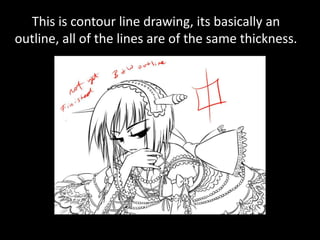
This is contour line drawing, its basically an outline, all of the lines are of the same thickness.
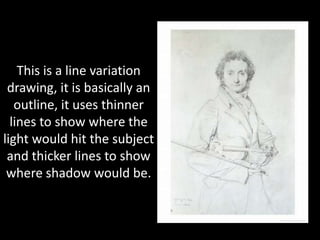
This is a line variation drawing, it is basically an outline, it uses thinner lines to show where the light would hit the subject and thicker lines to show where shadow would be.
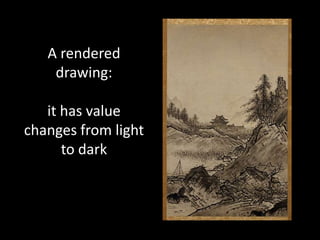
A rendered drawing:it has value changes from light to dark
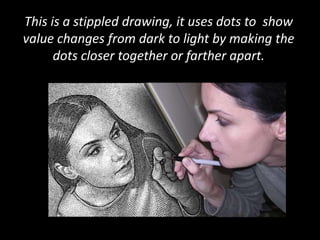
This is a stippled drawing, it uses dots to  show value changes from dark to light by making the dots closer together or farther apart.
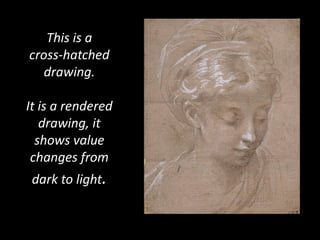
This is a cross-hatched drawing.It is a rendered drawing, it shows value changes from dark to light.
Art AppreciationChapter 7Painting
painting terms*Pigment – powdered colorVehicle – a liquid that holds pigment togetherBinder – helps the paint to stick to the surface*Support – the painting surfacePrimer – a preliminary coating to prepare the surface for paintingGesso – mixture of white pigment and glue used to seal a surface to prepare for painting*Medium – has multiple meanings in art1.  the material used to make art (oil, charcoal, clay, glass)2.  standard category of art (sculpture, painting, ceramics)3.  a liquid used to make paint, also used to thin paint 	    (linseed oil)
Painting mediaEncausticFrescoTemperaOilWatercolorGouacheAcrylicMixed media
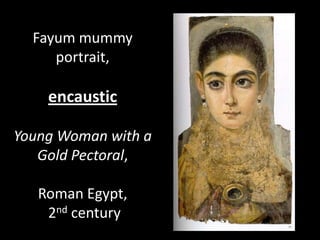
EncausticPigment is mixed with waxOnce the painting is complete, the artist brings the heat source close to the surface to fuse the colors (burning in)Used in ancient Greece and in Roman-Egyptian portraiture
Fayum mummy portrait,encausticYoung Woman with a Gold Pectoral,Roman Egypt, 2nd century
FrescoPigment is mixed with water and applied to plaster, usually a wallTrue fresco is applied to wet lime plasterUsed for large scale murals since ancient times
TemperaSometimes called egg temperaThe vehicle for it is an emulsion; can be oil, fat, wax, resin, casein, but most famously egg yolkRetains the brilliance of its colors for centuries
oilPigment compounded with oil, usually linseed oilAllowed artists to switch from painting on wood panels to canvasPaint can be used in various thicknessesGlazes - thin, translucent veils of colorImpasto – very thick paint, often strait from the tubeDries VERY slowly
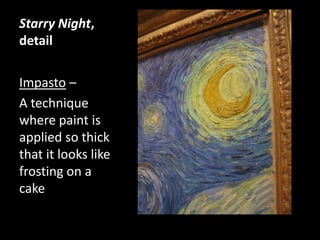
Starry Night, detailImpasto – A technique where paint is applied so thick that it looks like frosting on a cake
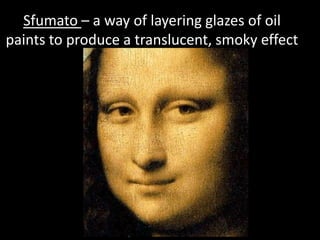
Sfumato– a way of layering glazes of oil paints to produce a translucent, smoky effect
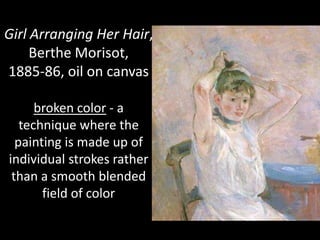
Girl Arranging Her Hair, Berthe Morisot, 1885-86, oil on canvasbroken color - a technique where the painting is made up of individual strokes rather than a smooth blended field of color
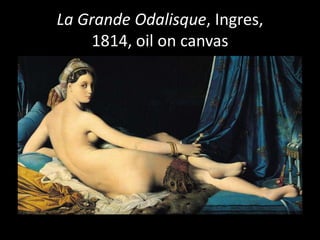
La Grande Odalisque, Ingres, 1814, oil on canvas
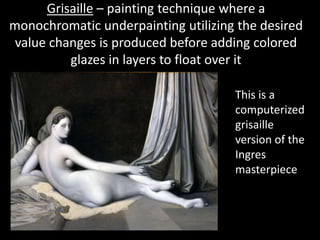
Grisaille – painting technique where a monochromatic underpainting utilizing the desired value changes is produced before adding colored glazes in layers to float over itThis is a computerized grisaille version of the Ingres masterpiece
Linda Nochlin – art historian (p. 173)Wrote “Why Have There Been No Great Women Artists?” 1971, ArtNewsHer work is thought to be the impetus for the Feminist Art movement in the 1970s.
WatercolorPigment using gum arabic as a binderThe most common support is paper
GouacheWatercolor with an inert white pigment addedGouache is opaque (watercolor is transparent)Pronounced       go – osh
Acrylic Paint made from synthetic plastic resinA more proper name would be polymer paints
CollageAn innovation of Picasso and Braque, after Cubism; they called it “synthetic cubism”Collage is a french word meaning “pasting” or “gluing”
Art AppreciationChapter 8Prints
4 basic methodsReliefIntaglioLithographyScreenprinting
What is a print?Courtesy of momahttp://www.moma.org/interactives/projects/2001/whatisaprint/print.html
ReliefThe background image is cut awayThe raised areas hold ink WoodcutWood engraving
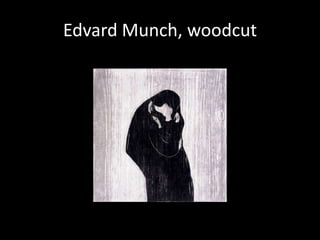
Edvard Munch, woodcut
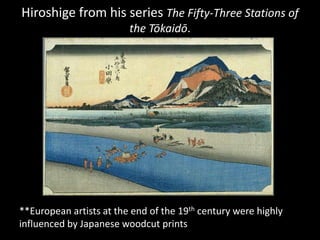
Hiroshige from his series The Fifty-Three Stations of the Tōkaidō.**European artists at the end of the 19th century were highly influenced by Japanese woodcut prints
Wood engravingUses the end grain of the boardUses harder woodMore highly detailedQuick video showing fine detailhttp://www.youtube.com/watch?v=UzZ26udfPs0&feature=player_embedded
intaglioRefers to 5 techniquesEngravingDrypointMezzotintEtchingAquatint*Opposite of relief, the ink goes into the grooves on the surface.*Artist makes lines or grooves into a metal plate using a sharp tool or acid
Intaglio demohttp://www.youtube.com/watch?v=SNKn4PORGBIMC Escher Mezzotinthttp://www.mcescher.com/Film/Eschermezotintprint.mpgLithography demohttp://www.youtube.com/watch?v=JHw5_1HopscScreenprinting demohttp://www.youtube.com/watch?v=wogKeYH2wEE
engravingBegan from the practice of incising designs into armor
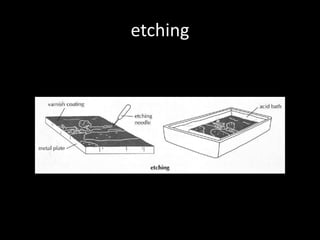
EtchingThe entire plate is covered with a ground, like beeswax or asphaltThe artist draws through the ground on the plate using an etching needleThe entire plate is dipped into acidAcid eats away the linesThe ground is removedThe plate is inked and printed
etching
lithographyLithography artists draw onto smooth limestone surface using a greasy materialIt works based on the idea that oil and water do not mix
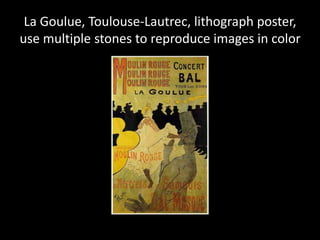
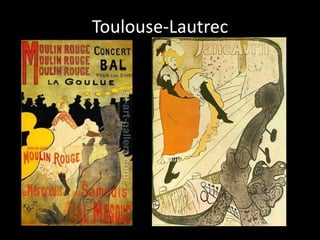
La Goulue, Toulouse-Lautrec, lithograph poster,use multiple stones to reproduce images in color
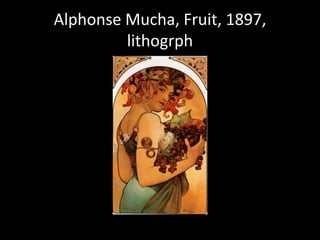
Alphonse Mucha, Fruit, 1897, lithogrph
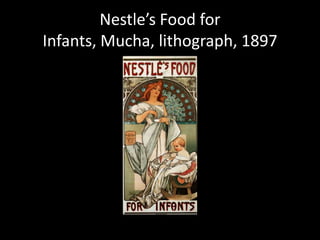
Nestle’s Food for Infants, Mucha, lithograph, 1897
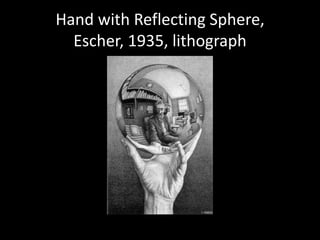
Hand with Reflecting Sphere,Escher, 1935, lithograph
ScreenprintingThe artist uses a screenAlso called SerigraphyThey block out certain areas that are not meant to be printedPlace the screen over paper and force ink thru the screen using a squegee
Chapter 9Camera Arts
3 types of camera art: photography, film, and videoDaguerreotype – first photographic process, uses a camera obscura and a copper plate coated with silver iodide, required a very long exposure timeLandscape photography was popular because it showed places that most people couldn’t get toPhotojournalism – recording newsworthy eventsThe first important conflict to be documented in photography was the American Civil War.Pure photography – did not crop or manipulate images in any wayAnsel Adams – landscape photographerAlfred Stieglitz – pure photographerDorothea Lange – photojournalistCharlie Chaplin - filmaker
Film is an illusion of motion in a still image, 24 frames per second.An auteur is an “author” of a film. Orson Welles, Citizen Kane, 1941. Considered to be one of the greatest American film of all time.Animation means “bringing to life”Video art is about mass communication
Chapter 10Graphic design and illustration
Graphic designthe goal is communication of a specific messageUsually trying to sell something or give directions
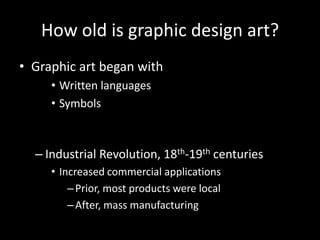
How old is graphic design art?Graphic art began with Written languagesSymbolsIndustrial Revolution, 18th-19th centuriesIncreased commercial applicationsPrior, most products were local After, mass manufacturing
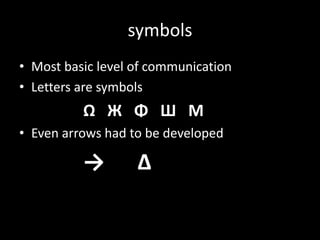
symbolsMost basic level of communicationLetters are symbolsΩ   ЖΦШМEven arrows had to be developed ->      Δ
typographyThe arrangement and appearance of letters
layoutBlueprint for the composition of an extended work such as a book or magazine
posters/adsColor lithography (19th century) brought about eye-catching postersColor wasn’t practical in magazines or newspapersHenri de Toulouse-LautrecFlat simplified forms influenced by Japanese printsImmediately collector’s items
Toulouse-Lautrec
illustrationAn image created to accompany wordsBooks			- PoemsMagazines		- Newspapers
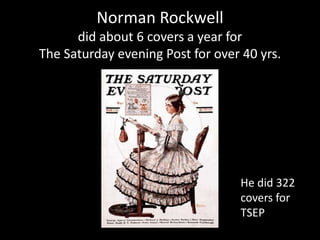
Norman Rockwelldid about 6 covers a year for The Saturday evening Post for over 40 yrs.He did 322 covers for    TSEP
Chapter 11Sculpture and Installation
SculptureSculpture is 3D, the third dimension is depthInstallation incorporates the entire exhibit space
4 basic methods for making sculptureModelingAdditive processAssemblingAdditive processCarvingSubtractive processCastingLiquid is poured into a mold to hardenModelingThe most direct sculpture methodThe pliable material is shaped and formed with hands and tools
CastingVery indirect method of forming sculptureLiquid is poured into a mold made of the original
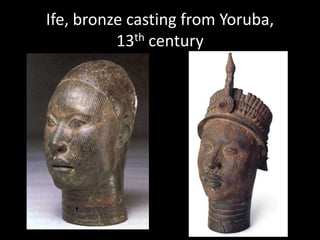
Ife, bronze casting from Yoruba, 13th century
lost-wax castingBe able to describe the process!!Textbook, pg 254http://www.andresteadsculpture.com/casting.php
carvingA directtechniqueSculptor begins with a block of material
assemblingAssemblage – Various individual parts can be placed on or near each otherSometimes this art is called “found object”
SculptureLow relief – the subject projects very slightly from the backgroundA coin, carved doors, an Egyptian tomb wallHigh relief – the subject projects much more boldly from the backgroundProjects at least half its depthsculpture “in the round” – the viewer can walk completely around the sculpture, the view from all sides is interestingSometimes there is still a front and back
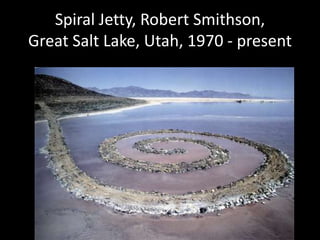
earthworkMaybe …Name a famous earthworkThe serpent moundCahokia moundsSpiral JettyThe Nasca Lines
Spiral Jetty, Robert Smithson, Great Salt Lake, Utah, 1970 - present
Chapter 12Crafts
ESSAY QUESTIONSomething along the lines of comparing and contrasting the terms art & craftDo you consider craft a fine art, make the argument that it is or isn’tUse specific examples like Voulkos and Chicago, see the last several slides for more craft/art information3 paragraph+ essay with an intro a body and a conclusion
CRAFTMost crafts have roots in the middle ages, when a craftsman had a trade – potter, glassblower, woodworker, weaver.The word “craft” alludes to expert work done by hand.“Craft” and “Art” originally had the same meaning. During the Renaissance, painting, sculpture and architecture were elevated to a different level.Thus much of art history before the Renaissance  includes craft.
Craft vs ArtWestern cultures (Europe & US) have Fine Art and Craft in separate categories.Often the dividing line is function.Many other cultures around the world attribute artistic meaning to craft objects.Often fine art objects like sculpture have a spiritual function.There is no definite division between art and craft, nor should there be.Labels are a convenience for talking about art.
Traditional Materials of CraftCeramics GlassMetalWoodFiber
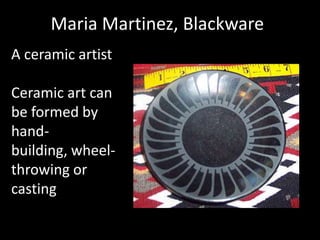
Maria Martinez, BlackwareA ceramic artistCeramic art can be formed by hand-building, wheel-throwing or casting
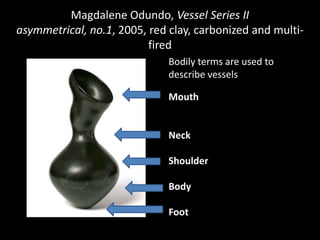
Magdalene Odundo, Vessel Series II asymmetrical, no.1, 2005, red clay, carbonized and multi-firedBodily terms are used to describe vesselsMouthNeckShoulderBodyFoot
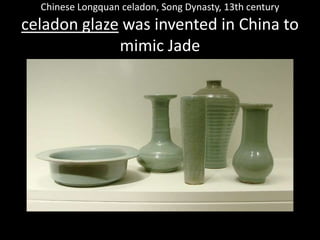
Chinese Longquan celadon, Song Dynasty, 13th centuryceladon glaze was invented in China to mimic Jade
GlassCan be formed in many waysBlown glassFused glass, fired in a kilnVarious types of moldsCuttingsandblasting
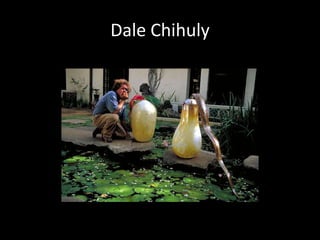
Dale Chihuly
MetalTypes of metalsCopper		- SilverBrass		- GoldBronze		- SteelNickel		- IronCan be shaped in many waysCasting		- ForgingCutting		- HammeringSoldering	Can be decorated in many waysCloissoneChasing & Repoussé
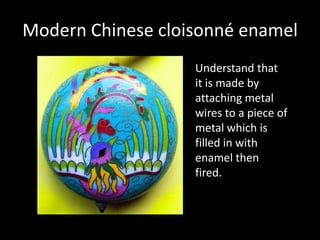
Modern Chinese cloisonné enamelUnderstand that it is made by attaching metal wires to a piece of metal which is filled in with enamel then fired.
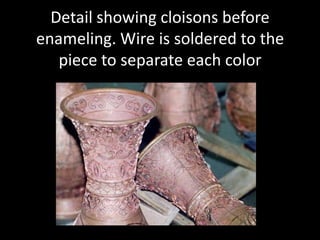
Detail showing cloisons before enameling. Wire is soldered to the piece to separate each color
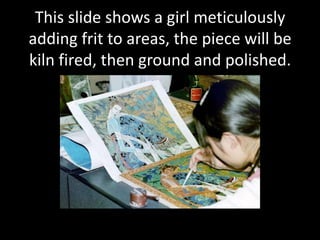
This slide shows a girl meticulously adding frit to areas, the piece will be kiln fired, then ground and polished.
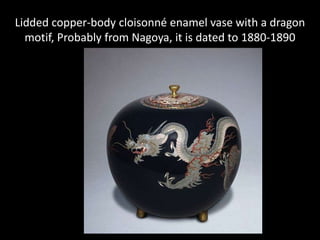
Lidded copper-body cloisonné enamel vase with a dragon motif, Probably from Nagoya, it is dated to 1880-1890
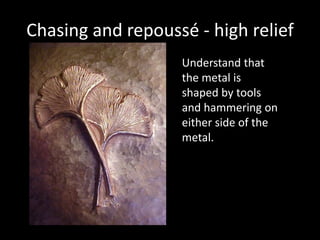
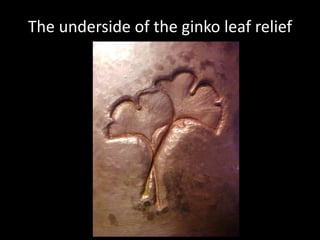
Chasing and repoussé - high reliefUnderstand that the metal is shaped by tools and hammering on either side of the metal.
The underside of the ginko leaf relief
FiberAlso known as textilesConstruction methods are unique to itselfWeaving – the general method for all textilesWarp – held taut Weft – is interwoven through the warpTapestry – a type of weaving
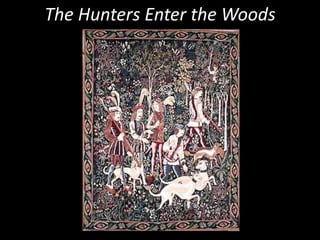
The Hunt of the Unicorn, 1475-1500A series of 7 tapestry panels from the 15th century
The Hunters Enter the Woods
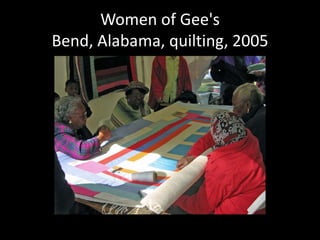
Gee’s Bend Quilts A rural community near Selma, AlabamaWas once the site of cotton plantationsThe unique quilting style has been practiced for at least 6 generations
Women of Gee's Bend, Alabama, quilting, 2005
Jade and LacquerJade – a mineral stone of either nephrite or jadeiteColor from white to brown to greenFound mostly in the East, Central Asia & Central AmericaPrized in China for 6000 yrsLacquer – made from the sap of a tree that originally only grew in China, it is brushed over wood in very thin coatsHardens to a smooth glasslike finishDemands patience, can take 30 coats to build up a substantial layer, must fully dry between coats
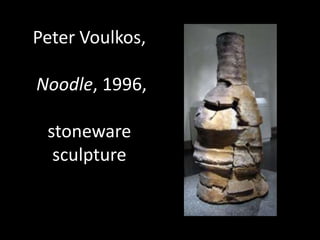
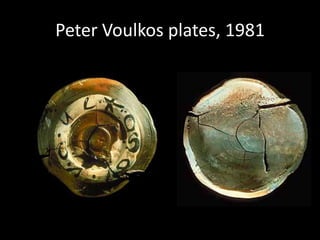
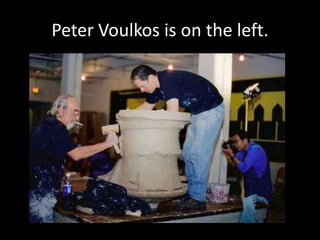
Blurring the Boundaries between Art and CraftTaking something functional and making it nonfunctional gives it a whole new meaningVoulkos’s Pottery broke this barrierUsing craft methods to make Fine Art elevates the notion of craftChicago’s The Dinner Party used traditional “womens work” in multiple ways to create a fine art installation.
Peter Voulkos,Noodle, 1996,stoneware sculpture
Peter Voulkos plates, 1981
Peter Voulkos is on the left.
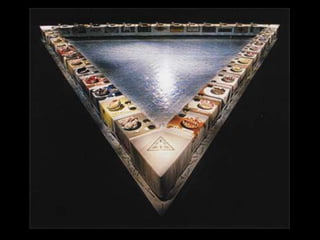
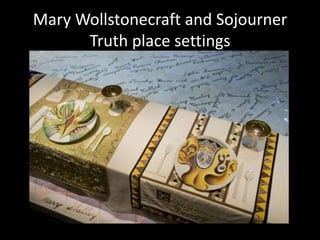
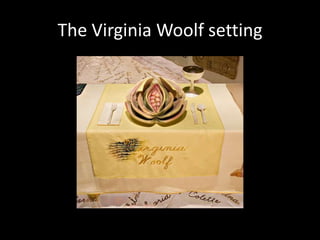
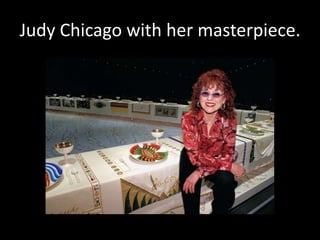
The Dinner Party, Judy Chicago, 1979http://www.brooklynmuseum.org/eascfa/dinner_party/place_settings/webtour/The table has 39 place settings to honor influential women in history.An additional 999 important women’s names are written on the tile floor.
Mary Wollstonecraft and Sojourner Truth place settings
The Virginia Woolf setting
Judy Chicago with her masterpiece.
Blurring the lines between high brow and low brow art:High artPaintingSculptureFine photographyLow artPotteryComic booksAdvertisements
End of Final Exam Review200 pointsMultiple choiceMatching1 Long Essay question1 Listing Question1 Short Answer Question
E:\Final Exam\Final Exam Review Condensed

E:\Final Exam\Final Exam Review Condensed

  • 1.
    Final Exam ReviewArtAppreciation 2010
  • 2.
  • 3.
  • 4.
    Most common drawingsurface?Most long-lasting drawing surface?Rendering?Graphite?Media?Techniques ?
  • 5.
    Drawing materialsPencil *-also called graphiteMetalpoint*- a wire scratches across surfaceCharcoal *-made from burned woodPastel *- color media, comes in crayon forBrush and Ink *Most common drawing media used in asiaMixed mediaUsing more than one media in an artwork
  • 6.
    This is contourline drawing, its basically an outline, all of the lines are of the same thickness.
  • 7.
    This is aline variation drawing, it is basically an outline, it uses thinner lines to show where the light would hit the subject and thicker lines to show where shadow would be.
  • 8.
    A rendered drawing:ithas value changes from light to dark
  • 9.
    This is astippled drawing, it uses dots to show value changes from dark to light by making the dots closer together or farther apart.
  • 10.
    This is across-hatched drawing.It is a rendered drawing, it shows value changes from dark to light.
  • 11.
  • 12.
    painting terms*Pigment –powdered colorVehicle – a liquid that holds pigment togetherBinder – helps the paint to stick to the surface*Support – the painting surfacePrimer – a preliminary coating to prepare the surface for paintingGesso – mixture of white pigment and glue used to seal a surface to prepare for painting*Medium – has multiple meanings in art1. the material used to make art (oil, charcoal, clay, glass)2. standard category of art (sculpture, painting, ceramics)3. a liquid used to make paint, also used to thin paint (linseed oil)
  • 13.
  • 14.
    EncausticPigment is mixedwith waxOnce the painting is complete, the artist brings the heat source close to the surface to fuse the colors (burning in)Used in ancient Greece and in Roman-Egyptian portraiture
  • 15.
    Fayum mummy portrait,encausticYoungWoman with a Gold Pectoral,Roman Egypt, 2nd century
  • 16.
    FrescoPigment is mixedwith water and applied to plaster, usually a wallTrue fresco is applied to wet lime plasterUsed for large scale murals since ancient times
  • 17.
    TemperaSometimes called eggtemperaThe vehicle for it is an emulsion; can be oil, fat, wax, resin, casein, but most famously egg yolkRetains the brilliance of its colors for centuries
  • 18.
    oilPigment compounded withoil, usually linseed oilAllowed artists to switch from painting on wood panels to canvasPaint can be used in various thicknessesGlazes - thin, translucent veils of colorImpasto – very thick paint, often strait from the tubeDries VERY slowly
  • 19.
    Starry Night, detailImpasto– A technique where paint is applied so thick that it looks like frosting on a cake
  • 20.
    Sfumato– a wayof layering glazes of oil paints to produce a translucent, smoky effect
  • 21.
    Girl Arranging HerHair, Berthe Morisot, 1885-86, oil on canvasbroken color - a technique where the painting is made up of individual strokes rather than a smooth blended field of color
  • 22.
    La Grande Odalisque,Ingres, 1814, oil on canvas
  • 23.
    Grisaille – paintingtechnique where a monochromatic underpainting utilizing the desired value changes is produced before adding colored glazes in layers to float over itThis is a computerized grisaille version of the Ingres masterpiece
  • 24.
    Linda Nochlin –art historian (p. 173)Wrote “Why Have There Been No Great Women Artists?” 1971, ArtNewsHer work is thought to be the impetus for the Feminist Art movement in the 1970s.
  • 25.
    WatercolorPigment using gumarabic as a binderThe most common support is paper
  • 26.
    GouacheWatercolor with aninert white pigment addedGouache is opaque (watercolor is transparent)Pronounced go – osh
  • 27.
    Acrylic Paint madefrom synthetic plastic resinA more proper name would be polymer paints
  • 28.
    CollageAn innovation ofPicasso and Braque, after Cubism; they called it “synthetic cubism”Collage is a french word meaning “pasting” or “gluing”
  • 29.
  • 30.
  • 31.
    What is aprint?Courtesy of momahttp://www.moma.org/interactives/projects/2001/whatisaprint/print.html
  • 32.
    ReliefThe background imageis cut awayThe raised areas hold ink WoodcutWood engraving
  • 33.
  • 34.
    Hiroshige from hisseries The Fifty-Three Stations of the Tōkaidō.**European artists at the end of the 19th century were highly influenced by Japanese woodcut prints
  • 35.
    Wood engravingUses theend grain of the boardUses harder woodMore highly detailedQuick video showing fine detailhttp://www.youtube.com/watch?v=UzZ26udfPs0&feature=player_embedded
  • 36.
    intaglioRefers to 5techniquesEngravingDrypointMezzotintEtchingAquatint*Opposite of relief, the ink goes into the grooves on the surface.*Artist makes lines or grooves into a metal plate using a sharp tool or acid
  • 37.
    Intaglio demohttp://www.youtube.com/watch?v=SNKn4PORGBIMC EscherMezzotinthttp://www.mcescher.com/Film/Eschermezotintprint.mpgLithography demohttp://www.youtube.com/watch?v=JHw5_1HopscScreenprinting demohttp://www.youtube.com/watch?v=wogKeYH2wEE
  • 38.
    engravingBegan from thepractice of incising designs into armor
  • 39.
    EtchingThe entire plateis covered with a ground, like beeswax or asphaltThe artist draws through the ground on the plate using an etching needleThe entire plate is dipped into acidAcid eats away the linesThe ground is removedThe plate is inked and printed
  • 40.
  • 41.
    lithographyLithography artists drawonto smooth limestone surface using a greasy materialIt works based on the idea that oil and water do not mix
  • 42.
    La Goulue, Toulouse-Lautrec,lithograph poster,use multiple stones to reproduce images in color
  • 43.
    Alphonse Mucha, Fruit,1897, lithogrph
  • 44.
    Nestle’s Food forInfants, Mucha, lithograph, 1897
  • 45.
    Hand with ReflectingSphere,Escher, 1935, lithograph
  • 46.
    ScreenprintingThe artist usesa screenAlso called SerigraphyThey block out certain areas that are not meant to be printedPlace the screen over paper and force ink thru the screen using a squegee
  • 47.
  • 48.
    3 types ofcamera art: photography, film, and videoDaguerreotype – first photographic process, uses a camera obscura and a copper plate coated with silver iodide, required a very long exposure timeLandscape photography was popular because it showed places that most people couldn’t get toPhotojournalism – recording newsworthy eventsThe first important conflict to be documented in photography was the American Civil War.Pure photography – did not crop or manipulate images in any wayAnsel Adams – landscape photographerAlfred Stieglitz – pure photographerDorothea Lange – photojournalistCharlie Chaplin - filmaker
  • 49.
    Film is anillusion of motion in a still image, 24 frames per second.An auteur is an “author” of a film. Orson Welles, Citizen Kane, 1941. Considered to be one of the greatest American film of all time.Animation means “bringing to life”Video art is about mass communication
  • 50.
    Chapter 10Graphic designand illustration
  • 51.
    Graphic designthe goalis communication of a specific messageUsually trying to sell something or give directions
  • 52.
    How old isgraphic design art?Graphic art began with Written languagesSymbolsIndustrial Revolution, 18th-19th centuriesIncreased commercial applicationsPrior, most products were local After, mass manufacturing
  • 53.
    symbolsMost basic levelof communicationLetters are symbolsΩ ЖΦШМEven arrows had to be developed -> Δ
  • 54.
    typographyThe arrangement andappearance of letters
  • 55.
    layoutBlueprint for thecomposition of an extended work such as a book or magazine
  • 56.
    posters/adsColor lithography (19thcentury) brought about eye-catching postersColor wasn’t practical in magazines or newspapersHenri de Toulouse-LautrecFlat simplified forms influenced by Japanese printsImmediately collector’s items
  • 57.
  • 58.
    illustrationAn image createdto accompany wordsBooks - PoemsMagazines - Newspapers
  • 59.
    Norman Rockwelldid about6 covers a year for The Saturday evening Post for over 40 yrs.He did 322 covers for TSEP
  • 60.
  • 61.
    SculptureSculpture is 3D,the third dimension is depthInstallation incorporates the entire exhibit space
  • 62.
    4 basic methodsfor making sculptureModelingAdditive processAssemblingAdditive processCarvingSubtractive processCastingLiquid is poured into a mold to hardenModelingThe most direct sculpture methodThe pliable material is shaped and formed with hands and tools
  • 63.
    CastingVery indirect methodof forming sculptureLiquid is poured into a mold made of the original
  • 64.
    Ife, bronze castingfrom Yoruba, 13th century
  • 65.
    lost-wax castingBe ableto describe the process!!Textbook, pg 254http://www.andresteadsculpture.com/casting.php
  • 66.
  • 67.
    assemblingAssemblage – Variousindividual parts can be placed on or near each otherSometimes this art is called “found object”
  • 68.
    SculptureLow relief –the subject projects very slightly from the backgroundA coin, carved doors, an Egyptian tomb wallHigh relief – the subject projects much more boldly from the backgroundProjects at least half its depthsculpture “in the round” – the viewer can walk completely around the sculpture, the view from all sides is interestingSometimes there is still a front and back
  • 69.
    earthworkMaybe …Name afamous earthworkThe serpent moundCahokia moundsSpiral JettyThe Nasca Lines
  • 70.
    Spiral Jetty, RobertSmithson, Great Salt Lake, Utah, 1970 - present
  • 71.
  • 72.
    ESSAY QUESTIONSomething alongthe lines of comparing and contrasting the terms art & craftDo you consider craft a fine art, make the argument that it is or isn’tUse specific examples like Voulkos and Chicago, see the last several slides for more craft/art information3 paragraph+ essay with an intro a body and a conclusion
  • 73.
    CRAFTMost crafts haveroots in the middle ages, when a craftsman had a trade – potter, glassblower, woodworker, weaver.The word “craft” alludes to expert work done by hand.“Craft” and “Art” originally had the same meaning. During the Renaissance, painting, sculpture and architecture were elevated to a different level.Thus much of art history before the Renaissance includes craft.
  • 74.
    Craft vs ArtWesterncultures (Europe & US) have Fine Art and Craft in separate categories.Often the dividing line is function.Many other cultures around the world attribute artistic meaning to craft objects.Often fine art objects like sculpture have a spiritual function.There is no definite division between art and craft, nor should there be.Labels are a convenience for talking about art.
  • 75.
    Traditional Materials ofCraftCeramics GlassMetalWoodFiber
  • 76.
    Maria Martinez, BlackwareAceramic artistCeramic art can be formed by hand-building, wheel-throwing or casting
  • 77.
    Magdalene Odundo, VesselSeries II asymmetrical, no.1, 2005, red clay, carbonized and multi-firedBodily terms are used to describe vesselsMouthNeckShoulderBodyFoot
  • 78.
    Chinese Longquan celadon,Song Dynasty, 13th centuryceladon glaze was invented in China to mimic Jade
  • 79.
    GlassCan be formedin many waysBlown glassFused glass, fired in a kilnVarious types of moldsCuttingsandblasting
  • 80.
  • 81.
    MetalTypes of metalsCopper -SilverBrass - GoldBronze - SteelNickel - IronCan be shaped in many waysCasting - ForgingCutting - HammeringSoldering Can be decorated in many waysCloissoneChasing & Repoussé
  • 82.
    Modern Chinese cloisonnéenamelUnderstand that it is made by attaching metal wires to a piece of metal which is filled in with enamel then fired.
  • 83.
    Detail showing cloisonsbefore enameling. Wire is soldered to the piece to separate each color
  • 84.
    This slide showsa girl meticulously adding frit to areas, the piece will be kiln fired, then ground and polished.
  • 85.
    Lidded copper-body cloisonnéenamel vase with a dragon motif, Probably from Nagoya, it is dated to 1880-1890
  • 86.
    Chasing and repoussé- high reliefUnderstand that the metal is shaped by tools and hammering on either side of the metal.
  • 87.
    The underside ofthe ginko leaf relief
  • 88.
    FiberAlso known astextilesConstruction methods are unique to itselfWeaving – the general method for all textilesWarp – held taut Weft – is interwoven through the warpTapestry – a type of weaving
  • 89.
    The Hunt ofthe Unicorn, 1475-1500A series of 7 tapestry panels from the 15th century
  • 90.
  • 91.
    Gee’s Bend QuiltsA rural community near Selma, AlabamaWas once the site of cotton plantationsThe unique quilting style has been practiced for at least 6 generations
  • 92.
    Women of Gee'sBend, Alabama, quilting, 2005
  • 93.
    Jade and LacquerJade– a mineral stone of either nephrite or jadeiteColor from white to brown to greenFound mostly in the East, Central Asia & Central AmericaPrized in China for 6000 yrsLacquer – made from the sap of a tree that originally only grew in China, it is brushed over wood in very thin coatsHardens to a smooth glasslike finishDemands patience, can take 30 coats to build up a substantial layer, must fully dry between coats
  • 94.
    Blurring the Boundariesbetween Art and CraftTaking something functional and making it nonfunctional gives it a whole new meaningVoulkos’s Pottery broke this barrierUsing craft methods to make Fine Art elevates the notion of craftChicago’s The Dinner Party used traditional “womens work” in multiple ways to create a fine art installation.
  • 95.
  • 96.
  • 97.
    Peter Voulkos ison the left.
  • 98.
    The Dinner Party,Judy Chicago, 1979http://www.brooklynmuseum.org/eascfa/dinner_party/place_settings/webtour/The table has 39 place settings to honor influential women in history.An additional 999 important women’s names are written on the tile floor.
  • 100.
    Mary Wollstonecraft andSojourner Truth place settings
  • 101.
  • 102.
    Judy Chicago withher masterpiece.
  • 103.
    Blurring the linesbetween high brow and low brow art:High artPaintingSculptureFine photographyLow artPotteryComic booksAdvertisements
  • 104.
    End of FinalExam Review200 pointsMultiple choiceMatching1 Long Essay question1 Listing Question1 Short Answer Question