From Idea to
Execution: Spotify’s
Discover Weekly
Chris Johnson :: @MrChrisJohnson
Edward Newett :: @scaladaze
DataEngConf • NYC • Nov 2015
Or: 5 lessons in building
recommendation products at scale
Who are We??
Chris Johnson Edward Newett
Spotify in Numbers
• Started in 2006, now available in 58 markets
• 75+ Million active users, 20 Million paying subscribers
• 30+ Million songs, 20,000 new songs added per day
• 1.5 Billion user generated playlists
• 1 TB user data logged per day
• 1,700 node Hadoop cluster
• 10,000+ Hadoop jobs run daily
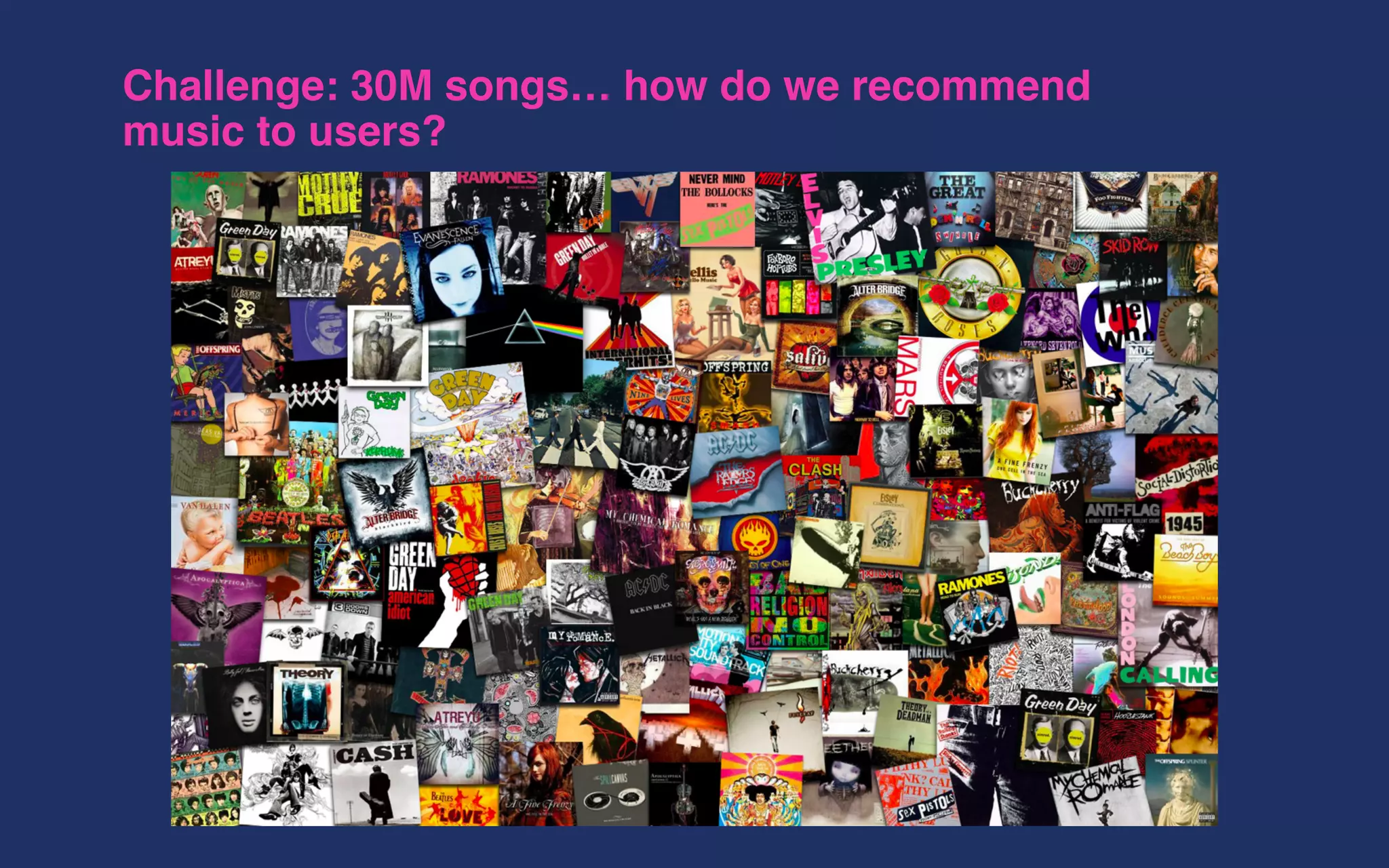
Challenge: 30M songs… how do we recommend
music to users?
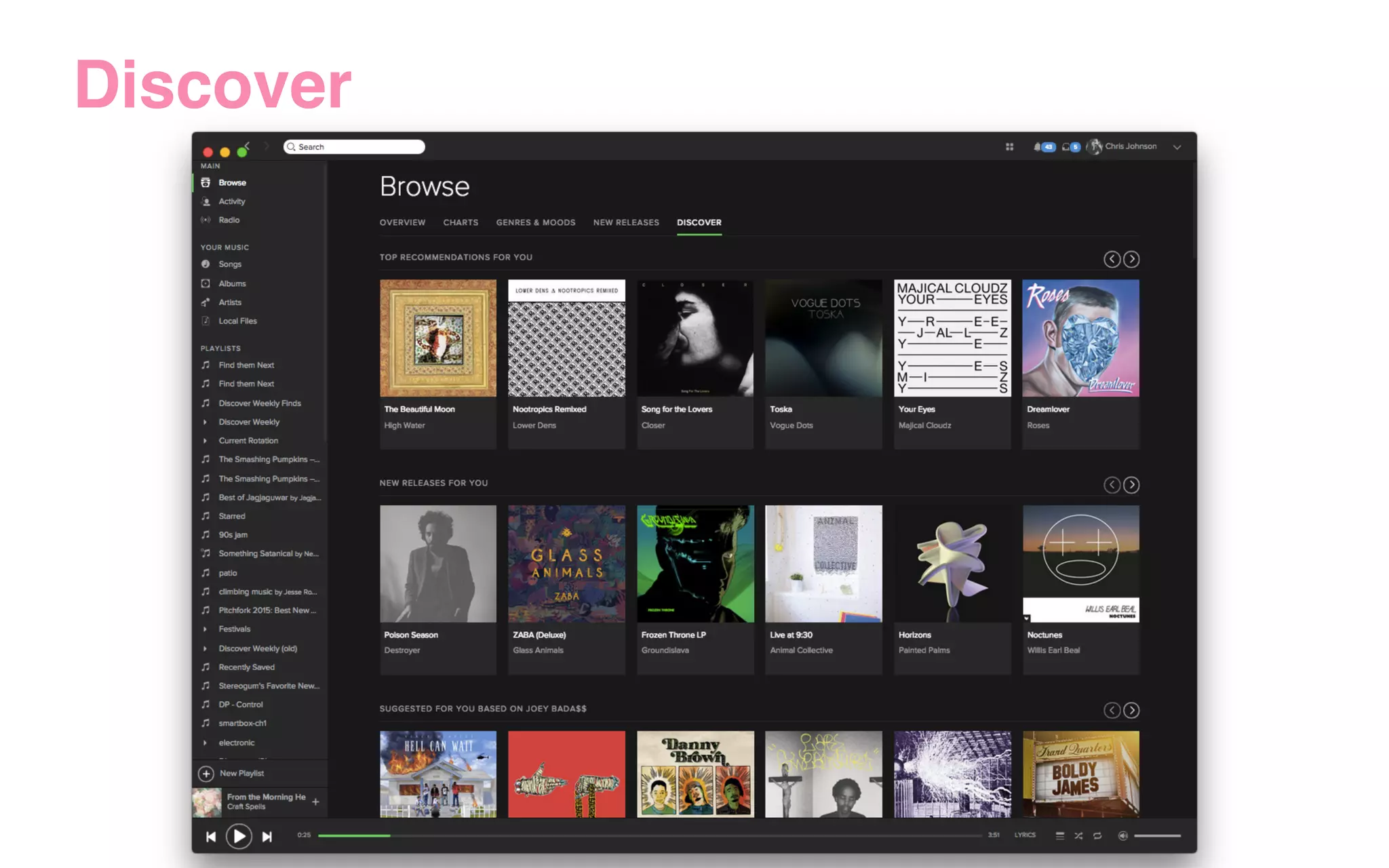
Discover
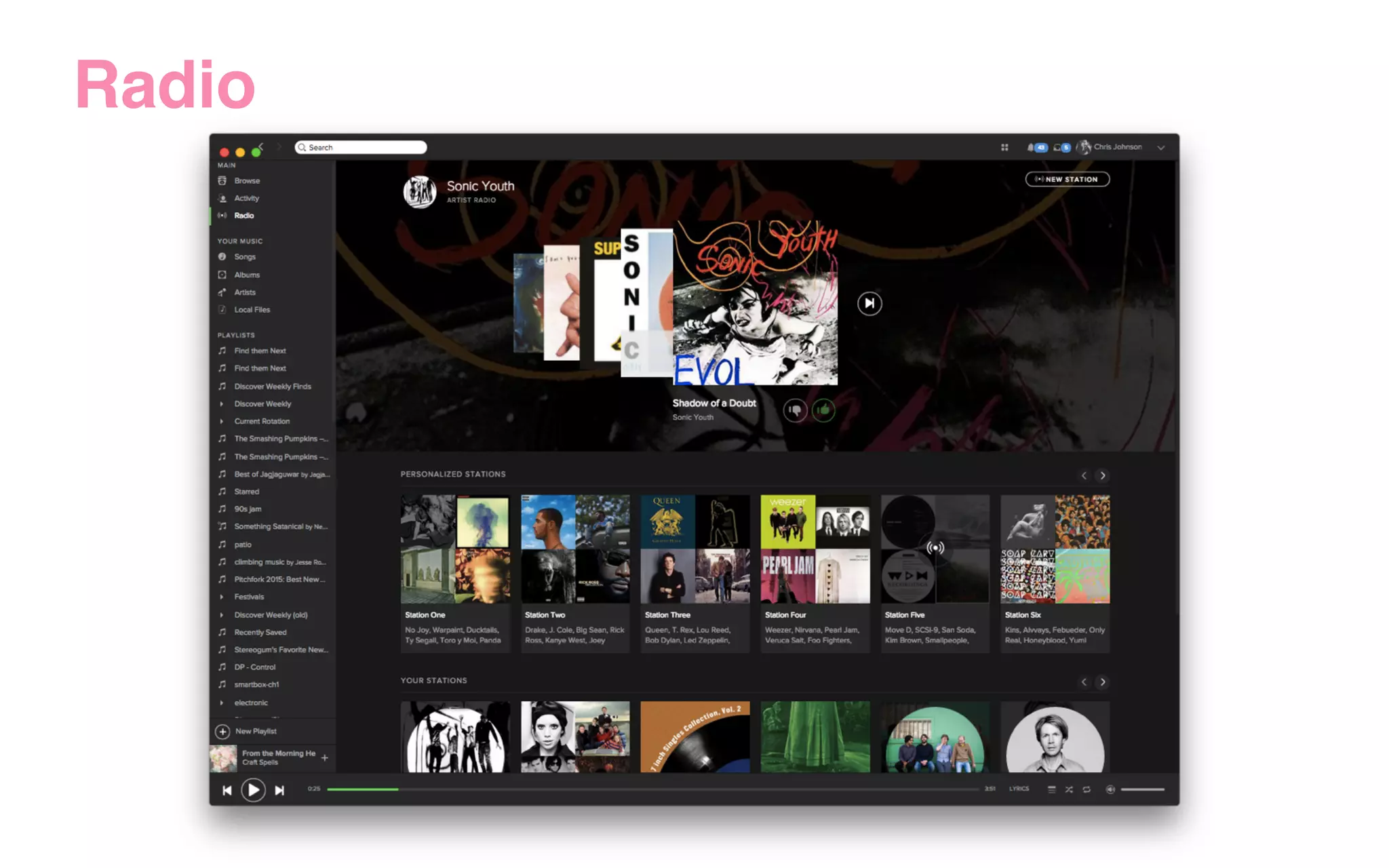
Radio
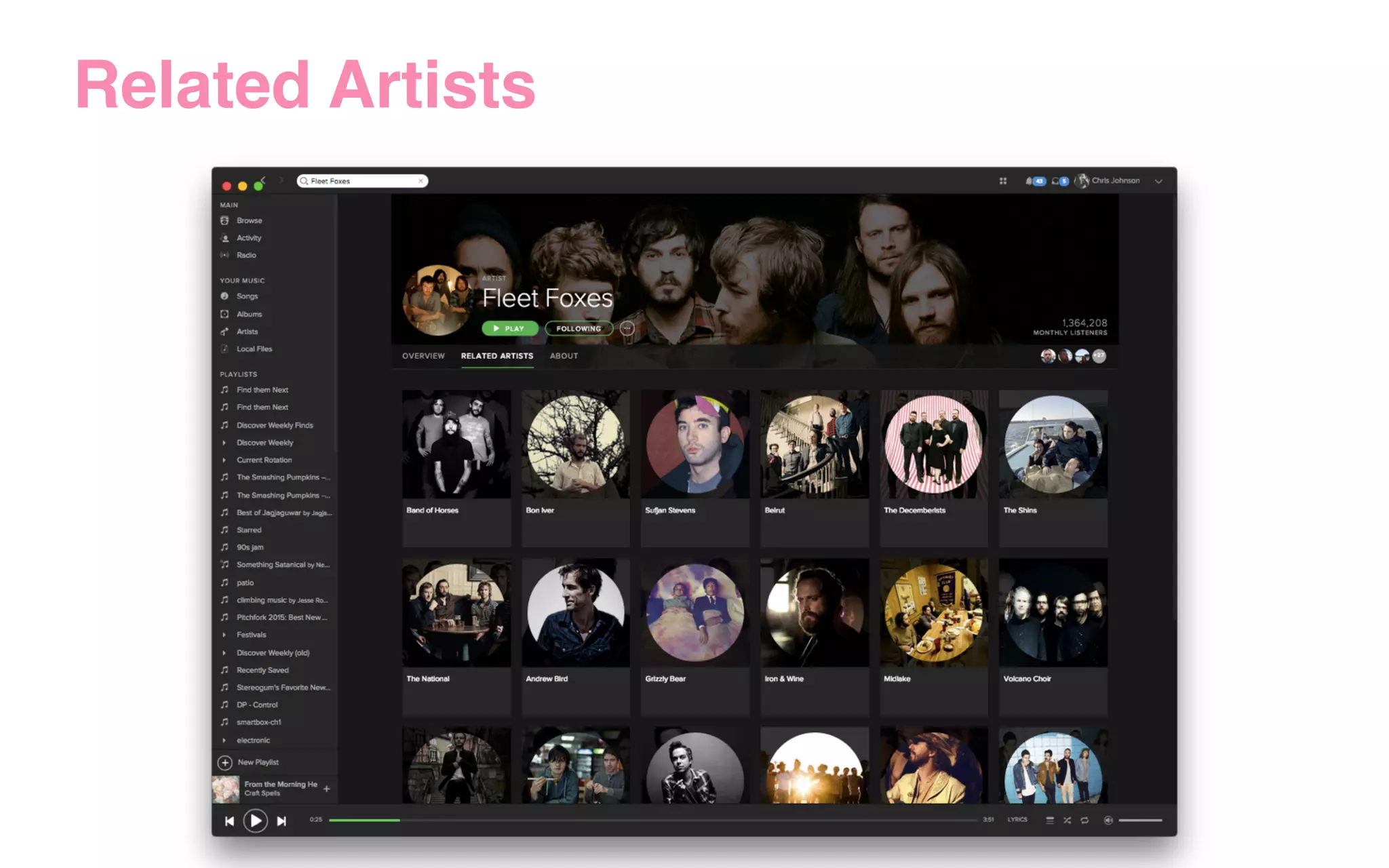
Related Artists
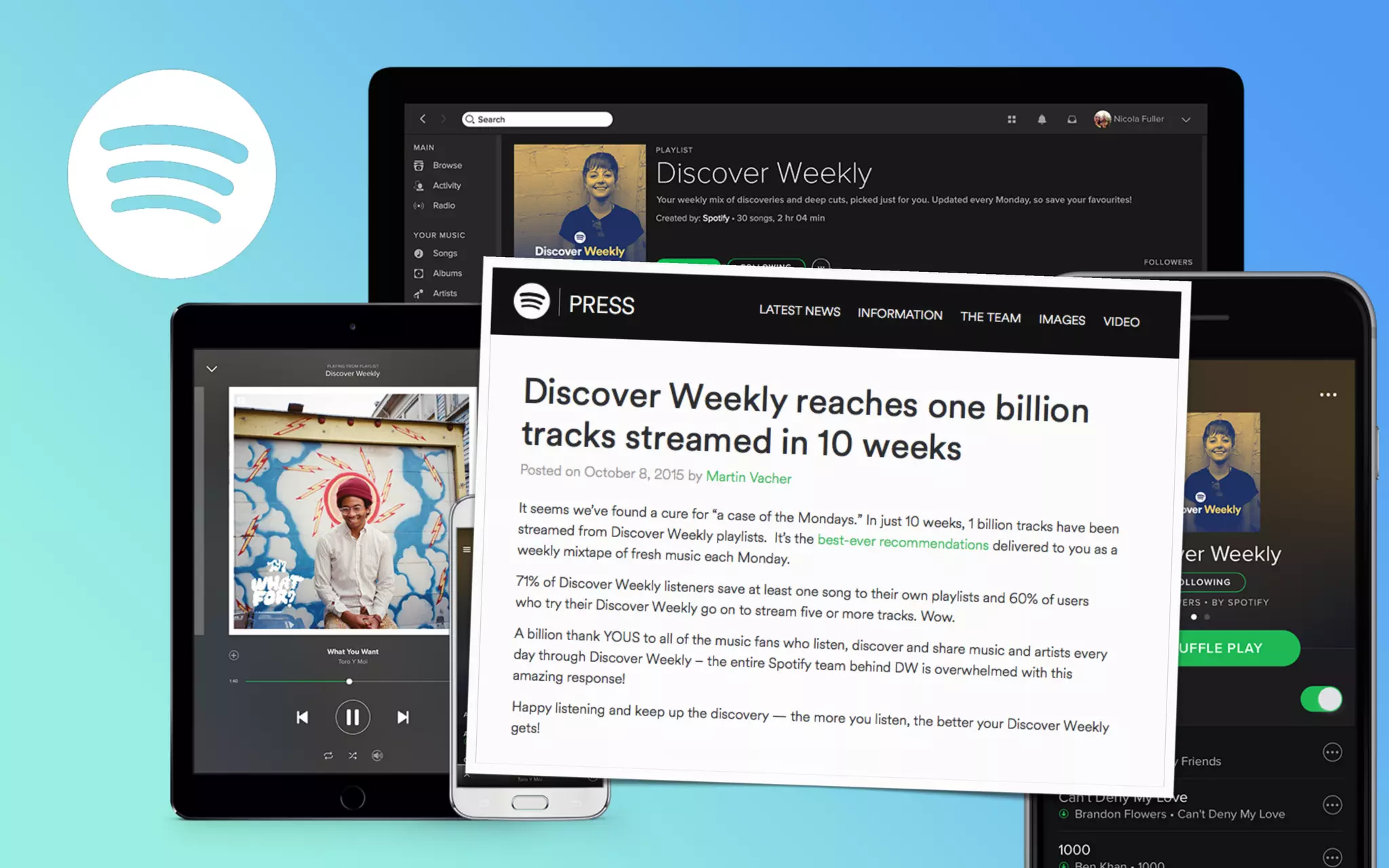
Discover Weekly
• Started in 2006, now available in 58 markets
• 75+ Million active users, 20 Million paying subscribers
• 30+ Million songs, 20,000 new songs added per day
• 1.5 Billion user generated playlists
• 1 TB user data logged per day
• 1,700 node Hadoop cluster
• 10,000+ Hadoop jobs run daily
The Road to
Discover Weekly
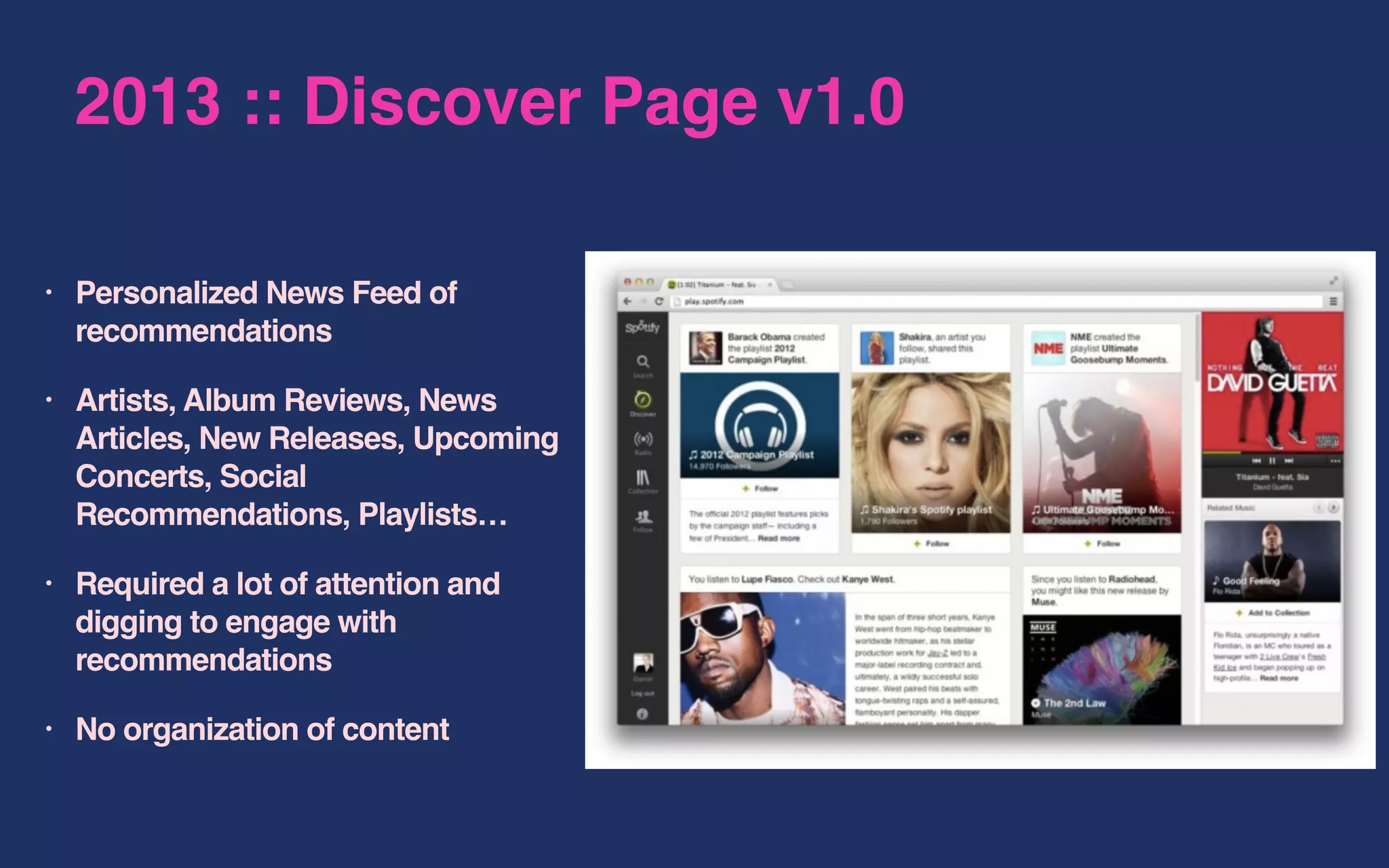
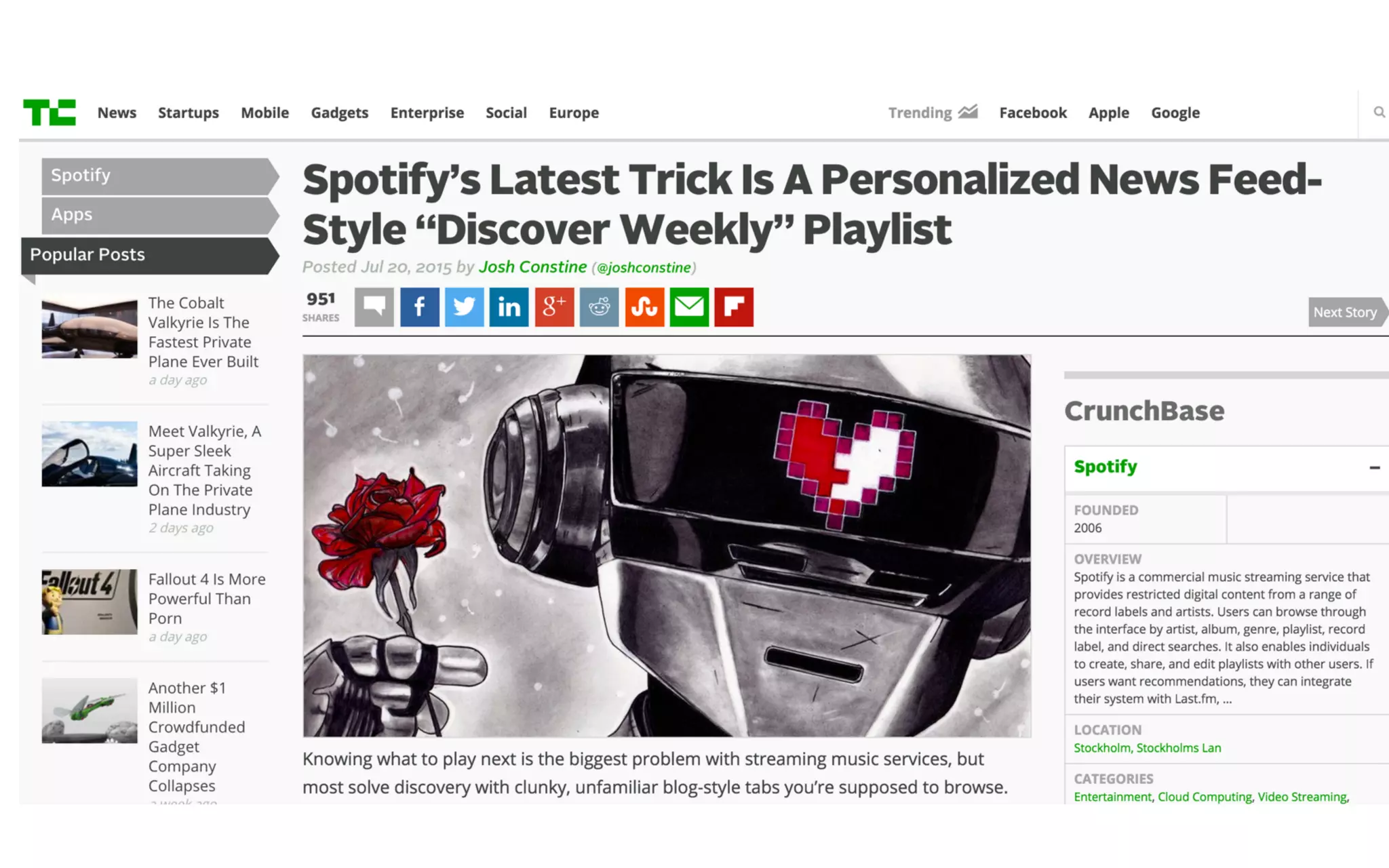
2013 :: Discover Page v1.0
• Personalized News Feed of
recommendations
• Artists, Album Reviews, News
Articles, New Releases, Upcoming
Concerts, Social
Recommendations, Playlists…
• Required a lot of attention and
digging to engage with
recommendations
• No organization of content
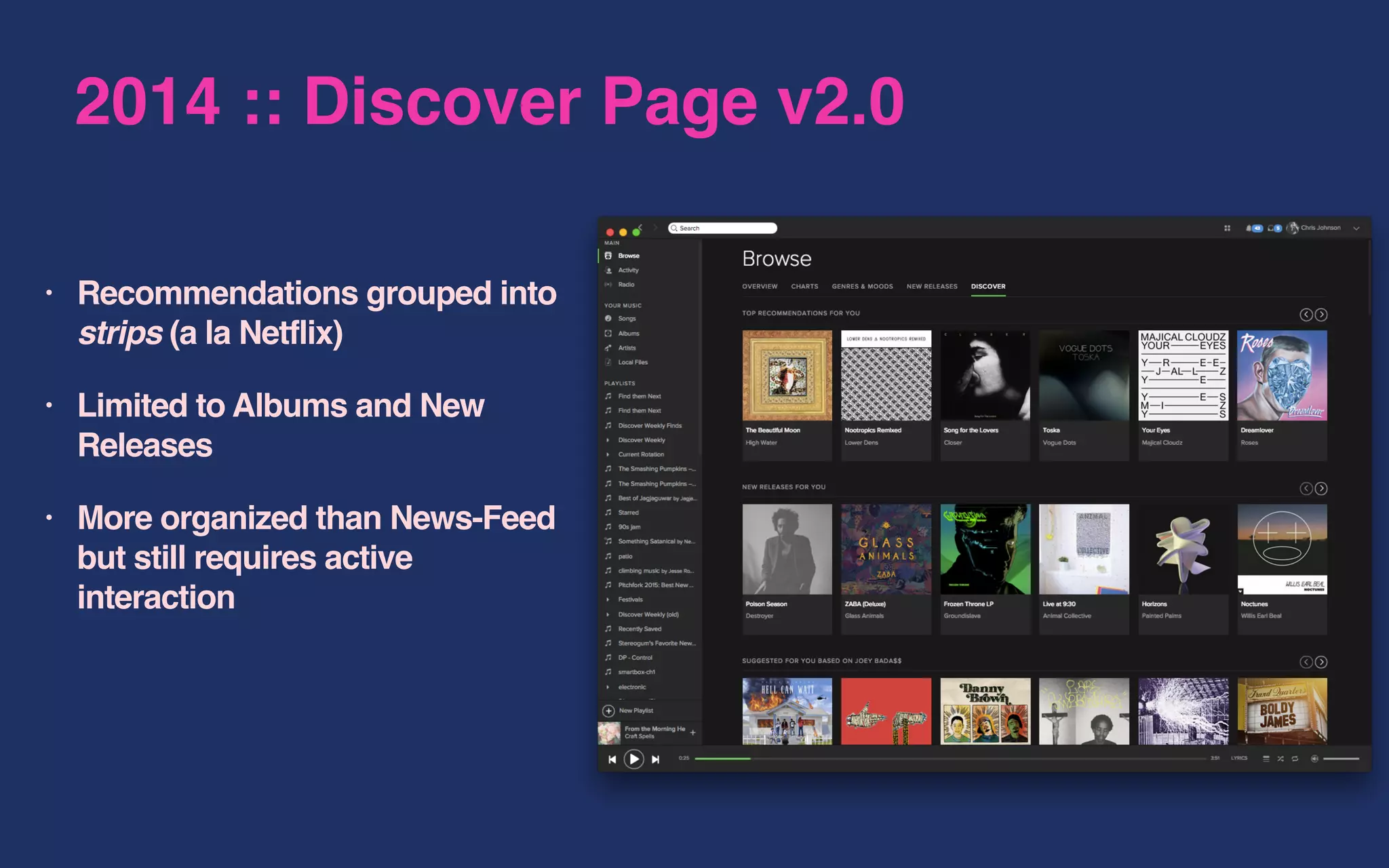
2014 :: Discover Page v2.0
• Recommendations grouped into
strips (a la Netflix)
• Limited to Albums and New
Releases
• More organized than News-Feed
but still requires active
interaction
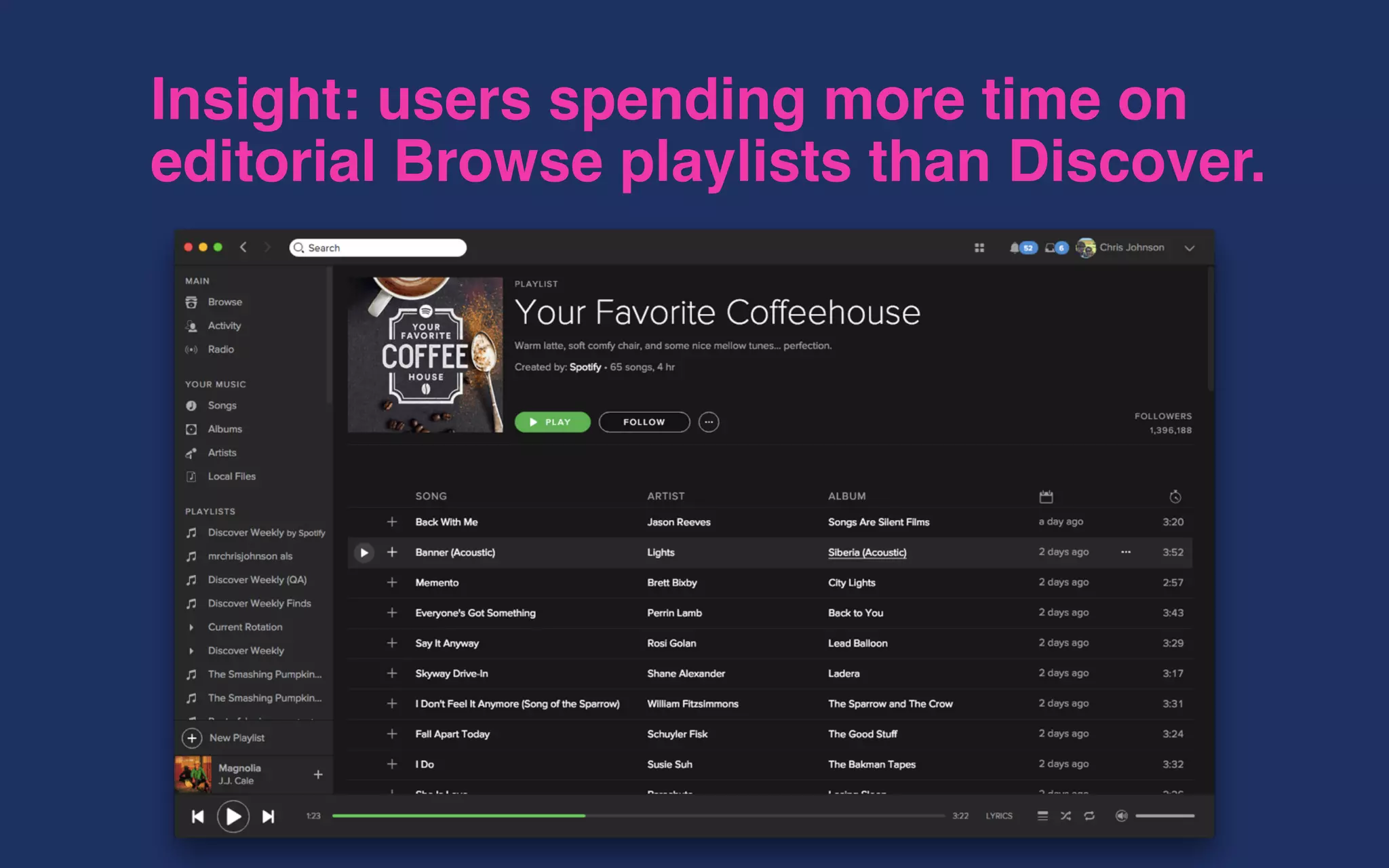
Insight: users spending more time on
editorial Browse playlists than Discover.
Idea: combine the
personalized experience
of Discover with the lean-
back ease of Browse
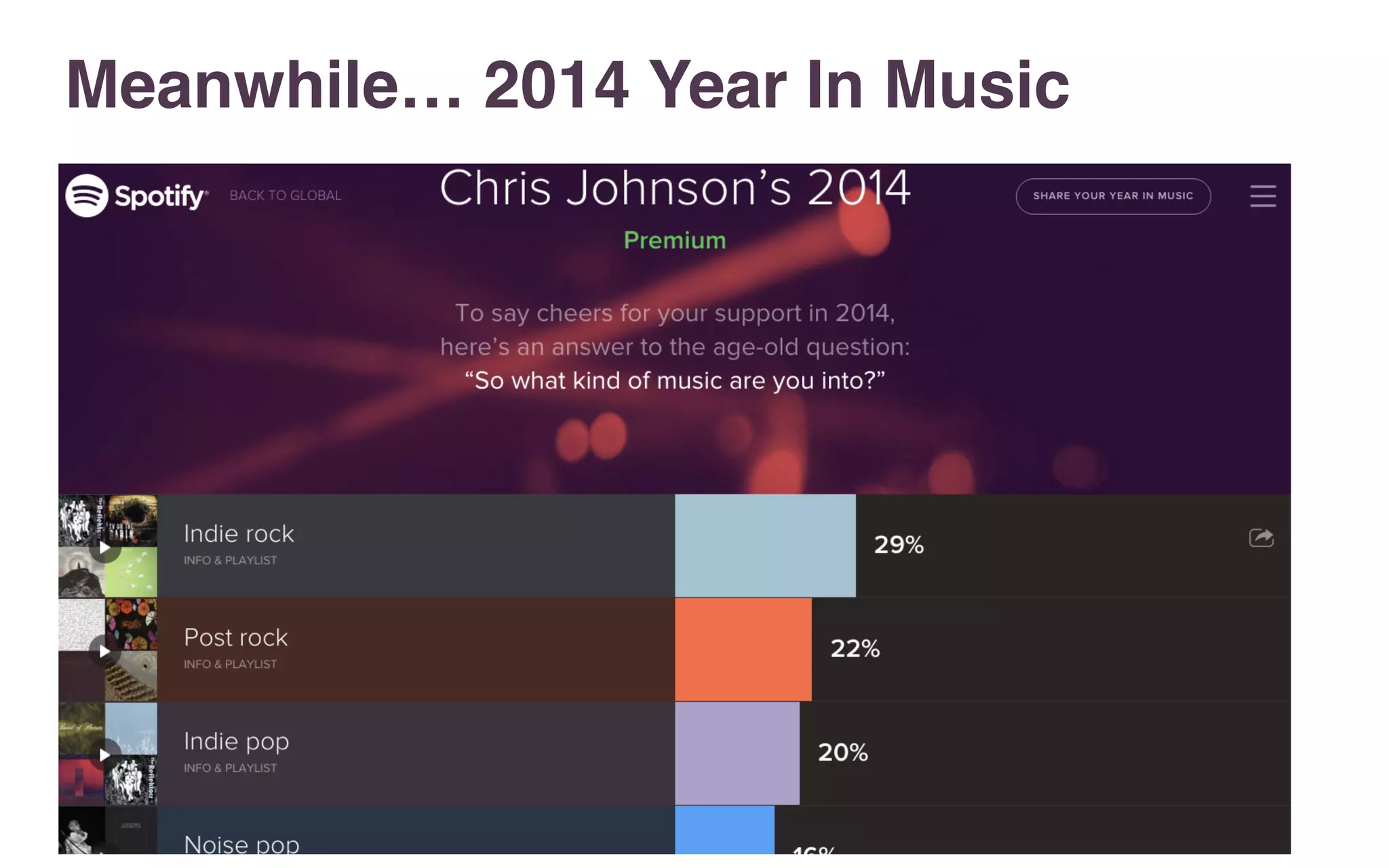
Meanwhile… 2014 Year In Music
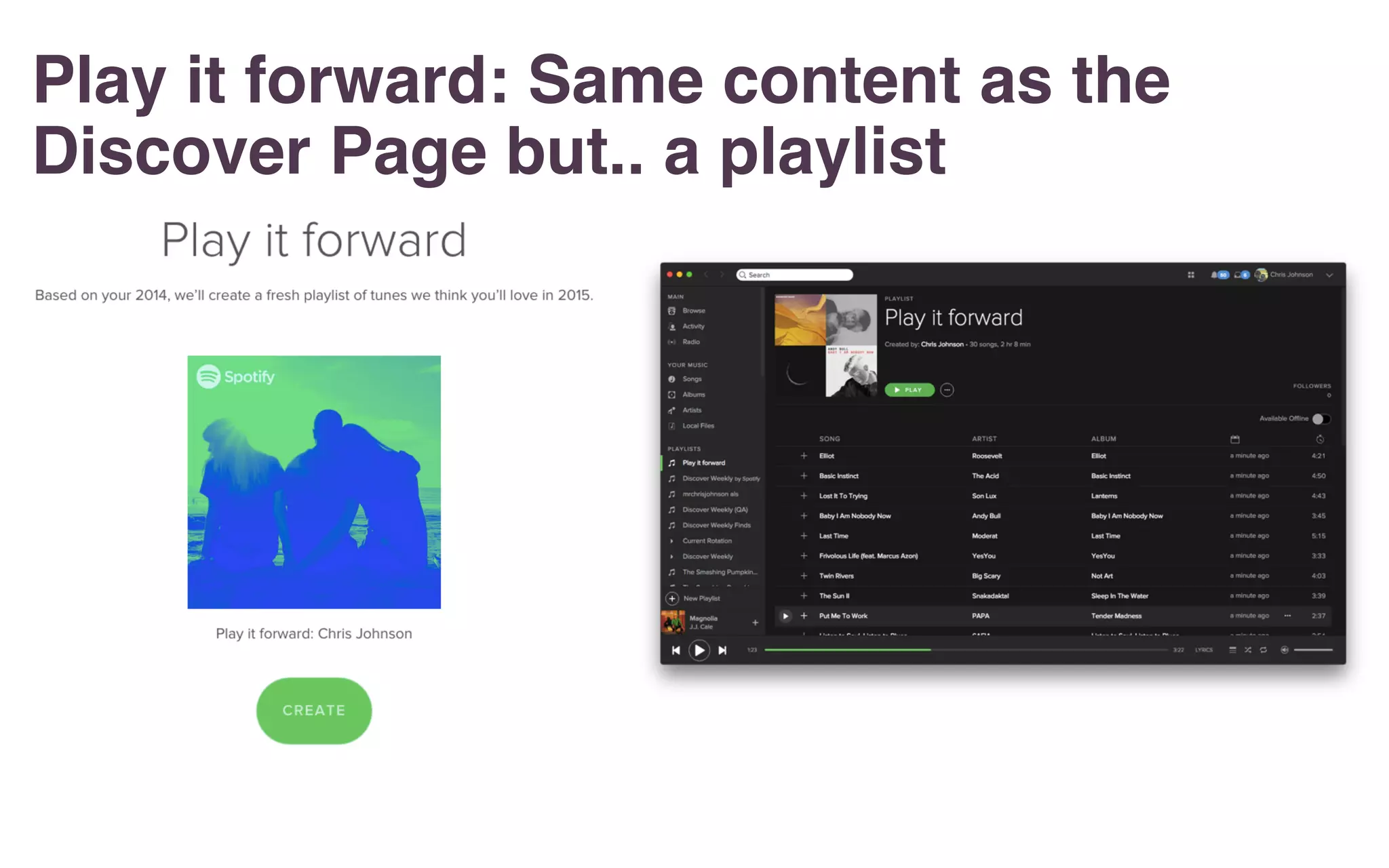
Play it forward: Same content as the
Discover Page but.. a playlist
Lesson 1:
Be data driven from
start to finish
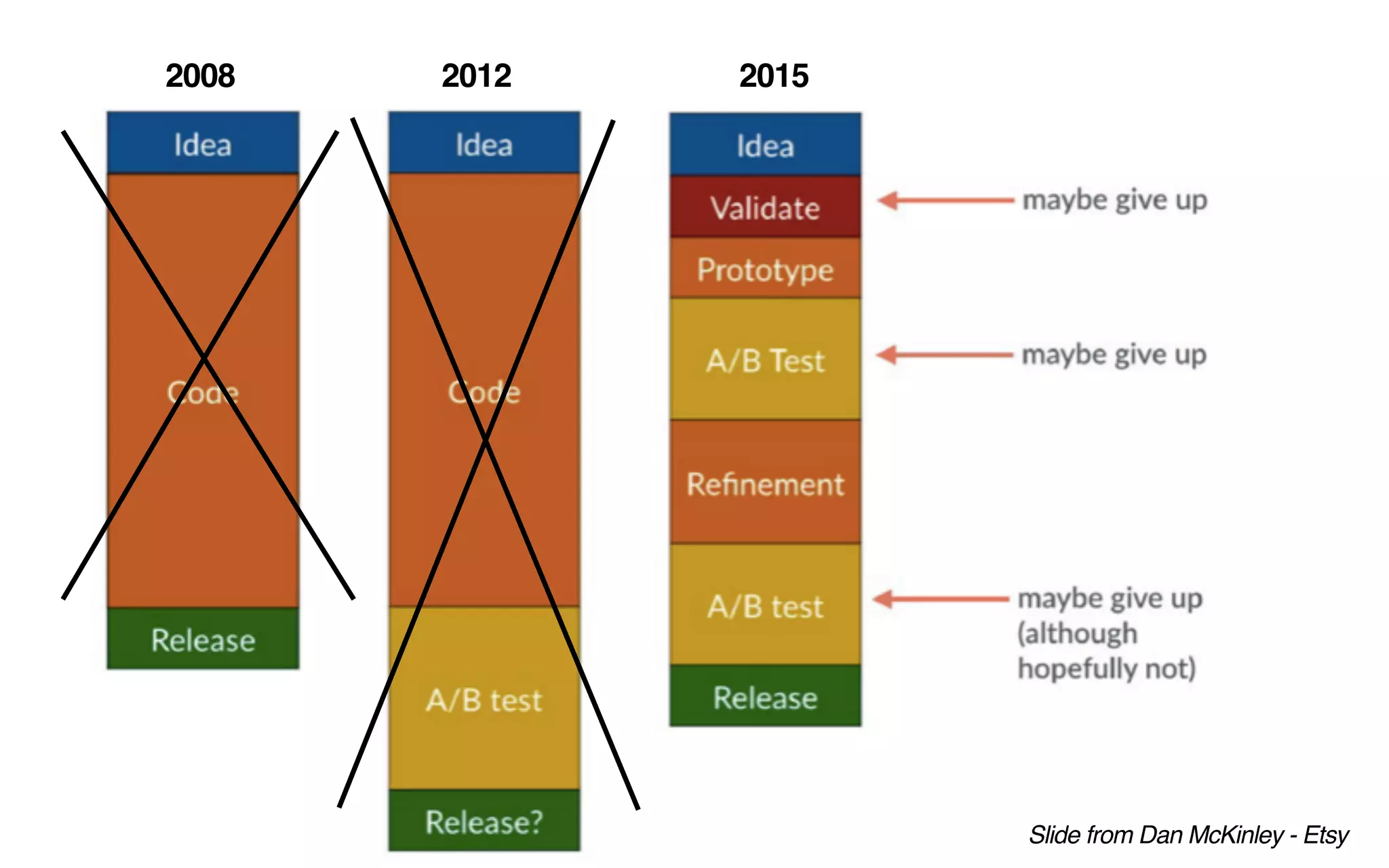
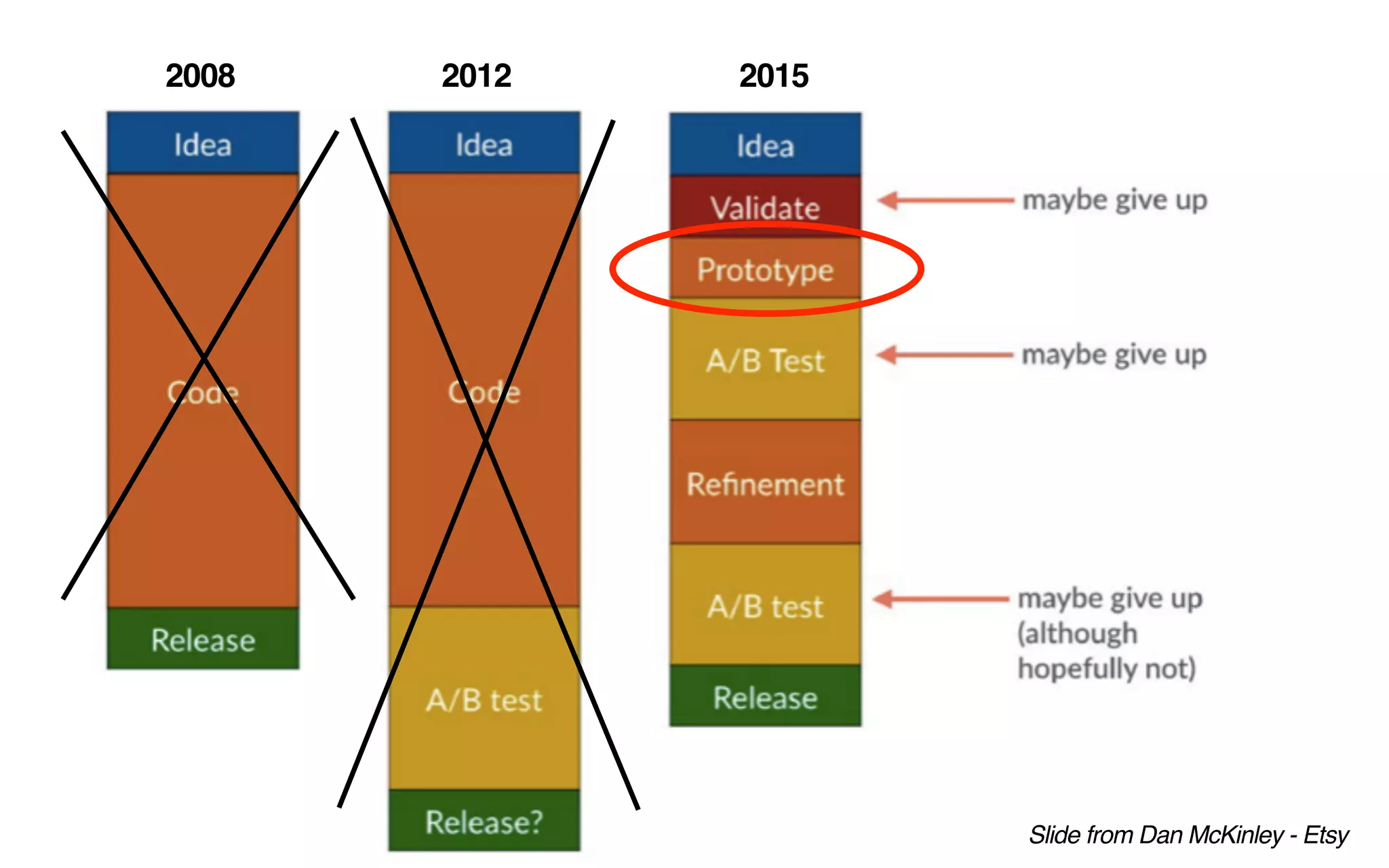
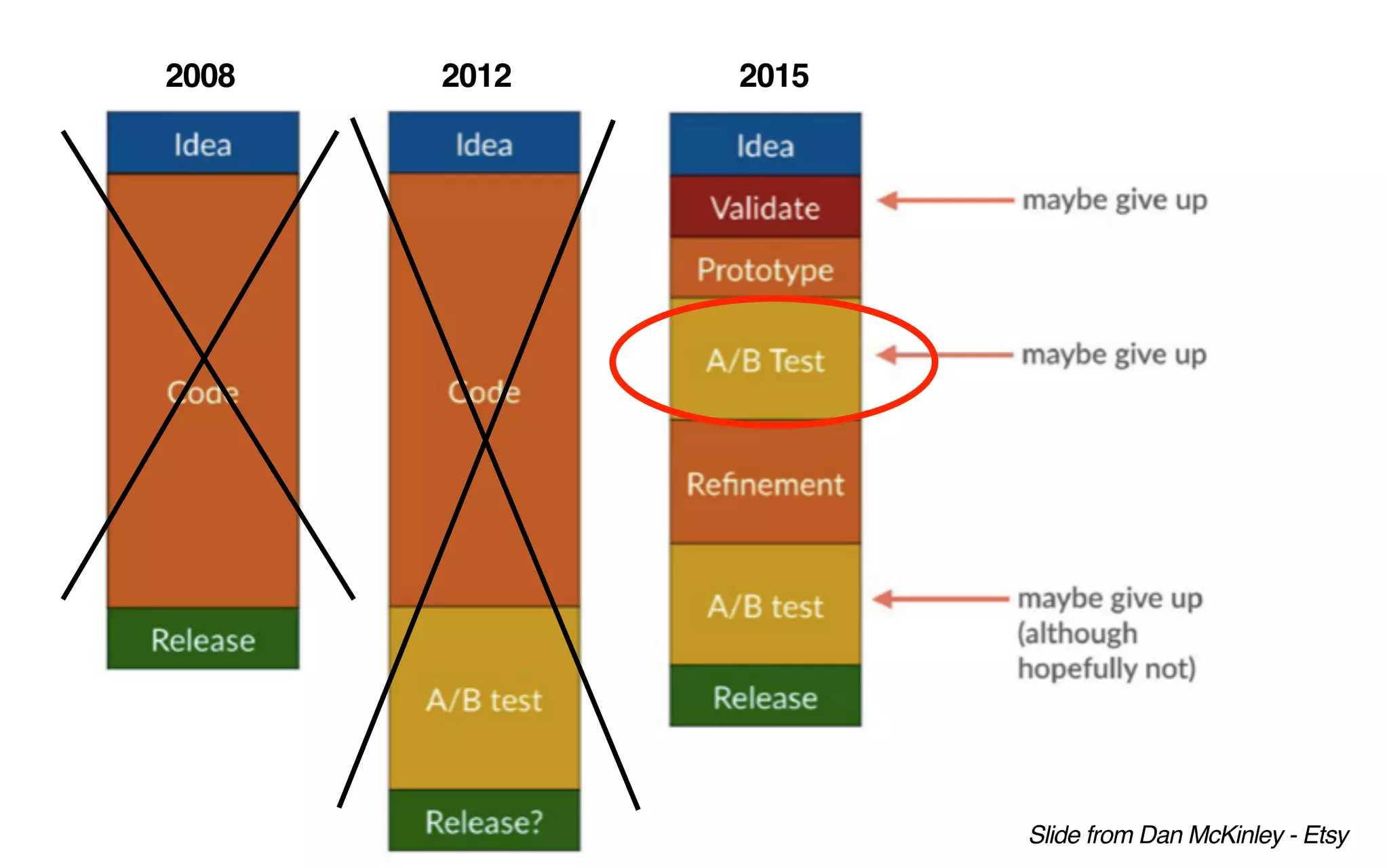
Slide from Dan McKinley - Etsy
2008 2012 2015
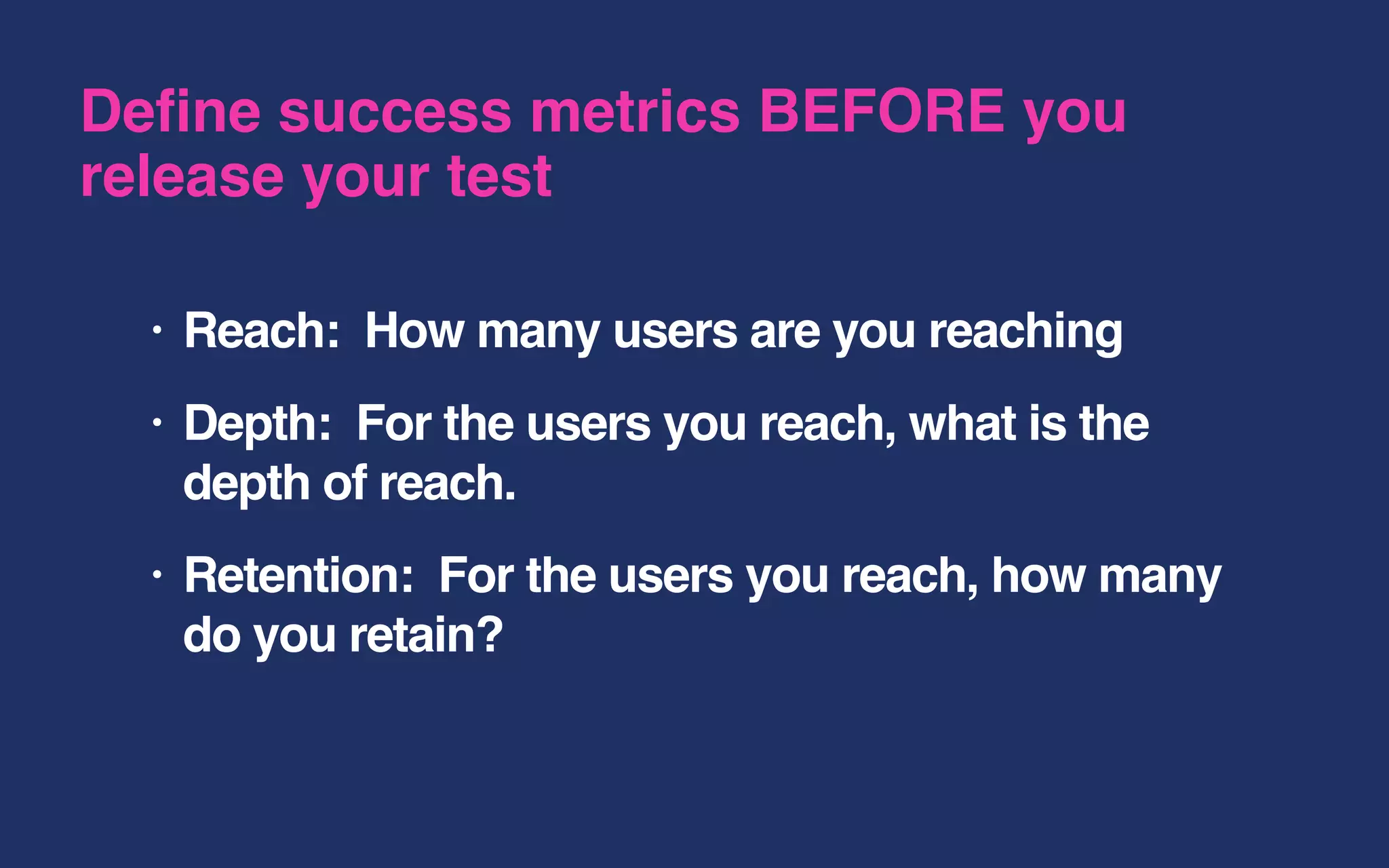
• Reach: How many users are you reaching
• Depth: For the users you reach, what is the
depth of reach.
• Retention: For the users you reach, how many
do you retain?
Define success metrics BEFORE you
release your test
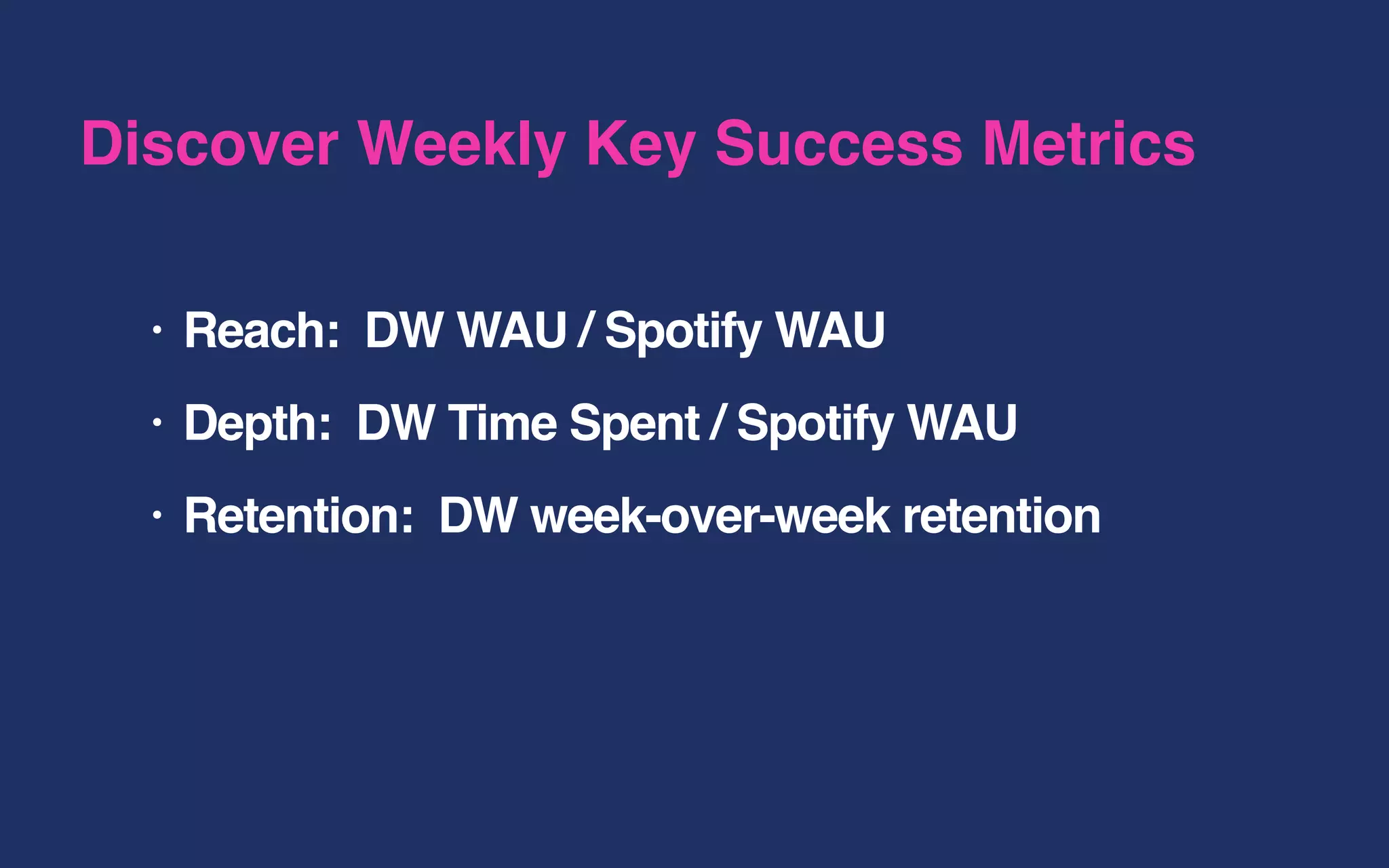
• Reach: DW WAU / Spotify WAU
• Depth: DW Time Spent / Spotify WAU
• Retention: DW week-over-week retention
Discover Weekly Key Success Metrics
2008 2012 2015
Slide from Dan McKinley - Etsy
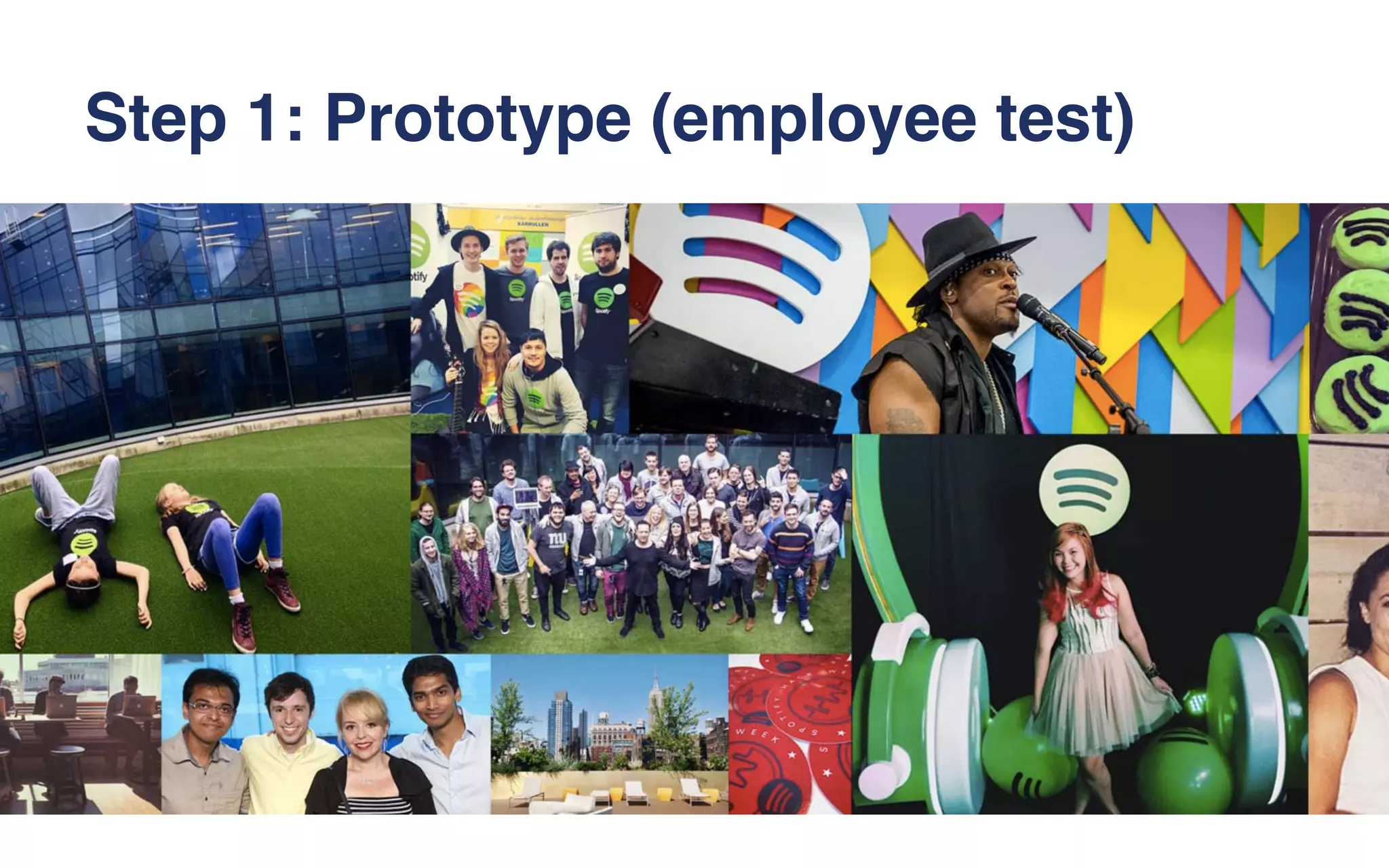
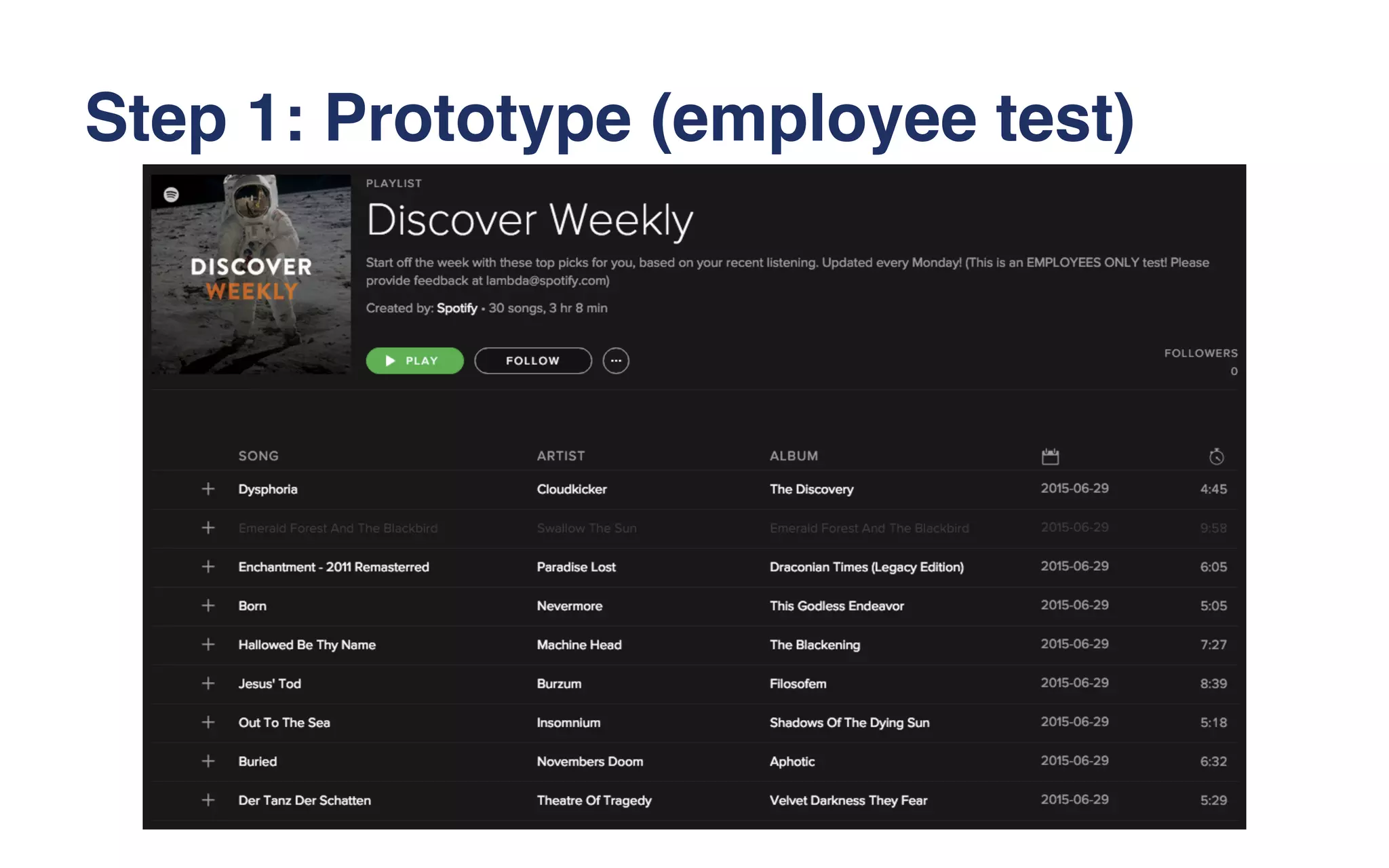
Step 1: Prototype (employee test)
Results of Employee Test were very positive!
2008 2012 2015
Slide from Dan McKinley - Etsy
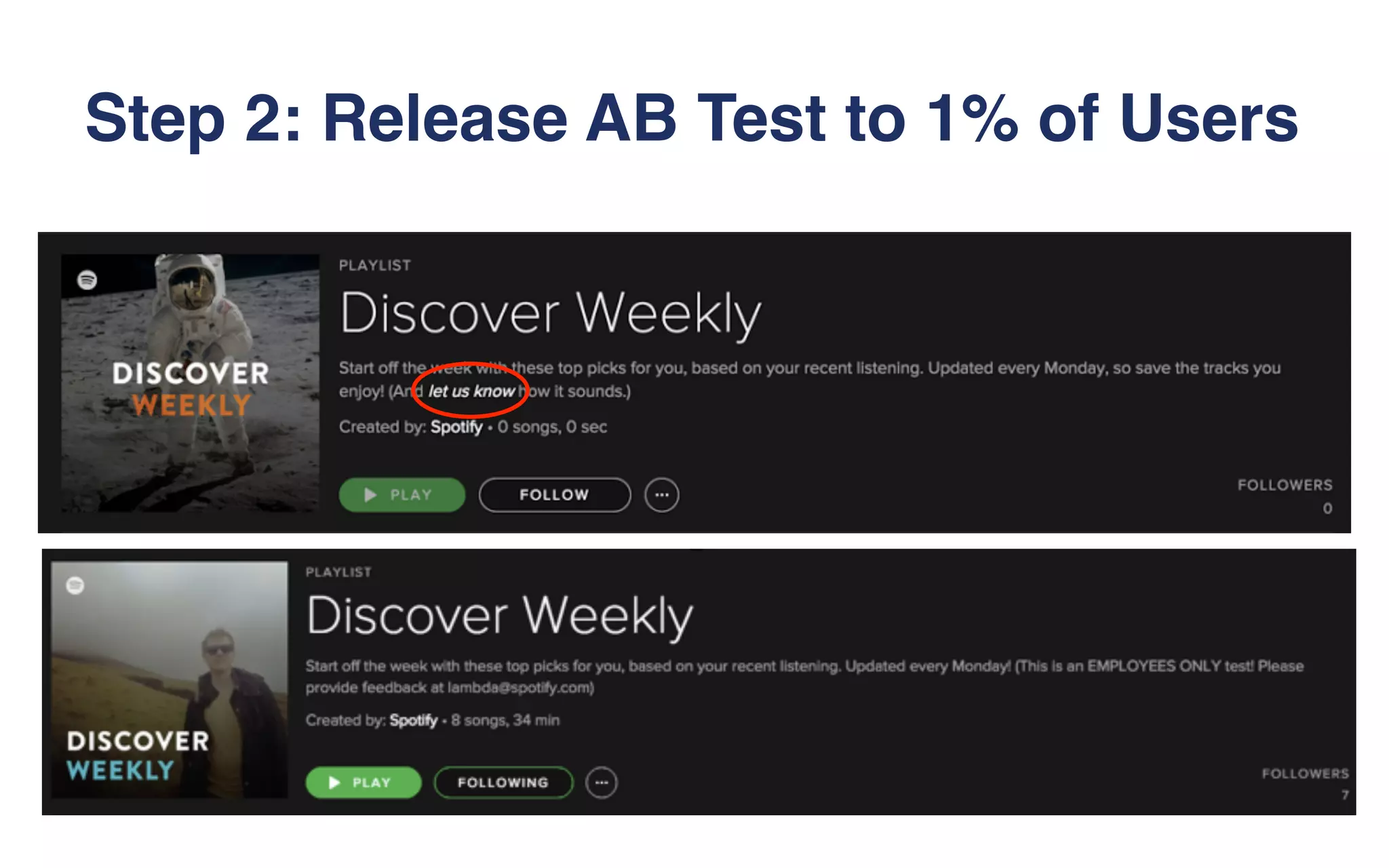
Step 2: Release AB Test to 1% of Users
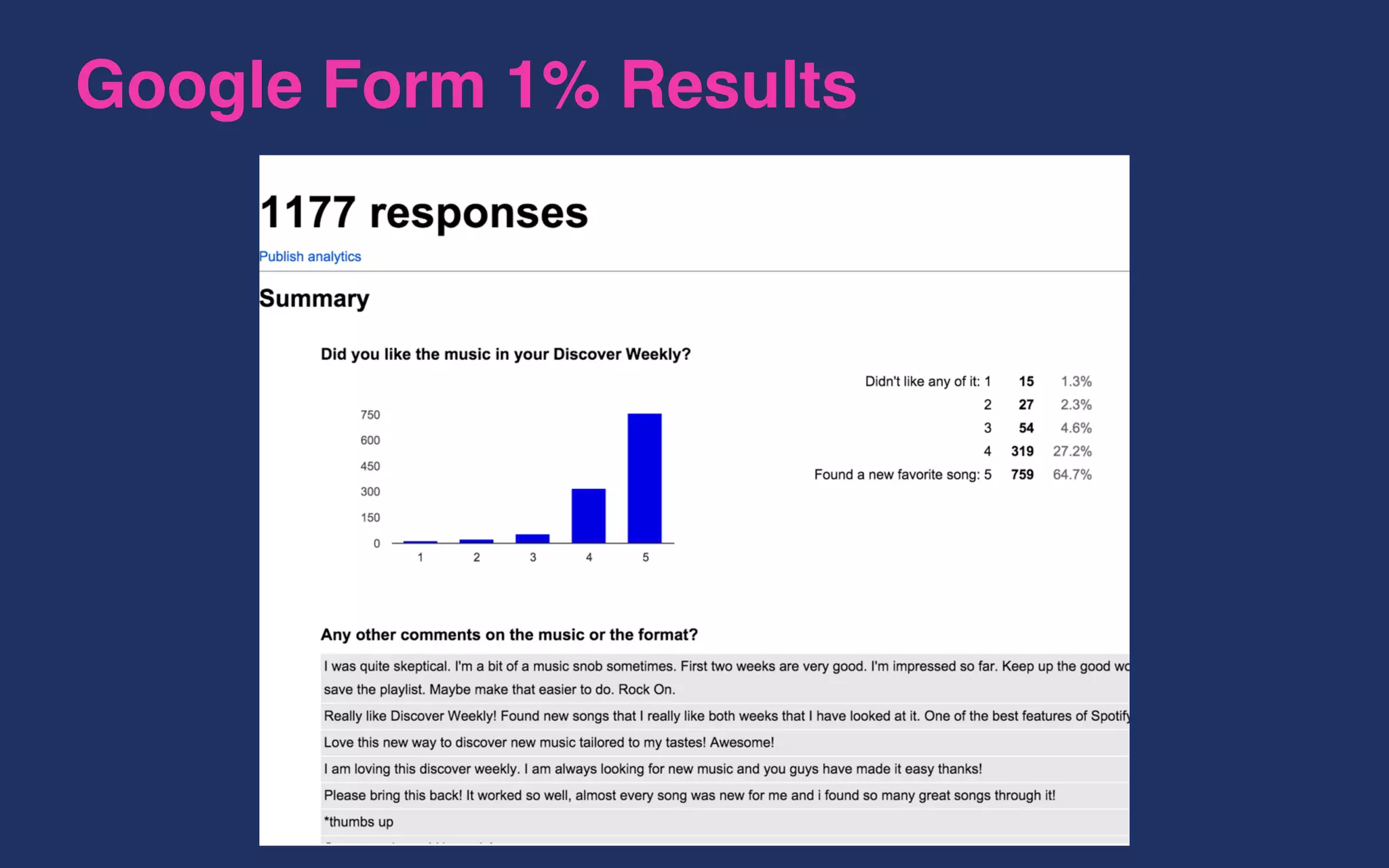
Google Form 1% Results
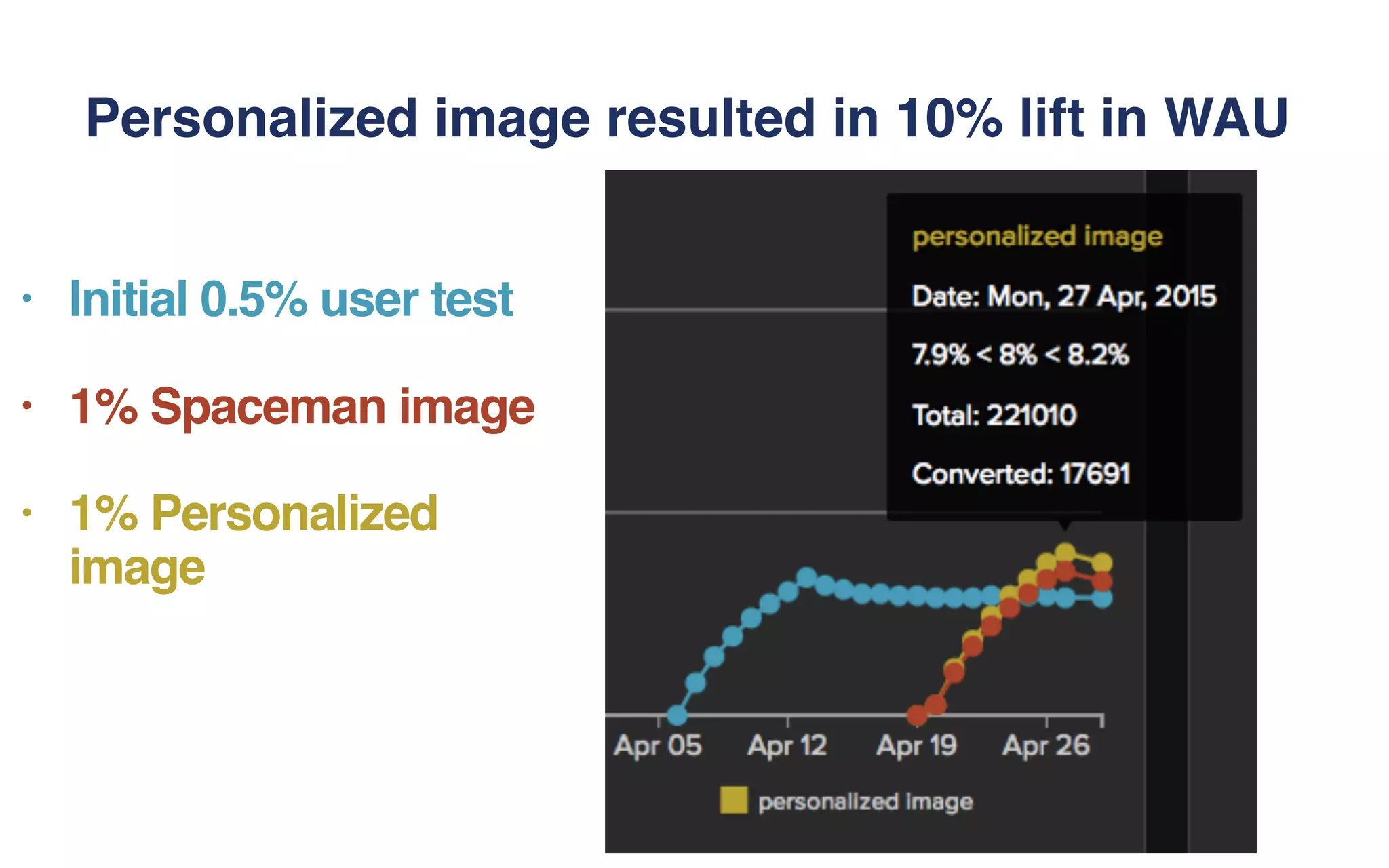
Personalized image resulted in 10% lift in WAU
• Initial 0.5% user test
• 1% Spaceman image
• 1% Personalized
image
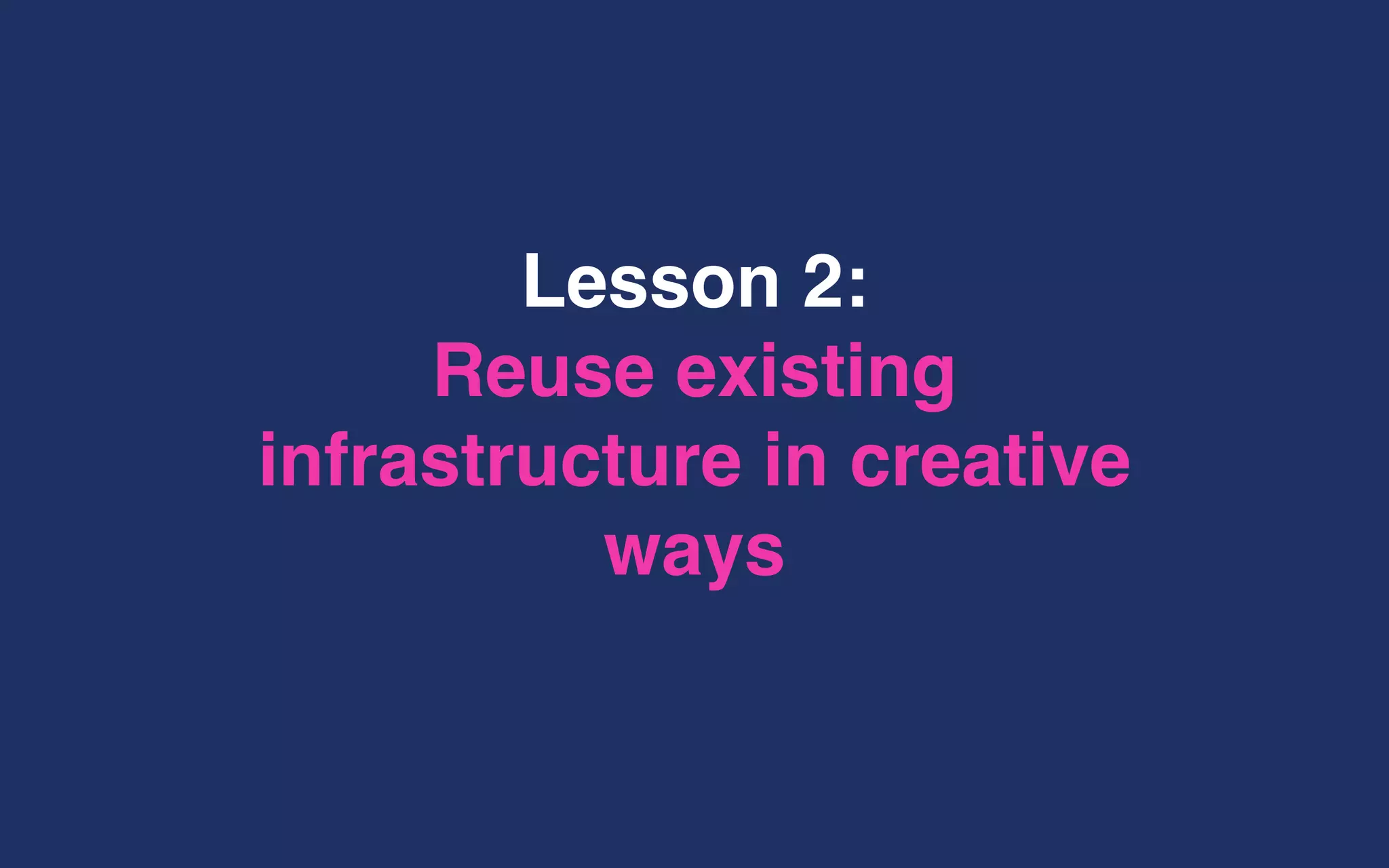
Lesson 2:
Reuse existing
infrastructure in creative
ways
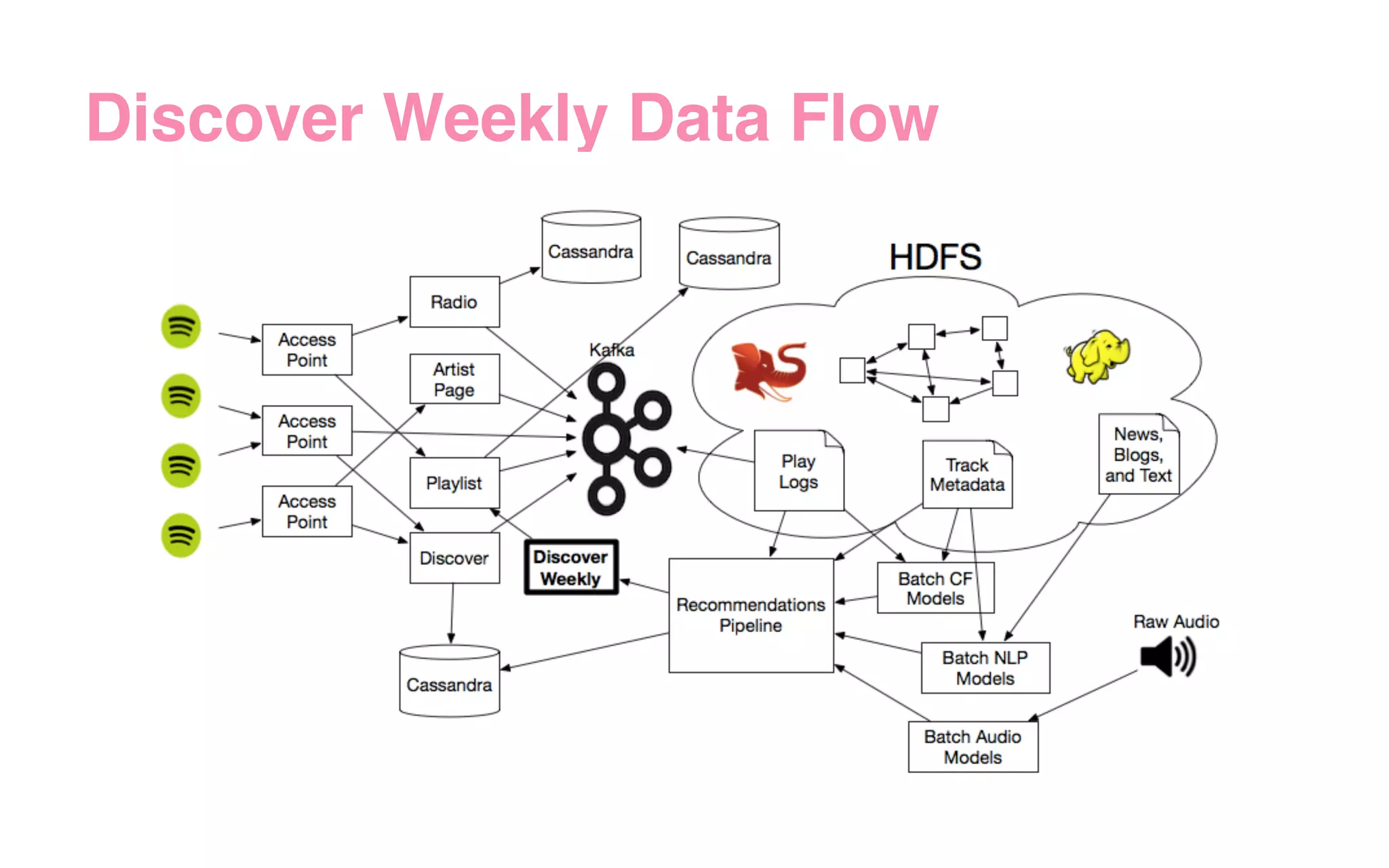
Discover Weekly Data Flow
Recommendation
Models
1 0 0 0 1 0 0 1
0 0 1 0 0 1 0 0
1 0 1 0 0 0 1 1
0 1 0 0 0 1 0 0
0 0 1 0 0 1 0 0
1 0 0 0 1 0 0 1
•Aggregate all (user, track) streams into a large matrix
•Goal: Approximate binary preference matrix by inner product of 2 smaller matrices by minimizing the
weighted RMSE (root mean squared error) using a function of plays, context, and recency as weight
X YUsers
Songs
• = bias for user
• = bias for item
• = regularization parameter
• = 1 if user streamed track else 0
•
• = user latent factor vector
• = item latent factor vector
[1] Hu Y. & Koren Y. & Volinsky C. (2008) Collaborative Filtering for Implicit Feedback Datasets 8th IEEE International Conference on Data Mining
Implicit Matrix Factorization
1 0 0 0 1 0 0 1
0 0 1 0 0 1 0 0
1 0 1 0 0 0 1 1
0 1 0 0 0 1 0 0
0 0 1 0 0 1 0 0
1 0 0 0 1 0 0 1
•Aggregate all (user, track) streams into a large matrix
•Goal: Model probability of user playing a song as logistic, then maximize log likelihood of binary
preference matrix, weighting positive observations by a function of plays, context, and recency
X YUsers
Songs
• = bias for user
• = bias for item
• = regularization parameter
• = user latent factor vector
• = item latent factor vector
[2] Johnson C. (2014) Logistic Matrix Factorization for Implicit Feedback Data NIPS Workshop on Distributed Matrix Computations
Can also use Logistic Loss!
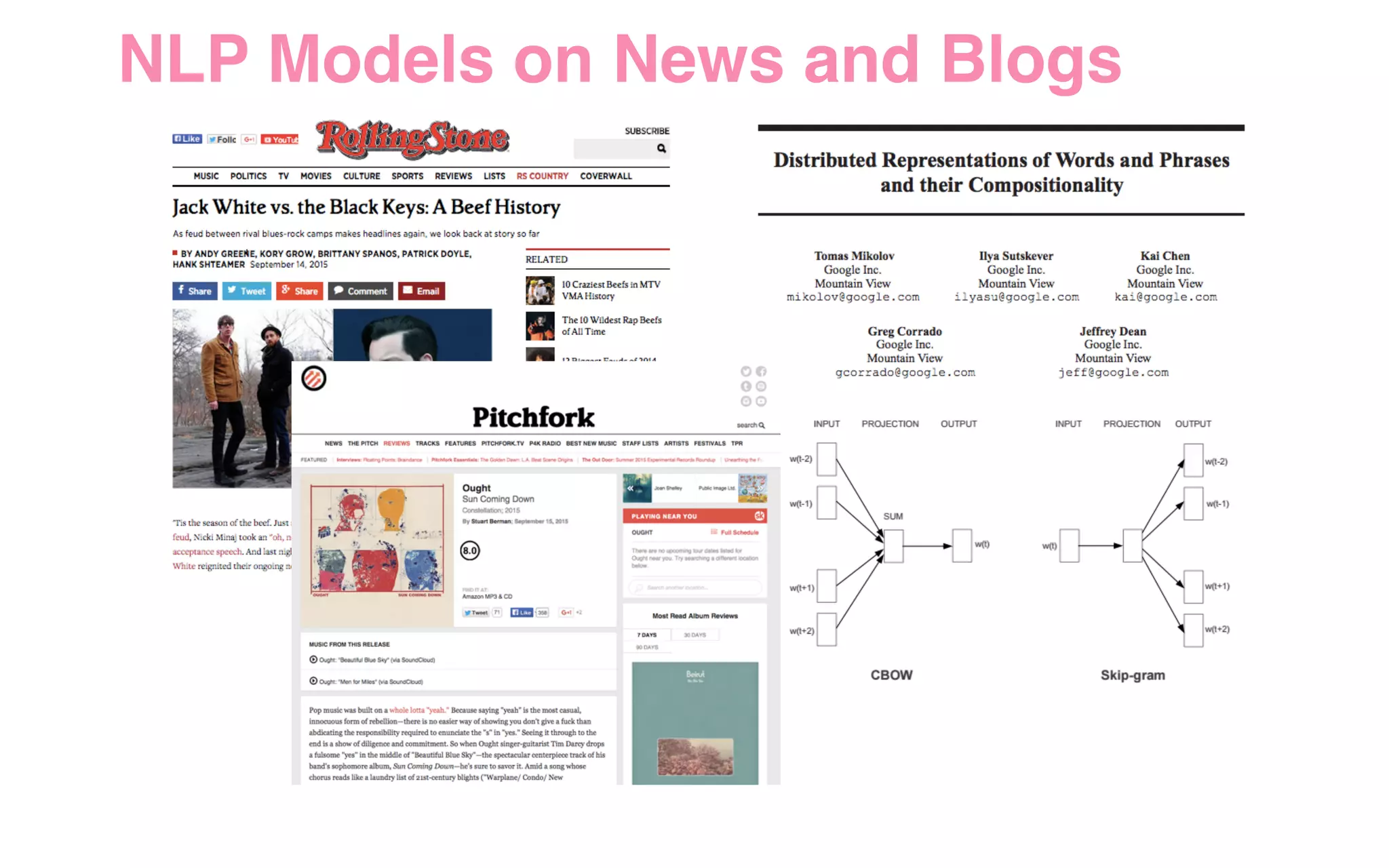
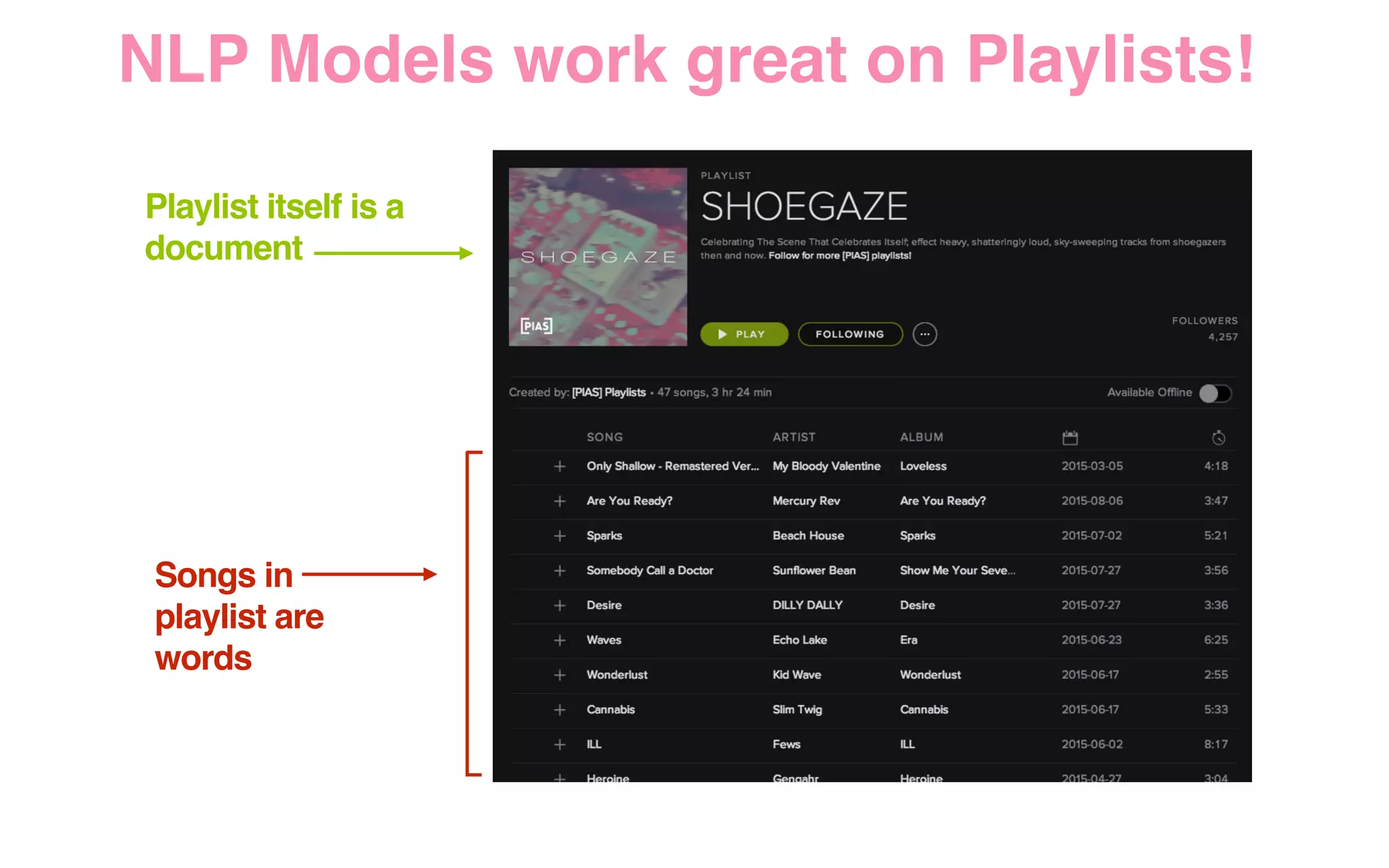
NLP Models on News and Blogs
Playlist itself is a
document
Songs in
playlist are
words
NLP Models work great on Playlists!
[3] http://benanne.github.io/2014/08/05/spotify-cnns.html
Deep Learning on Audio
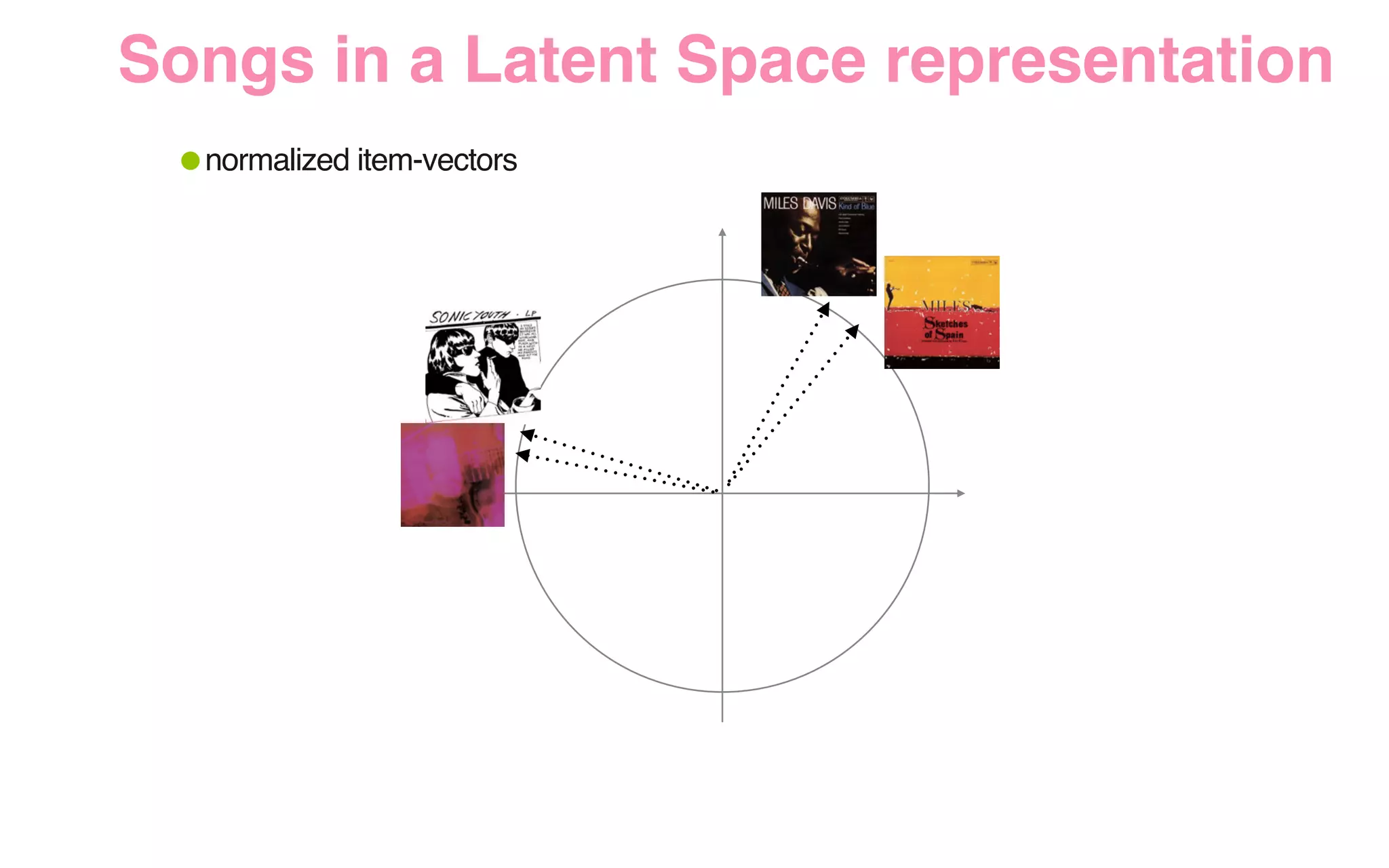
•normalized item-vectors
Songs in a Latent Space representation
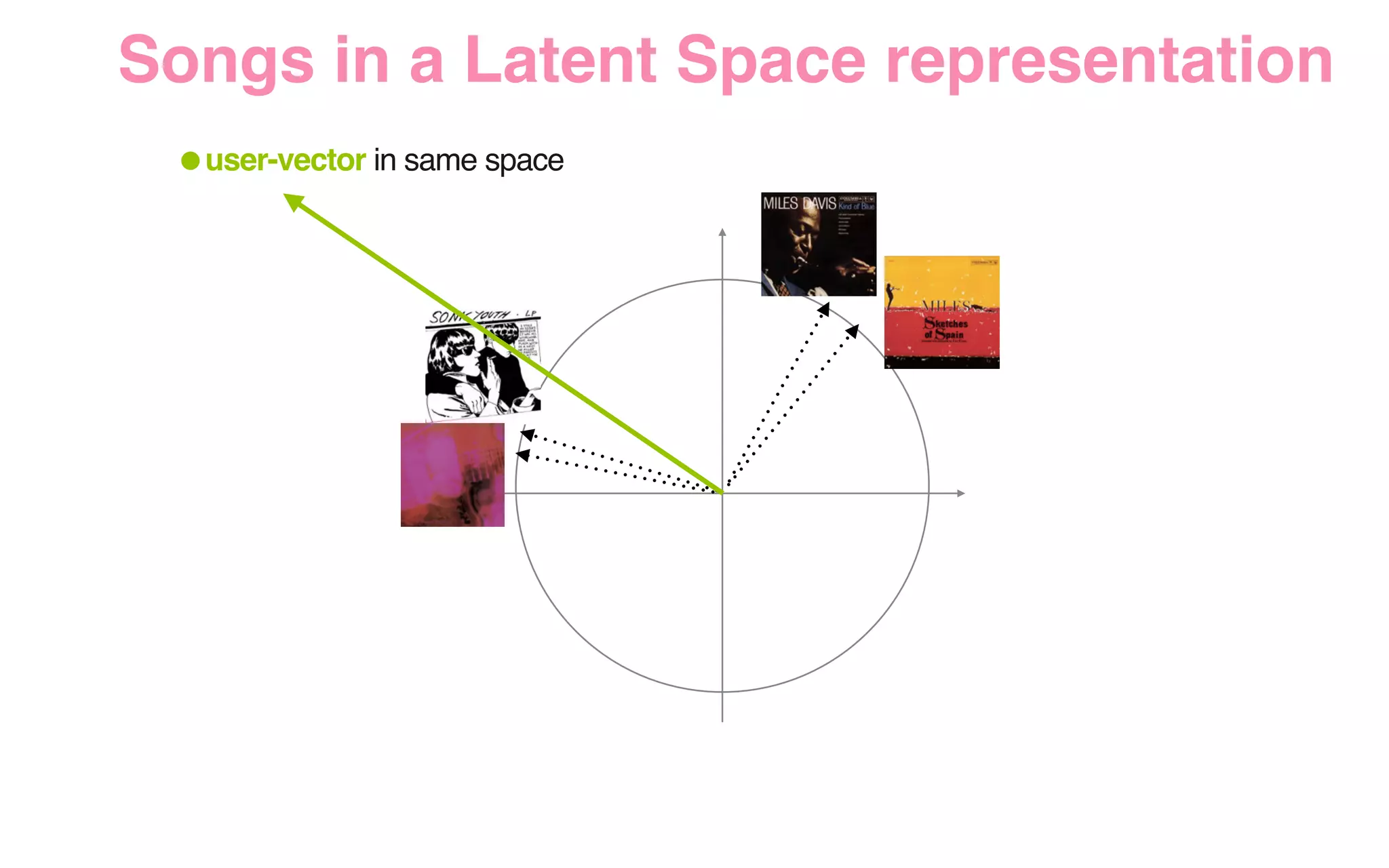
•user-vector in same space
Songs in a Latent Space representation
Lesson 3:
Don’t scale until
you need to
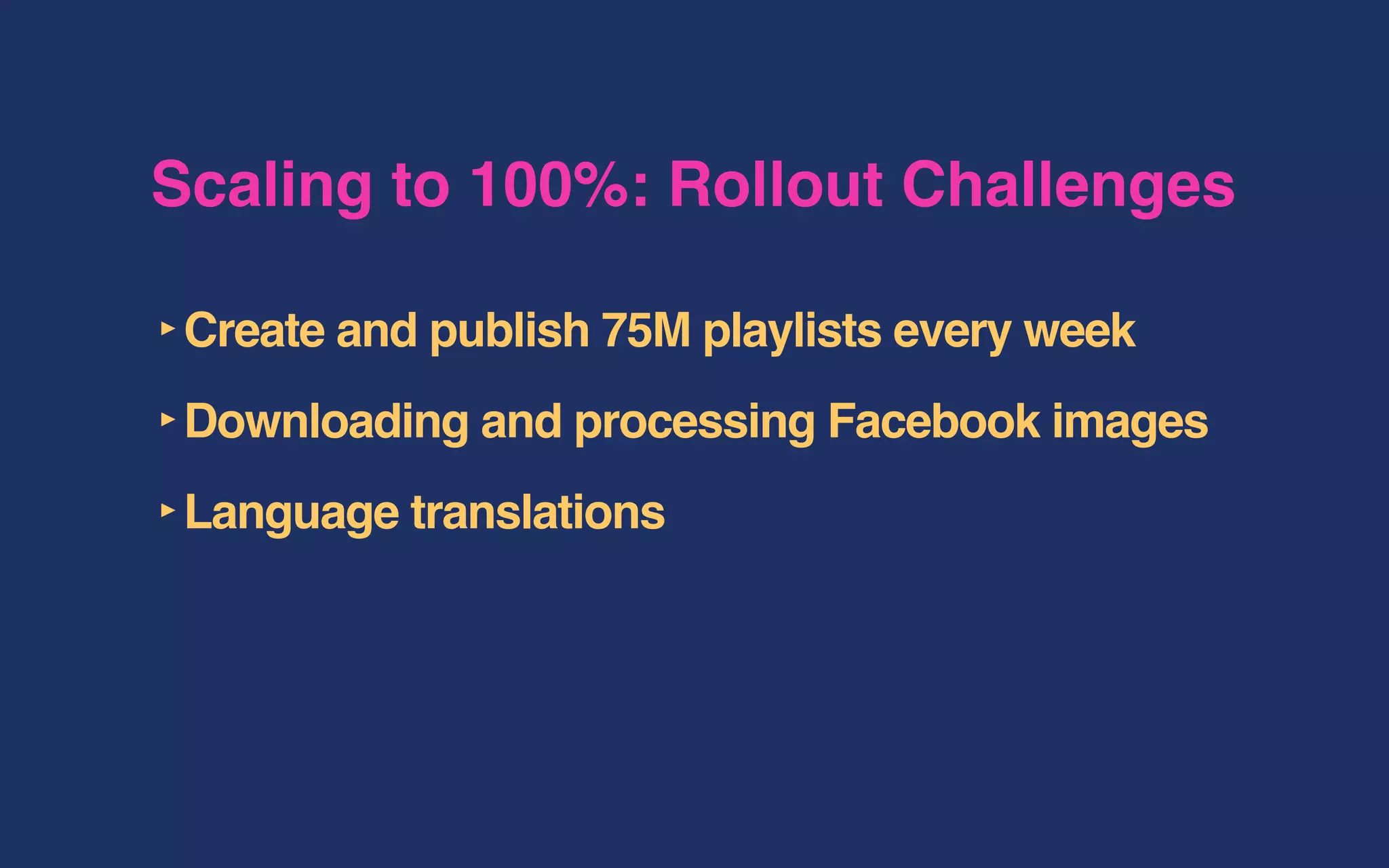
Scaling to 100%: Rollout Challenges
‣Create and publish 75M playlists every week
‣Downloading and processing Facebook images
‣Language translations
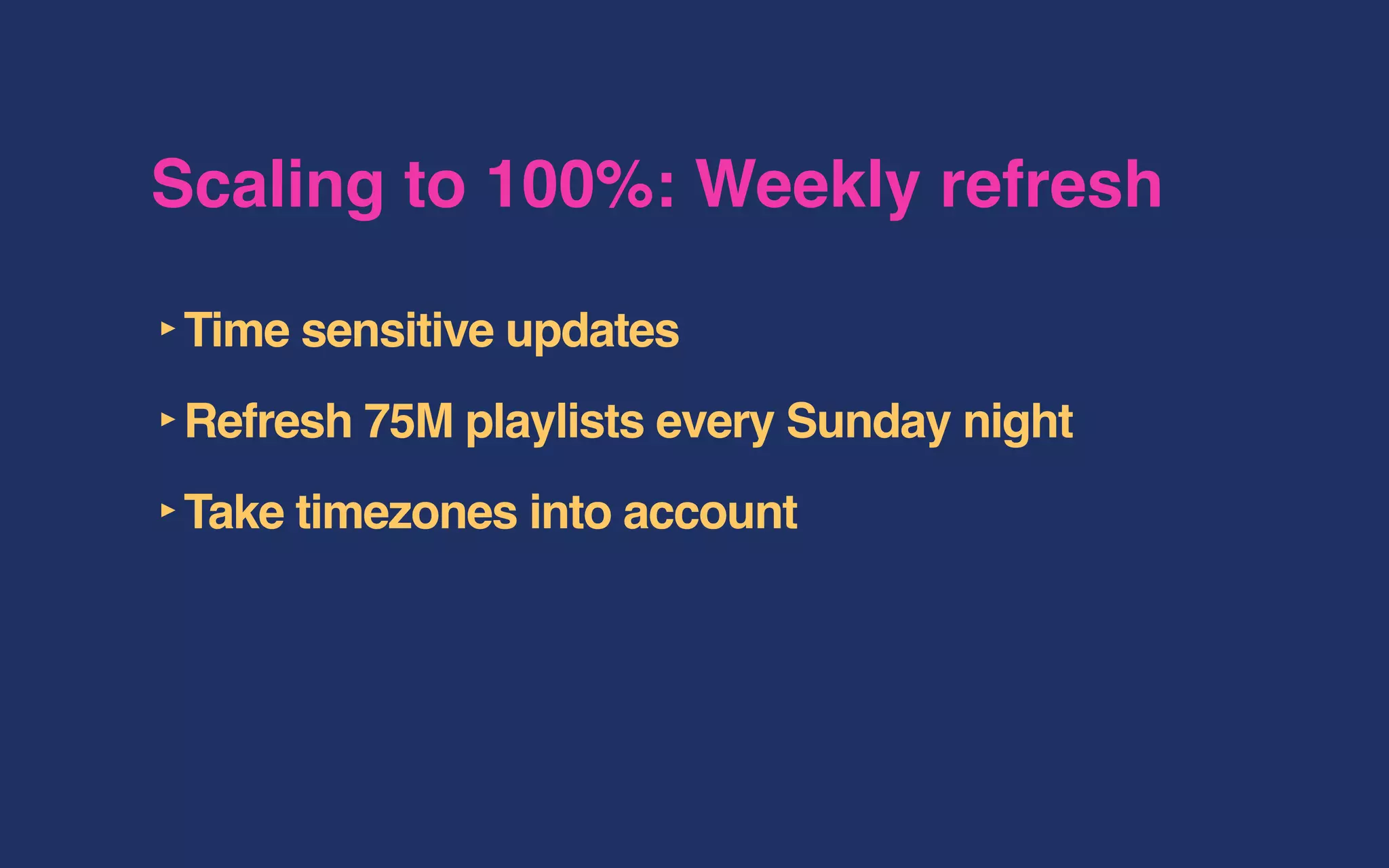
Scaling to 100%: Weekly refresh
‣Time sensitive updates
‣Refresh 75M playlists every Sunday night
‣Take timezones into account
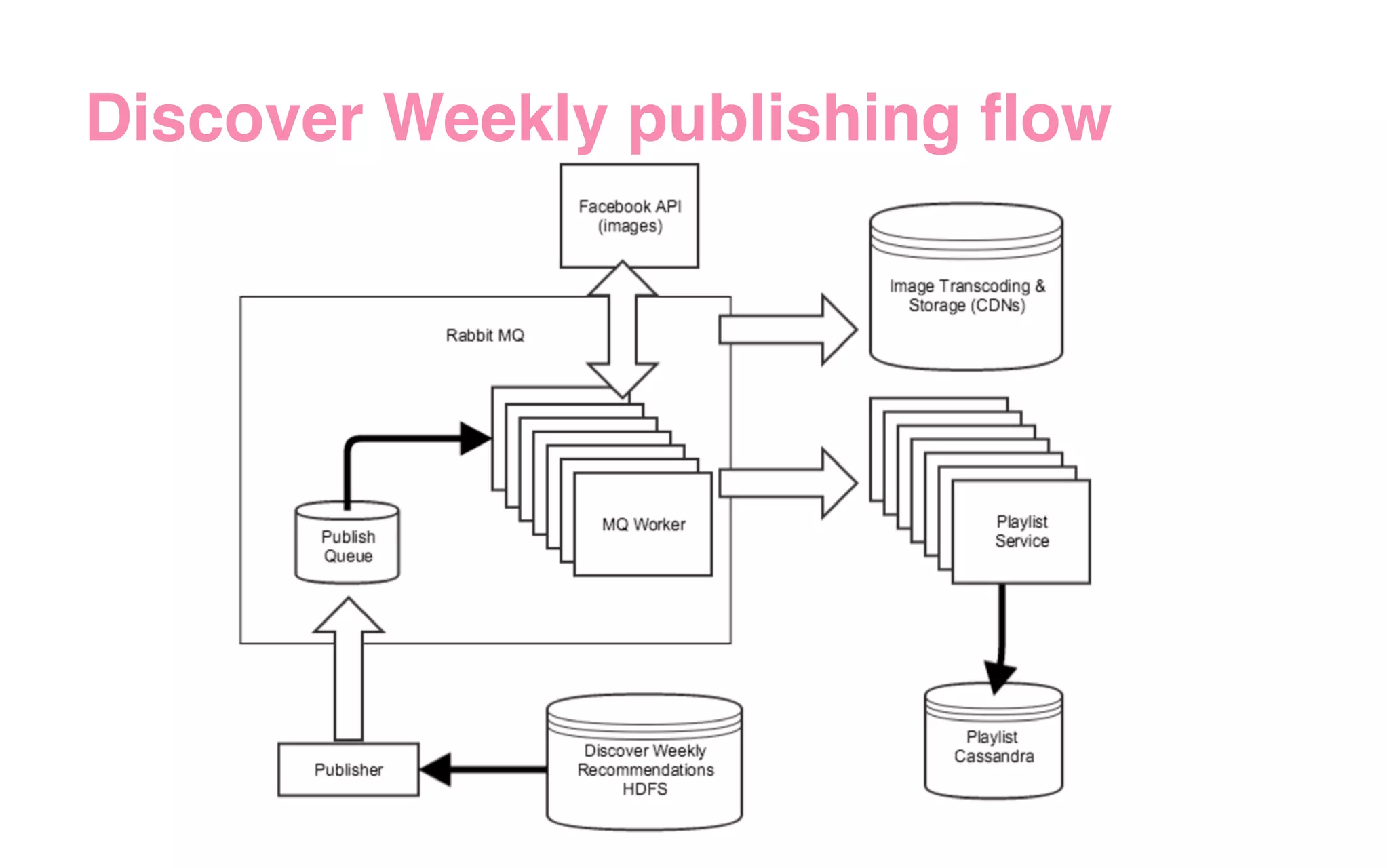
Discover Weekly publishing flow
What’s next?
Iterating on content
quality and interface
enhancements
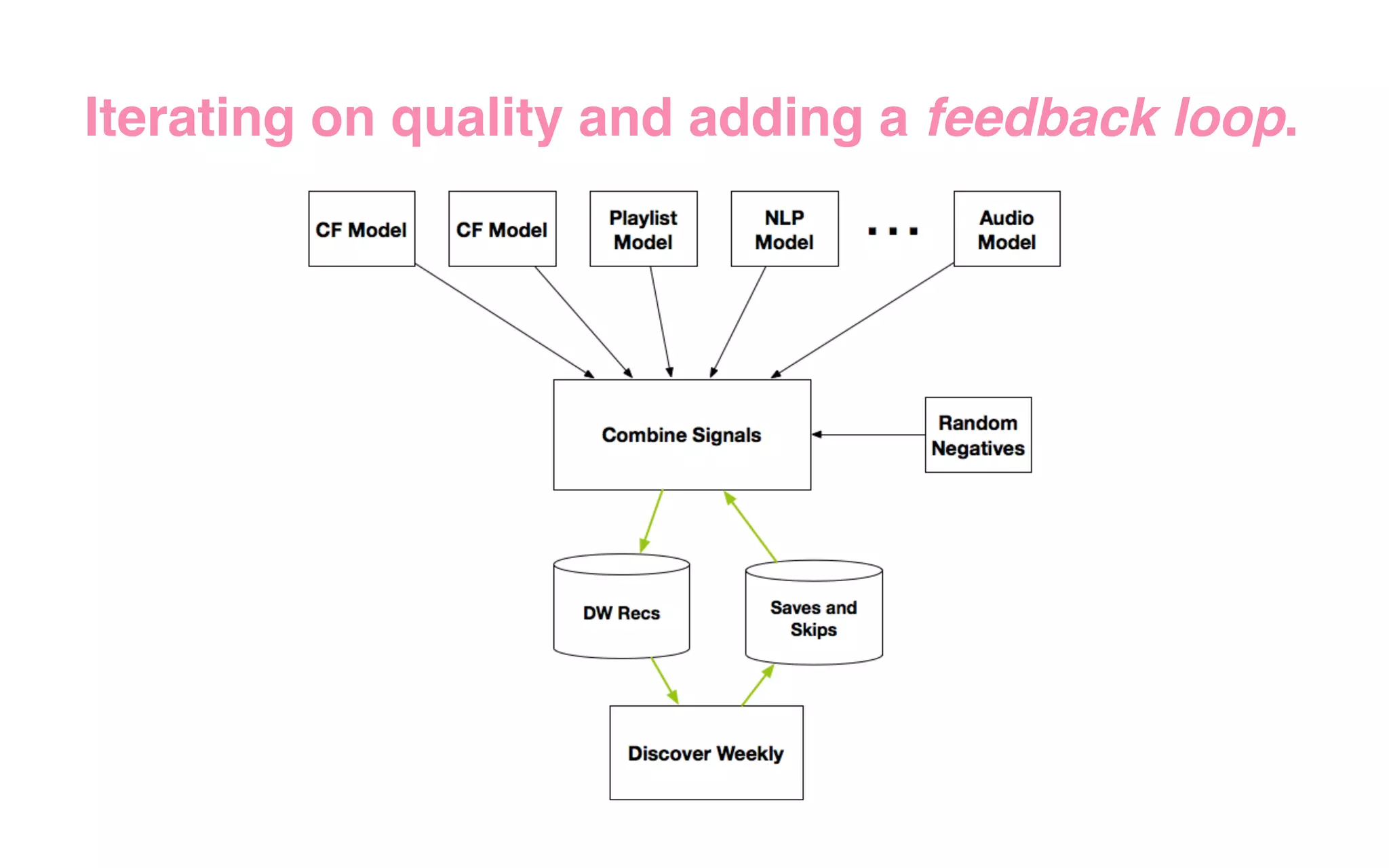
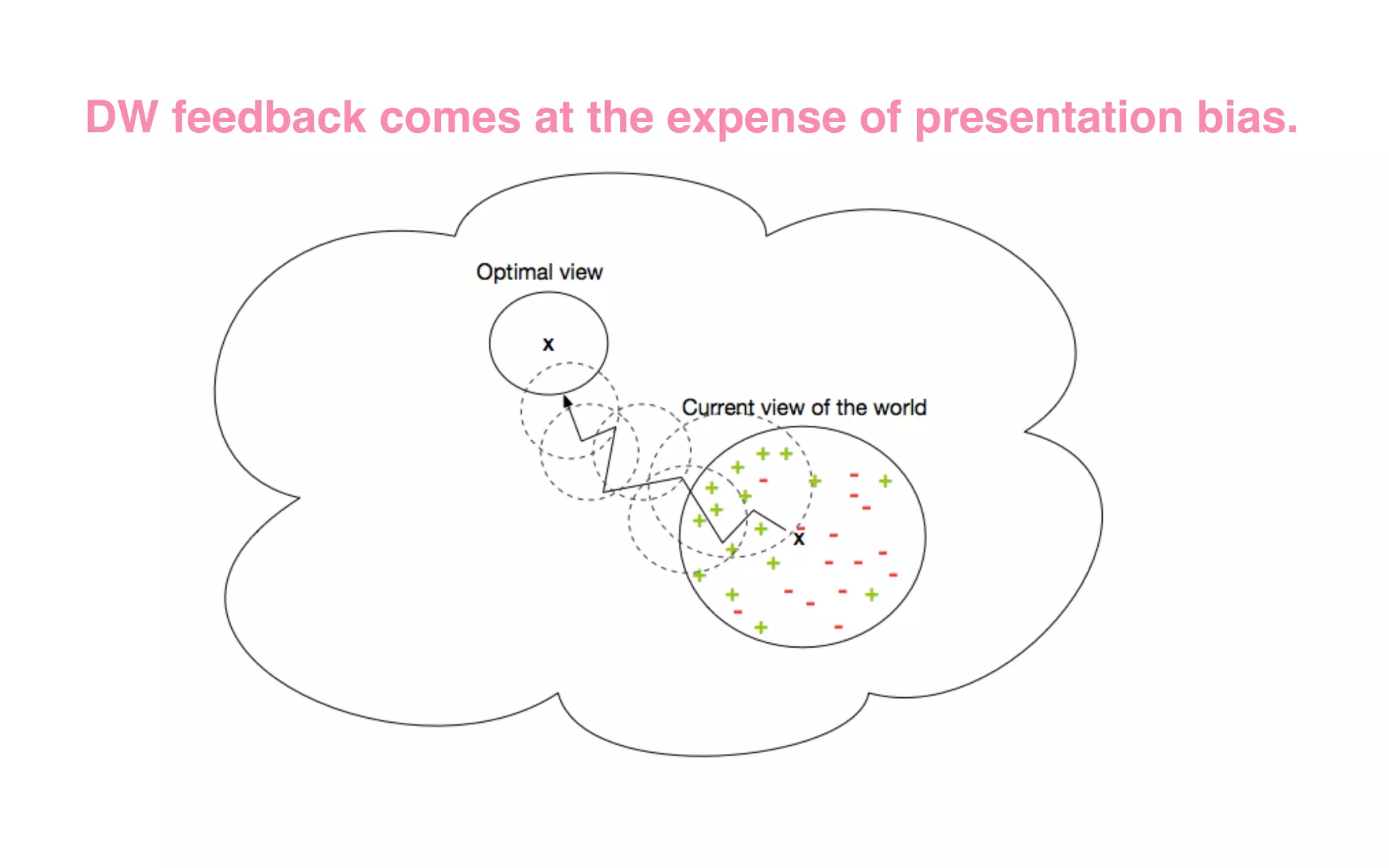
Iterating on quality and adding a feedback loop.
DW feedback comes at the expense of presentation bias.
Lesson 4:
Users know best. In the
end, AB Test everything!
Lesson 5 (final lesson!):
Empower bottom-up
innovation in your org and
amazing things will happen.
Thank You!
(btw, we’re hiring Machine Learning and
Data Engineers, come chat with us!)

From Idea to Execution: Spotify's Discover Weekly

  • 1.
    From Idea to Execution:Spotify’s Discover Weekly Chris Johnson :: @MrChrisJohnson Edward Newett :: @scaladaze DataEngConf • NYC • Nov 2015 Or: 5 lessons in building recommendation products at scale
  • 2.
    Who are We?? ChrisJohnson Edward Newett
  • 3.
    Spotify in Numbers •Started in 2006, now available in 58 markets • 75+ Million active users, 20 Million paying subscribers • 30+ Million songs, 20,000 new songs added per day • 1.5 Billion user generated playlists • 1 TB user data logged per day • 1,700 node Hadoop cluster • 10,000+ Hadoop jobs run daily
  • 4.
    Challenge: 30M songs…how do we recommend music to users?
  • 5.
  • 6.
  • 7.
  • 8.
    Discover Weekly • Startedin 2006, now available in 58 markets • 75+ Million active users, 20 Million paying subscribers • 30+ Million songs, 20,000 new songs added per day • 1.5 Billion user generated playlists • 1 TB user data logged per day • 1,700 node Hadoop cluster • 10,000+ Hadoop jobs run daily
  • 9.
  • 10.
    2013 :: DiscoverPage v1.0 • Personalized News Feed of recommendations • Artists, Album Reviews, News Articles, New Releases, Upcoming Concerts, Social Recommendations, Playlists… • Required a lot of attention and digging to engage with recommendations • No organization of content
  • 11.
    2014 :: DiscoverPage v2.0 • Recommendations grouped into strips (a la Netflix) • Limited to Albums and New Releases • More organized than News-Feed but still requires active interaction
  • 12.
    Insight: users spendingmore time on editorial Browse playlists than Discover.
  • 13.
    Idea: combine the personalizedexperience of Discover with the lean- back ease of Browse
  • 14.
  • 15.
    Play it forward:Same content as the Discover Page but.. a playlist
  • 16.
    Lesson 1: Be datadriven from start to finish
  • 17.
    Slide from DanMcKinley - Etsy 2008 2012 2015
  • 18.
    • Reach: Howmany users are you reaching • Depth: For the users you reach, what is the depth of reach. • Retention: For the users you reach, how many do you retain? Define success metrics BEFORE you release your test
  • 19.
    • Reach: DWWAU / Spotify WAU • Depth: DW Time Spent / Spotify WAU • Retention: DW week-over-week retention Discover Weekly Key Success Metrics
  • 20.
    2008 2012 2015 Slidefrom Dan McKinley - Etsy
  • 21.
    Step 1: Prototype(employee test)
  • 22.
    Step 1: Prototype(employee test)
  • 23.
    Results of EmployeeTest were very positive!
  • 24.
    2008 2012 2015 Slidefrom Dan McKinley - Etsy
  • 25.
    Step 2: ReleaseAB Test to 1% of Users
  • 26.
  • 27.
    Personalized image resultedin 10% lift in WAU • Initial 0.5% user test • 1% Spaceman image • 1% Personalized image
  • 28.
  • 29.
  • 30.
  • 31.
    1 0 00 1 0 0 1 0 0 1 0 0 1 0 0 1 0 1 0 0 0 1 1 0 1 0 0 0 1 0 0 0 0 1 0 0 1 0 0 1 0 0 0 1 0 0 1 •Aggregate all (user, track) streams into a large matrix •Goal: Approximate binary preference matrix by inner product of 2 smaller matrices by minimizing the weighted RMSE (root mean squared error) using a function of plays, context, and recency as weight X YUsers Songs • = bias for user • = bias for item • = regularization parameter • = 1 if user streamed track else 0 • • = user latent factor vector • = item latent factor vector [1] Hu Y. & Koren Y. & Volinsky C. (2008) Collaborative Filtering for Implicit Feedback Datasets 8th IEEE International Conference on Data Mining Implicit Matrix Factorization
  • 32.
    1 0 00 1 0 0 1 0 0 1 0 0 1 0 0 1 0 1 0 0 0 1 1 0 1 0 0 0 1 0 0 0 0 1 0 0 1 0 0 1 0 0 0 1 0 0 1 •Aggregate all (user, track) streams into a large matrix •Goal: Model probability of user playing a song as logistic, then maximize log likelihood of binary preference matrix, weighting positive observations by a function of plays, context, and recency X YUsers Songs • = bias for user • = bias for item • = regularization parameter • = user latent factor vector • = item latent factor vector [2] Johnson C. (2014) Logistic Matrix Factorization for Implicit Feedback Data NIPS Workshop on Distributed Matrix Computations Can also use Logistic Loss!
  • 33.
    NLP Models onNews and Blogs
  • 34.
    Playlist itself isa document Songs in playlist are words NLP Models work great on Playlists!
  • 35.
  • 36.
    •normalized item-vectors Songs ina Latent Space representation
  • 37.
    •user-vector in samespace Songs in a Latent Space representation
  • 38.
    Lesson 3: Don’t scaleuntil you need to
  • 39.
    Scaling to 100%:Rollout Challenges ‣Create and publish 75M playlists every week ‣Downloading and processing Facebook images ‣Language translations
  • 40.
    Scaling to 100%:Weekly refresh ‣Time sensitive updates ‣Refresh 75M playlists every Sunday night ‣Take timezones into account
  • 41.
  • 45.
    What’s next? Iterating oncontent quality and interface enhancements
  • 46.
    Iterating on qualityand adding a feedback loop.
  • 47.
    DW feedback comesat the expense of presentation bias.
  • 48.
    Lesson 4: Users knowbest. In the end, AB Test everything!
  • 49.
    Lesson 5 (finallesson!): Empower bottom-up innovation in your org and amazing things will happen.
  • 50.
    Thank You! (btw, we’rehiring Machine Learning and Data Engineers, come chat with us!)