



Welcome
 Presented by Aswathy K.
 FMTC Pallimukku
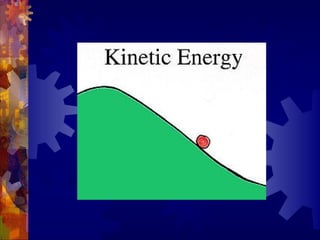
Kinetic Energy
 Energy possessed by a body by virtue
of its motion.
Kinetic Energy
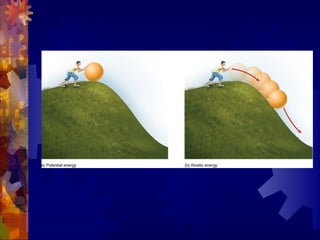
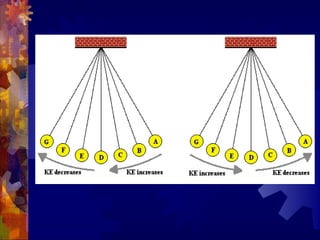
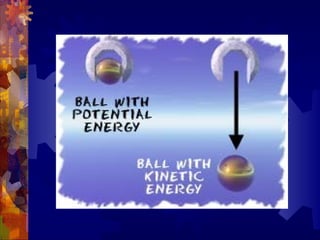
 If an object is moving, it has energy.
(Be careful, the converse of this
statement is not always true!)
 This energy is called kinetic energy -
the energy of motion.
Kinetic Energy
 An object’s kinetic energy depends on:
 the object’s mass.
 Kinetic energy is directly proportional to
mass.
 the object’s speed.
 Kinetic energy is directly proportional to
the square of the object’s speed.
Kinetic Energy
Kinetic energy is a scalar quantity.
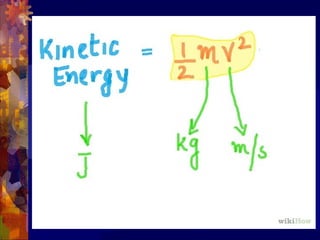
Common units of kinetic energy:
Joules
An object with mass of 1 kg, moving
at 1 m/s, has a kinetic energy of 0.5
Joule.
Thank You

Kinetic energy

  • 1.
    Welcome  Presented byAswathy K.  FMTC Pallimukku
  • 8.
    Kinetic Energy  Energypossessed by a body by virtue of its motion.
  • 9.
    Kinetic Energy  Ifan object is moving, it has energy. (Be careful, the converse of this statement is not always true!)  This energy is called kinetic energy - the energy of motion.
  • 11.
    Kinetic Energy  Anobject’s kinetic energy depends on:  the object’s mass.  Kinetic energy is directly proportional to mass.  the object’s speed.  Kinetic energy is directly proportional to the square of the object’s speed.
  • 12.
    Kinetic Energy Kinetic energyis a scalar quantity. Common units of kinetic energy: Joules An object with mass of 1 kg, moving at 1 m/s, has a kinetic energy of 0.5 Joule.
  • 13.