Denial
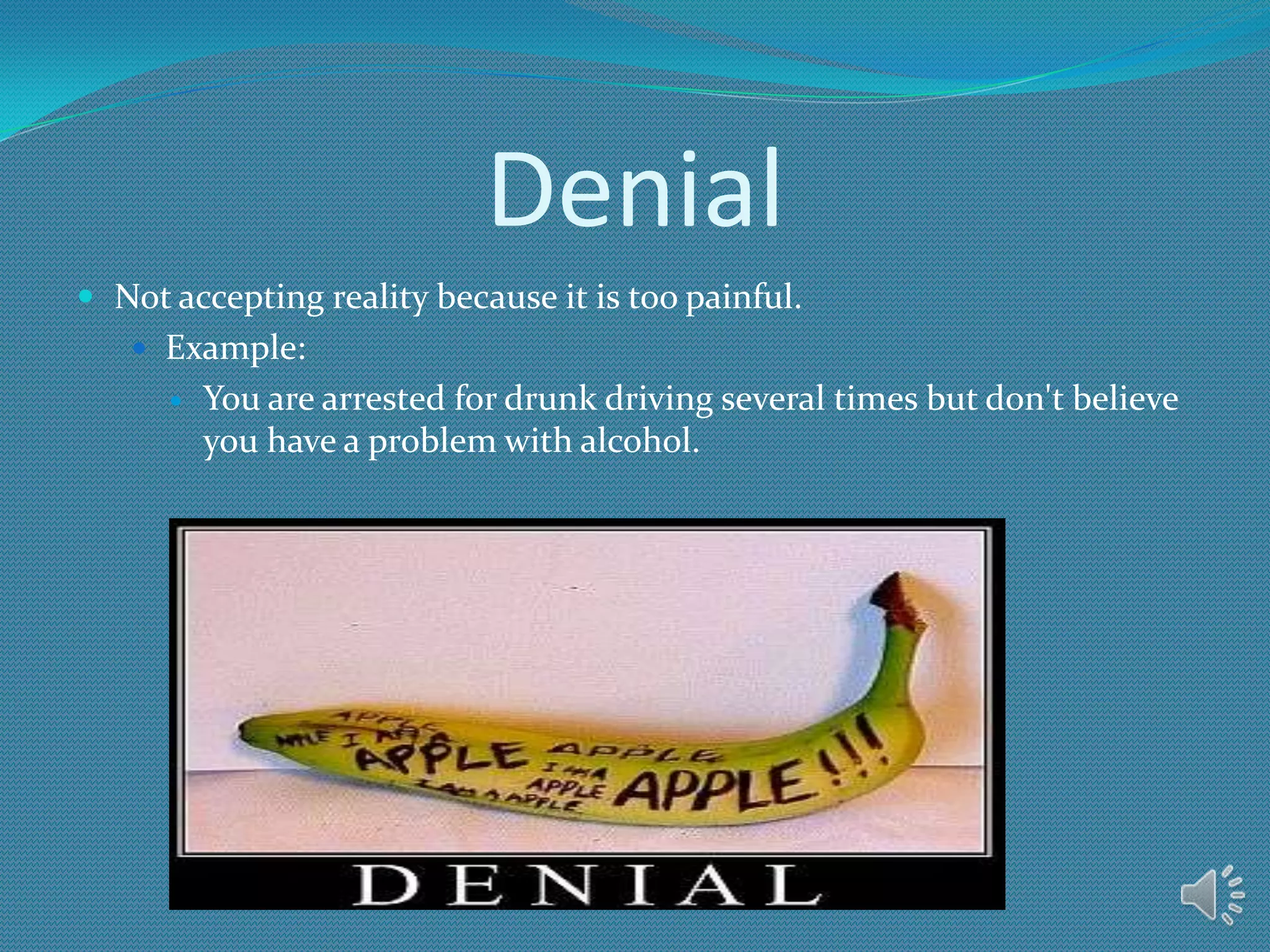
 Not accepting reality because it is too painful.
    Example:
         You are arrested for drunk driving several times but don't believe
          you have a problem with alcohol.
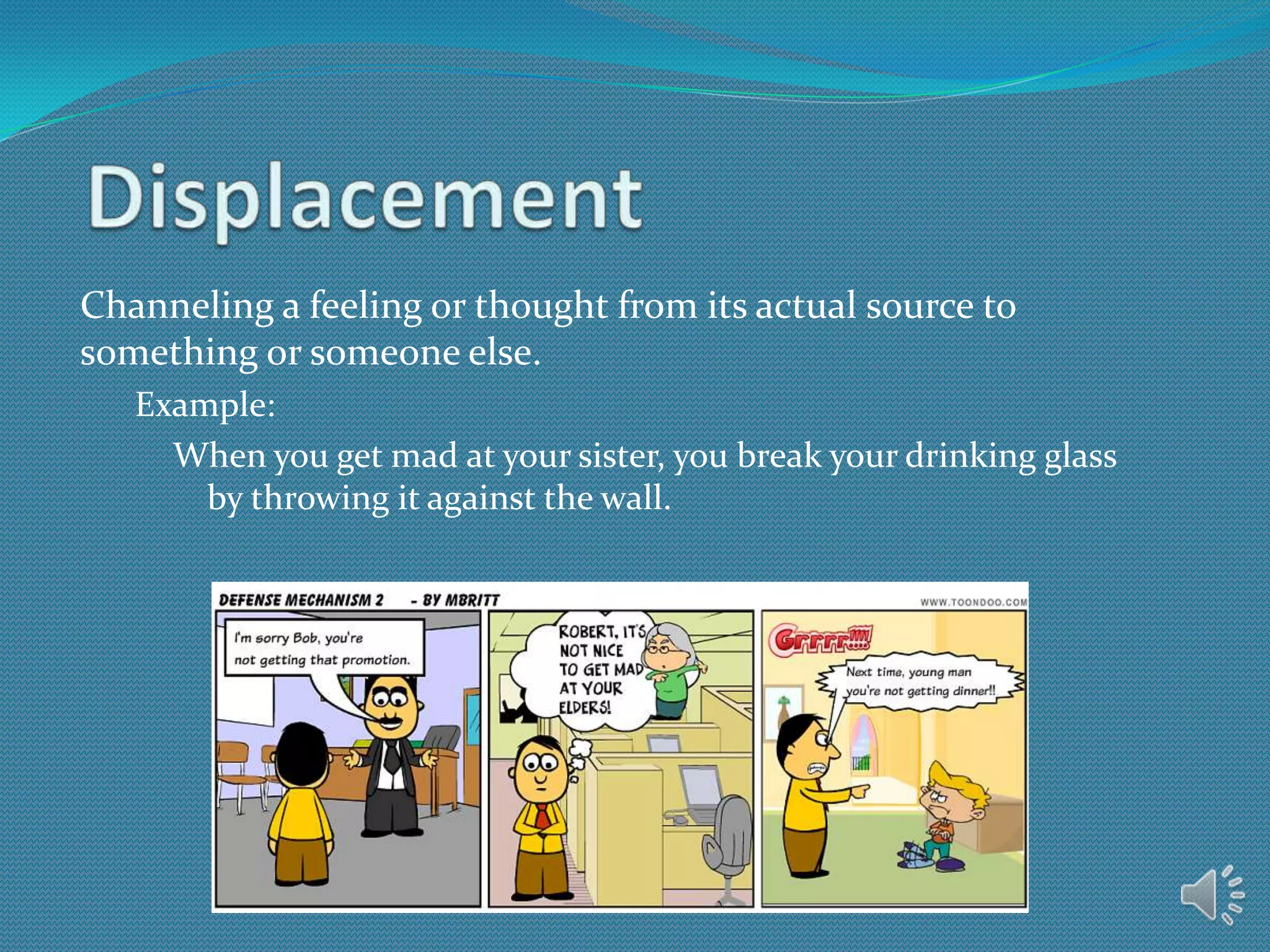
Channeling a feeling or thought from its actual source to
something or someone else.
   Example:
     When you get mad at your sister, you break your drinking glass
       by throwing it against the wall.
Projection
 Is the misattribution of a person’s undesired
 thoughts, feelings or impulses onto another person
 who does not have those thoughts, feelings or
 impulses.
   Example:
       a spouse may be angry at their significant other for not
        listening, when in fact it is the angry spouse who does not
        listen.
Rationalization
 Justifying one's behaviors and motivations by
 substituting "good", acceptable reasons for these real
 motivations .
   Example:
       I always study hard for tests and I know a lot of people who
        cheat so it's not a big deal I cheated this time.
Reaction Formation
 Is the converting of unwanted or dangerous
 thoughts, feelings or impulses into their opposites.
   Example:
       For instance, a woman who is very angry with her boss and
        would like to quit her job may instead be overly kind and
        generous toward her boss and express a desire to keep working
        there forever.
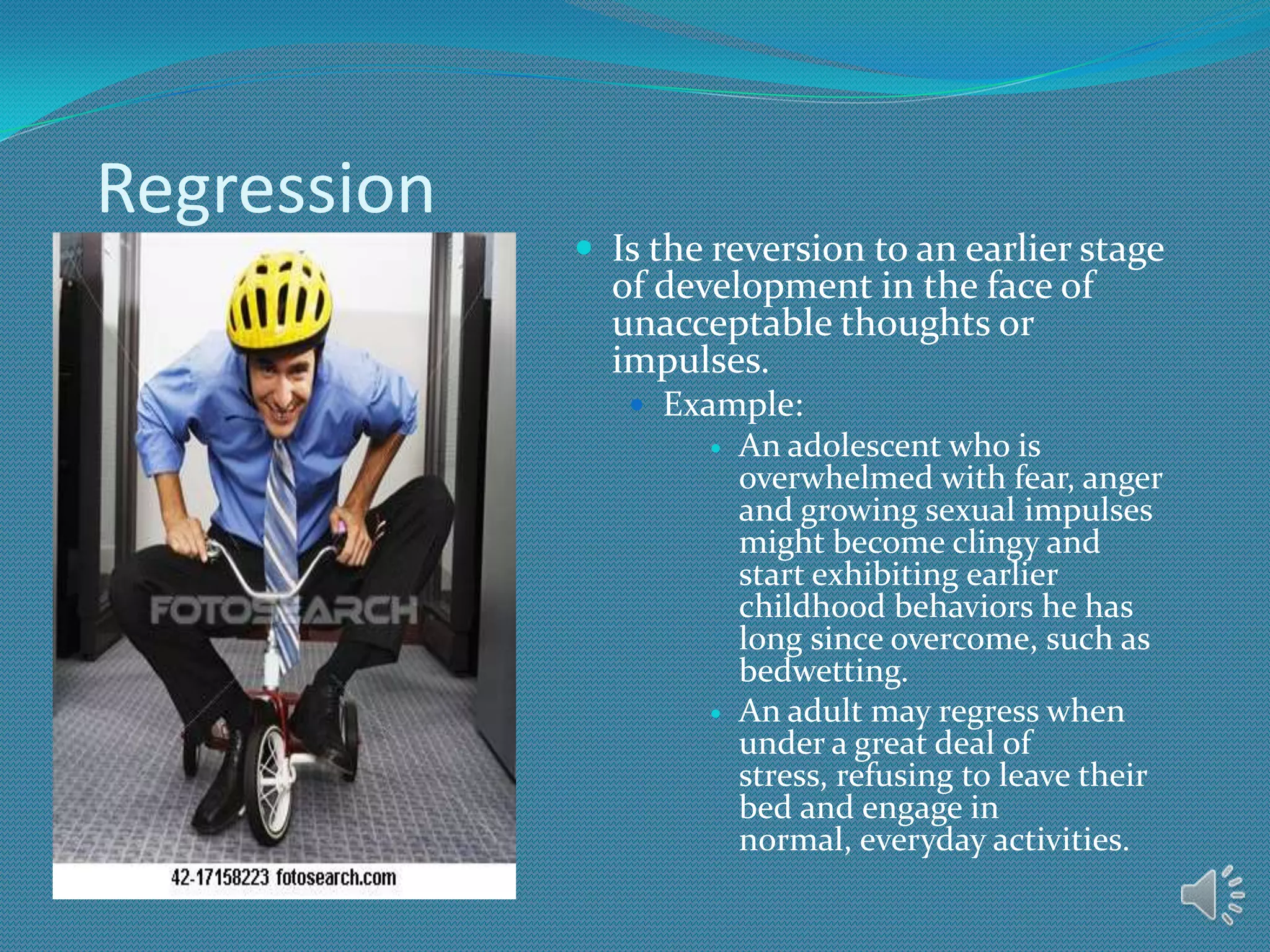
Regression
              Is the reversion to an earlier stage
               of development in the face of
               unacceptable thoughts or
               impulses.
                 Example:
                        An adolescent who is
                         overwhelmed with fear, anger
                         and growing sexual impulses
                         might become clingy and
                         start exhibiting earlier
                         childhood behaviors he has
                         long since overcome, such as
                         bedwetting.
                        An adult may regress when
                         under a great deal of
                         stress, refusing to leave their
                         bed and engage in
                         normal, everyday activities.
Repression
 Burying a painful feeling or
  thought from your awareness
  though it may resurface in
  symbolic form. Sometimes
  considered a basis of other
  defense mechanisms.
    Example:
        You can't remember your
         father's funeral.
Sublimation
 Redirecting unacceptable, instinctual drives into
 personally and socially acceptable channels.
   Example:
       Intense rage redirected in the form of participation in sports
        such as boxing or football
Work Cites
 http://www.utahpsych.org/defensemechanisms.ht
  m
 http://psychcentral.com/lib/2007/15-common-
  defense-mechanisms/all/1/

Freud’s defense mechanisms

  • 2.
    Denial  Not acceptingreality because it is too painful.  Example:  You are arrested for drunk driving several times but don't believe you have a problem with alcohol.
  • 3.
    Channeling a feelingor thought from its actual source to something or someone else. Example: When you get mad at your sister, you break your drinking glass by throwing it against the wall.
  • 4.
    Projection  Is themisattribution of a person’s undesired thoughts, feelings or impulses onto another person who does not have those thoughts, feelings or impulses.  Example:  a spouse may be angry at their significant other for not listening, when in fact it is the angry spouse who does not listen.
  • 5.
    Rationalization  Justifying one'sbehaviors and motivations by substituting "good", acceptable reasons for these real motivations .  Example:  I always study hard for tests and I know a lot of people who cheat so it's not a big deal I cheated this time.
  • 6.
    Reaction Formation  Isthe converting of unwanted or dangerous thoughts, feelings or impulses into their opposites.  Example:  For instance, a woman who is very angry with her boss and would like to quit her job may instead be overly kind and generous toward her boss and express a desire to keep working there forever.
  • 7.
    Regression  Is the reversion to an earlier stage of development in the face of unacceptable thoughts or impulses.  Example:  An adolescent who is overwhelmed with fear, anger and growing sexual impulses might become clingy and start exhibiting earlier childhood behaviors he has long since overcome, such as bedwetting.  An adult may regress when under a great deal of stress, refusing to leave their bed and engage in normal, everyday activities.
  • 8.
    Repression  Burying apainful feeling or thought from your awareness though it may resurface in symbolic form. Sometimes considered a basis of other defense mechanisms.  Example:  You can't remember your father's funeral.
  • 9.
    Sublimation  Redirecting unacceptable,instinctual drives into personally and socially acceptable channels.  Example:  Intense rage redirected in the form of participation in sports such as boxing or football
  • 10.
    Work Cites  http://www.utahpsych.org/defensemechanisms.ht m  http://psychcentral.com/lib/2007/15-common- defense-mechanisms/all/1/