French & Indian War Competing for an Empire
French & Indian War  Pre-assessment When did the French & Indian War begin? Explain the causes of the French & Indian War. What role did the area around Pittsburgh play in the war? List two groups involved in the war. What role did George Washington play in the war? List three major people involved in the war. Describe the effects the war had on North America.  In what year did the war end? Explain how the war played a role in causing the American Revolution.
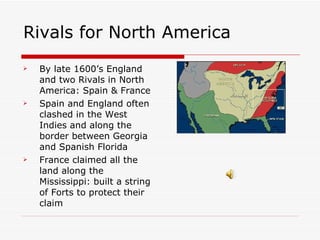
Rivals for North America By late 1600’s England and two Rivals in North America: Spain & France Spain and England often clashed in the West Indies and along the border between Georgia and Spanish Florida France claimed all the land along the Mississippi: built a string of Forts to protect their claim
The Balance of Power  French Advantages Single Government Could make quick decisions Many Indian allies Established forts in Ohio valley English Advantages Indian allies Strong Navy Colonial population 20 times greater Colonies were easier to defend
Native Americans Take Sides England English were farmers and usually ignored Indian rights Settlers expand into Indian lands Found allies among the Iroquois: enemies of the Algonquins Also won the help of Indians in Ohio Valley France Indians controlled fur trade French were fur trappers Expected the Indians to take their side Found allies among the Algonquins and Hurons
The Ohio Valley Why were the English and French interested in the Ohio Valley? Explain why Native Americans mostly sided with the French?
Drama at Fort Necessity Washington was sent to tell the French to leave and build a Fort to protect English claims Washington attacked a small French force (opening shots of the war)near Jumonville Glen Washington expecting a counter attack builds Fort Necessity A strong French & Indian force attacks, forcing Washington to surrender
The Defeat at Fort Necessity Why did Washington’s men attack the French at Jumonville Glen? Do you think it was a wise decision by Washington? Evaluate why Washington was defeated at Fort Necessity. What would you have done differently?
A Plan of Union Delegates from the English colonies met to discuss a plan proposed by  Ben Franklin  to work together against the French in Albany Plan called for a Grand Council with representatives from each colony Council would make laws, raise taxes and set up the defense of the colonies Delegates approved the plan but the colonial assemblies rejected it because they did not want to give up power
Warm-up  What role did George Washington play in the early events of the French & Indian War?
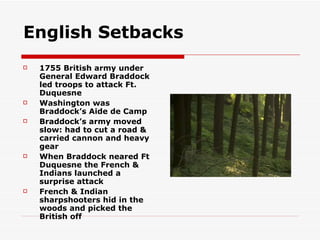
English Setbacks 1755 British army under General Edward Braddock led troops to attack Ft. Duquesne Washington was Braddock’s Aide de Camp Braddock’s army moved slow: had to cut a road & carried cannon and heavy gear When Braddock neared Ft Duquesne the French & Indians launched a surprise attack  French & Indian sharpshooters hid in the woods and picked the British off
 
Braddock’s Defeat Braddock had five horses shot out from under him before he fell mortally wounded Washington escaped without a wound Almost half of the British were killed or wounded Over the next two years the French won a string of victories
Braddock’s Defeat Explain how a much stronger force under General Braddock was easily defeated by a much smaller force. Describe what you believe were the bad decisions made by Braddock. What role did Washington play in the battle. Evaluate: Why did the British fight the way that they did in the battle?
Battle of Fort Oswego The Battle of Fort Oswego was one in a series of early French victories in the North America.  August 10, 1756, a force of French soldiers and Canadian militia under General Montcalm captured the British Fort Oswego. The fall of Fort Oswego interrupted American shipping on Lake Ontario. The battle showed that European siege tactics would work in North American.
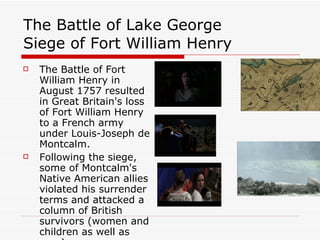
The Battle of Lake George  Siege of Fort William Henry The Battle of Fort William Henry in August 1757 resulted in Great Britain's loss of Fort William Henry to a French army under Louis-Joseph de Montcalm.  Following the siege, some of Montcalm's Native American allies violated his surrender terms and attacked a column of British survivors (women and children as well as men).
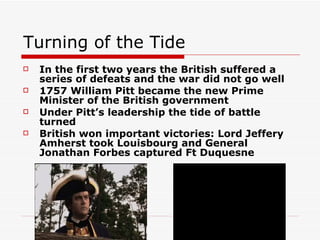
Turning of the Tide In the first two years the British suffered a series of defeats and the war did not go well 1757 William Pitt became the new Prime Minister of the British government Under Pitt’s leadership the tide of battle turned British won important victories: Lord Jeffery Amherst took Louisbourg and General Jonathan Forbes captured Ft Duquesne
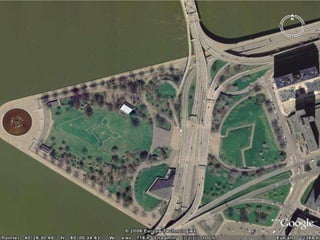
Fort Duquesne Finally Falls Sept 14, 1758 Advanced force of 800 British Defeated Fall of 1758 French abandon Fort Duquesne Forbes takes control of Fort Duquesne November 25 th  1758
Final Victory 1759 Pitt sent Gen. James Wolfe to attack Quebec the French Capital Quebec was well defended and sat atop a steep cliff Wolfe’s troops climbed the cliff at night During the Battle both the Marquis de Montcalm and Wolfe were killed The British won the Battle
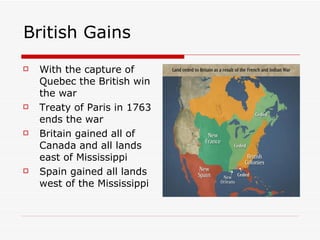
British Gains With the capture of Quebec the British win the war Treaty of Paris in 1763 ends the war Britain gained all of Canada and all lands east of Mississippi Spain gained all lands west of the Mississippi

French & indian war

  • 1.
    French & IndianWar Competing for an Empire
  • 2.
    French & IndianWar Pre-assessment When did the French & Indian War begin? Explain the causes of the French & Indian War. What role did the area around Pittsburgh play in the war? List two groups involved in the war. What role did George Washington play in the war? List three major people involved in the war. Describe the effects the war had on North America. In what year did the war end? Explain how the war played a role in causing the American Revolution.
  • 3.
    Rivals for NorthAmerica By late 1600’s England and two Rivals in North America: Spain & France Spain and England often clashed in the West Indies and along the border between Georgia and Spanish Florida France claimed all the land along the Mississippi: built a string of Forts to protect their claim
  • 4.
    The Balance ofPower French Advantages Single Government Could make quick decisions Many Indian allies Established forts in Ohio valley English Advantages Indian allies Strong Navy Colonial population 20 times greater Colonies were easier to defend
  • 5.
    Native Americans TakeSides England English were farmers and usually ignored Indian rights Settlers expand into Indian lands Found allies among the Iroquois: enemies of the Algonquins Also won the help of Indians in Ohio Valley France Indians controlled fur trade French were fur trappers Expected the Indians to take their side Found allies among the Algonquins and Hurons
  • 6.
    The Ohio ValleyWhy were the English and French interested in the Ohio Valley? Explain why Native Americans mostly sided with the French?
  • 7.
    Drama at FortNecessity Washington was sent to tell the French to leave and build a Fort to protect English claims Washington attacked a small French force (opening shots of the war)near Jumonville Glen Washington expecting a counter attack builds Fort Necessity A strong French & Indian force attacks, forcing Washington to surrender
  • 8.
    The Defeat atFort Necessity Why did Washington’s men attack the French at Jumonville Glen? Do you think it was a wise decision by Washington? Evaluate why Washington was defeated at Fort Necessity. What would you have done differently?
  • 9.
    A Plan ofUnion Delegates from the English colonies met to discuss a plan proposed by Ben Franklin to work together against the French in Albany Plan called for a Grand Council with representatives from each colony Council would make laws, raise taxes and set up the defense of the colonies Delegates approved the plan but the colonial assemblies rejected it because they did not want to give up power
  • 10.
    Warm-up Whatrole did George Washington play in the early events of the French & Indian War?
  • 11.
    English Setbacks 1755British army under General Edward Braddock led troops to attack Ft. Duquesne Washington was Braddock’s Aide de Camp Braddock’s army moved slow: had to cut a road & carried cannon and heavy gear When Braddock neared Ft Duquesne the French & Indians launched a surprise attack French & Indian sharpshooters hid in the woods and picked the British off
  • 12.
  • 13.
    Braddock’s Defeat Braddockhad five horses shot out from under him before he fell mortally wounded Washington escaped without a wound Almost half of the British were killed or wounded Over the next two years the French won a string of victories
  • 14.
    Braddock’s Defeat Explainhow a much stronger force under General Braddock was easily defeated by a much smaller force. Describe what you believe were the bad decisions made by Braddock. What role did Washington play in the battle. Evaluate: Why did the British fight the way that they did in the battle?
  • 15.
    Battle of FortOswego The Battle of Fort Oswego was one in a series of early French victories in the North America. August 10, 1756, a force of French soldiers and Canadian militia under General Montcalm captured the British Fort Oswego. The fall of Fort Oswego interrupted American shipping on Lake Ontario. The battle showed that European siege tactics would work in North American.
  • 16.
    The Battle ofLake George Siege of Fort William Henry The Battle of Fort William Henry in August 1757 resulted in Great Britain's loss of Fort William Henry to a French army under Louis-Joseph de Montcalm. Following the siege, some of Montcalm's Native American allies violated his surrender terms and attacked a column of British survivors (women and children as well as men).
  • 17.
    Turning of theTide In the first two years the British suffered a series of defeats and the war did not go well 1757 William Pitt became the new Prime Minister of the British government Under Pitt’s leadership the tide of battle turned British won important victories: Lord Jeffery Amherst took Louisbourg and General Jonathan Forbes captured Ft Duquesne
  • 18.
    Fort Duquesne FinallyFalls Sept 14, 1758 Advanced force of 800 British Defeated Fall of 1758 French abandon Fort Duquesne Forbes takes control of Fort Duquesne November 25 th 1758
  • 19.
    Final Victory 1759Pitt sent Gen. James Wolfe to attack Quebec the French Capital Quebec was well defended and sat atop a steep cliff Wolfe’s troops climbed the cliff at night During the Battle both the Marquis de Montcalm and Wolfe were killed The British won the Battle
  • 20.
    British Gains Withthe capture of Quebec the British win the war Treaty of Paris in 1763 ends the war Britain gained all of Canada and all lands east of Mississippi Spain gained all lands west of the Mississippi