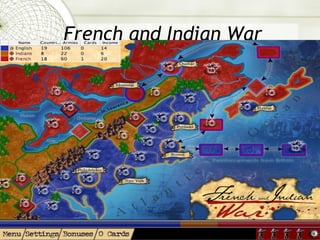
French and Indian War
Background France and Britain had fought THREE times between 1689 to 1748. Both the French and the British are exploring North America  Native American Alliances: French - Huron and Algonquin British - Iroquois
Conflict over the Ohio River Valley British fur traders moved into the Ohio River Valley in the 1750s French & Indians alarmed so they destroy Pickawillany Post Virginia Company is angered so they send a small group of farmers to tell the French to leave.
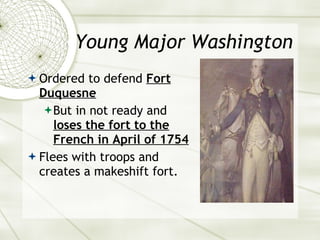
Young Major Washington Ordered to defend  Fort Duquesne But in not ready and  loses the fort to the French in April of 1754 Flees with troops and creates a makeshift fort.
Fort Necessity Fort Necessity  (makeshift fort) is attacked by the French on  July 3, 1754 George Washington is forced to surrender to the  French . The first shot of the War.
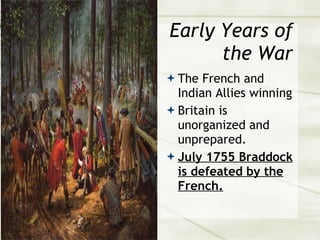
Early Years of the War The French and Indian Allies winning Britain is unorganized and unprepared. July 1755 Braddock is defeated by the French.
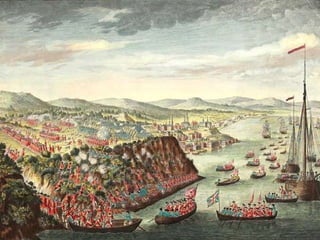
Battle of Quebec September of 1759 Surprise attack Climbed cliffs at night (300 feet above St. Lawrence River) Woolfe and 4,000 men  Quebec (FRENCH) surrenders to the British   TURNING POINT OF THE WAR
 
 
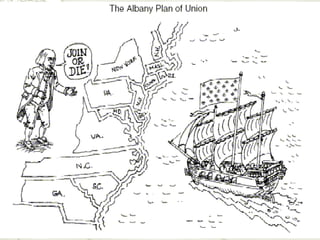
Franklin’s Idea Unite the colonies to fight the French ALBANY PLAN OF UNION Does not happen
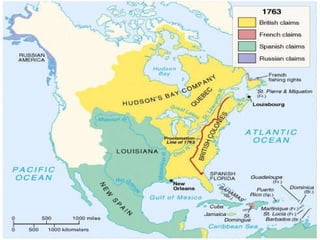
Treaty of Paris 1763 Ends French power in North America Britain gains: All of Canada and French lands east of Mississippi Spain Gives Florida to the British  Gets all French lands west of Mississippi Most importantly New Orlenas.
 
Pontiac’s Rebellion British took forts, and refused to give supplies to the Native Americans Native Americans respond by attacking settlers& destroying everything west of the Appalachians Mountains
Proclamation of 1763 British response to Pontiac’s rebellion Stated that no colonist could settle WEST of the Appalachians Mountains It was meant to support Native American Allies and protect colonists claims already made.

French and indian

  • 1.
  • 2.
    Background France andBritain had fought THREE times between 1689 to 1748. Both the French and the British are exploring North America Native American Alliances: French - Huron and Algonquin British - Iroquois
  • 3.
    Conflict over theOhio River Valley British fur traders moved into the Ohio River Valley in the 1750s French & Indians alarmed so they destroy Pickawillany Post Virginia Company is angered so they send a small group of farmers to tell the French to leave.
  • 4.
    Young Major WashingtonOrdered to defend Fort Duquesne But in not ready and loses the fort to the French in April of 1754 Flees with troops and creates a makeshift fort.
  • 5.
    Fort Necessity FortNecessity (makeshift fort) is attacked by the French on July 3, 1754 George Washington is forced to surrender to the French . The first shot of the War.
  • 6.
    Early Years ofthe War The French and Indian Allies winning Britain is unorganized and unprepared. July 1755 Braddock is defeated by the French.
  • 7.
    Battle of QuebecSeptember of 1759 Surprise attack Climbed cliffs at night (300 feet above St. Lawrence River) Woolfe and 4,000 men Quebec (FRENCH) surrenders to the British TURNING POINT OF THE WAR
  • 8.
  • 9.
  • 10.
    Franklin’s Idea Unitethe colonies to fight the French ALBANY PLAN OF UNION Does not happen
  • 11.
    Treaty of Paris1763 Ends French power in North America Britain gains: All of Canada and French lands east of Mississippi Spain Gives Florida to the British Gets all French lands west of Mississippi Most importantly New Orlenas.
  • 12.
  • 13.
    Pontiac’s Rebellion Britishtook forts, and refused to give supplies to the Native Americans Native Americans respond by attacking settlers& destroying everything west of the Appalachians Mountains
  • 14.
    Proclamation of 1763British response to Pontiac’s rebellion Stated that no colonist could settle WEST of the Appalachians Mountains It was meant to support Native American Allies and protect colonists claims already made.