(Stanford BUS-21)
Martin Westhead
Mastering Marketing
Free Case-Study: Ning
How to make money
by giving things away
Overview
 Ning history
 Monetization
 Analysis
- Successes
- Challenges
- Lessons
Disclaimer: My view only based on limited info…
HISTORY
Timeline
2004
- Founded 24hr Laundry
2005
- Launched platform to create social apps
2006
- Pivot to focus on 3 apps: Videos, Photos, Groups
2007
- Ning launched based on combining these apps
2009
- 1M social networks
2010
- 2M social networks
- Jason Rosenthal takes over as CEO
- Free -> subscribed
2011
- Bought by Mode Media (formerly Glam)
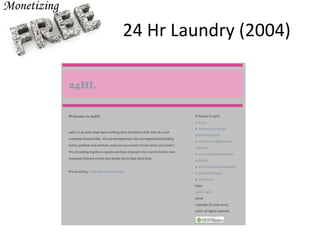
24 Hr Laundry (2004)
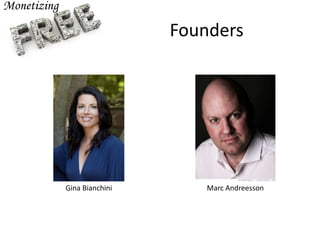
Founders
Gina Bianchini Marc Andreessen
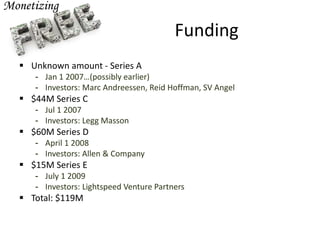
Funding
 Unknown amount - Series A
- Jan 1 2007…(possibly earlier)
- Investors: Marc Andreessen, Reid Hoffman, SV Angel
 $44M Series C
- Jul 1 2007
- Investors: Legg Masson
 $60M Series D
- April 1 2008
- Investors: Allen & Company
 $15M Series E
- July 1 2009
- Investors: Lightspeed Venture Partners
 Total: $119M
Platform for building
Social Apps
 Toolkit for building and hosting social network
applications
 Build your own Facebook, Linked-in, Myspace
 Underlying functionality
- User accounts
- Friends
- Blog posts and discussions
- Messages
- Photo, Video and music sharing
 Mix and match and add your own
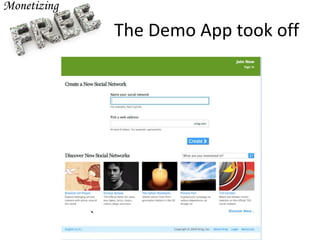
The Demo App took off
Pivot
 Hosting other people’s code is hard
- Poorly written code hard to control
 More interest in the application than in
developing
 After several years of not being a social
network company…
 Ning was born, a provider of social networks
Product turning points
 2007
- Ning launched
 2008
- Shut down API
- Ban Porn
 2009
- Ning as a hub
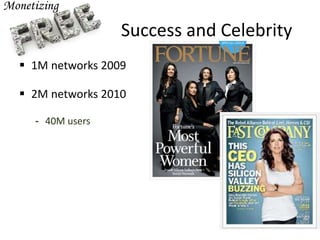
Success and Celebrity
 1M networks 2009
 2M networks 2010
- 40M users
New CEO
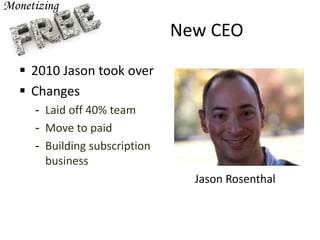
 2010 Jason took over
 Changes
- Laid off 40% team
- Move to paid
- Building subscription
business
Jason Rosenthal
Ning bought by Glam
Media
 Tech-crunch estimates they paid $150M
 Glam (now Mode) Media
- Advertizing
- Specializing in the long tail
- Potential monetization engine for Ning
 Ning 3.0
- Relaunch of subscription product
- Totally new user experience
MONETIZATION
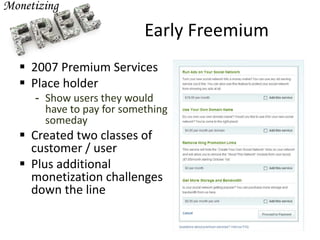
Early Freemium
 2007 Premium Services
 Place holder
- Show users they would
have to pay for something
someday
 Created two classes of
customer / user
 Plus additional
monetization challenges
down the line
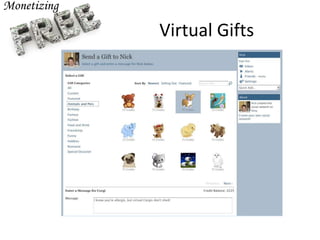
Virtual Gifts
Advertizing
THE SWITCH TO PAID
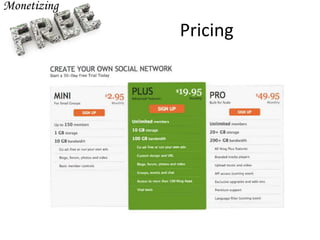
Pricing
Why Subscription?
 Ads
- Best inventory sold
- Hard to target the log tail
- Hard to identify brand-safe content
 Value conflict
- Free sites – maximize page views
- Paid sites – want control
 User generated content policing
- Costly and risky
How did the new model
fair?
 Only lost 15% of traffic
- Although millions of networks
 Careful management of customer
communications paid off
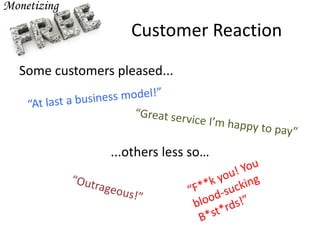
Customer Reaction
Some customers pleased...
...others less so…
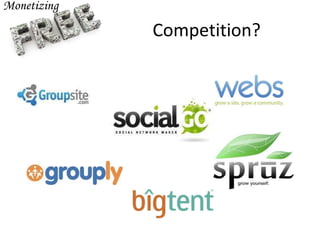
Competition?
ANALYSIS
Successes
 Successful product
- Rapid growth
- Diverse and fascinating use-cases
- People loved it
 Scale
- In the top 20 websites in the world
 Hot area
- Social networks
 $119M funding
Challenges
 Too many pivots
- Long-time users fatigued
- Flip-flopping on white label
 Limited cross-site network effects
- Each Ning was an island
- Tried to fix it but failed to find the right product
 Building communities is hard
- Not just a technology problem
- Needs an “abundance” approach
 Market perceptions changed
- Early on Social Networks were being discovered
- Today: Facebook + Twitter
- Harder to create mindshare foothold
Lessons – Scale isn’t
everything
Internet scale does not guarantee monetization
 Ning had scale, engagement and growth
 Still failed to succeed at Monetization
Lessons – Think Ahead
It pays to think about Monetization early
 Sold premium ad inventory
- Worth $1000’s per month
- For $19.99
 Hard to put the Genii back in the bottle
 Early paid networks include Marquee VIP
customers
Lessons - Pivots
You only have a small number of pivots – use them
wisely
 Hard to bring existing customers along
 Each pivot reduces user faith
 Bigger you are the harder the pivot
 Be lean
- Treat each model as an experiment
- Understand clear criteria for success
- Pivot early
- Fail fast
Lessons – Network Effects
Network effects
 Double viral loop
- Networks pull in users
- Who create networks
 However
- Unable to leverage cross site traffic
- Each site had to build its own following
- We needed something like the Tumblr model
Lessons – Two Customers
Paid and Free users in opposition
 Different user segments
 Different expectations
- White label
- Ownership
 Early premium offer created more problems
than value
Lesson – Customer
Expectations
Manage Customer Expectations
 Move from Free to Paid managed well
- Consultation with customer council
- Overall transparency
- Advanced notice
 Creation of Paid customer segment
- Created unreasonable expectations
- Charge was way too low
Summary
 Ning history
 Monetization
 Analysis
- Successes
- Challenges
- Lessons
Disclaimer: My view only based on limited info…

Free Business Models Use Case: Ning

  • 1.
    (Stanford BUS-21) Martin Westhead MasteringMarketing Free Case-Study: Ning How to make money by giving things away
  • 2.
    Overview  Ning history Monetization  Analysis - Successes - Challenges - Lessons Disclaimer: My view only based on limited info…
  • 3.
  • 4.
    Timeline 2004 - Founded 24hrLaundry 2005 - Launched platform to create social apps 2006 - Pivot to focus on 3 apps: Videos, Photos, Groups 2007 - Ning launched based on combining these apps 2009 - 1M social networks 2010 - 2M social networks - Jason Rosenthal takes over as CEO - Free -> subscribed 2011 - Bought by Mode Media (formerly Glam)
  • 5.
  • 6.
  • 7.
    Funding  Unknown amount- Series A - Jan 1 2007…(possibly earlier) - Investors: Marc Andreessen, Reid Hoffman, SV Angel  $44M Series C - Jul 1 2007 - Investors: Legg Masson  $60M Series D - April 1 2008 - Investors: Allen & Company  $15M Series E - July 1 2009 - Investors: Lightspeed Venture Partners  Total: $119M
  • 8.
    Platform for building SocialApps  Toolkit for building and hosting social network applications  Build your own Facebook, Linked-in, Myspace  Underlying functionality - User accounts - Friends - Blog posts and discussions - Messages - Photo, Video and music sharing  Mix and match and add your own
  • 9.
    The Demo Apptook off
  • 10.
    Pivot  Hosting otherpeople’s code is hard - Poorly written code hard to control  More interest in the application than in developing  After several years of not being a social network company…  Ning was born, a provider of social networks
  • 11.
    Product turning points 2007 - Ning launched  2008 - Shut down API - Ban Porn  2009 - Ning as a hub
  • 12.
    Success and Celebrity 1M networks 2009  2M networks 2010 - 40M users
  • 13.
    New CEO  2010Jason took over  Changes - Laid off 40% team - Move to paid - Building subscription business Jason Rosenthal
  • 14.
    Ning bought byGlam Media  Tech-crunch estimates they paid $150M  Glam (now Mode) Media - Advertizing - Specializing in the long tail - Potential monetization engine for Ning  Ning 3.0 - Relaunch of subscription product - Totally new user experience
  • 15.
  • 16.
    Early Freemium  2007Premium Services  Place holder - Show users they would have to pay for something someday  Created two classes of customer / user  Plus additional monetization challenges down the line
  • 17.
  • 18.
  • 19.
  • 20.
  • 21.
    Why Subscription?  Ads -Best inventory sold - Hard to target the log tail - Hard to identify brand-safe content  Value conflict - Free sites – maximize page views - Paid sites – want control  User generated content policing - Costly and risky
  • 22.
    How did thenew model fair?  Only lost 15% of traffic - Although millions of networks  Careful management of customer communications paid off
  • 23.
    Customer Reaction Some customerspleased... ...others less so…
  • 24.
  • 25.
  • 26.
    Successes  Successful product -Rapid growth - Diverse and fascinating use-cases - People loved it  Scale - In the top 20 websites in the world  Hot area - Social networks  $119M funding
  • 27.
    Challenges  Too manypivots - Long-time users fatigued - Flip-flopping on white label  Limited cross-site network effects - Each Ning was an island - Tried to fix it but failed to find the right product  Building communities is hard - Not just a technology problem - Needs an “abundance” approach  Market perceptions changed - Early on Social Networks were being discovered - Today: Facebook + Twitter - Harder to create mindshare foothold
  • 28.
    Lessons – Scaleisn’t everything Internet scale does not guarantee monetization  Ning had scale, engagement and growth  Still failed to succeed at Monetization
  • 29.
    Lessons – ThinkAhead It pays to think about Monetization early  Sold premium ad inventory - Worth $1000’s per month - For $19.99  Hard to put the Genii back in the bottle  Early paid networks include Marquee VIP customers
  • 30.
    Lessons - Pivots Youonly have a small number of pivots – use them wisely  Hard to bring existing customers along  Each pivot reduces user faith  Bigger you are the harder the pivot  Be lean - Treat each model as an experiment - Understand clear criteria for success - Pivot early - Fail fast
  • 31.
    Lessons – NetworkEffects Network effects  Double viral loop - Networks pull in users - Who create networks  However - Unable to leverage cross site traffic - Each site had to build its own following - We needed something like the Tumblr model
  • 32.
    Lessons – TwoCustomers Paid and Free users in opposition  Different user segments  Different expectations - White label - Ownership  Early premium offer created more problems than value
  • 33.
    Lesson – Customer Expectations ManageCustomer Expectations  Move from Free to Paid managed well - Consultation with customer council - Overall transparency - Advanced notice  Creation of Paid customer segment - Created unreasonable expectations - Charge was way too low
  • 34.
    Summary  Ning history Monetization  Analysis - Successes - Challenges - Lessons Disclaimer: My view only based on limited info…