UCD 2015 October 2015
Framing and Blending to
Create Great Things
Mary Piontkowski
@maryp
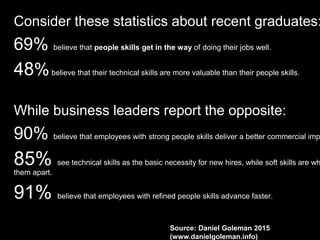
Consider these statistics about recent graduates:
69% believe that people skills get in the way of doing their jobs well.
48%believe that their technical skills are more valuable than their people skills.
While business leaders report the opposite:
90% believe that employees with strong people skills deliver a better commercial imp
85% see technical skills as the basic necessity for new hires, while soft skills are wh
them apart.
91% believe that employees with refined people skills advance faster.
Source: Daniel Goleman 2015
(www.danielgoleman.info)
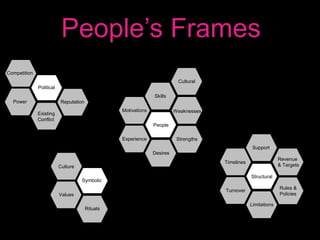
People’s Frames
Political
Reputation
Existing
Conflict
Power
Competition
Support
Timelines
Revenue
& Targets
Structural
Rules &
Policies
Turnover
Limitations
Skills
Motivations Weaknesses
People
StrengthsExperience
Desires
Cultural
Symbolic
Rituals
Values
Culture
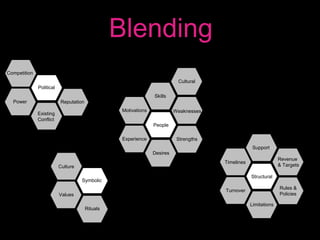
Blending
Political
Reputation
Existing
Conflict
Power
Competition
Support
Timelines
Revenue
& Targets
Structural
Rules &
Policies
Turnover
Limitations
Symbolic
Rituals
Values
Culture
Skills
Motivations Weaknesses
People
StrengthsExperience
Desires
Cultural
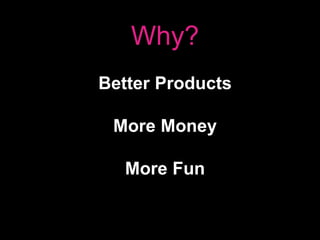
Why?
Better Products
More Money
More Fun
Consider This
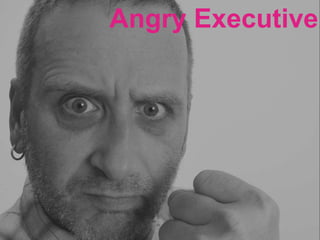
Angry Executive
Evil Client
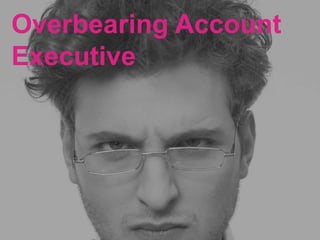
Overbearing Account
Executive
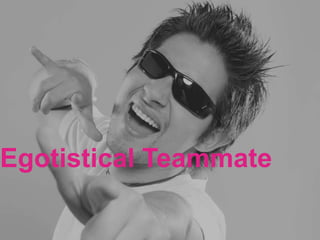
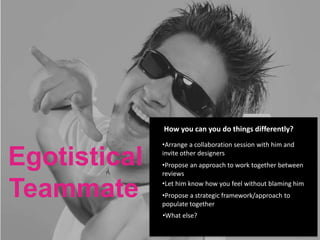
Egotistical Teammate
You
You
Stop.
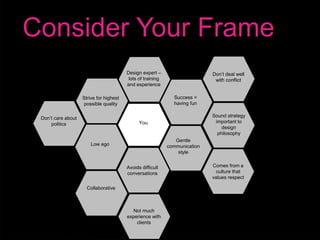
Consider Your Frame
Don’t care about
politics
Success =
having fun
You
Gentle
communication
style
Low ego
Avoids difficult
conversations
Strive for highest
possible quality
Design expert –
lots of training
and experience
Collaborative
Not much
experience with
clients
Sound strategy
important to
design
philosophy
Don’t deal well
with conflict
Comes from a
culture that
values respect
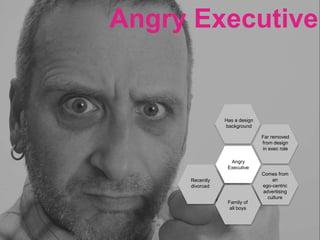
Angry Executive
Has a design
background
Far removed
from design
in exec role
Angry
Executive
Comes from
an
ego-centric
advertising
culture
Recently
divorced
Family of
all boys
Angry Executive
Has a design
background
Far removed
from design
in exec role
Angry
Executive
Comes from
an
ego-centric
advertising
culture
Recently
divorced
Family of
all boys
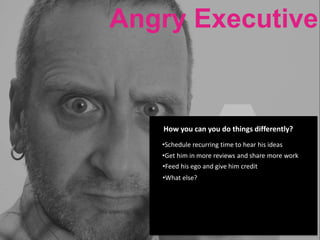
How you can you do things differently?
•Schedule recurring time to hear his ideas
•Get him in more reviews and share more work
•Feed his ego and give him credit
•What else?
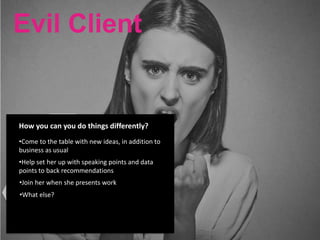
Evil Client
Her success
is measured
by her boss/
perception of
agency’s
work Little digital
experience
Evil Client
She is most
appreciated
when she
brings new
ideas to the
table
Has few
trusted
peers at
work
Was fired
from her
last job
Evil Client
Her success
is measured
by her boss/
perception of
agency’s
work Little digital
experience
Evil Client
She is most
appreciated
when she
brings new
ideas to the
table
Has few
trusted
peers at
work
Was fired
from her
last job
How you can you do things differently?
•Come to the table with new ideas, in addition to
business as usual
•Help set her up with speaking points and data
points to back recommendations
•Join her when she presents work
•What else?
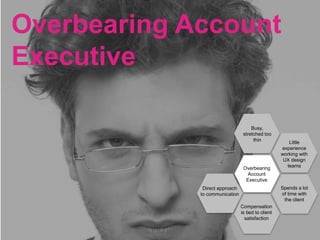
Overbearing Account
Executive
Busy,
stretched too
thin
Little
experience
working with
UX design
teamsOverbearing
Account
Executive
Spends a lot
of time with
the client
Direct approach
to communication
Compensation
is tied to client
satisfaction
Overbearing Account
Executive
Busy,
stretched too
thin
Little
experience
working with
UX design
teamsOverbearing
Account
Executive
Spends a lot
of time with
the client
Direct approach
to communication
Compensation
is tied to client
satisfaction
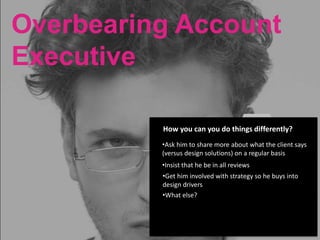
How you can you do things differently?
•Ask him to share more about what the client says
(versus design solutions) on a regular basis
•Insist that he be in all reviews
•Get him involved with strategy so he buys into
design drivers
•What else?
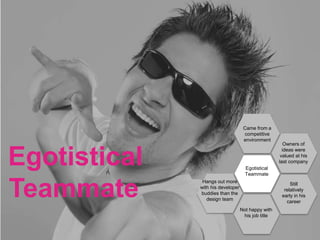
Egotistical
Came from a
competitive
environment
Egotistical
Teammate
Still
relatively
early in his
career
Hangs out more
with his developer
buddies than the
design team
Not happy with
his job title
Owners of
ideas were
valued at his
last company
Teammate
Egotistical
Came from a
competitive
environment
Egotistical
Teammate
Still
relatively
early in his
career
Hangs out more
with his developer
buddies than the
design team
Not happy with
his job title
Owners of
ideas were
valued at his
last company
Teammate
How you can you do things differently?
•Arrange a collaboration session with him and
invite other designers
•Propose a strategic framework/approach to
populate together
•Propose an approach to work together between
reviews
•What else?
•Let him know how you feel without blaming him
Take Time to Build
Relationships
To help understand people’s
frames
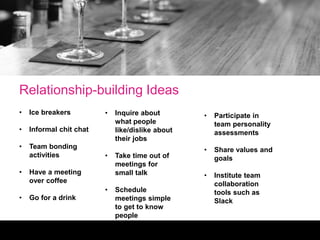
• Ice breakers
• Informal chit chat
• Team bonding
activities
• Have a meeting
over coffee
• Go for a drink
Determine whether the project objectives have been met
SPARK INITIATE IDEATE BUILD COMPLETEComplete
Relationship-building Ideas
• Inquire about
what people
like/dislike about
their jobs
• Take time out of
meetings for
small talk
• Schedule
meetings simple
to get to know
people
• Participate in
team personality
assessments
• Share values and
goals
• Institute team
collaboration
tools such as
Slack
Let’s Practise!
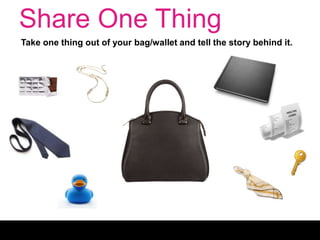
Share One Thing
Take one thing out of your bag/wallet and tell the story behind it.
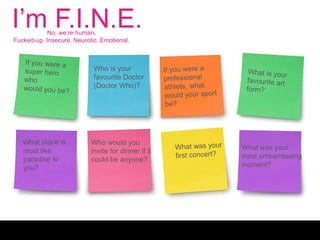
I’m F.I.N.E.No, we’re human.
Fucked-up. Insecure. Neurotic. Emotional.
Who is your
favourite Doctor
(Doctor Who)?
What was your
most embarrassing
moment?
Who would you
invite for dinner if it
could be anyone?
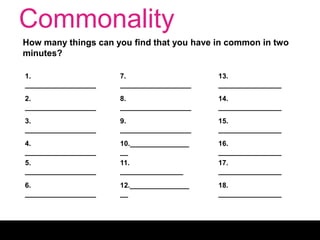
Commonality
How many things can you find that you have in common in two
minutes?
1.
__________________
2.
__________________
3.
__________________
4.
__________________
5.
__________________
6.
__________________
7.
__________________
8.
__________________
9.
__________________
10._______________
__
11.
________________
12._______________
__
13.
________________
14.
________________
15.
________________
16.
________________
17.
________________
18.
________________
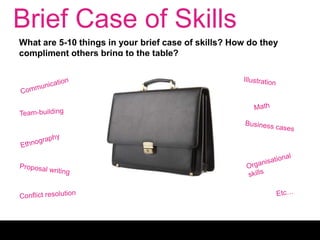
Brief Case of Skills
What are 5-10 things in your brief case of skills? How do they
compliment others bring to the table?
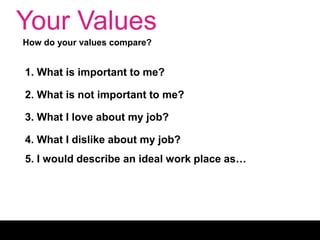
Your Values
1. What is important to me?
2. What is not important to me?
3. What I love about my job?
4. What I dislike about my job?
5. I would describe an ideal work place as…
How do your values compare?
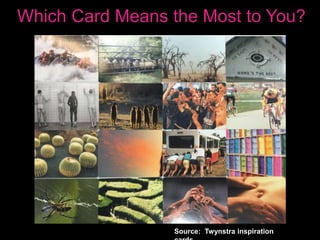
Which Card Means the Most to You?
Source: Twynstra inspiration
Express Draw
Draw (then share) a thing that makes you happy.
Remember to Consider
Your Frame
How Are YOU
Perceived?1. How do you think people perceive you?
2. What do like about that? What don’t you like?
3. Can you share things about yourself to influence
those perceptions?
4. What new experiences can change your frame for the
positive?
Interesting Reads
Articles
 Collaborating with Creative Peers https://hbr.org/2015/10/collaborating-with-creative-peers
 Daniel Goleman, Help Your Young Talent Develop a Professional Mindset http://www.danielgoleman.info/daniel-goleman-
help-young-talent-develop-a-professional-mindset/
 Office Politics Isn’t Something You Can Sit Out Of https://hbr.org/2015/01/office-politics-isnt-something-you-can-sit-out
 How to Build the Social Ties You Need at Work https://hbr.org/2015/09/how-to-build-the-social-ties-you-need-at-work
 Recruiting for Cultural Fit https://hbr.org/2015/07/recruiting-for-cultural-fit
 Does IQ beat EQ? Wrong Question. http://www.6seconds.org/2014/10/16/emotional-intelligence-overrated/
 CareerBliss Culture Corner: Zappos Defines the Wow Factor at Work http://www.careerbliss.com/blog/culture-profile-zappos-
defines-the-wow-factor-at-work/
 Make Your Enemies Your Allies https://hbr.org/2012/05/make-your-enemies-your-allies?cm_sp=Topics-_-Links-_-
Read%20These%20First
 Why We Fight at Work https://hbr.org/2014/06/why-we-fight-at-work?cm_sp=Topics-_-Links-_-Read%20These%20First
Books
 How Great Leaders Think, The Art of Reframing, Lee G. Bolman and Terrence E.Deal
 Emotional Intelligence -- Why it can Matter More than IQ, Daniel Goleman
 The Big Book of Team Building Games, John W. Newstromand Edward E Scannell
Thank You
mary@piontkowski.net
t:@maryp

Framing and Blending to Create Great Things

  • 1.
    UCD 2015 October2015 Framing and Blending to Create Great Things Mary Piontkowski @maryp
  • 2.
    Consider these statisticsabout recent graduates: 69% believe that people skills get in the way of doing their jobs well. 48%believe that their technical skills are more valuable than their people skills. While business leaders report the opposite: 90% believe that employees with strong people skills deliver a better commercial imp 85% see technical skills as the basic necessity for new hires, while soft skills are wh them apart. 91% believe that employees with refined people skills advance faster. Source: Daniel Goleman 2015 (www.danielgoleman.info)
  • 3.
    People’s Frames Political Reputation Existing Conflict Power Competition Support Timelines Revenue & Targets Structural Rules& Policies Turnover Limitations Skills Motivations Weaknesses People StrengthsExperience Desires Cultural Symbolic Rituals Values Culture
  • 4.
  • 5.
  • 6.
  • 7.
  • 8.
  • 9.
  • 10.
  • 11.
  • 13.
  • 14.
    Consider Your Frame Don’tcare about politics Success = having fun You Gentle communication style Low ego Avoids difficult conversations Strive for highest possible quality Design expert – lots of training and experience Collaborative Not much experience with clients Sound strategy important to design philosophy Don’t deal well with conflict Comes from a culture that values respect
  • 15.
    Angry Executive Has adesign background Far removed from design in exec role Angry Executive Comes from an ego-centric advertising culture Recently divorced Family of all boys
  • 16.
    Angry Executive Has adesign background Far removed from design in exec role Angry Executive Comes from an ego-centric advertising culture Recently divorced Family of all boys How you can you do things differently? •Schedule recurring time to hear his ideas •Get him in more reviews and share more work •Feed his ego and give him credit •What else?
  • 17.
    Evil Client Her success ismeasured by her boss/ perception of agency’s work Little digital experience Evil Client She is most appreciated when she brings new ideas to the table Has few trusted peers at work Was fired from her last job
  • 18.
    Evil Client Her success ismeasured by her boss/ perception of agency’s work Little digital experience Evil Client She is most appreciated when she brings new ideas to the table Has few trusted peers at work Was fired from her last job How you can you do things differently? •Come to the table with new ideas, in addition to business as usual •Help set her up with speaking points and data points to back recommendations •Join her when she presents work •What else?
  • 19.
    Overbearing Account Executive Busy, stretched too thin Little experience workingwith UX design teamsOverbearing Account Executive Spends a lot of time with the client Direct approach to communication Compensation is tied to client satisfaction
  • 20.
    Overbearing Account Executive Busy, stretched too thin Little experience workingwith UX design teamsOverbearing Account Executive Spends a lot of time with the client Direct approach to communication Compensation is tied to client satisfaction How you can you do things differently? •Ask him to share more about what the client says (versus design solutions) on a regular basis •Insist that he be in all reviews •Get him involved with strategy so he buys into design drivers •What else?
  • 21.
    Egotistical Came from a competitive environment Egotistical Teammate Still relatively earlyin his career Hangs out more with his developer buddies than the design team Not happy with his job title Owners of ideas were valued at his last company Teammate
  • 22.
    Egotistical Came from a competitive environment Egotistical Teammate Still relatively earlyin his career Hangs out more with his developer buddies than the design team Not happy with his job title Owners of ideas were valued at his last company Teammate How you can you do things differently? •Arrange a collaboration session with him and invite other designers •Propose a strategic framework/approach to populate together •Propose an approach to work together between reviews •What else? •Let him know how you feel without blaming him
  • 23.
    Take Time toBuild Relationships To help understand people’s frames
  • 24.
    • Ice breakers •Informal chit chat • Team bonding activities • Have a meeting over coffee • Go for a drink Determine whether the project objectives have been met SPARK INITIATE IDEATE BUILD COMPLETEComplete Relationship-building Ideas • Inquire about what people like/dislike about their jobs • Take time out of meetings for small talk • Schedule meetings simple to get to know people • Participate in team personality assessments • Share values and goals • Institute team collaboration tools such as Slack
  • 25.
  • 26.
    Share One Thing Takeone thing out of your bag/wallet and tell the story behind it.
  • 27.
    I’m F.I.N.E.No, we’rehuman. Fucked-up. Insecure. Neurotic. Emotional. Who is your favourite Doctor (Doctor Who)? What was your most embarrassing moment? Who would you invite for dinner if it could be anyone?
  • 28.
    Commonality How many thingscan you find that you have in common in two minutes? 1. __________________ 2. __________________ 3. __________________ 4. __________________ 5. __________________ 6. __________________ 7. __________________ 8. __________________ 9. __________________ 10._______________ __ 11. ________________ 12._______________ __ 13. ________________ 14. ________________ 15. ________________ 16. ________________ 17. ________________ 18. ________________
  • 29.
    Brief Case ofSkills What are 5-10 things in your brief case of skills? How do they compliment others bring to the table?
  • 30.
    Your Values 1. Whatis important to me? 2. What is not important to me? 3. What I love about my job? 4. What I dislike about my job? 5. I would describe an ideal work place as… How do your values compare?
  • 31.
    Which Card Meansthe Most to You? Source: Twynstra inspiration
  • 32.
    Express Draw Draw (thenshare) a thing that makes you happy.
  • 33.
  • 34.
    How Are YOU Perceived?1.How do you think people perceive you? 2. What do like about that? What don’t you like? 3. Can you share things about yourself to influence those perceptions? 4. What new experiences can change your frame for the positive?
  • 35.
    Interesting Reads Articles  Collaboratingwith Creative Peers https://hbr.org/2015/10/collaborating-with-creative-peers  Daniel Goleman, Help Your Young Talent Develop a Professional Mindset http://www.danielgoleman.info/daniel-goleman- help-young-talent-develop-a-professional-mindset/  Office Politics Isn’t Something You Can Sit Out Of https://hbr.org/2015/01/office-politics-isnt-something-you-can-sit-out  How to Build the Social Ties You Need at Work https://hbr.org/2015/09/how-to-build-the-social-ties-you-need-at-work  Recruiting for Cultural Fit https://hbr.org/2015/07/recruiting-for-cultural-fit  Does IQ beat EQ? Wrong Question. http://www.6seconds.org/2014/10/16/emotional-intelligence-overrated/  CareerBliss Culture Corner: Zappos Defines the Wow Factor at Work http://www.careerbliss.com/blog/culture-profile-zappos- defines-the-wow-factor-at-work/  Make Your Enemies Your Allies https://hbr.org/2012/05/make-your-enemies-your-allies?cm_sp=Topics-_-Links-_- Read%20These%20First  Why We Fight at Work https://hbr.org/2014/06/why-we-fight-at-work?cm_sp=Topics-_-Links-_-Read%20These%20First Books  How Great Leaders Think, The Art of Reframing, Lee G. Bolman and Terrence E.Deal  Emotional Intelligence -- Why it can Matter More than IQ, Daniel Goleman  The Big Book of Team Building Games, John W. Newstromand Edward E Scannell
  • 36.

Editor's Notes

  • #2 This talk is about reminding everyone to TAKING TIME to get to know and continually keep in mind the people you work with. We spend time observing, interviewing, analyzing the customers/users of the products and services we designing? Why is it so hard to take a few minutes to have a chat with our co-workers, to schedule coffee, to bond with our teams and clients?
  • #4 Consider your frame – what’s important to you and what you are trying to achieve, and consider how the other people’s frames either help or hinder your goals. It takes a team to make great things. Blending your frame with other people’s frames can help you work together effectively.
  • #11 http://www.istockphoto.com/photo/angry-young-businessman-in-glasses-61249544?st=8fd4630
  • #14 They aren’t that bad, they have to have some redeeming qualities, you need to work together to get things done. Take the time Start off on the right foot but breaking the ice in meetings, team building and communication exercises, Cross disciplinary teams – value exercises (together or just to guide you) Take time for intro meetings, go to lunch, ask people what drives them? Take time out for these things. Exercise: Photo cards What do I like most and least about my job? Ongoing coffee Team meetings and brown bags 1:1s Ongoing team building off on the right foot but breaking the ice in meetings, team building and communication exercises, Cross disciplinary teams – value exercises (together or just to guide you) Take time for intro meetings, go to lunch, ask people what drives them? Take time out for these things. Exercise: Fine cards, self disclosure introductions Scenario: You have a new boss or client. He calls a meeting and shares New client: Two teams
  • #16 http://www.istockphoto.com/photo/upset-customer-1682968?st=a680ad5 Scenario: Your goal: The best design possible within the time and budget constraints Problem #1: The angry VP: screams at people, gets upset easily when reviewing designs Is he seeing stuff too late? Does he need to be a part of the design process? Does he have information that the team should have earlier? Is his job on the line? Are targets being met? What is his history? What have his managers been like? Would he be having personal issues? Problem #2: The evil, controlling client: plays favorites, dislikes multiple people on the team, runs to the angry guy VP to tell on team members What motivates the client? What are the strengths and weaknesses on her team? What is the political environment? How is her success measured? What does this project mean for her? What are her past successes and failures? How does she experience communication with the team? What are her communication channels? What types of things does she value? How does that conflict with with the team members’ values? Problem #3: The account manager is unresponsive, condescending, and downright rude. What are his relationships like? What do you know about his past experiences? Is he doing the job he would like to be doing? Is his position valued? Is he underpaid? Does he have the support to do his job? Does he take the time to better understand the client’s needs, motivation, frame, et?
  • #17 http://www.istockphoto.com/photo/upset-customer-1682968?st=a680ad5 Scenario: Your goal: The best design possible within the time and budget constraints Problem #1: The angry VP: screams at people, gets upset easily when reviewing designs Is he seeing stuff too late? Does he need to be a part of the design process? Does he have information that the team should have earlier? Is his job on the line? Are targets being met? What is his history? What have his managers been like? Would he be having personal issues? Problem #2: The evil, controlling client: plays favorites, dislikes multiple people on the team, runs to the angry guy VP to tell on team members What motivates the client? What are the strengths and weaknesses on her team? What is the political environment? How is her success measured? What does this project mean for her? What are her past successes and failures? How does she experience communication with the team? What are her communication channels? What types of things does she value? How does that conflict with with the team members’ values? Problem #3: The account manager is unresponsive, condescending, and downright rude. What are his relationships like? What do you know about his past experiences? Is he doing the job he would like to be doing? Is his position valued? Is he underpaid? Does he have the support to do his job? Does he take the time to better understand the client’s needs, motivation, frame, et?
  • #28 This is about getting beyond the basic: “How are you?” “I’m fine.” We’re not fine, we’re human. We’re F.I.N.E.
  • #31 ICE BREAKERS Fine cards Self disclosure introductions INTO MEETINGS Share your vision/frame Ask about motivations What is important to me: What is not important to me: What I love about my job: What I dislike about my job: An ideal work place would be like this:
  • #32 ICE BREAKERS Fine cards Self disclosure introductions INTO MEETINGS Share your vision/frame Ask about motivations
  • #34 What are your values? How do those align with the people around you? How can you help others understand where you are coming from and what is important to you? Exercise: value sheet (add personality assessment?) What is important to me: What is not important to me: What I love about my job: What I dislike about my job: An ideal work place would be like this: IN THE EXAMPLE, WHAT IS IT ABOUT YOU AND YOUR VALUES AND MOTIVATIONS THAT CAUSED YOU TO FIND THEM ANNOYING, EVIL, AND INCOMPETENT?