



ICD-10-CM and ICD-10-PCS
     Fracture Coding
     Char Gore, RHIA, CCS
   Kim Lee, RHIA, CCS-P, CPC
Terminology Review
Abbreviations - General

•   CC = chief complaint
•   DS = discharge summary
•   DX = diagnosis
•   H&P = history and physical
•   PE = physical exam
•   PMH = past medical history
•   ROS = review of systems
Abbreviations - Orthopedic
•   FX = fracture
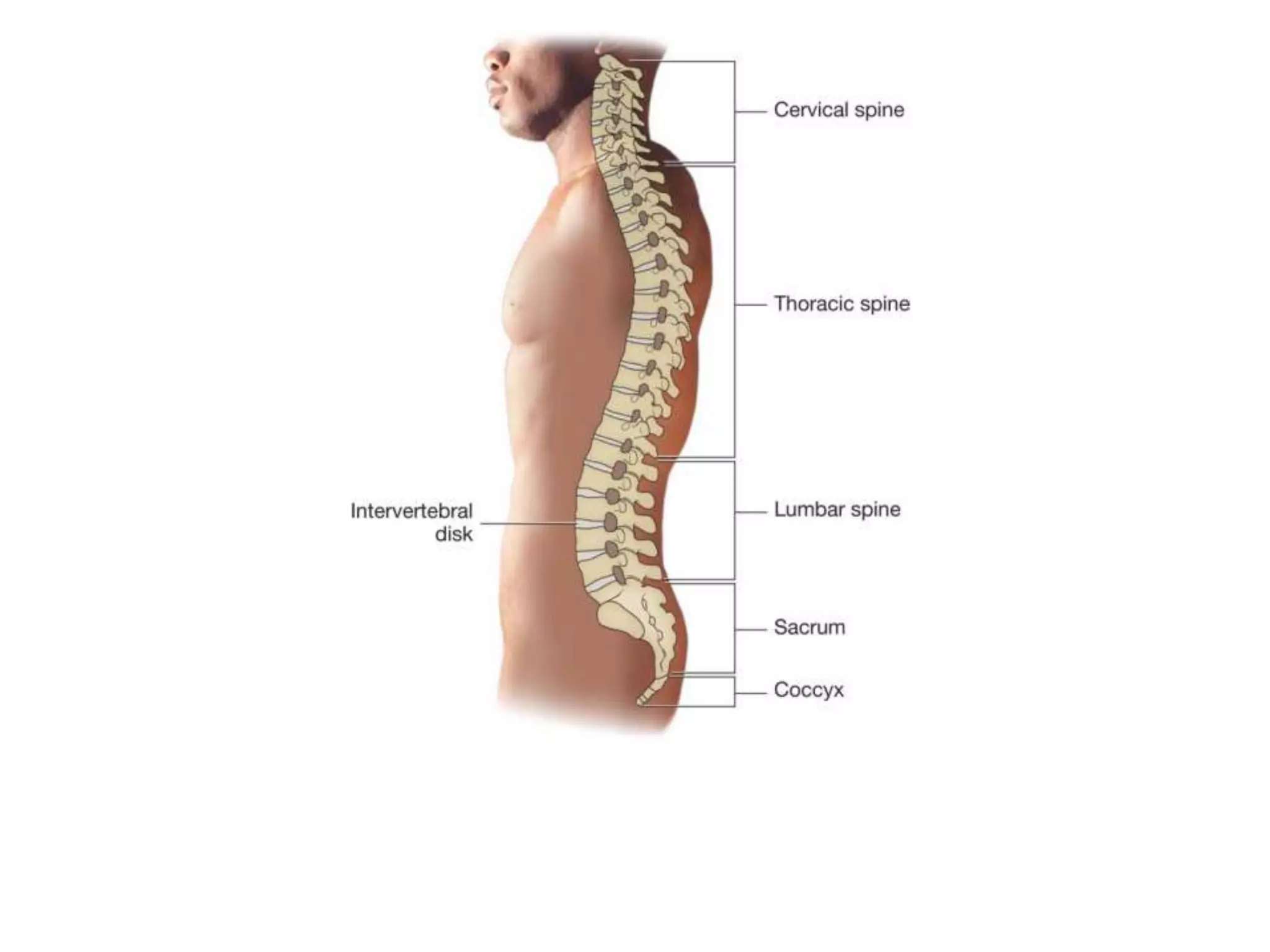
•   C1-C7 = cervical vertebrae
•   DIP = distal interphalangeal (joint)
•   L1-L5 = lumbar vertebrae
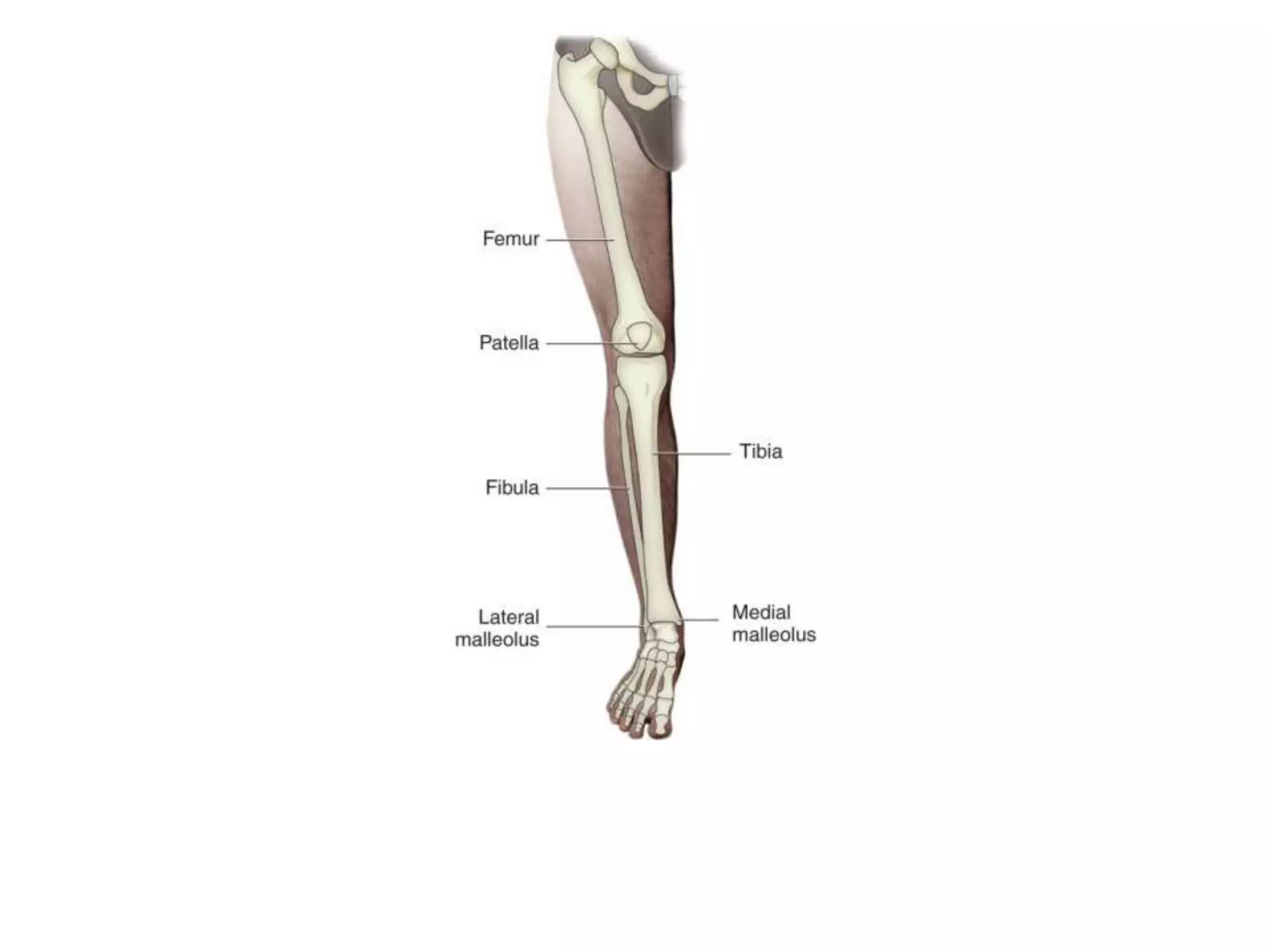
•   LLE = left lower extremity
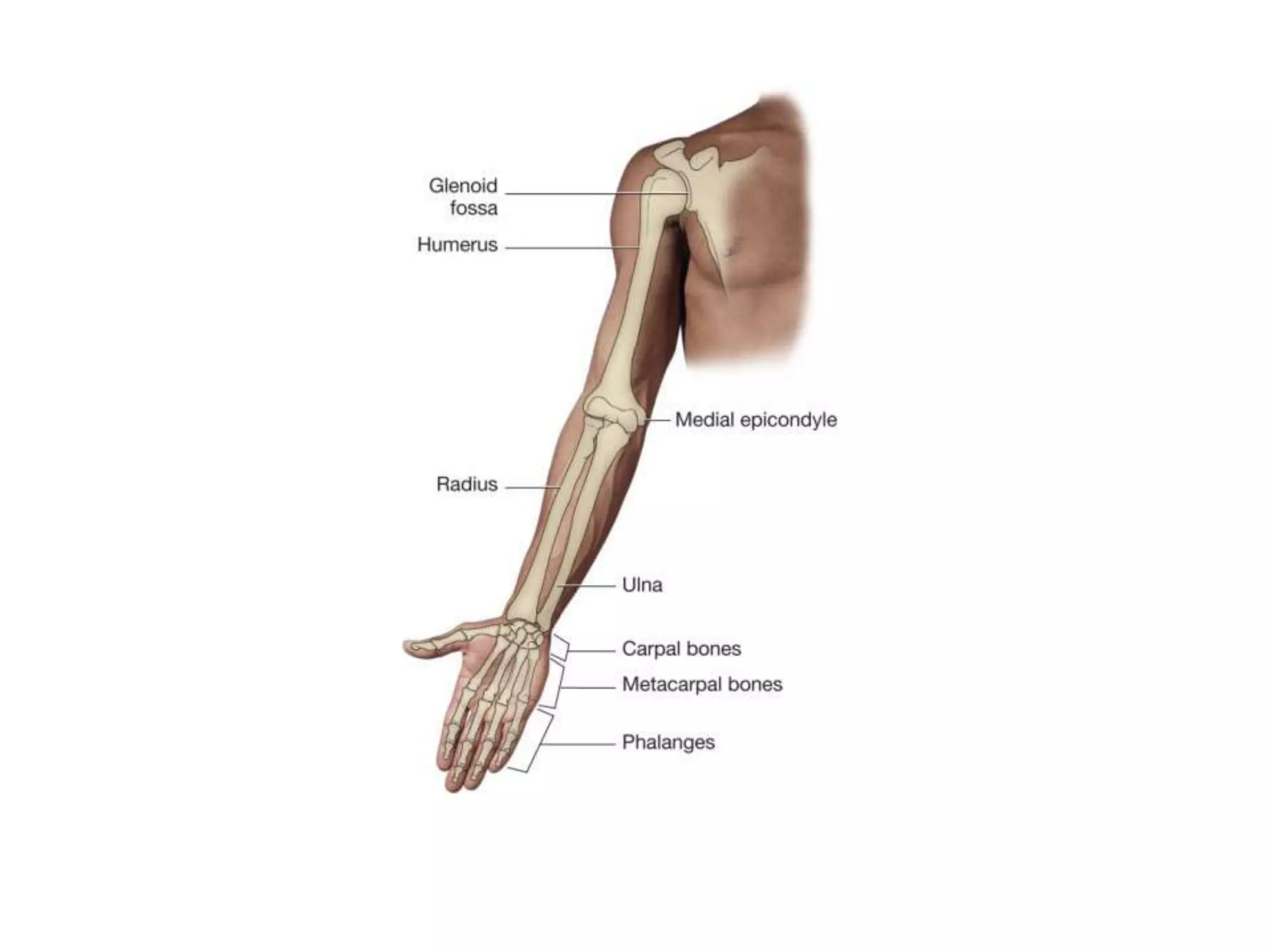
•   LUE = left upper extremity
•   RLE = right lower extremity
•   RLU = right upper extremity
•   ORIF = Open reduction and internal fixation
•   PIP = proximal interphalagenal (joint)
•   ROM = range of motion
•   S1 = first sacral vertebra
•   T1-T12 = thoracic vertebrae
•   THR = total hip replacement
•   Tib-fib = tibia-fibula
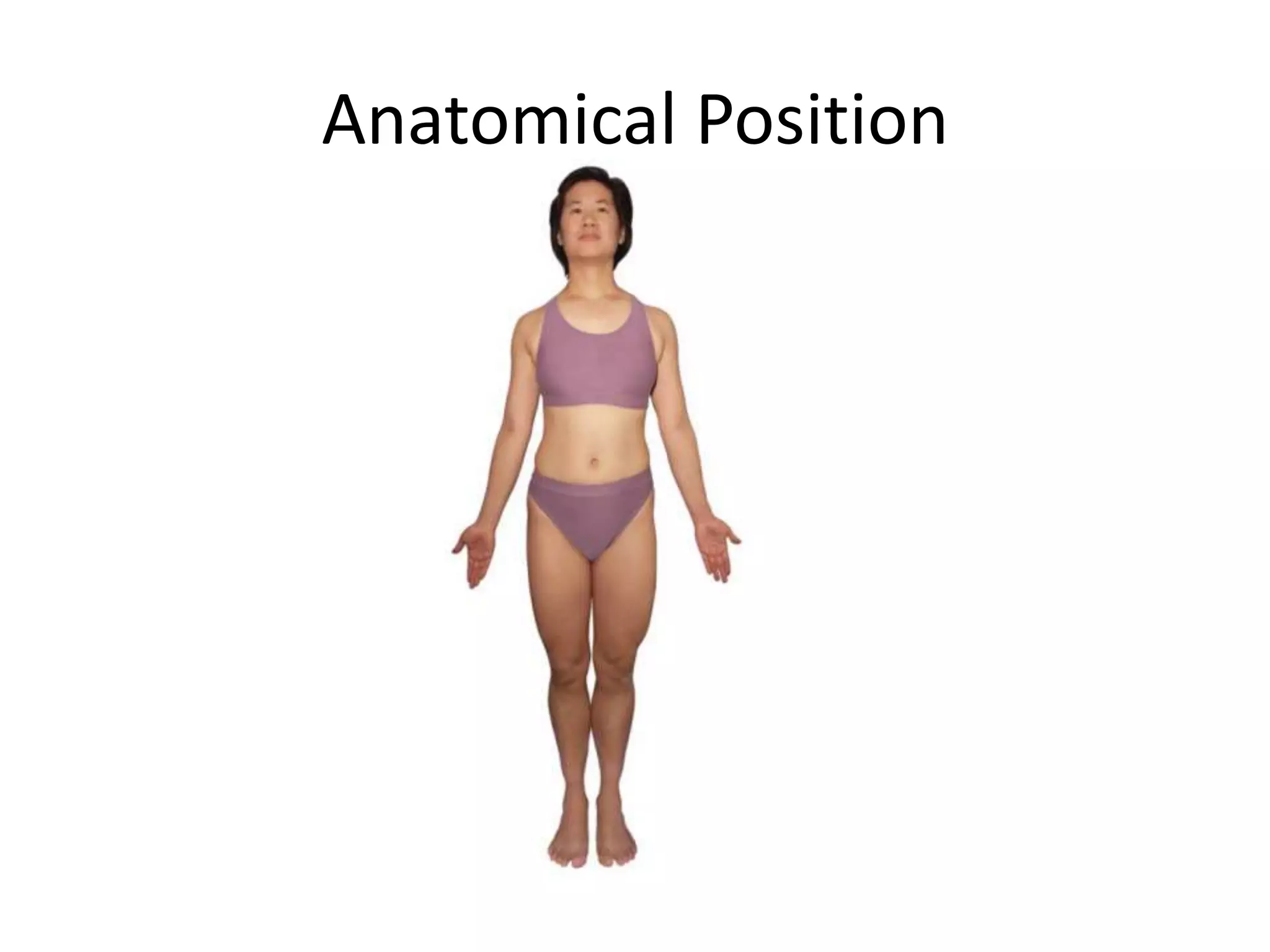
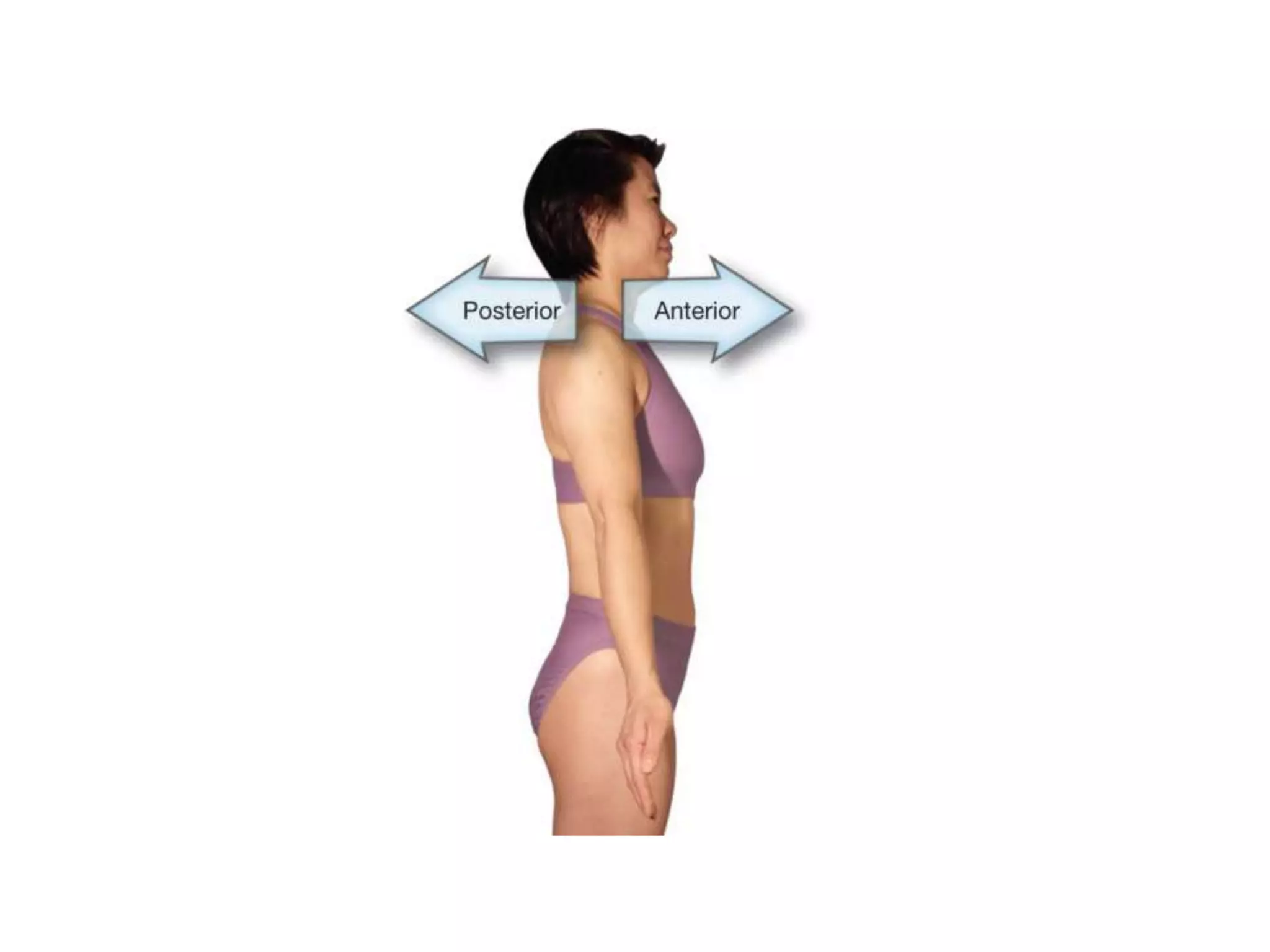
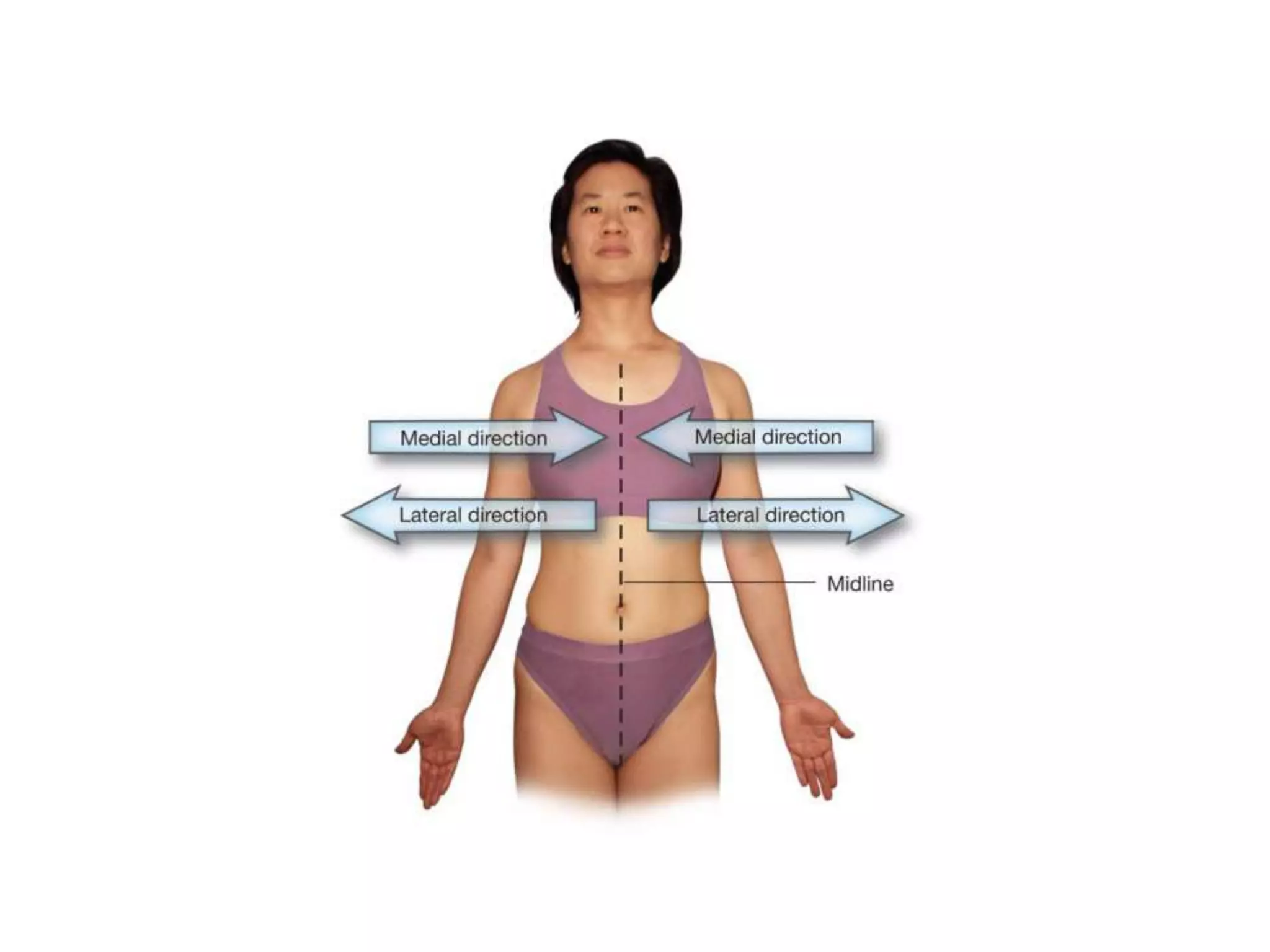
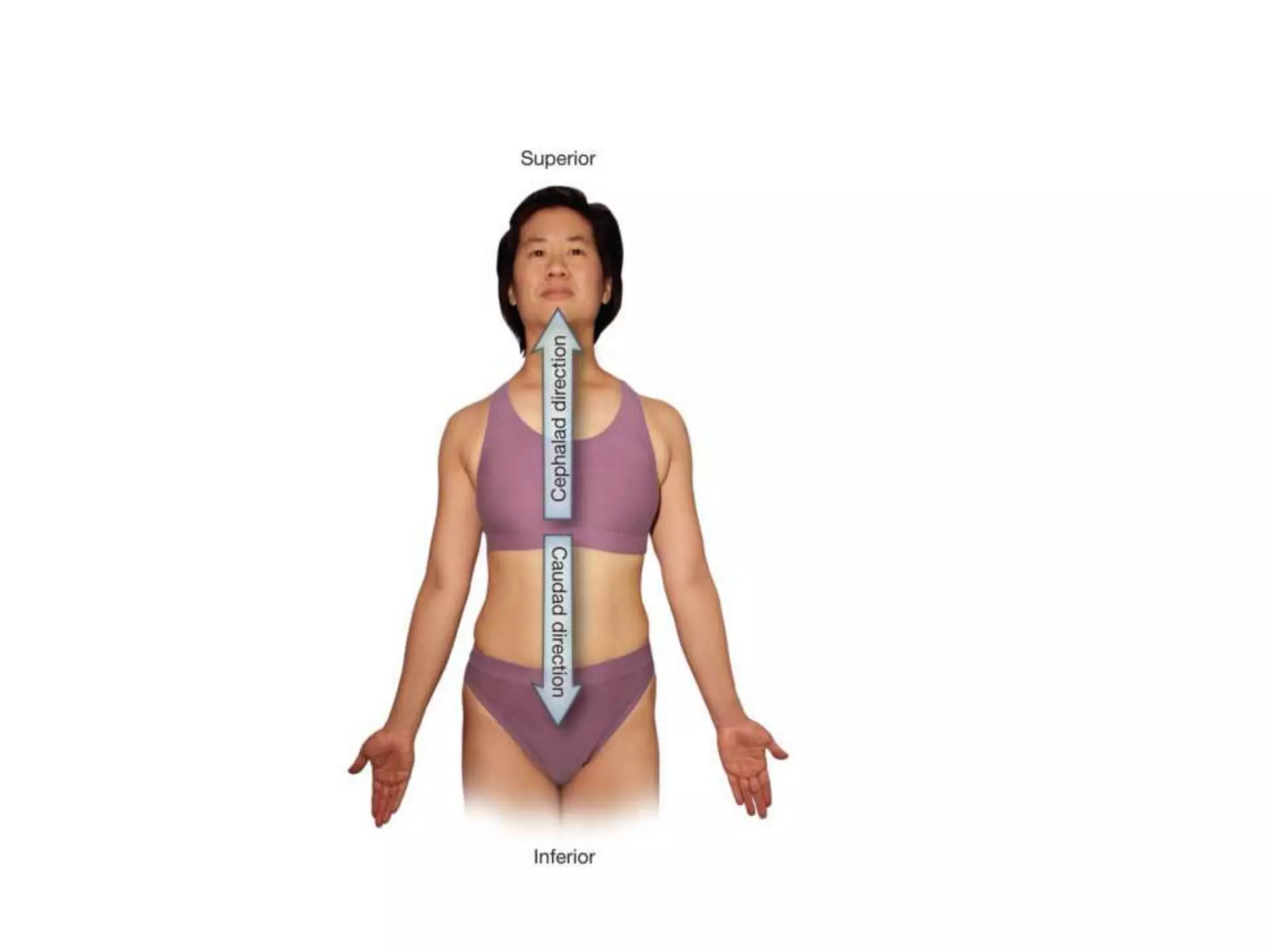
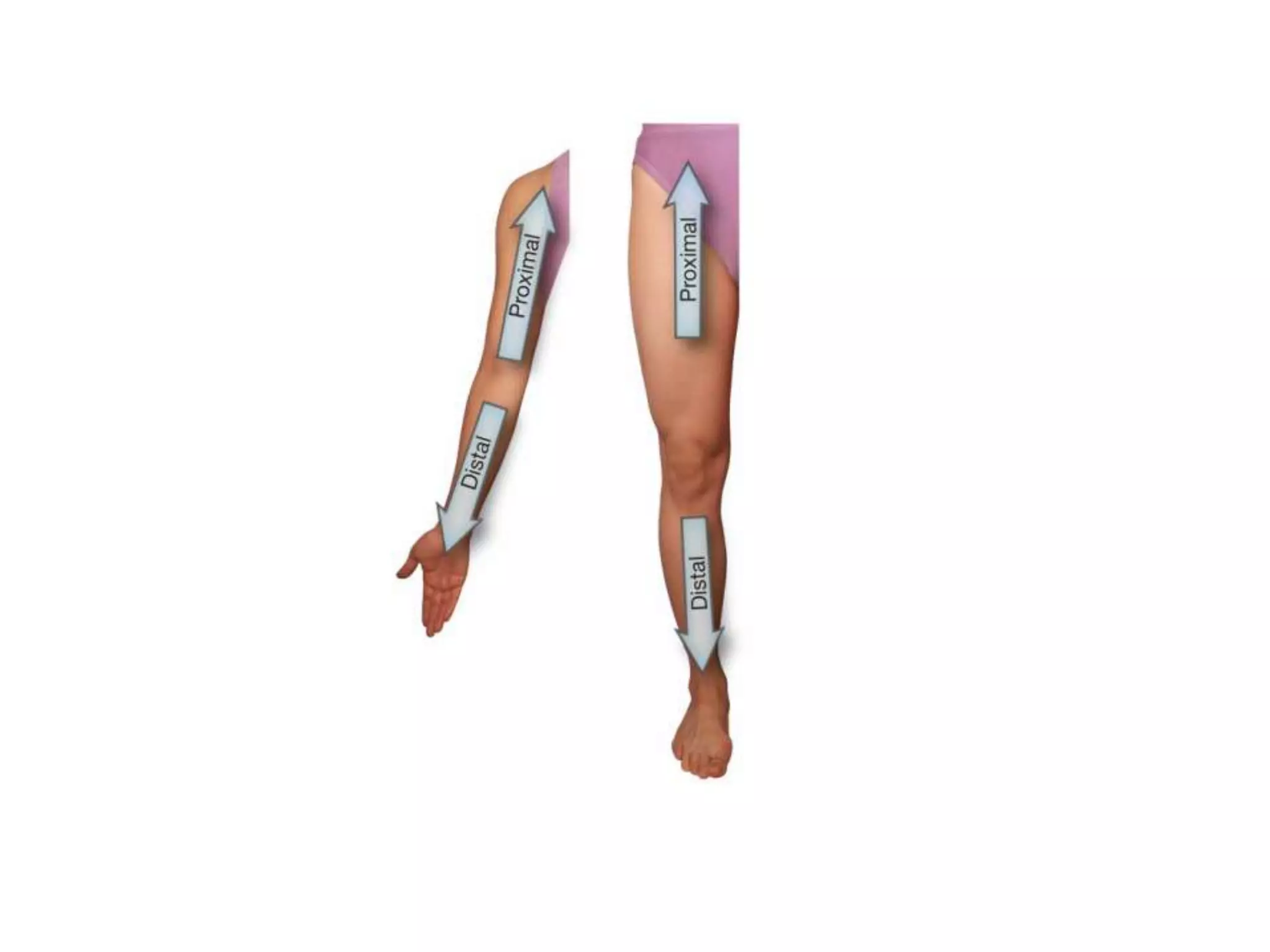
Directions
Anatomical Position
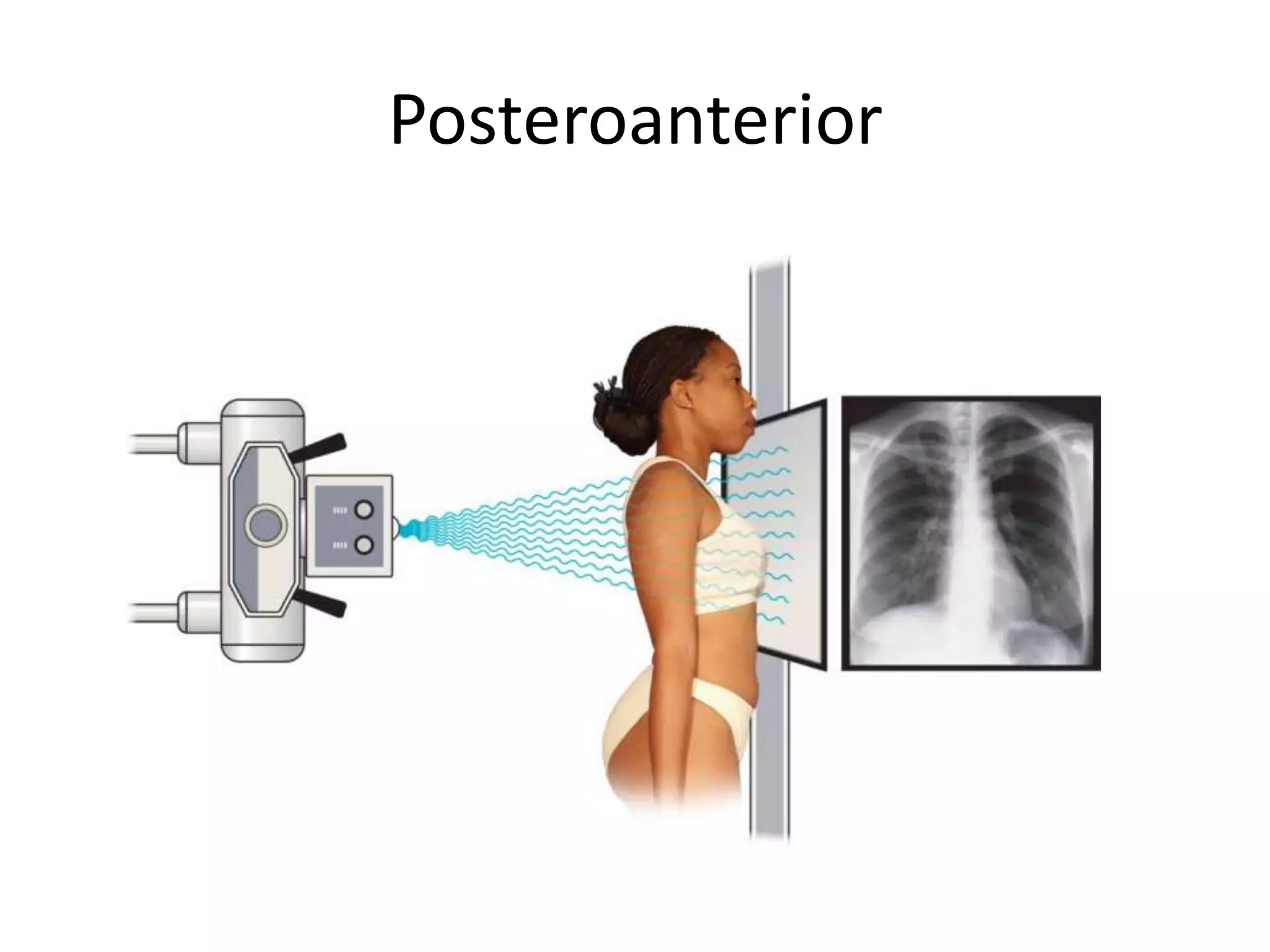
Posteroanterior
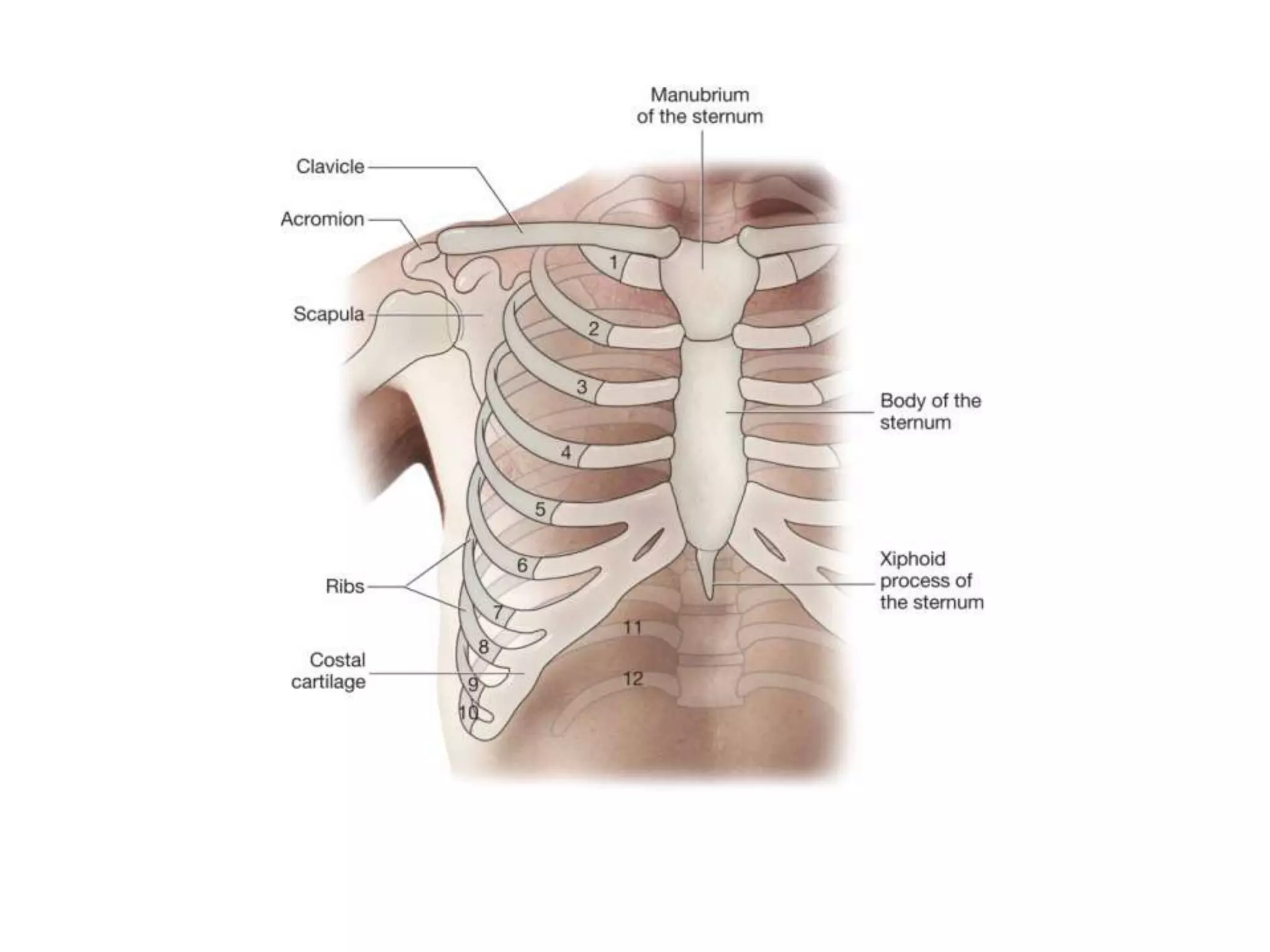
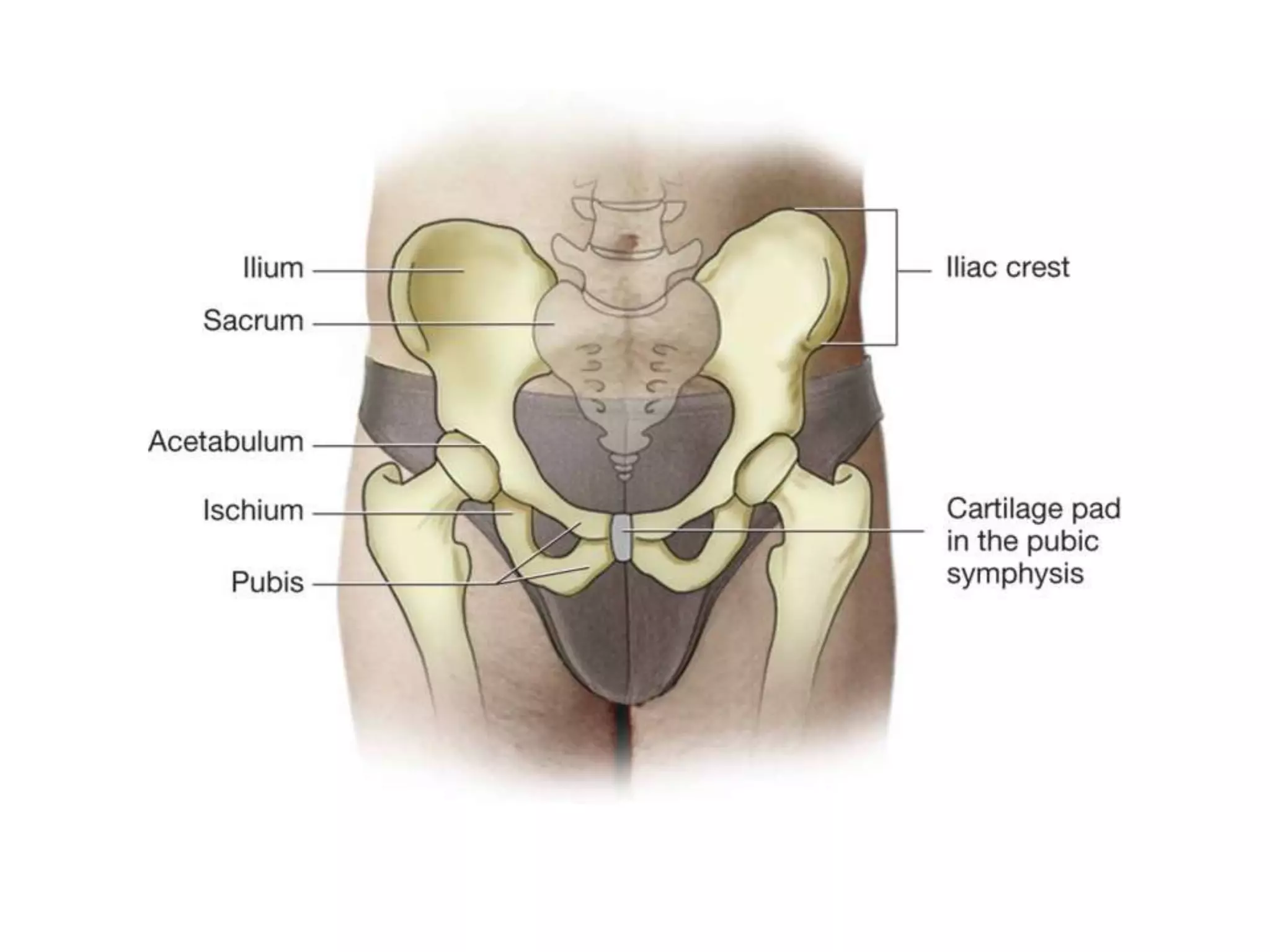
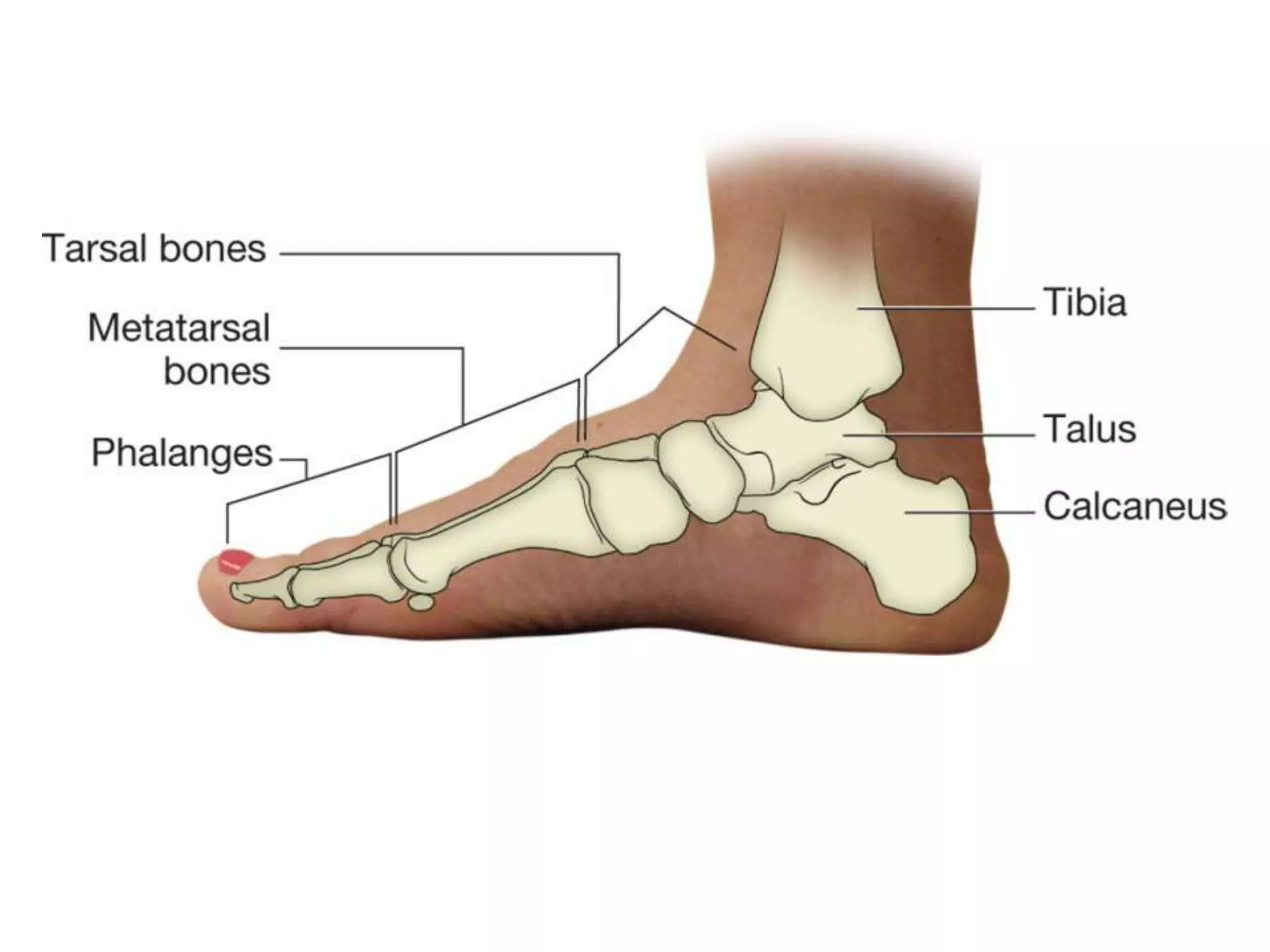
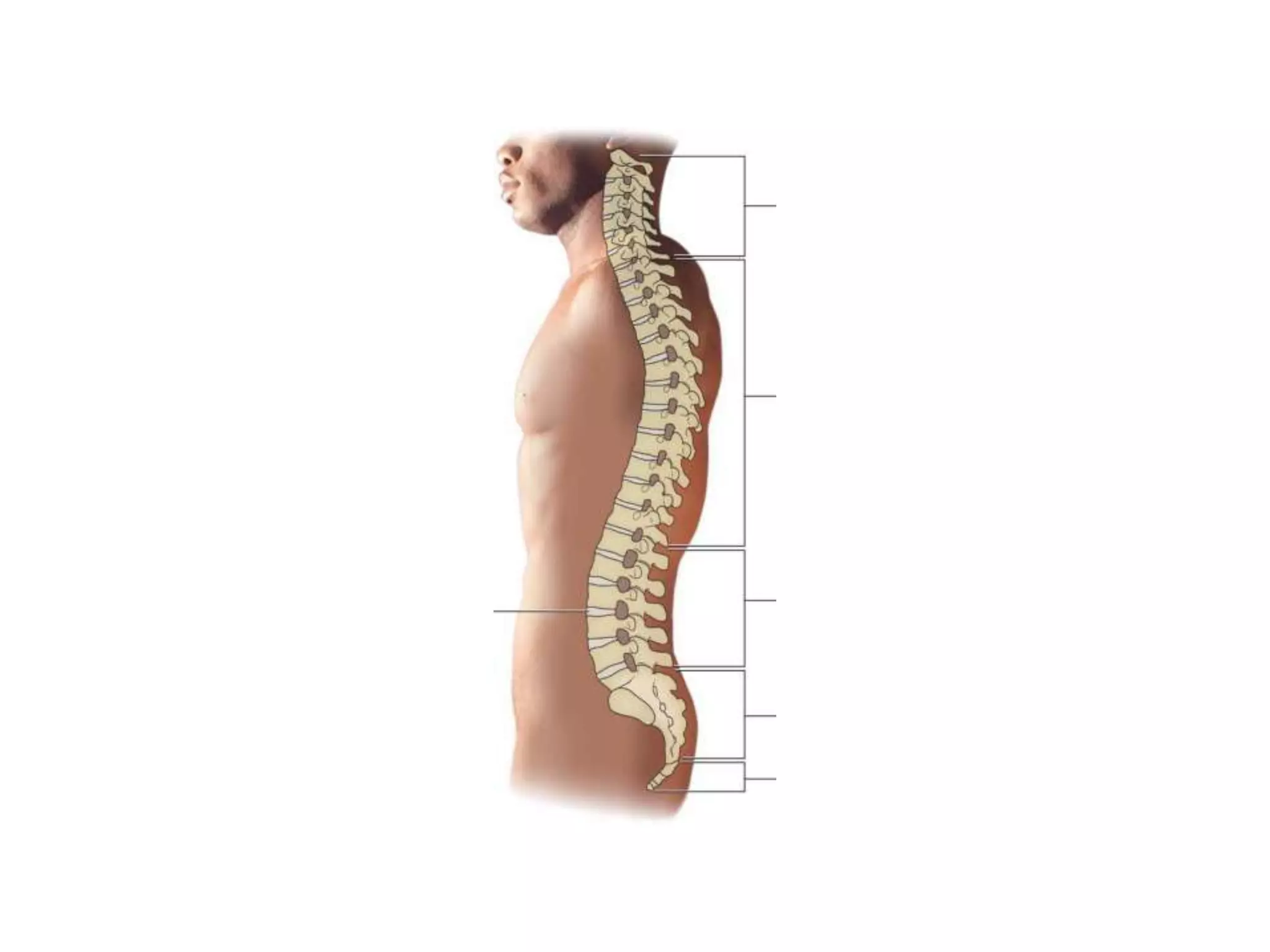
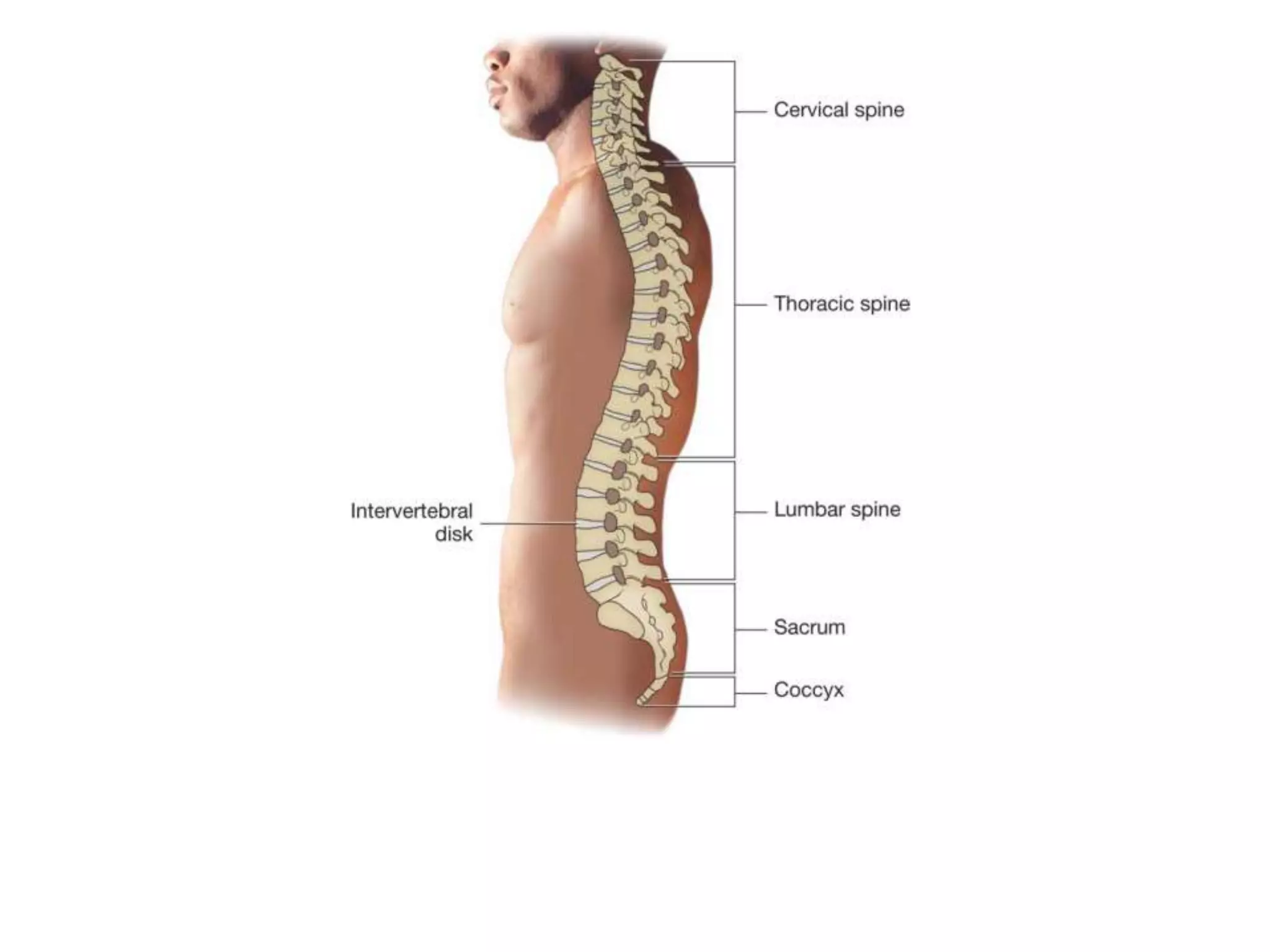
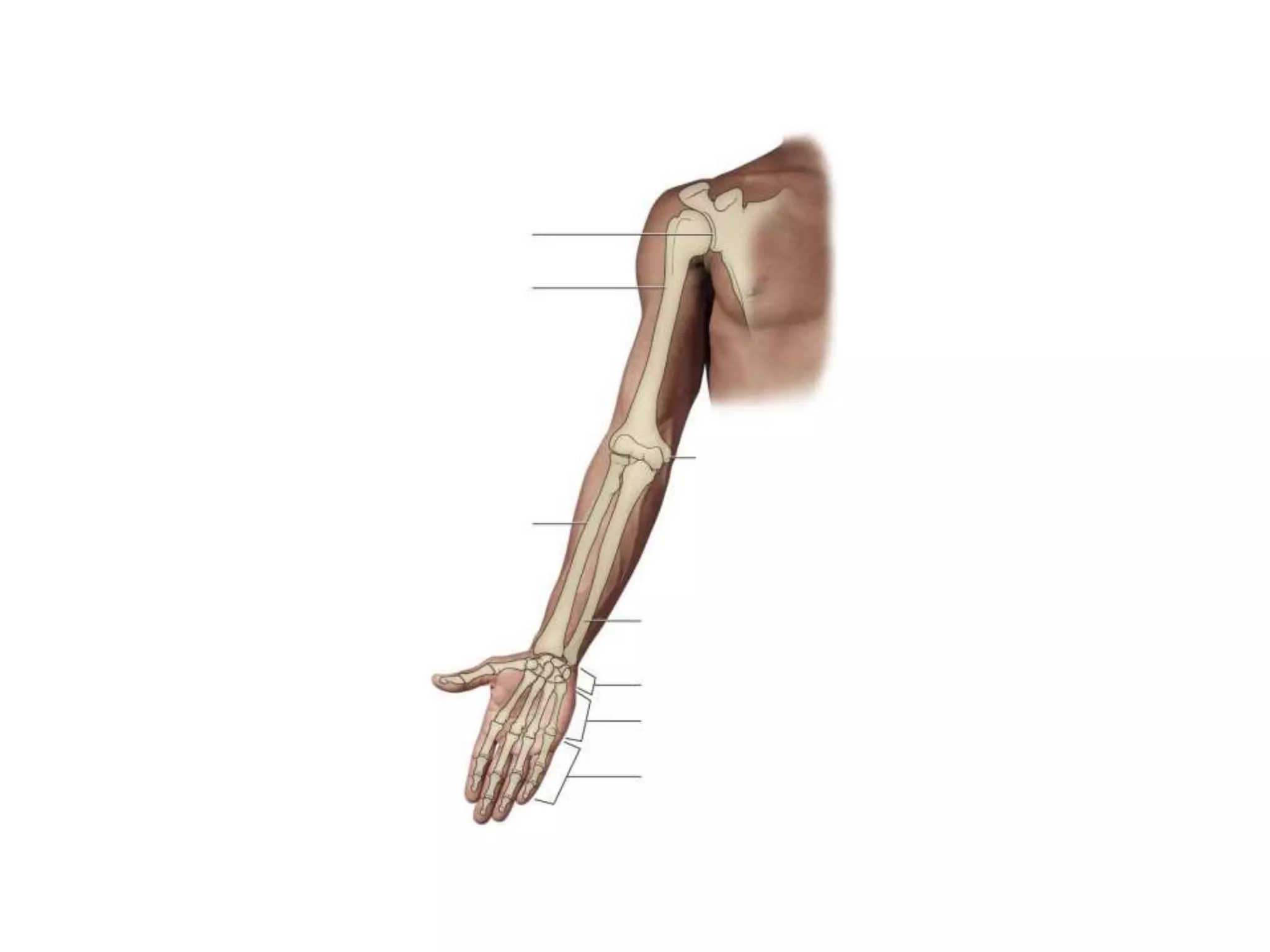
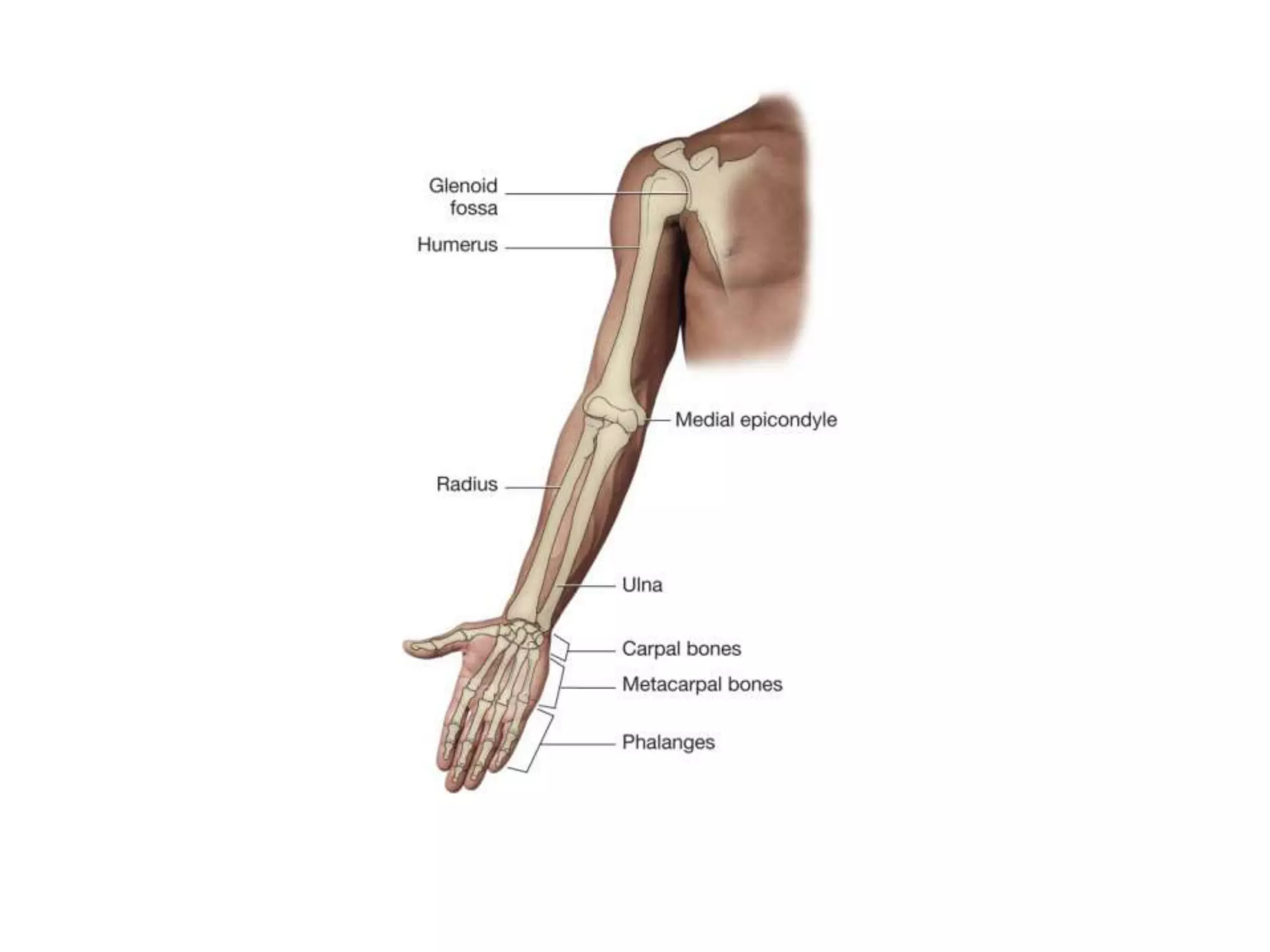
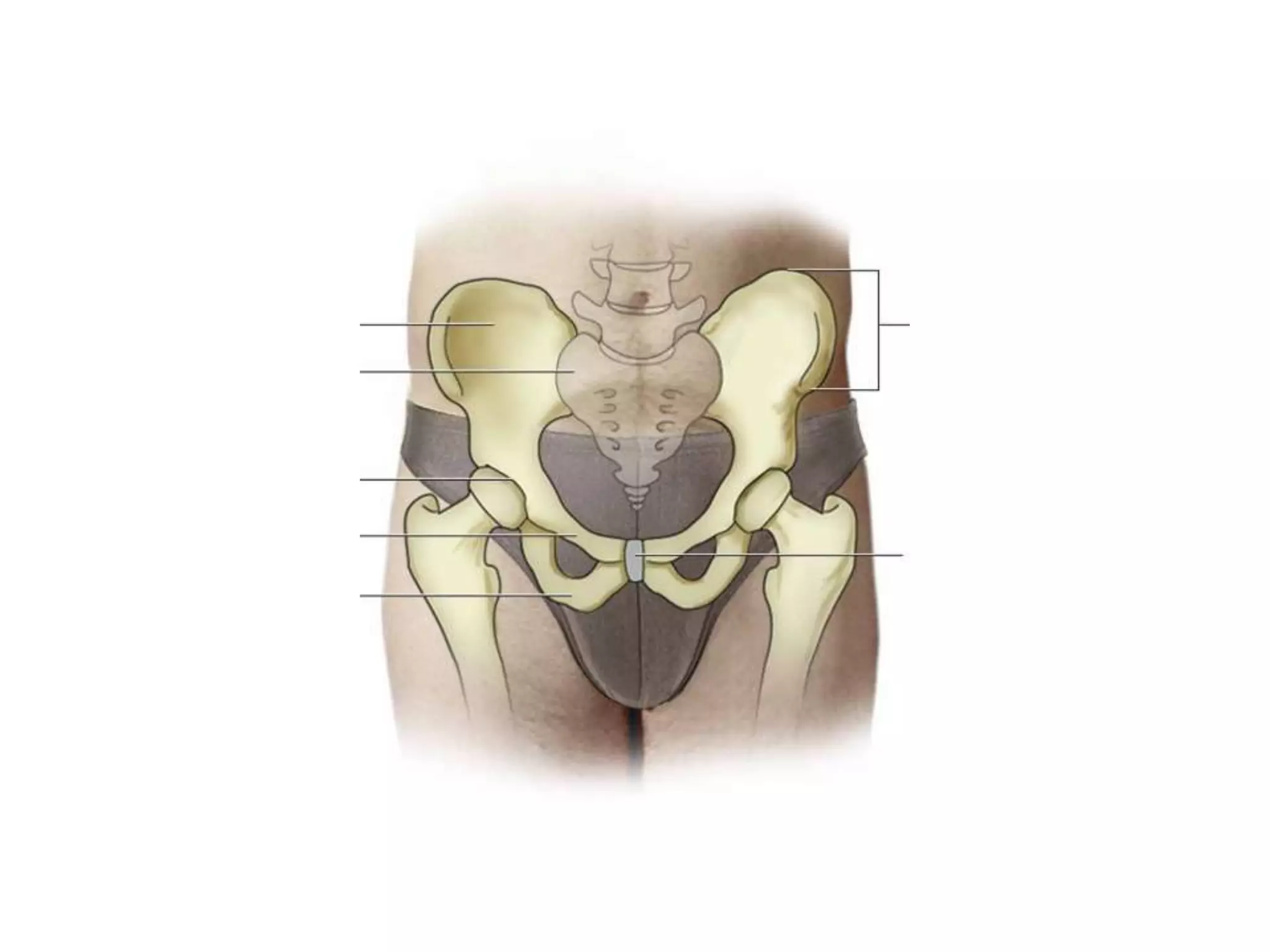
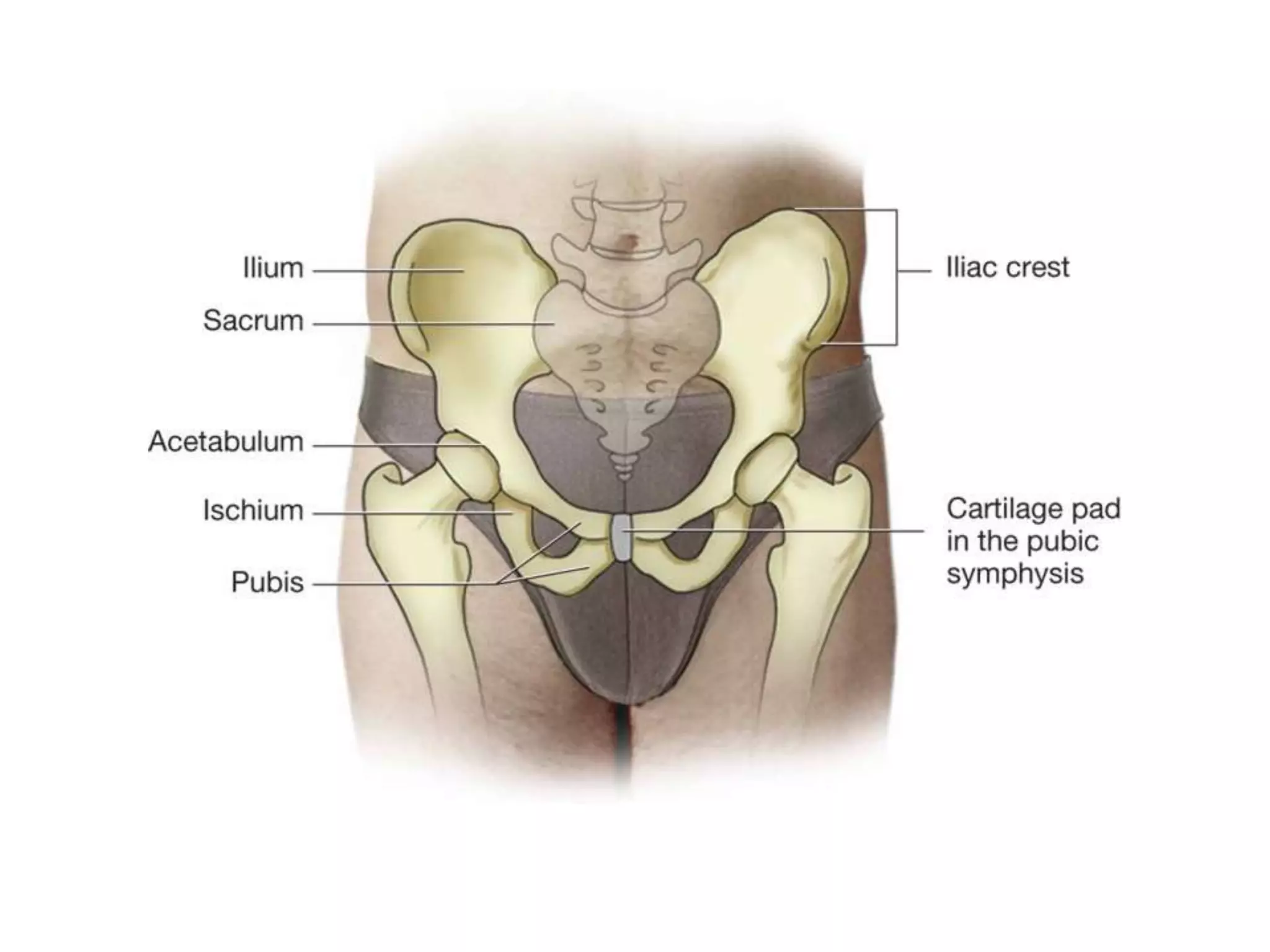
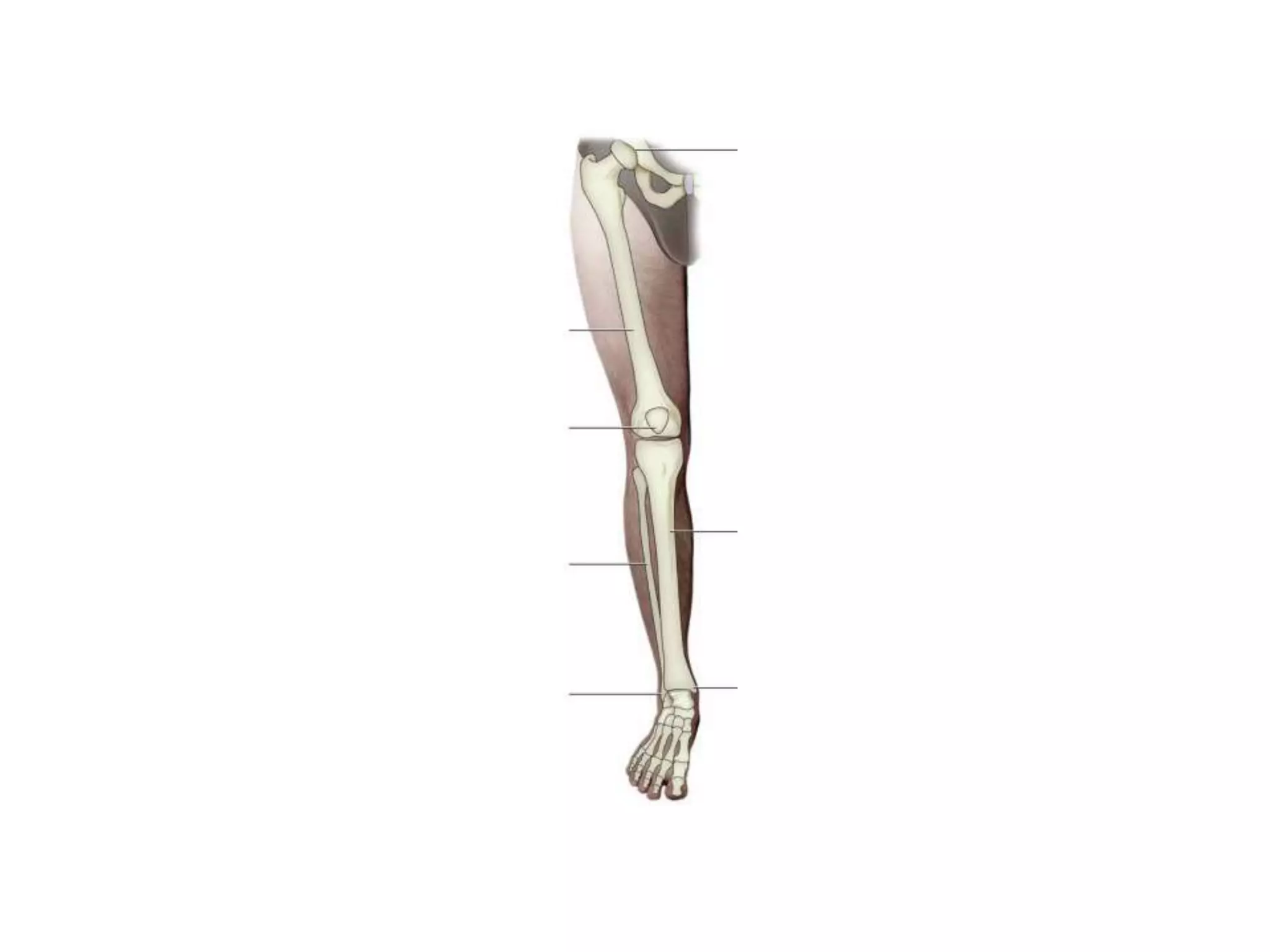
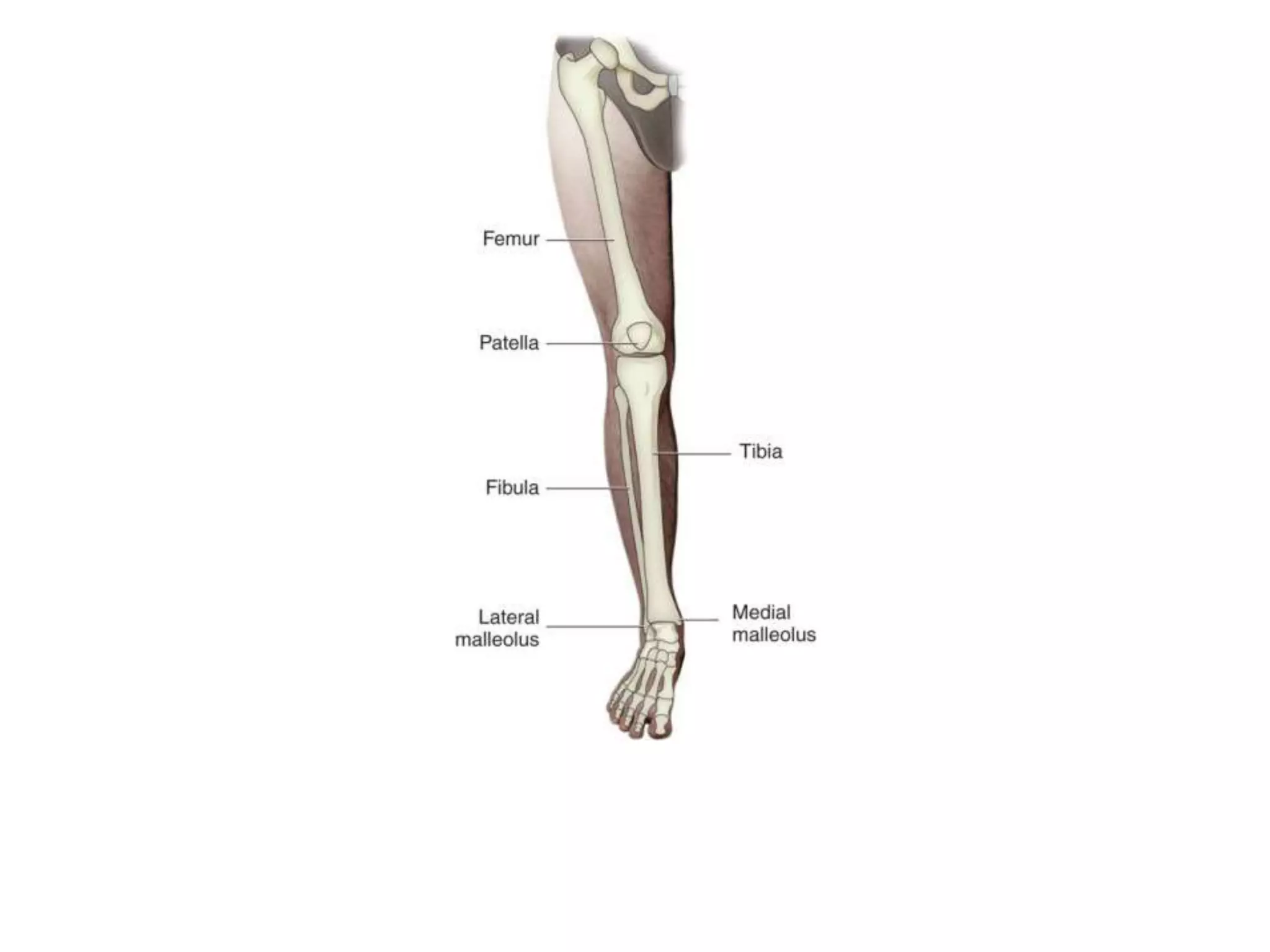
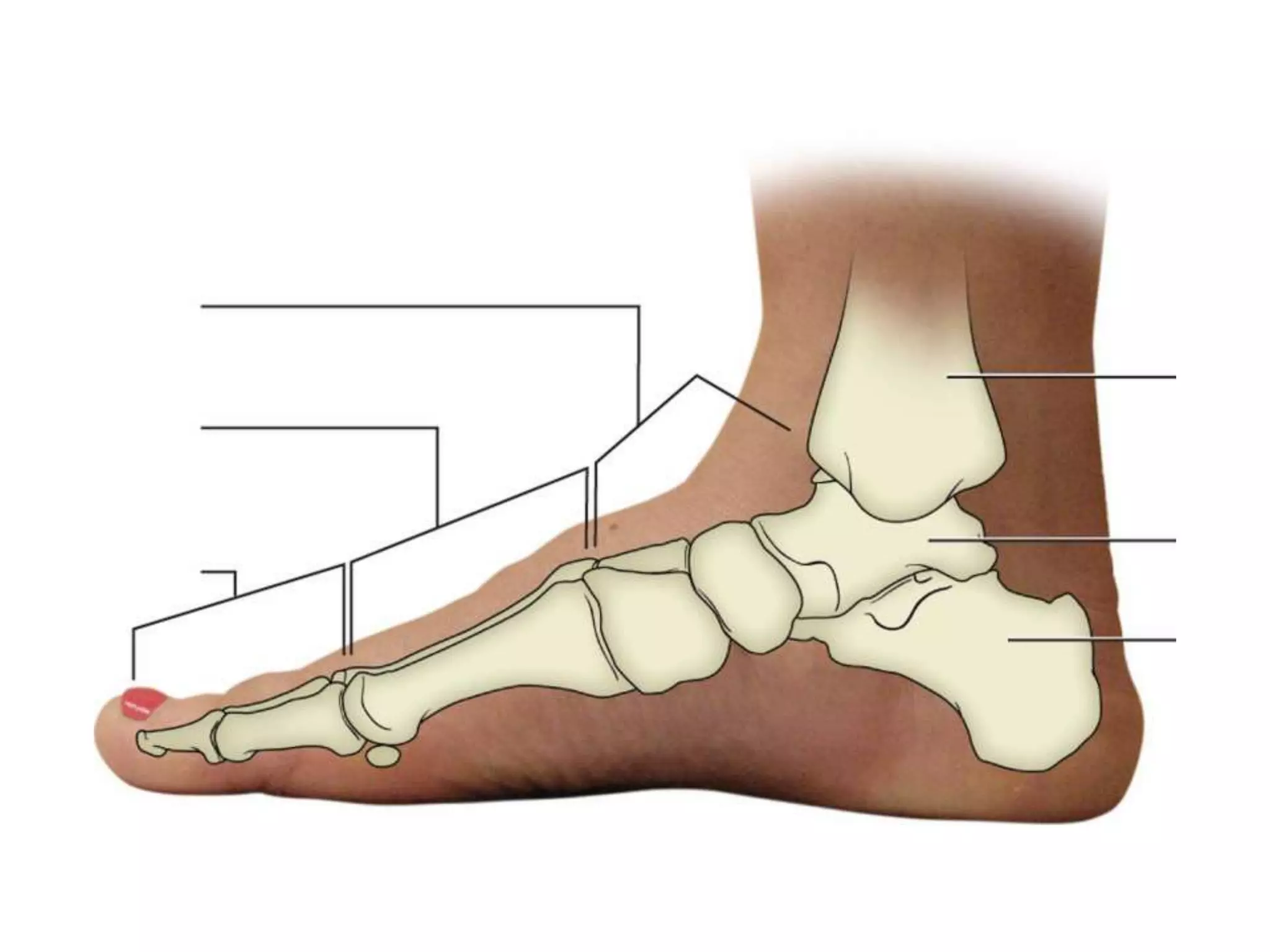
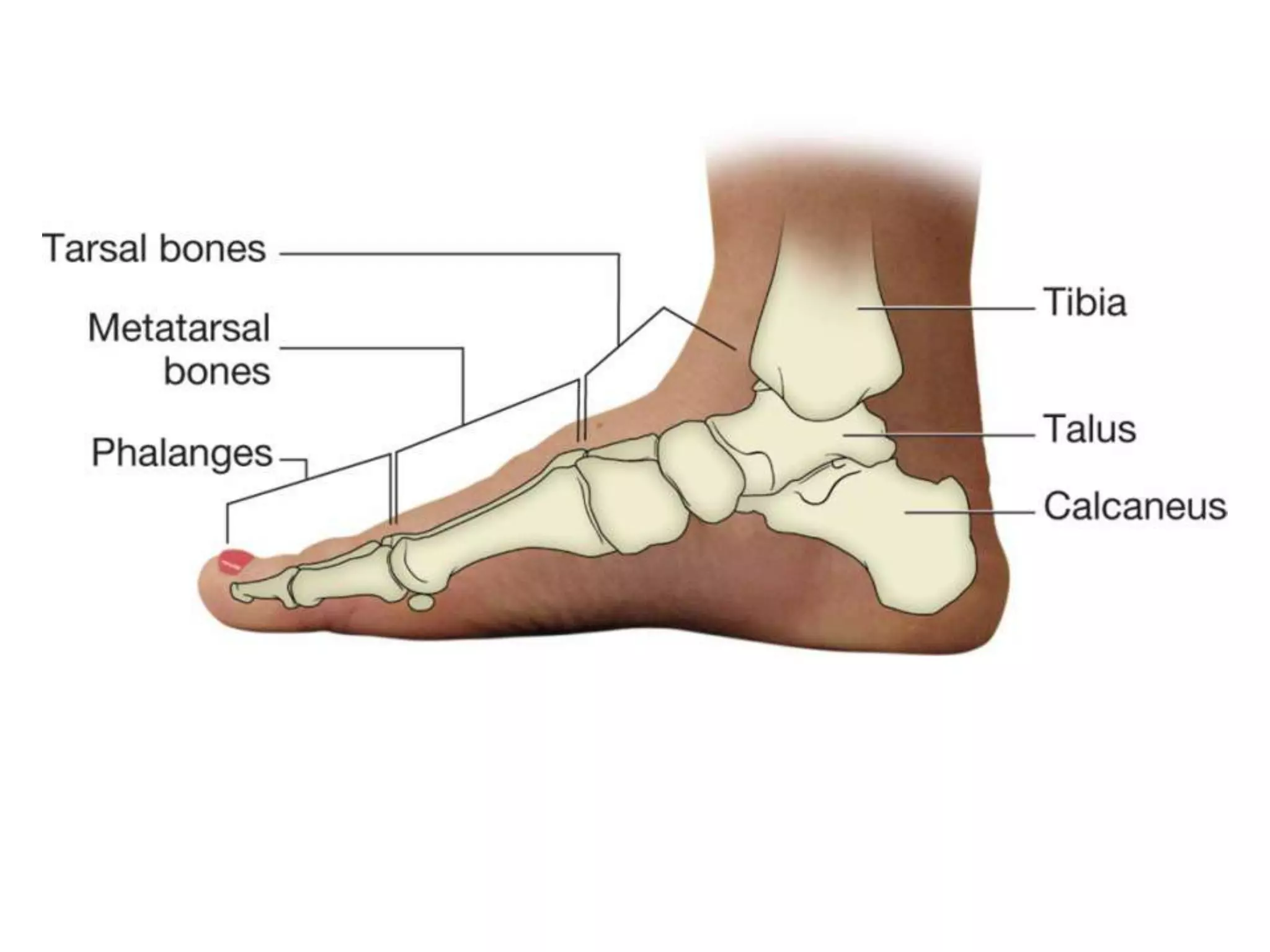
Anatomy Review
FRACTURES
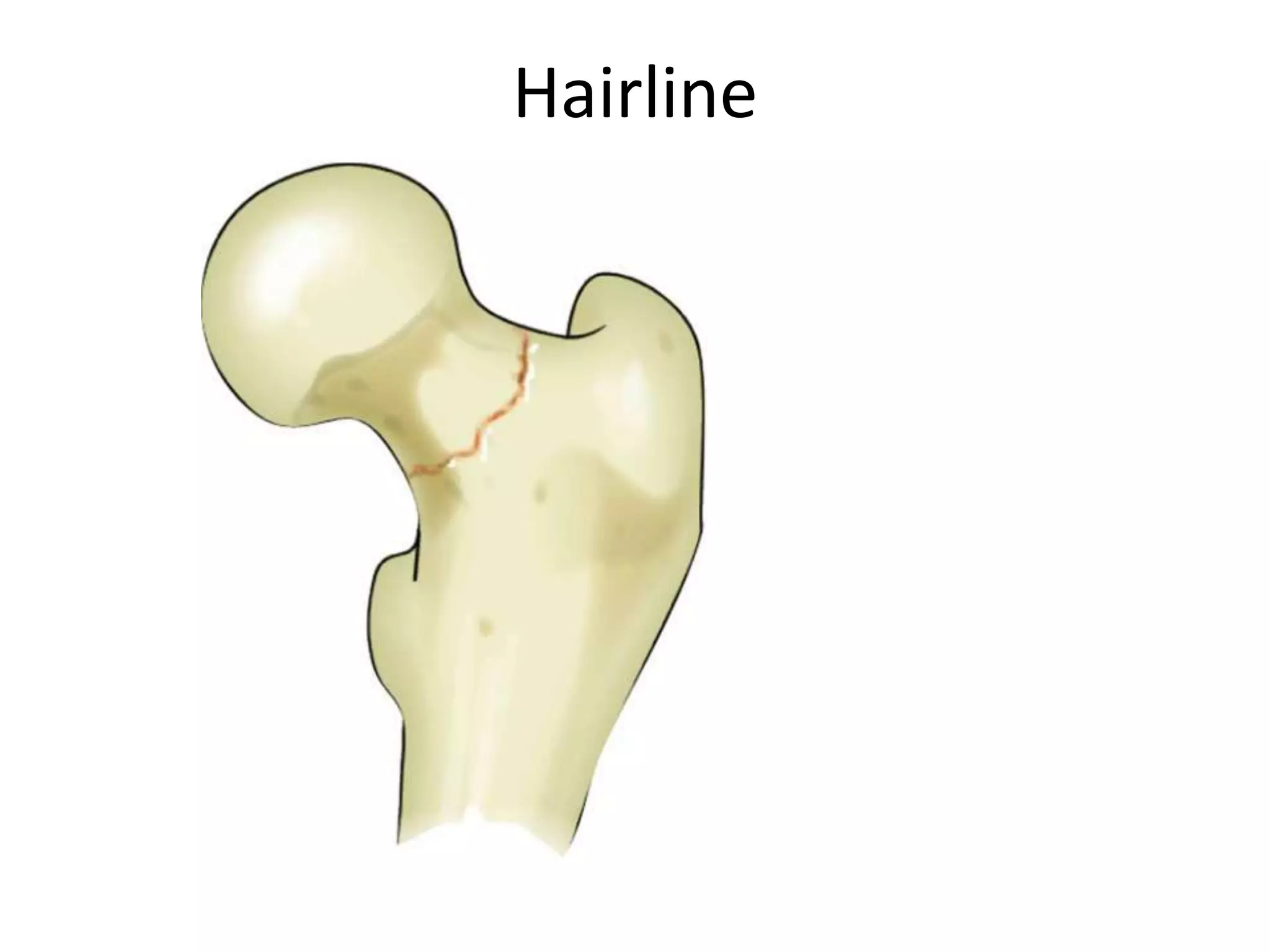
•   Open               •   Hairline
•   Closed             •   Displaced
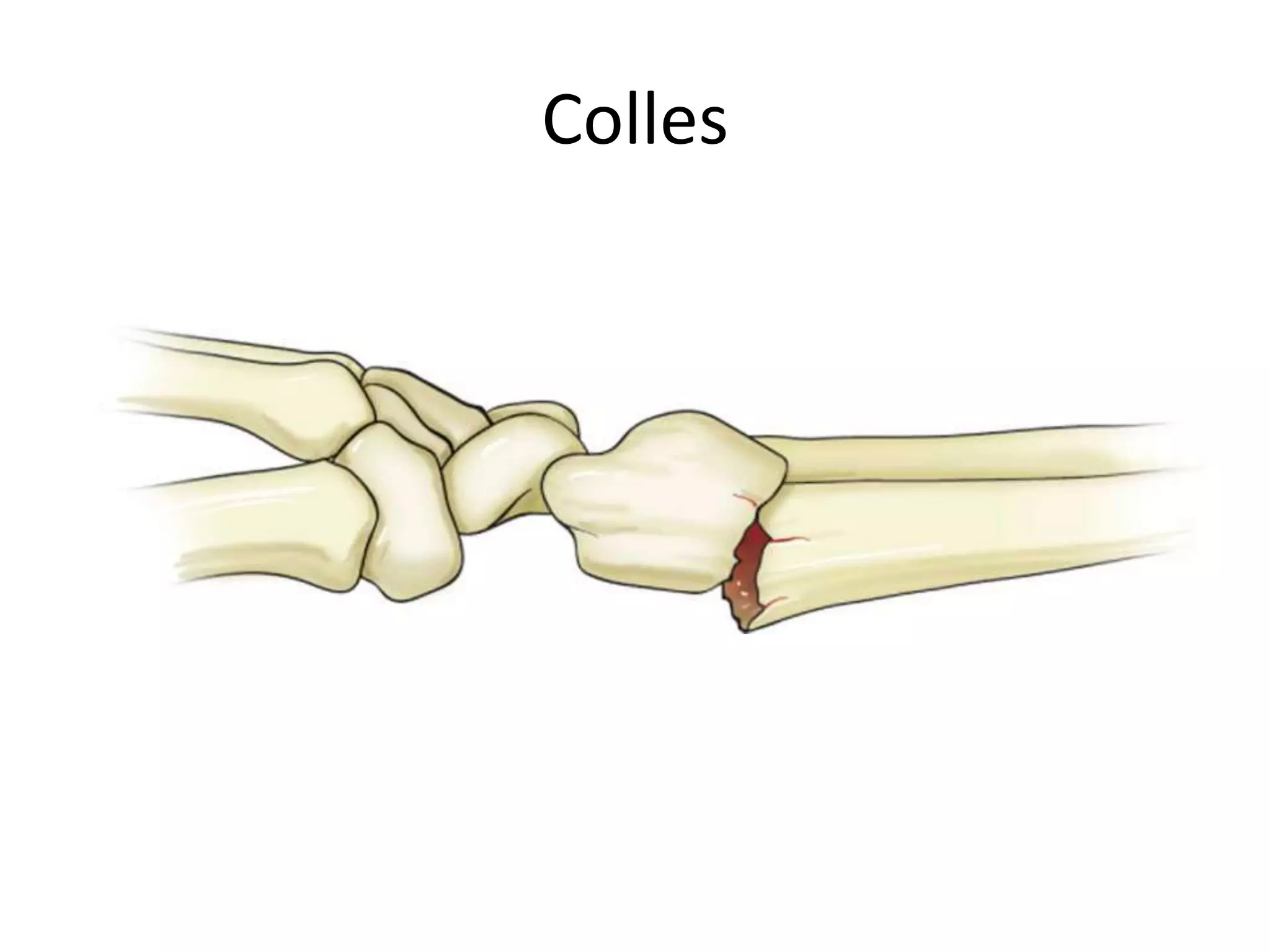
•   Colles             •   Nondisplaced
•   Comminuted         •   Oblique
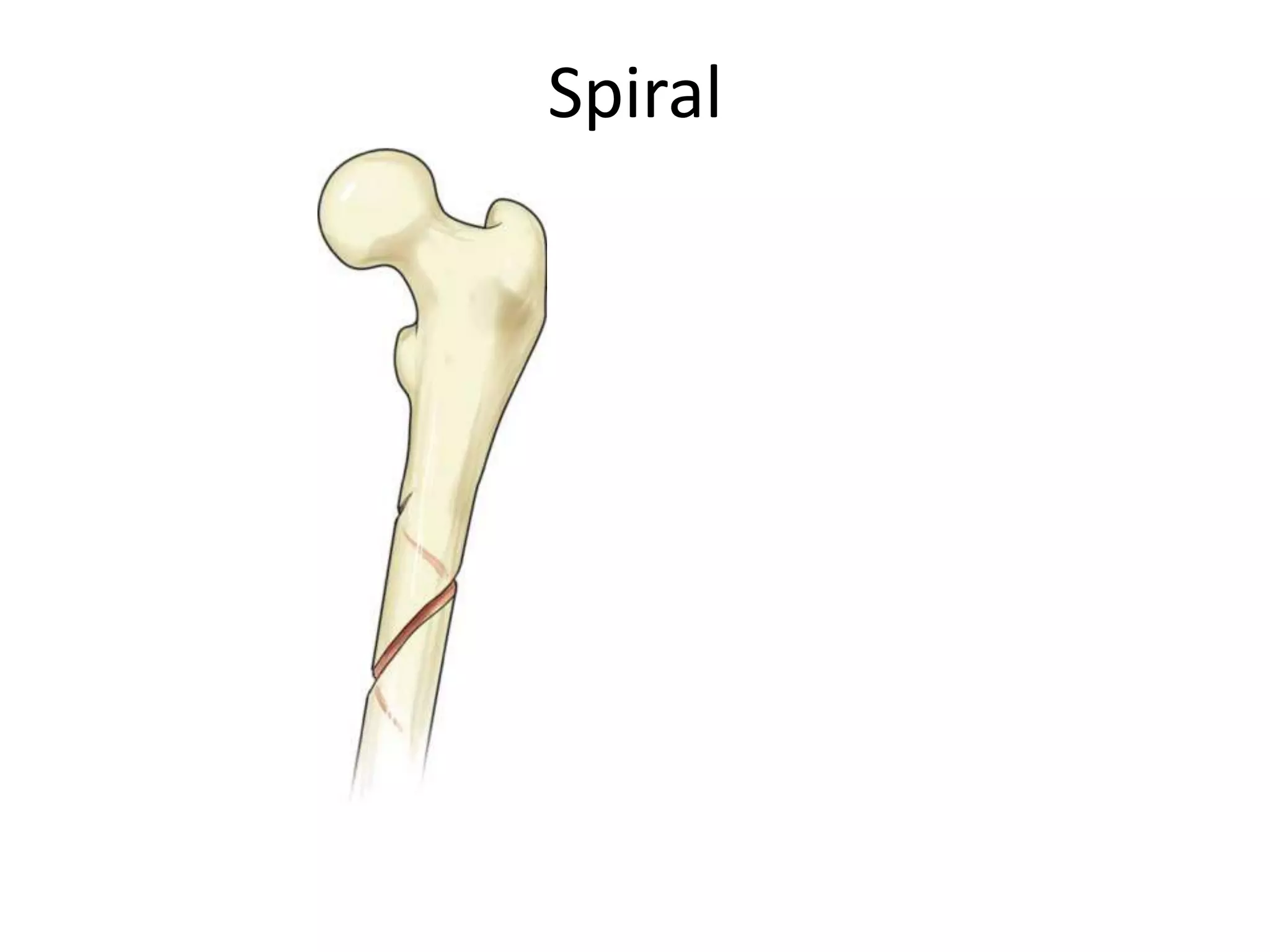
•   Compression        •   Spiral
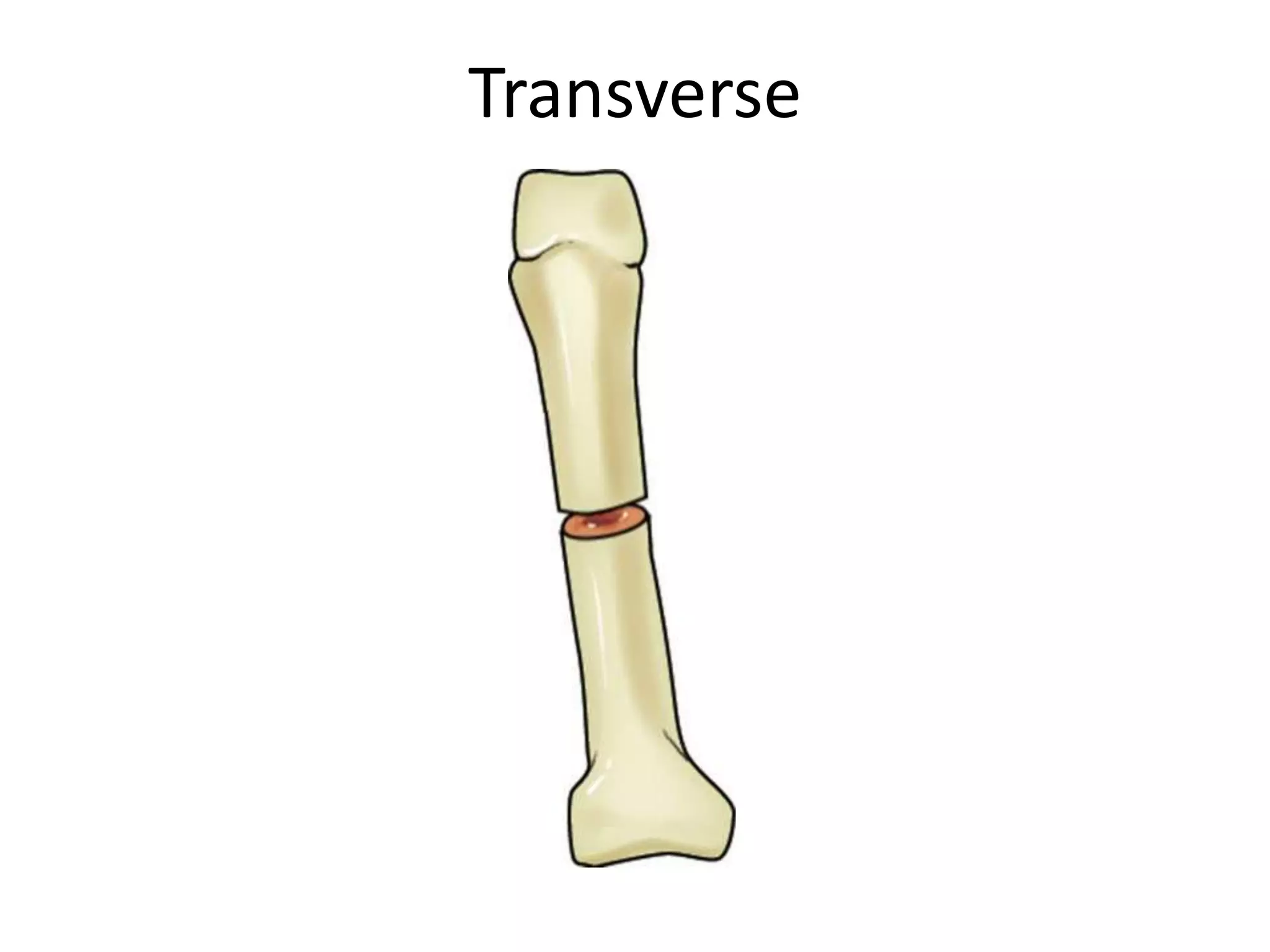
•   Depressed          •   Transverse
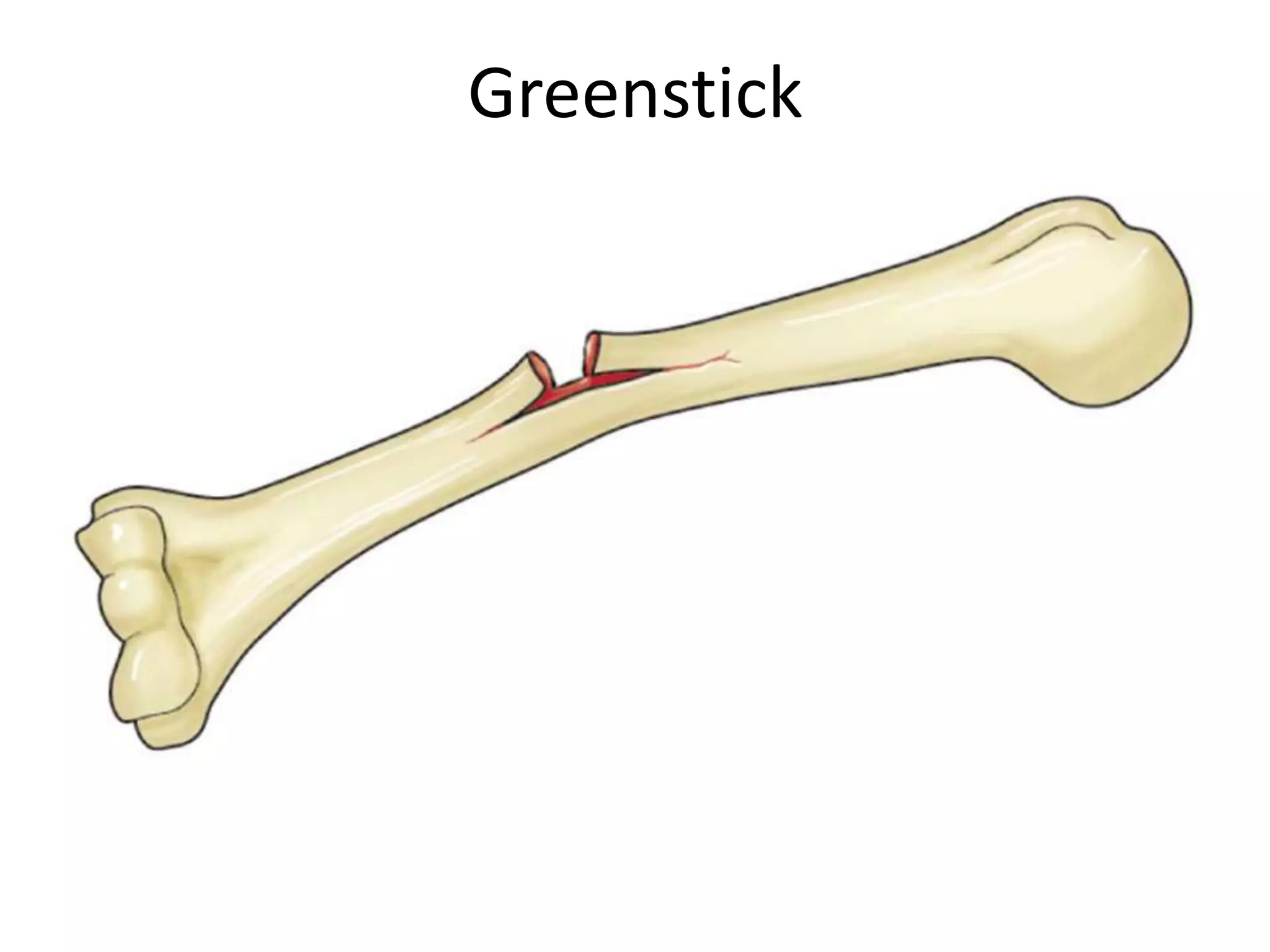
•   Greenstick
Open Vs. Closed
           Open           Closed
Bone breaks through the   Bone does not break through
overlying skin            the overlying skin
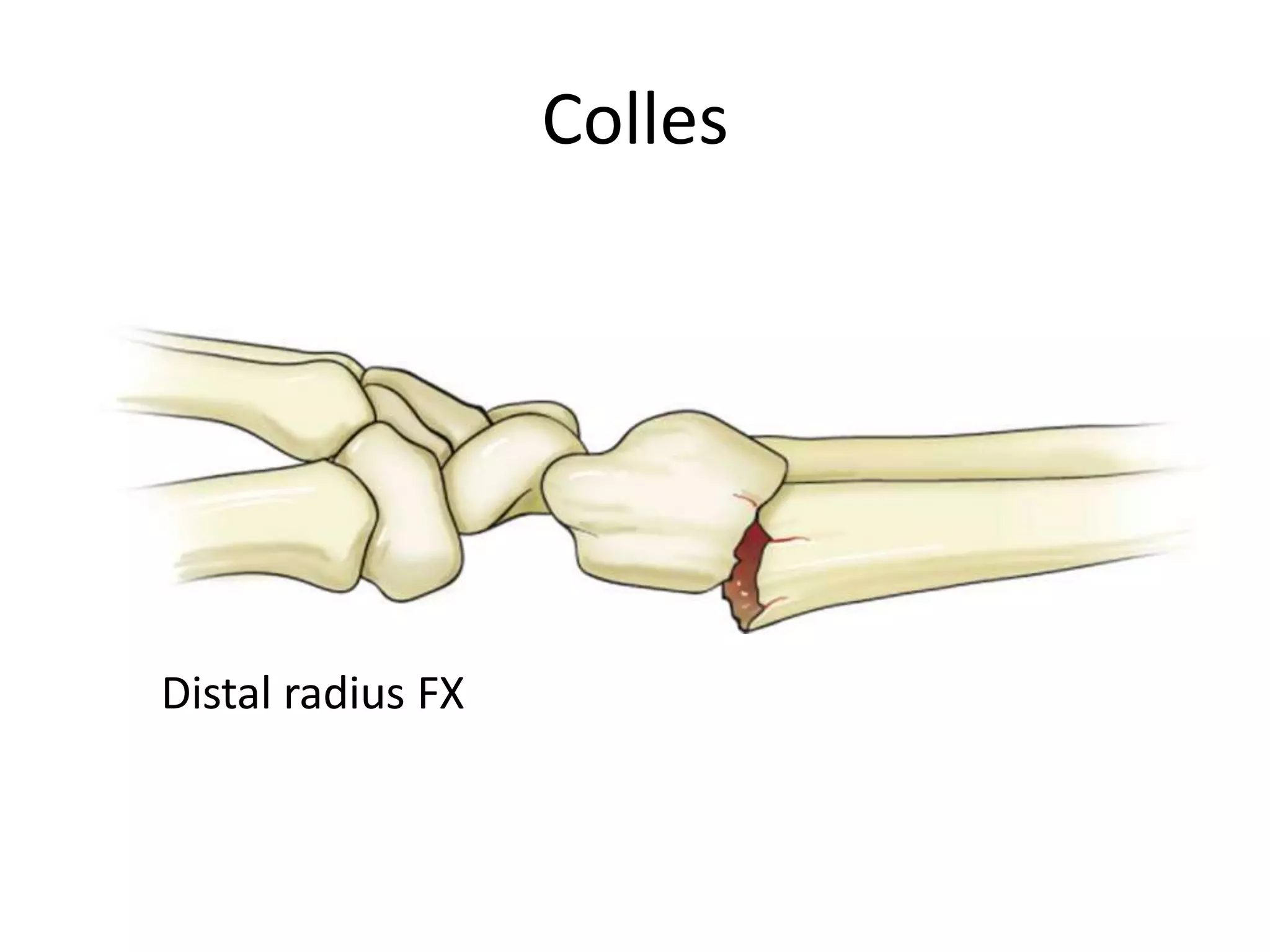
Colles


Distal radius FX
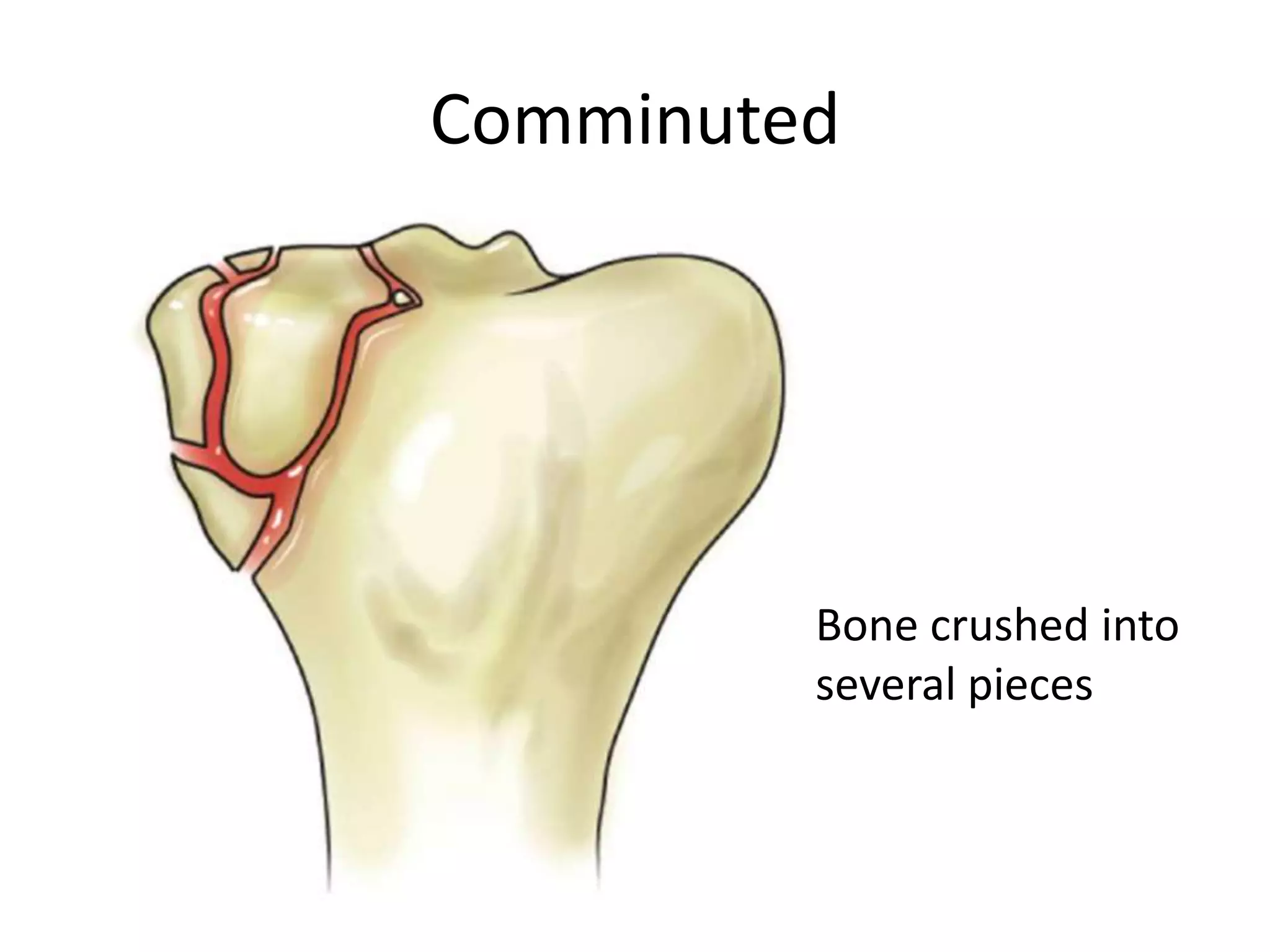
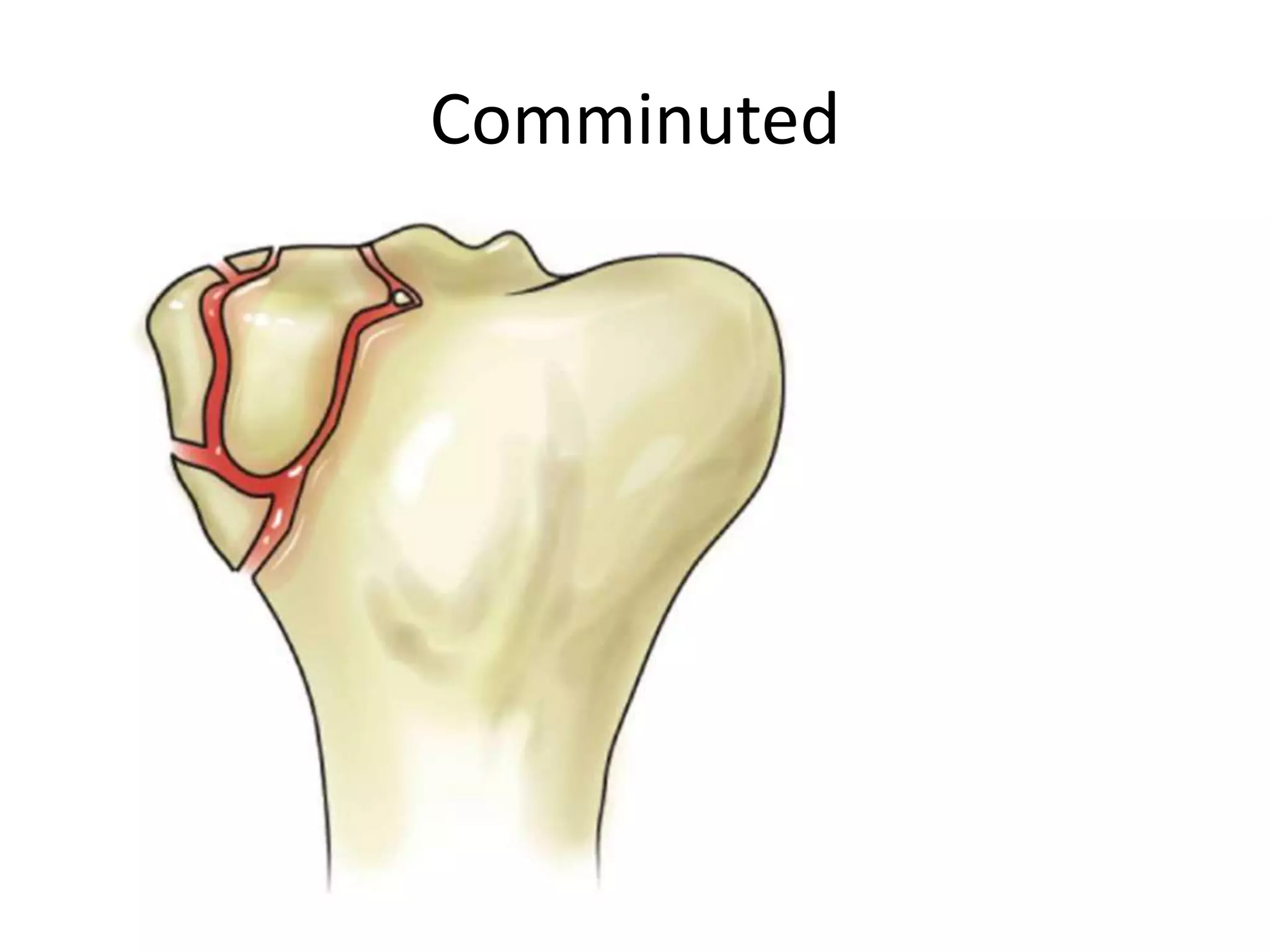
Comminuted


         Bone crushed into
         several pieces
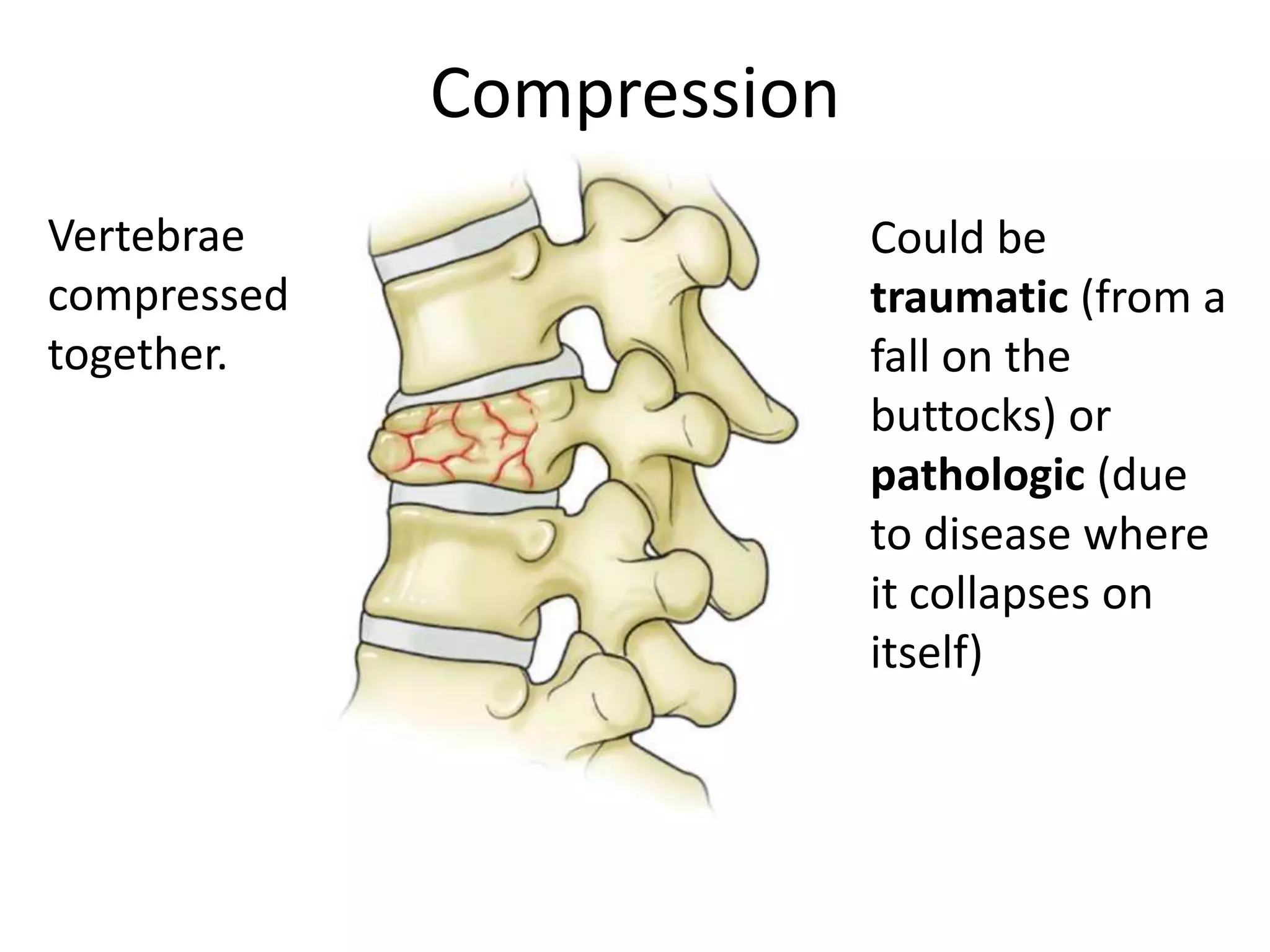
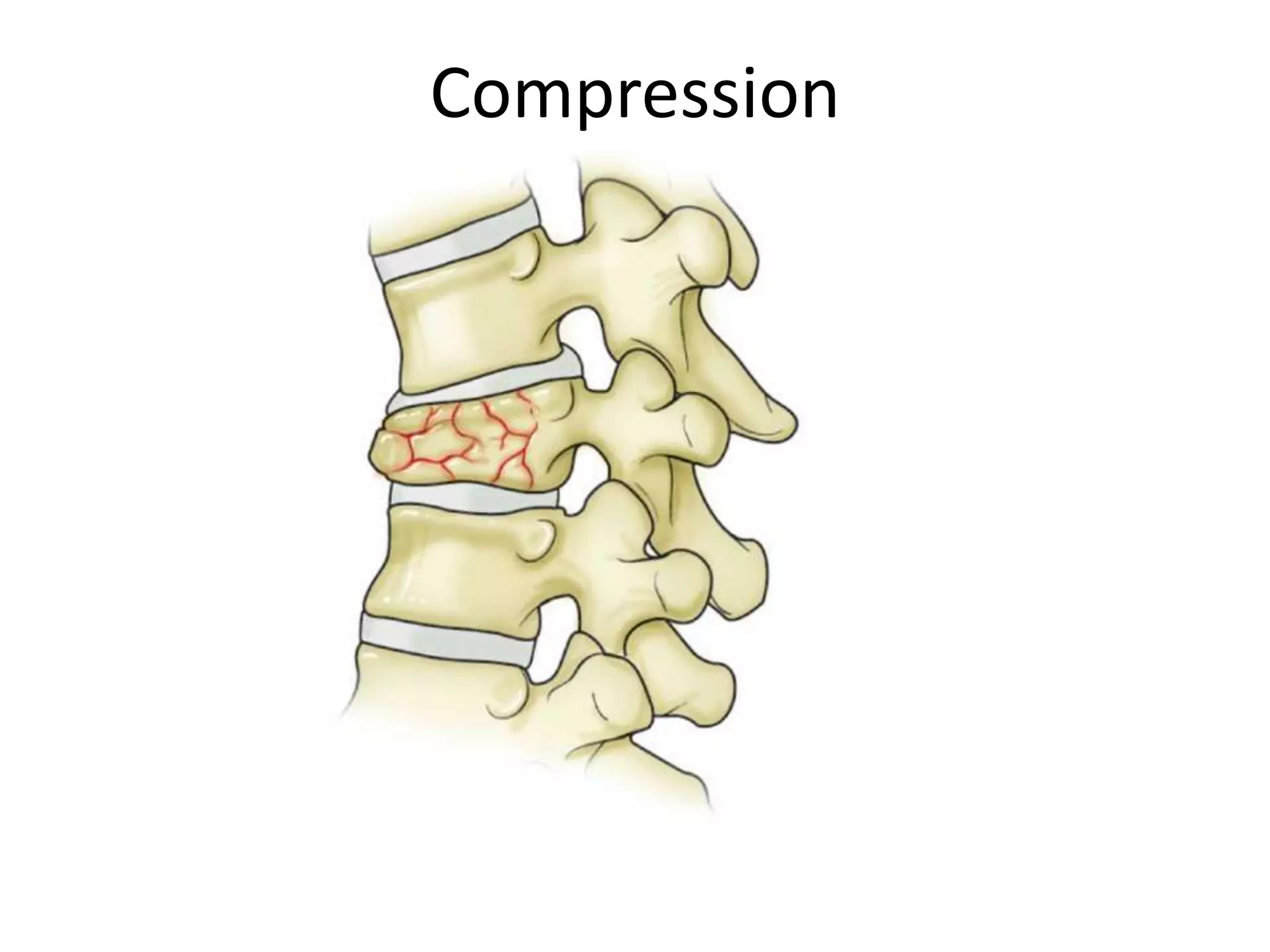
Compression
Vertebrae                  Could be
compressed                 traumatic (from a
together.                  fall on the
                           buttocks) or
                           pathologic (due
                           to disease where
                           it collapses on
                           itself)
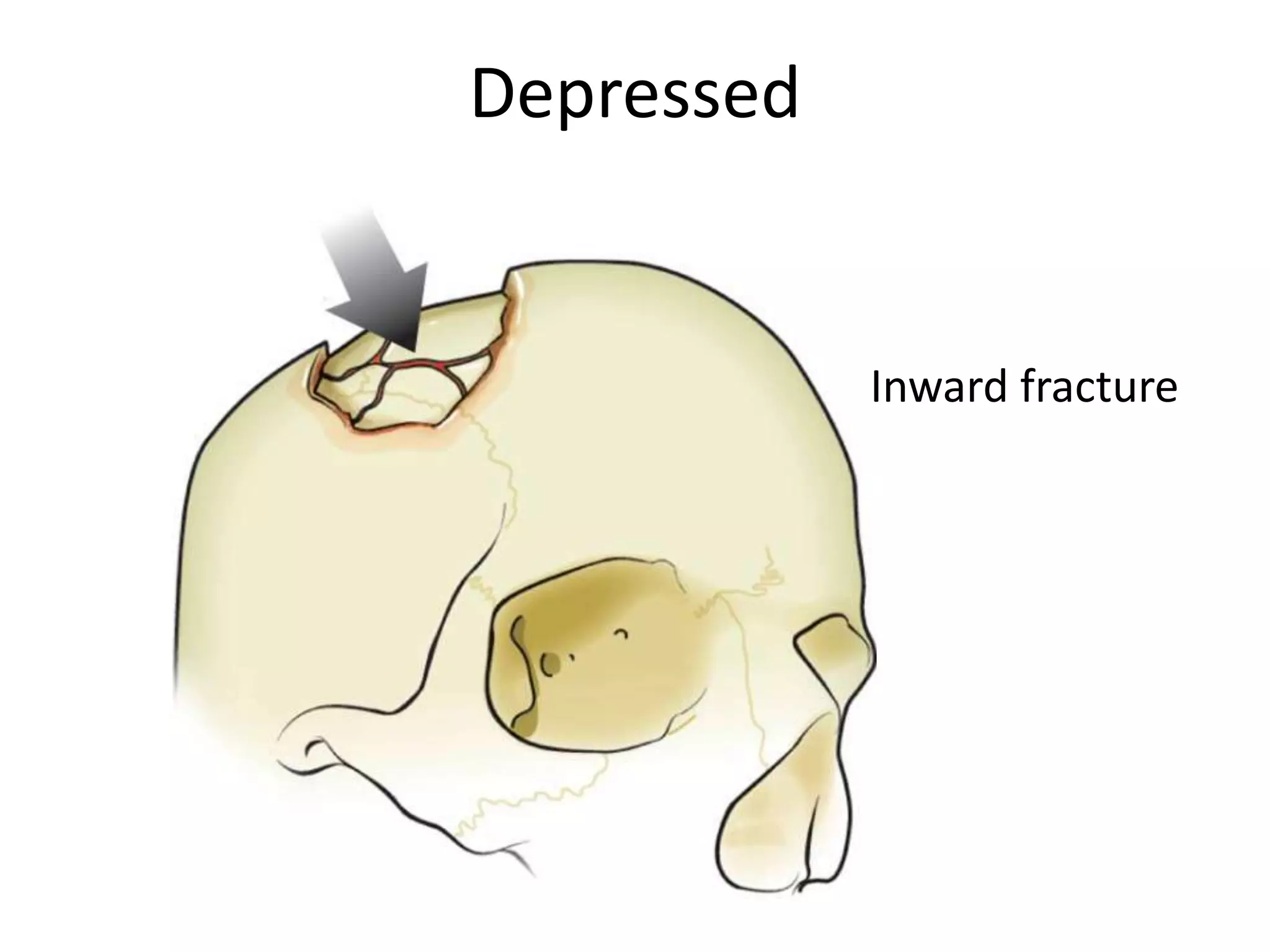
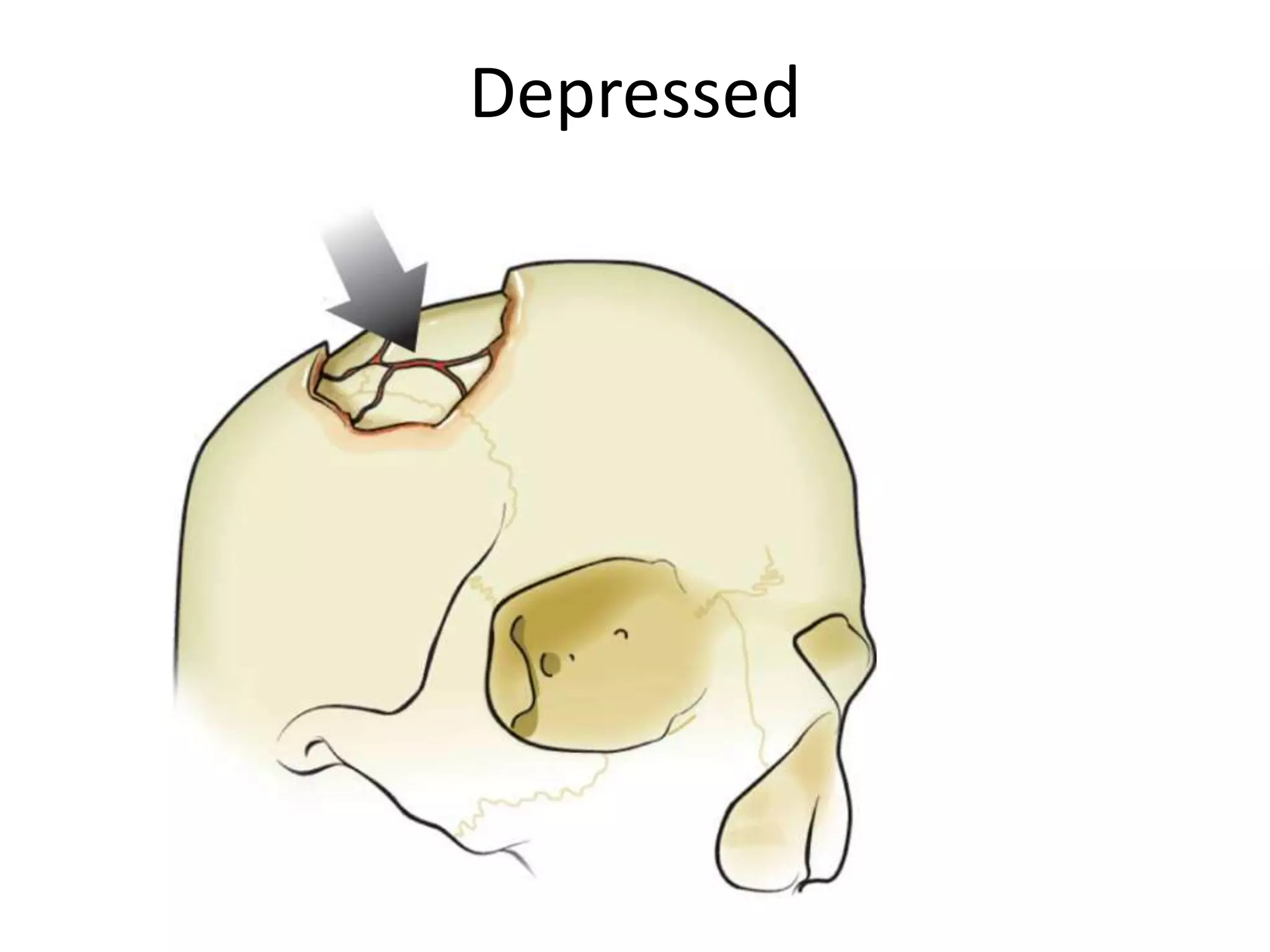
Depressed


            Inward fracture
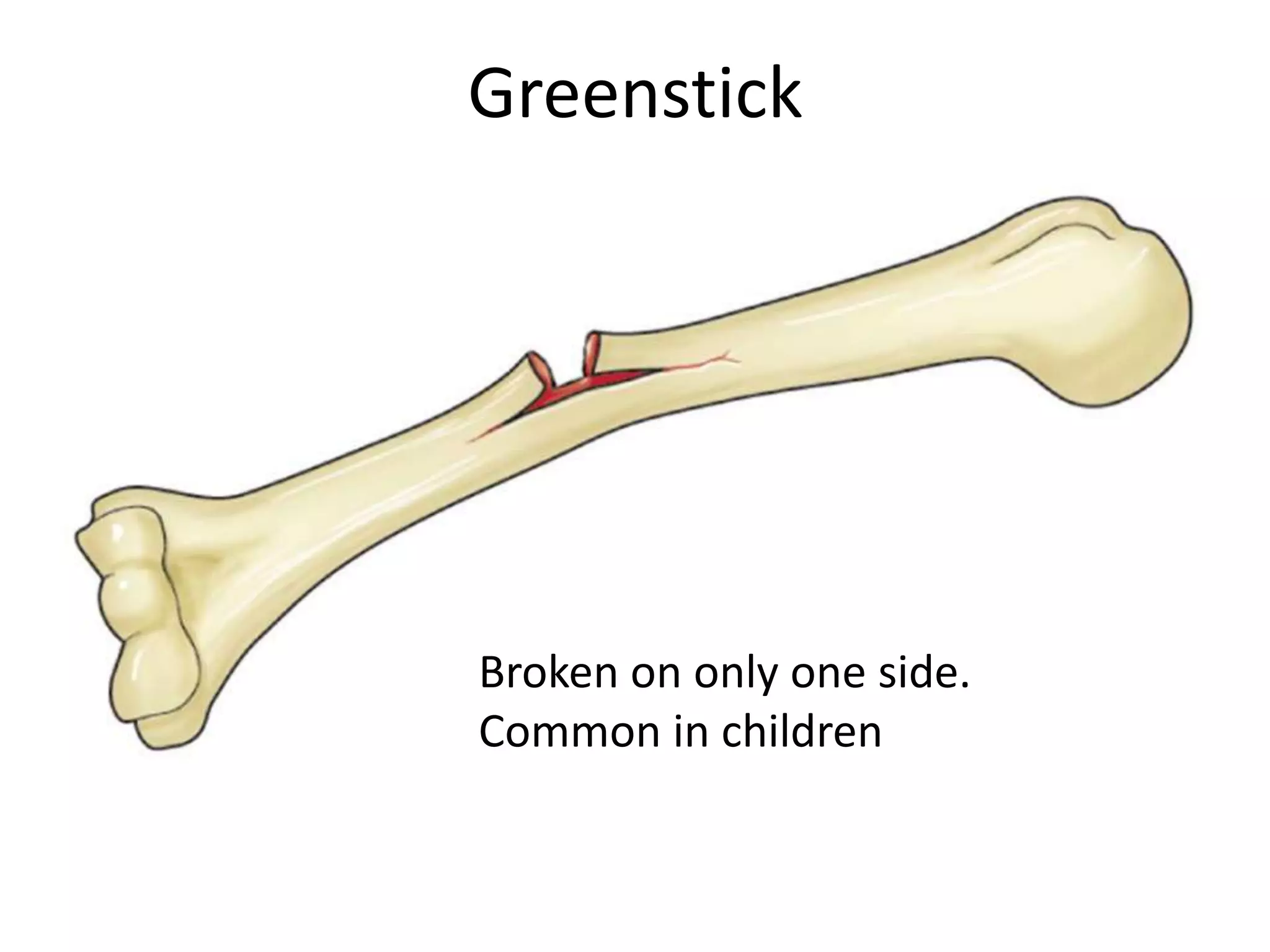
Greenstick


Broken on only one side.
Common in children
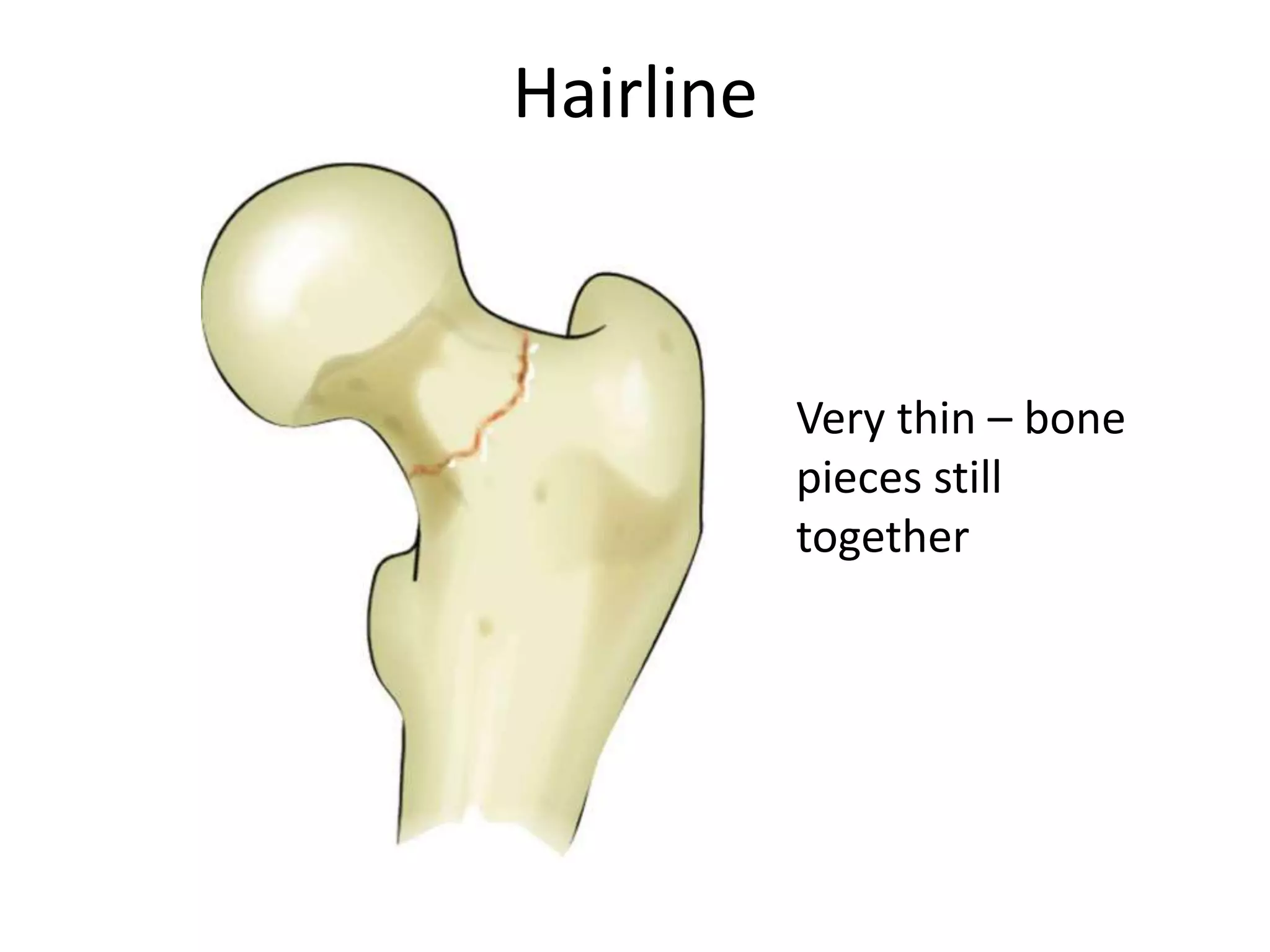
Hairline


           Very thin – bone
           pieces still
           together
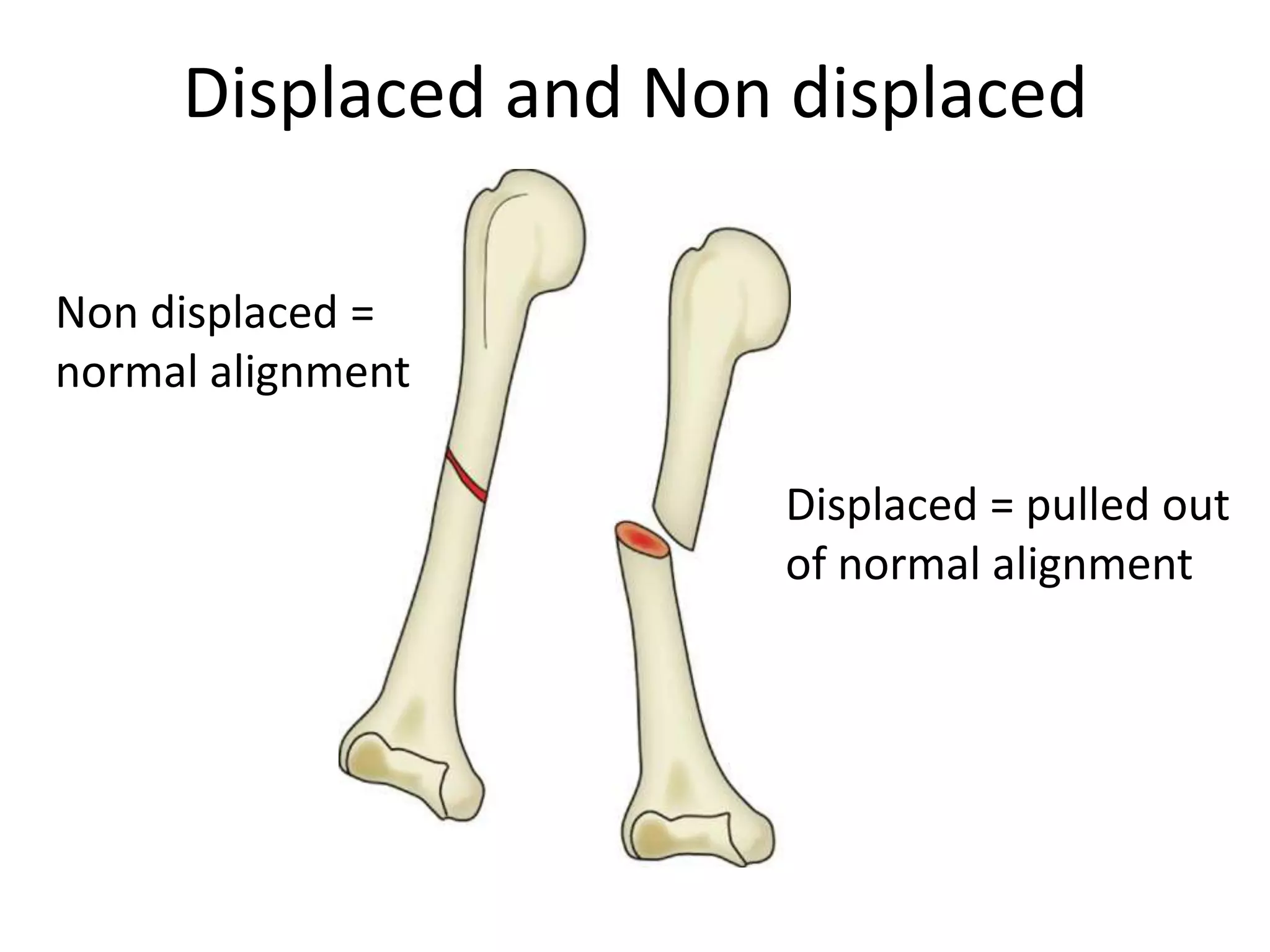
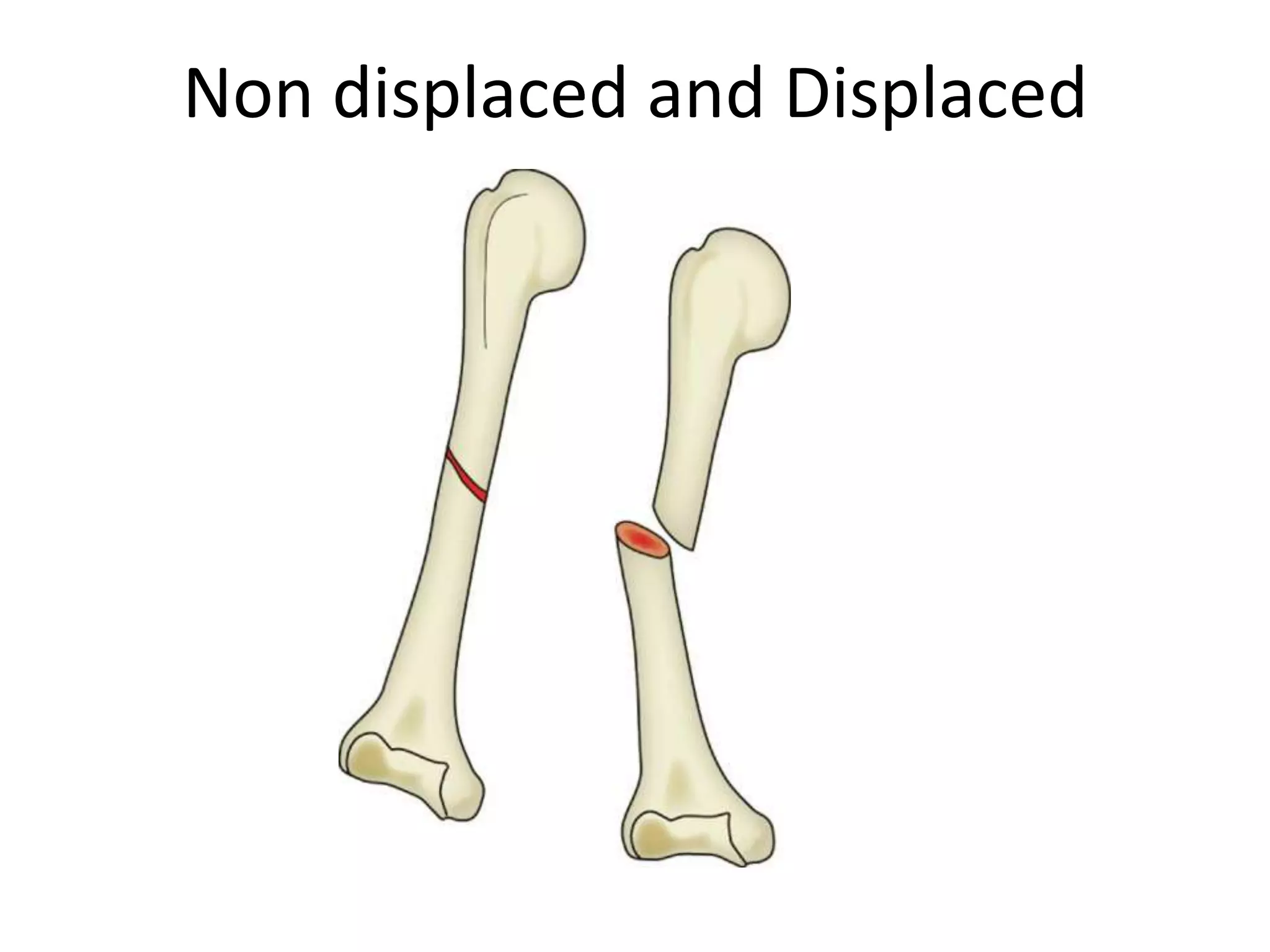
Displaced and Non displaced

Non displaced =
normal alignment

                      Displaced = pulled out
                      of normal alignment
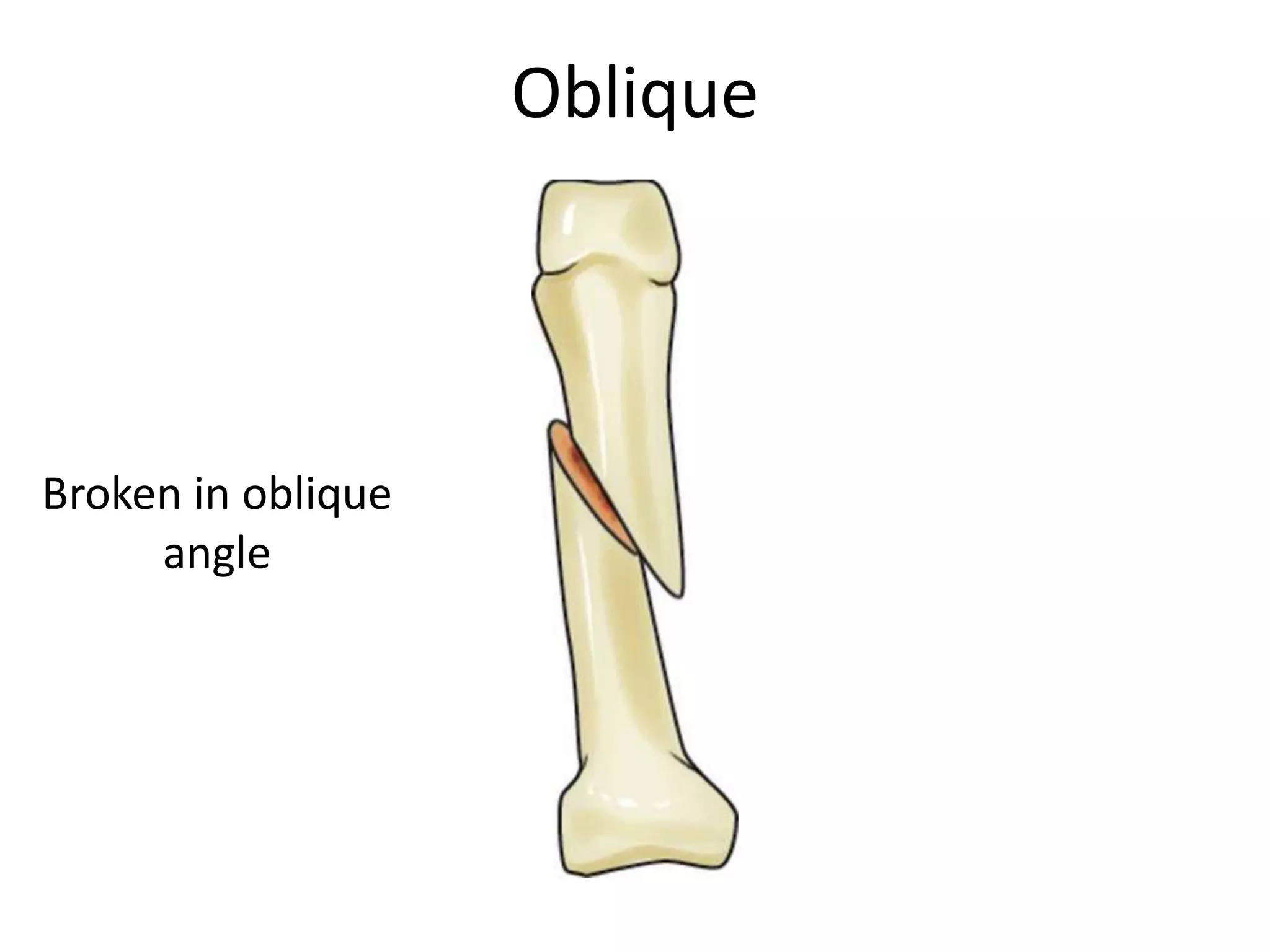
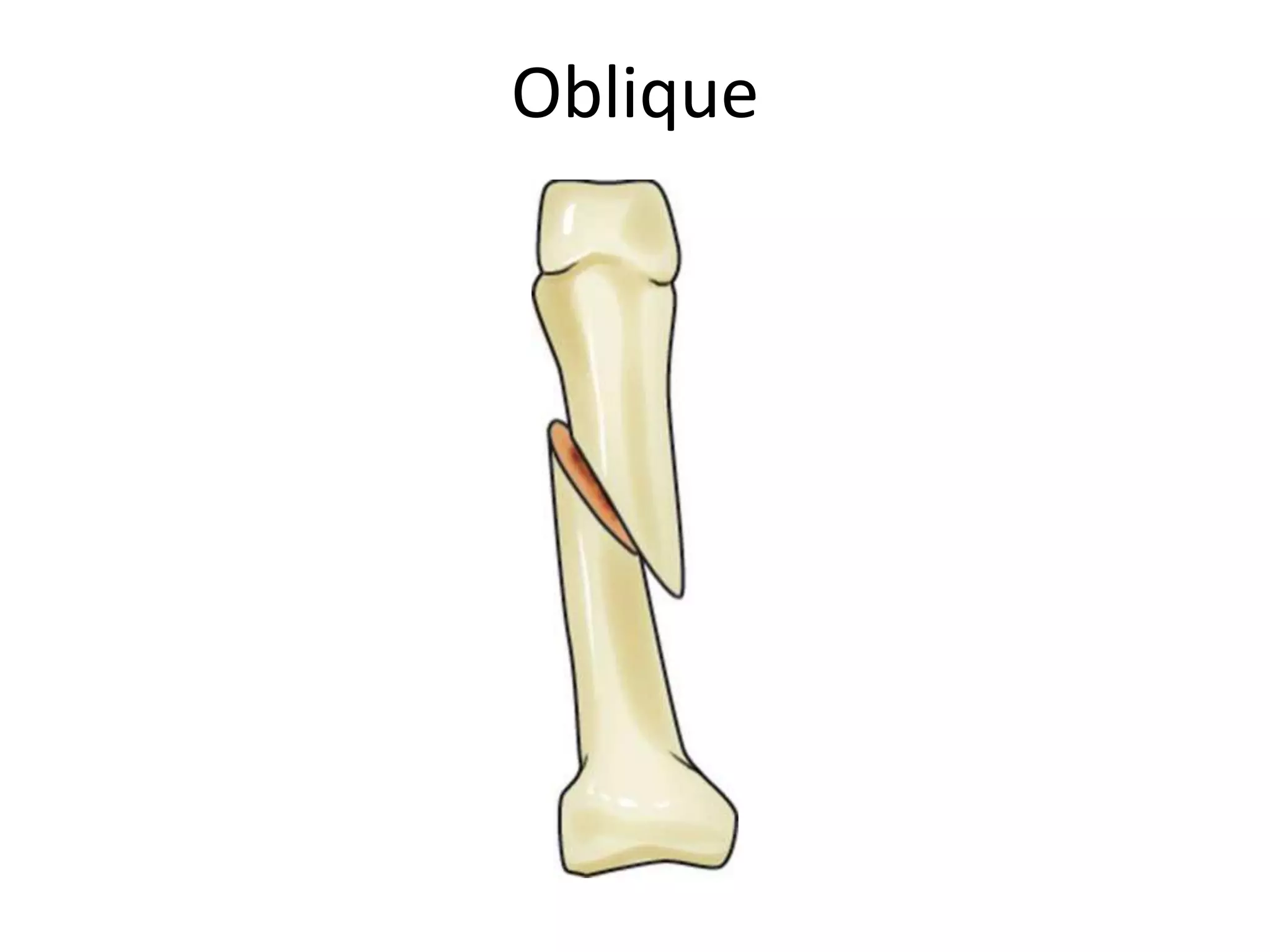
Oblique


Broken in oblique
     angle
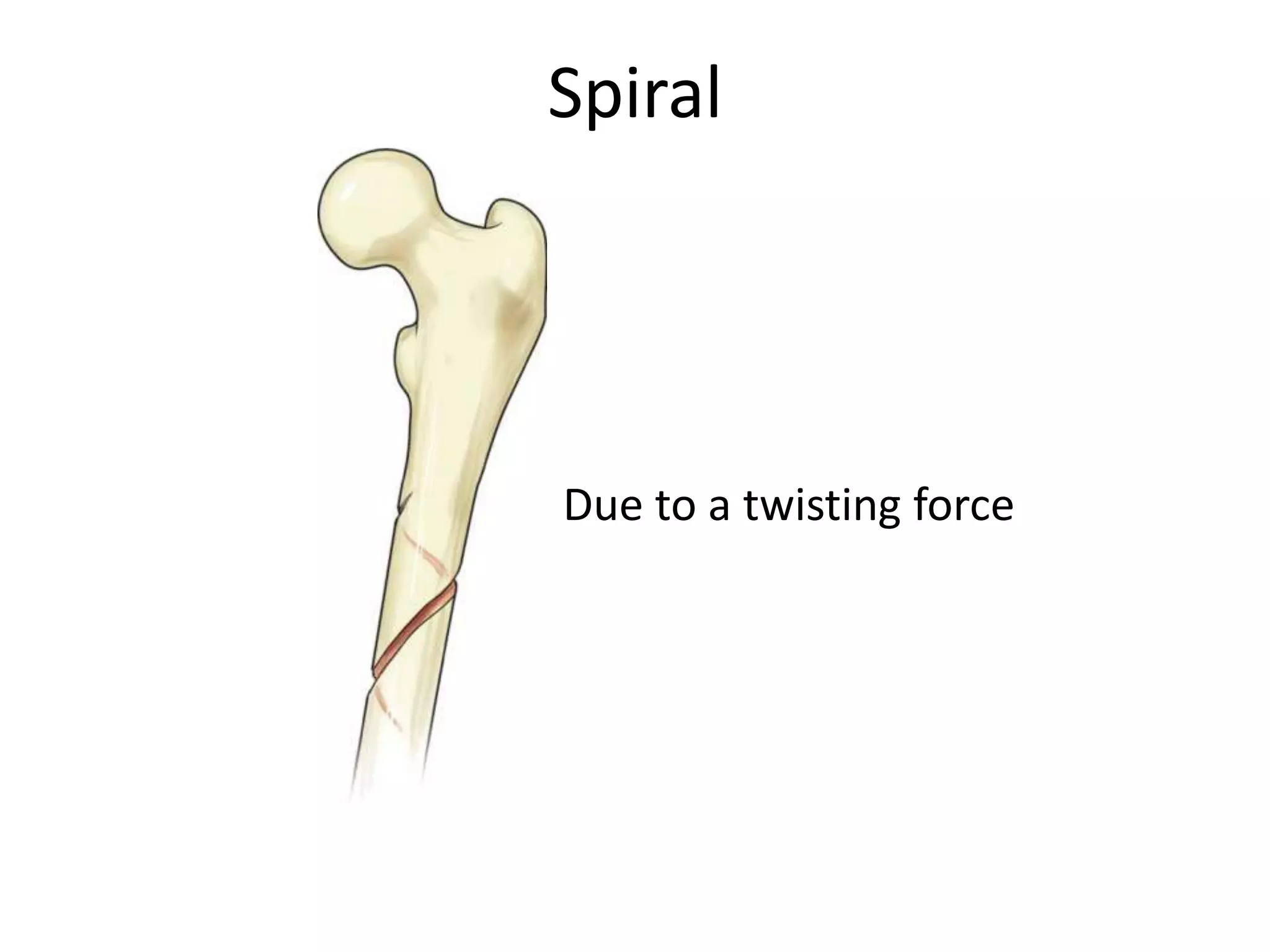
Spiral


Due to a twisting force
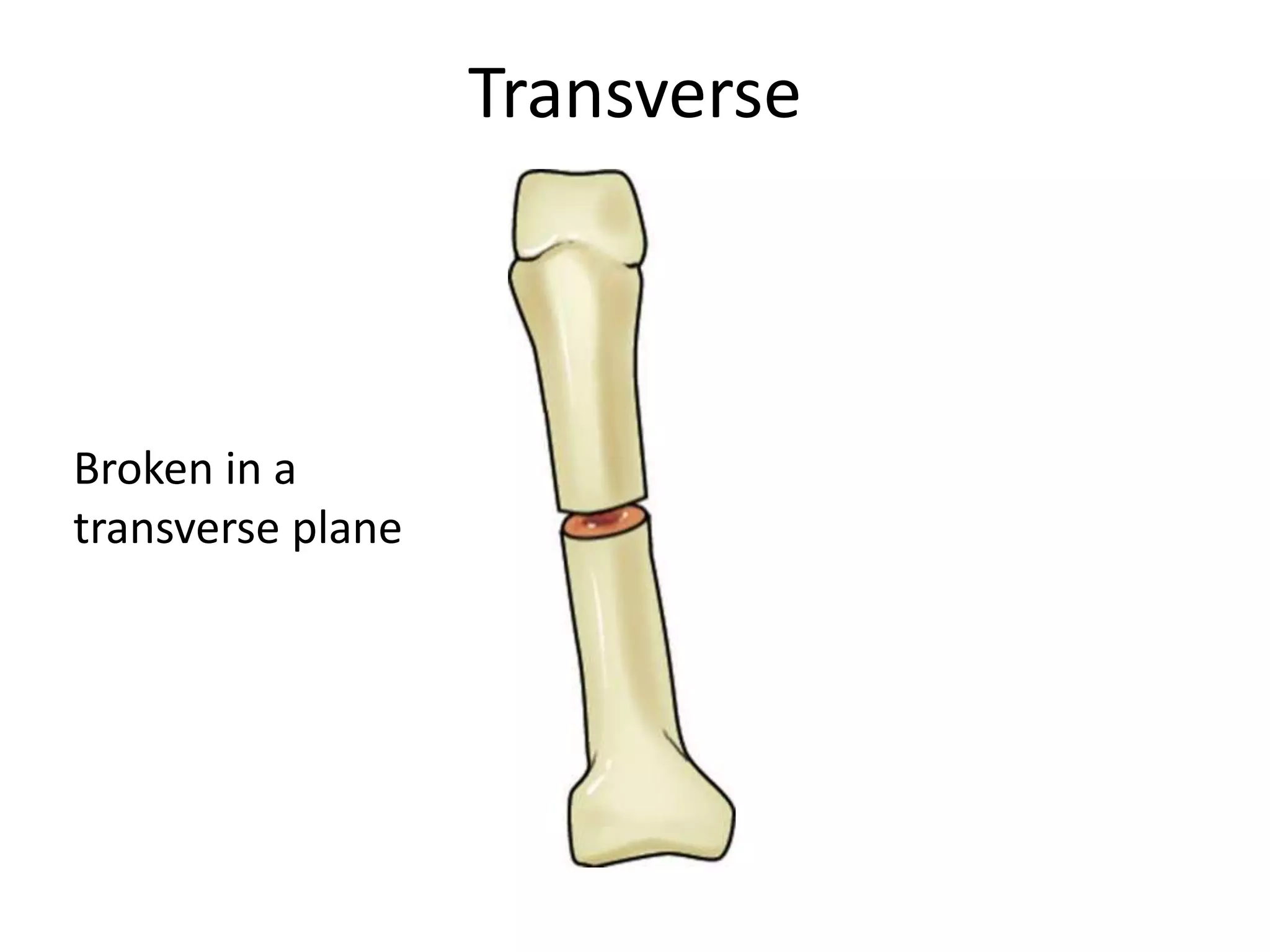
Transverse


Broken in a
transverse plane
Colles
Comminuted
Compression
Depressed
Greenstick
Hairline
Non displaced and Displaced
Oblique
Spiral
Transverse
ICD-10-CM Brief Overview

 Taking what you know in 9 and
        applying it to 10
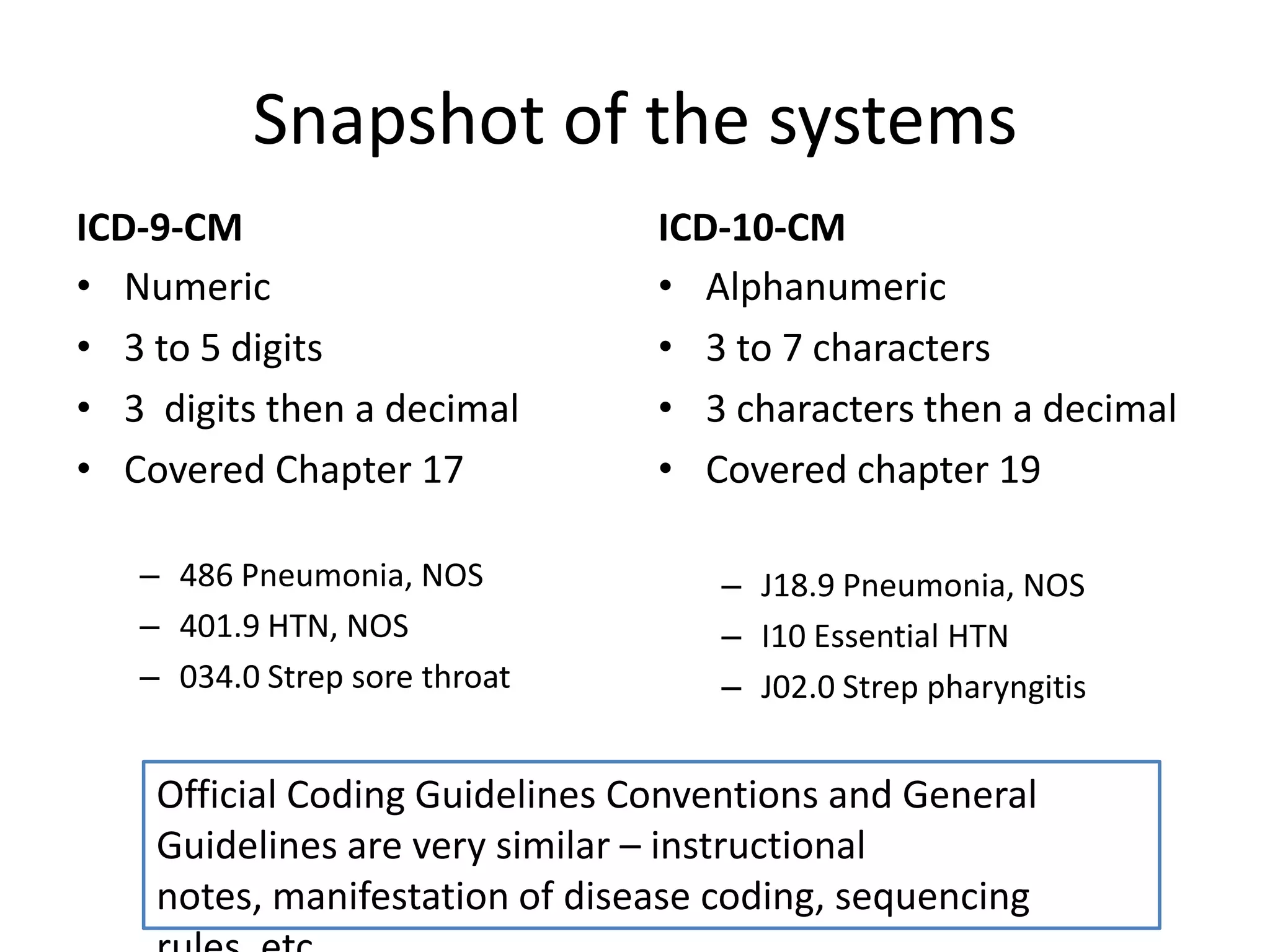
Snapshot of the systems
ICD-9-CM                        ICD-10-CM
• Numeric                       • Alphanumeric
• 3 to 5 digits                 • 3 to 7 characters
• 3 digits then a decimal       • 3 characters then a decimal
• Covered Chapter 17            • Covered chapter 19

   – 486 Pneumonia, NOS             – J18.9 Pneumonia, NOS
   – 401.9 HTN, NOS                 – I10 Essential HTN
   – 034.0 Strep sore throat        – J02.0 Strep pharyngitis


    Official Coding Guidelines Conventions and General
    Guidelines are very similar – instructional
    notes, manifestation of disease coding, sequencing
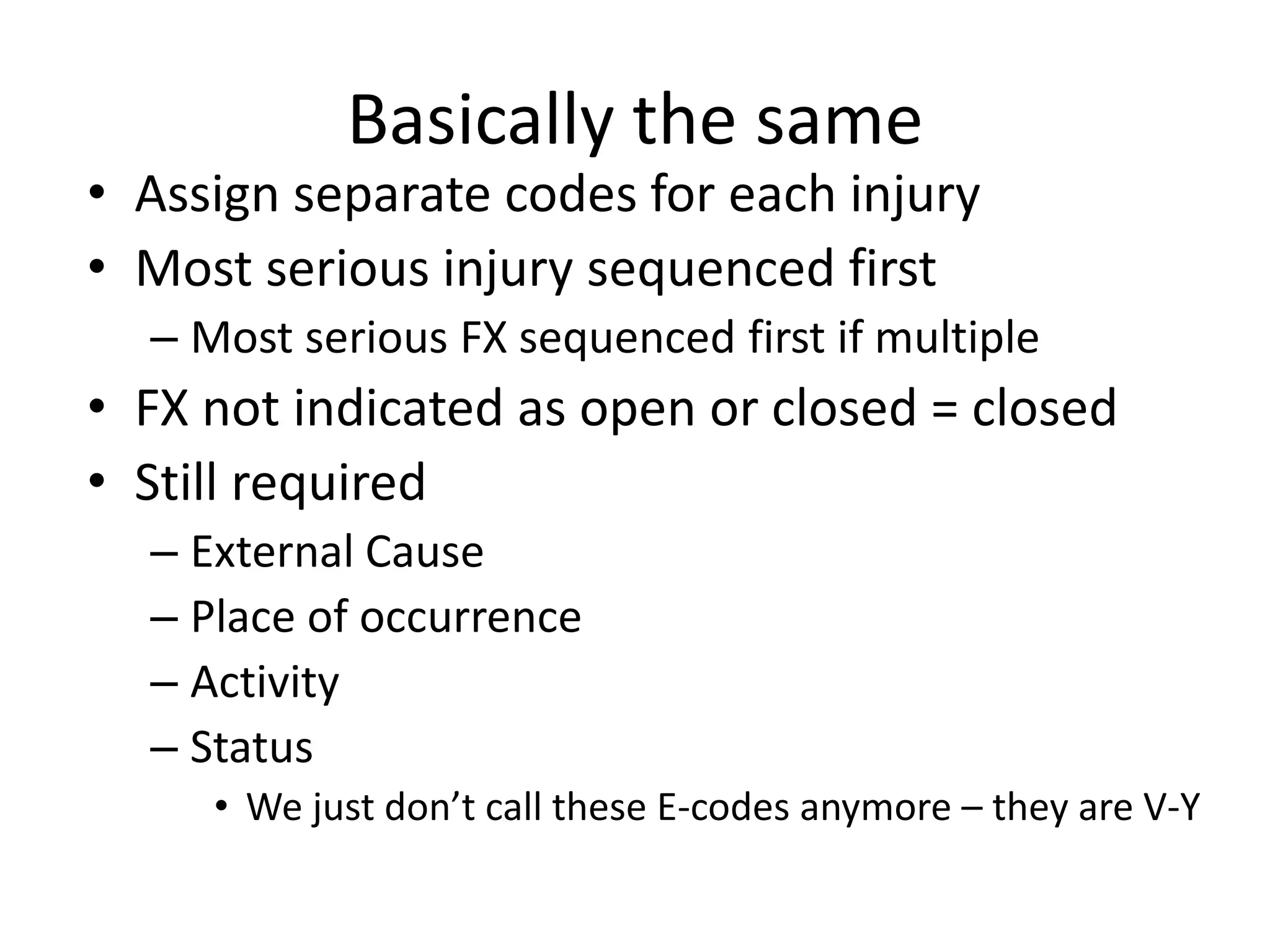
Basically the same
• Assign separate codes for each injury
• Most serious injury sequenced first
  – Most serious FX sequenced first if multiple
• FX not indicated as open or closed = closed
• Still required
  – External Cause
  – Place of occurrence
  – Activity
  – Status
     • We just don’t call these E-codes anymore – they are V-Y
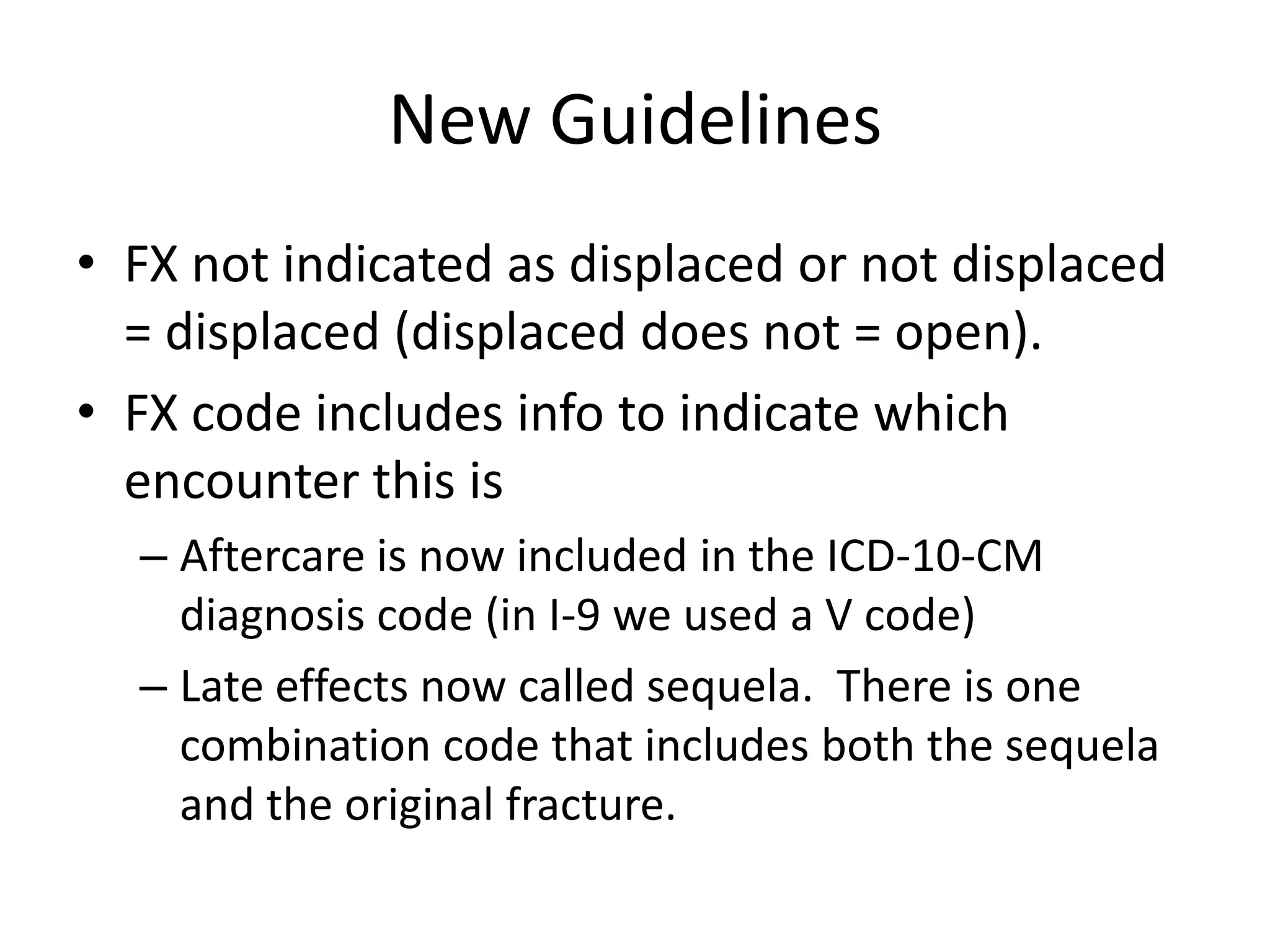
New Guidelines
• FX not indicated as displaced or not displaced
  = displaced (displaced does not = open).
• FX code includes info to indicate which
  encounter this is
  – Aftercare is now included in the ICD-10-CM
    diagnosis code (in I-9 we used a V code)
  – Late effects now called sequela. There is one
    combination code that includes both the sequela
    and the original fracture.
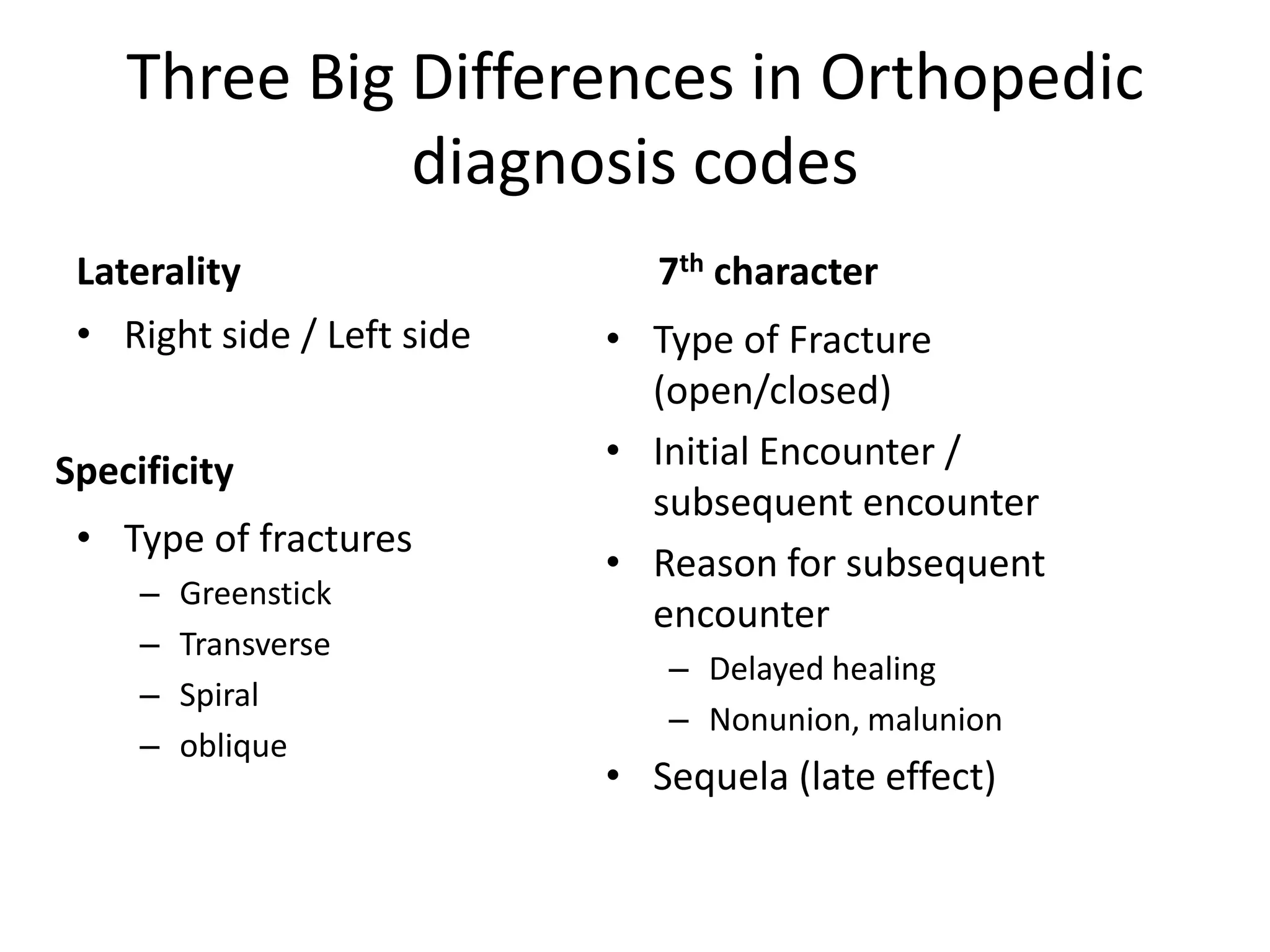
Three Big Differences in Orthopedic
              diagnosis codes
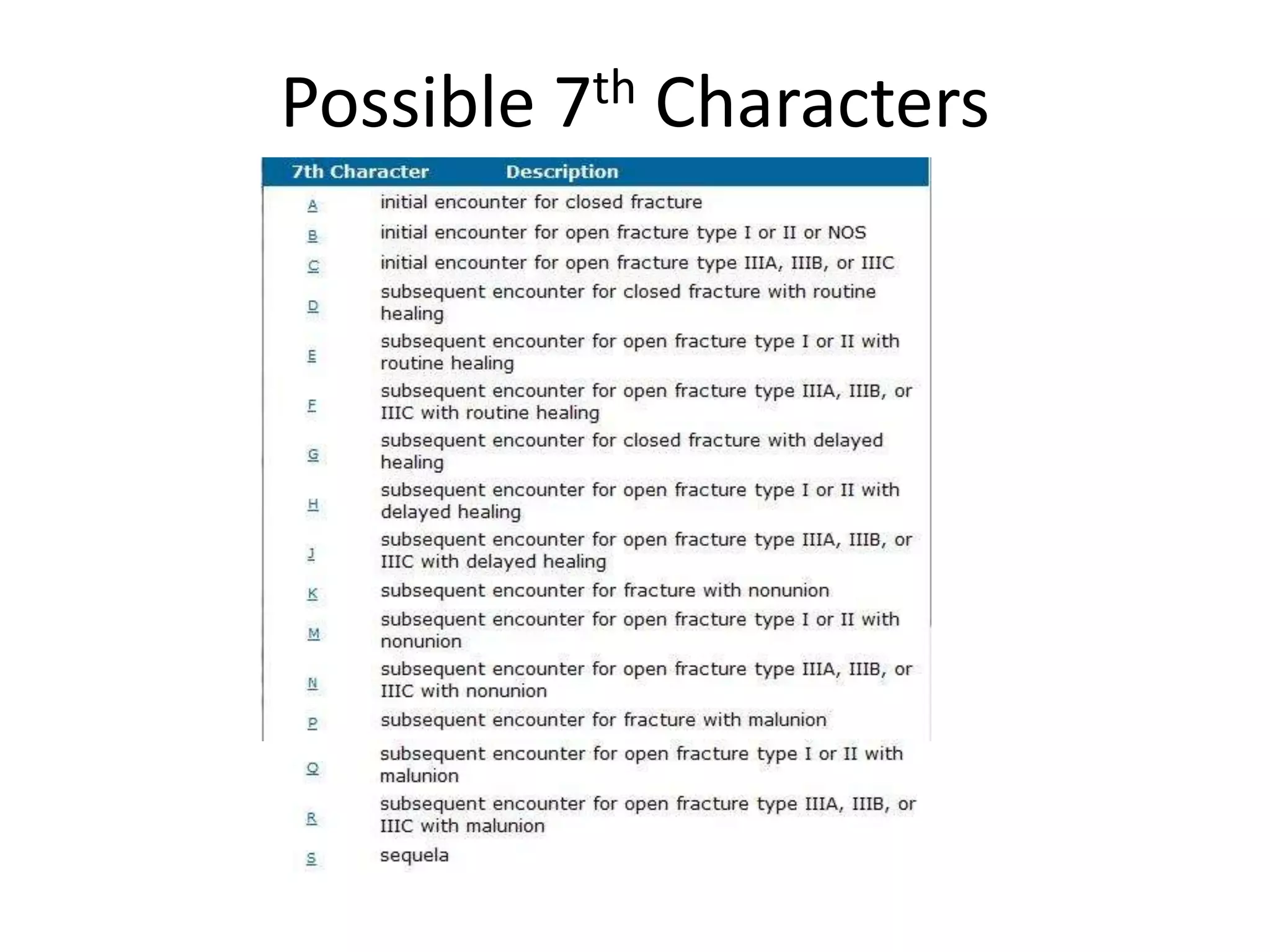
 Laterality                    7th character
 • Right side / Left side   • Type of Fracture
                              (open/closed)
Specificity                 • Initial Encounter /
                              subsequent encounter
 • Type of fractures
                            • Reason for subsequent
     –   Greenstick
                              encounter
     –   Transverse
                               – Delayed healing
     –   Spiral
                               – Nonunion, malunion
     –   oblique
                            • Sequela (late effect)
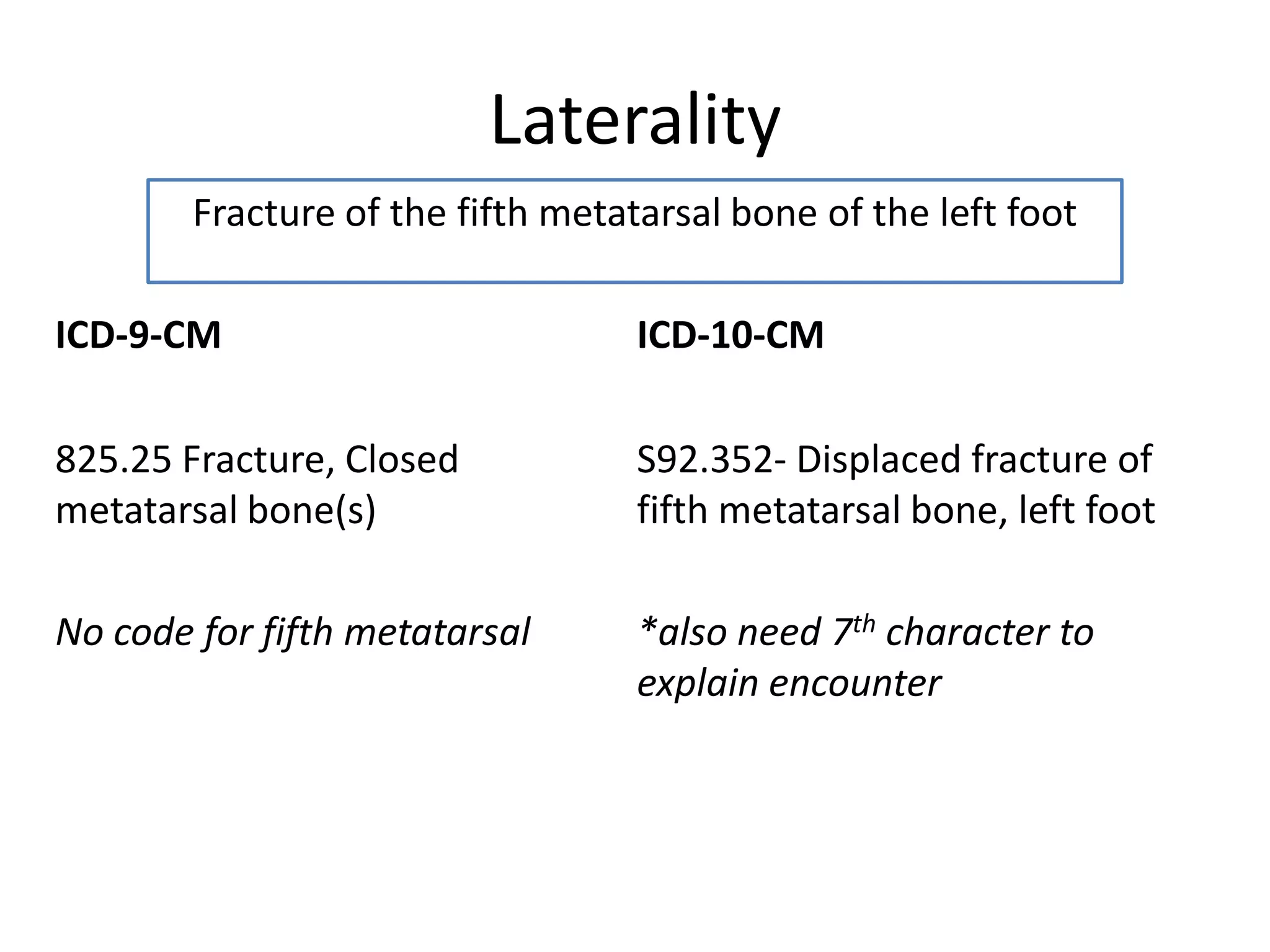
Laterality
        Fracture of the fifth metatarsal bone of the left foot

ICD-9-CM                           ICD-10-CM

825.25 Fracture, Closed            S92.352- Displaced fracture of
metatarsal bone(s)                 fifth metatarsal bone, left foot

No code for fifth metatarsal       *also need 7th character to
                                   explain encounter
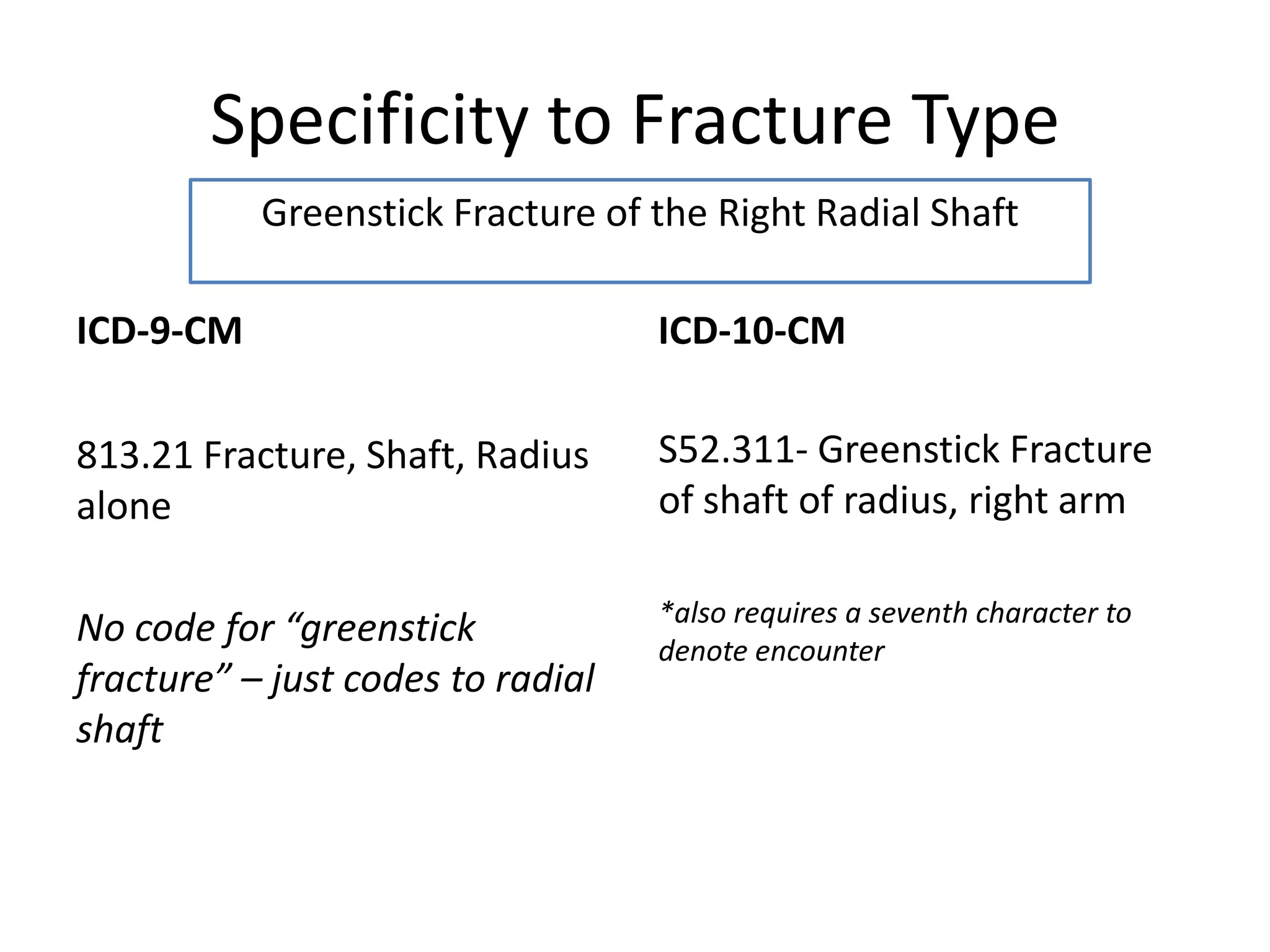
Specificity to Fracture Type
           Greenstick Fracture of the Right Radial Shaft

ICD-9-CM                           ICD-10-CM

813.21 Fracture, Shaft, Radius     S52.311- Greenstick Fracture
alone                              of shaft of radius, right arm

                                   *also requires a seventh character to
No code for “greenstick            denote encounter
fracture” – just codes to radial
shaft
Possible 7th Characters
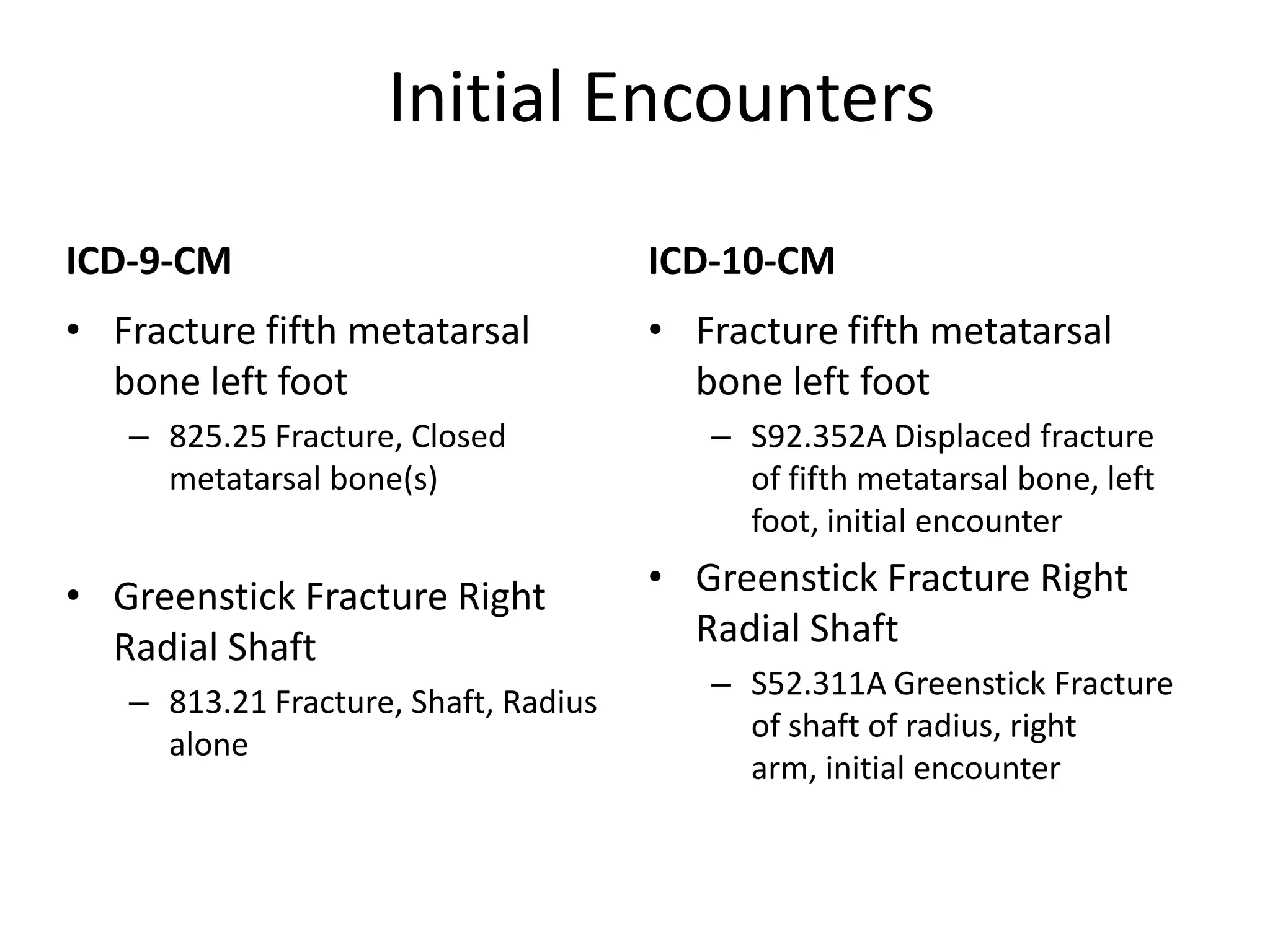
Initial Encounters
ICD-9-CM                              ICD-10-CM
• Fracture fifth metatarsal           • Fracture fifth metatarsal
  bone left foot                        bone left foot
   – 825.25 Fracture, Closed             – S92.352A Displaced fracture
     metatarsal bone(s)                    of fifth metatarsal bone, left
                                           foot, initial encounter

• Greenstick Fracture Right           • Greenstick Fracture Right
  Radial Shaft                          Radial Shaft
                                         – S52.311A Greenstick Fracture
   – 813.21 Fracture, Shaft, Radius
                                           of shaft of radius, right
     alone
                                           arm, initial encounter
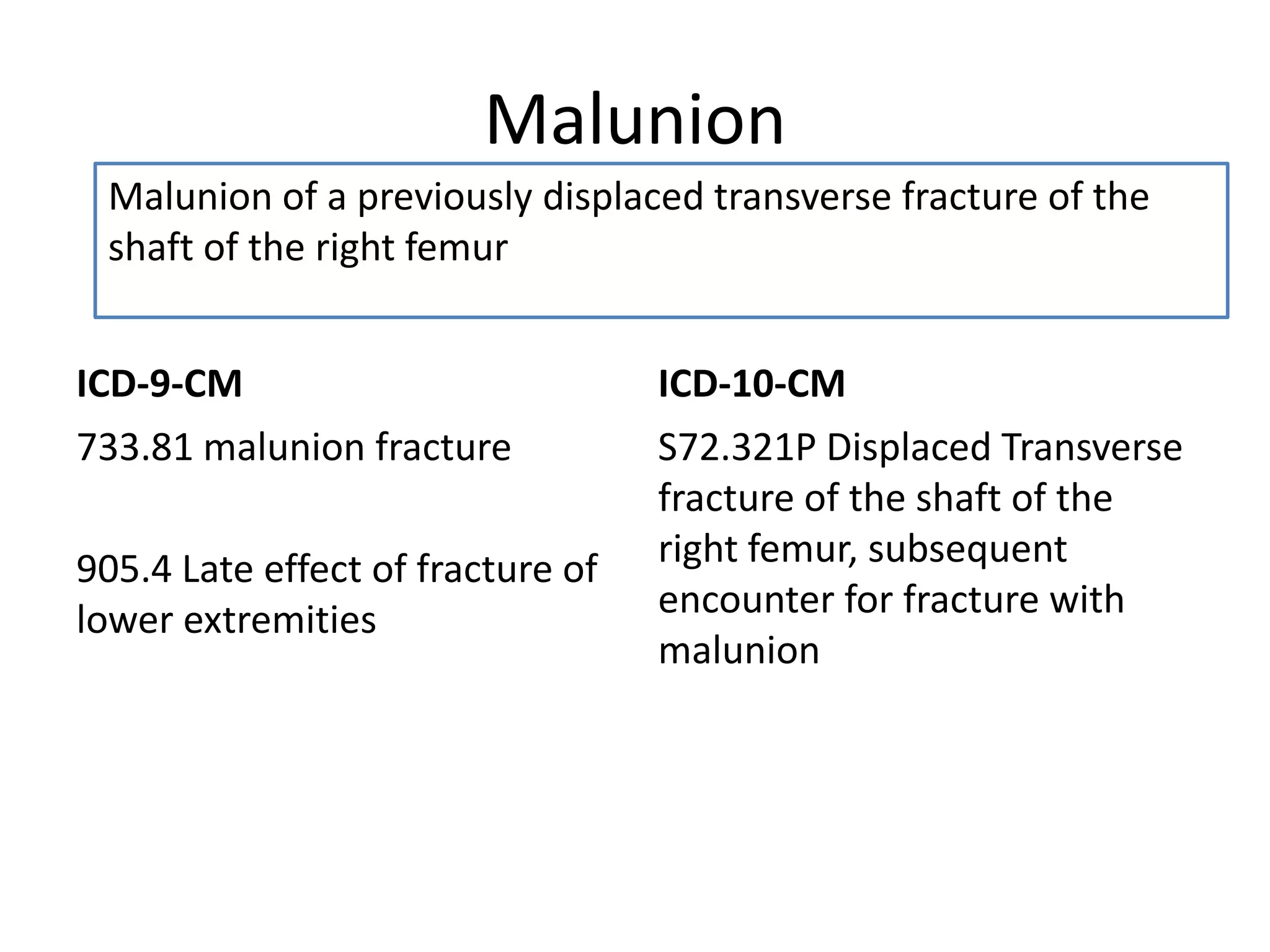
Malunion
 Malunion of a previously displaced transverse fracture of the
 shaft of the right femur


ICD-9-CM                           ICD-10-CM
733.81 malunion fracture           S72.321P Displaced Transverse
                                   fracture of the shaft of the
905.4 Late effect of fracture of   right femur, subsequent
lower extremities                  encounter for fracture with
                                   malunion
Encoder Practice


Give me some to look up!
Getting to Know – ICD-10-PCS
• Totally different from ICD-9-CM
• How?
  – Structure
  – Organization
  – Expandability
Other Important Features of ICD-10-
                   PCS
•   Standardized terminology
•   Specificity
•   No explicit “NOS” code options
•   Limited use of “NEC” code options
Format / Structure of ICD-10-PCS
                  Codes
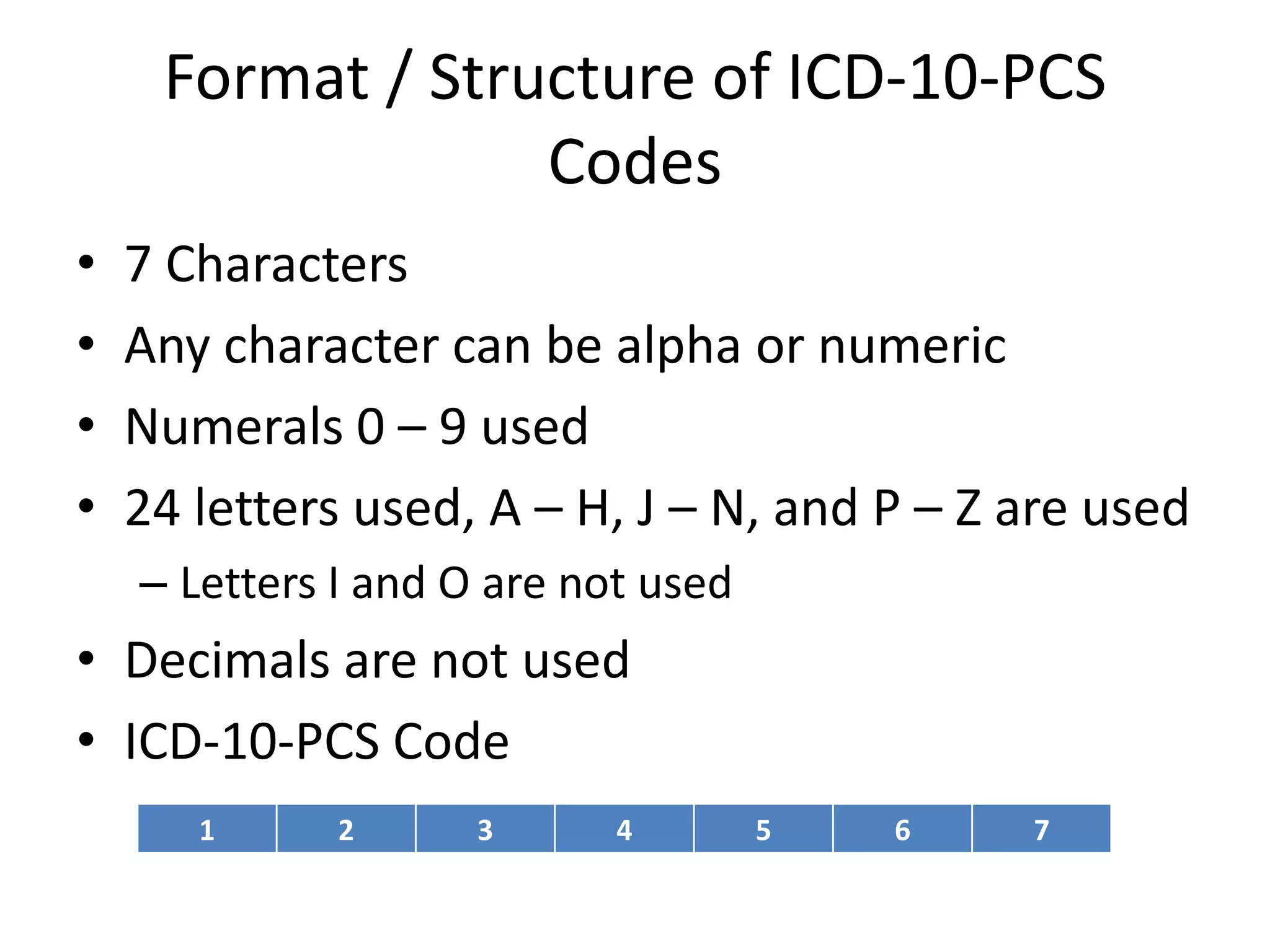
•   7 Characters
•   Any character can be alpha or numeric
•   Numerals 0 – 9 used
•   24 letters used, A – H, J – N, and P – Z are used
    – Letters I and O are not used
• Decimals are not used
• ICD-10-PCS Code
       1      2      3      4        5   6   7
Valid Code Example Using ICD-10-PCS
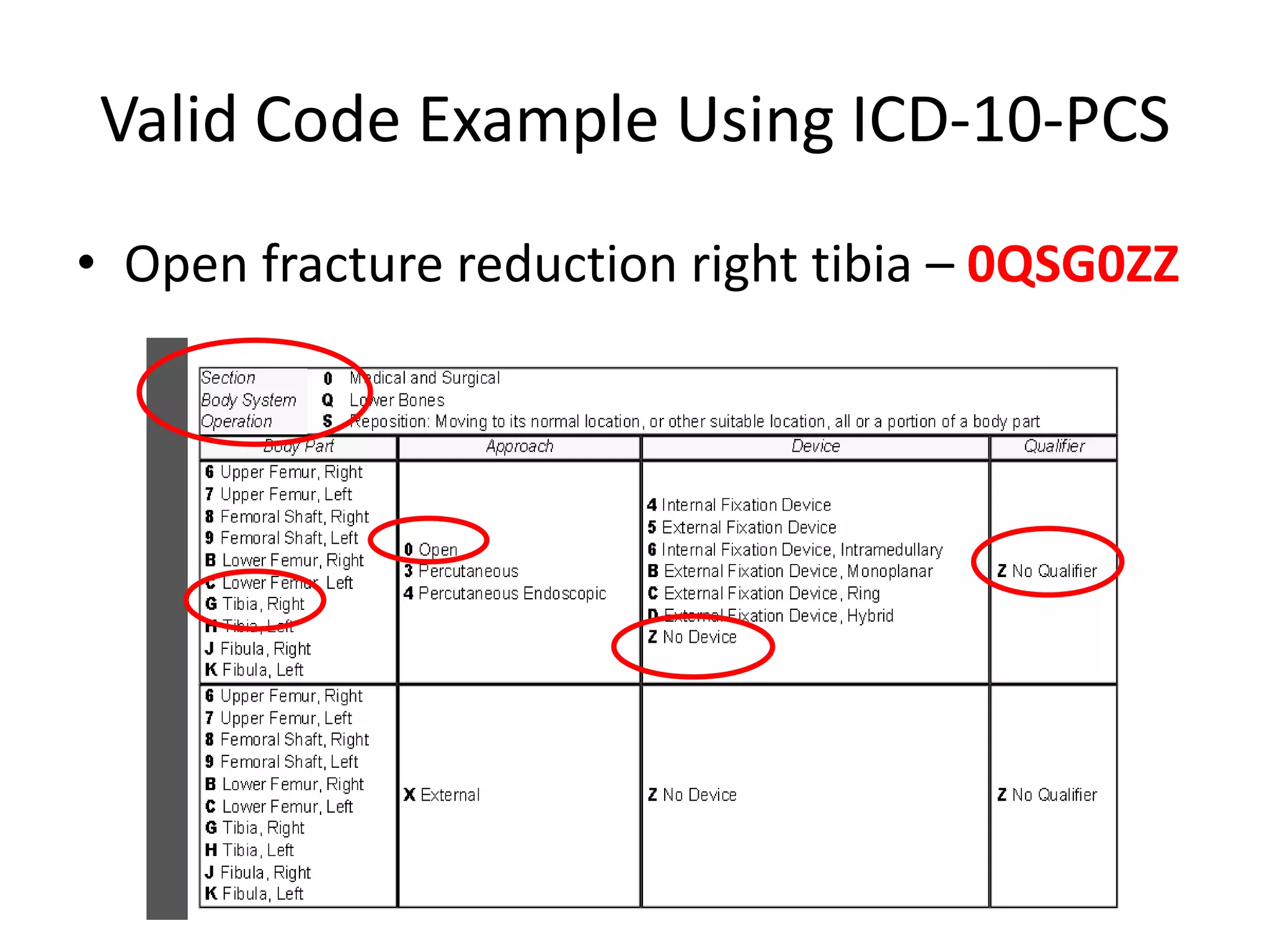
• Open fracture reduction right tibia – 0QSG0ZZ
Let’s Play A Game!
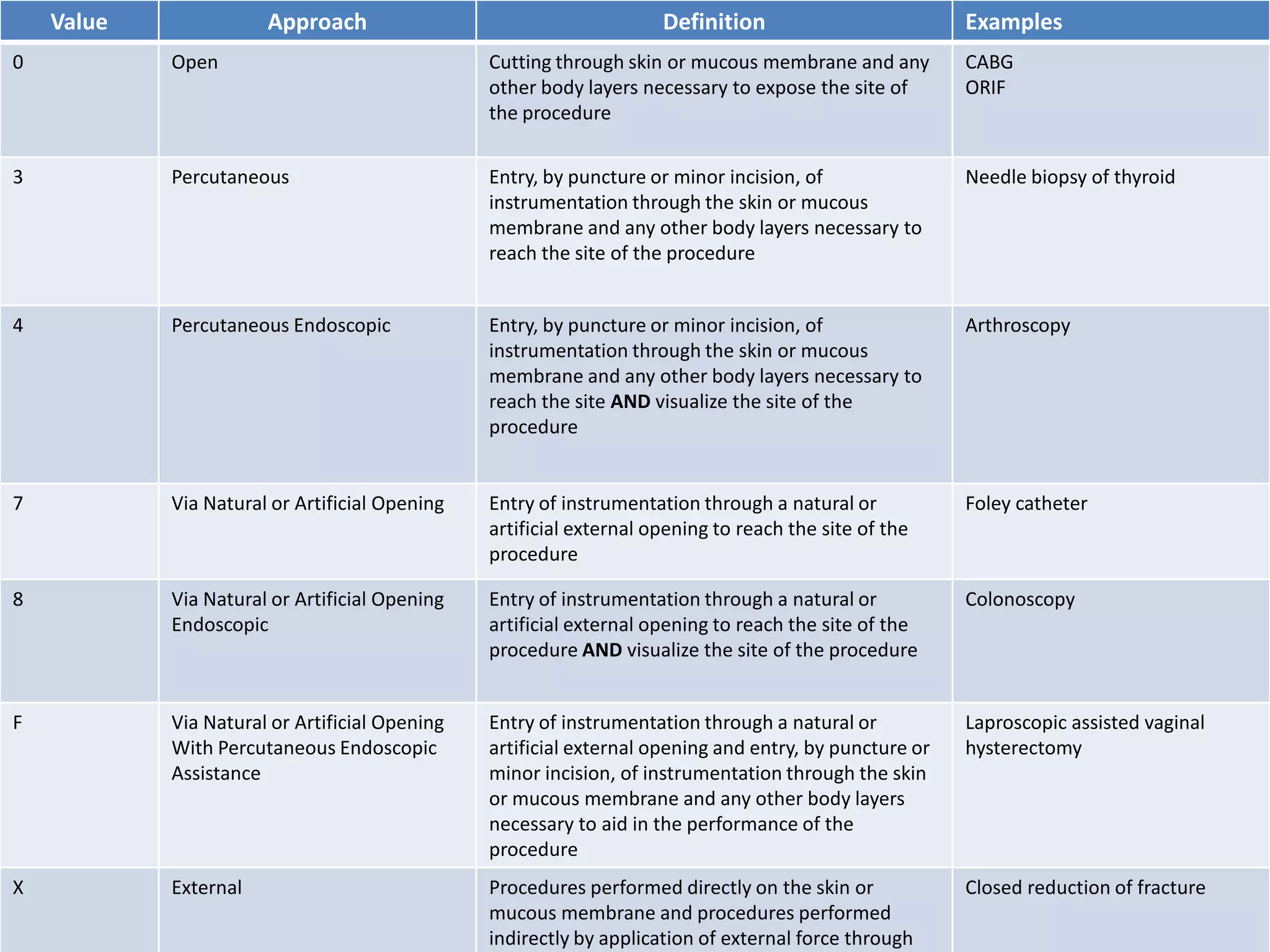
Value              Approach                                      Definition                         Examples
0           Open                                Cutting through skin or mucous membrane and any         CABG
                                                other body layers necessary to expose the site of       ORIF
                                                the procedure


3           Percutaneous                        Entry, by puncture or minor incision, of                Needle biopsy of thyroid
                                                instrumentation through the skin or mucous
                                                membrane and any other body layers necessary to
                                                reach the site of the procedure


4           Percutaneous Endoscopic             Entry, by puncture or minor incision, of                Arthroscopy
                                                instrumentation through the skin or mucous
                                                membrane and any other body layers necessary to
                                                reach the site AND visualize the site of the
                                                procedure


7           Via Natural or Artificial Opening   Entry of instrumentation through a natural or           Foley catheter
                                                artificial external opening to reach the site of the
                                                procedure

8           Via Natural or Artificial Opening   Entry of instrumentation through a natural or           Colonoscopy
            Endoscopic                          artificial external opening to reach the site of the
                                                procedure AND visualize the site of the procedure


F           Via Natural or Artificial Opening   Entry of instrumentation through a natural or           Laproscopic assisted vaginal
            With Percutaneous Endoscopic        artificial external opening and entry, by puncture or   hysterectomy
            Assistance                          minor incision, of instrumentation through the skin
                                                or mucous membrane and any other body layers
                                                necessary to aid in the performance of the
                                                procedure
X           External                            Procedures performed directly on the skin or            Closed reduction of fracture
                                                mucous membrane and procedures performed
                                                indirectly by application of external force through
Let’s Play Another Game!
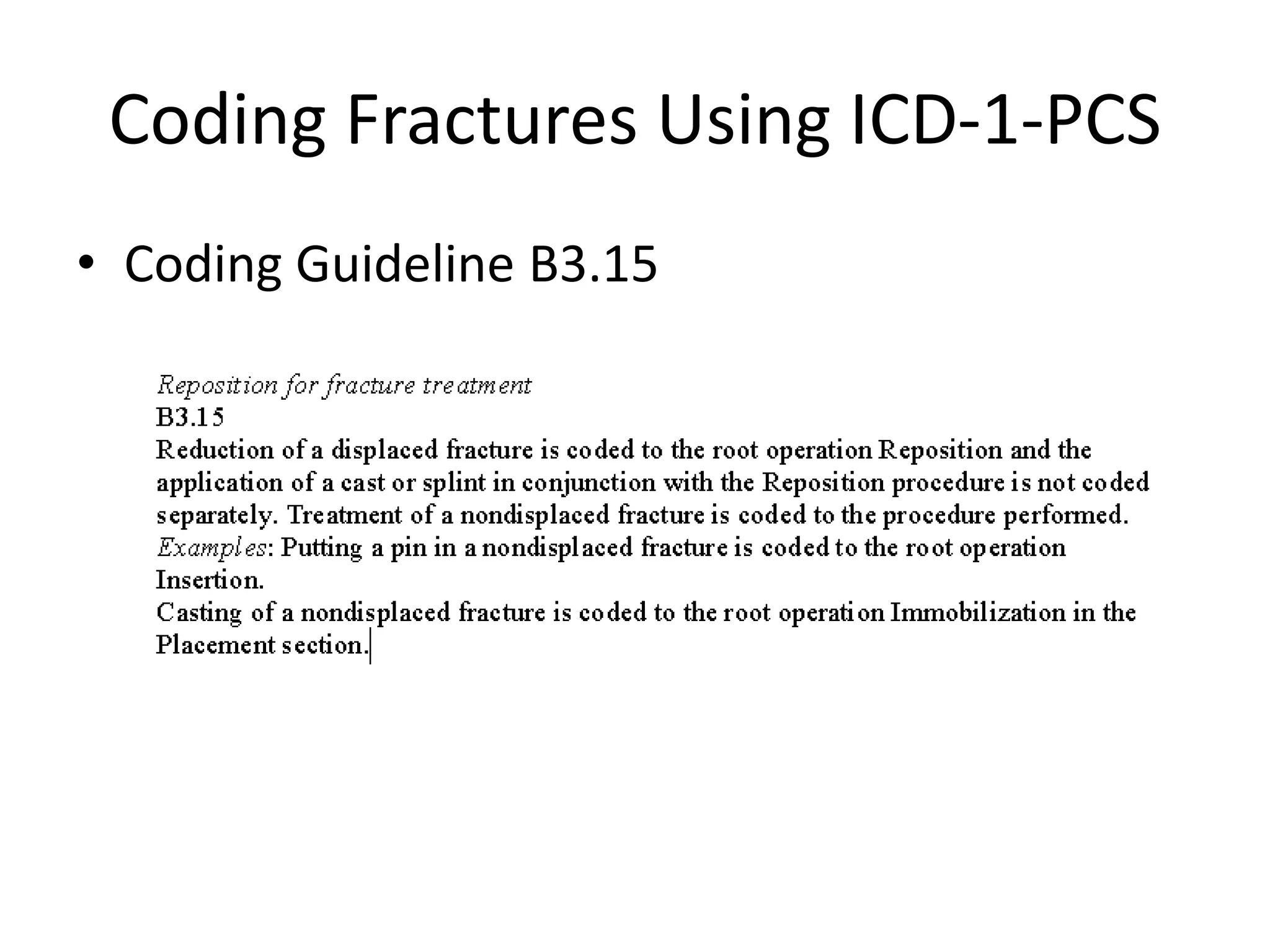
Coding Fractures Using ICD-1-PCS
• Coding Guideline B3.15
Let’s Play Another Game
               Coding Scenarios
• Case 1
• Case 2
• Case 3
Resources
• ICD-10-CM Official Coding Guidelines FY11
  http://www.cdc.gov/nchs/data/icd10/10cmguide
  lines2012.pdf
• ICD-9-CM Official Coding Guidelines FY11
  http://www.cdc.gov/nchs/data/icd9/icdguide10.
  pdf
• Root Operations: Key to Procedure Coding in ICD-
  10-PCS, Anne Barta, MSA, RHIA & Ann
  Zeisset, RHIT, CCS, CCS-P
• Microsoft Clip Art

Fracture Coding CM and PCS

  • 1.
    ICD-10-CM and ICD-10-PCS Fracture Coding Char Gore, RHIA, CCS Kim Lee, RHIA, CCS-P, CPC
  • 2.
  • 3.
    Abbreviations - General • CC = chief complaint • DS = discharge summary • DX = diagnosis • H&P = history and physical • PE = physical exam • PMH = past medical history • ROS = review of systems
  • 4.
    Abbreviations - Orthopedic • FX = fracture • C1-C7 = cervical vertebrae • DIP = distal interphalangeal (joint) • L1-L5 = lumbar vertebrae • LLE = left lower extremity • LUE = left upper extremity • RLE = right lower extremity • RLU = right upper extremity
  • 5.
    ORIF = Open reduction and internal fixation • PIP = proximal interphalagenal (joint) • ROM = range of motion • S1 = first sacral vertebra • T1-T12 = thoracic vertebrae • THR = total hip replacement • Tib-fib = tibia-fibula
  • 7.
  • 8.
  • 10.
  • 15.
  • 33.
    FRACTURES • Open • Hairline • Closed • Displaced • Colles • Nondisplaced • Comminuted • Oblique • Compression • Spiral • Depressed • Transverse • Greenstick
  • 34.
    Open Vs. Closed Open Closed Bone breaks through the Bone does not break through overlying skin the overlying skin
  • 35.
  • 36.
    Comminuted Bone crushed into several pieces
  • 37.
    Compression Vertebrae Could be compressed traumatic (from a together. fall on the buttocks) or pathologic (due to disease where it collapses on itself)
  • 38.
    Depressed Inward fracture
  • 39.
    Greenstick Broken on onlyone side. Common in children
  • 40.
    Hairline Very thin – bone pieces still together
  • 41.
    Displaced and Nondisplaced Non displaced = normal alignment Displaced = pulled out of normal alignment
  • 42.
  • 43.
    Spiral Due to atwisting force
  • 44.
  • 46.
  • 47.
  • 48.
  • 49.
  • 50.
  • 51.
  • 52.
  • 53.
  • 54.
  • 55.
  • 57.
    ICD-10-CM Brief Overview Taking what you know in 9 and applying it to 10
  • 58.
    Snapshot of thesystems ICD-9-CM ICD-10-CM • Numeric • Alphanumeric • 3 to 5 digits • 3 to 7 characters • 3 digits then a decimal • 3 characters then a decimal • Covered Chapter 17 • Covered chapter 19 – 486 Pneumonia, NOS – J18.9 Pneumonia, NOS – 401.9 HTN, NOS – I10 Essential HTN – 034.0 Strep sore throat – J02.0 Strep pharyngitis Official Coding Guidelines Conventions and General Guidelines are very similar – instructional notes, manifestation of disease coding, sequencing
  • 59.
    Basically the same •Assign separate codes for each injury • Most serious injury sequenced first – Most serious FX sequenced first if multiple • FX not indicated as open or closed = closed • Still required – External Cause – Place of occurrence – Activity – Status • We just don’t call these E-codes anymore – they are V-Y
  • 60.
    New Guidelines • FXnot indicated as displaced or not displaced = displaced (displaced does not = open). • FX code includes info to indicate which encounter this is – Aftercare is now included in the ICD-10-CM diagnosis code (in I-9 we used a V code) – Late effects now called sequela. There is one combination code that includes both the sequela and the original fracture.
  • 61.
    Three Big Differencesin Orthopedic diagnosis codes Laterality 7th character • Right side / Left side • Type of Fracture (open/closed) Specificity • Initial Encounter / subsequent encounter • Type of fractures • Reason for subsequent – Greenstick encounter – Transverse – Delayed healing – Spiral – Nonunion, malunion – oblique • Sequela (late effect)
  • 62.
    Laterality Fracture of the fifth metatarsal bone of the left foot ICD-9-CM ICD-10-CM 825.25 Fracture, Closed S92.352- Displaced fracture of metatarsal bone(s) fifth metatarsal bone, left foot No code for fifth metatarsal *also need 7th character to explain encounter
  • 63.
    Specificity to FractureType Greenstick Fracture of the Right Radial Shaft ICD-9-CM ICD-10-CM 813.21 Fracture, Shaft, Radius S52.311- Greenstick Fracture alone of shaft of radius, right arm *also requires a seventh character to No code for “greenstick denote encounter fracture” – just codes to radial shaft
  • 64.
  • 65.
    Initial Encounters ICD-9-CM ICD-10-CM • Fracture fifth metatarsal • Fracture fifth metatarsal bone left foot bone left foot – 825.25 Fracture, Closed – S92.352A Displaced fracture metatarsal bone(s) of fifth metatarsal bone, left foot, initial encounter • Greenstick Fracture Right • Greenstick Fracture Right Radial Shaft Radial Shaft – S52.311A Greenstick Fracture – 813.21 Fracture, Shaft, Radius of shaft of radius, right alone arm, initial encounter
  • 66.
    Malunion Malunion ofa previously displaced transverse fracture of the shaft of the right femur ICD-9-CM ICD-10-CM 733.81 malunion fracture S72.321P Displaced Transverse fracture of the shaft of the 905.4 Late effect of fracture of right femur, subsequent lower extremities encounter for fracture with malunion
  • 67.
    Encoder Practice Give mesome to look up!
  • 68.
    Getting to Know– ICD-10-PCS • Totally different from ICD-9-CM • How? – Structure – Organization – Expandability
  • 69.
    Other Important Featuresof ICD-10- PCS • Standardized terminology • Specificity • No explicit “NOS” code options • Limited use of “NEC” code options
  • 70.
    Format / Structureof ICD-10-PCS Codes • 7 Characters • Any character can be alpha or numeric • Numerals 0 – 9 used • 24 letters used, A – H, J – N, and P – Z are used – Letters I and O are not used • Decimals are not used • ICD-10-PCS Code 1 2 3 4 5 6 7
  • 71.
    Valid Code ExampleUsing ICD-10-PCS • Open fracture reduction right tibia – 0QSG0ZZ
  • 72.
  • 73.
    Value Approach Definition Examples 0 Open Cutting through skin or mucous membrane and any CABG other body layers necessary to expose the site of ORIF the procedure 3 Percutaneous Entry, by puncture or minor incision, of Needle biopsy of thyroid instrumentation through the skin or mucous membrane and any other body layers necessary to reach the site of the procedure 4 Percutaneous Endoscopic Entry, by puncture or minor incision, of Arthroscopy instrumentation through the skin or mucous membrane and any other body layers necessary to reach the site AND visualize the site of the procedure 7 Via Natural or Artificial Opening Entry of instrumentation through a natural or Foley catheter artificial external opening to reach the site of the procedure 8 Via Natural or Artificial Opening Entry of instrumentation through a natural or Colonoscopy Endoscopic artificial external opening to reach the site of the procedure AND visualize the site of the procedure F Via Natural or Artificial Opening Entry of instrumentation through a natural or Laproscopic assisted vaginal With Percutaneous Endoscopic artificial external opening and entry, by puncture or hysterectomy Assistance minor incision, of instrumentation through the skin or mucous membrane and any other body layers necessary to aid in the performance of the procedure X External Procedures performed directly on the skin or Closed reduction of fracture mucous membrane and procedures performed indirectly by application of external force through
  • 74.
  • 75.
    Coding Fractures UsingICD-1-PCS • Coding Guideline B3.15
  • 76.
    Let’s Play AnotherGame Coding Scenarios • Case 1 • Case 2 • Case 3
  • 77.
    Resources • ICD-10-CM OfficialCoding Guidelines FY11 http://www.cdc.gov/nchs/data/icd10/10cmguide lines2012.pdf • ICD-9-CM Official Coding Guidelines FY11 http://www.cdc.gov/nchs/data/icd9/icdguide10. pdf • Root Operations: Key to Procedure Coding in ICD- 10-PCS, Anne Barta, MSA, RHIA & Ann Zeisset, RHIT, CCS, CCS-P • Microsoft Clip Art

Editor's Notes

  • #69 Because ICD-10-PCS has these three characteristics the codeset is able to be complete, flexible, and expandable. All ICD-10-PCS codes contain 7 characters that identify a category of specific information. ICD-10- PCS has a unique code that be assigned for every significant procedure. Each code retains its own unique definition. Codes are not reused in ICD-10-PCS.Expandability is also a characteristic of ICD-10-PCS. Unlike ICD-9 procedure codes that require whole codes to be added each year to account for the changes in technology and new procedures; ICD-10-PCS changes can be made within existing structure because whole codes are not added.
  • #70 In ICD-9 you will find procedure codes that use terminology that includes eponyms, such as the name of a procedure named after a doctor, for example Collis Nissen, you will also see acronyms and other common terms such as CABG, or procedures that include the diagnosis in the code such as “wide excision of lesion on lip”. In ICD-10-PCS you will not find procedure names, diagnostic information, or eponyms. Instead each procedure is coded to the root operation that identifies the outcome of the procedure. The use of codes identified by “NOS and NEC” is not an option for “NOS” and limited for “NEC” that is because in ICD-10-PCS each character in the code defines information about the procedure and all 7 characters must contain a specific value from a single row of a table when you build a code. Let’s look at the format and structure of ICD-10-PCS codes.
  • #71 The format and structure of ICD-10-PCS code consist of 7 characters, any character can be alpha or numeric, numerals 0 through 9 are used, 24 letters are used, letters I and O are no used so that coders do not become confused with 1 and 0. Decimals are not used. The ICD-10-PCS code is identified like this:1 = The section2 = The body system3 = The root operation4 = The body part5 = The approach6 = The device7 = The qualifierLet’s look at a valid code in ICD-10-PCS
  • #72 As you can see on this slide the first three characters are identified by 0QS which is the section, body system, and operation. The last four characters identify the location of the fracture, right tibia, how the procedure was done, in this case it was open and the last two characters represent whether a device was used and other information about the procedure. You always have to have 7 characters in order for the code to be valid in ICD-10-PCS.
  • #73 Great job everyone!
  • #75 Now this is a jeopardy game so remember your answer must be in the form of “What is”!
  • #76 Key words you should note “reposition, insertion, placement” These words will be helpful to know when looking up codes for procedures in ICD-10-PCS
  • #77 Okay now we are going to take a look at some case scenarios. Feel free to work in groups!